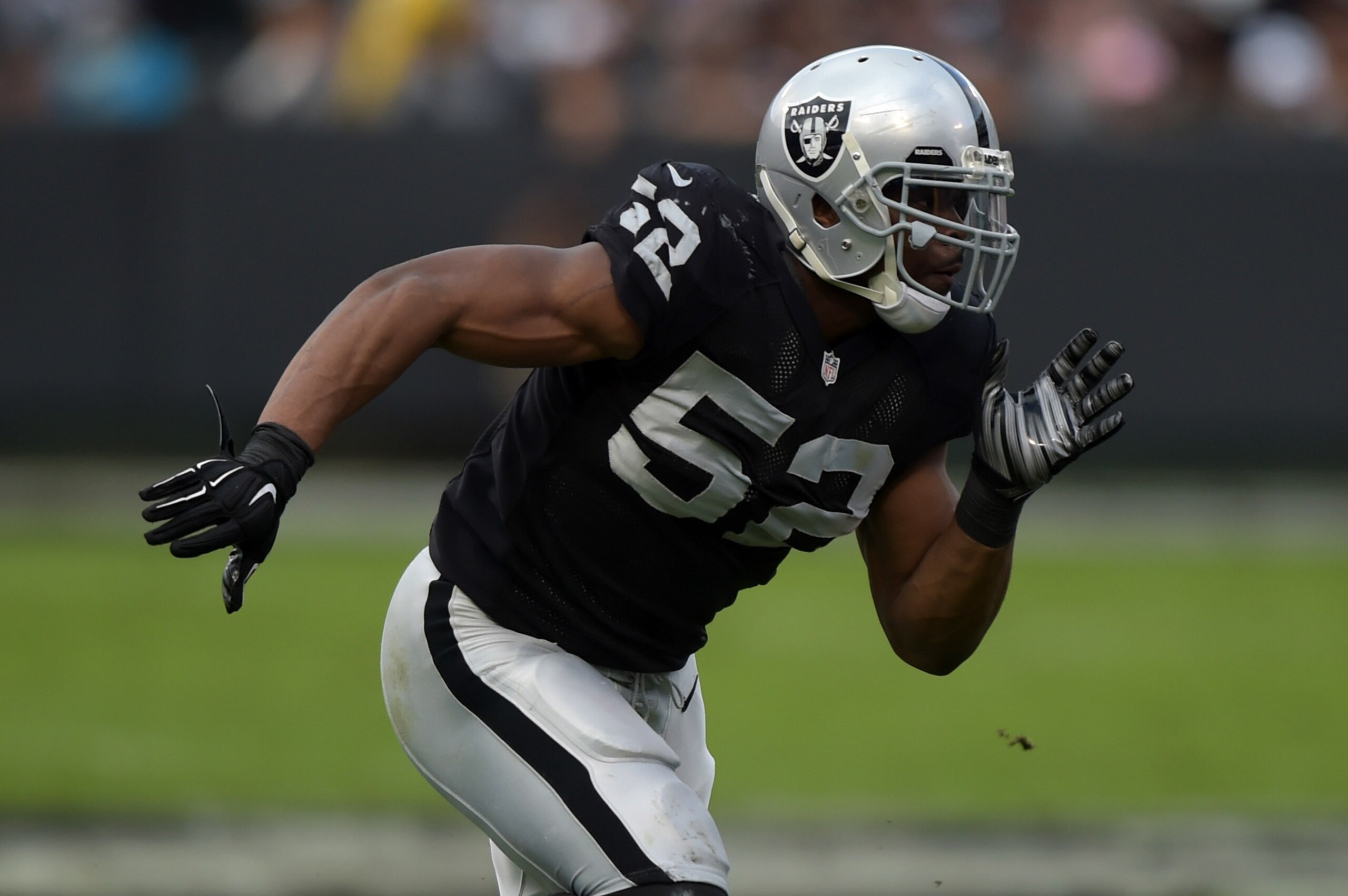


The Oakland Raiders have been the most active team since the start of free agency. The team added 10 new faces, many of which were brought in to start. This has caused a major shift in the team's depth charts.
The team opted to let almost all of its own free agents walk. Instead, Oakland opted to bring in a lot of free agents, and the positions affected are all over the roster. This is clearly a roster in flux.
Still, with so much time left until the start of the season and with the draft still to come, the construction of the roster is far from complete. This is especially true considering that the Raiders are likely to draft at least two or three players they'll expect to start.
But with the number of starters already brought in, we can start to get a fairly accurate idea of what this roster will look like in the upcoming season.
Outlook
1 of 12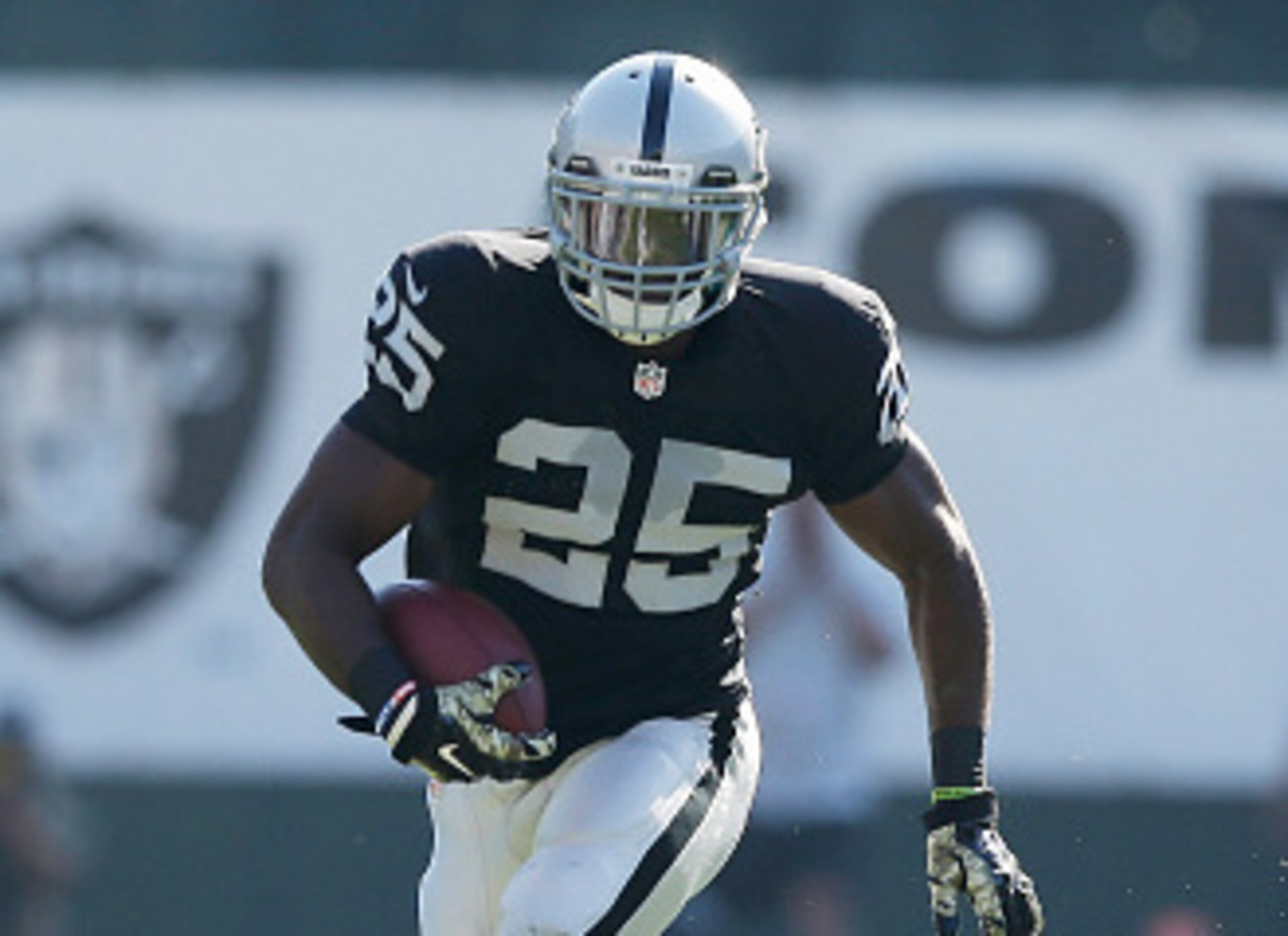
The Raiders currently have 72 players on the roster, including exclusive-rights free agents and restricted free agents. This number is going to go up once the team adds draft picks and undrafted free agents. The roster needs to get up 90 before it gets cut back down to 53 by the time next season rolls around.
Clearly, the formation of the roster isn't complete. But we can at least get an idea of what it will eventually look like.
And while it's impossible to know exactly who Oakland will take in the draft, we can make reasonable guesses as to what positions the team will definitely address. In projecting the team's depth chart, we can assume that Oakland will select at least one player at each of these positions in the upcoming draft:
- Wide Receiver
- Defensive End
- Guard
The Raiders will certainly address a few other positions, but there's no question about these three. The rookies the team will add at these positions have been accounted for in the projected depth charts.
As far as who's currently on the roster, there are players who have a good chance of making the final 53-man roster, but they'll be at the very bottom. There are also several players the Raiders have brought in as camp bodies to fill out the roster. These players are most likely going to be cut and are roster-bubble players at best. However, as current members of the team they have been included on this depth chart.
All of the players who fall into one of these two categories have been included in italics.
Depth-chart projections have been made using the most current Raiders official roster.
Quarterback
2 of 12
| Projected Depth Chart | |
| Starter | Derek Carr |
| Second String | Christian Ponder |
| Third String | Matt McGloin |
For the first time in years, the Raiders can say that there's no question regarding who will be the team's quarterback.
While Carr didn't have a great rookie season, he certainly did enough to secure the starting job in 2015. He went through some of the growing pains expected from a rookie quarterback. But he also showed great potential, and he brought a sense of poise and leadership that Oakland hasn't had at the position since the Rich Gannon days. He'll enter training camp as the unquestioned starting quarterback.
Ponder was brought in on a one-year deal to be the backup, so there's question as to what his role will be. He's only 27 years old, but he's already spent four years in the NFL. He'll provide a veteran presence at the position.
McGloin will once again find himself at the bottom of the depth chart. He'll be in and out of the active roster on game days throughout the season, and he's unlikely to see any action once the preseason's over. But he's shown in the past that he can occasionally make plays. He's not a bad quarterback to have in reserve.
Running Back
3 of 12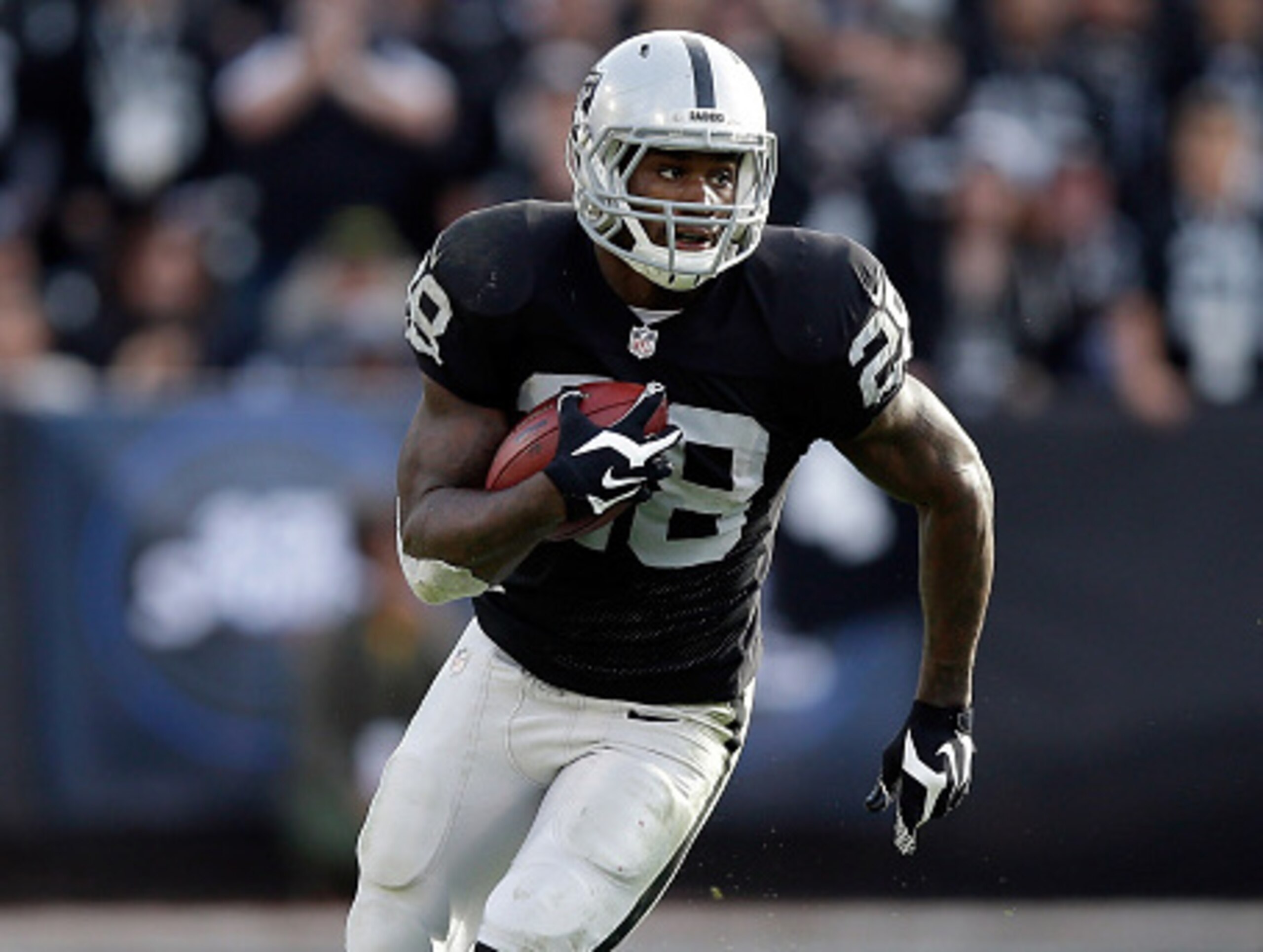
| Projected Depth Chart | |
| Starter | Latavius Murray |
| Second String | Roy Helu Jr. |
| Third String | Trent Richardson |
| Other reserves: George Atkinson III, Kory Sheets, Terrance Cobb | |
For about a week following the signing of Helu, the running back position looked both solid and settled. Murray was looking like the starter, and the versatile Helu was going to be the dangerous backup.
However, the addition of Richardson has made the picture at the position a lot less clear.
How this plays out is going to come down to Richardson's performance in camp and in the preseason. If he can return to a form that resembles the player he was in college, he has a good shot at taking the starting job. If he continues to be the player he's been since he entered the NFL, he's going to end up at the bottom of the depth chart.
For now, we have to look at the facts: Richardson been an ineffective NFL running back, and that's how he'll be perceived until he proves otherwise. Because of that, Murray gets the nod as the starter.
Helu's role won't change regardless of what happens between Murray and Richardson. Helu wasn't brought in to start anyway. He was brought in because of his versatility and his ability to catch passes out of the backfield. Regardless of who's starting, Helu will still be able to contribute in this role.
.jpg?w=2560 "Titans Colts Football")
.jpg?w=2560 "Chiefs Giants Football")
.jpg?w=2560 "Eagles Jaguars Football")
Fullback
4 of 12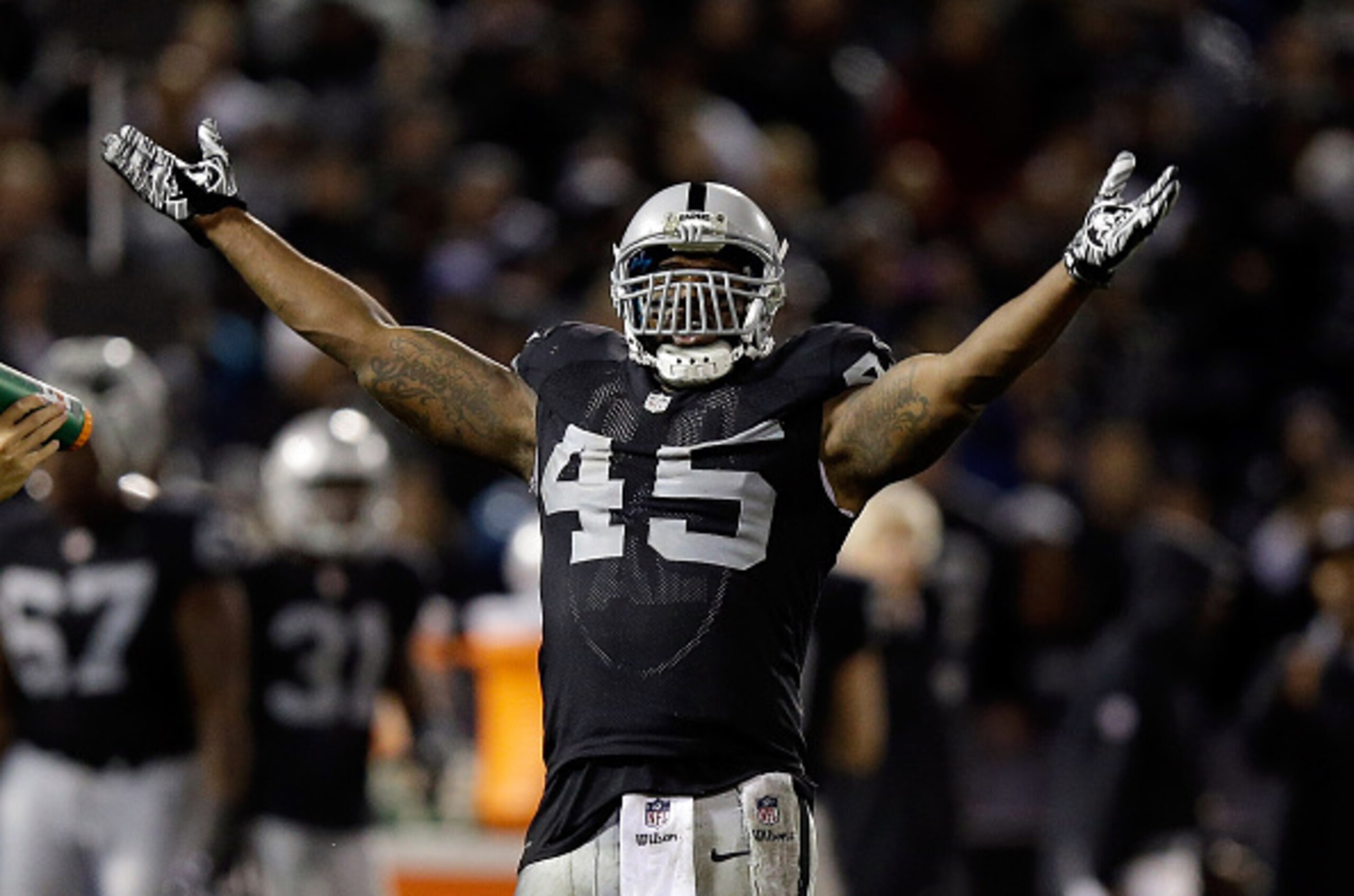
| Projected Depth Chart | |
| Starter | Marcel Reece |
| Second String | Jamize Olawale |
Both Reece and Olawale are members of what's now an extinct position in Oakland's game plan. ESPN NFL Insider Adam Caplan noted that the Raiders will move away from using a classic fullback, instead using "[m]ore of an H-back, or F-Back, in addition to TEs."
Given the change in the way they'll be used, both should have some serious questions regarding their role in the offense and their spots on the team. Given Reece's versatility and his past production, it's likely that new head coach Jack Del Rio will have a use for him. This could actually be to Reece's benefit, as he's been notoriously underutilized in Oakland for years.
Unfortunately, this could spell the end of Olawale's time in Oakland. A promising player, he's never been able to move ahead of Reece on the depth chart, which has already limited his playing time. Now that he's without a true position and with his new duties possibly overlapping with incoming running backs, there might not be a spot for him.
Olawale is actually something of a fullback/running back hybrid, so he certainly has plenty to contribute. The question is whether the new coaching staff will give him the opportunity.
Tight End
5 of 12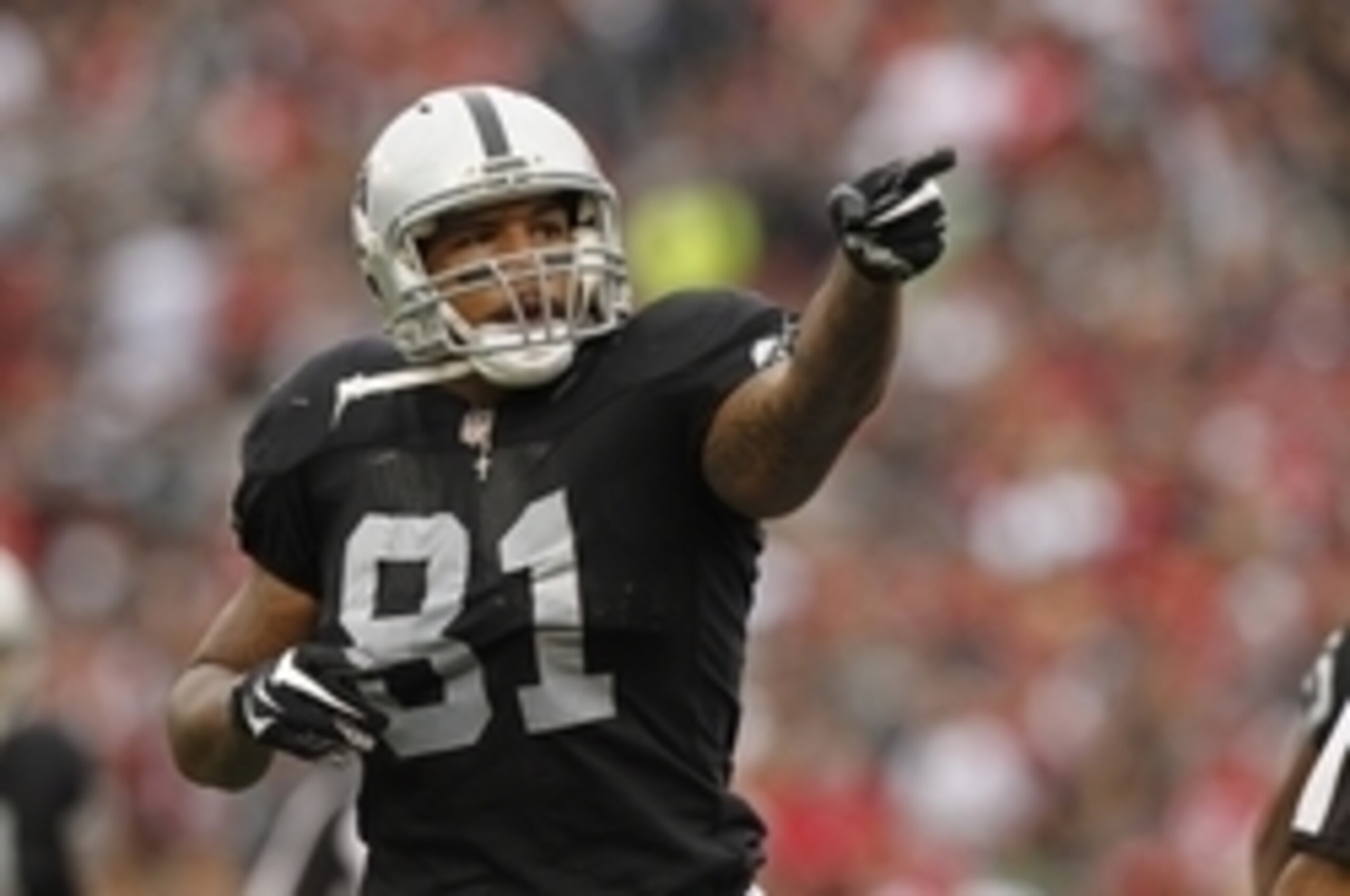
| Projected Depth Chart | |
| Starter | Mychal Rivera |
| Second String | Lee Smith |
| Third String | Brian Leonhardt |
| Other reserves: Nick Kasa, Scott Simonson | |
Oakland has quietly put together a solid tight end group.
In his first two seasons, Rivera has shown that he can produce as a receiving tight end in the NFL, but he's yet to become a contributor as a blocker. The Raiders added blocker extraordinaire Lee Smith to fix that issue.
Smith is the definition of a blocking tight end. Between his proficient grunt work and Rivera's ability to get open downfield, the Raiders have the makings of an effective tandem at the position.
Still, while the position is solid at the top, it doesn't offer much clarity beyond that. Leonhardt, Kasa and Simonson still have undefined roles. Are they blockers? Can they be brought in to catch passes in certain situations?
One of Oakland's goals in camp will be to try to figure out how best to utilize these three young tight ends. It also opens up the possibility that the team will look to add a tight end in through the draft.
Wide Receiver
6 of 12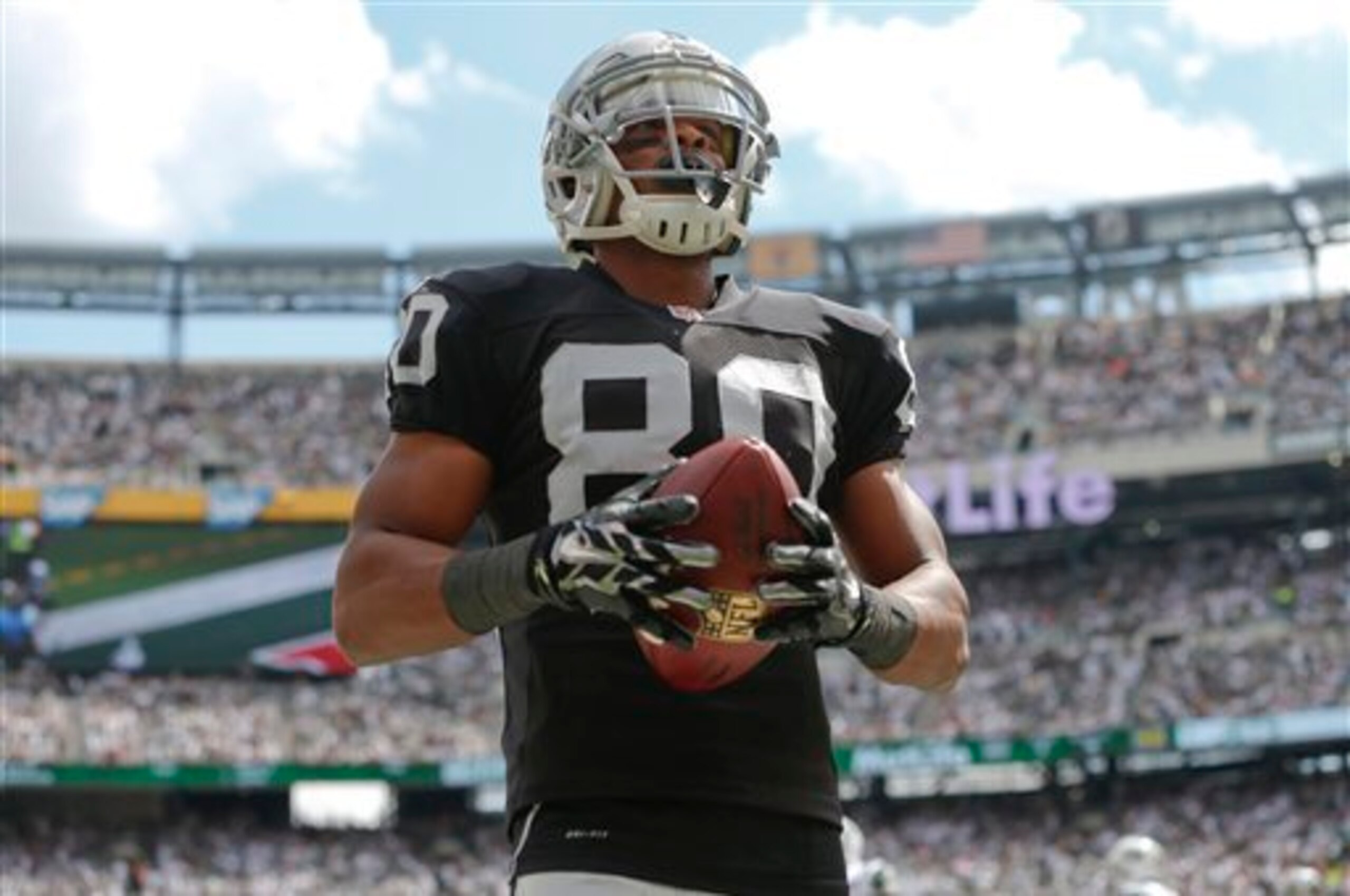
| Project Depth Chart | ||
| Wide Receiver No. 1 | Wide Receiver No. 2 | |
| Starter | Rod Streater | Rookie Draft Pick |
| Second String | Andre Holmes | James Jones |
| Third String | Brice Butler | Kenbrell Thompkins |
| Other reserves: Seth Roberts, Jeremy Gallon | ||
As underwhelming as Oakland's group of wide receivers was last season, it actually wasn't a terrible group. The problem was that it was missing a true No. 1. Having one would've made everyone's job easier. But the lack of one forced every other receiver to play out of position and take on too much responsibility.
Ideally, Del Rio will make Butler a more prominent player at the position. He's shown enough to earn more playing time than he's gotten. An increase in playing time will mean an increase in production.
Still, the group wasn't effective enough, which is why the Streater's return from injury is so important. In his last full season (2013), he totaled 888 yards on 60 receptions while averaging 14.8 yards per catch. In three seasons, he's picked up a first down on 65.7 percent of his receptions.
But even with Streater's return, the Raiders need reinforcements. After not adding anyone in free agency, the team is a lock to draft a wide receiver in the first round or the second round at the latest.
Most pundits have Oakland choosing between West Virginia's Kevin White and Alabama's Amari Cooper with the fourth overall pick. However, Bleacher Report NFL Insider Jason Cole notes that at fourth overall, Oakland is "in the pivot spot" in the draft. This makes a trade not only possible, but maybe even likely. If the team trades down, that will change who's available at wide receiver.
Regardless of where the Raiders end up picking in the first round, a wide receiver will still be a priority.
It wouldn't be a surprise to see Oakland draft multiple wide receivers, but the team will certainly add at least one. This selection will be made within the first two rounds of the draft. And the Raiders will expect that receiver to be a major contributor right away.
Offensive Line
7 of 12
| Projected Depth Chart | ||
| Starter | Second String | |
| Right Tackle | Austin Howard | Menelik Watson |
| Right Guard | Khalif Barnes | Rookie Draft Pick |
| Center | Rodney Hudson | Kevin Boothe |
| Left Guard | Gabe Jackson | Lamar Mady |
| Left Tackle | Donald Penn | Matt McCants |
| Other Reserves: Danny Kistler Jr. (tackle) | ||
When Del Rio stepped in as Oakland's head coach, one of the first things he did was address the issue at right tackle by moving Howard one spot over to fill the position. Since then, the team has added one of the NFL's top centers in Rodney Hudson. With the left side of the line already secured by Jackson and Penn, the Raiders suddenly have what could be one of the league's most effective units.
But there's still a glaring hole at right guard. Del Rio stated that to reporters at the combine:
"In all likelihood, we’ll start there with him[Howard] and Watson battling for the right tackle spot. That’s what I envision. We know that he moved in at guard, but he’s probably more suited to be a tackle.
"
This leaves the door open for Watson to finally secure the starting job at right tackle. If he does, Howard can move back to guard. But Watson's progress has been frustratingly slow since the Raiders drafted him in 2013. The odds are that Howard, who's proved to be an unspectacular but effective right tackle, will stay on the outside.
The most likely scenario is that jack-of-all-trades Barnes steps in at right guard. Of course, Barnes isn't the long-term answer, which makes the Raiders adding a guard through the draft a likely scenario. The rookie could be brought along slowly and learn the position, then take over as the starter later in the season.
Defensive Line
8 of 12
| Projected Depth Chart | ||
| Starter | Second String | |
| Right Defensive End | Rookie Draft Pick | Benson Mayowa |
| Nose Tackle | Dan Williams | Ricky Lumpkin |
| Defensive Tackle | Justin Ellis | Stacy McGee |
| Left Tackle | Justin Tuck | C.J. Wilson |
| Other reserves: Denico Autry, Shelby Harris, Kona Schwenke | ||
Oakland has put together a group of defensive linemen lacking in big-name recognition but filled with tantalizing potential. That is, of course, until you get to defensive end.
Tuck is still capable of being effective. But the Raiders have no one to line up opposite him. It is possible that Mayowa, who played under new Oakland defensive coordinator Ken Norton Jr. while they were both with the Seattle Seahawks, could become more productive under familiar coaching. But that's a long shot. After that, it's unproven talent and spot-duty players.
As is the case with wide receiver, the Raiders are sure to add a defensive end within the first few rounds. Whoever it is, the team will need him to step in and contribute right away.
Unlike at defensive end, the team is set at defensive tackle. The combination of Williams and Ellis should lead to opposing teams finding it very difficult to find any room to run up the middle.
An issue could arise between Williams and Ellis because both of their playing styles are along the lines of a nose tackle. Their strength lies in stopping the run, not getting after the passer. In theory, one would start, and the other would be the backup. But they're both the best interior linemen currently on the roster, which makes both of them the likely starters.
Linebacker
9 of 12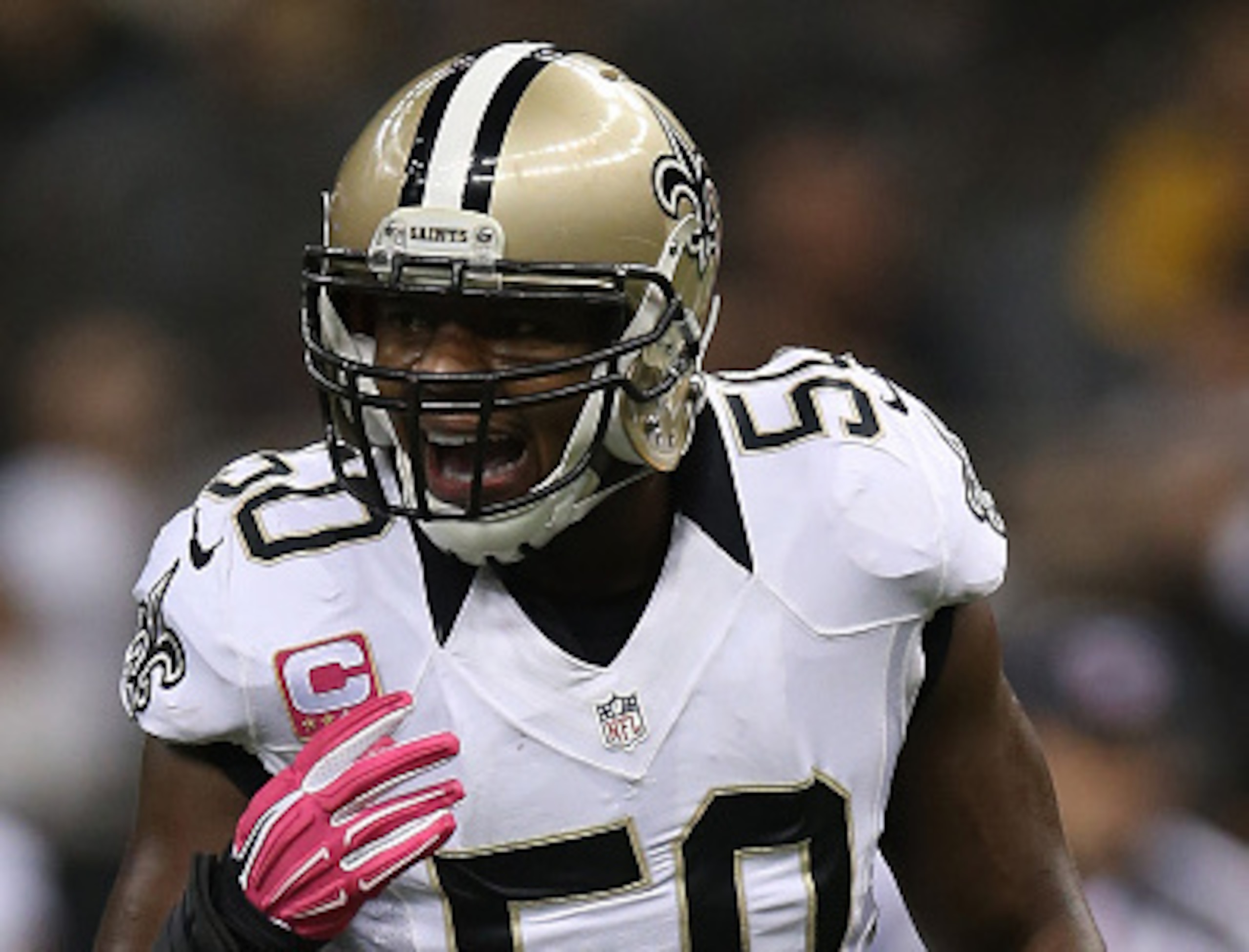
| Projected Depth Chart | |||
| Strong-side Linebacker | Middle Linebacker | Weak-side Linebacker | |
| Starter | Khalil Mack | Curtis Lofton | Sio Moore |
| Second String | Malcolm Smith | Miles Burris | |
| Third String | Ray-Ray Armstrong | Bojay Filimoeatu | |
| Other reserves: Spencer Hadley, Justin Jackson | |||
Oakland had one of the better sets of outside linebackers in the NFL last season with Mack and Moore. Unfortunately, there was no one in the middle, and the entire defense suffered because of it. The Raiders effectively fixed this problem by adding veteran middle linebacker Lofton. The team now has a starting group with the potential to create major havoc.
But while the starting unit is set, there are still questions regarding depth. The biggest issue the team has to address is at reserve middle linebacker. What caused so much trouble last season was that after Nick Roach went down, the team found itself without a suitable replacement. The team played an entire season without a true middle linebacker. If Lofton gets hurts, it'll happen again.
One of Smith's best attributes is his versatility, and he could possibly step into the middle. But the team shouldn't gamble again. It's not as big a need as other positions, but the Raiders need to give serious consideration to adding a true middle linebacker later in the draft to have as a reserve.
Secondary
10 of 12
| Projected Depth Chart | |||
| Starter | Second String | Third String | |
| Cornerback No. 1 | D.J. Hayden | Keith McGill | Taiwan Jones |
| Cornerback No. 2 | T.J. Carrie | Neiko Thorpe | James Dockery |
| Strong Safety | Nate Allen | Jonathan Dowling | Larry Asante |
| Free Safety | Charles Woodson | Brandian Ross | |
| Other reserves: Ras-I Dowling (safety), Chance Casey (cornerback), Vernon Kearney (cornerback), Jansen Watson (cornerback) | |||
The Raiders have a solid plan at almost every position. The one exception? Cornerback.
No more veteran placeholders. No more experience. The Raiders are going all youth, all the time at the position, and it's sink-or-swim time for the young guys. As it stands now, Hayden (24), Carrie (24) and McGill (26), three players with a combined total of 43 games in four combined seasons, make up the top of the depth chart at cornerback.
The potential is there. But so are the concerns.
Hayden has yet to play more than 10 games in a season. Carrie had a solid rookie season, but this will be a major jump in responsibility. And McGill spent most of last season on special teams. Having them as the three primary cornerbacks is showing a ton of faith on very little evidence.
Adding another young, unproven player to the mix isn't ideal, but the Raiders could use help at the position. Adding a rookie through the draft wouldn't be a surprise.
Safety, on the other hand, offers more to be confident about. The ageless Woodson is back for one more season, and he's proved that he's still plenty effective. He's not the long-term answer, but he can hold down the position for one more year. Next to him he'll have another veteran in Allen. The two of them will provide a level of solid play at the back the defense didn't have last season.
Behind them, the Raiders have some intriguing prospects. Dowling only played in four games his rookie year, but he has the size (6'1", 210 lbs) and range to make an impact. Asante showed a nose for the ball, and Ross was vastly improved in his second tenure with Oakland.
All three players have the benefit of playing behind proven veterans. This will give them time to continue to learn and improve.
Special Teams
11 of 12
| Projected Depth Chart | |
| Kicker | Sebastian Janikowski |
| Punter | Marquette King |
| Long Snapper | Jon Condo |
| Other reserves: Steven Clark (punter), Giorgio Tavecchio (kicker) | |
No changes here: The Raiders should enter 2015 with the same set of special teamers they had last season.
Condo remains one of the most reliable long snappers in the NFL. This is one of the most underrated positions in football. No one knows who the long snapper is until he makes a mistake and ends up on a blooper reel. Condo has had a long, steady career free of these types of mistakes.
King continues to establish himself as a reliable punter. He took over for Shane Lechler in 2013, and the punting game hasn't missed a beat. King averaged over 45 yards per punt in 2014, and he averaged a league-best 48.9 the year before. There's no need to fix what isn't broken.
At least on paper, Janikowski is the one member of this group who might be in danger of losing his spot.
Even at 37 years old, he still has one of the strongest legs in the league. But he's gone through periods of unreliability in his career, and he's expensive. He signed an $18.9 million extension back in 2013 with $8 million guaranteed, but that guaranteed money was paid out over the first two years. There's no guaranteed money heading into 2015.
Still, it's unlikely the Raiders will choose to part ways with their longest-tenured player, which will leave the team's core special teams group intact.
Conclusion
12 of 12
Many of these projected depth charts will change after the draft. But for much of the roster, the depth charts are already mostly set.
The team can still use help in several areas. A look at the depth chart as of now helps to identify the areas that need to be addressed on the first two days of the draft.
The depth chart will go through several changes between now and the draft. But a look at where it stands now at least gives an idea of which direction the roster is moving.
And as of now, the signs are encouraging.
Unless otherwise noted, all stats taken from ESPN.com.
Share your thoughts and opinions in the comments section and on Twitter @BrianJ_Flores.
.jpg?w=2560 "Colts Football")
.jpg?w=2560)





