Vikings Mock Draft: Instant Contributors Minnesota Can Find in Every Round
With free agency dying down and the Minnesota Vikings making clear they don't intend to fill their many holes with mercenaries, fans will have to turn their eyes to the draft to find instant contributors—and there's no better way to look at that than with a mock draft.
The Vikings, who are missing a sixth-round pick but carry an extra seventh-round pick, are not likely to be able to find starters or impact players at every position throughout the draft. For the most part, finding players who can make an impact right away will mean some gambling on injury, competition level or character concerns, though that's not always the case.
Finding players who can make an impact right away in every round isn't easy, but by using CBS' player grades as a guide for finding out who will be available, we can begin to drill down what our options look like.
With those constraints in mind, let's find out what the draft can bring!
Round 1: LB Eric Kendricks, UCLA
1 of 6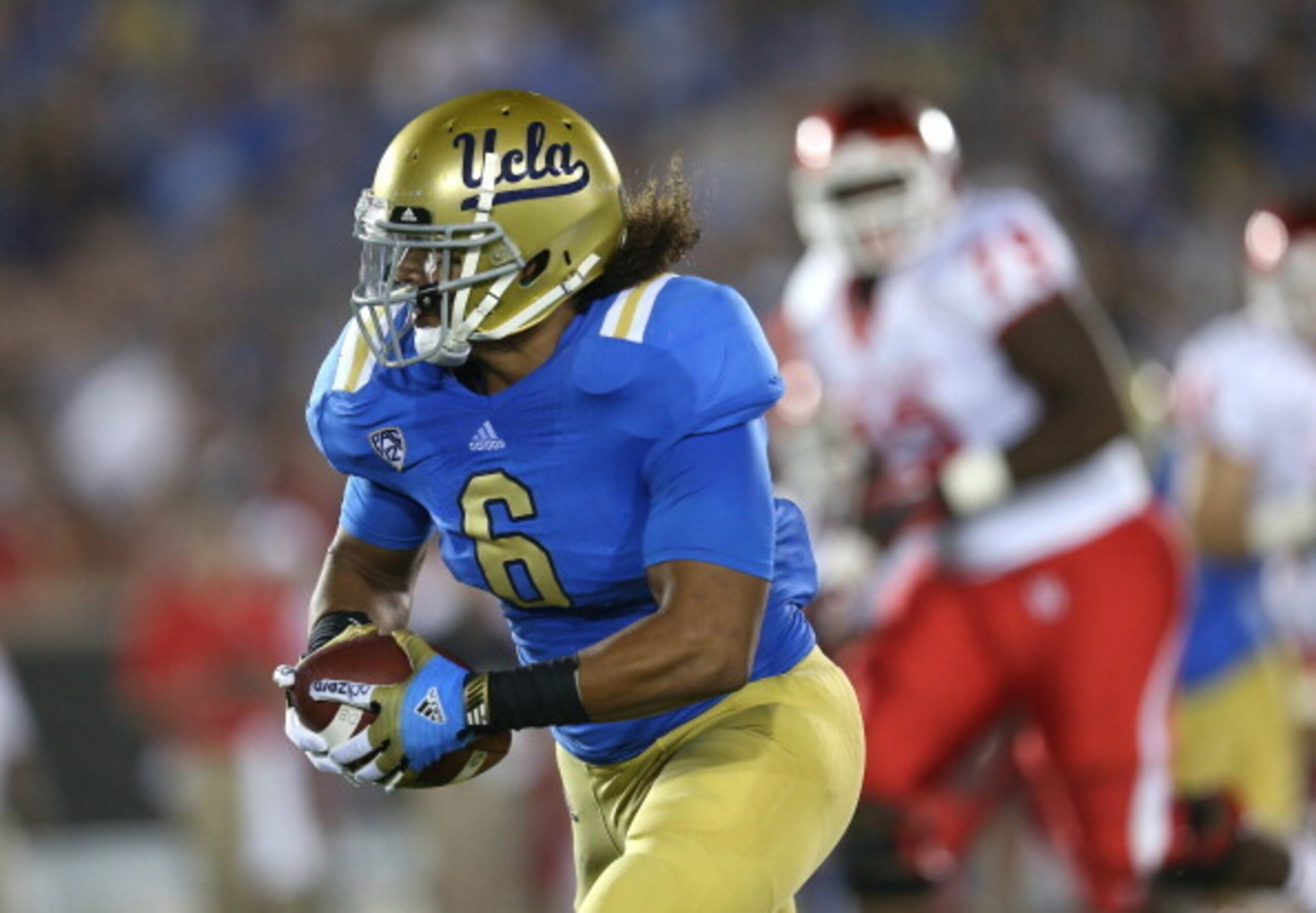
It doesn't matter whether the Vikings grab him with the 11th pick or trade down in the first round to grab him while securing more draft assets, but grabbing Eric Kendricks would immediately upgrade the defense.
Fans shouldn't let the idea of a "reach" prevent them from considering the idea of Kendricks in the first round for the Minnesota Vikings.
The biggest flaws listed for him on scouting reports are either nit-picky or not all that relevant to the Vikings. Numerous scouting reports, like those at NFL.com, CBS and Scout.com list him as an "undersized" linebacker and focus on smaller technical details, like occasionally meeting the blocker with his head down or at times playing out of control—and none of these smaller details were big enough to be noted by more than one evaluation firm.
For the Vikings, size isn't much of an issue. Looking at every linebacker stacked behind the three-technique defensive tackle (usually called the "Will" linebacker, but not always lined up on the weak side of the offense) head coach Mike Zimmer, former defensive coordinator for the Cincinnati Bengals, has employed over the past few years reveals a pattern of smaller linebackers.
Aside from the fact linebackers regularly lost weight to play the "Will" position in Zimmer's defense, undersized players have been drafted into those positions from the onset. The first linebacker drafted in the Zimmer regime at Cincinnati was Keith Rivers in the first round, who came in at a whopping 235 pounds.
The next "Will" linebacker to be picked was Roddrick Muckelroy (236 pounds) in the fourth round, followed by Sean Porter (229 pounds), also in the fourth. Undrafted free agents Vincent Rey (240 pounds at his pro day), Jayson DiManche (231 pounds) and Emmanuel Lamur (232 pounds) were competing for that spot in camp the last time Zimmer was the DC.
The bottom line is Kendricks is one of the most instinctive players in the draft, and reads keys on the defense better than almost everybody. A player with a nose for the ball, he always seems to be around the play whereever it ends.
With underrated explosiveness and speed, Kendricks can be the complete package at linebacker. Though knocked for taking on blocks poorly, the issue has less to do with functional strength and more to do with leverage.
Kendricks will take on blocks at the shoulders or sometimes even higher, robbing any advantage he should have by being the lower man. Further, he doesn't plant his feet when he takes on lead blockers or guards, which makes his strength on the field one of the more impressive sights in the Pac-12.
His ability to move guards or heavy fullbacks despite these severe technical (albeit easy to fix) limitations means he has unlockable talent in this arena far greater than other well-regarded linebackers, like Paul Dawson or Stephone Anthony.
Beyond that, he shows far more coverage ability than his peers in this area, with more consistent and sound zone drops than Shaq Thompson and the ability to carry tight ends with fluidity and reactiveness better than Dawson or Anthony.
Combining incredibly savvy play with high-level athleticism and strength should make him a top pick in the draft. That he may not end up being that is no reason to snub the pick.
Round 2: OL Ali Marpet, Hobart
2 of 6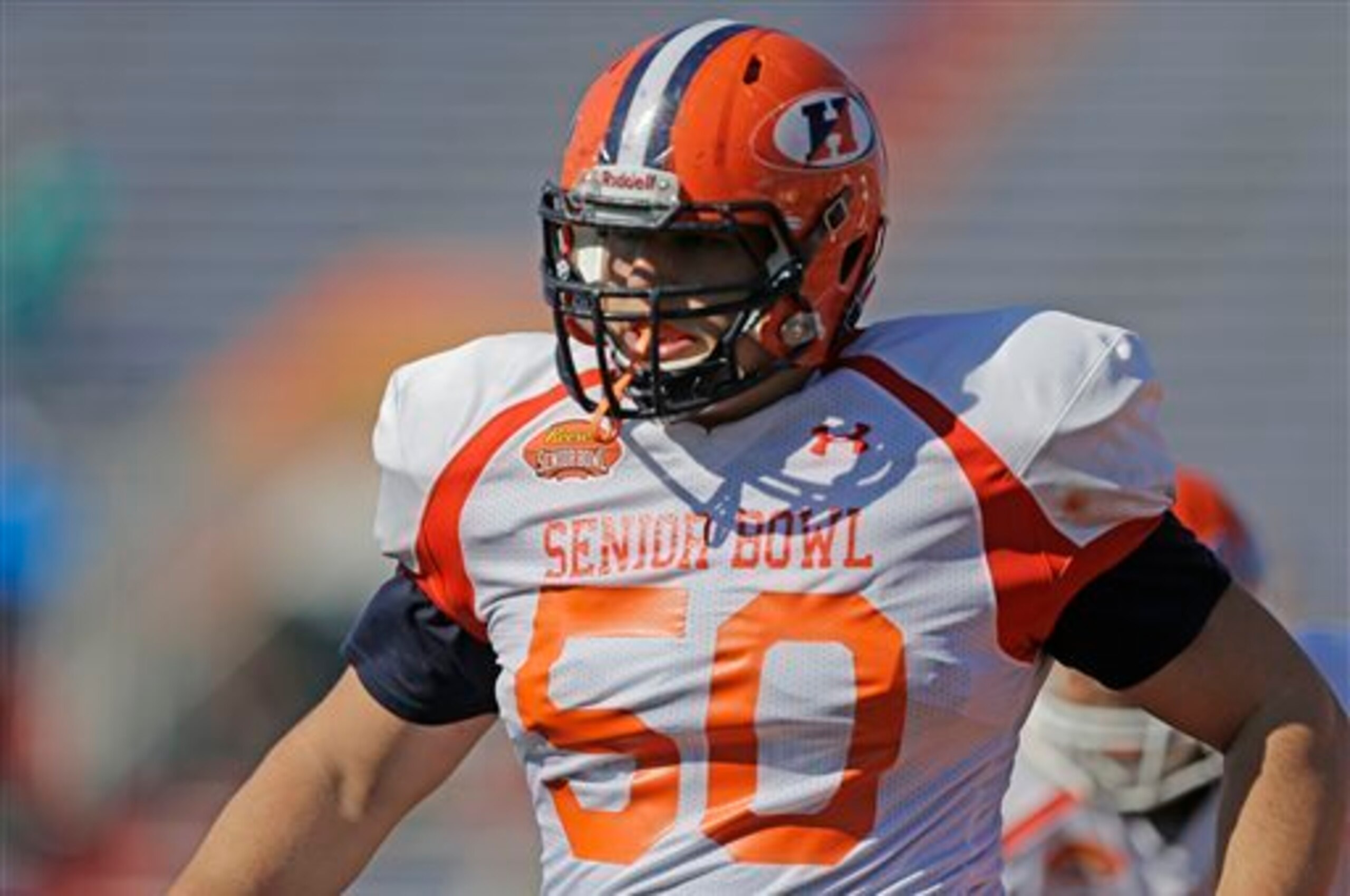
Already featured as a potential Vikings fit here before, former Hobart tackle Ali Marpet has risen on draft boards across the country and is currently CBS' No. 80 overall player. Considered the top small-school prospect in the draft by more than one expert, leap-frogging FCS and Division II players to get there, Marpet could be the highest-selected Division III player since the Seattle Seahawks selected Chris Warren from Ferrum College 25 years ago.
It's not out of the realm of possibility he ends up as the top guard in the class. He already dominated the Senior Bowl as the best offensive lineman on either team, per Pro Football Focus, and looked completely at home moving up to the competition level during practices.
An outstanding athlete who tested better than any other offensive lineman at the NFL combine using position-specific performance metrics, Marpet may be able to play all five positions on the line, though he is best used at guard.
With some issues regarding his base and leverage, Marpet more than makes up for it with a keen understanding of angles and a combination of raw power and quickness. Beyond that, his technique is far more refined than many players in the draft already, despite his small-school background, and he uses his hands excellently.
Other guards projected to go in the second round, like South Carolina's A.J. Cann and Duke's Laken Tomlinson, have both exhibited similar flaws to Marpet, but with less physical upside and more consistent failures. Marpet's biggest issue is the limited tape he has against higher levels of competition, but what he does provide in any workout or on any tape is a surprisingly refined player with strength and speed.
That's definitely worth a second-round pick, and he should be able to slot into the Vikings' left guard slot immediately, even with some issues to work out.
Round 3: RB David Cobb, Minnesota
3 of 6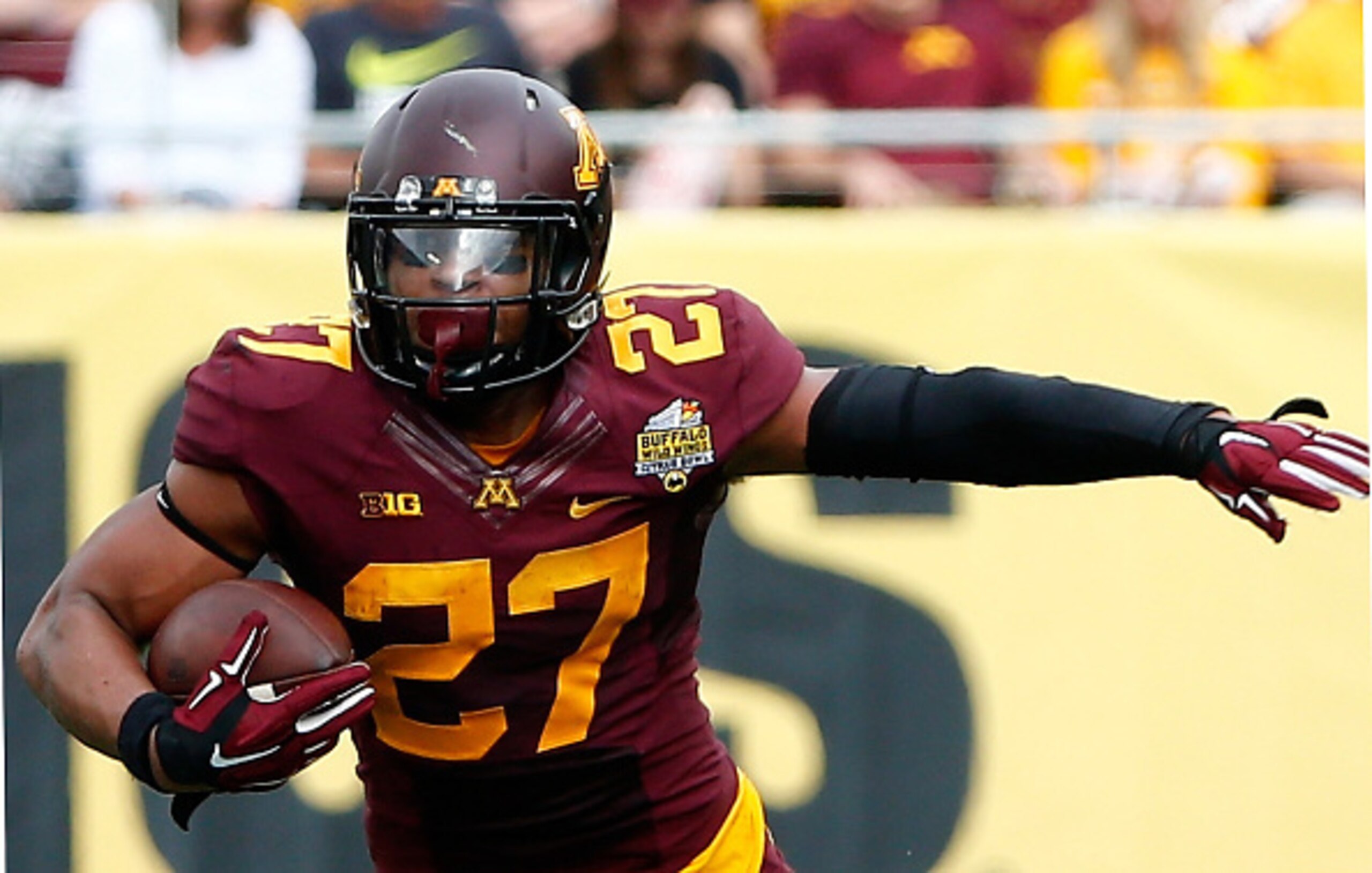
Why not stay at home when picking a complementary back to the ever-exciting Jerick McKinnon? Naturally, if the Adrian Peterson situation gets resolved in favor of keeping him, this pick would have to change, but for now a player who doesn't want to play won't count as someone who can contribute right away despite the negotiating leverage the Vikings have.
David Cobb can be the tank to Jerick McKinnon's jets, allowing him to pummel through opposing lines with power and patience while McKinnon creates explosive plays on different downs.
Though Matt Asiata provided the plugger role to the Vikings this past year, and did it far better than given credit for, there's clearly much to be desired from a running back who could only average 3.5 yards per carry.
Cobb falls behind Asiata in one respect: he's a poor pass-blocker who needs to clean up his hands and base in order to be reliable in the backfield protecting the quarterback. Other than that, he seems like a rich man's Asiata.
With slightly better speed and burst than the undrafted Utah running back, Cobb can grab more yards from small creases and take advantage of closing lanes with more alacrity. He exhibits much better leverage on a consistent basis and his low center of gravity allows him to create more yards after the play seems dead, and he often saved the offense in Minnesota after a leaky line allowed defenders in the backfield.
He won't bounce yards outside for huge gains, nor will he be able to take advantage of space the way Melvin Gordon or Duke Johnson might, but there's a decent chance he'll be more consistent and keep the offense on schedule.
One of the toughest runners in the draft, with Cobb the Vikings could feature a devastating one-two punch as their answer to the trouble caused by Peterson.
.jpg?w=2560 "Chiefs Giants Football")
.jpg?w=2560 "Steelers Buccaneers Football")
.jpg?w=2560 "Titans Colts Football")
Round 4: WR Kenny Bell, Nebraska
4 of 6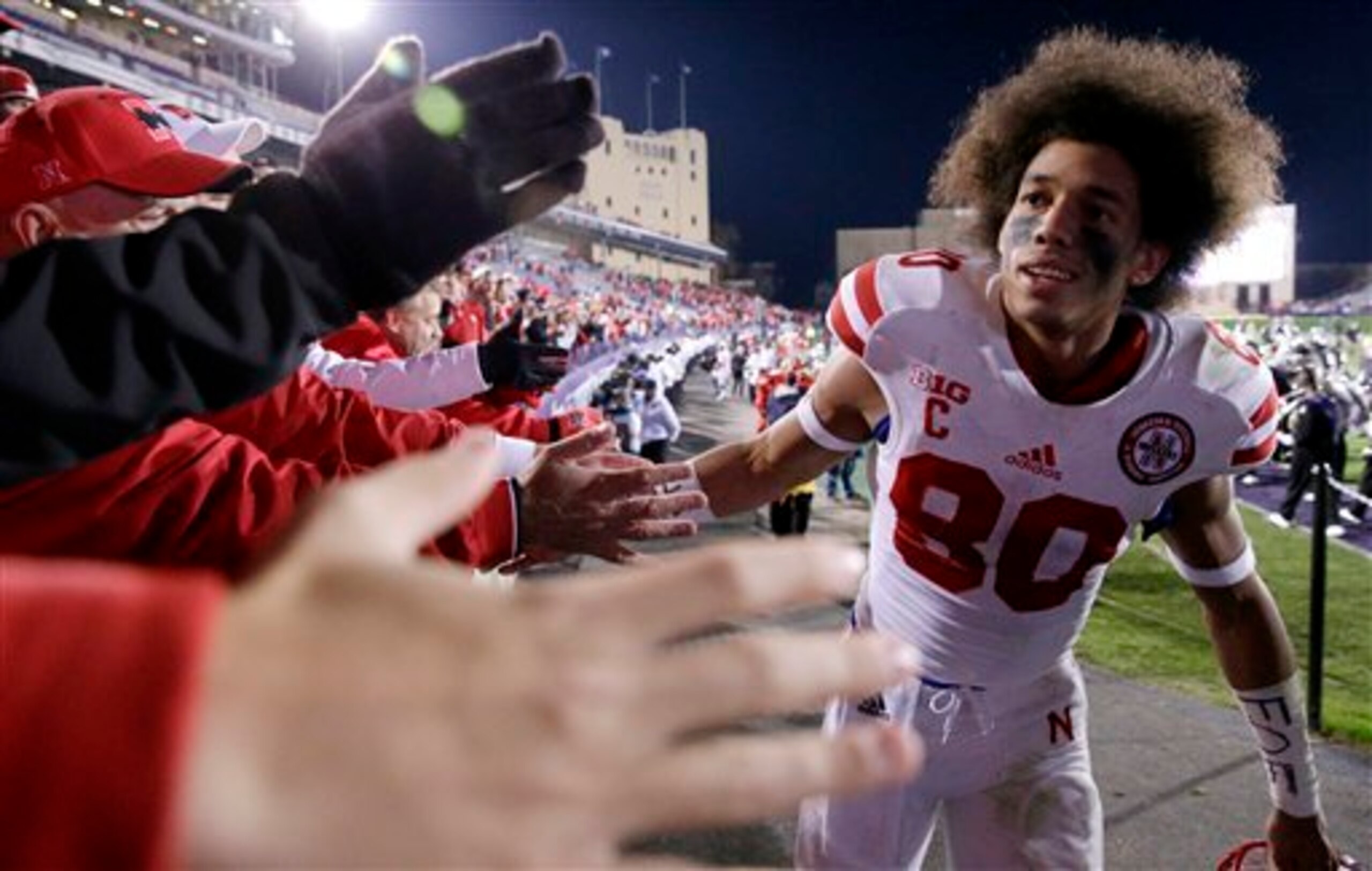
If the task is to find a player with an immediate impact, the Vikings could do worse than Nebraska receiver Kenny Bell, whose football intelligence and quickness should allow him to see snaps immediately in a beleaguered receiver corps with talent but no certainty.
Even if Bell doesn't crack the starting lineup, he can potentially supplant Marcus Sherels at punt returner. Though Sherels' role is important, and he's one of the better punt returners in the NFL, competition at the position can only bring dividends.
Aside from special teams play, however, Bell can get on the field quickly when leveraging what he does best. At 6'1" and 197 pounds, Bell looks lanky but has more weight than people realize and has the ability to play inside the slot or outside, allowing him to provide relief to any receivers on the roster.
Though he still needs refinement in terms of overall technique, Bell still shows an ability to create separation throughout his route and more importantly, deceives opposing defenders. His explosion at the break could be helped with more traditional receiving coaching, but there's little question he can get open as it is through the sheer quickness he plays with.
His ability to adjust his running for the opposing defense is relatively rare among college receivers, as most aren't asked to adjust their spot or their route based on what they see.
All of that won't overcome issues with drops or the fact he struggles against press coverage, but he still could provide a superior backup option on the roster to receiver Adam Thielen regardless. That isn't to say Thielen is a poor receiver, but Bell is very good without getting the due he deserves.
He will have to grow in significant ways, both technically as a player and physically with his body, before he can contribute more as a starter, but Bell is ready to provide 100 or more snaps of solid rotational play, even if he does get pushed around a little bit.
Round 5: LB Jake Ryan, Michigan
5 of 6
With Eric Kendricks as the "Will" outside linebacker for the Vikings, Minnesota still needs to figure out what will happen on the inside. Though Gerald Hodges flashed in limited play for the Vikings, Minnesota happened to have "one of the worst defensive performances in a long time," according to head coach Mike Zimmer, when Hodges was in charge of relaying defensive plays to the rest of the team.
Immediately afterwards, the Vikings gave those duties to Audie Cole, who was starting because of injuries to both Chad Greenway and Anthony Barr.
The Vikings need a middle linebacker, if only for two downs, who can fill in the gap in the middle left by departing free-agent linebacker Jasper Brinkley as well as the gap left in defensive play-calling left by Greenway's potentially reduced role—one made more apparent by his recent restructuring to take less pay for the second year in a row.
While the defensive communicator could belong to Kendricks, Jake Ryan or Barr (who was in line for that responsibility last year), having a trio of linebackers who are all capable of those responsibilities is even better.
More than that, Ryan is an above-average athlete with the straight-line speed and gap discipline to be an effective middle linebacker for Minnesota. He can spill to the edges of a play or take on the ball-carrier downhill, and is sure to meet the runner with force.
A high-motor player with very good football intelligence, Ryan's instincts could use some work. Though immediately likely to compete for the middle job with Cole (who suffers from the same late instinct problems) and possibly Greenway, Ryan will either have to trust his eyes more or find faster keys to work off of.
A little stiff as an athlete, Ryan isn't the perfect two-down thumper free-agent linebacker Brandon Spikes is, but he still has excellent capability as a run defender who can either take on blocks and free up the "Will" linebacker or attack the running back himself.
In coverage, his fluidity makes him a liability as a man coverage defender, but he's more than capable as a zone player who can close on the ball well and reads the quarterback's eyes with comfort.
Ryan's strengths should allow him to go higher, but injury concerns from a torn ACL in 2013 will hurt his stock.
Round 7: S Cedric Thompson, Minnesota and DE Frank Clark, Michigan
6 of 6
There's no reason the Minnesota Vikings can't double-dip at the local university and grab an intriguing safety prospect whose potential is tantalizing.
In the seventh round, it will be difficult to find "instant contributors," so players who can make an enormous contribution on special teams as well as provide rotational work off the bat will be necessary. To that end, the Vikings can select safety Cedric Thompson with one of their picks in the seventh round and Frank Clark of Michigan with the other pick.
Thompson was a versatile safety for Minnesota, playing nearly every down responsibility, from in the box to deep center-fielder, and all the attendant responsibilities that come with that, sometimes manning up against tight ends or blitzing as the team needed him to.
What's most attractive about Thompson is his sheer athleticism. Though it doesn't quite show up on the field of play as often as you'd like, it's impossible not to ask "what could be?" with his pro day results. Dane Brugler at CBS Sports reported the defensive back "stole the show."
Indeed, it would be difficult to find another safety with 4.40 speed, a 40.5" vertical leap and 10'2" broad jump in any draft, much less one as shallow as this year's. The closest may be Justin Cox of Mississippi State, who at least one team has crossed off their board as a character risk, and who is listed as a cornerback (the position he played in college) on CBS' board.
As an on-field player, Cedric Thompson shows frustrating oscillation between too much urgency and too much patience, either reacting too late to the play in front of him, or reacting too early to developments in the game. If this is an issue of reading the wrong offensive keys, it may be a relatively quick fix.
Given his willingness to hit and average tackling angles, he should be a good special-teamer who can showcase his athleticism immediately in kickoff and punt units without scrimmage play slowing him down.
Frank Clark would be a risky pick, but if the goal is to find an instant contributor, the seventh round doesn't offer much quicker talent than Clark. With two arrests (one for theft and the other for a domestic violence incident), he may be off of a number of team boards—and the Vikings are a good candidate to be one of those teams, given their recent issues with Adrian Peterson.
However, despite a very poor public reaction to his media comments about his domestic violence incident, several teams seem to be satisfied with the answers he gave in private interviews at the NFL combine.
If so, finding him in the seventh round could be unlikely, but for now is projected to go there by CBS. He didn't get drafted in Matt Miller's most recent seven-round mock draft, either.
Clark is an explosive player with a dominant combine showing, while also playing with a high motor. It is rare to find a player who gives effort throughout the play and on every down, while also showcasing premier athletic talent. Though he certainly needs to be taught technique and hone his play, he can become a starter in the NFL after a year or two as a backup.
While that lack of technical prowess will keep him from being a starter for two or three years, he can be an impact rotational player who can make waves on third down.
.jpg?w=2560 "Steelers Saints Football")
.jpg?w=2560 "Eagles Jaguars Football")
.jpg?w=2560 "🚨 Week 8 AP Top 25 Poll")