

How Notre Dame Can Best Use All of Its Playmakers in 2015
New offensive coordinator Mike Sanford is getting his first look at Notre Dame's offense during spring practice, and he's likely coming to grips with a legitimate problem he'll have come the fall: how to get the football to all of the Irish's playmakers.
Yes, it's the type of champagne problem elite offensive teams deal with year in and year out (and yes, this is also the type of column that gets pulled out six months from now, when the Irish offense gets stuck in neutral).
But it's worth remembering that mistakes are what doomed Brian Kelly's most prolific offense in South Bend. Finishing 101st in the country in turnovers turned a potentially dynamic Irish attack into a slightly better-than-average outfit at the bottom of the top 40 in both yardage and scoring.
TOP NEWS

Updated CFP Bracket Projections 🔮

Week 5 AP Top 25 Poll 🔢
Top Overreactions after Week 5 of CFB Season 😧
But Sanford takes over an group that looks primed to explode. Only Ben Koyack and Cam McDaniel exit among the skill players.
| Grant Hedrick | 70.8 | 3,696 | 23 | 14 | 3.8 | 8 |
| Everett Golson | 60.0 | 3,445 | 29 | 14 | 2.5 | 8 |
| Malik Zaire | 60.0 | 266 | 1 | 0 | 5.7 | 2 |
So in just 15 practices, Sanford not only needs to see what he's working with but formulate a plan to keep quarterbacks Everett Golson and Malik Zaire happy—not to mention satisfying two good running backs and the deepest Irish wide receiving corps in recent memory.
So many players, so few snaps. Let's take a look at how Sanford used his personnel at Boise State in the hopes of finding a few clues to help decipher what the Irish will look like when they take the field against Texas.
At Boise State, the Broncos offense under Sanford averaged 39.7 points a game, good for ninth in the country—a full touchdown better than Notre Dame. The Broncos also put up 494.3 yards per game, 50 more than the Irish did.
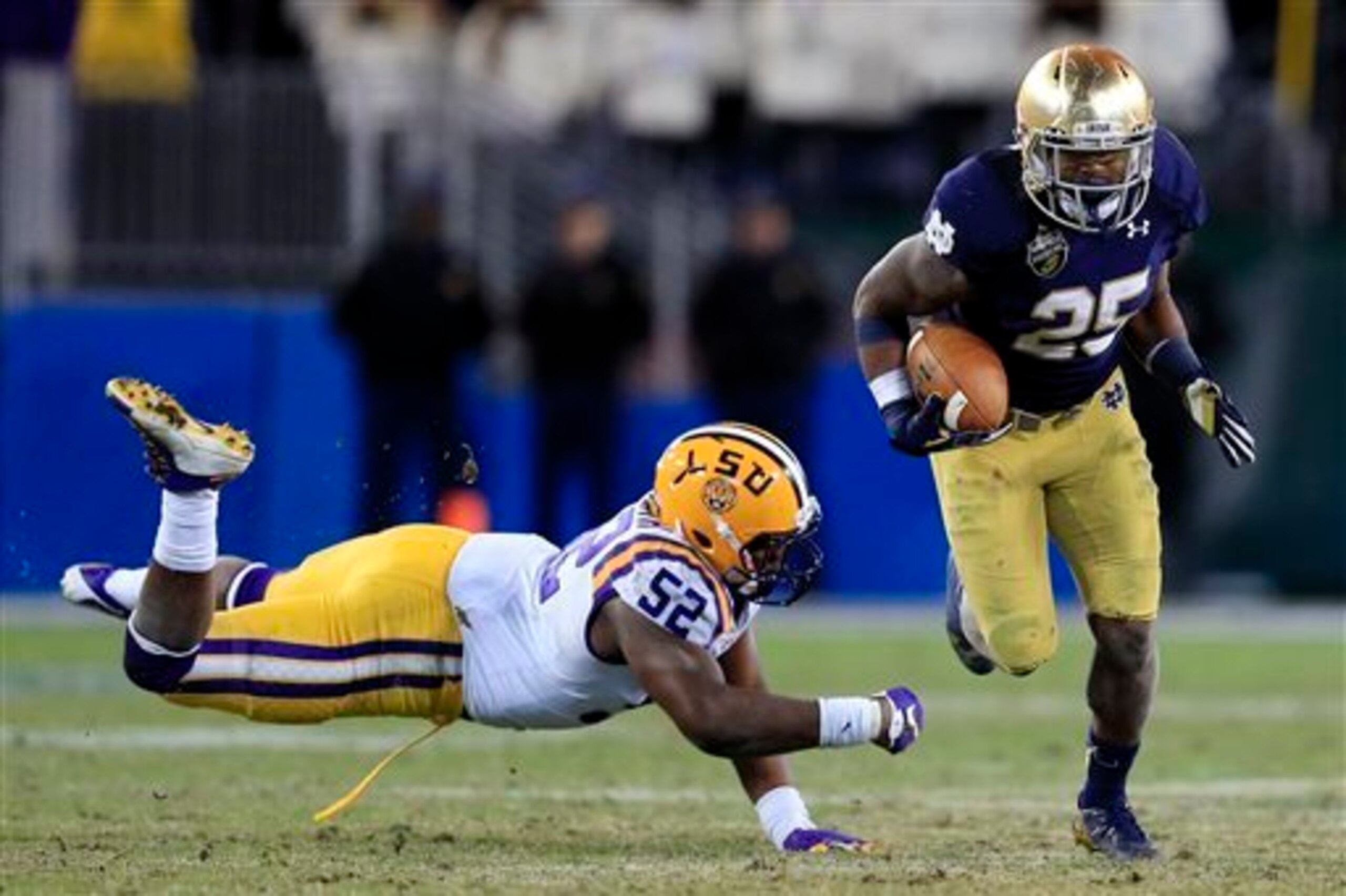
To do it, the first-year offensive coordinator rode running back Jay Ajayi. With 347 carries and 1,823 yards, Ajayi served as the workhorse of the Boise State offense, scoring a ridiculous 32 touchdowns in 2014.
Piloting that offense, fifth-year quarterback Grant Hedrick was no slouch, either. He completed 70.8 percent of his passes, throwing for 3,696 yards and 23 touchdowns while also scoring eight more as a runner.
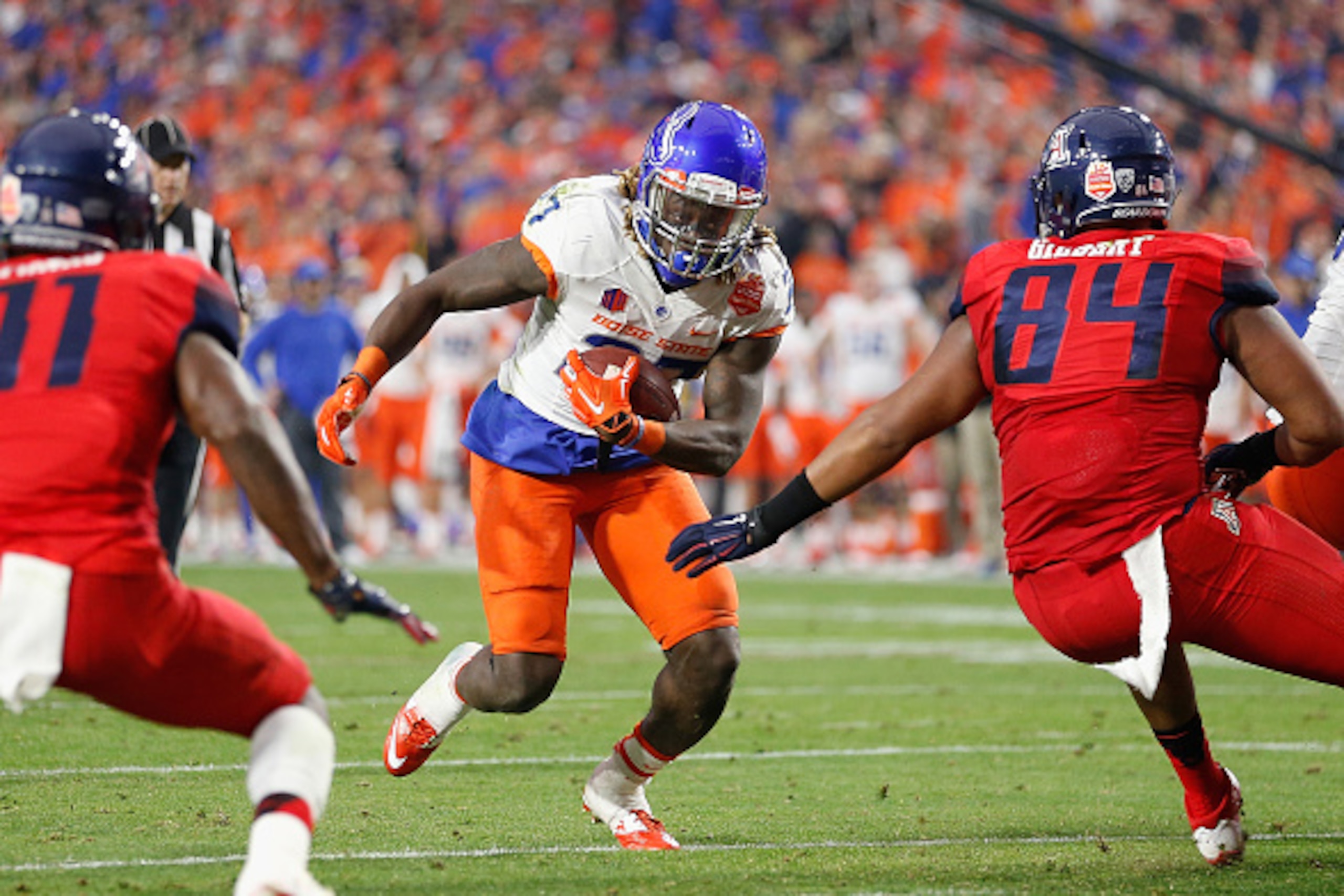
Those numbers match up pretty favorably to Everett Golson's from 2014 (both Hedrick and Golson threw 14 interceptions), though you won't find many people who think Hedrick has a better skill set than Golson.
While most are focused on Golson versus Zaire, Sanford is likely hard at work trying to eliminate the mistakes that turned Golson from an early-season Heisman candidate to the guy benched for a first-year participant.
| Boise State | 57-43 | 39.7 | 494.3 | 280.4 | 213.9 | 75.7 |
| Notre Dame | 51-49 | 32.8 | 444.9 | 285.4 | 159.5 | 72.8 |
In Zaire, Sanford might actually have a quarterback better suited to run his offense. The Broncos used the quarterback to run the football consistently, with Hedrick logging 155 rushing attempts. Hedrick had eight games where he had double-digit carries. That's the same as Tarean Folston, Notre Dame's leading rusher.
We saw the Irish commit to a run-heavy attack, riding Zaire against LSU with 22 rushes for 96 hard-earned yards in the Music City Bowl victory. That type of workload is only sustainable in a bowl game played as a one-game season, though Zaire's a 220-pound battering ram who certainly won't shy away from contact.
(Zaire took off his red jersey over the weekend to run the ball against Notre Dame's defense.)
Setting aside the quarterback battle, finding footballs for the rest of Notre Dame's weapons will likely be the focus on the offseason.

Expect the ground game to grow. The primary beneficiaries of that change will be Folston and Greg Bryant. Both ran for over five yards per carry, with Folston the closest thing to a feature back we've seen under Kelly.
In a passing game that will emphasize getting vertical, Sanford has never had a weapon like William Fuller. Notre Dame's sophomore sensation went for 1,094 yards in 2014 while tying a school record with 15 receiving touchdowns.
The depth behind him is the strength of the team. Notre Dame's top four receivers are all back—Chris Brown, Corey Robinson and C.J. Prosise will join Fuller—as are six of the top seven, with only tight end Ben Koyack departing.
Prosise is already cross-training at running back, with the staff looking for more ways to get the ball in his hands. Seldom-used receiver Torii Hunter Jr. has been impressive this spring and is capable of working both outside and in the slot.
Boise State ran the football on 57 percent of its offensive snaps last season. The Irish ran it 51 percent of the time. Ajayi took 57 percent of the running touches, with Folston leading Notre Dame's committee-based approach at 36 percent. In simpler terms, Ajayi averaged 24.8 carries per game; Folston was only at 13.5.
Both the Broncos and the Irish had five players catch 28 or more passes. Fuller's 76 catches was tops for Notre Dame, while lightning bug Shane Williams-Rhodes caught 68 for Boise State. Fuller produced 14.4 yards per catch and 15 scores; Rhodes had seven touchdowns but only 8.6 yards per catch.
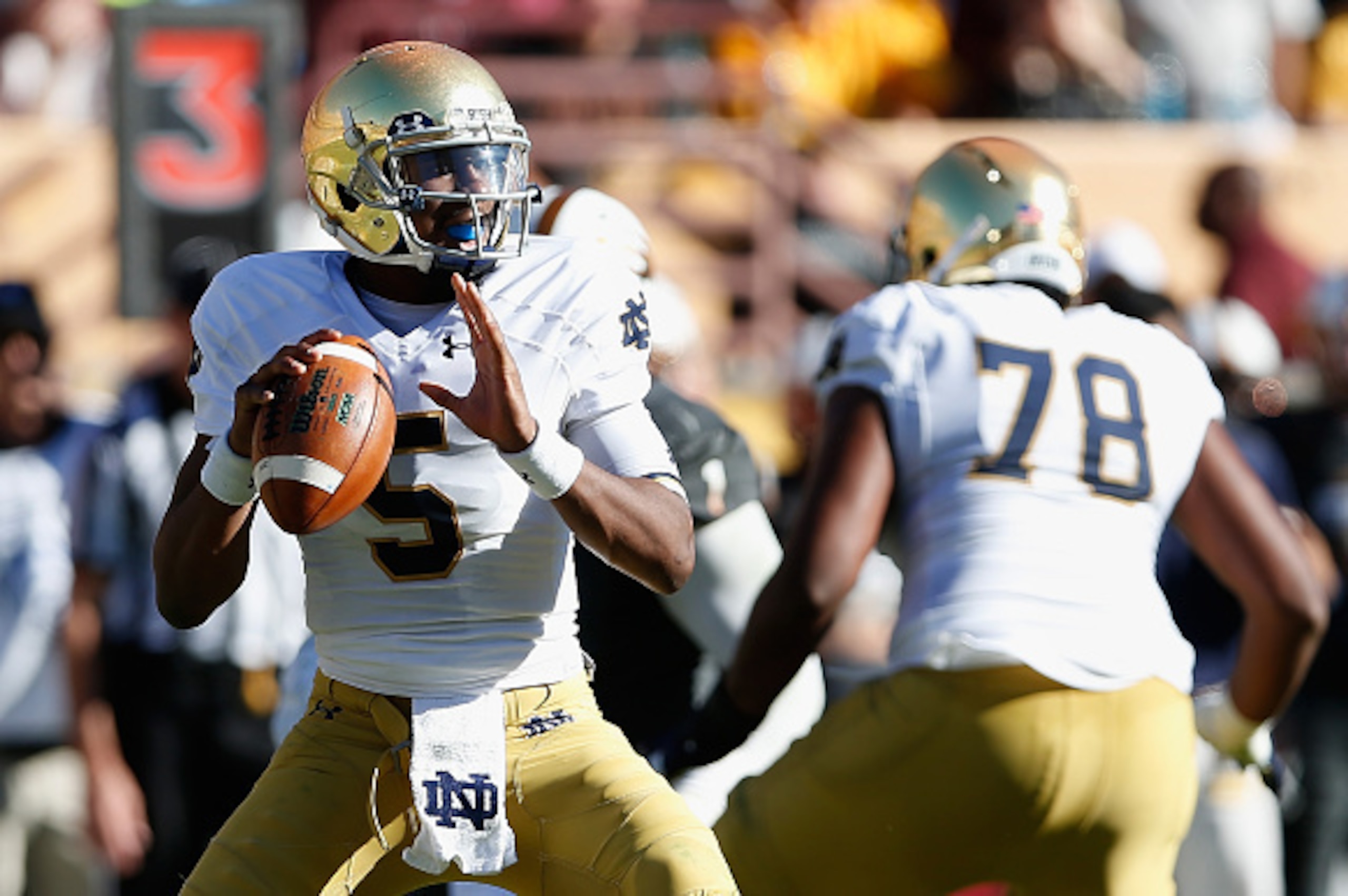
Personnel dictates scheme in many offenses. And while Sanford gets to know both Kelly and associate head coach Mike Denbrock—they'll be the three architects behind the Irish offense—he'll also get a better grasp on the deep pool of talent at his disposal heading into the 2015 season.
With variables like the evolving quarterback battle making this algebra all but impossible to solve, finding enough footballs for everybody will be a balancing act that sometimes won't make everybody happy.
But as Notre Dame looks to make its way into next season's College Football Playoff, those are problems most teams would be happy to have.
_0.png?w=2560)



.jpg?w=2560 "Love's Body Already 'Tired'")

.jpg?w=2560 "Tyreek Deal May Come Soon")


.jpg?w=2560 "Ward Nearly Walks Out of Presser ▶️")