Arsenal Must Learn to Win When the Pressure Is on
If Arsenal learned anything from their heartbreaking near comeback against AS Monaco in the UEFA Champions League, it's that they must start winning when the pressure is on.
Learning that skill can cap this season in style for a team currently in rampant form domestically. The Gunners recently won their sixth Premier League game in a row after beating Newcastle United 2-1.
The battling display away from home came on the heels of the 2-0 win in Monaco that wasn't quite enough to overturn a 3-1 deficit from the first leg. Arsenal had made their own problems by folding in the face of expectation.
.jpg?w=2560 "Cardinals Giants Football")
.jpg?w=2560 "Jets Dolphins Football")

Having received what looked like a favourable draw, the Gunners were expected to make light work of Monaco. They would vanquish their rugged and stout, yet limited Ligue 1 foes to erase the memories of exits against tournament heavyweights such as Barcelona and Bayern Munich.
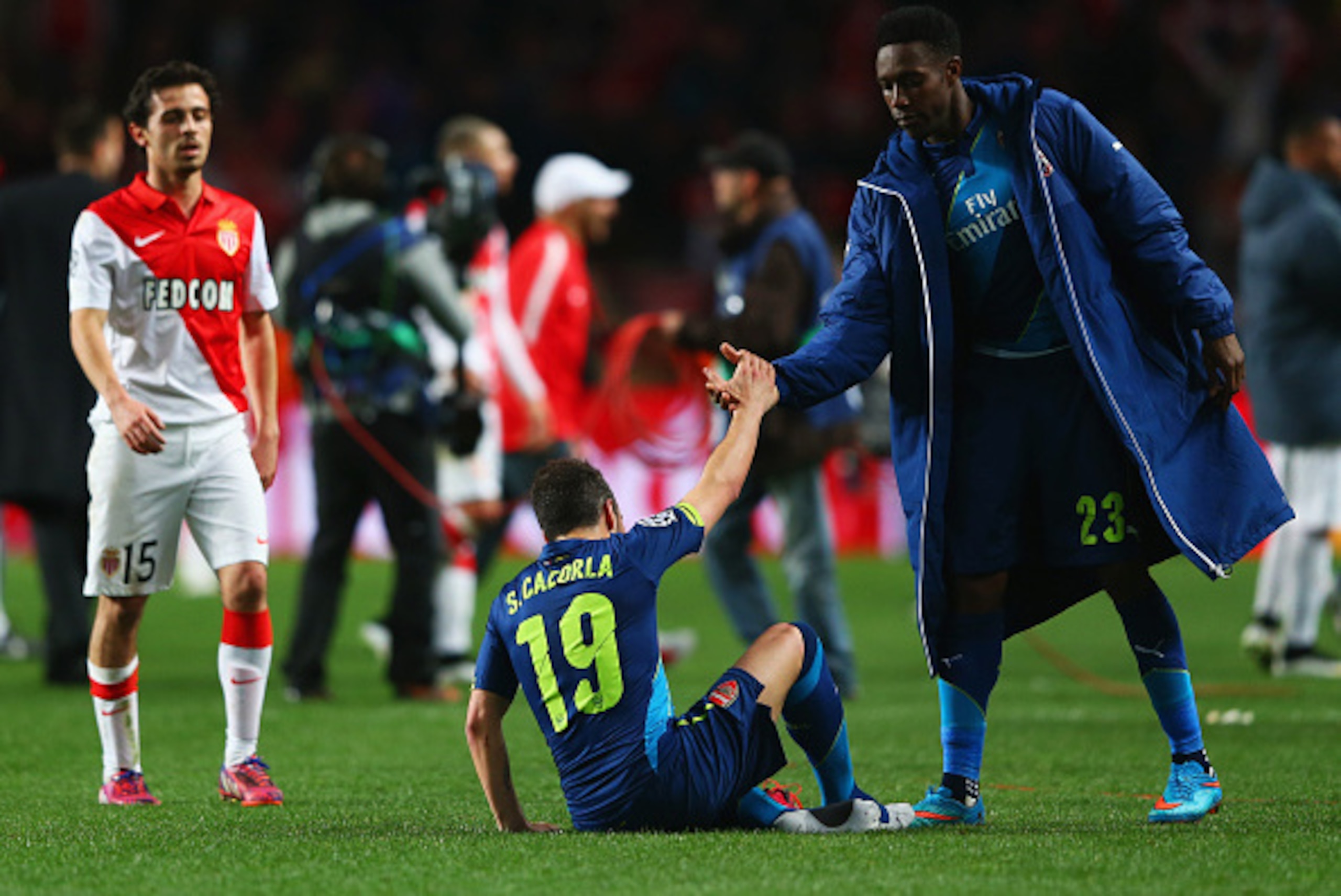
That was the theory, at least. But Arsenal couldn't deal with the expectation, couldn't deal with a different kind of pressure. The kind of pressure that comes from being expected to win, not the pressure of overcoming more talented squads and defying expectations.
It's a problem that's followed the north London club in recent seasons. In fact, it's been present throughout manager Arsene Wenger's tenure.
How else do you explain the 2011 League Cup final loss to Birmingham City? How on earth did a Gunners squad at the time bossing the league slip up against a team soon to face the ignominy of relegation, a team they'd beaten twice in Premier League action?
Arsenal had been expected to steamroll Birmingham despite key injuries to Theo Walcott and Cesc Fabregas. Yet Wenger's star-studded starting lineup, one still featuring Robin van Persie, Andrei Arshavin, Tomas Rosicky and Jack Wilshere, froze on the big day at Wembley.
The nervy Gunners fell behind after handing City the initiative of a fast start. Even a fairly swift equaliser didn't settle those nerves. It was the same jitters that contributed to Laurent Koscielny and Wojciech Szczesny's late and decisive calamity that gifted Birmingham the trophy.
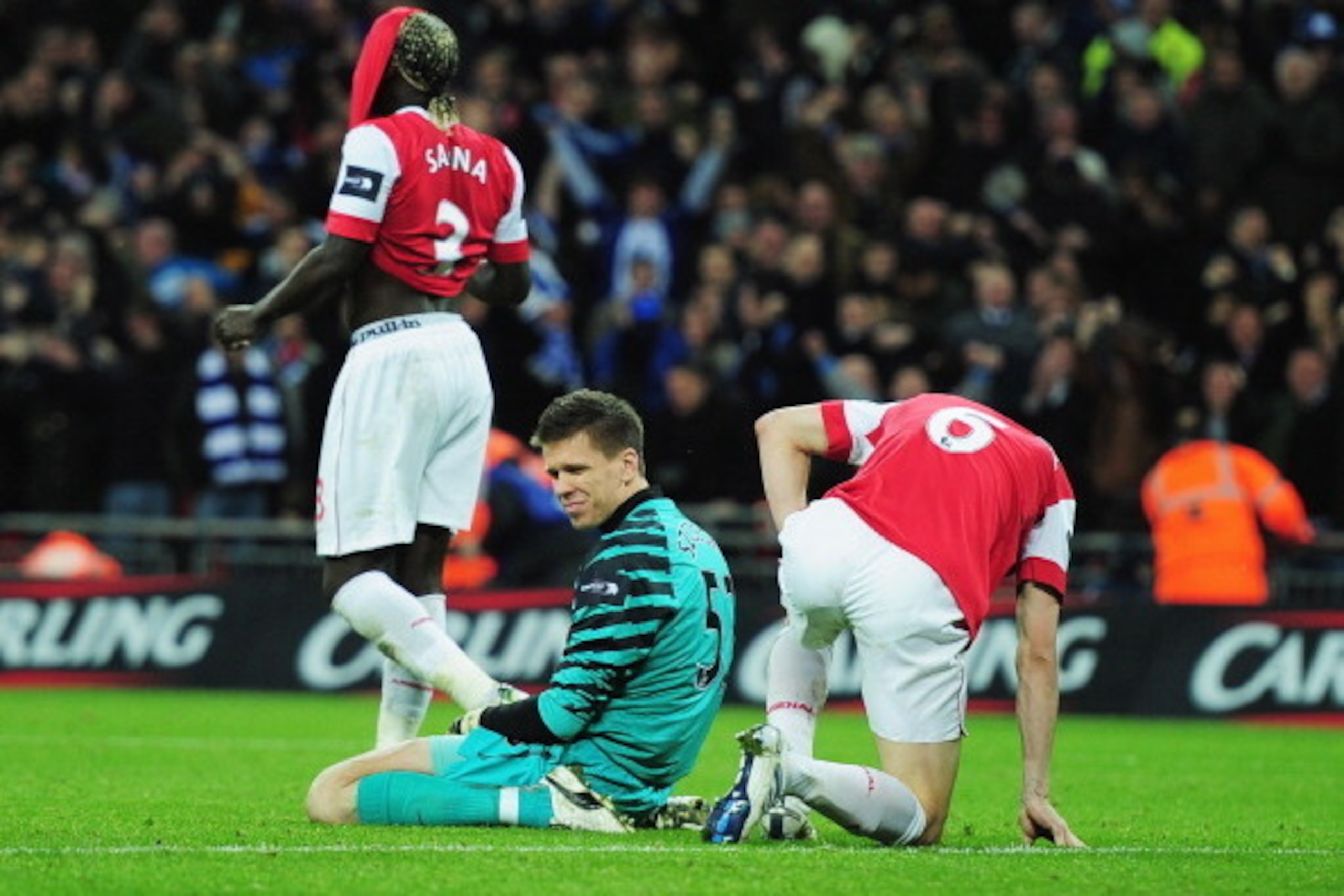
A game against Birmingham represented a great chance to end the club's then-prolonged spell without silverware ahead of time. Top-four teams facing struggling Premiership sides or lower league opposition don't waste those chances.
When Manchester United last won the FA Cup, they beat plucky Championship outfit Millwall, 3-0. Two years later, the Red Devils beat newly promoted Wigan Athletic 4-0 in a League Cup final. The Latics had stunned a below-par Arsenal in the semi-final.
Neither of those United teams were particularly powerful. They didn't win the league. But they still took their chances to earn trophies by emphatically beating teams they should beat. That's how it's supposed to happen.
Would you really trust Arsenal to do the same? The answer's simple: You can't.
Not when this team gets knocked out of Europe's premier competition by Monaco. Not when the Gunners lost a League Cup quarter-final to then-League 2 side Bradford City two seasons ago.
Arsenal had a last-eight draw against a team three divisions beneath them in the pecking order and wasted a chance to earn a semi-final berth. Of course, the Gunners aren't the only top-tier team to suffer a giant killing in England's cup formats, but this result was just so typical.
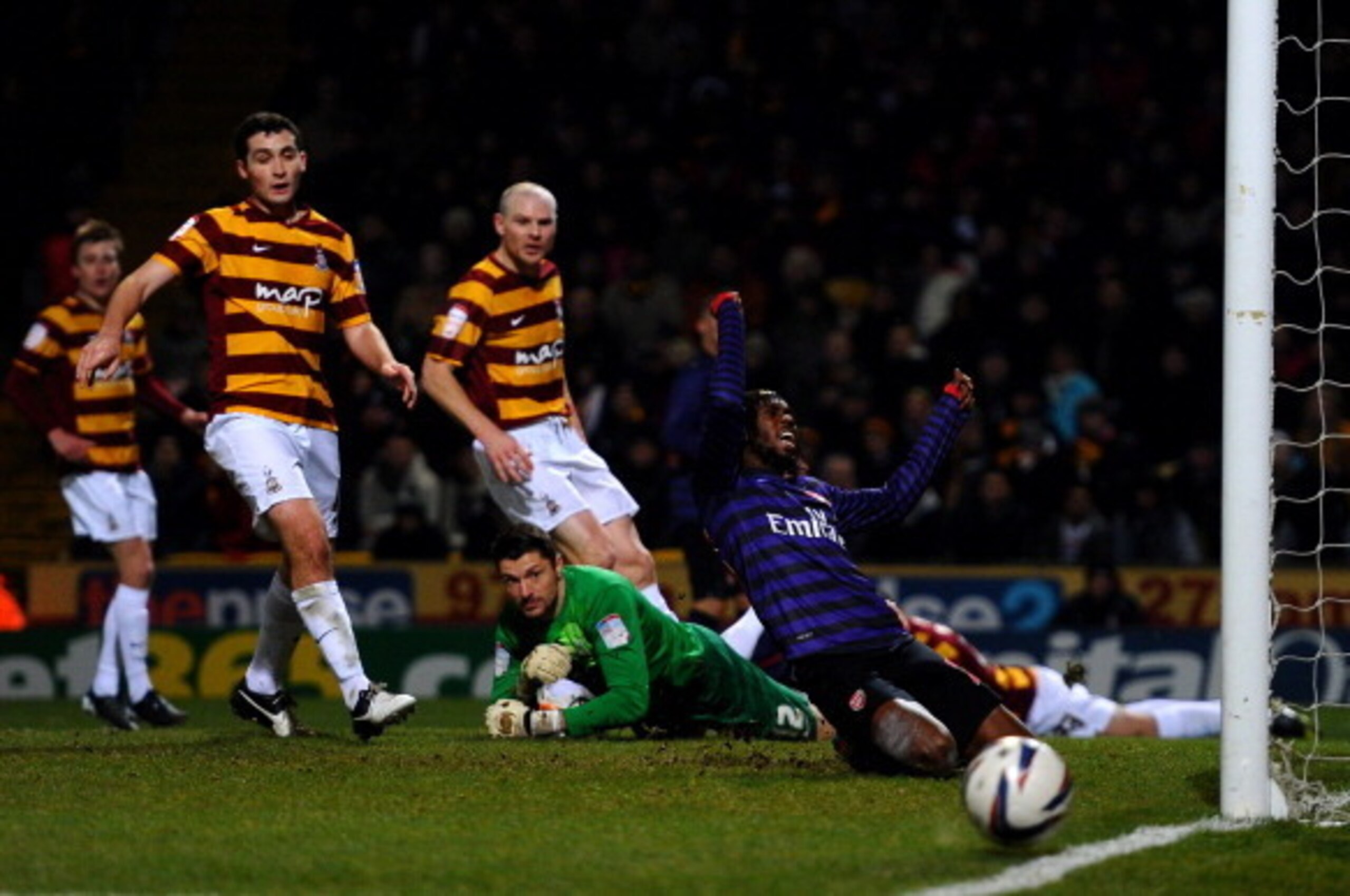
Along with the FA Cup home defeat to Championship strugglers Blackburn Rovers that followed it, the Bradford result was typical because it emphatically reinforced the idea that regardless of form and talent, you can never quite trust Wenger's Gunners.
It's been most obvious during recent seasons, but it is not without precedent even during the Frenchman's glorious early years.
Perhaps the best example came in the 1999/00 UEFA Cup. Arsenal had crashed out of the Champions League early, but rampaged their way through Europe's less prestigious competition.
Big wins over Nantes, a usually powerful Deportivo La Coruna, Werder Bremen and Racing Club Lens positioned the Gunners for a final against Galatasaray in Copenhagen.
A starting 11 featuring Patrick Vieira, Emmanuel Petit, Marc Overmars, Dennis Bergkamp and Thierry Henry should have claimed Arsenal's third European trophy. But instead, Wenger's men buckled under the pressure.
Instead of the free-flowing football that had lit up the previous stages of the tournament, the Gunners were static and tame. Serious supporter trouble prior to the final hung over the game, but there was no doubt Arsenal's players had frozen on the pitch.
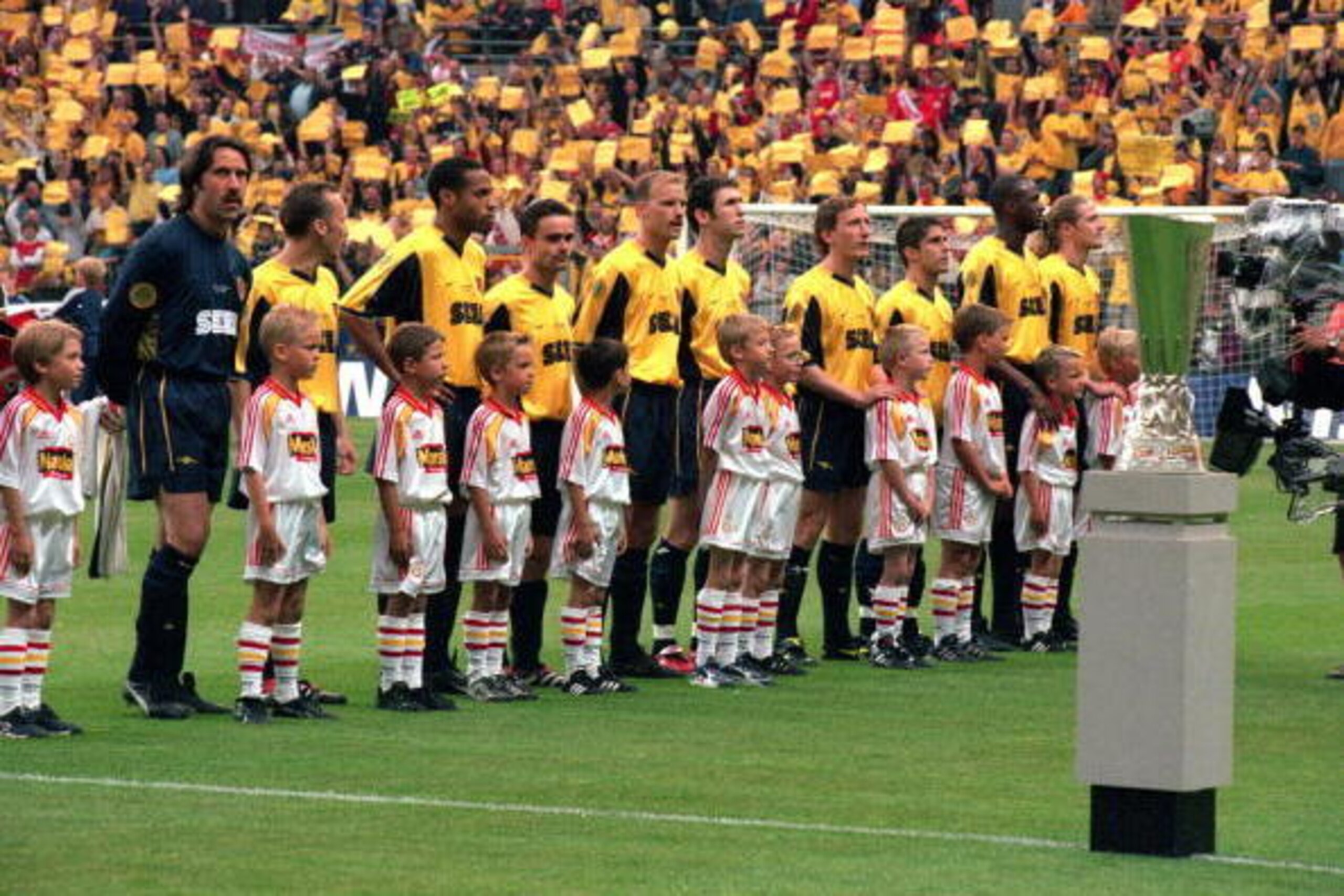
That final could be taken as a defining early moment in the Wenger era. It speaks to the one criticism of the great manager that actually sticks: He should have won more.
In his book The Professor, Myles Palmer described what one connected friend in the world of football told him about the Frenchman shortly after he'd arrived at Highbury: "He's a runner-up, not a winner. He finishes second too often." (Myles Palmer, The Professor, page 7, Virgin Books Ltd, 2008).
Granted, this accusation wasn't completely fair. At least at that stage.
Wenger had often finished second during his stint at Monaco. But Marseille's match-fixing scandal, which included some of those years, has to be factored in. It certainly left a scar with Wenger, one that still resonates, per Jim White of The Telegraph.
Still, the words of Palmer's unnamed source sound credible when considering the missed opportunities during the Wenger era at Arsenal.
His double-winning squad of 1997/98 was one of the most talented the Premier League era has ever seen. So was the 2001/02 double-winning group that was eventually moulded into the "Invincibles."
But the first group won nothing after '98. As good as United were the following season, there's no way the Red Devils should have claimed the treble.
Arsenal finishing runners-up by a single point in the Premiership and famously losing the chance to retain the FA Cup at the semi-final stage against United revealed a team that couldn't quite muster their best when the pressure was really on.

Despite winning four and drawing two of their previous six meetings, Arsenal couldn't beat United when it really counted.
How about those "Invincibles." As great as that team was, the season would've been an anti-climax had they lost even one league game.
It couldn't be any different after they inexplicably lost a League Cup semi-final to Middlesbrough, were kicked off the pitch at the same stage of the FA Cup by United and were beaten by Chelsea at the quarter-final stage of the Champions League.
That Chelsea defeat summed up the problems Arsenal have had dealing with pressure during the Wenger era. The Gunners beat the Blues twice in the Premier League and in the FA Cup fifth round, all by a 2-1 scoreline.
They came from behind to draw at Stamford Bridge during the first leg in Europe. Armed with an away goal and four matches without defeat, Arsenal should have seen off Chelsea at Highbury.
They even took the lead via Jose Antonio Reyes but were eventually dispatched by Wayne Bridge's winner. That's right, Wayne Bridge's winner.
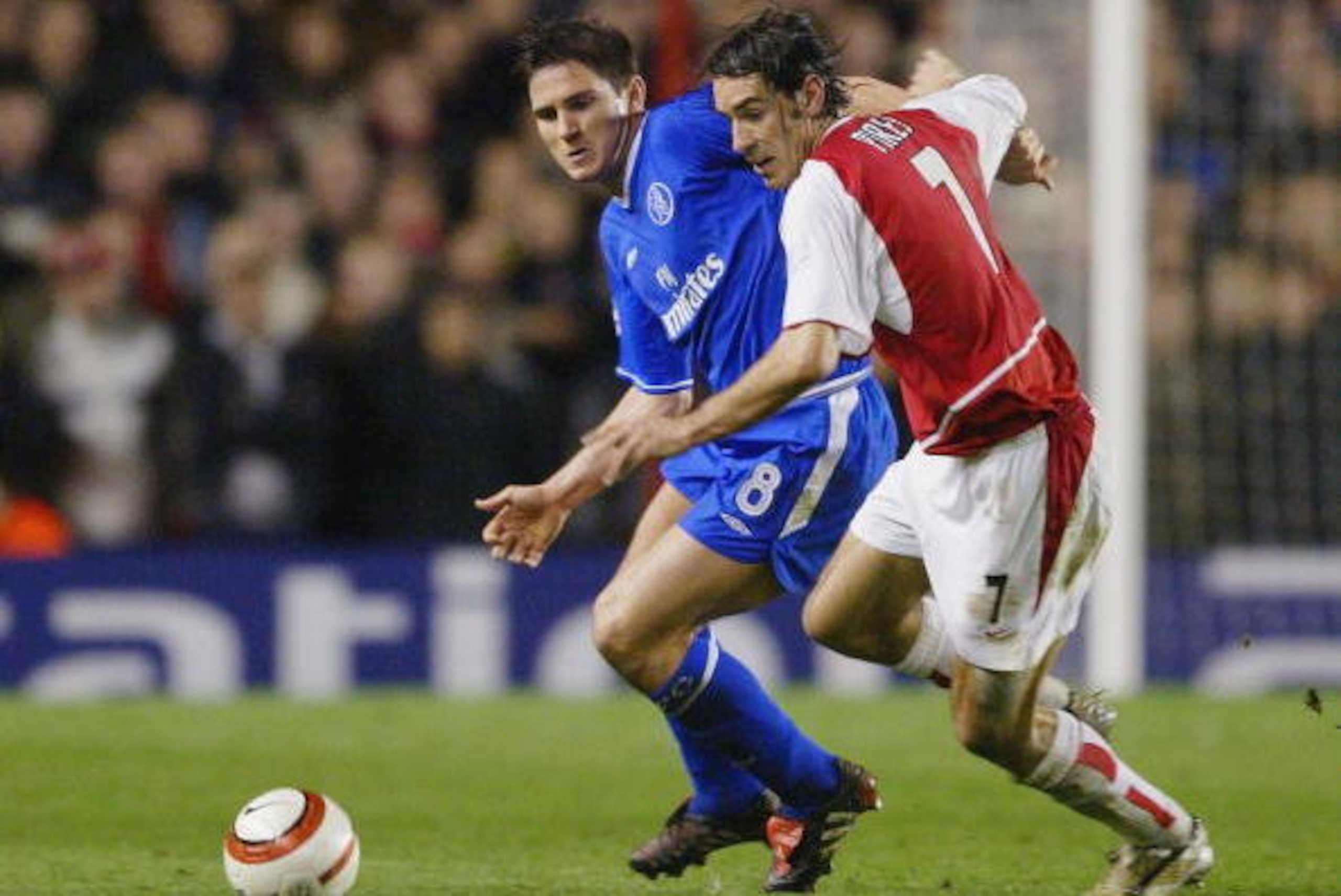
The FA Cup defeat to a United side Arsenal were superior to at every level, but couldn't get over the psychological barrier against in four matches that season, came just days earlier.
Does anyone really believe that Arsenal squad wasn't talented enough to win a treble or even another double? Yet they didn't because they buckled just enough in the season's crunch period.
It wasn't talent that cost them, or cost the team in 1998/99, or the one that blew a healthy league lead in 2002/03. It was temperament, a mental fragility that surfaces whenever the pressure increases.
If you're searching for the point from this rather painful ramble down memory lane, just consider what's still at stake during the remainder of this season.
The first priority is securing another top-four finish in the league. Arsenal's excellent run of consistency in this area is often mocked, but it does matter.
The Gunners' recent form and some minor Chelsea wobbles even have some dreaming of the title. Olivier Giroud and Aaron Ramsey are believers, according to The Telegraph's Jason Mellor.
But frankly, talk of the title should be muted. It's not that this Arsenal team aren't capable of winning their final eight games.
Wenger has expertly and patiently constructed a powerful-looking squad that's only some light tinkering away from being strong contenders for major trophies. But that's next season.
For now, the Gunners need to make sure they are at least in the mix for Europe's premier club competition. It's the only way they'll attract more players the quality of Alexis Sanchez and Mesut Ozil.
But Wenger's team maintaining their perennial place in the Premier League's lucrative quartet is by no means certain, even with five of their last eight games at home.
Three of those games will even be against a trio of teams fighting to stave off relegation, Burnley, Hull City and Sunderland. The Gunners have the talent to win all three games, but would a letdown or two really surprise anybody? It's part of this squad, like it or not.
Arsenal can open up a nine-point lead over fifth spot if they beat Liverpool at home in their next league game. That's a Liverpool side they've lost against just once in their last six meetings.
But a slip against the Merseyside club and Arsenal will suddenly find themselves desperately fighting for their top-four lives.
Yet retaining the FA Cup will be just as significant. In fact, Arsenal's semi-final date with Championship outfit Reading is the perfect opportunity to prove they've learned the lessons from Monaco and past failures.
Anyone thinking the Royals will be easy marks is deluded. Not when they boast firepower that could trouble the Gunners' defence. Players such as Yakubu, Pavel Pogrebnyak and Jamie Mackie all represent major threats.
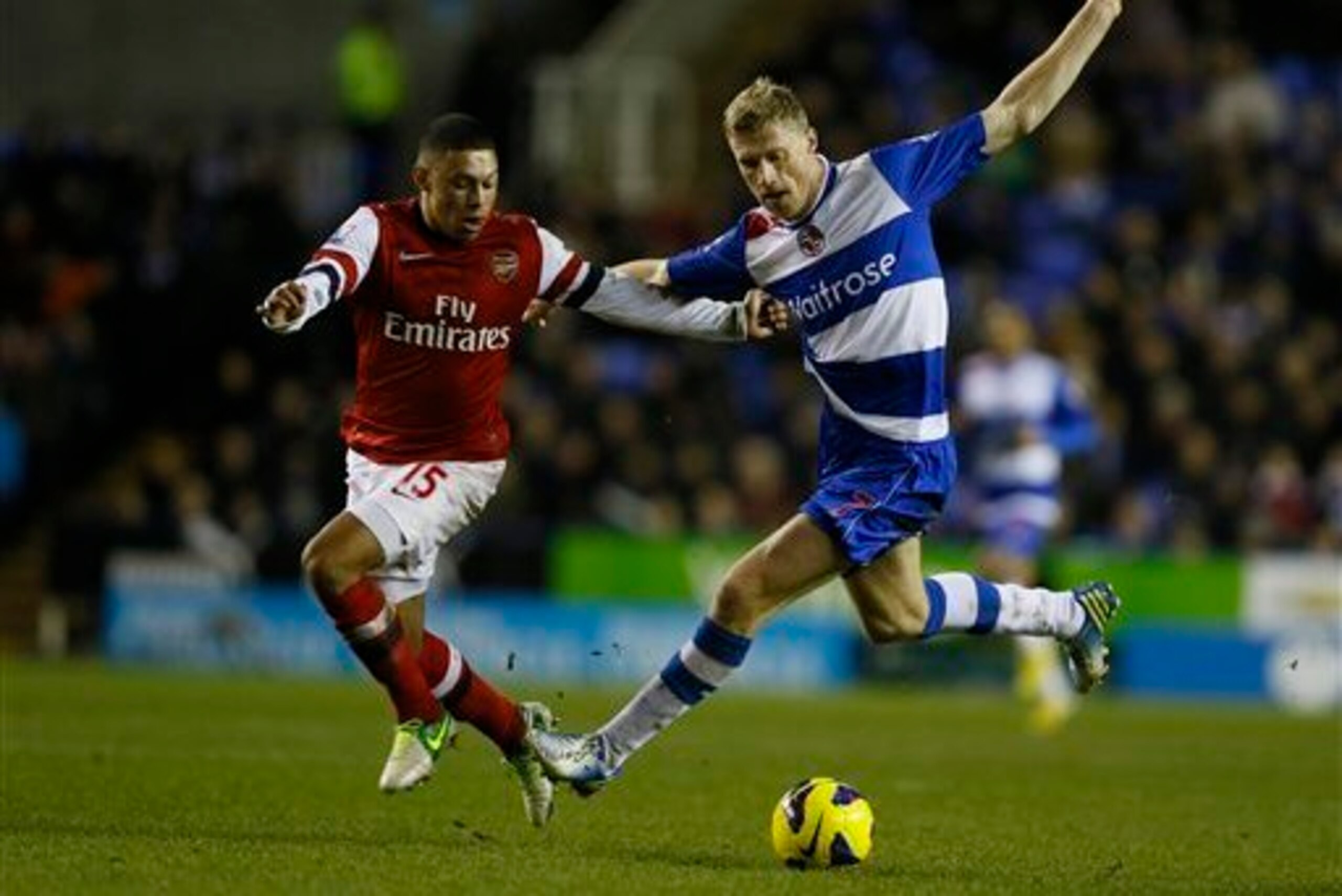
It's also worth noting Wenger has often found teams managed by Steve Clarke tough to beat. He earned a pair of narrow wins over the Clarke-coached West Bromwich Albion in 2012. The following season, league-leading Arsenal were held to a 1-1 draw by the Baggies.
There's also Wenger's history in FA Cup semi-finals to consider. It's very successful, but things have certainly been tight, particularly against teams Arsenal were expected to beat comfortably.
On their way to that first double, Arsenal only outlasted Championship side Wolverhampton Wanderers by virtue of a lone Christopher Wreh goal.
Four years later, it was a Gianluca Festa own goal that gifted a sluggish Arsenal the win over Middlesbrough. The next season, one Freddie Ljungberg goal and a quite miraculous save from David Seaman were needed to survive against another Championship opponent, Sheffield United.
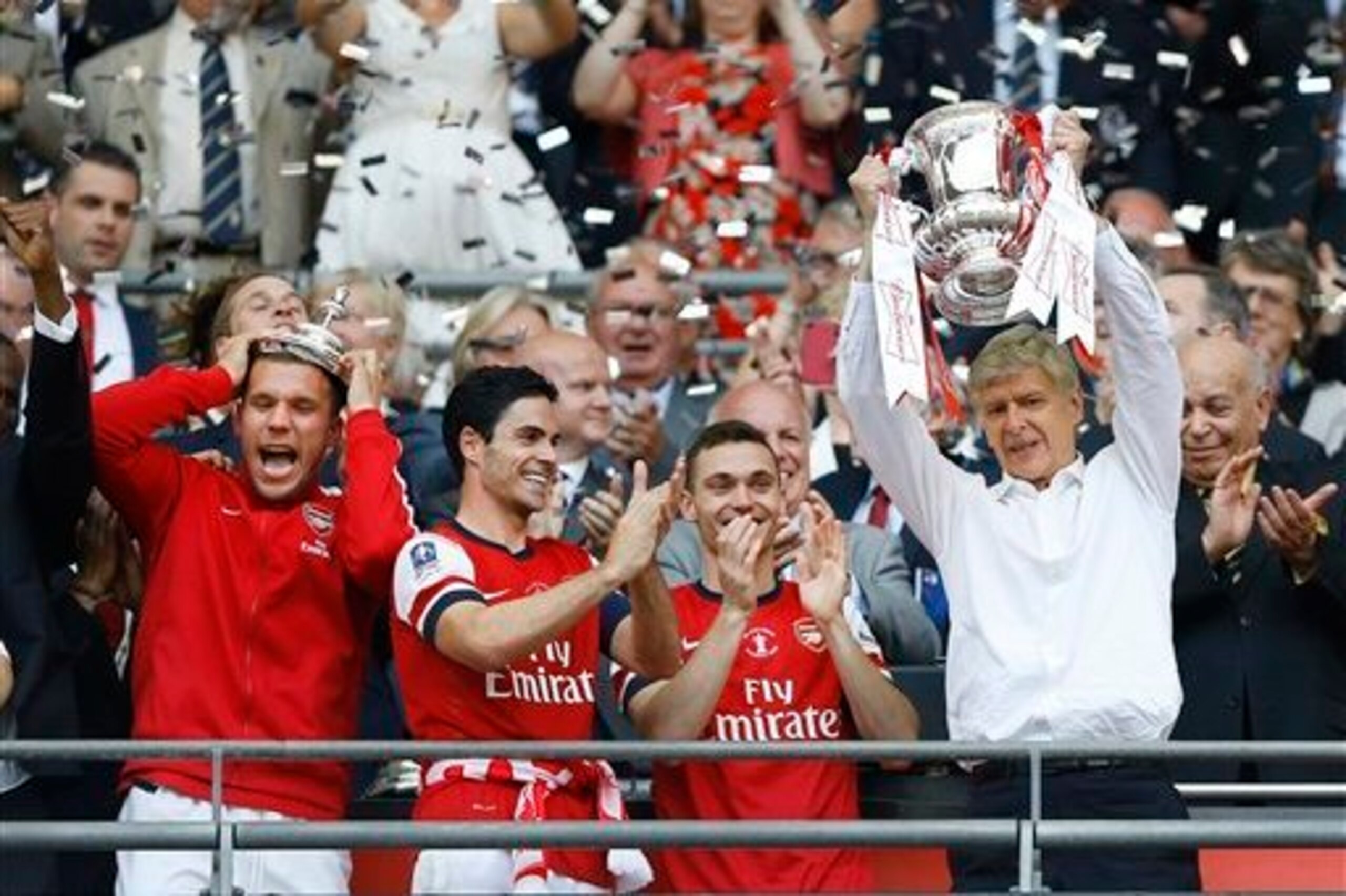
Last season's penalty shootout triumph over Championship residents Wigan Athletic was one of the most gruelling of the season. Arsenal just about held their nerve on each occasion, but they had the talent to make easier work of each opponent.
This team can still add to last season's silverware, as well as improve on that campaign's league position. But either will only happen if the lessons from Monaco and many other failures under the weight of expectation are taken to heart.
.jpg?w=2560 "Titans Ravens Football")
.jpg?w=2560 "NFL investigating 2 referees for separate viral exchanges")