

Is Arsene Wenger Destined to Be a European Nearly Man?
On his first return to the Stade Louis II in a coaching capacity since leaving Monaco in 1994, Arsene Wenger could have a really special night. Despite his historical ties to the Principality club, that would only be so in the case of an Arsenal victory.
What it will not do, however, is radically change the perception of his achievements in European competition, even if his Arsenal team should pull off a quite improbable exploit and advance to the Champions League’s last eight at the expense of his former club.
If many share the sentiment that Wenger’s best days in London N5 have been and gone, the hope of the veteran coach finally breaking his European trophy duck is even dimmer. Should the Gunners tumble at the last-16 hurdle for a fifth successive season, they would be in good company, with Real Madrid having done likewise in a century that has brought the holders three Champions League titles. In fact, El Real went out in the first knockout round six times in a row between 2004 and 2010.
TOP NEWS
Live Highlights and Viral Moments 🍿

Final Men's Ballon d'Or Rankings 📊

Carrick Replacement Options 📝
It must be said that Wenger and his teams have been the victim of some terribly difficult draws in this period, notably in being knocked out by eventual winners Barcelona (2011) and Bayern Munich (2013), two of the best teams the competition can remember in recent times.
An exit to Monaco, however, would stand for something quite different. It was a pairing that was viewed as heaven sent, particularly post-Radamel Falcao and James Rodriguez. Even if those who celebrated Arsenal’s fortune back in December should have acknowledged Monaco’s excellent defensive record under new coach Leonardo Jardim—particularly in the Champions League itself—they had their point, in that this is a tie that they should have had every reasonable expectation of winning. It is not unreasonable for Wenger to carry the can for the fact that this has not transpired.
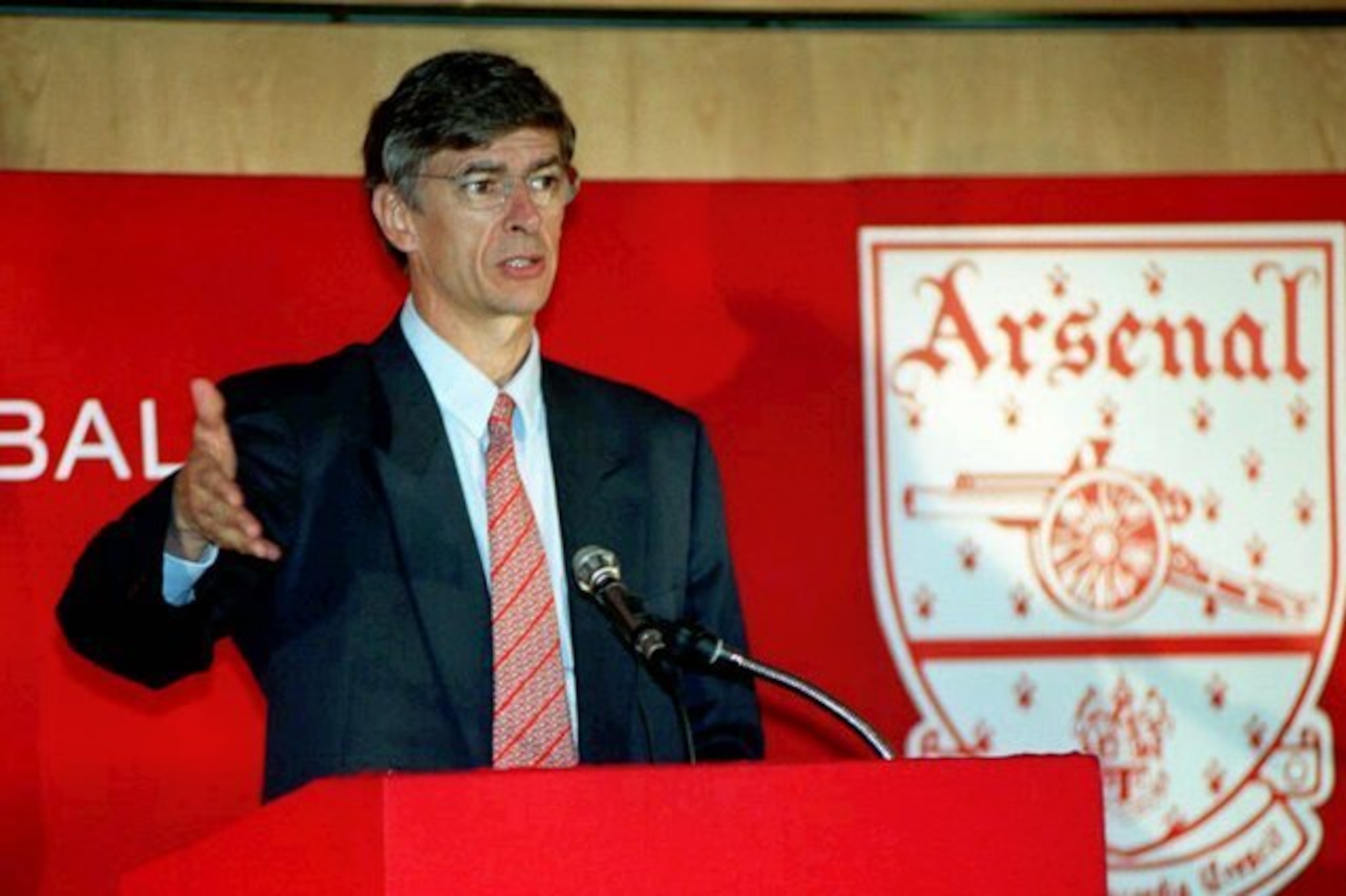
His European record is modest for a man who has made such impact on the continent’s game as a whole. He has three European finals to show for a career that has now spanned five decades, which have all been defeats; the 1992 Cup Winners’ Cup final with Monaco, then the 2000 UEFA Cup (against Galatasaray) and the 2006 Champions League final (versus Barcelona) with Arsenal.
As for Wenger’s time in north London, four quarter-finals and one semi, with the latter ending in humbling defeat by domestic rivals Manchester United, besides 2006 in Paris, is a poor return for a man who has built a series of very fine teams; certainly during his first decade at the club.
His tactics must come under scrutiny, particularly in recent years. The early stage at which Arsenal went for broke in the Emirates first leg, leaving themselves open to counter-attack, was quite extraordinary, and not an isolated incident. Although the make up of the match was quite different, there were echoes of the Gunners’ defeat by the same score (3-1) at home to Bayern two years ago.
After Lukas Podolski pulled a goal back, Arsenal overcommitted in their anxiety and conceded a third to Mario Mandzukic. It was a crucial misjudgement, especially in light of the Londoners’ 2-0 win in the Allianz Arena return.
The focus should not, however, simply rest on Wenger’s coaching. It is not reasonable to expect strong returns from diminishing resources. Even if Arsenal have shown willingness to get involved in the sharp end of the transfer market in the last two summers, they are yet to rebuild a side matching 2004’s Invincibles (who fell late on to Chelsea in the last eight) or even 2008’s underrated crop (again, narrowly edged by a domestic rival in the quarters in the shape of Liverpool).
It would also be wholly dishonest to characterise Monaco’s near misses under Wenger as failures. The run to the 1994 semis was a tremendous achievement, and it deserves to be recognised in the context of the time. They went out in a one-off match (according to the competition’s format at the time) at the San Siro against Fabio Capello’s superb Milan, containing Zvonimir Boban, Dejan Savicevic and Franco Baresi to name but three—and fielding a stronger side than the one handicapped by injuries and bans that went on to pulverise Johan Cruyff’s Barcelona in the final.
Recalling that draw again reminds us just how much bad luck Wenger has had on his European adventures. Tuesday night’s match at his old stomping ground will not make or break his reputation in the Champions League, but maybe he can recoup some of the fortune that has so frequently escaped him on this stage.
.jpg?w=2560 "Chiefs Giants Football")
.jpg?w=2560 "🚨 Week 8 AP Top 25 Poll")

.jpg?w=2560 "Baker Gets Glove From Rays 🧤")
.jpg?w=2560 "Steelers Roll Saints in Paris")


.jpg?w=2560 "NFL investigating Eagles")
.jpg?w=2560 "5 Teams Eyeing Jonathan Taylor")
.jpg?w=2560 "Updates from EVERY Game")