

Atlanta Hawks Have Star-in-the-Making with Dennis Schroder
Dennis Schroder doesn't get many opportunities to shine—not with the Atlanta Hawks emphasizing systems over studs and Jeff Teague holding down the starting point guard job ahead of him.
No wonder, then, that the rising star's eyes lit up at the chance to start when Teague rested against the Los Angeles Lakers on March 15.
Thirty-eight minutes, a career-high 24 points and 10 assists later, Schroder had shown the world what most Hawks observers already knew: He's the real deal.
TOP NEWS
Buzz: Knicks' KAT Offer Revealed

Surprise Dubs Trade Idea 💡

Projecting New-Look Lakers Rotation 🧐
Skills Snapshot
Schroder's principal weapon is his speed. He's an end-to-end blur—the kind that calls to mind images of a 22-year-old Monta Ellis or a modern-day John Wall. He excels in the open floor and, as Hawks.com writer K.L. Chouinard observes, turns the corner faster than most in half-court sets:
He's always been fast, but Schroder's ability to shoot the long ball is something new this year.
After knocking down just 23.8 percent of his triples as a rookie, his second-year accuracy mark has jumped to 34 percent. And since shaking off a slow start from deep, Schroder's 2015 marksmanship has been impressive.
| Nov. | 22.2 |
| Dec. | 18.2 |
| Jan. | 41.7 |
| Feb. | 47.8 |
| Mar. | 36.8 |
The comparisons to Rajon Rondo were always forced. Looking at Schroder's shooting growth, we can now officially put them to bed forever.
The improvement isn't in any way magical; Schroder just got some good advice and put in the time, per Chris Vivlamore of The Atlanta Journal-Constitution: "The Hawks second-year point guard said he worked with assistant coaches to remove a 'lurch' in his wrist. In keeping his hand and wrist in a tighter position, Schroder delivers a smoother shot."
Atlanta prefers to use Schroder as a pick-and-roll ball-handler, a role in which his speed forces defenders to give him extra space. Now that he's more dangerous from deep, though, going under the screen is nearly as dangerous as chasing him over the top.
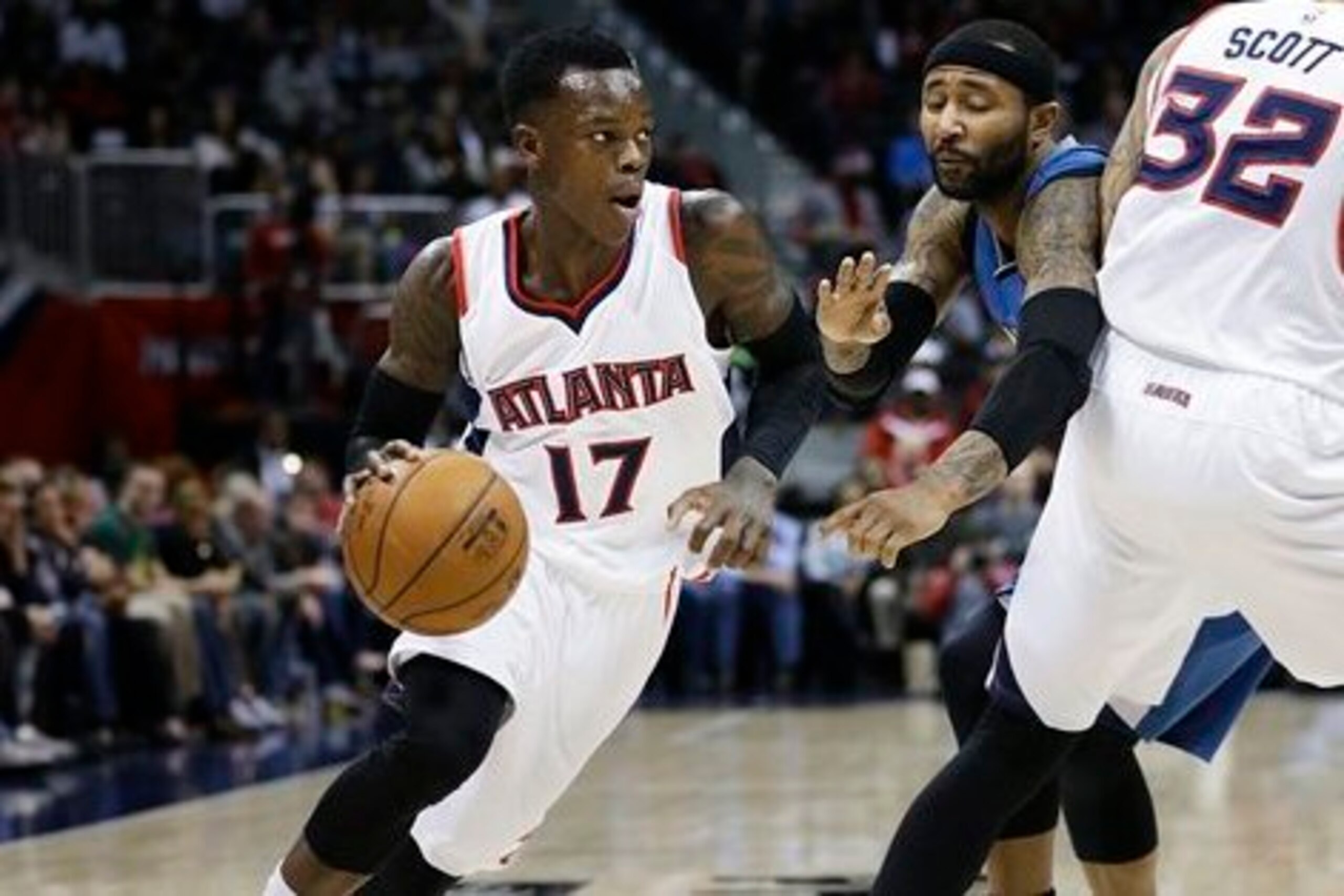
He has work to do as a decision-maker despite his physical advantages. According to play-type data provided by NBA.com, Schroder averages .79 points per possession as a pick-and-roll ball-handler, which ranks him in the 62nd percentile of players who've been involved in at least 10 such plays.
That's a satisfactory place to be for a player with Schroder's limited experience, but when you look at Teague's .92 points per play and 88th-percentile ranking, it's not exactly hard to figure out why the Hawks haven't allowed the young gun to eat into the veteran's minutes very often.
Defensively, Schroder struggles. The quickness and aggression that make him dangerous on offense have yet to translate on the other end. Schroder can be inattentive off the ball, and though he's usually engaged on it, he simply doesn't bother opposing scorers.
Opponents shoot well above their averages from all over the floor whenever Schroder is the primary defender, per NBA.com:
| Overall | 45.1 | +2.6 |
| Two-Pointers | 51.6 | +4.9 |
| Three-Pointers | 36.7 | +2.4 |
| Inside 6 Feet | 69.6 | +11.9 |
| Inside 10 Feet | 63.5 | +11.7 |
| Outside 15 Feet | 38.7 | +2.2 |
The holes in Schroder's game aren't cause for concern—both because of his youth (he's just 21) and because of his hunger to improve.
The Virtues of Impatience
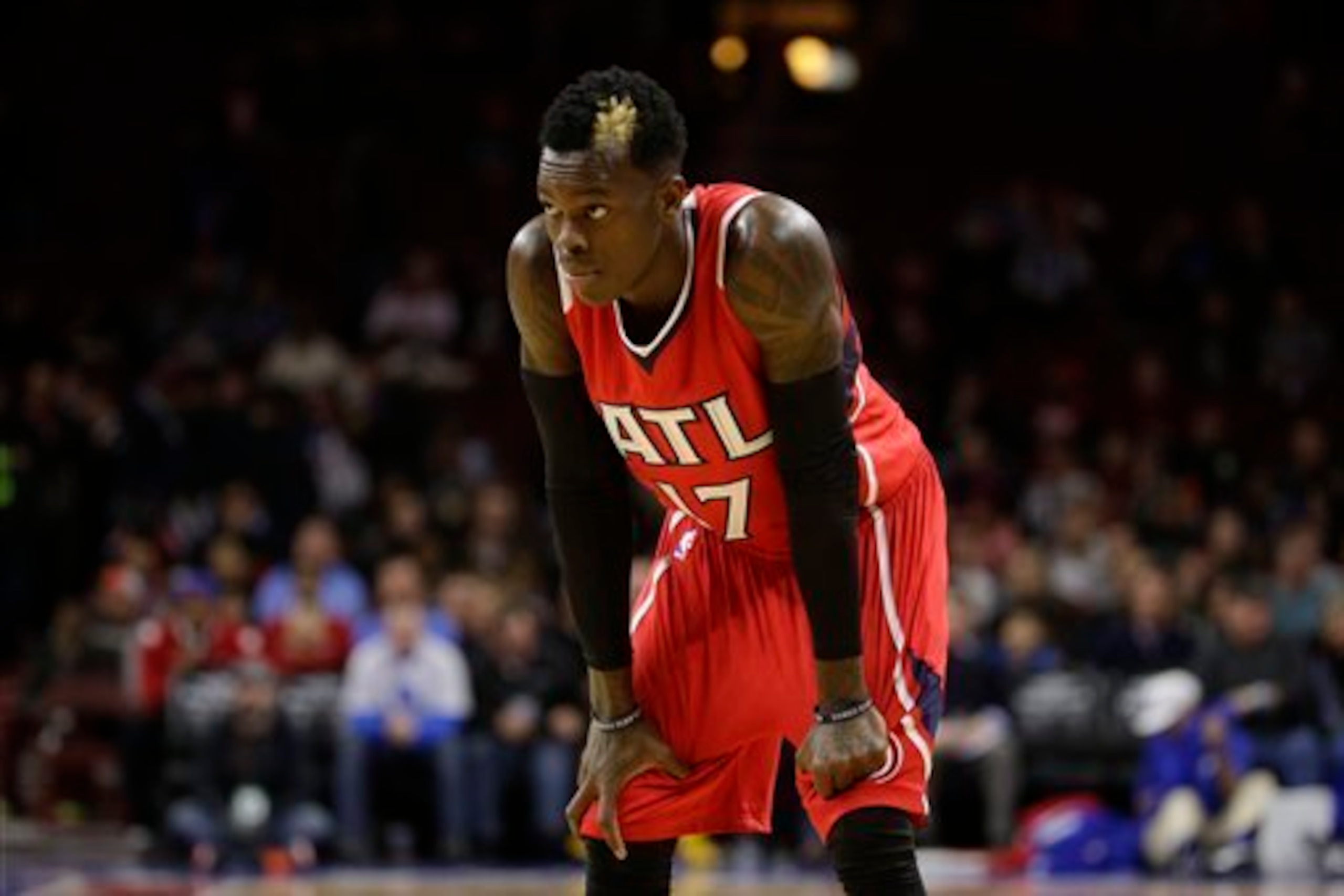
It's not totally accurate to say that Schroder is a willing backup. He does, however, have an ideal mixture of two important qualities: a desire to be great and an appreciation for being told he's not great just yet.
Consider a pair of thoughts Schroder provided to Vivlamore in nearly the same breath.
First this: "I'm never going to be satisfied. I want to get better every day and don't try to waste my time. I did a great step from last year to this year. I still want to get better and one day be a starter."
And then this: "Last year was really hard on me. I think I'm good because they keep pushing me and yelling at me when I do something wrong. That's a big reason I improved this year."
They, as Schroder refers to them, are the Hawks veteran leaders and coaches, and it's hard to imagine a better bunch of blue-collar, team-oriented mentors for him than the ones he goes to work with every day.
On-court maturity is still an issue for Schroeder. It should be. Again, he's 21. But when he acts up, like he does in the following clip of a dunk on Phoenix Suns guard Archie Goodwin, the Hawks are there to set him straight.
Note the way Al Horford is at his side immediately—as much to separate him from Goodwin as to send the message that the little post-dunk staredown isn't part of how the Hawks do business. Horford knows Schroder needs some guidance in order to reach his potential. Schroder talks plenty, and he mixes it up with anyone who'll talk back.
Schroder's confidence may be his greatest asset, and if he can rein it in enough to avoid some of the petty extracurriculars that have marked his early career, it'll take him a very long way.
As long as he can stand the wait.
The Future

The question with Schroder now is: Will he get a chance to be more than a backup in Atlanta?
It's nice to imagine all that team-oriented stuff rubbing off on him, making him happy to contribute however he can. But a guy as self-assured as Schroder, who produces whenever he's given the minutes and can legitimately play, should want to spread his wings.
In seven starts this season, he's averaging 14 points, 7.4 assists and three rebounds.
That'll eventually mean a much larger role, and we should expect other teams to offer one (and a whole bunch of money) when that option arises. Fortunately for Atlanta, Schroder's rookie contract keeps him under team control through his restricted free agency in 2017.
In the near term, the Hawks can continue to use him as a weapon off the bench, a one-man attacker who'll represent a potent change of pace from the all-for-one, one-for-all approach the starters employ.
Expect Atlanta's playoff run to feature a handful of Schroder takeovers, even if they only last for a few minutes at a time.
Beyond that, the future is uncertain. Schroder will want increased responsibilities regardless, but if he picks up his defense and adds an in-between scoring dimension, he'll likely deserve more time.
Atlanta's offense has fallen off precipitously in the limited minutes when Teague and Schroder have shared the floor this year, posting an offensive rating of just 90.1 in 46 minutes together in March, per NBA.com. Playing both at the same time is worth trying, but the results haven't been there so far.
If that doesn't change, Atlanta may face a difficult decision down the line.

.jpg?w=2560 "Love's Body Already 'Tired'")

.jpg?w=2560 "Tyreek Deal May Come Soon")
.jpg?w=2560 "Ward Nearly Walks Out of Presser ▶️")

.jpg?w=2560 "NFL investigating 2 referees for separate viral exchanges")
