

Austin Rivers Is Actually Proving Somewhat Useful to Los Angeles Clippers
Austin Rivers came into Los Angeles having to meet relatively tame expectations. You have to credit him: He's done that so far.
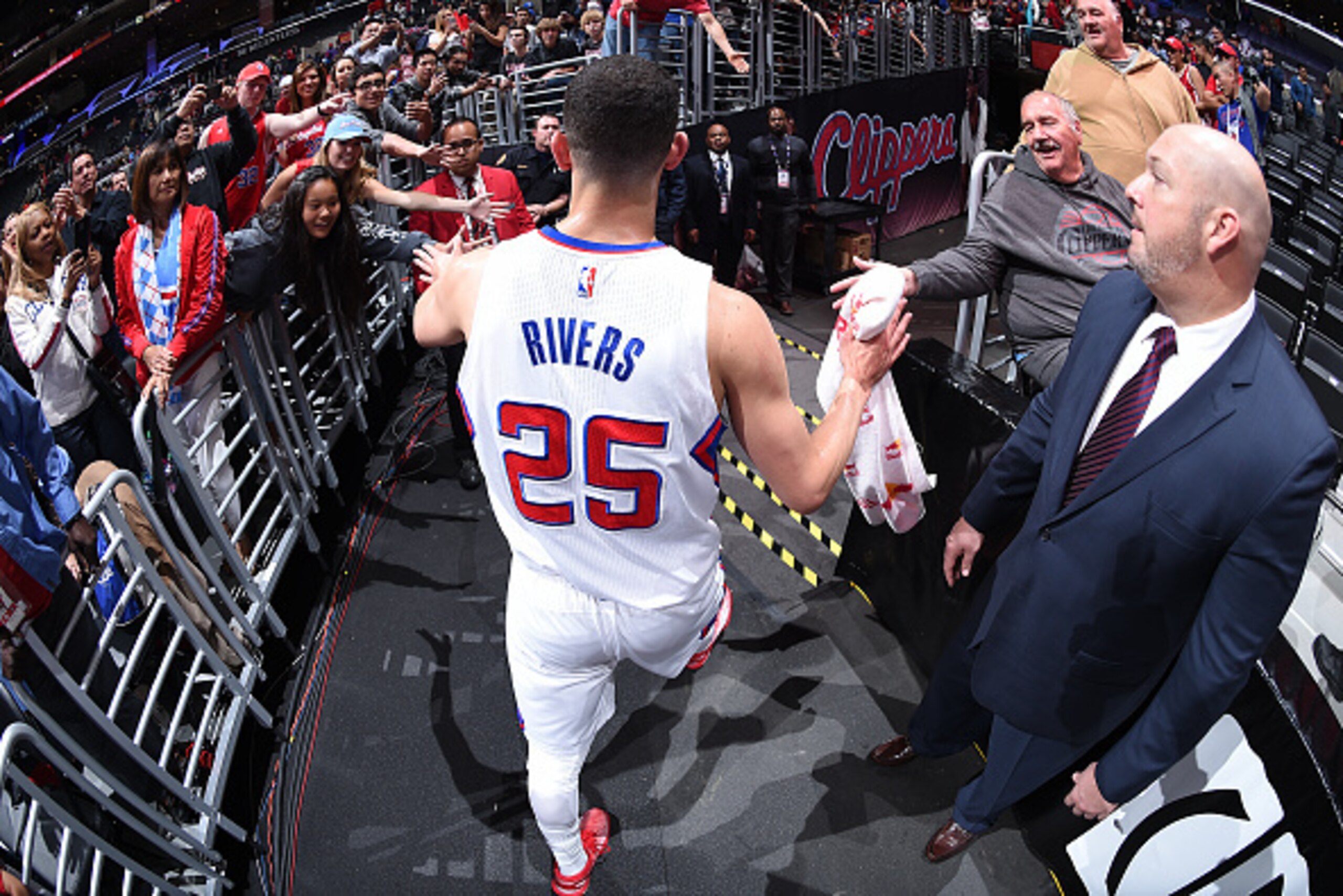
In 17 games with the Los Angeles Clippers, Rivers has put up modest production, even after dropping a career-high 28 points against the Sacramento Kings over the weekend. But he's still found a way to contribute outside of the five threes he bombed in against George Karl's new team.
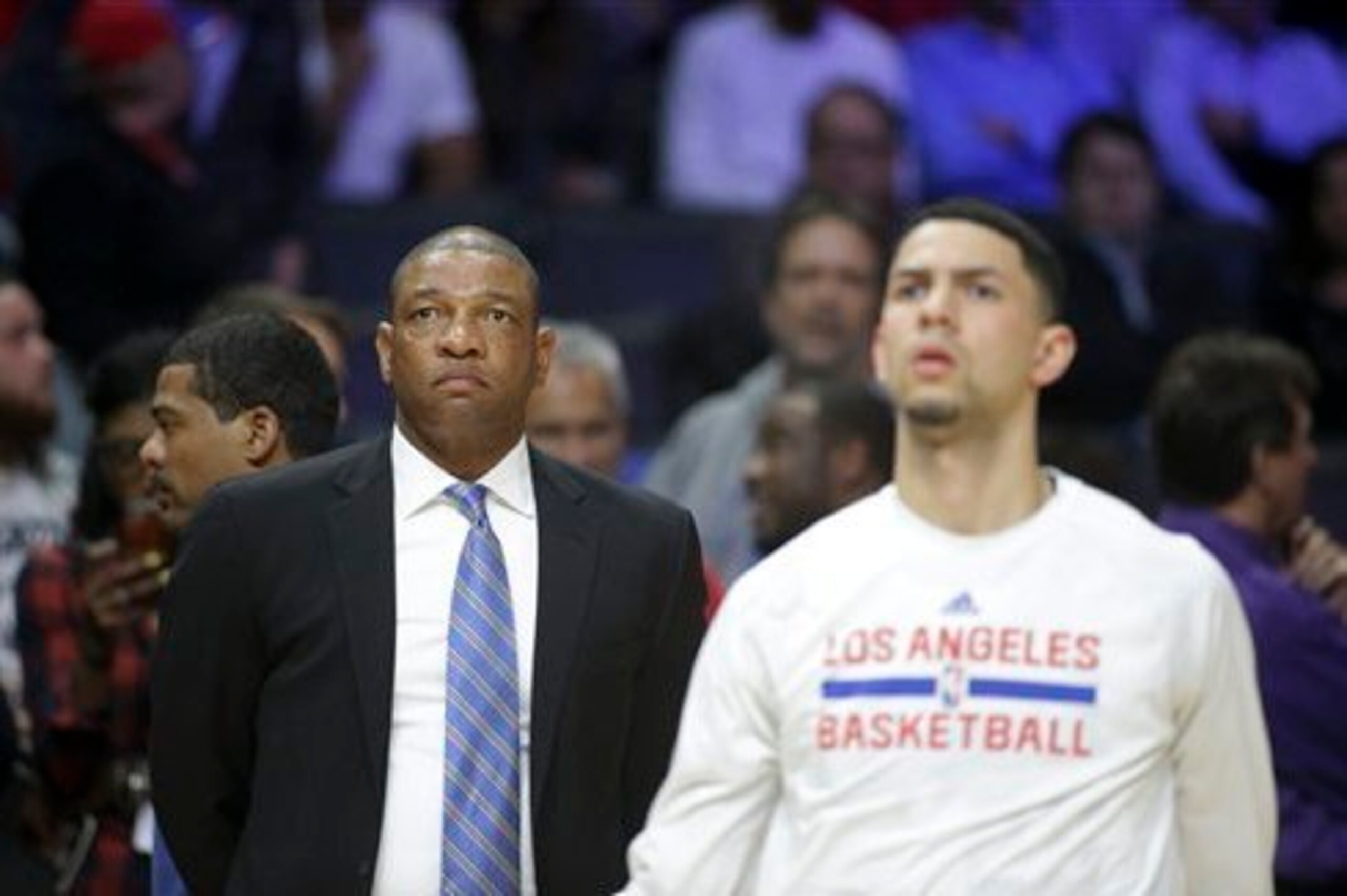
Austin has been playing plenty of point guard with the Clippers, who currently have only two natural 1s. (Unfortunately, one of them is dad/coach/president, Doc Rivers.) The lack of point guard depth has forced the younger Rivers into running the bench unit often, though that hasn't always been the case, especially over the past few games.
TOP NEWS

LeBron's Special Helicopter Deal

MJ Makes Record-Setting Donation 🙌

Shams: KAT, Hart Could Be Trade Names
Actually, the Clippers bench, which has struggled for most of the season, has been far more potent lately. And for that, the guys in blue, white and red can thank the second-unit guards: Rivers and Jamal Crawford.
Since the trade deadline, Crawford, who shot just 36 percent from the field and 30 percent from long range over the final 38 games of the first half of the season, has started to look more like the reigning Sixth Man of the Year we know so well. But that's just physically. Stylistically, we're seeing a different kind of Crawford, too.
Crawford has looked more comfortable than usual initiating offense for teammates and has basically acted as a de facto point guard for the second unit.
His pick-and-roll distribution has been pristine, and he's actually taking on a pass-first mentality at times. Yes, Crawford has looked like a real facilitator, especially when he's making tosses to Glen Davis, with whom he appears to have a can't-quite-put-your-finger-on-it chemistry. It's bringing us back to Crawford's days at University of Michigan when people thought he'd enter the league as a point guard.
So, what does all this have to do with Rivers? Well, Crawford acting as a co-facilitator with him has pushed Rivers into playing more 2, where he's more comfortable even if he's not much of a shooter.
Rivers is the ultimate tweener, more because of his personality and style than because of his skill set. It's been a problem of his since the college days at Duke, when Rivers' passes almost looked predetermined, as if he decided whether he was going to pass, shoot or pull up every time he drove to the hoop.
That's Rivers' move, too. He loves putting his head down and bouncing off guys as he penetrates the lane. He's actually effective in getting to the paint. He just hasn't always been an efficient finisher around the hoop, but that's changed in L.A.
Rivers is hitting just under 60 percent of his shots at the rim in his 17 Clipper games, a would-be career high if spread over a full season (by a long shot).

That's not just an impressive number by Rivers' standards, either. Sixty percent is well above league average for finishers. Of course, it's not like Rivers has been a perfectly adequate scorer, even if he is making his layups.
The 22-year-old still has a true shooting under 48 percent with the Clippers, about as inefficient as he's going to get since his numbers away from the basket are generally poor and he, for some reason, hasn't figured out a way to get to the line often. But he's made up for it on the other side of the ball.
That's right. Rivers is becoming a legitimate defender. (But before we move on, let's clarify exactly what "legitimate" means.)
He's not a one-on-one stopper. He's not lockdown. But he's actually provided nice stability as a team defender on the wing, even if he doesn't have the size or length to guard forwards—the Clippers' biggest need, surely one of the reasons why they just signed Jordan Hamilton to a 10-day contract.
Still, Rivers has actually made an impact merely by rotating to the right spots, and he's forcing turnovers because of it.
We always hear how steals are an overrated defensive statistic, because even if you're getting a ton of them (like two a game), you're failing to account for the other 65 or 75 possessions a player is on the floor. And that's a valid claim. Steals, as a statistic, are relatively meaningless. But the way a defender can create steals has value.
If you have a guy who gambles like crazy and has it pay off a couple of times a game, he's going to hurt your team more often than not. But if you have someone who can actually create takeaways off proper rotations, that's a different story. It means you're employing a defender who's giving you low-risk, high-reward stops. What coach wouldn't want that?
Rivers has actually added that dynamic to the Clippers defense, even if he's far from perfect and will still get lost a few times a game. Ultimately, he's a step up from what the Clips had before, which isn't saying much considering Jordan Farmar's defensive struggles.
The uptick in bench play over the past few games doesn't necessarily justify the trade for Rivers. His production is still extraneous, somewhat unnecessary to prioritize when there are greater needs on the team.
But the Clippers don't have a time machine. This is their roster, and they should at the very least be pleased that Rivers has advanced his play while hustling for his father.
Fred Katz averaged almost one point per game in fifth grade but maintains that his per-36-minute numbers were astonishing. Find more of his work on ESPN's TrueHoop Network at ClipperBlog.com. Follow him on Twitter at @FredKatz.
All quotes obtained firsthand. Unless otherwise noted, all statistics are current as of Feb. 25 and are courtesy of Basketball-Reference.com and NBA.com.

.jpg?w=2560 "Grading WWE Raw 🔠")

.jpg?w=2560 "Viral Rams Coach Vid 🖕")

.jpg?w=2560 "Injury-stricken Seahawks signing veteran RB")
.jpg?w=2560 "Bijan's INSANE 1st Half 🤩")