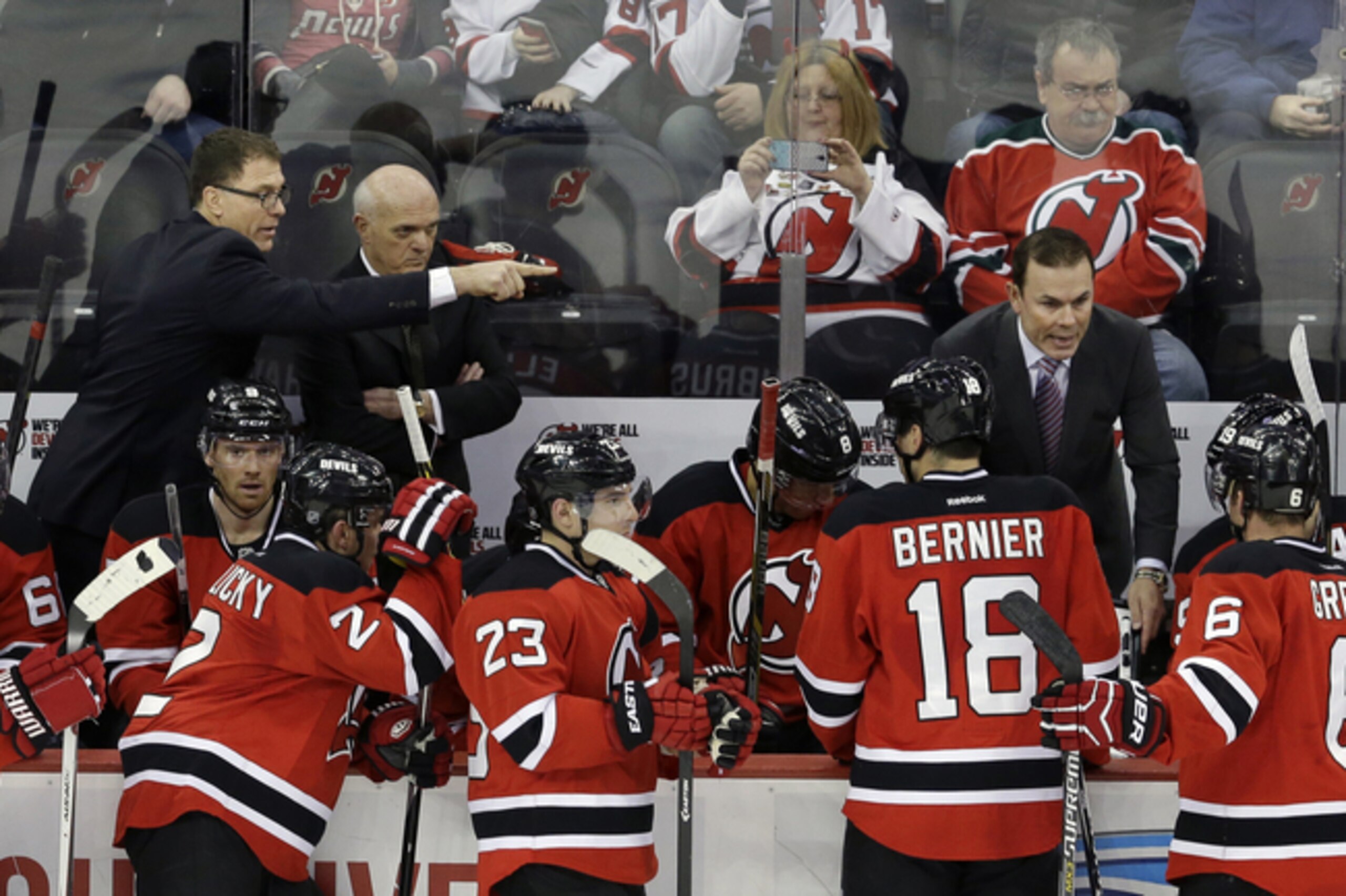

4 Keys for the New Jersey Devils the Rest of the 2014-15 Season
The New Jersey Devils' players and coaches will continue to say that as long as they are not mathematically eliminated from the playoffs, they'll keep working toward that goal. That is what they have to say.
But, the reality is, the playoff ship set sail long ago. The fans and the organization at large know that the team will not be making the postseason.
Of course, that does not mean that New Jersey's quality of play cannot improve before the end of the season. Even in games that the Devils have won, they have often looked mediocre at best.
So, this list will look at the keys to the Devils improving their play just for the rest of this season, after quickly taking a look at a few short-term steps the team can take to improve its long-term outlook.
Coming through on these keys will not make the Devils a playoff team, but it will make them decidedly easier to watch.
Short-Term Keys for Long-Term Improvement
1 of 5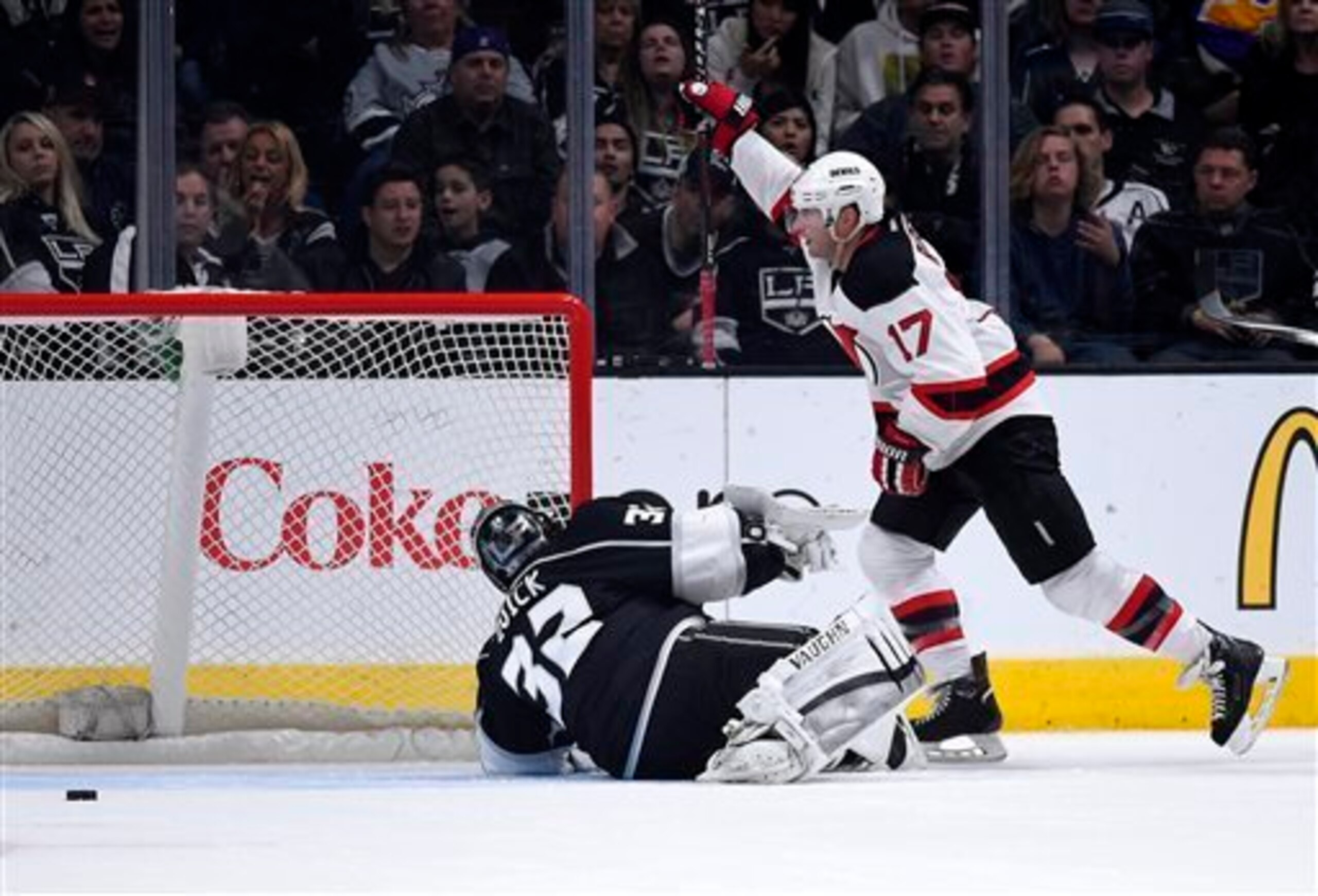
Though I want to focus on how the team can improve for the rest of this season, I would be missing the larger picture if I did not at all address how the team can make future seasons more successful. So, here are two things that New Jersey can do the rest of this season that will help the team in the long run.
Makes Trades as Early as Possible
The Devils will be facing a lot of questions after the season ends.
Who will the coach be? What young players will be ready to make the jump to the next level? What older players are worth keeping around?
The answers to these questions will depend, at least in part, on what happens during the remainder of the season. Yet, with lineup changes and questions swirling about trades, it will be hard to get any continuous product on which to judge players and coaches.
Therefore, it would be best for the team to make moves sooner rather than later. The two most likely players the Devils may move are Michael Ryder and Jaromir Jagr. Fans would be thrilled to see Ryder go while disappointed to see Jagr depart, but both are likely worth less to the team than the draft picks or prospects they could bring in.
The departure of those two, and perhaps Marek Zidlicky on defense, would also open up playing time for younger players, which brings us to another point.
Starting with Eric Gelinas, Let Young Players Play
I have nothing against Peter Harrold or Mark Fraser, both of whom could be serviceable third-pairing defensemen for many NHL teams. But, Harrold, 31, and Fraser, 28, keeping Eric Gelinas out of the lineup on a regular basis has been absolutely nonsensical.
The Devils have nothing to lose by letting Gelinas, 23, make mistakes now. His defensive play has been rightly in question for most of his time in New Jersey, but how do the coaches expect him to improve without playing either in New Jersey or Albany with the team's AHL affiliate?
The coaches must let Gelinas play now, when his defensive lapses will have no significant repercussions.
At forward, it is more understandable that the likes of Reid Boucher and Stefan Matteau have not seen significant time in the NHL, but that ought to change by the end of the season. If players like Ryder and Jagr are traded, it must be players like Boucher and Matteau that take their place.
Tim Sestito and Mike Sislo were both hardworking team players during their time in the NHL this season, which is all that could be asked of them. But the time for filling out the lineup with the serviceable is over. The Devils must give their young forwards a chance to succeed, or to fail, so that they know what they have going forward.
Power-Play Success
2 of 5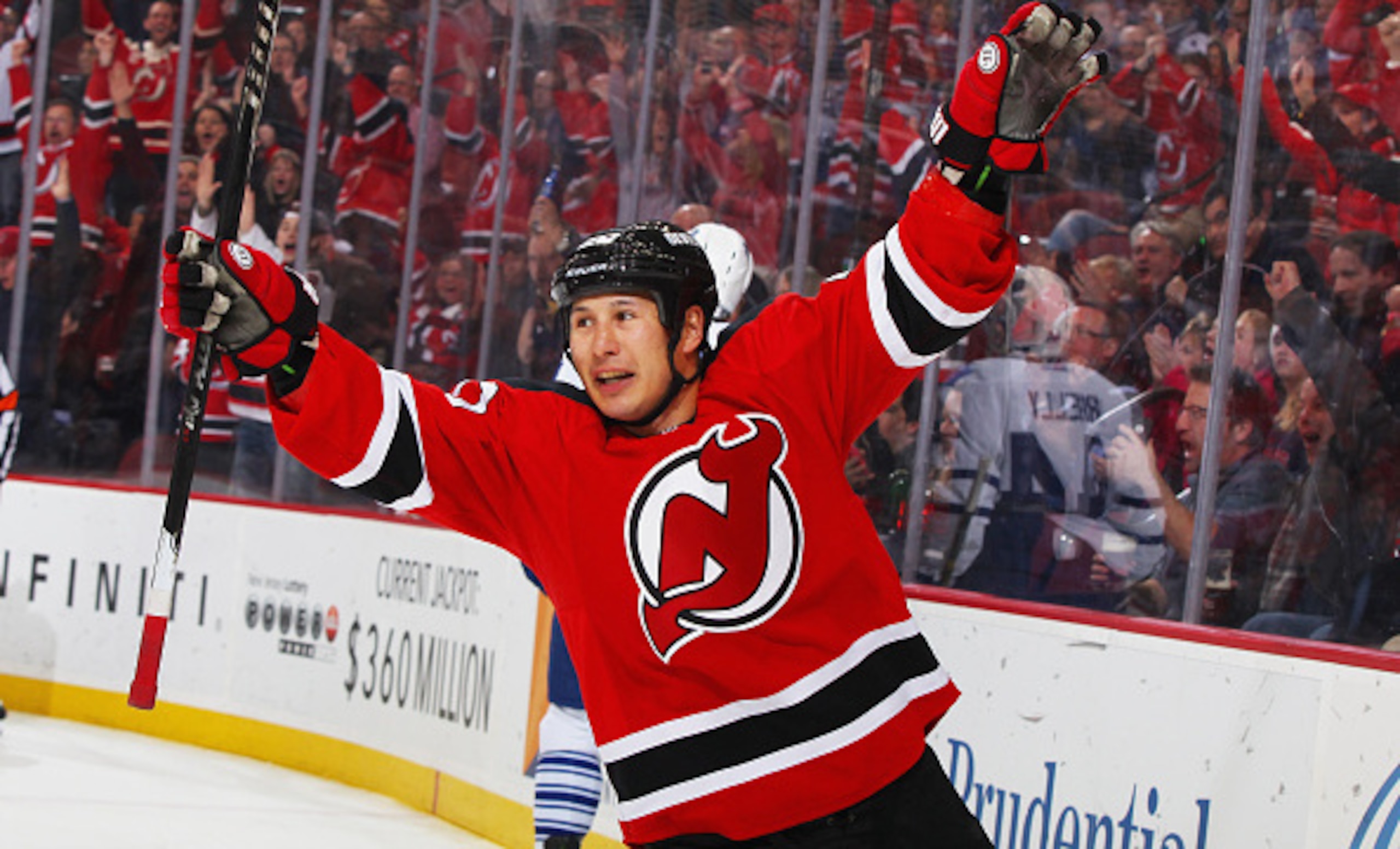
If one thing seems certain, it is that the Devils will not score many goals in even-strength situations.
Only Carolina, Arizona and Buffalo have scored less even-strength goals than New Jersey this year, so it is imperative that the Devils capitalize on their opportunities with the extra man.
The Devils, for much of the season, were decent on the power play. They currently have the 11th-best power-play percentage in the NHL (19.6 percent), by no means terrible given their lack of goal-scoring talent.
But, under the new coaching staff, the Devils have been dreadful with the man advantage. Since December 27, the team is 6-of-43 on the power play, just under 14 percent. In their last four games, the Devils are 0-of-6 on the power play with only one shot on goal.
Some could argue that the Devils' inability to get enough shots at even strength in recent games has been due to an increased focus on defense, but there is no acceptable reason for the lack of shots we have seen on recent power plays. New Jersey simply must do better.
The new coaching staff, presumably led by Adam Oates in this department, has tried to put four forwards on each power-play unit. The results have been horrid.
Tom Gulitti of the Fire and Ice Blog reported that when the Devils practiced the power play on Thursday, the lines were the following:
"One unit had Elias, Tootoo and Henrique up front with Zajac on the left side (one-timer) and Zidlicky as the main pointman.
The other unit had Jagr, Gomez and Bernier up front with Cammalleri on the right side (one-timer) and Merrill as the main pointman.
"
The sad truth of the matter is that the Devils simply do not have enough talented forwards to play this way with the man advantage. Jordin Tootoo's presence on the power play confirms this.
Of course, to pin the team's power-play woes on Tootoo is entirely inaccurate. His presence is merely a symptom of the greater issues.
New Jersey's power-play skaters, particularly the forwards, have not been doing a good enough job of keeping the puck. On the rare occasion that the team can hold the puck for an extended period, the players are far too static, allowing penalty killers to easily block passing and shooting lanes.
So, what can the Devils do to improve the power play in the short run? First, having Gelinas or Ryder in the lineup certainly would not hurt. Giving Adam Larsson, who has shown improvement to his offensive game in the past month, might not be a bad idea as well.
Additionally, it is worth asking if Oates is any good as a power-play coordinator. In 2011-12, Oates ran the power play when the team still had Ilya Kovalchuk, Zach Parise and David Clarkson. The team's power play was only 14th in the league, operating at 17.2 percent.
Regardless of the cause, any improvement to the Devils' power play would be a great relief to a goal-starved team.
Strong Goalie Play
3 of 5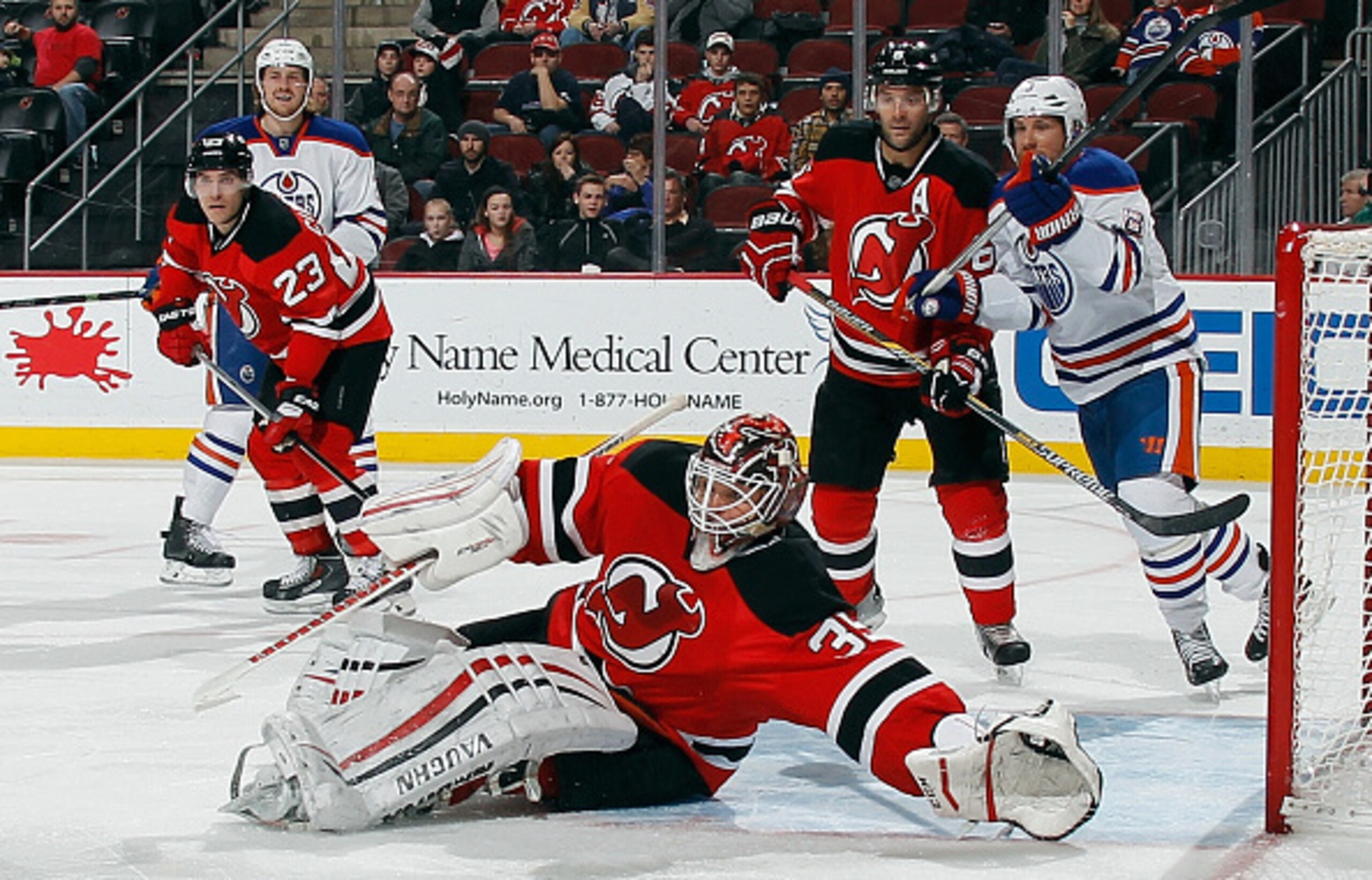
Putting this much pressure on Cory Schneider and Keith Kinkaid may be unfair, but with the Devils' goal-scoring woes, there is no doubt that the play of the goalies is key to New Jersey's success.
Fortunately for the Devils, both goalies have been up to the task. During January, in which New Jersey went 6-3-2, the Devils gave up an average of 31 shots per game. In this time, Schneider posted a 1.89 goals against average and a .940 save percentage, both highest single-month totals for this season.
Kinkaid's numbers have dipped a little after a stellar start, but that was mainly due to his team's horrendous play against Anaheim and Montreal in recent weeks. In those two games combined, the Devils were outshot 84-38. Kinkaid gave up 10 goals in those two games.
Against Florida, though, his only other recent start, he stopped 26 out of 27 shots. Given that this kind of matchup is more fitting for a backup goalie, it seems reasonable to say Kinkaid is doing a decent job.
Of course, the story in goal is predominately about Schneider, who has gotten off to a good start in February as well. In his last three games, he has stopped 74 of 78 shots.
While the Devils continue to struggle to possess the puck and score goals, the continuation of strong play between the pipes will be key.

Put Goal Scorers in Positions to Score Goals
4 of 5
This seems like it should go without saying, but a look at the Devils' line combinations from Thursday's practice (again per Gulitti at Fire and Ice) does raise some questions.
Adam Henrique—Scott Gomez—Steve Bernier/Stephen Gionta
Patrik Elias—Travis Zajac—Jordin Tootoo
Tuomo Ruutu—Michael Cammalleri—Jaromir Jagr
Martin Havlat—Jacob Josefson—Dainius Zubrus/Michael Ryder
Gionta's presence as a rotating first-line winger makes sense, as he is only there to get closer to a return to health. Still, there are some other glaring questions.
First, what is Tootoo doing on the second line? His contributions to the Devils this year are undeniable, but no amount of hard work and physical play is going to make him a regular offensive contributor. Also, Zajac and Elias have been two of the Devils' most consistent players since the coaching change (with consistent being a relative term given how poor the team has been as a whole), with eight goals between them.
Second, Havlat and Ryder's presence on the fourth line makes no sense. If the Devils truly have no intention of playing Ryder, then rotating him on the fourth line just to keep him fresh is sensible.
But, if they are considering inserting him back into the lineup, having him practice with the fourth line is a waste of everyone's time. Both he and Havlat have had disappointing seasons, but both also have a history of scoring goals.
Playing either player for nine minutes a night with Josefson at center is not going to help Ryder or Havlat get their scoring touch back. If the Devils truly feel that both players have no scoring ability left to offer the team, then they ought to both simply be benched to allow young players an opportunity.
For the Devils to remain competitive this season, they must make smarter decisions regarding the utilization of their top forwards.
Get More Shots
5 of 5
The Devils' inability to get shots is growing more and more apparent, with the team's shots-per-game average since the coaching change down to 20.
If it was simply a matter of New Jersey needing to use its offensive-zone time more effectively, then this would not be that big a deal. But, while there is a small extent to which the Devils' shot problem is related to a lack of willingness to let loose in the zone, there are much bigger issues at work.
The Devils simply are not getting the offensive-zone time, or even just the time with the puck, necessary to create enough scoring chances to regularly win games.
The new coaching staff has made preventing prime goal-scoring opportunities the top priority, which is a noble goal and has been moderately successful (the team has only conceded more than two goals once since the All-Star break). But, it has come at the cost of taking any sense of offensive purpose out of the team.
Combine this new mindset with the Devils' still-sloppy breakouts and neutral-zone play and what is left is a team that is destined to create incredibly few scoring chances.
The overall result is exactly what we have seen since the All-Star break—a team that gets outplayed badly against good teams and plays an evenly matched, if unexciting, game against bad ones.
To improve their play, the Devils must clean up their breakouts (which has been an issue all season), think shoot-first when they do get offensive-zone time and allow themselves to take a few chances offensively.
Whether or not they are capable of changes that will bring more shots is another question entirely. But, if the New Jersey Devils are going to improve their play for the rest of the season, that is where they must start.

.jpg?w=2560 "Grading WWE Raw 🔠")

.jpg?w=2560 "Viral Rams Coach Vid 🖕")


.jpg?w=2560 "Injury-stricken Seahawks signing veteran RB")
