

5 Cuts That Could Create Cap Space for the New York Giants
Welcome to 2015, where all NFL teams are 0-0 and must begin working on reshaping their rosters in order to improve on deficiencies from last season.
The New York Giants, coming off a 6-10 season, have a lot of work to do over the next several months, starting with clearing away some cap space so they can re-sign free agents they have identified as keepers, while also adding a newcomer or two at certain positions.
Let’s look at where the Giants currently stand with their cap situation using a $140 million cap figure, as projected by Over the Cap. New York has an estimated $15,726,246 of cap space tied up in 69 contracts.
Eating into their cap space is $3,417,529 in dead money (money tied up in player contracts that are no longer active, such as the last of center David Baas’ contract).
However, built into that cap space is the Giants’ 2015 rookie pool estimate of $6,267,517, a figure based on their drafting ninth overall.
That rookie pool estimate will be used to sign the draft picks (the Giants currently have eight picks this spring thanks to the extra seventh-round pick they will be receiving from Denver in the Brandon McManus trade), and the money will also be used in signing key undrafted free agents.
In sum, the Giants actually have $9,458,729 in cap space to spend, which is not nearly enough to cover the projected $15 million franchise tag for defensive end Jason Pierre-Paul should they need to go that route.
While the Giants could spend more than the $9.458 million during the March free-agency sweeps, the fact remains they are going to need to clear more space.
Before we look at the contracts that will likely be terminated, it needs to be mentioned that quarterback Eli Manning ($19.75 million) and cornerback Prince Amukamara ($6.89 million) will almost certainly receive contract extensions that will lower their respective 2015 cap figures.
In addition, look for the contracts of punter Steve Weatherford ($3.075 million) and linebacker Jon Beason ($7.366 million) to be reworked into more cap-friendly amounts.
Let’s now look at five contracts that make sense to purge from the books.
DE Mathias Kiwanuka
1 of 5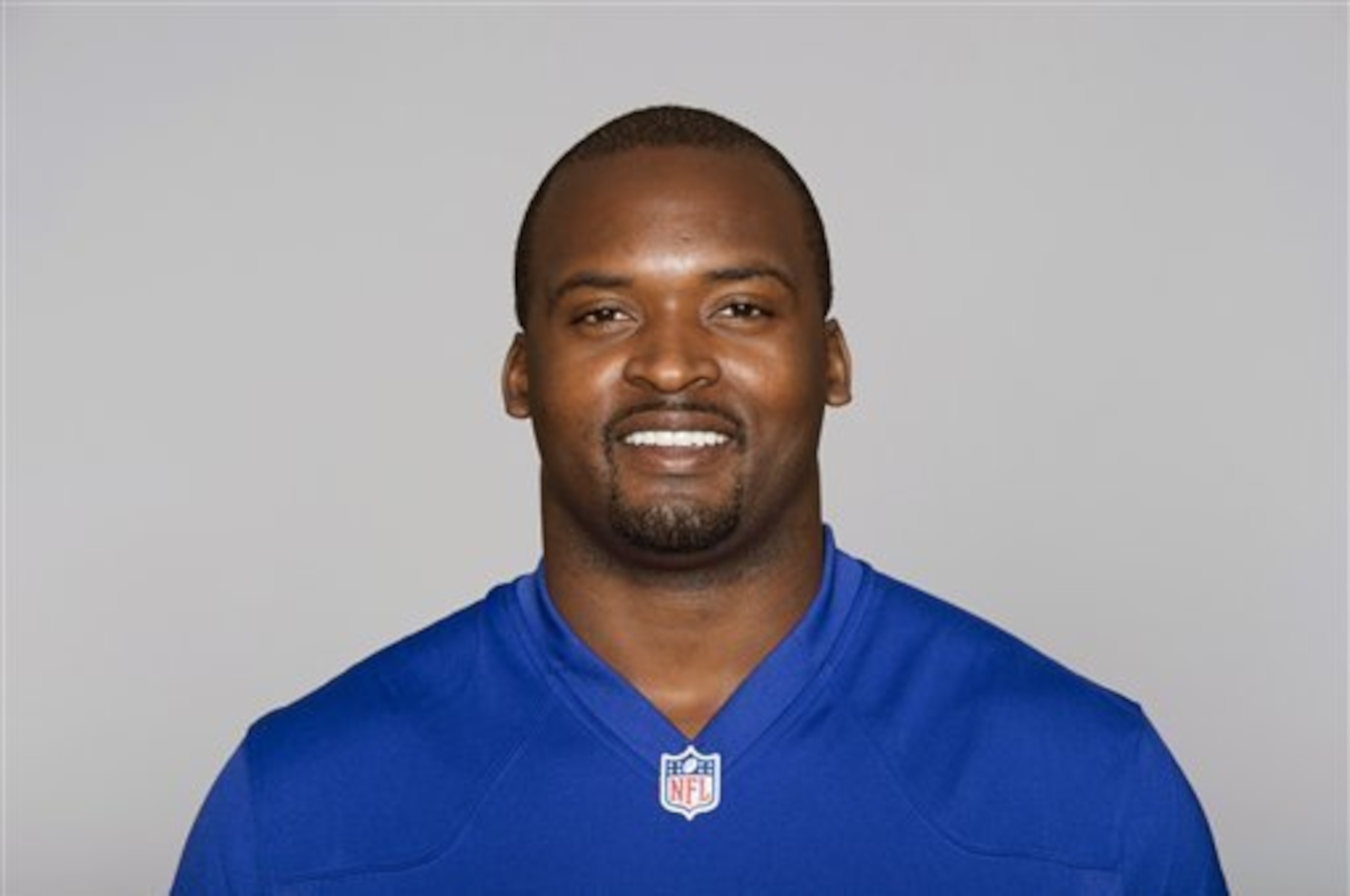
Defensive end Mathias Kiwanuka, a nine-year NFL veteran, is entering the final year of his three-year, $21 million contract extension signed in April 2012, a deal that is currently the fifth-highest among 4-3 outside linebacker contracts, per Over the Cap. (Kiwanuka at one point was a strong-side linebacker for the Giants and thus was paid accordingly.)
At age 31, Kiwanuka’s best years are sadly behind him. He has had two consecutive injury-filled seasons, including 2014, in which he was placed on injured reserve with a knee ailment that required surgery.
Since 2011, when he recorded a career-high 84 tackles, Kiwanuka has seen his production dip to 37, 41 and 28 tackles in the 2012-2014 seasons, respectively, though to be fair he has logged 8.5 sacks over the last two seasons, including six sacks in 2013.
Still, in watching Kiwanuka, it’s become sad to see him no longer able to defeat the solo blocking he received as a benefit of having Jason Pierre-Paul on the opposite end drawing the double-team blocks. He often struggled to shed blockers at the point of attack, despite fighting to the whistle, and was oftentimes targeted by opposing rushers who exploited his side of the field.
Kiwanuka’s pass rush wasn’t much better, as he appeared to lose speed coming around the edge and struggled with his power rushes.
This decline, which unfortunately has been several years in the making, and the physical breakdowns he has experienced over the last two seasons likely signals the end of his tenure with the Giants.
Kiwanuka is due to count for a $7.45 million cap hit. If he and the Giants do part ways, as is expected, they will save $4.825 million and absorb a $2.625 million dead-money charge.
RB Peyton Hillis
2 of 5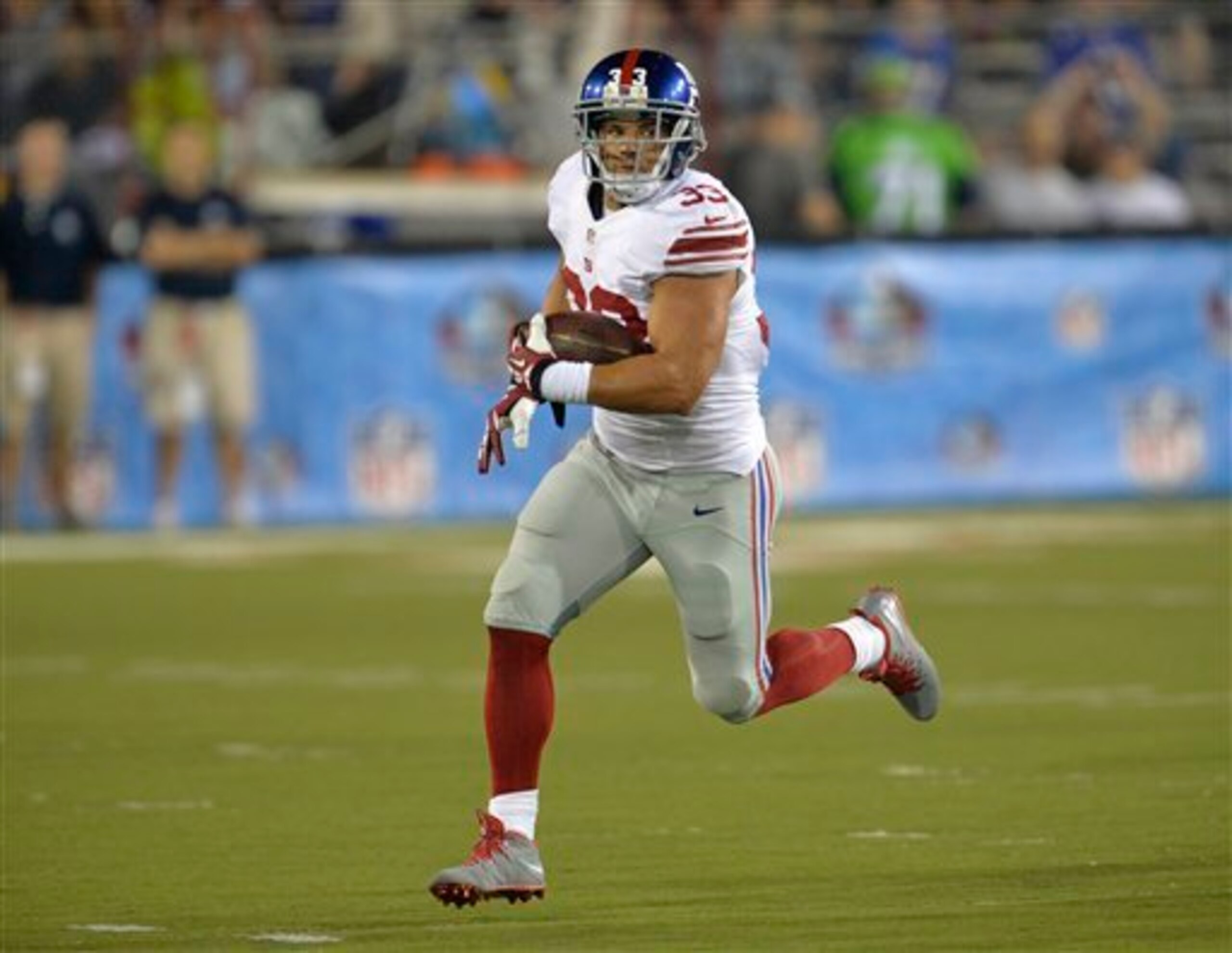
Last offseason, the Giants re-signed unrestricted free-agent running back Peyton Hillis to an extremely cap-friendly two-year, $1.8 million deal.
The contract, at the time, made sense considering the Giants were unsure of what was going to happen with David Wilson’s comeback from spinal surgery in his neck.
It also made sense because in 2013, Hillis, who came off the couch, gave the Giants some solid production, running 73 times for 247 yards and two touchdowns while adding 13 catches for 96 yards and showing he was a proficient third-down blocker.
Unfortunately for Hillis, he suffered a concussion in 2013 that cost him one game, which came in Week 16. He had also suffered a hyperextended knee as a member of Tampa Bay during the 2013 preseason, according to Jenna Laine of Sports Talk Florida.
This season, Hillis suffered another concussion, one that was so severe it ended his season after just nine games.
It’s not known if Hillis plans to retire, but given his concussion history, it certainly wouldn’t be surprising if his NFL career is over.
If that happens, the Giants would save $945,000 on Hillis, with no dead money set to hit the 2015 cap. This is because the Giants, in lieu of a signing bonus, gave Hillis a roster bonus for each year of his contract plus a $25,000 per year workout bonus.
If Hillis is not in the team’s 2015 plans—and it would be hard to imagine he is given the development of a younger, cheaper and healthier Orleans Darkwa—the Giants would save 100 percent of Hillis’ 2015 cap hit.
RB David Wilson
3 of 5
In one of the most obvious, yet saddest, moves coming to help free up cap space, the Giants will gain $1.301 million in cap savings from the final year of running back David Wilson’s contract.
Wilson, of course, was forced to end his career after just two seasons thanks to a spinal issue in his neck. Last season, the Giants placed him on injured reserve so he could continue to collect his salary as well as gain a year of accrued service toward retirement benefits.
According to the latest player report on the NFLPA website, Wilson is still listed as an active player.
Assuming that Wilson has met the minimum time-in to qualify for retirement benefits, his rookie contract, which was set to expire after the 2015, would only count for $825,364 in dead money once it’s terminated.

.jpg?w=2560 "Falcons Saints Football")
.jpg?w=2560 "Rams Eagles Football")
OL J.D. Walton
4 of 5
Quite often, the way a player’s contract is structured provides a glimpse as to what his long-term future with the team might be.
Such was the case with offensive lineman J.D. Walton, whom the Giants signed to a two-year deal worth $6 million last offseason despite the fact that he had missed the 2013 season due to complications related to an ankle injury suffered in 2012.
That deal included $3 million in guaranteed money, of which $1.25 million was his signing bonus. The other $1.25 million was his 2014 base salary—a fully guaranteed amount.
In this, the final year of Walton’s contract, he’s due to earn a $2.25 million base salary, none of which is guaranteed.
With head coach Tom Coughlin having already said in a radio interview with WFAN’s Mike Francesa that the team is planning to move second-year man Weston Richburg from guard to center in 2015, Walton’s cap hit of $3.625 million becomes too much for a potential backup.
What is likely to happen is that the Giants will cut Walton, which would save $3 million in cap space and cost them just $625,000 in dead money, and look for younger and/or more cap-friendly options, particularly veterans who are willing to sign for a minimum qualifying offer.
CB Jayron Hosley
5 of 5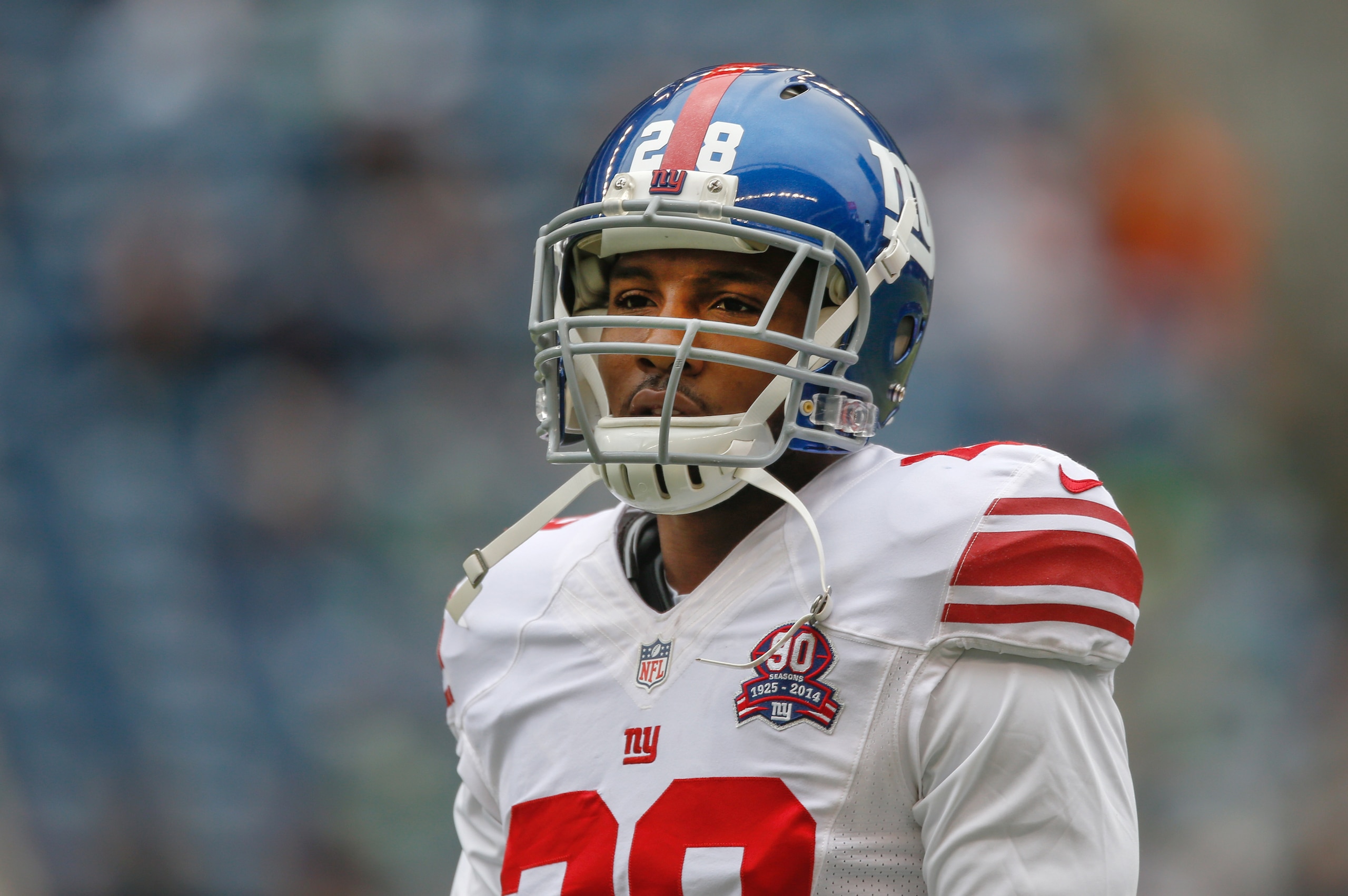
In his season-ending press briefing, general manager Jerry Reese spoke about how the team tends to give draft choices a chance to fail before cutting bait on them.
In the case of cornerback Jayron Hosley, a third-round pick in 2012, it’s probably time to exercise that practice. The former Virginia Tech star, whom the Giants initially envisioned as their slot cornerback of the future, has played in just 29 games over three years, amassing 57 tackles and one interception.
Hosley missed part of the 2012 and 2013 seasons due to injuries. In 2013, he missed the first five games of the season as a result of a four-game, league-imposed suspension and then subsequently was left on the exemption list once the four games were up.
He was then banished to the inactive list for the final five games of the 2014 season after logging just eight tackles and one pass defensed in six games.
If the Giants re-sign slot cornerback Walter Thurmond III, which is a very real possibility, his presence, along with the promise shown by third-year man Chandler Fenner, should be more than enough justification to purge Hosley from the roster.
By removing Hosley’s $796,250 cap figure from the books, the Giants would be charged with $128,750 in dead money while saving $667,500—more than enough to pay a rookie draft pick or undrafted free agent.
All salary-cap and financial information is via Over the Cap unless otherwise noted.
Patricia Traina covers the Giants for Inside Football, the Journal Inquirer and Sports Xchange. All quotes and information obtained firsthand unless otherwise sourced. Follow me on Twitter @Patricia_Traina.
.jpg?w=2560 "Texans-Mixon Released Football")

.jpg?w=2560 "Grading WWE Raw 🔠")


.jpg?w=2560 "2 NFL Officials Suspended")
