

Ranking MLB Offseason's Biggest Steals, Mistakes Entering February
Don't look now, but Major League Baseball's offseason is just about finished.
Sure, free agent James Shields remains, well, a free agent, and there's bound to be a trade or two involving some big-name players. But for the most part, this wild hot stove season has settled back to a simmer, especially now that pitchers and catchers are due to report in less than three weeks.
That makes right about now a good time to run through the biggest steals—and the biggest mistakes—of the offseason.
Of course, identifying the most noteworthy steals and mistakes is all about perspective. One team's steal often is another's mistake. But not always, especially when there are more than just trades happening, like signings and extensions.
Before getting to the good stuff, it's worth mentioning again that Shields (and his reps) very well could be on the "mistake" side of the ledger considering the right-hander is sitting out there on the open market, waiting for some team to pay him nine figures.
But if Shields stays unsigned for much longer and has to settle for a below-market deal, then the angle becomes more about how the club that lands a consistent, durable, proven No. 2 starting pitcher is getting a steal.
See? It really is all about perspective.
No. 5 Biggest Mistake: The Marlins and Dodgers Both Trade Away LHP Andrew Heaney
1 of 10
This is unique in that the same mistake was made by more than one club, as two teams traded away Andrew Heaney, a young, talented pitcher ready for the big leagues with six years of team control.
First, the Miami Marlins used Heaney as the centerpiece in a swap to acquire Dee Gordon (among others), and then—merely hours later—the Los Angeles Dodgers spun the 23-year-old for another second baseman in Howie Kendrick.
Although the left-hander struggled some in his first taste of the majors (5.83) last year, he made it into only seven games (29.1 innings), so that's the smallest of sample sizes. Plus, this is a high-pedigree pitcher who went No. 9 overall in 2012 and rolled through the minors in short order, compiling a 2.77 ERA, 1.14 WHIP and 9.1 strikeouts per nine innings.
That's not the kind of arm one team just jettisons, let alone two.
No. 5 Biggest Steal: The White Sox Get RHP Jeff Samardzija
2 of 10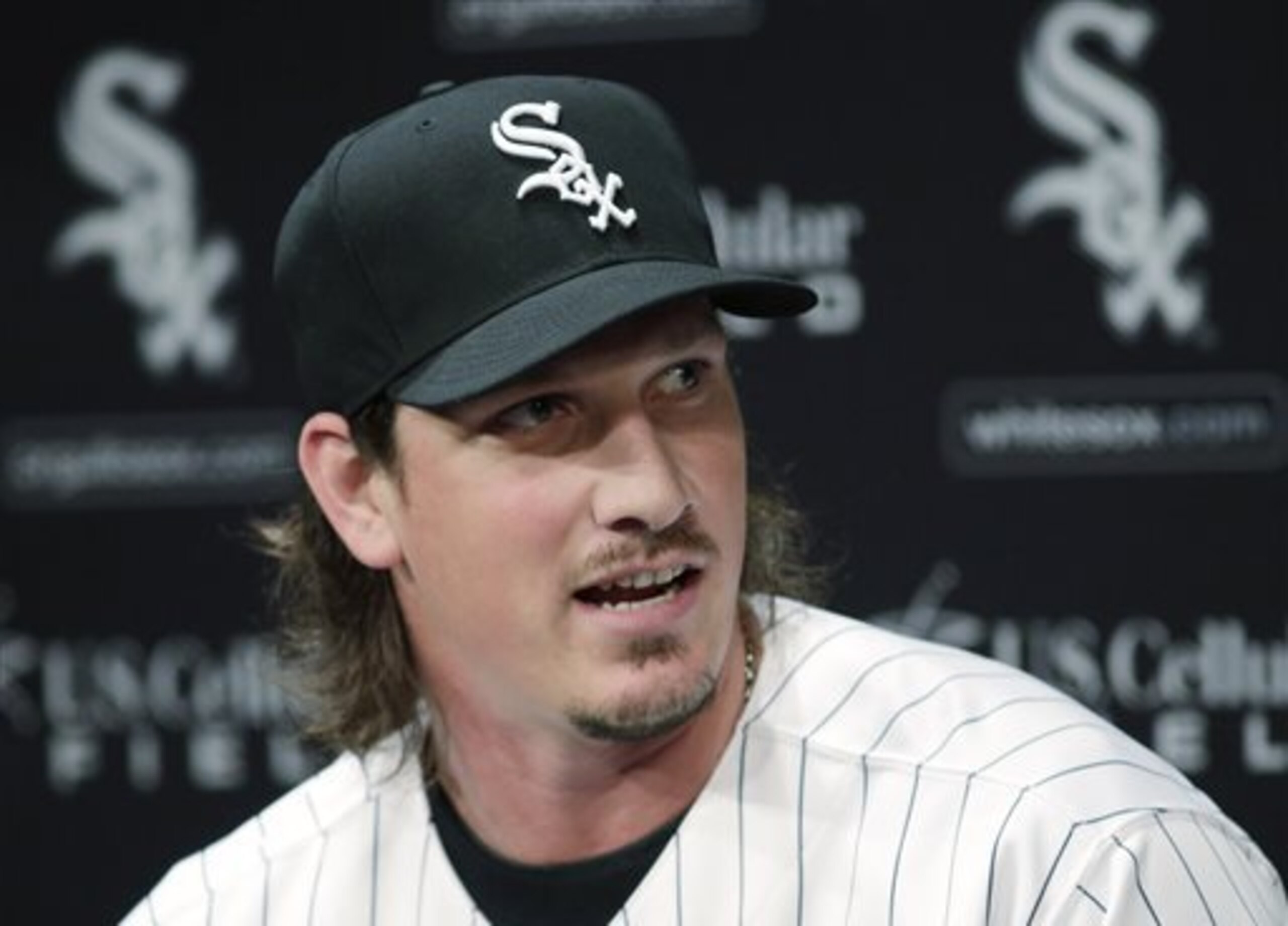
The Chicago White Sox had an efficient, successful winter, making a handful of moves to improve their roster by filling holes that needed it, like getting closer David Robertson for the bullpen and slugger Adam LaRoche as a much-needed lefty bat.
Perhaps the most impactful maneuver, however, was landing a strong right-handed starting pitcher to complement lefties Chris Sale and Jose Quintana at the top of the rotation. That's where Jeff Samardzija comes in.
In part because he's a free-agent-to-be, the White Sox acquired the 30-year-old from the Oakland Athletics without having to surrender any of their top young players.
The package was more quantity than quality, with infielder Marcus Semien, catcher Josh Phegley, first base prospect Rangel Ravelo and righty Chris Bassitt going to Oakland. That's how Chicago still is able to sport the 12th-best farm system in the sport, according to Keith Law of ESPN.
If the Sox emerge as contenders after two poor seasons—a very real possibility—the Samardzija get will be well worth it.
No. 4 Biggest Mistake: The Astros Trade for Evan Gattis
3 of 10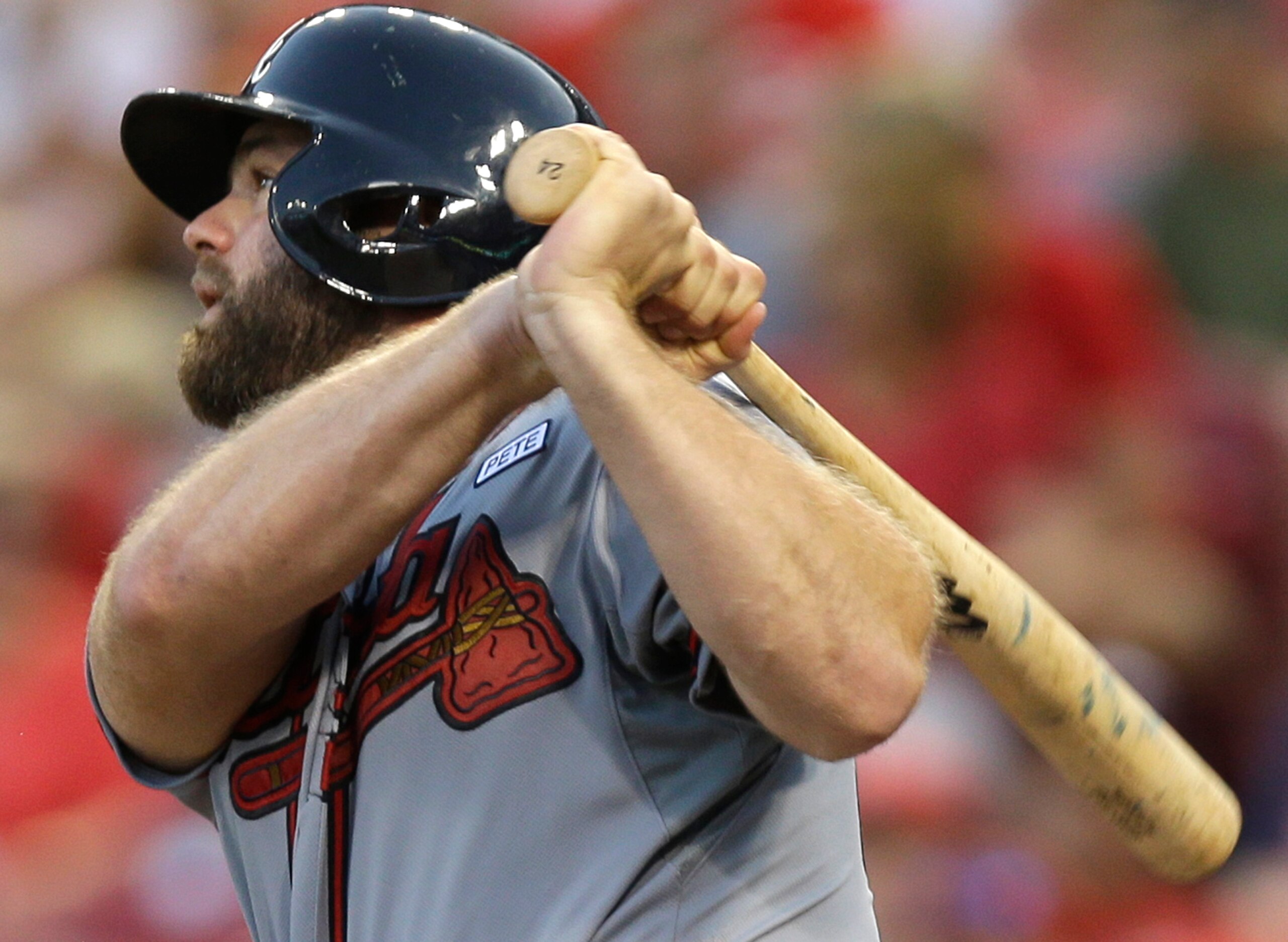
This is one of those deals that could go down as a "steal" for one side (the Atlanta Braves) but fits better as a mistake for the other, the Houston Astros.
That's because giving up three highly regarded prospects in right-hander Mike Foltynewicz, who already has reached the majors, third baseman Rio Ruiz and righty Andrew Thurman, a 2013 second-rounder, was rather a lot just to snag Evan Gattis.
Granted, the former Brave possesses plenty of power (43 homers in his first two seasons) and is under control for four more years, but Gattis also has proved to be injury prone and limited defensively, as well as in getting on base (.304 career OBP) and making contact.
That all-or-nothing approach at the plate is becoming something more than a minor target in Houston, as David Golebiewski of Gammons Daily puts it:
"In 2014, 30 MLB players hit at least 15 home runs while posting a walk-to-strikeout ratio below 0.4. The Astros now employ five of those strike zone-challenged sluggers: Chris Carter (37 home runs, 0.31 BB/K ratio), Evan Gattis (22 HR, 0.23 BB/K), George Springer (20 HR, 0.34 BB/K), Matt Dominguez (16 HR, 0.23 BB/K), and Rasmus, who popped 18 homers with a career-worst 0.23 BB/K during his “walk” year with the Toronto Blue Jays.
"
And that doesn't even count Jon Singleton, who had the highest strikeout rate (37.0 percent) among hitters with at least 300 plate appearances in 2014.
Even now that Gattis, who faked it at catcher and in left field with Atlanta, can spend time at designated hitter in the AL, this was an odd decision from an Astros club that is improving but not quite ready to get back to winning just yet.



No. 4 Biggest Steal: The Pirates Sign Korean INF Jung-Ho Kang
4 of 10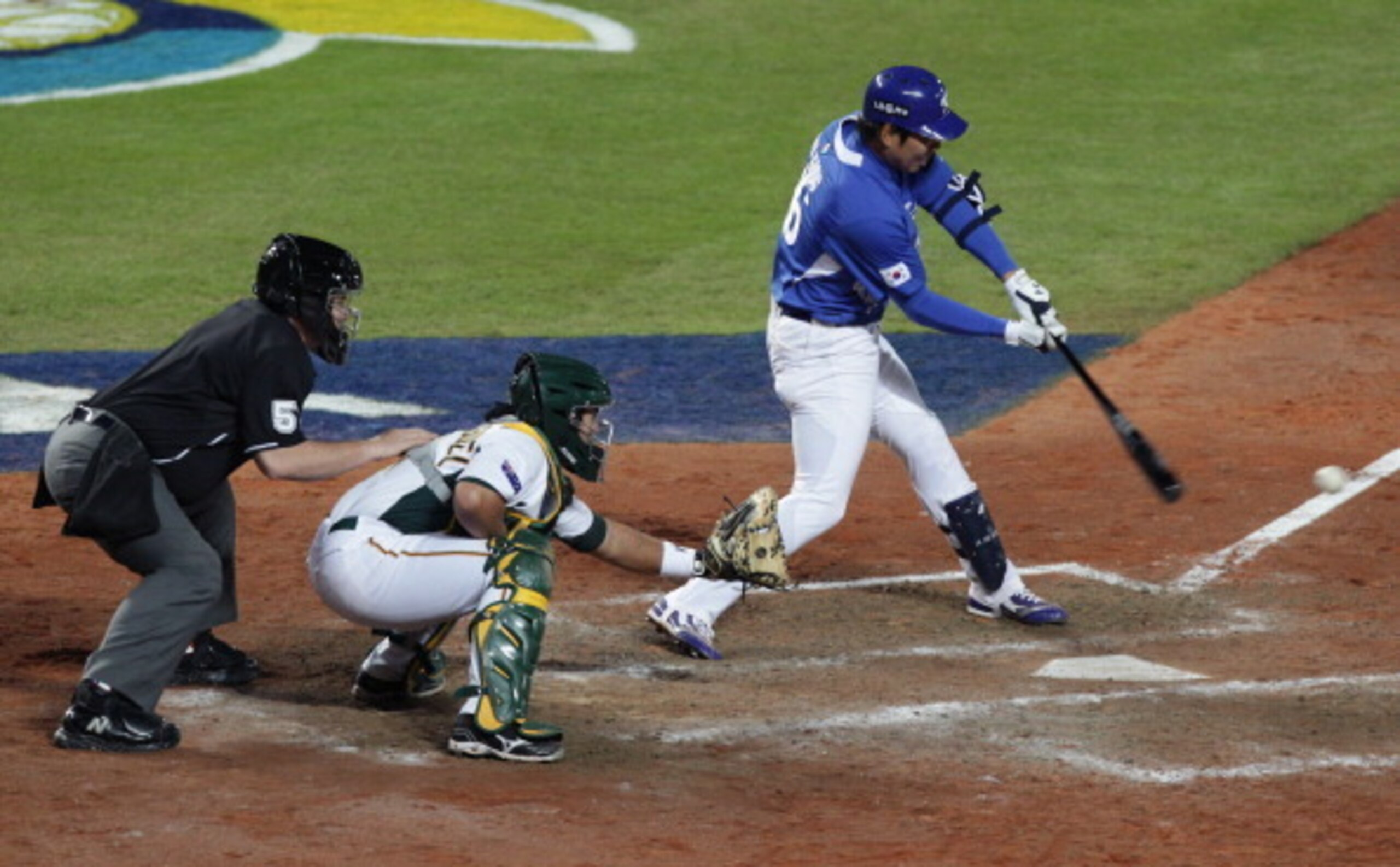
Despite a monstrous final campaign in Korean Baseball Organization (KBO), Jung-ho Kang comes with enough risk to make calling this a "steal" a decision that could come back to haunt the Pirates.
In winning KBO MVP in 2014, Kang posted a .356/.459/.739 slash line with 40 home runs, and yet he's also preparing to become the very first position player to go from KBO to MLB. Hence the risk.
Even still, Kang is just 27 years old (28 in April) and ranked as the No. 15 free agent by Keith Law of ESPN at the outset of the offseason.
Because Kang is in his prime, should be capable of playing on the dirt and has enough pop, if he adjusts to the majors and his game translates, too, he'll look like a $16 million bargain. That's the total price the Pittsburgh Pirates paid to obtain Kang, including posting price.
No. 3 Biggest Mistake: The Rays Trade OF Wil Myers
5 of 10
There are two big reasons why the Tampa Bay Rays made a misstep by trading Wil Myers this winter to the San Diego Padres as part of a three-team swap with the Washington Nationals.
The first is that they sold Myers when his stock was at its lowest, dealing the 2013 AL Rookie of the Year coming off a poor 2014 that also was interrupted by a wrist injury which cost him the better part of three months midseason.
The second? The Rays didn't actually get a lot in exchange for a still-young, still-team-controlled, still-talented asset, with fellow outfielder Steven Souza (formerly of the Nationals) the primary piece heading back to Tampa Bay.
As rough as last year was for Myers (.222/.294/.320), he's only 24 years old—almost two years younger than Souza, who turns 26 in April—and has 175 career games in the majors under his belt compared to all of 21 for Souza.
"This [trade] isn't about giving up on Wil Myers," new Rays President Matt Silverman said, via Marc Topkin of the Tampa Bay Times.
Frankly, that sounds like a man desperate to defend his decision, and if the Rays were (more or less) going to, ahem, give up on Myers already—and that choice seems premature given his potential—they might have been better off taking back shortstop Trea Turner and righty Joe Ross, the pair of well-regarded prospects the Padres sent to Washington.
No. 3 Biggest Steal: The Reds' Extension for Devin Mesoraco
6 of 10
Devin Mesoraco is anything but a household name, even in baseball-centric households. But for just $28 million over four years, the Cincinnati Reds just locked him up. It was a good move, as he could be one of the sport's next great catchers.
After a breakout 2014 in which Mesoraco led his position (minimum: 400 plate appearances) in both slugging percentage (.534) and home runs (25), the 26-year-old could become one of baseball's biggest bargains, particularly at a position suffering from a dearth of talent.
To wit, over the entirety of his new pact, Mesoraco will make only slightly more than what Buster Posey ($18.6 million) and former backstop Joe Mauer ($23 million) earn in a single season based on average annual value.
On top of that, setting Mesoraco's salary for the next four years provides cost certainty for a team that badly needs it due to a number of outlandish contracts (i.e., Joey Votto, Homer Bailey, Brandon Phillips). And because the Reds also bought out one year of what would have been Mesoraco's free agency, they're only paying him through his age-30 season, after which catchers tend to decline anyway.
No. 2 Biggest Mistake: The Marlins Pay OF Giancarlo Stanton $325 Million
7 of 10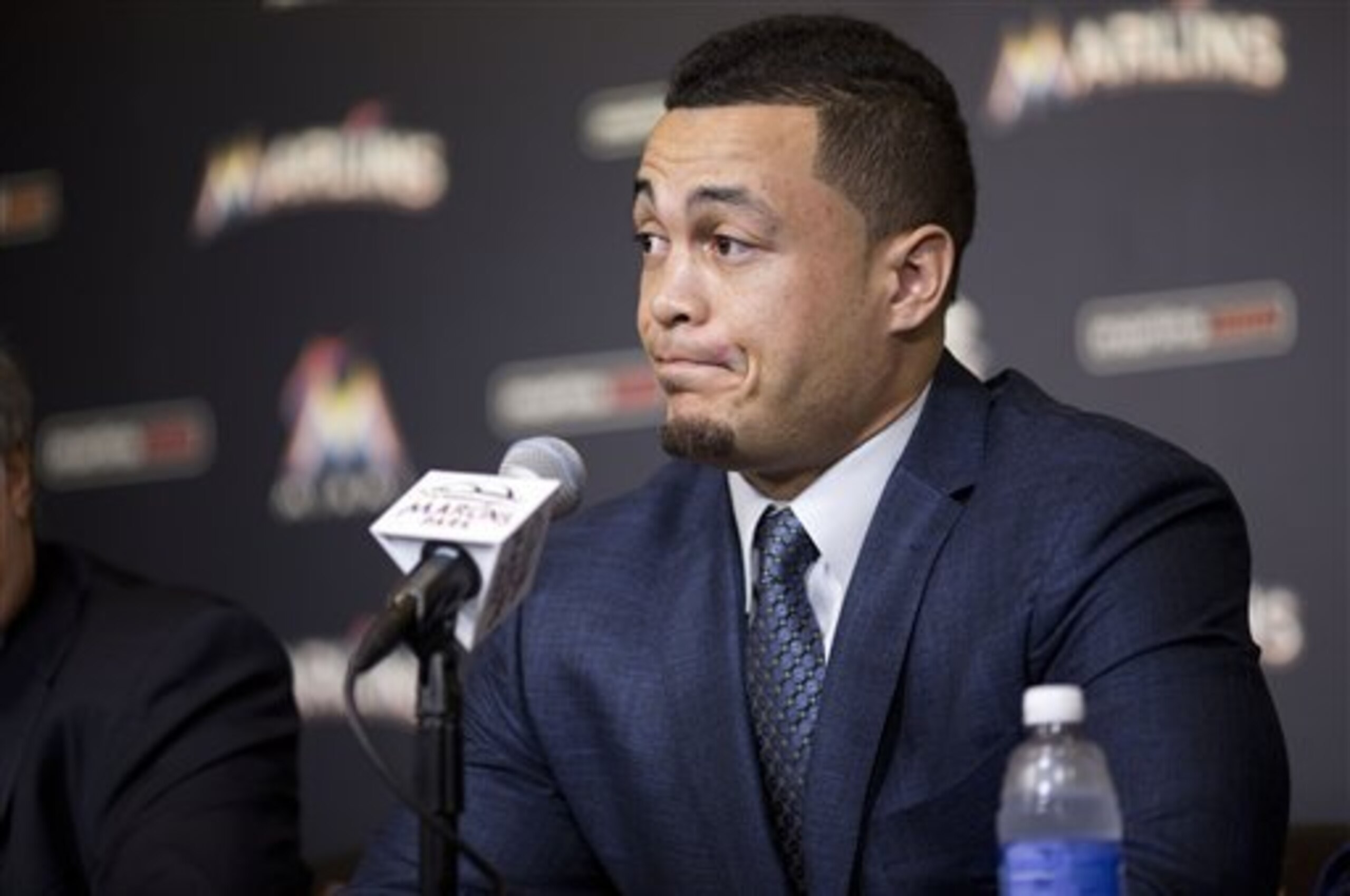
Look, Giancarlo Stanton is an elite player with special power and quite possibly would have won NL MVP had a Mike Fiers fastball not hit him square in the face and ended his season in mid-September. Oh, and he's still only 25 years old.
That said, for the Miami Marlins, who had the lowest payroll in baseball a year ago, to hand out a 13-year, $325 million extension—the largest contract ever in North America sports—was both surprising and more than a little crazy.
Because the deal is heavily backloaded—paying out just $30 million the first three years—and Stanton can opt out after the sixth season (2020), when he's 30 and could look for another monster payday via free agency, Miami might avoid disaster.
But then, if something—anything—goes wrong along the way, the Fish will be on the hook for $218 million over the next seven years, which could sink the franchise's future.
No. 2 Biggest Steal: The Indians Get 1B/OF/DH Brandon Moss
8 of 10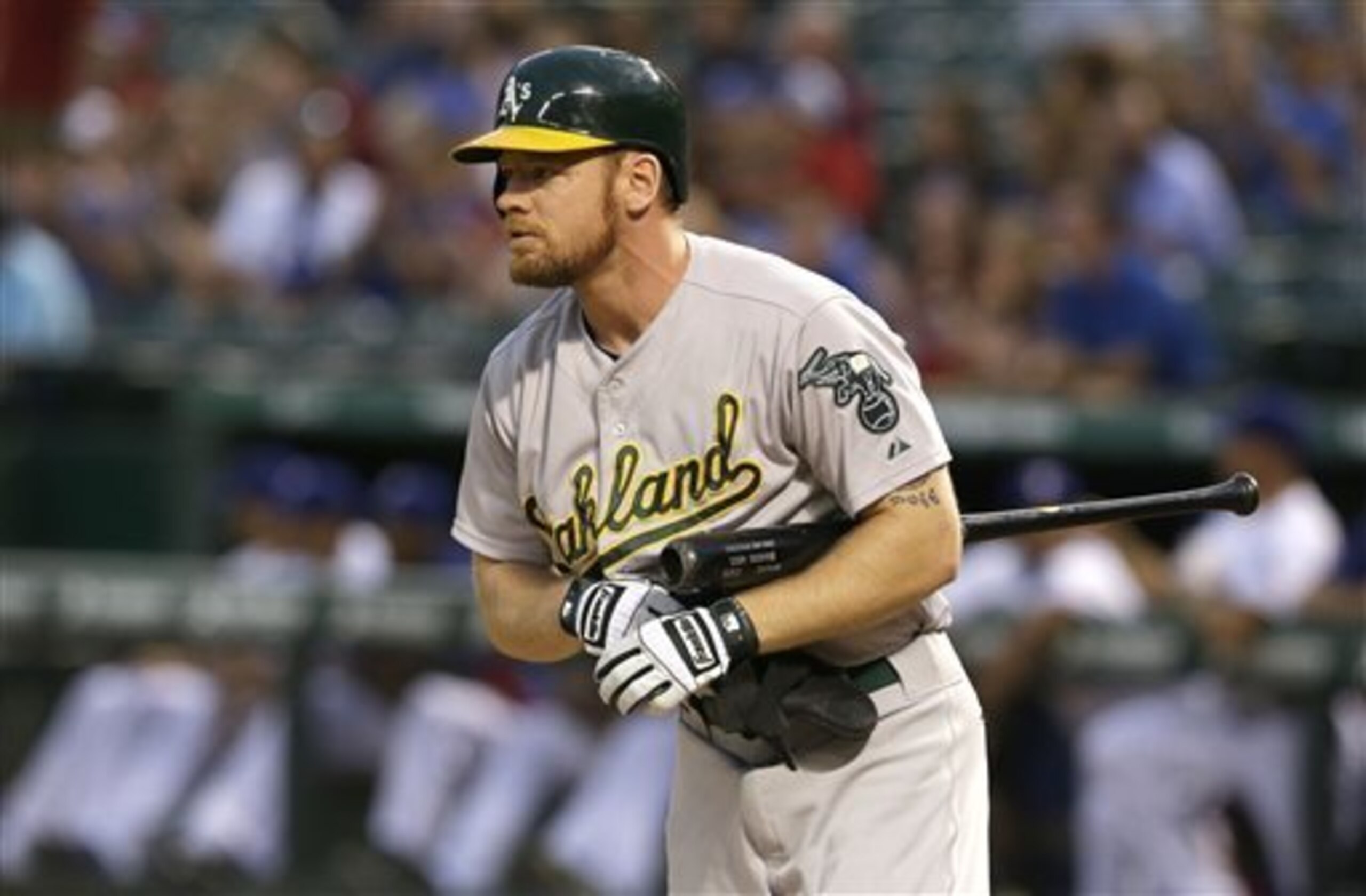
Look, Brandon Moss isn't some kind of super stud or anything, but he's been a very productive big league bat for the past three years, over which time he posted an .844 on-base-plus slugging percentage and totaled 76 home runs with the Athletics, all while handling three spots (first base, corner outfield and designated hitter).
Even coming off hip surgery that undoubtedly hampered the market for Moss, it seems like such a player should have required more than Joe Wendle on the other end of the trade.
Already 24, Wendle finally made it to Double-A in 2014, where he triple-slashed .253/.311/.414—not exactly impressive or even intriguing.
Admittedly, Moss' salary was due to jump via arbitration, so the A's were looking to get younger and cheaper. However, they needed to do better than Wendle, a measly second-base prospect—the least valuable kind there is outside of a reliever.
No. 1 Biggest Mistake: The Nationals Give $210 Million to RHP Max Scherzer
9 of 10
Much of what was written about the Giancarlo Stanton contract applies to Max Scherzer. The differences? The Washington Nationals aren't nearly as limited financially as the Marlins are, and Scherzer is getting $210 million—only slightly more than three-fifths of what Stanton is due.
But the history of nine-figure deals for free agents isn't pretty, particularly for pitchers, who come with a built-in injury risk that's much higher and more severe than that of position players. And Scherzer's $210 million—even if it's technically being spread over 14 years rather than seven—is the largest amount ever paid to a free-agent arm by a whopping $49 million.
Who, exactly, was Washington bidding against to go that high?
On top of that, Scherzer already is 30 years old, and the Nationals already had arguably the best rotation in baseball before signing him. Granted, Washington will send a dominant starter to the mound every game in 2015, and Scherzer could get even better now that he's back in the more pitcher-friendly NL. At least, initially.
If all that helps the Nationals advance deep into October after failed forays in 2012 and 2014, then this might just feel like it's worth it immediately. But if that doesn't happen, well, the team will have trouble when it comes time to try to bring back four key free-agents-to-be in right-handers Jordan Zimmermann and Doug Fister, shortstop Ian Desmond and center fielder/leadoff hitter Denard Span.
At some point in the not-too-distant future, the Nationals will wind up regretting this contract. It's just a matter of how much success they can have right away and how long they can stave off before said regret settles in and hamstrings the payroll.
No. 1 Biggest Steal: The Blue Jays Get 3B Josh Donaldson
10 of 10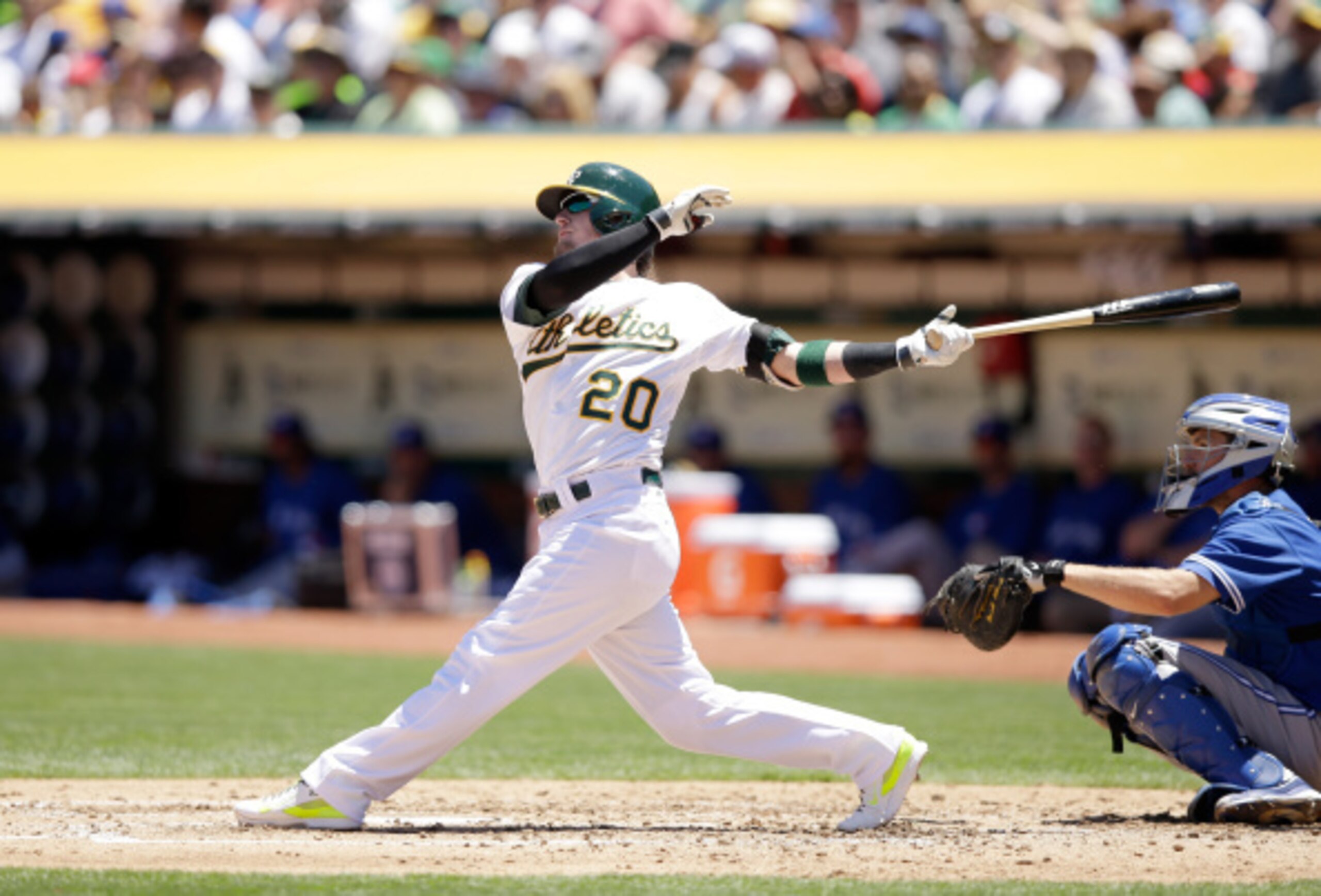
It's not good news for the Athletics that they happen to be on the wrong side of the two biggest "steals" of this winter.
Having covered—and justifiably questioned—the Brandon Moss move, it's now time to do the same for the Josh Donaldson deal to the Toronto Blue Jays that went down the day after Thanksgiving.
Donaldson, 29, has emerged from unknown entity to full-blown MVP candidate the past two seasons. That, combined with the fact that he has (count 'em) four years of team control remaining, should have brought back just about whatever Oakland wanted, if it actually were willing to make him available.
Instead, all Toronto had to part with was an uninspiring package of injury-riddled third baseman Brett Lawrie, a pair of young pitchers with back-of-the-rotation profiles in Sean Nolin and Kendall Graveman and a promising but long-way-off shortstop prospect in Franklin Barreto, who is nearly 19 but has yet to get out of Low-A ball.
"We're getting a middle-of-the-order bat, and it's something that we need," Jays general manager Alex Anthopoulos said of Donaldson via Gregor Chisholm of MLB.com. "We didn't expect him to be available."
On top of that, the Jays got to keep arms Aaron Sanchez and Daniel Norris as well as center fielder Dalton Pompey, each of whom is expected to be a contributor in 2015.
Add it all up, and this has been the biggest steal of the 2014-15 MLB offseason so far. And at this stage, it's likely to remain as such.
Statistics are accurate through the 2014 season and courtesy of MLB.com, Baseball-Reference and FanGraphs unless otherwise noted.
To talk baseball or fantasy baseball, check in with me on Twitter: @JayCat11.

.jpg?w=2560 "Grading WWE Raw 🔠")

.jpg?w=2560 "Viral Rams Coach Vid 🖕")

.jpg?w=2560 "Injury-stricken Seahawks signing veteran RB")

.jpg?w=2560 "Bijan's INSANE 1st Half 🤩")
