
Ranking the 5 Best European Players in New Jersey Devils History
The New Jersey Devils and general manager Lou Lamoriello made history when they acquired Viacheslav Fetisov, the first Soviet player to appear in the NHL.
Since then, Devils history has been littered with talented European players, from the insanely talented Ilya Kovalchuk to the hardworking Bobby Holik. The Devils' 2000 Stanley Cup victory was powered by two European players, Petr Sykora and Patrik Elias. That pair made up two-thirds of the "Arnott Line" or "A-Line," perhaps the best line in Devils history.
This list will rank the top European players in New Jersey Devils history, with a focus on the contributions they made to the organization, rather than talent alone. Of course, talent plays a large role in what a player was able to contribute to the Devils.
Honorable Mention
1 of 6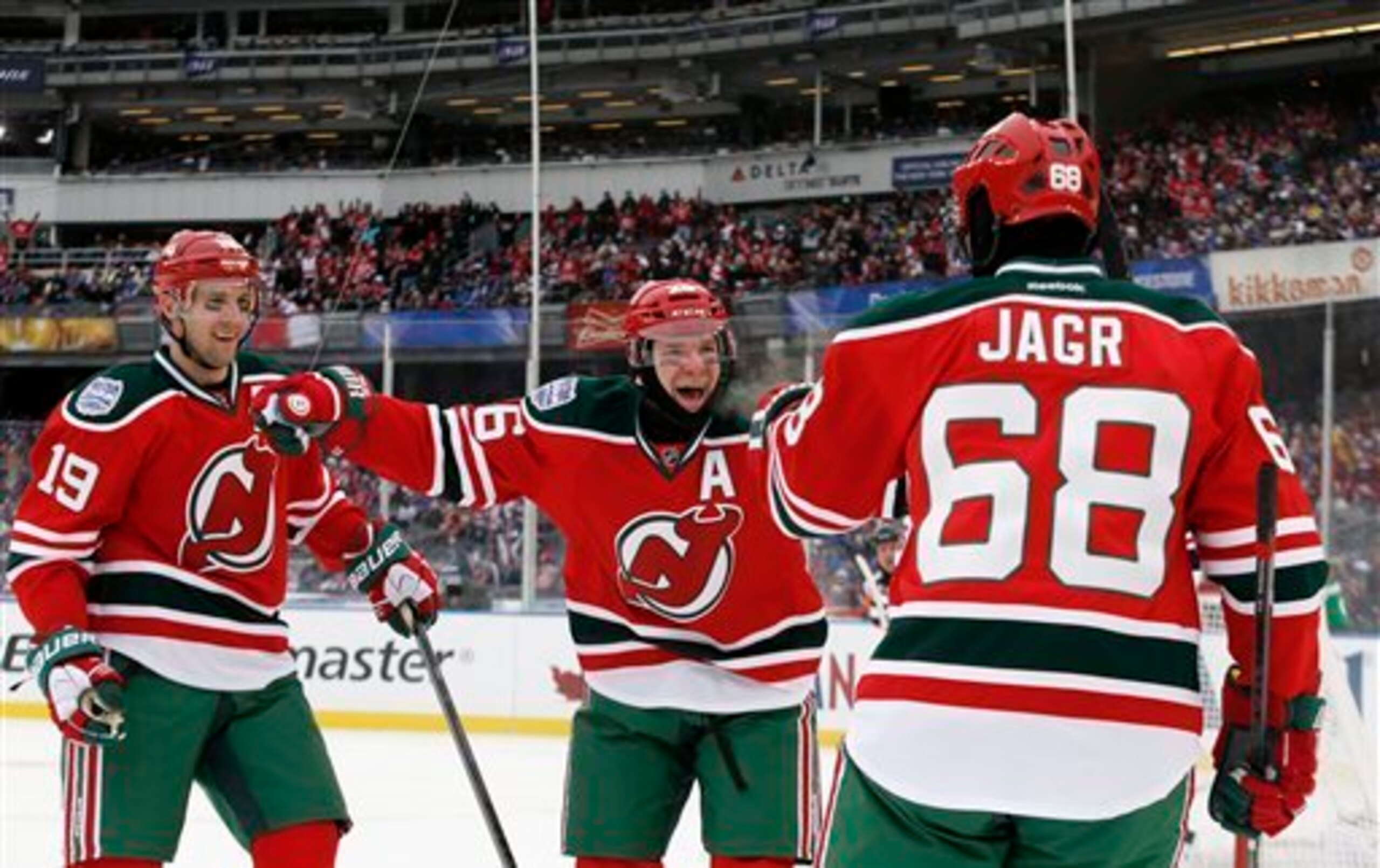
Jaromir Jagr
Jagr may only spend two seasons in New Jersey, but there is no doubt that he is among the best players ever to appear in the NHL. He has four 100-point seasons, five Art Ross Trophies, three Pearson Trophies and a Hart Trophy.
Even over the age of 40, he has continued to be a productive player, most recently with the Devils. Last season, he led New Jersey in points with 67 and played in all 82 games.
Though his time in New Jersey has had less of an impact on the team than any other player on this list, his talent is too great to not at least recognize him here.
Alexander Mogilny
Mogliny, like Jagr, did not spend a lot of time with the Devils, but he did have a greater impact on the team.
New Jersey acquired him in a trade at the deadline in the 1999-00 season, and he put up three goals and three assists in 12 regular-season games. He had four goals and three assists in the playoffs en route to the Devils' second Stanley Cup victory.
The following season, Mogilny amassed 43 goals, 40 assists and 83 points, his third highest career single-season points total. New Jersey's strong teams of the late '90s and early 2000s were criticized for being boring and defensive, but Mogilny was a part of the 2000-01 team that broke that mold and led the NHL in goals.
His strong play continued into the playoffs, where he picked up five goals and 11 assists before the Devils crashed out in the Stanley Cup Final against the Colorado Avalanche.
Mogilny's tenure in New Jersey was too short for him to make the top five, but no one can deny that he was a talented goal scorer who played a big role on two of the best teams in Devils history.
5. Sergei Brylin
2 of 6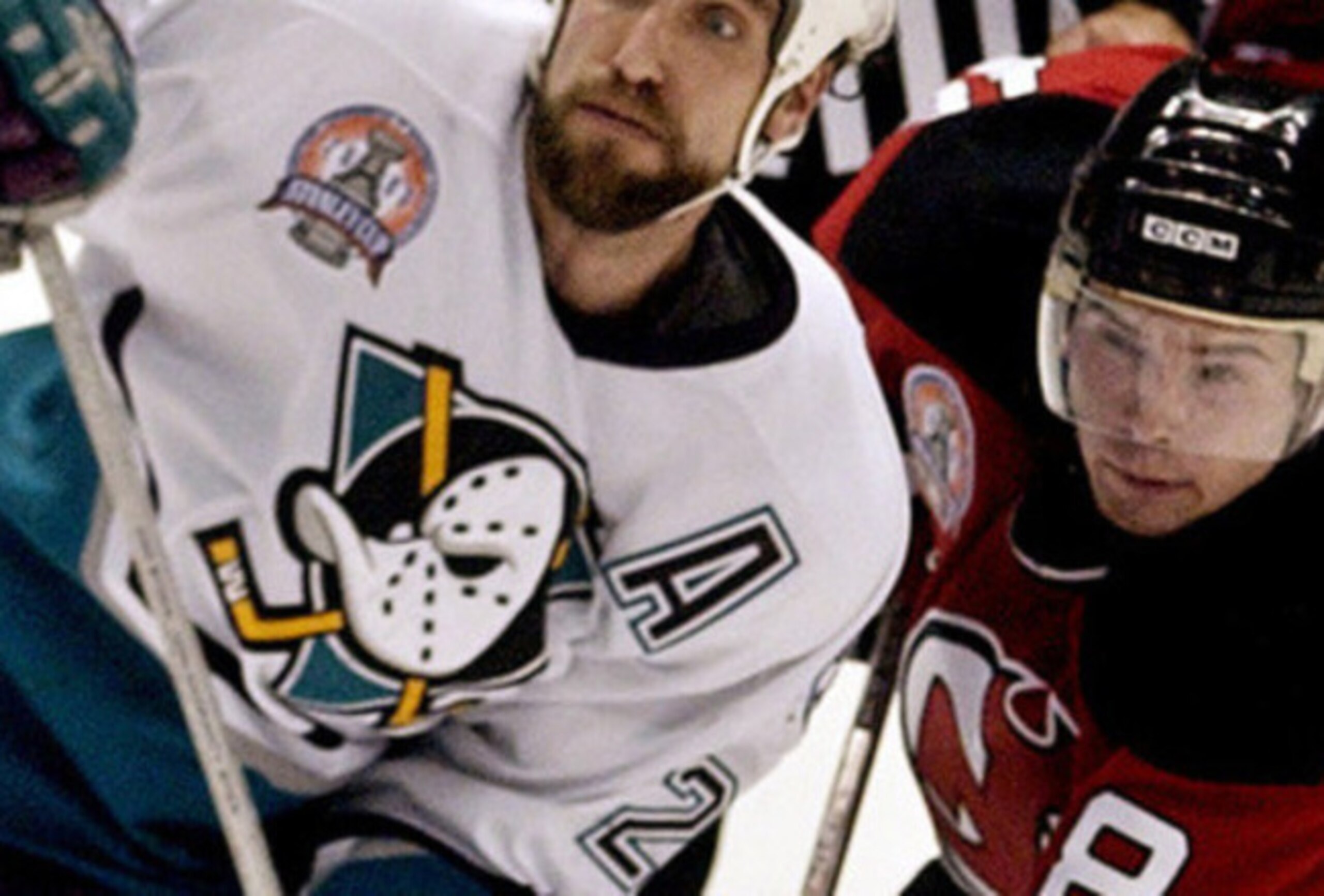
Career numbers with New Jersey
| GP | G | A | P | +/- |
| 765 | 129 | 179 | 308 | 49 |
If one player embodied the Devils' hardworking, selfless, defense-first but offensively capable mantra during the team's peak years, it is Sergei Brylin.
He could play any of the three forward positions, was content on any line and could always be relied on in his own defensive zone. He is one of only five players, and the only forward, to win three Stanley Cups with New Jersey.
His offensive numbers are modest, which is a reflection of the style he was asked to play as much as any lack of talent. In 2000-01, when the Devils led the NHL in goals and played a more offensive style, Brylin notched his only 20-plus-goal season, picking up 23 goals and 29 assists. When asked to be an offensive player, Brylin could be.
But, of course, that usually was not what the Devils needed from the Russian forward. As a result, Brylin had limited offensive numbers, while players like Mogilny, Petr Sykora, Scott Gomez, Jason Arnott, Jamie Langenbrunner and Jeff Friesen were allowed to focus on their offensive play.
With three Stanley Cups to show for it, Brylin will not complain.
4. Bobby Holik
3 of 6
Career numbers with New Jersey
| GP | G | A | P | +/- |
| 786 | 202 | 270 | 472 | 134 |
Big, strong power forwards who can be counted on to score 20 goals per season are a valuable commodity in the NHL, just as they were 20 years ago.
For 10 years, Bobby Holik filled that role to perfection.
He joined the team in 1992-93 as a 22-year-old, after spending two seasons in Hartford. In 1993-94, when the Devils eventually lost in the Eastern Conference Final to the New York Rangers, he put up a career-high plus-28 rating.
In the 1994-95 playoffs, his four goals and four assists helped the Devils to their first championship, as he centered Randy McKay and Mike Peluso on the notorious "Crash Line."
It was after the Crash Line, though, that Holik found his most consistent offensive form. Over his next six seasons, he averaged 23.67 goals, 33 assists and 60.67 points per season.
His offensive performance always came along with strong defensive play and an intimidating physical presence. He finished a season with a negative plus/minus only once during his career in New Jersey. He had over 100 penalty minutes three times and finished fifth in Selke Trophy voting in 1997-98.
Holik's extra offensive ability puts him ahead of Brylin on this list and makes him a top European player in Devils history.
.jpg?w=2560 "Golden Knights Blues Hockey")


3. Ilya Kovalchuk
4 of 6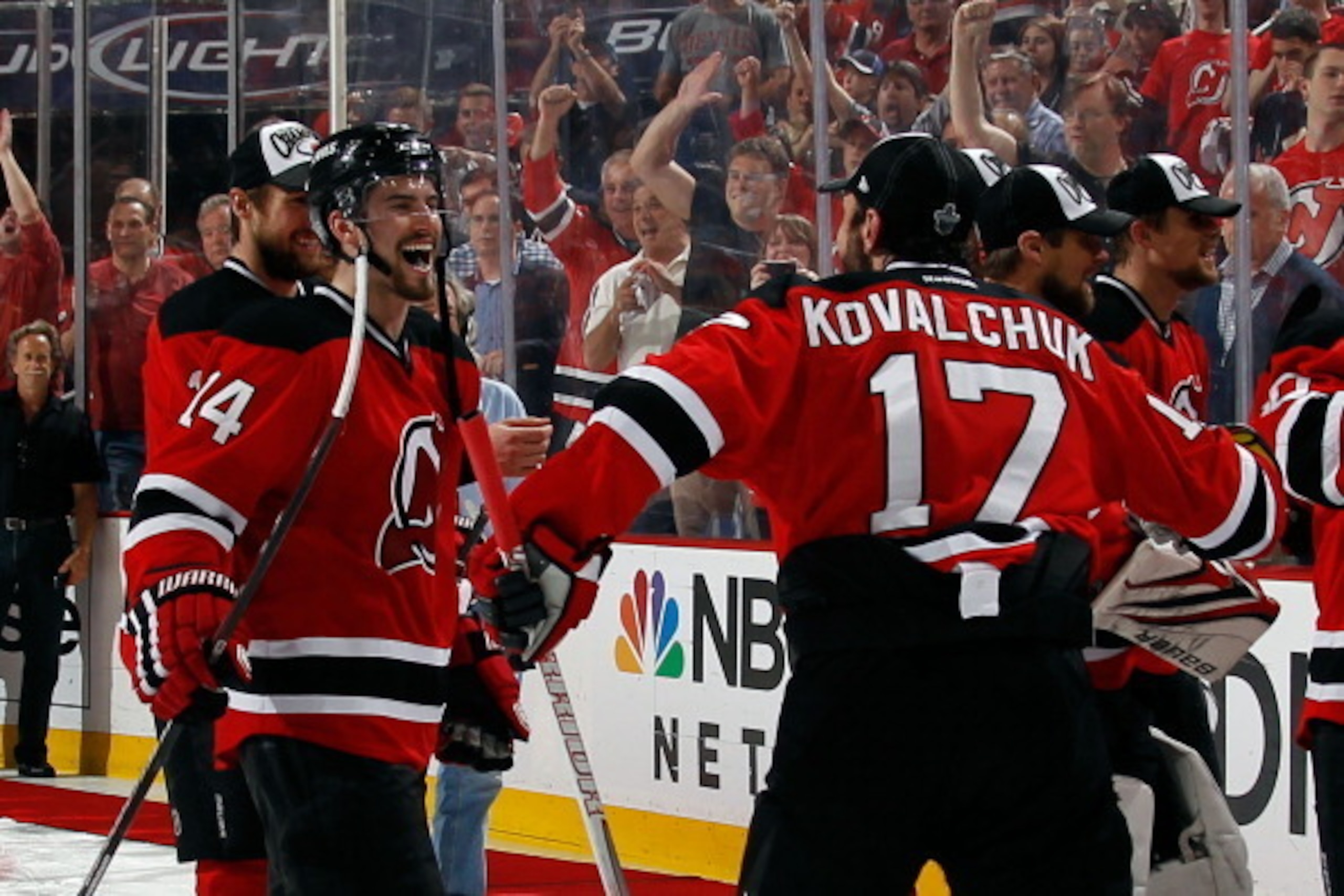
Career numbers with New Jersey
| GP | G | A | P | +/- |
| 222 | 89 | 112 | 201 | -32 |
There may be no Devils player with a more complicated legacy than Ilya Kovalchuk.
Surely, Devils fans will never forgive him for leaving the team to pursue a major payday in Russia, particularly after New Jersey lost a draft pick in the process of signing him. The fact that general manager Lou Lamoriello's focus on signing Kovalchuk may have hindered the Devils' chance of re-signing Zach Parise complicates Kovalchuk's legacy further.
But, the fact of the matter is that Kovalchuk may have been the single best offensive player in Devils history, and he nearly led New Jersey to a Stanley Cup. That means that not only must he make this list, but he must be ahead of Holik and Brylin, as he was one of the most important players on the Devils during his time in New Jersey.
Kovalchuk's 0.91 points per game is second in New Jersey history, behind only Kirk Muller's 0.94.
In the 2011-12 playoffs, he scored eight goals and picked up 11 assists over 23 games and would have been a front-runner for the Conn Smythe trophy if the Devils had managed to beat the Los Angeles Kings in the Stanley Cup Final.
His performances were made even more impressive by the fact that he was dealing with a herniated disc in his back throughout the postseason. Rich Chere at NJ.com reported head coach Peter DeBoer's comments on Kovalchuk's injuries after the series ended:
"It was quite a bit under 100 percent, I can tell you that. It was a back injury. That's not like a broken bone where you have a real handle on it, but he wasn't close to 100 percent.
I thought he showed a lot of guts, a lot of character. He didn't want to come out. He had a significant enough injury at different points that he easily could've come out and he didn't even want to go down that road. That's a testament to his character.
"
Kovalchuk will likely be remembered as a traitor, and fans are certainly entitled to that opinion.
However, he is also immensely talented and nearly helped the Devils to a Stanley Cup title at significantly less than 100 percent. For that, he deserves a place on this list.
2. Petr Sykora
5 of 6
Career numbers with New Jersey
| GP | G | A | P | +/- |
| 527 | 166 | 228 | 394 | 91 |
Petr Sykora was one-third of likely the top line in Devils history, and in the process he helped guide the team to consecutive Stanley Cup Finals.
In 1999-00, he notched 25 goals and 43 assists, giving him the third-highest points total on the team. Collectively, his line with Jason Arnott and Patrik Elias, known as the "A-Line," scored 82 goals.
In the playoffs, he had nine goals and eight assists. His line had 24 goals in 23 games during the postseason en route to a Stanley Cup title.
The next year, Sykora and the "A-Line" were even better. Sykora scored 35 goals and picked up 46 assists, both career highs. Combined, the trio had 96 goals, despite Arnott missing 28 games due to injury.
In the postseason, Sykora notched 10 goals and 12 assists, while the line collectively scored 26 goals before losing to the Colorado Avalanche in the Stanley Cup Final.
Sykora was also a decent defensive player who had a negative plus/minus in only one season with New Jersey while twice receiving votes for the Selke Trophy.
The fact that he won a title with the Devils, was a part of a team that won consecutive Eastern Conference Championships and spent eight seasons in New Jersey puts him ahead of Kovalchuk on the list, despite Kovalchuk's somewhat superior offensive numbers.
1. Patrik Elias
6 of 6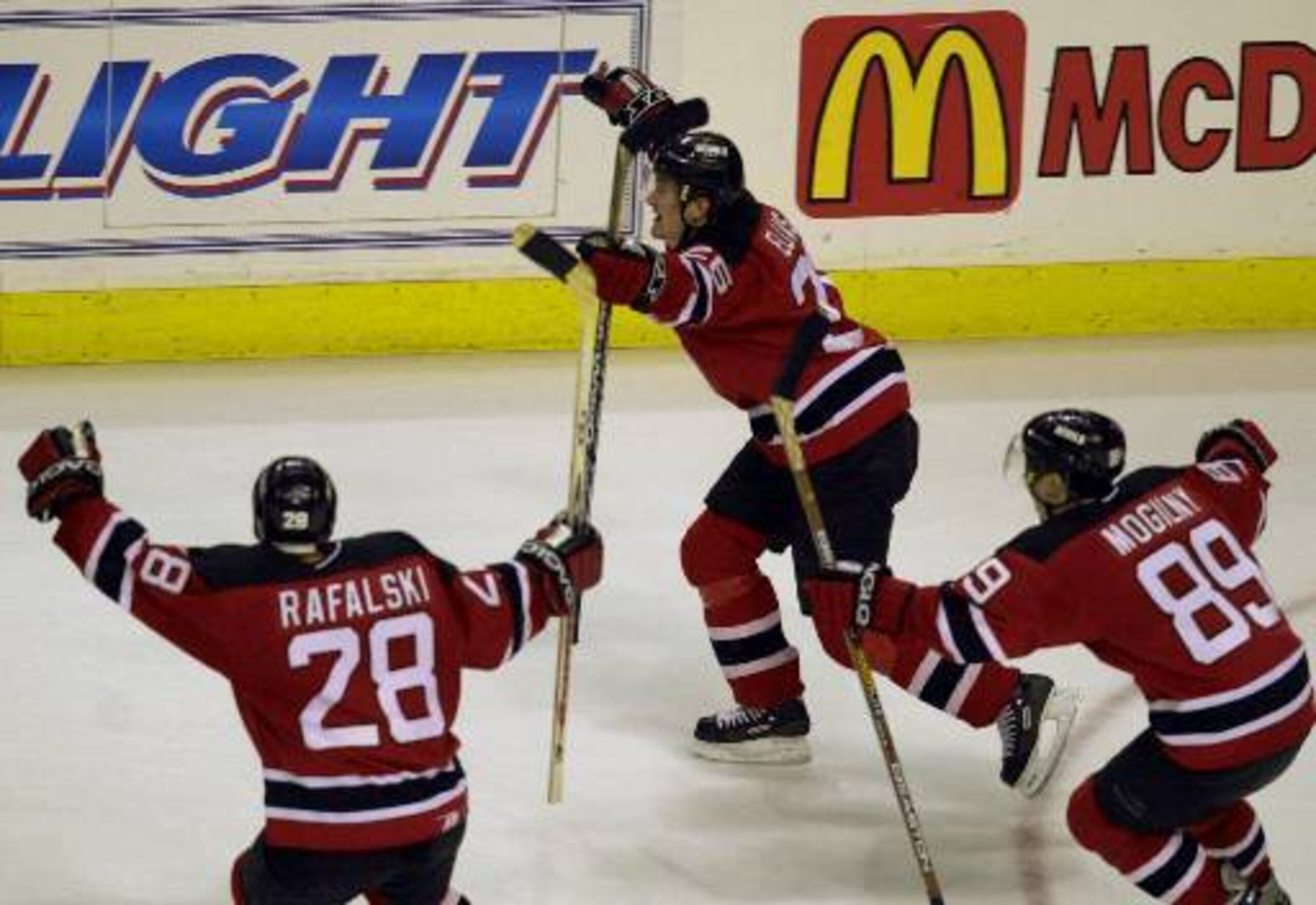
Career numbers with New Jersey
| GP | G | A | P | +/- |
| 1193 | 399 | 605 | 1004 | 174 |
Patrik Elias is not only the best European Devil but likely the best forward in Devils history as well. His place at the top of the list should come as no surprise.
What is most impressive about Elias is not any single season but his general consistency on both ends of the ice during his time in New Jersey. He has played 19 seasons in the NHL, all with the Devils, and is the team's all-time leader in goals, assists and points. He is a 10-time 20-goal scorer and amassed 60 points eight times.
Defensively, Elias has been just as consistent. The Czech forward has killed penalties during most of his time in New Jersey and has 16 short-handed goals to show for it. His plus-174 rating is second-best in team history and best among Devils' forwards.
Elias is the type of player, as Tom Gulitti reported at the Fire and Ice Blog, who actually back checks during the All-Star Game.
If he was not so defensively responsible, would his offensive stats be even more impressive? It is certainly possible, but Elias' performance in all facets of the game has helped drive the Devils to two titles and four Stanley Cup Final appearances during his time in New Jersey.
Elias' commitment to the team, in addition to his remarkable individual skill and the success he has contributed to, makes him the best European player in the history of the New Jersey Devils.


.jpg?w=2560 "Chiefs, Steelers Eye WR Trades")