
Power Ranking Every Super Bowl Champion in NFL History
How to rank Super Bowl winners? Let us count the ways.
There are so many measures by which we can look at past champions and rank their quality. Why not make it as objective as possible?
The methodology is simple. The task is not.
Ranking every Super Bowl champion is sure to rankle many fanbases, no matter how we judge them. So let's take an empirical approach rather than try to judge things like grit and clutch.
It's for that reason that I have created a "champion rating." It's a simple formula to take an objective, statistical look at each champion and see where it stacks up.
The rating is comprised of a factored points differential divided by the average offensive and defensive rankings for scoring and yardage and multiplied by winning percentage and a factored margin of victory in the Super Bowl itself. It was constructed to level the playing field between the modern teams and those that may even predate the NFL merger.
The first four Super Bowls featured teams that were in two entirely different leagues—the AFL and NFL before they merged—with little cross-pollination. That made things a bit trickier when it came to wading through the stats.
To keep things simple, team statistics from both leagues were combined, and team rankings were gleaned from there. It may not be a perfect representation for those four champions, but it's the most sensible way to bridge that gap.
48. Super Bowl XLVI: 2011 New York Giants
1 of 48
Date: February 5, 2012
Venue: Lucas Oil Stadium, Indianapolis
Final Score: New York Giants 21, New England Patriots 17
Champion Rating: 0.1
Don't think of the 2011 New York Giants as the worst Super Bowl winners in NFL history. Think of them as the least best.
That sounds nicer than what you are about to read, anyway.
For the second time in four years, the Giants became the bane of New England's existence, beating the Patriots in improbable fashion after a season that should have put them nowhere near the Lombardi Trophy.
The Giants have the distinction of being the only team to win a Super Bowl after having been outscored on the season—New York had a negative points differential of six for the year. The Giants were wholly average on the year, barely cracking the top 10 offensively and ranking near the bottom of the league on defense.
They were lucky to even be there after the San Francisco 49ers fumbled away the NFC Championship Game. For the second time in as many Super Bowl meetings, the Giants were underdogs against the Patriots.
There was no Helmet Catch this time, only tough defense that stymied Tom Brady once again and held the Patriots to just 17 points.
That is not to say they weren't deserving in the end—they clawed their way to ultimate victory, regardless of circumstance—but the 2011 Giants will likely be the least impressive Super Bowl victors for a long time to come.
47. Super Bowl XLII: 2007 New York Giants
2 of 48
Date: February 3, 2008
Venue: University of Phoenix Stadium, Glendale, Arizona
Final Score: New York Giants 17, New England Patriots 14
Champion Rating: 0.2
It was a play that will live in infamy.
Eli Manning dropped back on third down, down four points with 1:15 remaining. The New England Patriots were about to pull off what many thought impossible—run the table in the modern NFL.
Somehow, Manning escaped the clutches of Jarvis Green and Richard Seymour, scrambling outside the pocket to fire an ill-advised deep ball to little-known receiver David Tyree, who was surrounded by Patriots defenders.
Tyree pinned the ball to his helmet, and—despite the best efforts of safety Rodney Harrison—hung onto it while crashing to the ground.
Much like their 2011 iteration, however, the 2007 Giants were lucky to be there. They were in the middle of the pack on both offense and defense, and they backed into the playoffs with two losses in the final three games of the regular season.
One of those losses was a surprisingly close affair against the Patriots, however. Perhaps oddsmakers should have taken that into account when they installed New England as 12.5-point favorites in the Super Bowl.
46. Super Bowl XLVII: 2012 Baltimore Ravens
3 of 48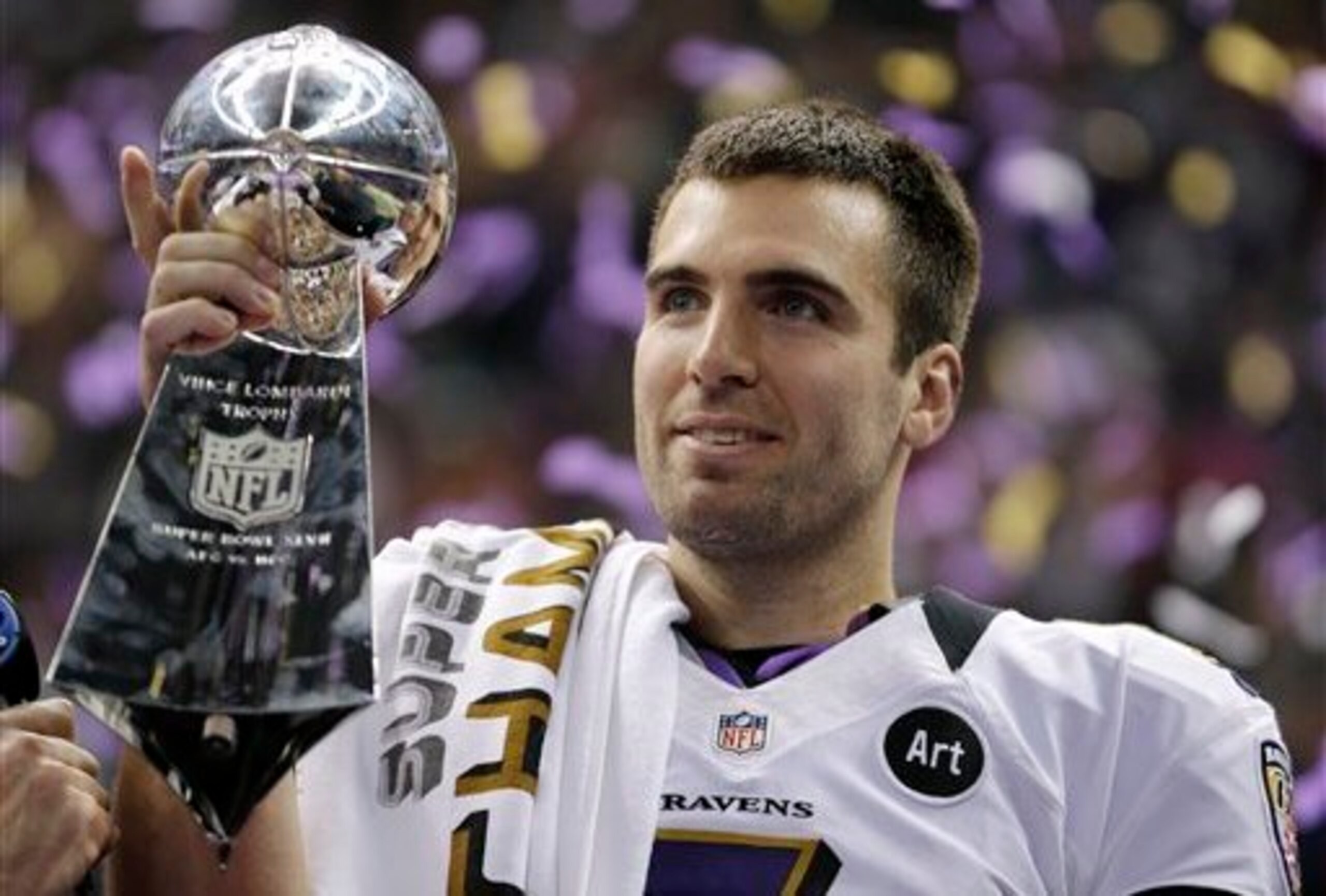
Date: February 3, 2013
Venue: Mercedes-Benz Superdome, New Orleans
Final Score: Baltimore Ravens 34, San Francisco 49ers 31
Champion Rating: 0.3
Hindsight is a curious lens.
If the NFL had just employed taller goal posts, Super Bowl XLVII might have been an entirely different story. Instead, Baltimore Ravens kicker Justin Tucker's game-winning field goal that sailed directly over the right bar gave them a regular-season victory over the New England Patriots, and they eventually won the AFC North.
Or how about when they were dead and nearly buried against the Denver Broncos in the AFC Championship Game, less than a minute away from defeat before Denver safety Rahim Moore let Baltimore receiver Jacoby Jones get behind him for a 70-yard touchdown to tie a game the Ravens would eventually win in overtime?
The 2012 Ravens were one of those teams of destiny, catching fire at the best possible time. Quarterback Joe Flacco's torrid postseason run—11 touchdowns and zero interceptions—was the fuel for that fire.
.jpg?w=2560 "Seahawks Chiefs Football")
.jpg?w=2560 "Super Bowl Halftime Jay-Z")
.jpg?w=2560 "Colts Vikings Football")
45. Super Bowl XXXVI: 2001 New England Patriots
4 of 48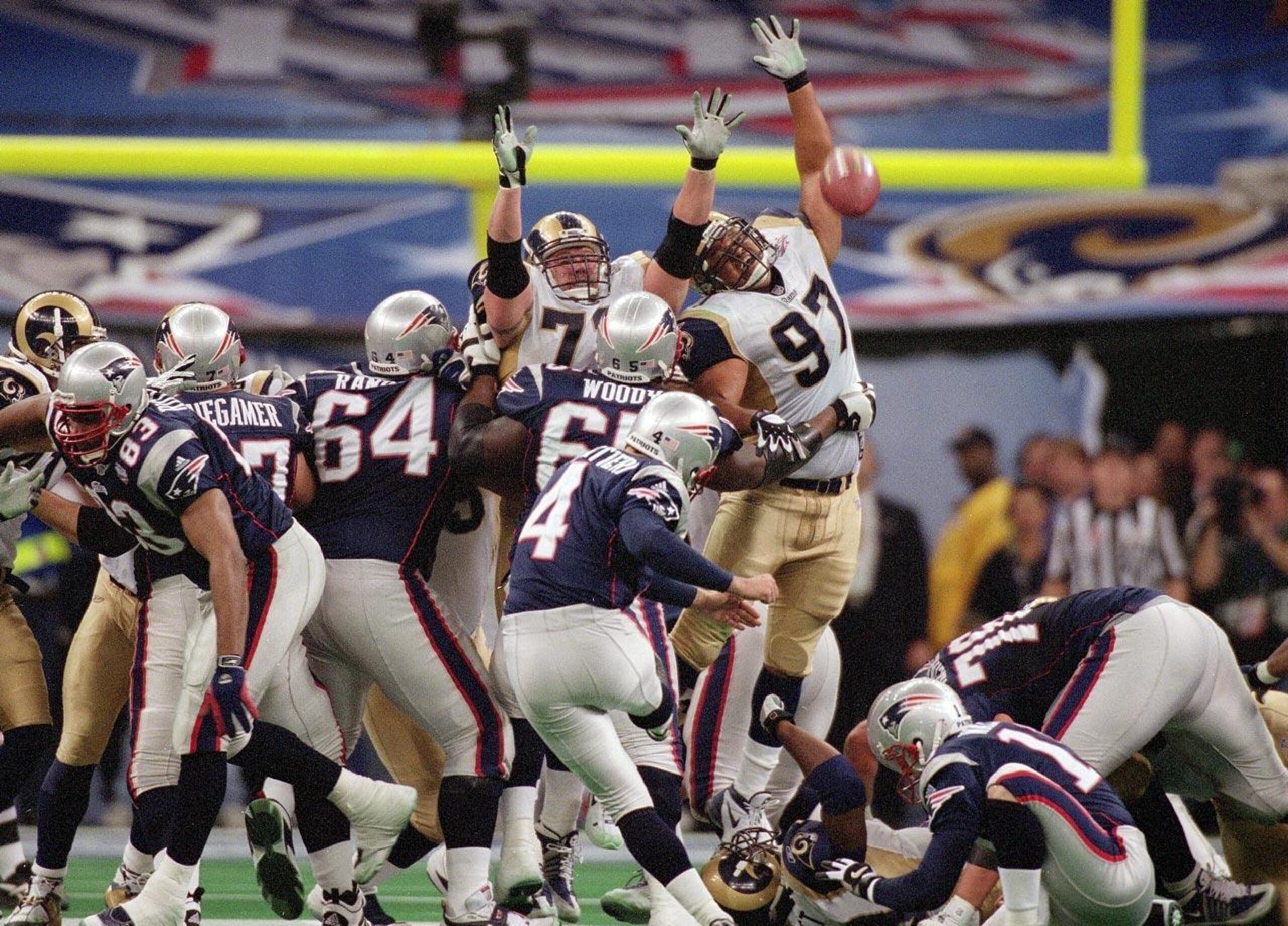
Date: February 3, 2002
Venue: Louisiana Superdome, New Orleans
Final Score: New England Patriots 20, St. Louis Rams 17
Champion Rating: 0.6
The irony of this is that the two New England Patriots teams that lost against the New York Giants in recent years would have been ranked near or even at the top of this list, whereas the three Super Bowl winning squads were far less impressive teams.
That is not to say they weren't great teams—all Super Bowl winners are, to varying degrees—but that New England team doesn't quite hold up among the best when compared to other champions.
The Patriots weren't supposed to win the game. They weren't even supposed to be there, if you ask any Oakland Raiders fans. Tom Brady's fumble during the divisional game at the hands of cornerback Charles Woodson was overruled thanks to the infamous tuck rule, and the rest is history.
Adam Vinatieri kicked a game-tying 45-yard field goal in the snow, and he would kick the overtime winner just a few minutes later.
After handling the Pittsburgh Steelers in the AFC Championship Game, the Patriots entered the Super Bowl as 14-point underdogs against the Rams, who once again featured the best offense in the league. The Patriots were sixth in scoring offense and defense, but they only had a 99-point differential, barely winning the AFC East in a tiebreaker.
Against all odds, New England held the Greatest Show on Turf to 17 points, beating the heavily favored Rams with another clutch field goal from Vinatieri. The improbable victory would be the beginning of one of the most dominant runs in NFL history for Brady, head coach Bill Belichick and the Patriots.
44. Super Bowl XLI: 2006 Indianapolis Colts
5 of 48
Date: February 4, 2007
Venue: Dolphin Stadium, Miami
Final Score: Indianapolis Colts 29, Chicago Bears 17
Champion Rating: 0.9
Before the Seattle Seahawks put the Denver Broncos and half the audience to sleep in Super Bowl XLVIII, we saw a nice run of quality championship games filled with drama. There were six great super contests in a row prior to the 2014 waxing.
The last snoozer before that? A soggy affair involving Rex Grossman.
The 2006 Indianapolis Colts had a great offense thanks to future Hall of Fame quarterback Peyton Manning. They were second in scoring and third in total offense, not atypical for a Manning-led offense.
That defense was another thing entirely, however, particularly against the run. It was, by far, the worst run defense to ever win a Super Bowl, having allowed 2,768 rushing yards and 20 touchdowns. It renders the fact the Colts ranked second against the pass utterly useless.
It didn't matter much against the overmatched Bears, whose best weapon was return man Devin Hester. He opened up Super Bowl XLI with an electrifying kickoff return for a touchdown, but it was all downhill from there for Chicago.
43. Super Bowl XV: 1980 Oakland Raiders
6 of 48
Date: January 25, 1981
Venue: Louisiana Superdome, New Orleans
Final Score: Oakland Raiders 27, Philadelphia Eagles 10
Champion Rating: 0.9
Where would the Oakland Raiders have ranked here without Jim Plunkett? Better yet, would they have won the Super Bowl at all?
After a tumultuous career that saw him wash out in New England and San Francisco, the 33-year-old Plunkett found himself thrust into the fire when starter Dan Pastorini was knocked out for the season with a broken leg.
It was a tumultuous season all around for the Raiders, who were forced to move back to Oakland a month after owner Al Davis had actually moved the team to Los Angeles. After a 2-3 start, it was hard to imagine the Raiders finishing above .500, let alone win a Super Bowl.
The Raiders proved resilient, as former head coach Tom Flores detailed at Raiders.com:
"The relocations and legal actions were never allowed to become major distractions to our players and coaches. Al Davis would never let these things be distractions. The main purpose was for us to win. Anything else was secondary, and Al would take care of that in his own time. The team never talked about anything but football - winning football. This is a very courageous bunch of guys. They absolutely refused to believe anything but that they could win.
"
Perhaps they would have been more dominant without all the distractions and roster turnover, but the Raiders wound up winning nine of their final 11 games to make the playoffs as a wild-card team and ultimately win it all.
Oakland exacted a measure of revenge on Philadelphia, beating an Eagles team that had won a head-to-head matchup 10-7 earlier in the season.
42. Super Bowl XLIII: 2008 Pittsburgh Steelers
7 of 48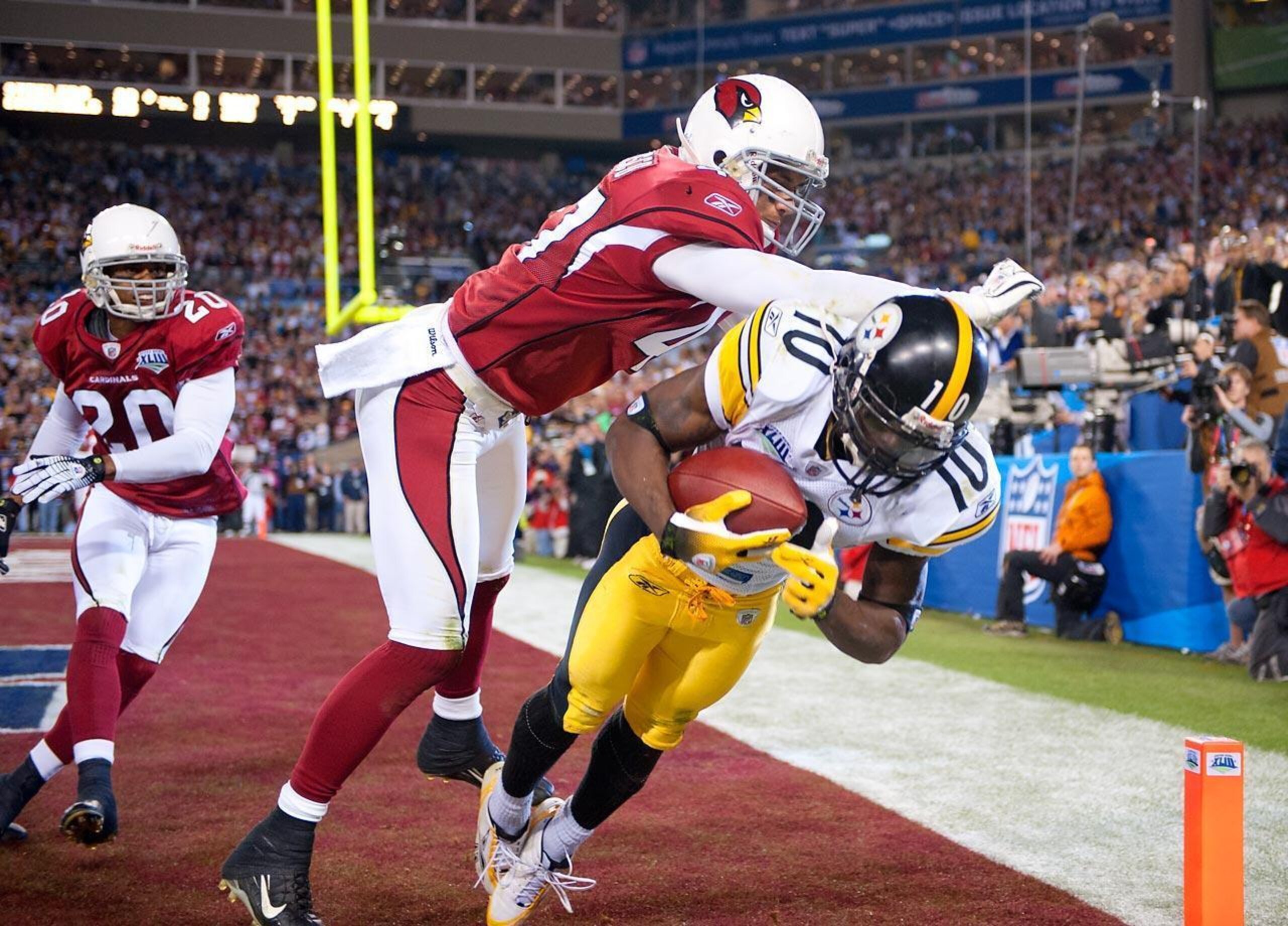
Date: February 1, 2009
Venue: Raymond James Stadium, Tampa, Florida
Final Score: Pittsburgh Steelers 27, Arizona Cardinals 23
Champion Rating: 1.0
A new day dawned in Pittsburgh as Mike Tomlin took over as head coach for the legendary Bill Cowher. Expectations are always high in Pittsburgh, but Tomlin exceeded those, winning Coach of the Year en route to a championship on his first try.
It was one of the most riveting championship games in recent memory. So why are the winners of Super Bowl XLIII ranked so low?
The Steelers featured the top defense in the league, but a pedestrian offense had them ranked in the bottom 13 for scoring and total yardage. That old adage saying defense wins championships was in play.
The victory ruined a magical season for Kurt Warner, who rekindled a career that had seemingly flamed out to lead the Cardinals to within 35 seconds of the franchise's first Super Bowl victory.
Alas, the Pittsburgh Steelers would not go quietly into the night, marching down the field and scoring a game-winning touchdown thanks to receiver Santonio Holmes making a beautiful catch in the corner of the end zone.
41. Super Bowl XXIII: 1988 San Francisco 49ers
8 of 48
Date: January 22, 1989
Venue: Joe Robbie Stadium, Miami
Final Score: San Francisco 49ers 20, Cincinnati Bengals 16
Champion Rating: 1.1
Who would have thought actor John Candy would factor into a Super Bowl victory?
The game was known for "The Drive," quarterback Joe Montana's 92-yard march down the field to victory. It started with a tension-breaking nod to Candy, as John Belock of the New York Daily News detailed:
"Joe Montana didn’t take a plane, train or automobile but chose to drive instead.
The ultimate football Super hero drove the San Francisco 49ers 92 yards in the waning moments of Super Bowl XXIII to beat the Cincinnati Bengals, 20-16, for their third title of the decade.
And it all started with an assist from John Candy. Trailing by three points and standing at his own 8-yard line, Montana broke the ice in a tense huddle by pointing out the Canadian comic actor in the stands. From there, Montana cemented his Super Bowl legend, completing 8-of-9 passes on the 11-play drive that ended with a 10-yard TD strike to John Taylor with 34 seconds left.
"
It was a great end to a tumultuous season for Montana and the 49ers, who were 6-5 at one point as he battled for his job with upstart southpaw Steve Young. They would go 4-1 to finish out the season on a nice run as Montana held onto the job for good.
The 49ers had just a 75-point differential that year, though they were in the top 10 in total and scoring offense and defense. They were simply not dominant like some of their other teams from the '80s or '90s.
The scintillating finish was one for the ages, but this was the worst San Francisco squad of all the Super Bowl winners. If only other teams should be so lucky, right?
40. Super Bowl XXXVIII: 2003 New England Patriots
9 of 48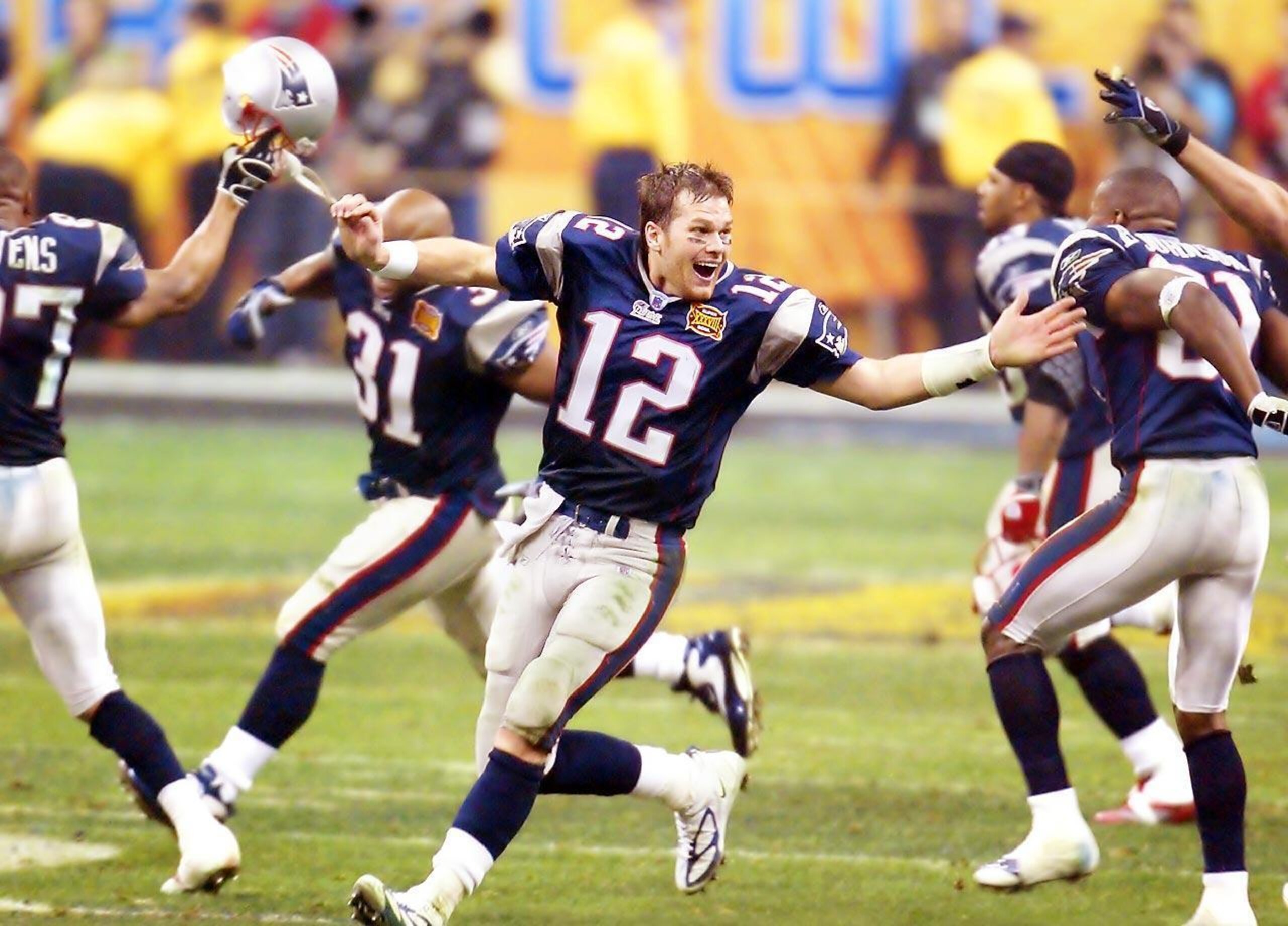
Date: February 1, 2004
Venue: Reliant Stadium, Houston
Final Score: New England Patriots 32, Carolina Panthers 29
Champion Rating: 1.2
Another Super Bowl, another close call for the New England Patriots as they defeated Jake Delhomme and the Carolina Panthers with a late field goal.
There was no shock this time around, as the Patriots were the favored team. They had blitzed through the NFL to the tune of a 14-2 record en route to the first win of the last back-to-back Super Bowl championships.
The Patriots weren't quite the dominant team they would become as the decade progressed, partially because future Hall of Fame quarterback Tom Brady was still developing into a lethal weapon. The offense wasn't bad—it ranked 12th in scoring and 17th in yardage—but it was the defense that buoyed New England to a second title in three years.
Led by the likes of linebacker Tedy Bruschi, defensive end Willie McGinest, cornerback Ty Law and newcomer safety Rodney Harrison, the Patriots led the league in scoring defense—allowing just over two touchdowns per game—and were seventh in total defense.
Adam Viniateri's leg won it all in the end as he booted a 41-yard field goal to win it for the Patriots in the waning moments of Super Bowl XXXVIII.
39. Super Bowl XXV: 1990 New York Giants
10 of 48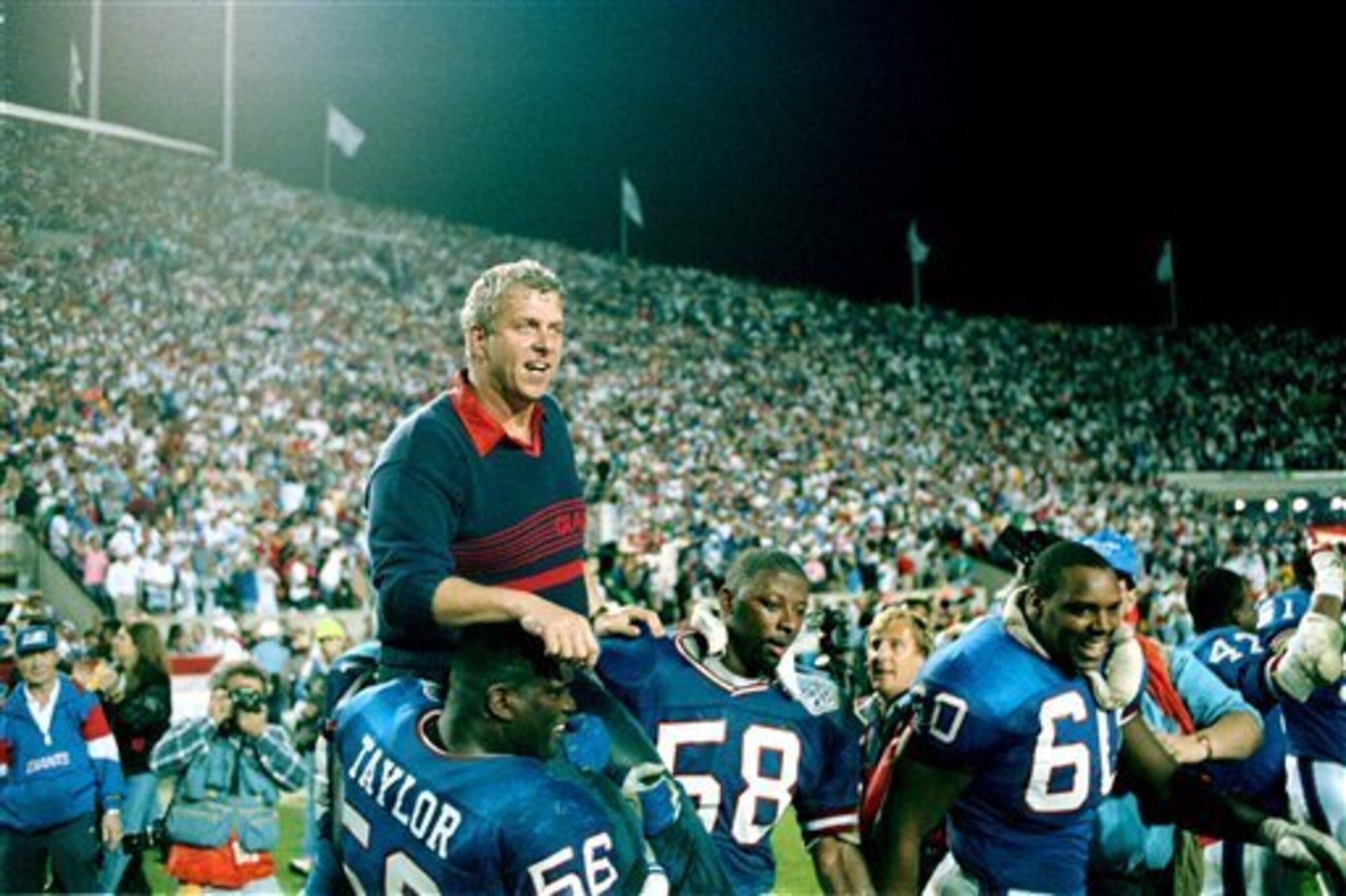
Date: January 27, 1991
Venue: Tampa Stadium, Tampa, Florida
Final Score: New York Giants 20, Buffalo Bills 19
Champion Rating: 1.2
Heading into the Super Bowl with a backup quarterback must be a harrowing affair for that team's fans.
That's what New York Giants fans went through at the end of the 1990 season, as their team's fate was in the hands of Jeff Hostetler after Phil Simms was knocked out for the season.
New York's opponent in the Super Bowl was the team that put Hostetler in the game to begin with. Simms suffered a broken foot in a Week 15 loss to the Buffalo Bills, summoning his backup to answer destiny's call.
That the Giants won on the backs of their defense was fitting, considering it was Lawrence Taylor and Co. who got them there. Taylor wasn't much of a factor in the Big Game due to his own injury, but New York's top-ranked scoring defense held Buffalo's top-ranked offense to just 19 points.
Of course, head coach Bill Parcells' declaration that "power wins football games," as Sports Illustrated's Paul Zimmerman chronicled, might not have happened if Bills kicker Scott Norwood hadn't infamously pushed a game-winning field goal wide right in the final seconds, but history belongs to the winners.
38. Super Bowl V: 1970 Baltimore Colts
11 of 48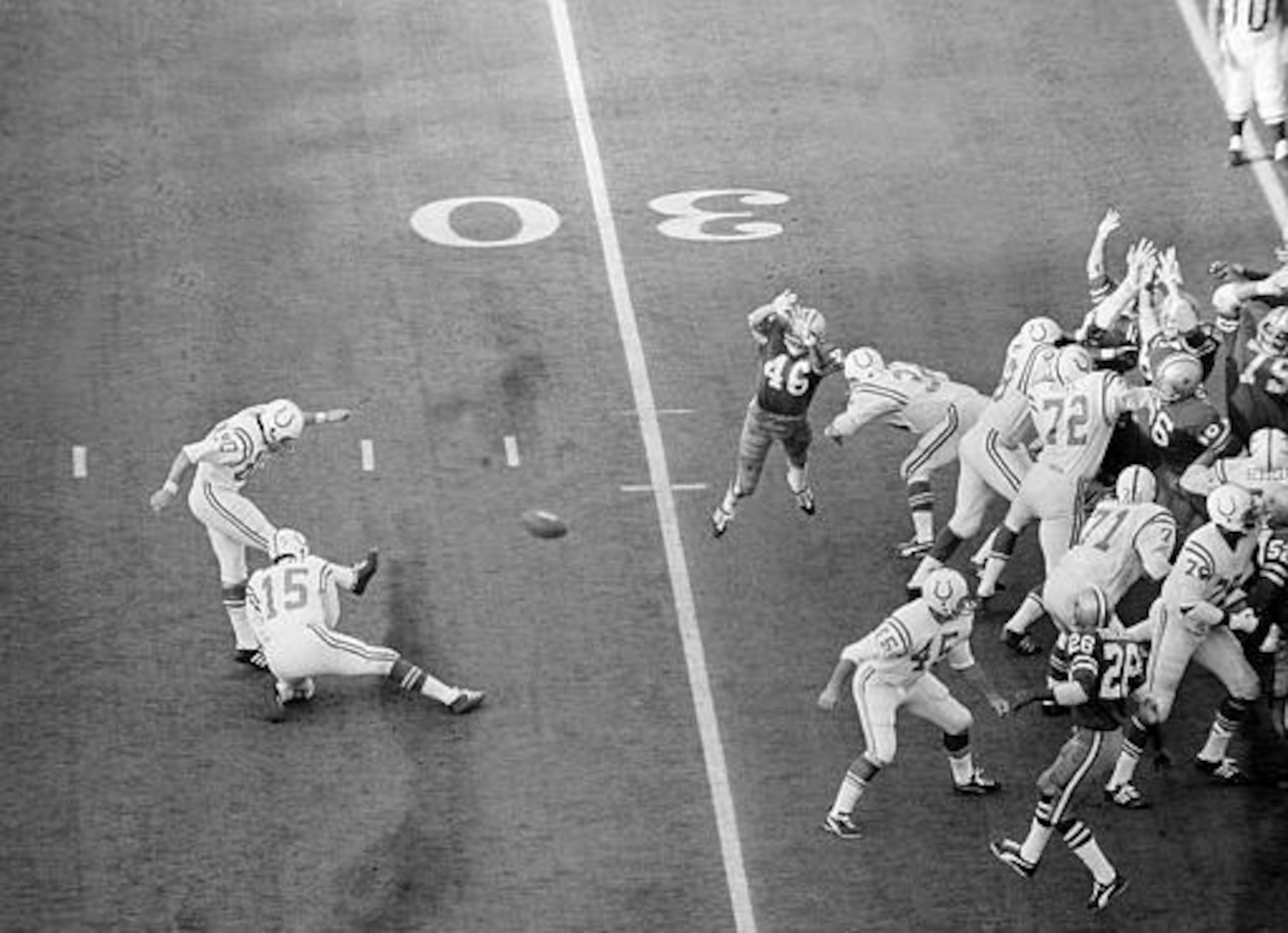
Date: January 17, 1971
Venue: Orange Bowl, Miami
Final Score: Baltimore Colts 16, Dallas Cowboys 13
Champion Rating: 1.2
Super Bowl V had a rather unique outcome.
The 16-13 victory by the Baltimore Colts doesn't particularly stand out, other than the fact it was a low-scoring affair. The fact that the MVP award for the game went to a player on the losing team, however, is a bit of a sore thumb.
Linebacker Chuck Howley won the award in a losing effort for the Dallas Cowboys. It was that kind of game.
For their part, the Colts only outscored opponents by 87 points on the year—99 points when prorated to 16 games—not exactly a dominant run.
37. Super Bowl XL: 2005 Pittsburgh Steelers
12 of 48
Date: February 5, 2006
Venue: Ford Field, Detroit
Final Score: Pittsburgh Steelers 21, Seattle Seahawks 10
Champion Rating: 1.5
Fortune favored the Pittsburgh Steelers as they rode a four-game winning streak into the playoffs as the No. 6 seed and just kept on winning all the way through the end.
Bill Cowher's team was the first to ever win a Super Bowl by beating the top three seeds in a conference, and he was rewarded with a matchup against the Seattle Seahawks in Super Bowl XL.
The Seahawks boasted the top scoring offense in the league, buoyed by running back Shaun Alexander's 27-touchdown season. The Steelers were able to neutralize the league MVP, for the most part, and the Seahawks only mustered 10 points as a result.
36. Super Bowl XLV: 2010 Green Bay Packers
13 of 48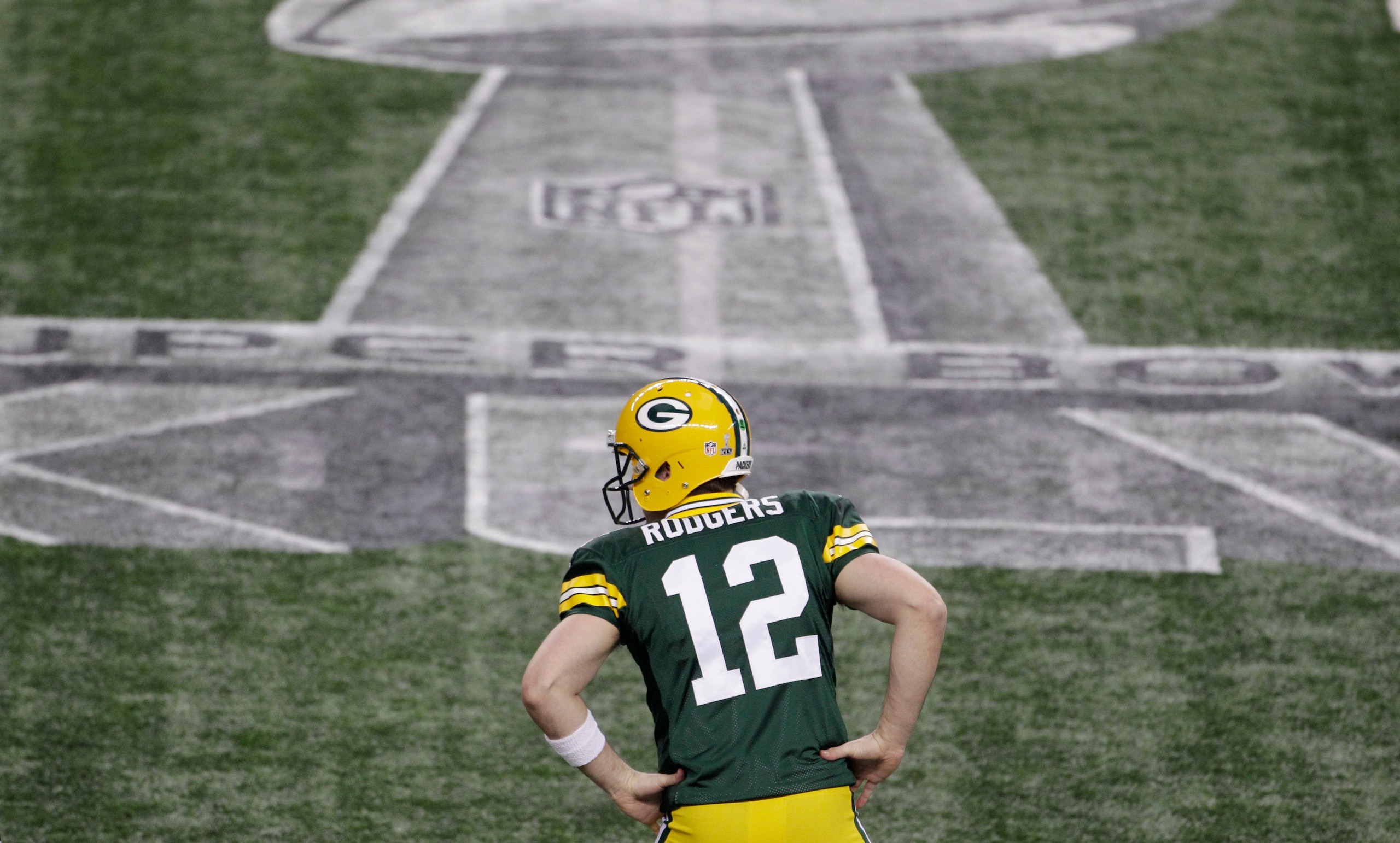
Date: February 6, 2011
Venue: Cowboys Stadium, Arlington, Texas
Final Score: Green Bay Packers 31, Pittsburgh Steelers 25
Champion Rating: 1.6
It's amazing what a difference a good defense makes.
The Green Bay Packers have featured a powerful offense thanks to star quarterback Aaron Rodgers for years now, but it was a stout defense that helped get them over the Super Bowl hump. A lack of quality defense since then has been a big reason why they haven't returned.
Their return to Super Bowl glory almost didn't happen—the Packers wound up in a three-way tie for the final playoff spot with the New York Giants and Tampa Bay Buccaneers. They got in by having the highest strength of victory.
It's amazing the Packers even lost six games when considering the fact they never trailed by more than a touchdown in any game throughout the year. They are the only Super Bowl winners in history to accomplish that feat.
35. Super Bowl XVI: 1981 San Francisco 49ers
14 of 48
Date: January 24, 1982
Venue: Pontiac Silverdome, Pontiac, Michigan
Final Score: San Francisco 49ers 26, Cincinnati Bengals 21
Champion Rating: 1.7
The beginning of dynasties is often beatified by legend. San Francisco's first Super Bowl victory was anything but pretty, however.
The Cincinnati Bengals couldn't get out of their own way as the 49ers built a 20-0 lead. Had they been able to hang onto the ball in the red zone, we might be telling a far different story.
The 49ers took full advantage of first-half miscues by their opponent, however, and the cushion was enough to get them through a harrowing second half that saw the Bengals cut the lead to six in the fourth quarter.
That season marked the rise to greatness for quarterback Joe Montana, who took a 6-10 team and helped transform it into a league power. But he wasn't at the height of his powers just yet—it was a second-ranked defense that powered San Francisco's run.
Featuring cornerback Dwight Hicks, defensive end Fred Dean and a rookie safety by the name of Ronnie Lott, that squad allowed just 250 points and 4,763 total yards. Only three teams would even crack 20 points against the 49ers during the regular season.
34. Super Bowl XLIV: 2009 New Orleans Saints
15 of 48
Date: February 7, 2010
Venue: SunLife Stadium, Miami
Final Score: New Orleans Saints 31, Indianapolis Colts 17
Champion Rating: 1.7
The Saints finally earned their "S" after decades of misery and heartache for their fans, and they had quarterback Drew Brees to thank for it.
Well, they also had cornerback Tracy Porter's game-sealing interception of Colts quarterback Peyton Manning to thank. Head coach Sean Payton's gamble with a surprise onside kick to start the second half was also a big factor.
Brees was the biggest reason the Saints were there in the first place, as they featured the second-most prolific offense to ever win a Super Bowl. They led the league with 510 points and 6,461 total yards, easily the best in the league.
Key defensive plays marked their postseason run. Porter saved the day in the NFC Championship Game, too, intercepting Brett Favre to prevent the Minnesota Vikings from kicking a game-winning field goal instead of going into overtime.
It was the fifth takeaway of the game for the Saints. The defense showed up when it mattered most, despite a pedestrian regular season. Brees did the rest.
33. Super Bowl II: 1967 Green Bay Packers
16 of 48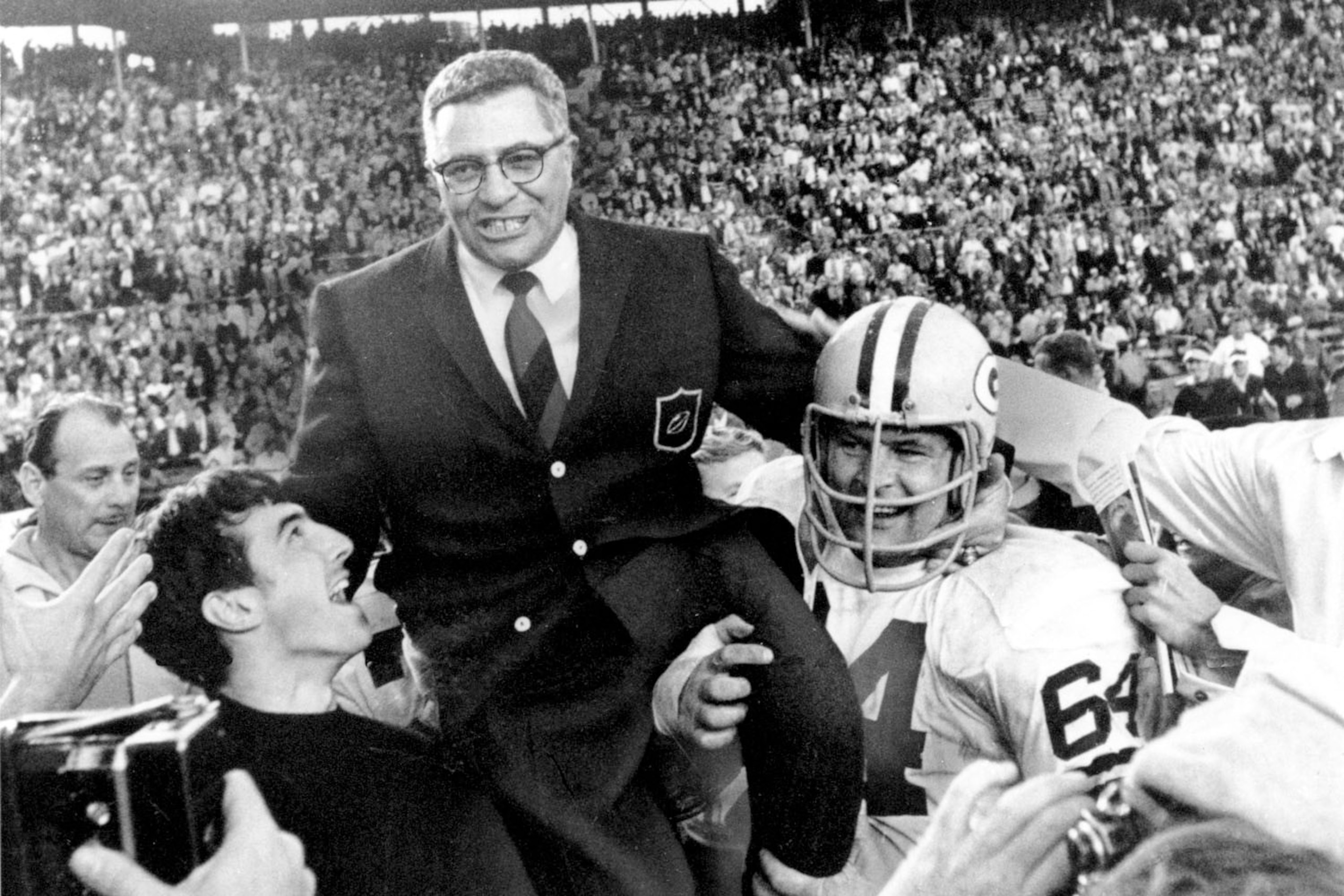
Date: January 14, 1968
Venue: Orange Bowl, Miami
Final Score: Green Bay Packers 33, Oakland Raiders 14
Champion Rating: 2.3
Green Bay's second Super Bowl championship was a slog compared to its first.
Injuries ravaged the team, forcing even Bart Starr to miss several games. Despite that, the offense was nearly identical to what it was the year before—scoring three fewer points and gaining four more yards—but the rest of the NFL and AFL had improved.
The Packers were ranked 14th in scoring and 13th in yardage between the two leagues. But the defense was still stellar.
The Packers allowed just 12.7 points per game in the playoffs en route to their big win over the Oakland Raiders, who were the second AFL team to be overmatched in the Super Bowl era.
32. Super Bowl XXXVII: 2002 Tampa Bay Buccaneers
17 of 48
Date: January 26, 2003
Venue: Qualcomm Stadium, San Diego
Final Score: Tampa Bay Buccaneers 48, Oakland Raiders 21
Champion Rating: 2.0
Brad Johnson has more Super Bowl wins than Dan Marino, Jim Kelly, Dan Fouts, Fran Tarkenton, Randall Cunningham and Ken Anderson combined. He has the 2002 Tampa Bay Buccaneers defense to thank for it.
That unit was easily the best in the league, allowing just 196 points and 4,044 points on the season. Tampa Bay's pass defense was a thing of beauty, allowing the fewest yards in the air among Super Bowl winners since the league went to 16 games.
It was going up against the league's best passing offense led by MVP quarterback Rich Gannon, and it was no contest, as SB Nation's Ryan Nanni tells it:
"And then the vise started to close on the Raiders. From 3-3 forward, Rich Gannon dropped back to pass 16 times in the first half. Combining the net yardage of the five passes Gannon completed and the two times he took a sack, Oakland gained 33 yards. Two other Oakland throws were intercepted by the Buccaneers. Those were run back for a total of 34 yards. To reiterate: the best passing attack in the NFL was getting out-gained through the air by the defense it was facing.
"
The Buccaneers would intercept Gannon five times with 172 return yards on the day, just 100 shy of his 272 passing yards on the day.
31. Super Bowl XVII: 1982 Washington Team
18 of 48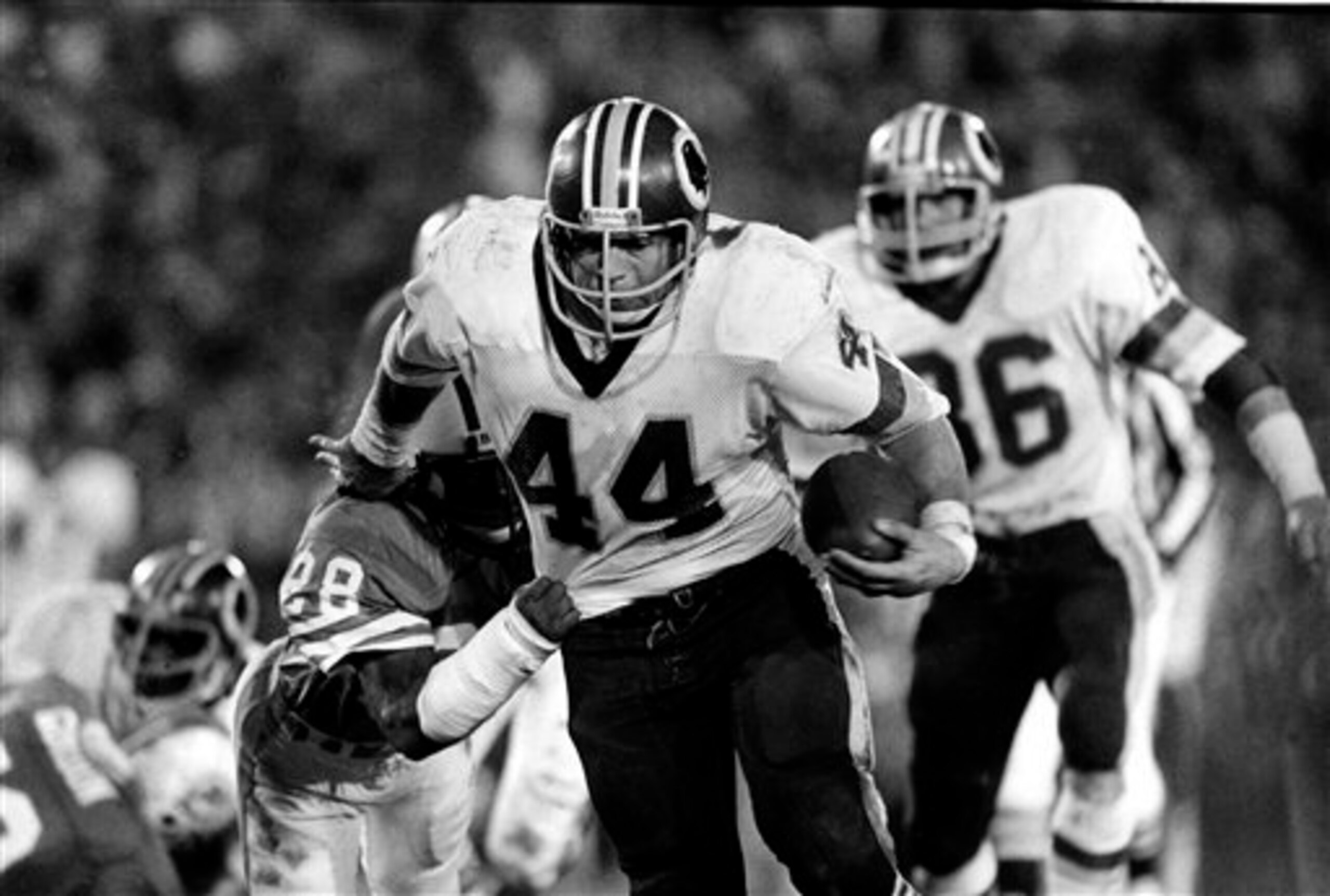
Date: January 30, 1983
Venue: Rose Bowl, Pasadena, California
Final Score: Washington 27, Miami Dolphins 17
Champion Rating: 2.1
Good thing John Riggins ended his holdout.
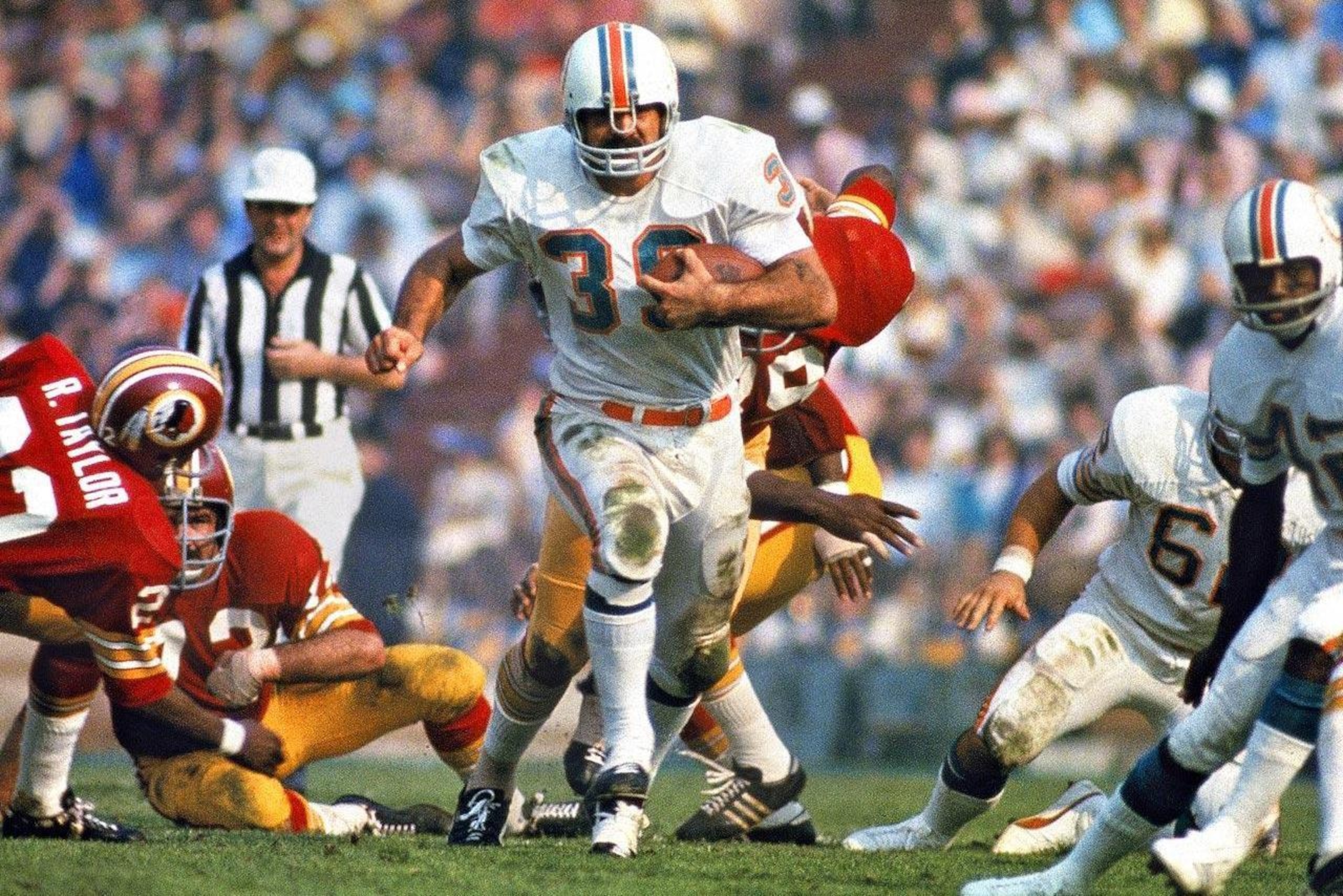
Washington's rumbling running back ran roughshod through the Miami Dolphins defense in Super Bowl XVII, carrying the ball 38 times for 166 yards and a touchdown. Just a couple of years before that, Riggins was out of football thanks to a protracted contract dispute.
His performance in the Super Bowl helped his team hang onto the ball for more than 36 minutes and stiff- arm the Miami Dolphins in their first Super Bowl appearance since the 1972 and 1973 championships.
It was also a good thing the players decided to end their strike, which does make Washington's valuation as a Super Bowl winner a tricky one. Their statistics were prorated from nine games to 16, leaving a lot to presumption.
Having one of the top defenses in the league got Joe Gibbs' squad to the Super Bowl, and Riggins ran away with the rest.
30. Super Bowl XXII: 1987 Washington Team
19 of 48
Date: January 31, 1988
Venue: Jack Murphy Stadium, San Diego
Final Score: Washington 42, Denver Broncos 10
Champion Rating: 2.1
What is it with Washington winning the Super Bowl in shortened seasons?
Much like Washington's Super Bowl win after the nine-game 1981 season, the 1987 season is also a bit of a thorny one to evaluate. This time it was a 15-game slate that was partially conducted with replacement players thanks to a player strike.
Perhaps removing the game that replacement players played from the equation and prorating the statistics would do, but would that be any more of an accurate representation?
Therefore, Washington's 1987 season stands in its full glory, and the team clocks in as the 30th-best Super Bowl champion in NFL history, according to the metrics.
Doug Williams became the first black quarterback to win a Super Bowl, throttling John Elway's Broncos with a Super Bowl-record 35 points in the second quarter.
Williams also broke records with 340 passing yards and four touchdowns, a masterful performance.
29. Super Bowl XI: 1976 Oakland Raiders
20 of 48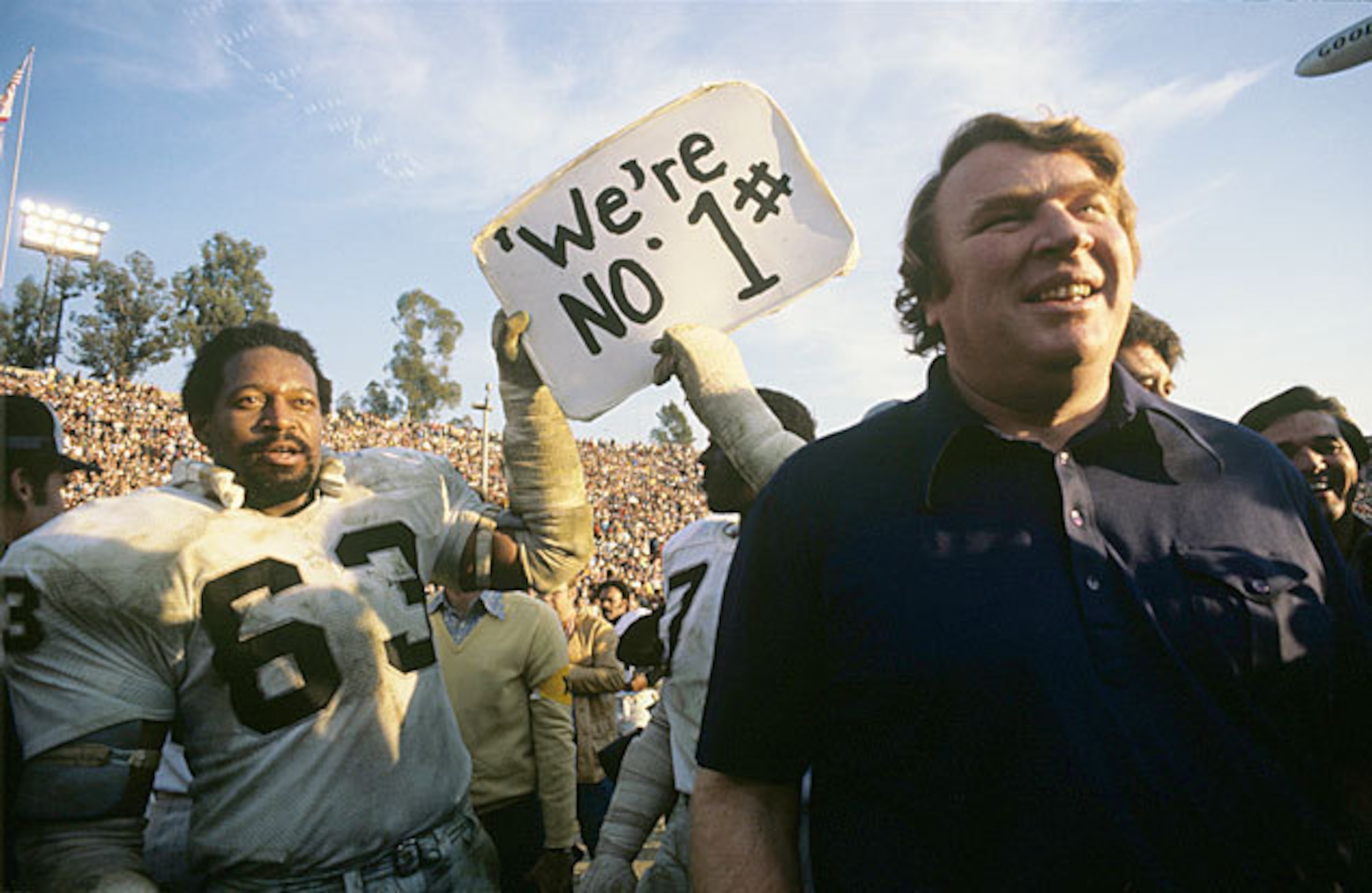
Date: January 9, 1977
Venue: Rose Bowl, Pasadena, California
Final Score: Oakland Raiders 32, Minnesota Vikings 14
Champion Rating: 2.2
The Oakland Raiders hired John Madden, and the rest was history. It just took a little while to get there.
Seven years and six playoff appearances after taking over, Madden won the only Super Bowl of his career. He did it with Ken Stabler's arm and Fred Biletnikoff's hands; the latter won MVP honors for his performance in the Big Game.
The Raiders had the fourth-best scoring offense and had the second-most yardage in the league, buoying a middling defense that tightened up just in time for the playoffs.
28. Super Bowl XVIII: 1983 Los Angeles Raiders
21 of 48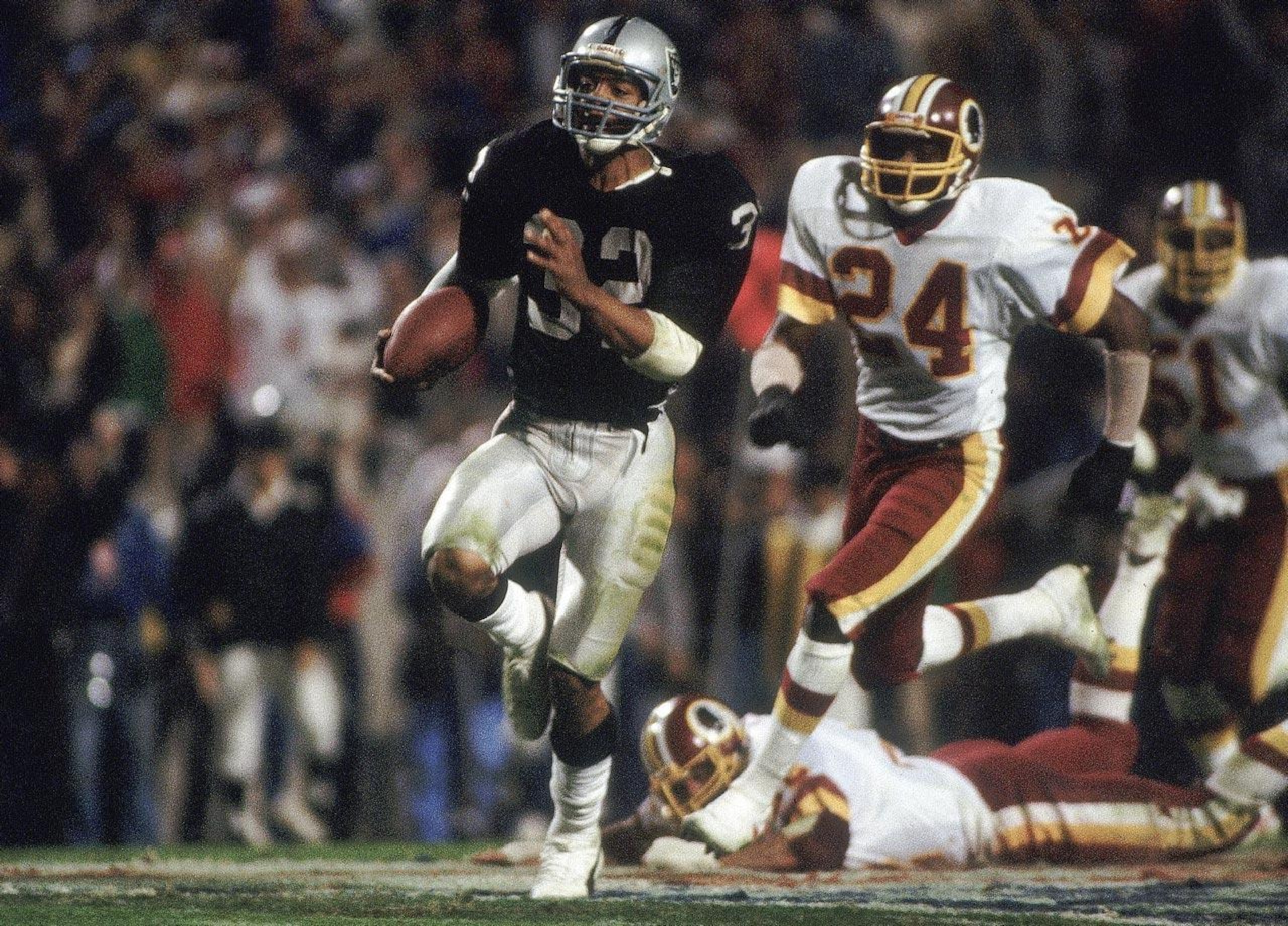
Date: January 22, 1984
Venue: Tampa Stadium, Tampa, Florida
Final Score: Los Angeles Raiders 38, Washington 9
Champion Rating: 2.2
The game was a blowout, but it still gave us one of the most memorable plays in Super Bowl history.
Raiders running back Marcus Allen took a handoff to the left and found himself walled off. Reversing his field, he found a cutback lane and exploded through a hole for 74 yards and a touchdown.
That play might have been more memorable if the Raiders weren't already winning by 19 points late in the third quarter. It was quite a surprise given they were three-point underdogs to a Washington team that had scored a then-record 541 points.
Incidentally, teams that break the scoring record haven't been very good at winning Super Bowls—with no team going on to win the Super Bowl after doing so.
27. Super Bowl XXX: 1995 Dallas Cowboys
22 of 48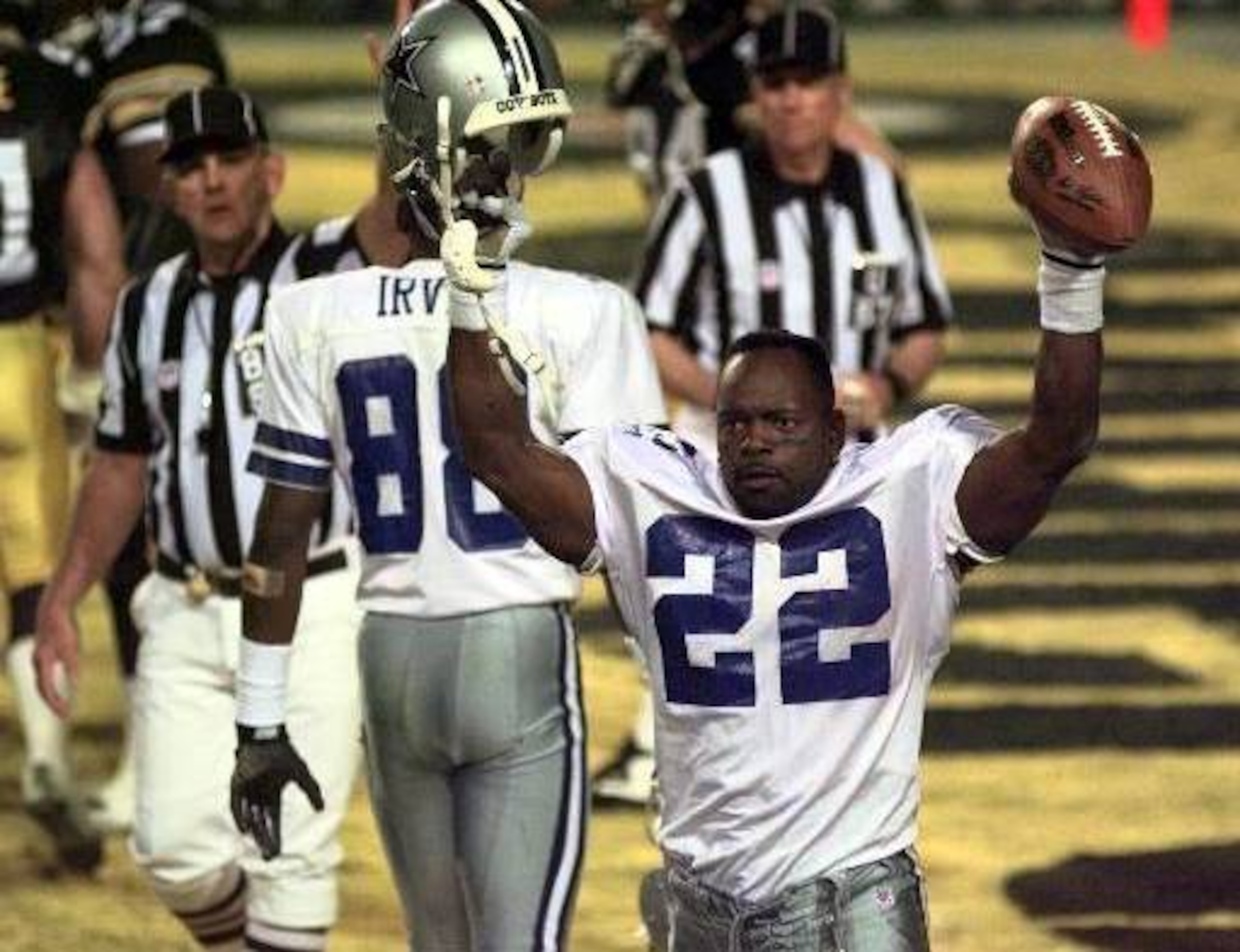
Date: January 28, 1996
Venue: Sun Devil Stadium, Tempe, Arizona
Final Score: Dallas Cowboys 27, Pittsburgh Steelers 17
Champion Rating: 2.5
The Dallas Cowboys didn't need Jimmy Johnson, at least as far as owner Jerry Jones was concerned. Once ousted, Johnson was replaced by Barry Switzer.
Not much changed, at least not while Switzer had a super roster at his disposal.
Led by quarterback Troy Aikman, running back Emmitt Smith and offensive lineman Larry Allen—all future Hall of Famers—the offense ranked in the top five in scoring and total yardage. The defense was also pretty strong, ranking third in scoring.
The Cowboys exacted a measure of revenge against the Pittsburgh Steelers in the Super Bowl almost 19 years to the day after losing to their nemeses from the 1970s.
26. Super Bowl XXXV: 2000 Baltimore Ravens
23 of 48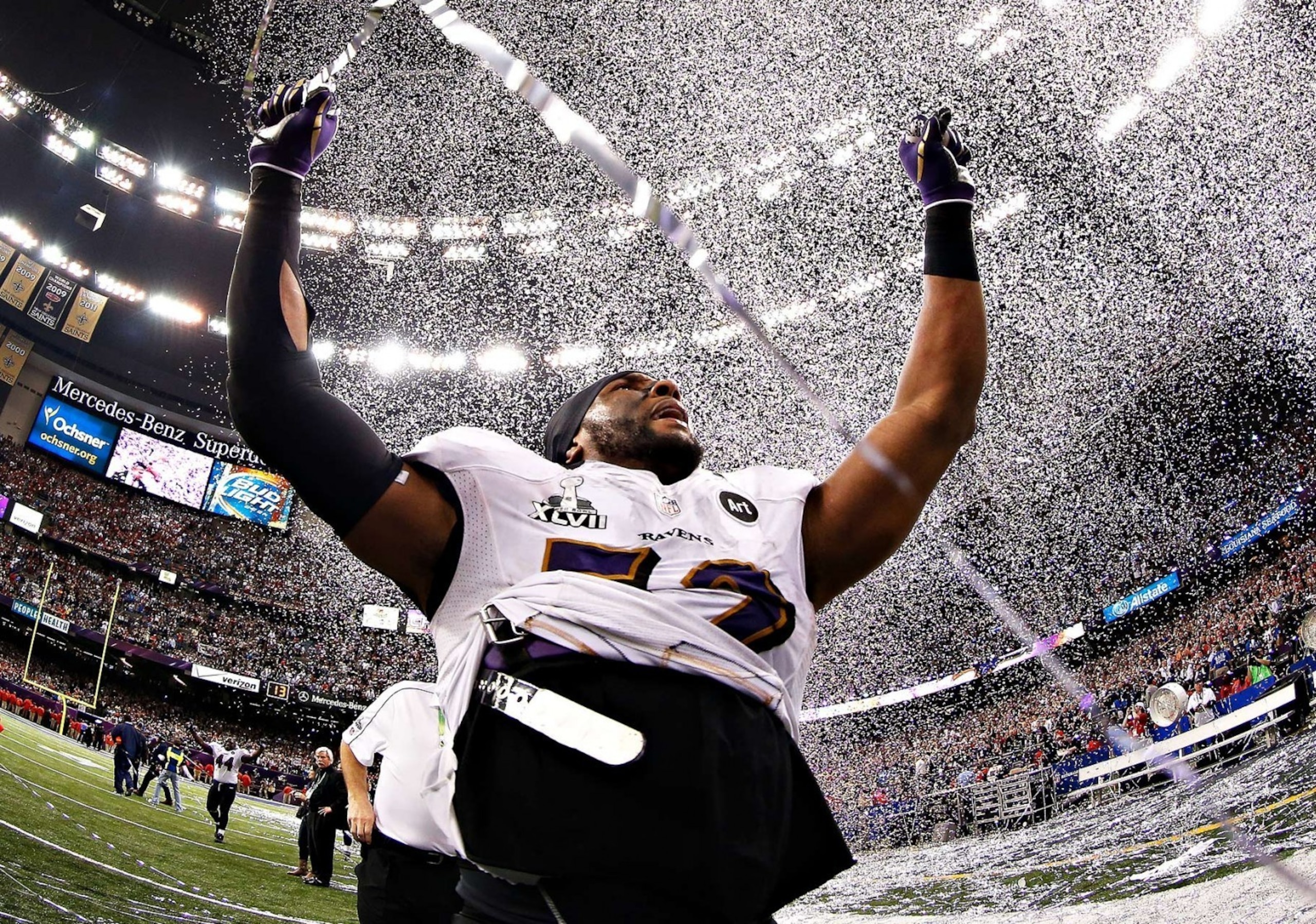
Date: January 28, 2001
Venue: Tulane Stadium, New Orleans
Final Score: Baltimore Ravens 34, New York Giants 7
Champion Rating: 2.5
It was a magical time in the nascent millennium, one where being an elite or even a franchise quarterback was no requirement to win a Super Bowl.
A strong running game and an elite defense could do the trick, and that's precisely how quarterback Trent Dilfer won his ring, two years before Brad Johnson would get his.
Technically, the 2000 Ravens played in the last game of the 20th century, but Super Bowl XXXV was played in the 21st.
That team's offense was rather pedestrian, scoring just 333 points on the season. That defense was arguably the best to ever hit the NFL—33 points and 168 total yards better than the 1985 Chicago Bears, widely considered the best defense in NFL history.
Baltimore's coaching staff included Marvin Lewis, Jack Del Rio, Rex Ryan and Mike Smith, all of whom would go on to be defensive-minded head coaches with varying success. Ray Lewis and Co. didn't allow one offensive touchdown in four postseason games, allowing 2.25 offensive points per game in the playoffs.
Zero. Touchdowns.
Were it not for that lackluster offense, Baltimore might be ranked among the best Super Bowl winners in history. But that defense was certainly one for the ages.
25. Super Bowl IX: 1974 Pittsburgh Steelers
24 of 48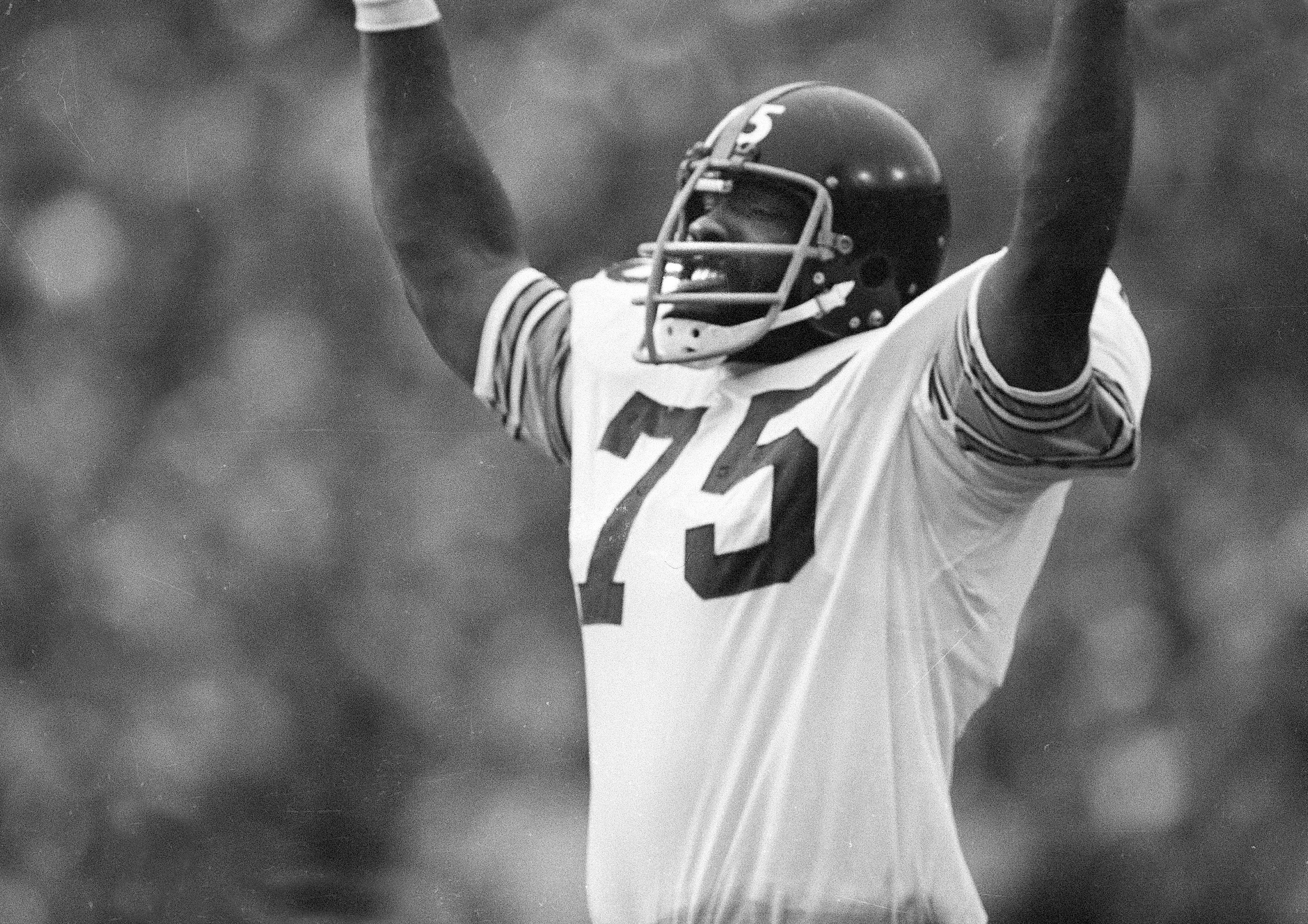
Date: January 12, 1975
Venue: Tulane Stadium, New Orleans
Final Score: Pittsburgh Steelers 16, Minnesota Vikings 6
Champion Rating: 2.7
Mean Joe Greene anchored what would become known as The Steel Curtain, a defensive front that would swallow up opponents and power the Pittsburgh's prosperity in the 1970s.
That was certainly the case for the 1974 squad, which made up for Terry Bradshaw's growing pains with a defense that allowed just 189 points and 3,074 yards throughout the regular season.
That defense propelled Chuck Noll's squad to its first Super Bowl appearance, squeezing the life out of the Minnesota Vikings and allowing just six points to begin a dominant run through the league over the next six years.
24. Super Bowl III: 1968 New York Jets
25 of 48
Date: January 12, 1969
Venue: Orange Bowl, Miami
Final Score: New York Jets 16, Baltimore Colts 7
Champion Rating: 2.8
It was all business for Johnny Unitas and the Baltimore Colts, the NFL champions who were set to take on the New York Jets in what was supposed to be the American Football League's annual Super Bowl drubbing. His foil had other plans.
Brash quarterback Joe Namath famously guaranteed victory for his New York Jets despite the fact his team was the biggest underdog in Super Bowl history—18 points.
It's not as if the Jets were a bad team heading into the game. Between the NFL and the AFL, they boasted a top-four offense all around and the second-best total defense.
After getting embarrassed in the first two Super Bowls, the AFL needed the Jets to be competitive. They were more than that, holding the Colts to one touchdown and cashing the check Namath had postdated earlier in the week.
23. Super Bowl XXXIX: 2004 New England Patriots
26 of 48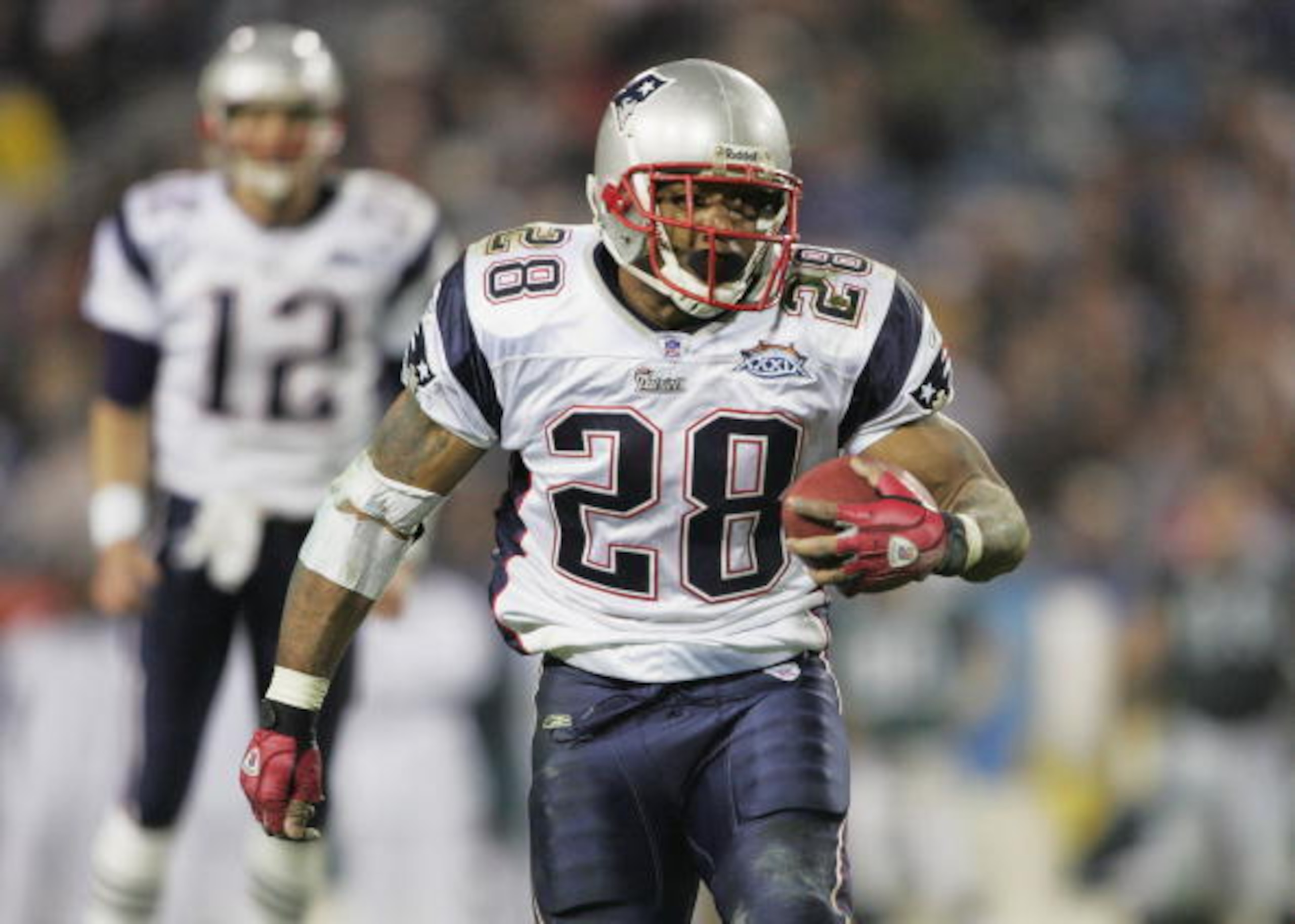
Date: February 6, 2005
Venue: Alltel Stadium, Jacksonville, Florida
Final Score: New England Patriots 24, Philadelphia Eagles 21
Champion Rating: 2.9
Tom Brady wasn't quite at the height of his powers, but New England's offense was improving.
The Patriots scored 89 more points and had 683 more total yards than they did during their previous year's championship run, vaulting them into the top 10 in the league.
The defense, meanwhile, was still one of the best in the league. It was a dangerous combination that helped them get back to 14 wins and outscore opponents by 177 points on the year.
Once again, the Super Bowl proved to be a tense affair won by three points, giving the Patriots three championships won by a total of nine points in the span of four seasons. Unlike previous Super Bowl victories, however, New England didn't need to rely on a late field goal to win it.
22. Super Bowl XXI: 1986 New York Giants
27 of 48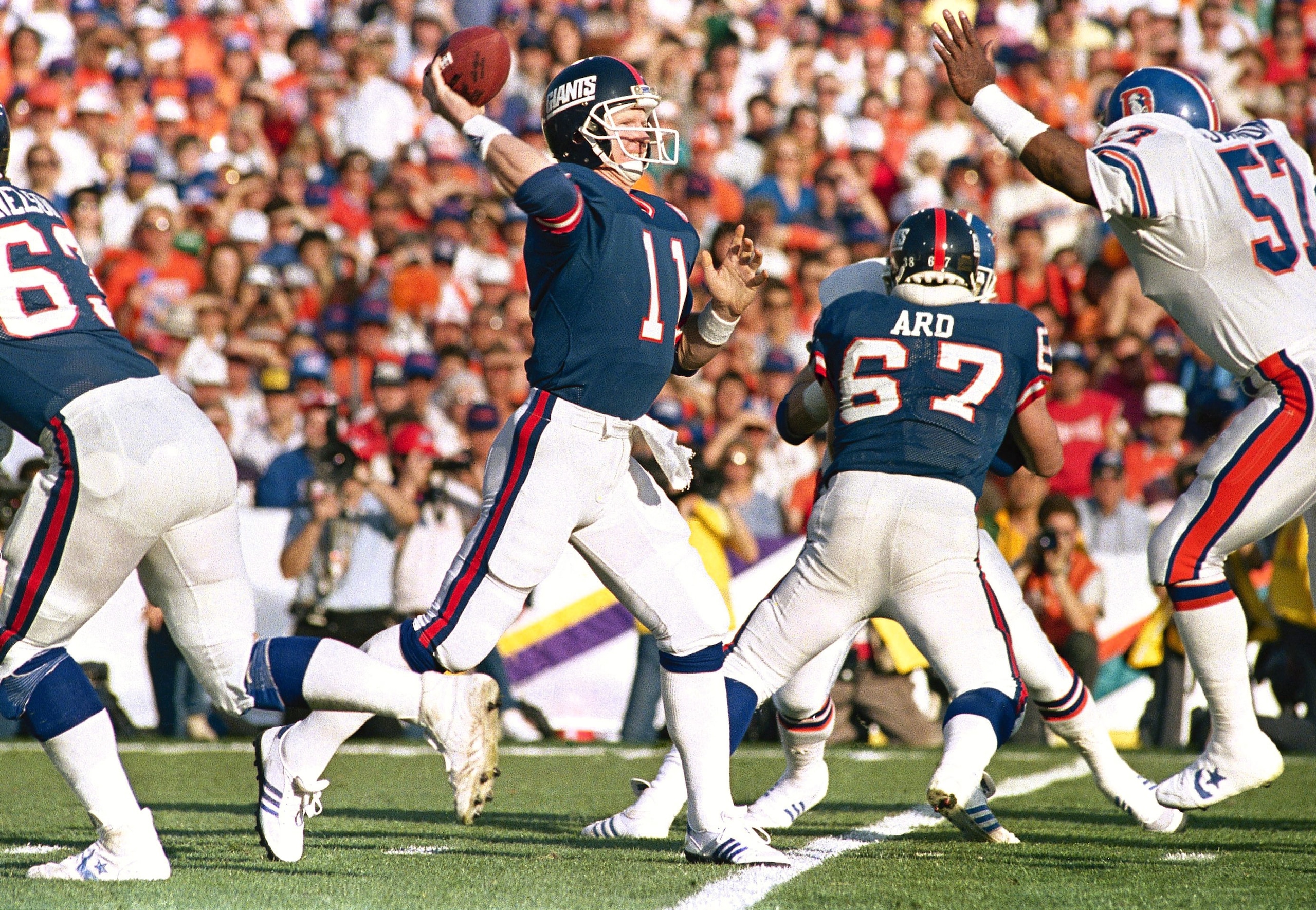
Date: January 25, 1987
Venue: Rose Bowl, Pasadena, California
Final Score: New York Giants 39, Denver Broncos 20
Champion Rating: 3.0
The first half was tight. The second half was a blowout.
John Elway and the Denver Broncos were handed their first of three embarrassing Super Bowl losses to come in four years, allowing 30 points in the second half as the Rambling Blue Wreck took control and held the Broncos to 10 garbage-time points in the fourth quarter.
Led by Defensive Player of the Year Lawrence Taylor, New York's second-ranked defense held teams below 10 points five times during the season and gave up a total of three points to perennial powerhouses San Francisco and Washington in the playoffs to get the Giants to the Super Bowl.
It was Phil Simms and that offense that shined during the Big Game, as he set a Super Bowl record by completing 88 percent of his passes en route to 39 points.
21. Super Bowl XXVIII: 1993 Dallas Cowboys
28 of 48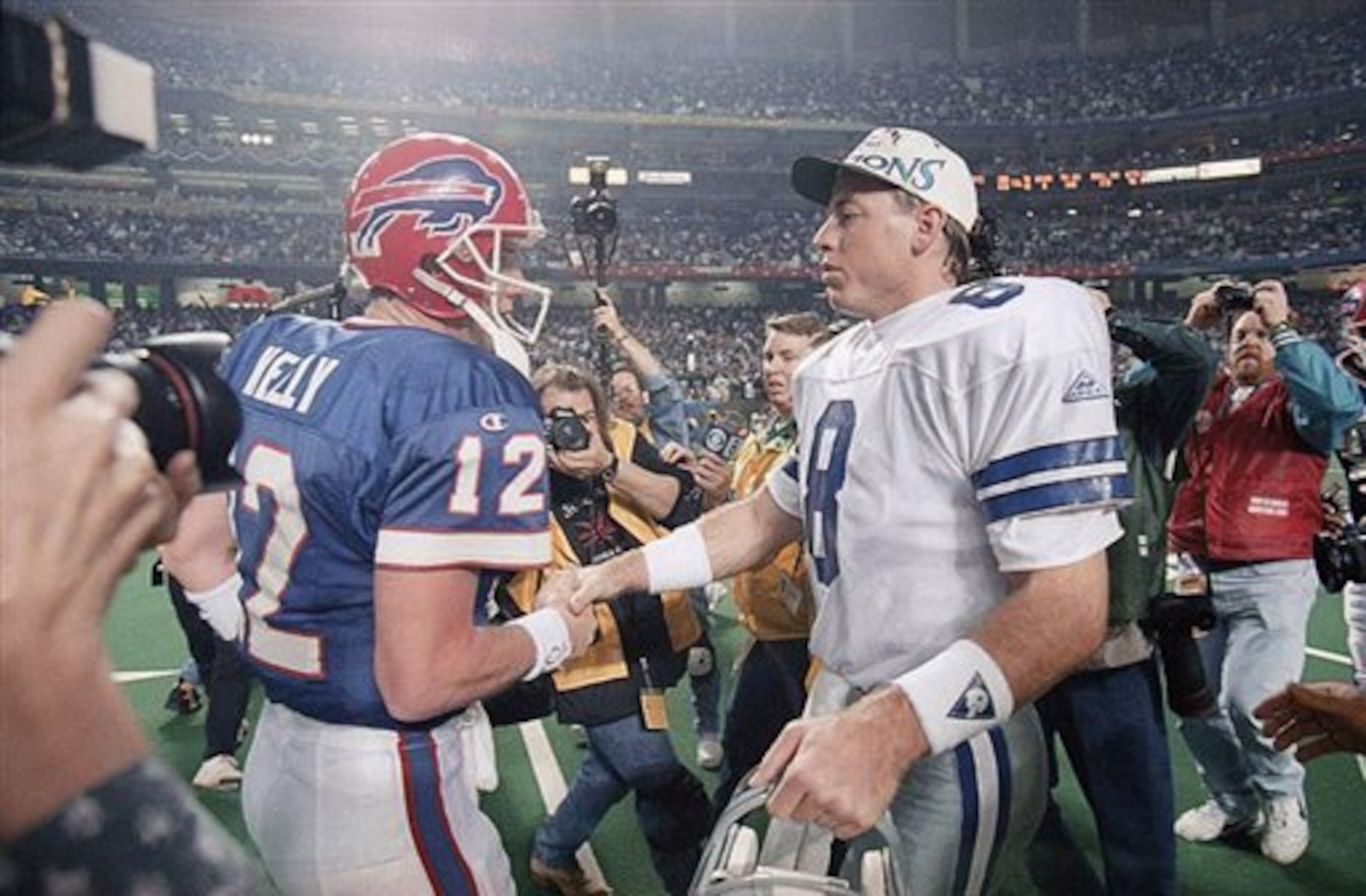
Date: January 30, 1994
Venue: Georgia Dome, Atlanta
Final Score: Dallas Cowboys 30, Buffalo Bills 13
Champion Rating: 3.1
Were it not for a two-game holdout from Emmitt Smith and some injury woes, the 1993 Dallas Cowboys might have had a bigger year.
Still, 12-4 and a second consecutive Super Bowl is nothing to complain about.
The Super Bowl was still a blowout, but at least it wasn't a complete annihilation like it was a year before. The Cowboys followed up one of the biggest routs in Super Bowl history with a 30-13 walloping. This time around, there was at least some intrigue through halftime.
Buffalo led at halftime, but the Cowboys defense shut the Bills out for the second half.
The Bills may have become perennial punch lines by then, but that shouldn't take away from a Dallas squad that featured the second-best scoring offense and defense that season.
20. Super Bowl XXXIII: 1998 Denver Broncos
29 of 48
Date: January 31, 1999
Venue: Pro Player Stadium, Miami
Final Score: Denver Broncos 34, Atlanta Falcons 19
Champion Rating: 3.5
John Elway had finally gotten his taste of ultimate victory, and he was back for more. A historic season by Terrell Davis sure helped.
Davis was the league MVP, rushing for 2,008 yards and 21 touchdowns on the year and buoying the offense to that rarefied 500-point air.
Head coach Mike Shanahan's offense was great, but his defense was pretty good, too.
The game was a laugher, which was not surprising considering the Broncos were favored by more than a touchdown over the Atlanta Falcons. It's too bad the Vikings lost the NFC Championship Game in overtime, which deprived us of a Super matchup between the two top offenses in the league.
19. Super Bowl XIII: 1978 Pittsburgh Steelers
30 of 48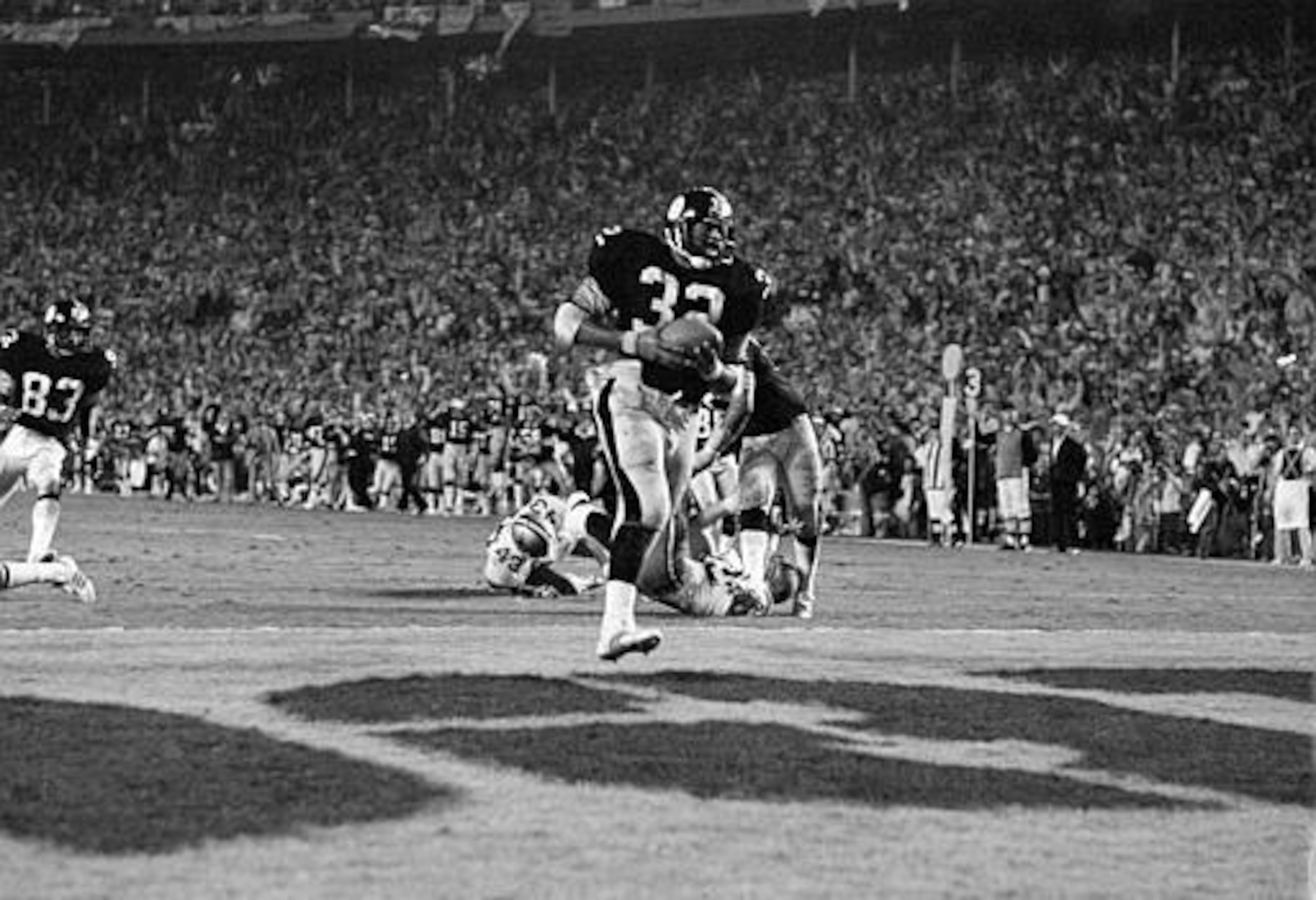
Date: January 21, 1979
Venue: Orange Bowl, Miami
Final Score: Pittsburgh Steelers 35, Dallas Cowboys 31
Champion Rating: 3.5
Terry Bradshaw. Lynn Swann. John Stallworth. Franco Harris.
Pittsburgh's offense was a rather nice complement to that defense, and it tipped off the second round of back-to-back championships for the Steelers in the 1970s.
The Steel Curtain was still firmly in place, allowing just 195 points in another dominant showing. The offense ranked in the top five, and it was the reason the Steelers could withstand a furious rally from the Dallas Cowboys to win 35-31.
Bradshaw threw for 318 yards and four touchdowns in the game—Super Bowl records at the time.
18. Super Bowl XLVIII: 2013 Seattle Seahawks
31 of 48
Date: February 2, 2014
Venue: MetLife Stadium, East Rutherford, New Jersey
Final Score: Seattle Seahawks 43, Denver Broncos 8
Champion Rating: 3.7
By the time Super Bowl XLVIII viewers sat down with their first snack of the game, the Seattle Seahawks had already taken control.
It wasn't their doing, however, as quarterback Peyton Manning and the Denver Broncos botched the first offensive snap of the game and gave up a safety.
The snowball had begun its descent downhill as the Seahawks began to assert themselves and take a 22-0 lead into halftime after Manning threw a pick-six to eventual game MVP Malcolm Smith. Seattle would win in shockingly dominant fashion.
The Seahawks were great, to be sure, but holding the league's record-breaking offense to eight points was the biggest surprise of all. As good as that top-ranked defense was, nobody could have predicted such a spectacular showing.
17. Super Bowl I: 1966 Green Bay Packers
32 of 48
Date: January 15, 1967
Venue: Memorial Coliseum, Los Angeles
Final Score: Green Bay Packers 35, Kansas City Chiefs 10
Champion Rating: 4.0
Finally, we arrive to the game that started it all.
The NFL and AFL embarked on a journey toward their historic merger, creating a championship game between the winners of each league that would eventually be called the Super Bowl.
Fittingly, the first winner of the NFL and AFL Championship Game was helmed by head coach Vince Lombardi, for whom the Super Bowl trophy would eventually be named.
His Green Bay Packers trounced the AFL champion Kansas City Chiefs. His defense was a stingy one, allowing just 163 points on the year, the best mark in either league.
The offense wasn't too shabby either, landing fifth among both leagues with legendary Packers quarterback Bart Starr under center.
16. Super Bowl XXXII: 1997 Denver Broncos
33 of 48
Date: January 25, 1998
Venue: Qualcomm Stadium, San Diego
Final Score: Denver Broncos 31, Green Bay Packers 24
Champion Rating: 4.5
The Green Bay Packers had just completed one of the most dominant championship runs in NFL history the year before, and John Elway wasn't exactly known for success in the Big Game.
It's no wonder the Denver Broncos were 11-point underdogs heading into Super Bowl XXXII. This time, however, Elway had an ace up his sleeve—Terrell Davis.
The league-leading running back was the difference in the game, winning MVP honors with 157 yards and three touchdowns, including the game-winner in the fourth quarter.
15. Super Bowl X: 1975 Pittsburgh Steelers
34 of 48
Date: January 18, 1976
Venue: Orange Bowl, Miami
Final Score: Pittsburgh Steelers 21, Dallas Cowboys 17
Champion Rating: 3.5
The Steel Curtain had descended, and the Pittsburgh Steelers were in the midst of their reign.
Of the championship squads from the 1970s, the defense on the 1975 team may have been the best. A year removed from a dominant Super Bowl run, the Steelers allowed just 162 points and 3,661 yards during the regular season to win a second consecutive championship.
By then, the offense was already coming around, with running back Franco Harris and wide receiver Lynn Swann helping it get to 373 points in the regular season.
Swann would win game MVP honors with 161 yards and one incredible catch despite his doubtful status after suffering a concussion in the AFC Championship Game.
14. Super Bowl VIII: 1973 Miami Dolphins
35 of 48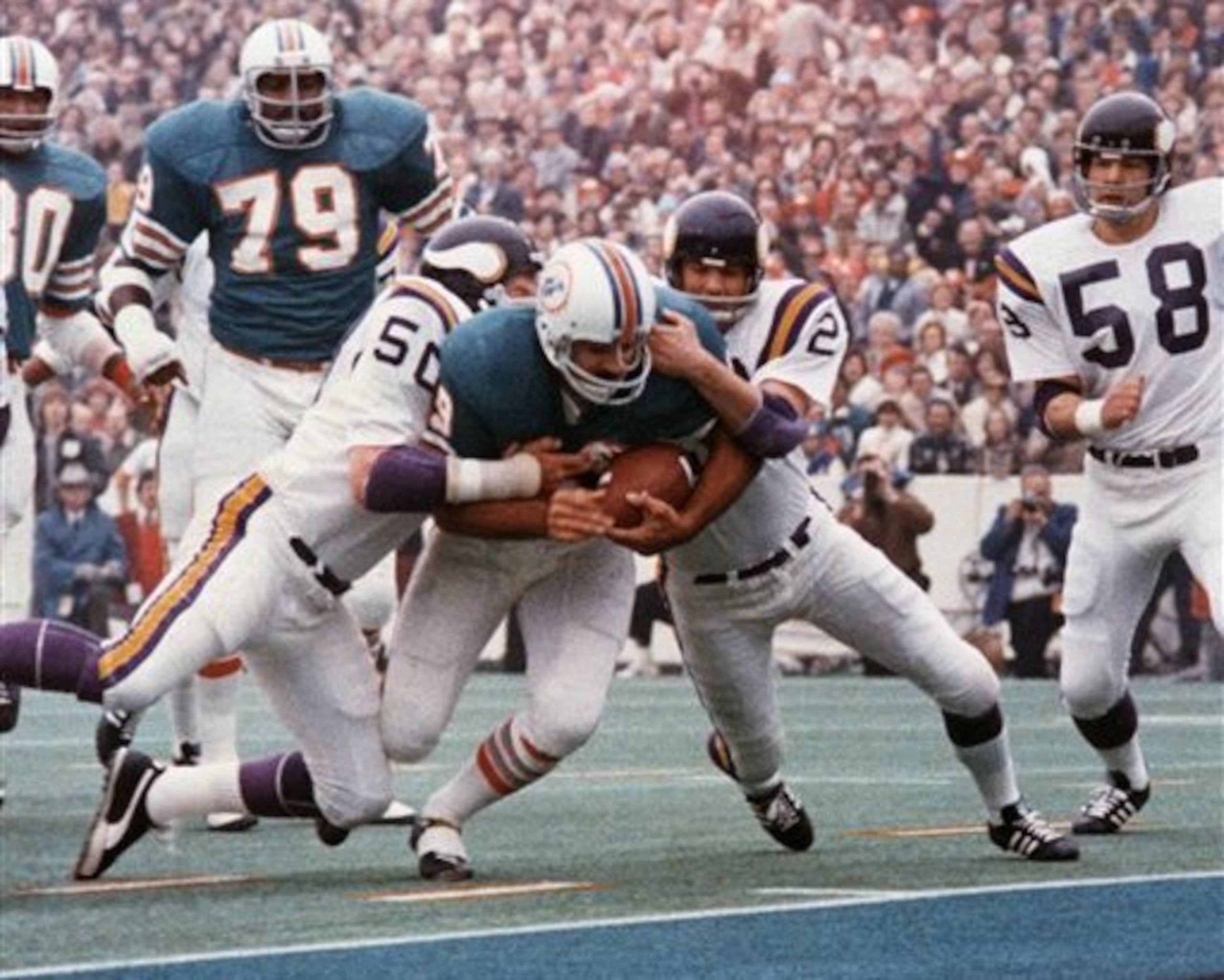
Date: January 13, 1974
Venue: Rice Stadium, Houston
Final Score: Miami Dolphins 24, Minnesota Vikings 7
Champion Rating: 4.9
It's easy to forget about the 1973 Dolphins when thinking about the perfect squad from the year before, but they were a dominant bunch in their own right. Some might say they were even more dominant than their perfect predecessor due to a much tougher schedule, as Fox Sports Florida's Chris Tomasson elucidated:
"I’ll say that this ring is for Super Bowl VIII, the one after the perfect season,’’ said Newman, a rookie guard on the champion 1973 Dolphins who went on to play in four Pro Bowls during his 12-year career. “Certainly, it’s more memorable to be perfect, but the players off that 1972 team will tell you they thought the ‘73 team was better.’’
The 1973 team went 12-2 during the regular season and 15-2 overall compared to 14-0 and 17-0 the year before. But those Dolphins didn’t have the soft schedule the 1972 team had and were much more dominant during the playoffs in bringing Miami a second consecutive title.“We had a better team in 1973,’’ said Kiick, a gritty running back who scored touchdowns in both Miami Super Bowl wins. “The schedule was tougher, and we also were more experienced. The record wasn’t perfect, but we dominated the Super Bowl.’"
Any notion of another perfect season went out the window early with a loss to the Oakland Raiders in Week 2, but the Dolphins still went 12-2 on the year. They also wound up with a top-10 offense and another top-ranked scoring defense that allowed fewer points than the previous year's squad.
The Super Bowl was no contest, and this time there was no fluky play to make it look close. The Dolphins steamrolled the Vikings to win back-to-back championships, and Miami has been chasing a third ring ever since.
13. Super Bowl XXIX: 1994 San Francisco 49ers
36 of 48
Date: January 29, 1995
Venue: Joe Robbie Stadium, Miami
Final Score: San Francisco 49ers 49, San Diego Chargers 26
Champion Rating: 4.9
The mantle had been passed, but Steve Young was unable to replicate his predecessor's Super Bowl success for the first couple of seasons.
He was finally able to break the seal after the 1994 season, however, as the San Francisco 49ers won their last of five Super Bowls.
His offense was the first to crack 500 points in a season and win a Super Bowl. Aside from having the top-ranked scoring offense, the 49ers were sixth in scoring defense and eighth in total defense, earning a 209-point differential on the season.
12. Super Bowl IV: 1969 Kansas City Chiefs
37 of 48
Date: January 11, 1970
Venue: Tulane Stadium, New Orleans
Final Score: Kansas City Chiefs 23, Minnesota Vikings 7
Champion Rating: 5.0
Without Kansas City, the NFL may not be the juggernaut it is today.
The Chiefs—originally known as the Dallas Texans—were charter members of the AFL, a competitor to the NFL as envisioned by original owner Lamar Hunt. Not a decade later, they were the champions of the world.
Kansas City participated in the first ever Super Bowl, a loss against the hallowed Green Bay Packers. A few years later, the Chiefs exacted a measure of revenge against the Minnesota Vikings.
That 1969 squad was dominant all around, boasting the top defense in the league and one of the best offenses to go along with it. Had quarterback Len Dawson not missed most of the season with an injury, we might be talking about the greatest team in Super Bowl history.
As it stands, those Chiefs were one of the best, allowing just 177 points on the season and throttling a team thought to be far superior—the Vikings were 12.5-point favorites, much like the NFL's Baltimore Colts were supposed to beat the New York Jets just a year before.
The victory punctuated the merger between the two leagues, one that would slowly propel professional football into the entertainment stratosphere.
11. Super Bowl XII: 1977 Dallas Cowboys
38 of 48
Date: January 15, 1978
Venue: Louisiana Superdome, New Orleans
Final Score: Dallas Cowboys 27, Denver Broncos 10
Champion Rating: 5.1
It was the last of the great Dallas Cowboys teams from the 1970s, and it was one of the greatest Super Bowl winners of all time.
Like Darth Vader and Obi Wan Kenobi, Craig Morton and Roger Staubach faced off in a battle between former master and apprentice. Not unlike Staubach's ultimate victory in winning the starting job—exiling Morton to a faraway land until they met in the Super Bowl—the Cowboys quarterback prevailed against the man from who he ripped the starting job in Dallas.
Staubach had spearheaded the league's top offense, but there wasn't much need for offense with the way his defense played.
Dallas' "Doomsday Defense" annihilated Morton, as he passed for just 39 yards and four interceptions before mercifully being pulled.
The game featured the only double-MVP in Super Bowl history as Dallas defensive linemen Harvey Martin and Randy White split the award.
10. Super Bowl XIV: 1979 Pittsburgh Steelers
39 of 48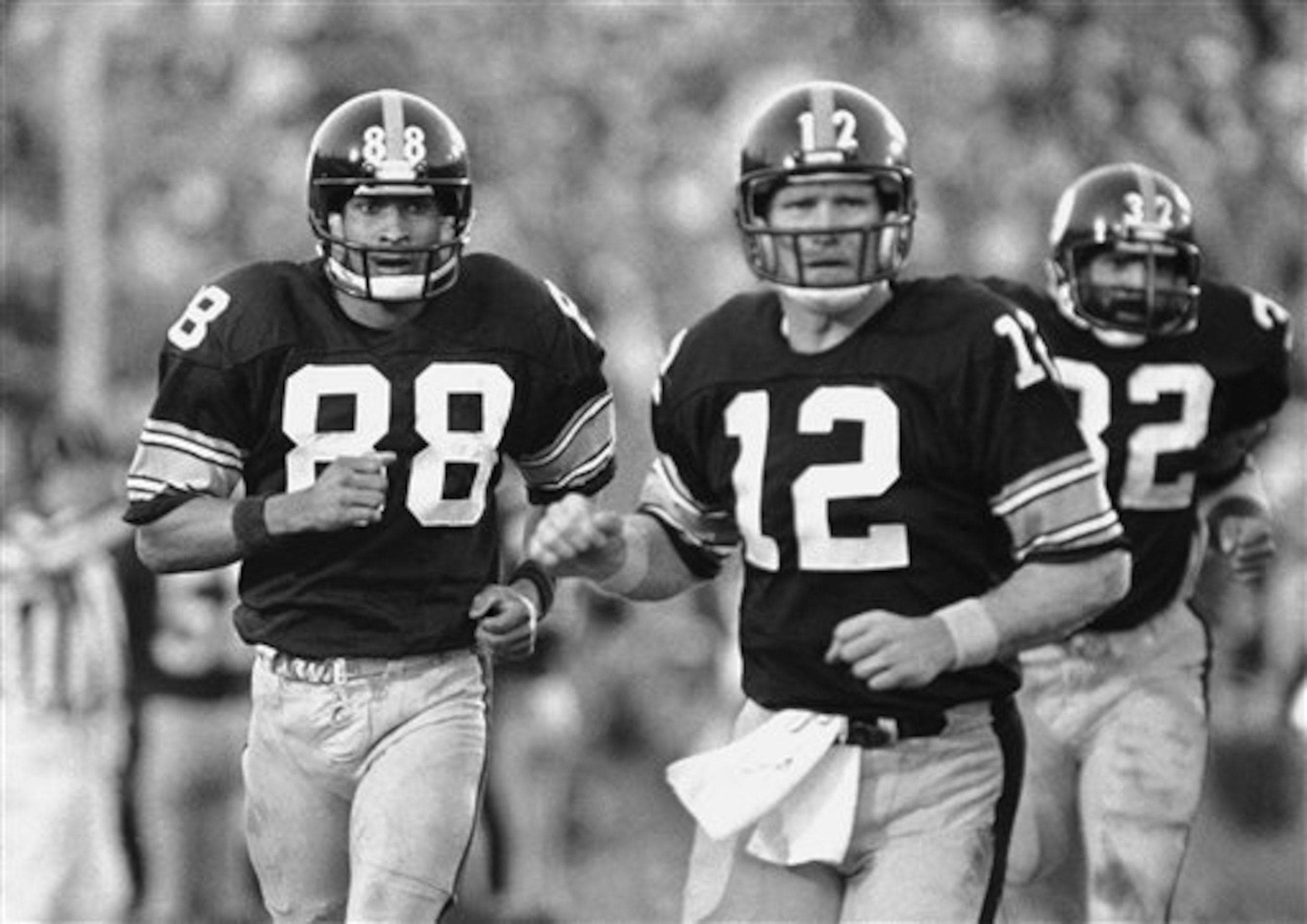
Date: January 20, 1980
Venue: Rose Bowl, Pasadena, California
Final Score: Pittsburgh Steelers 31, Los Angeles Rams 19
Champion Rating: 5.6
It was supposed to be a blowout, but the Los Angeles Rams made quite a game of it against the vaunted Pittsburgh Steelers until the latter pulled away in the fourth quarter.
Los Angeles led heading into the final quarter before Terry Bradshaw carried his team to victory.
The game might have been close, but there is a reason why the Steelers were heavy favorites going into it. The Steel Curtain had long descended on the NFL, and Bradshaw had helped turn the offense into a juggernaut as well.
Pittsburgh led the league in scoring and total offense on the wings of Bradshaw's 3,724 passing yards and 26 touchdowns, to go along with running back Franco Harris' 1,186 rushing yards and 11 touchdowns on the ground.
The defense was still excellent, having ranked in the top five in scoring and total yardage. It was the offense that ultimately pulled out the victory in the Super Bowl, as Bradshaw threw for 309 yards and a pair of touchdowns.
9. Super Bowl XXVII: 1992 Dallas Cowboys
40 of 48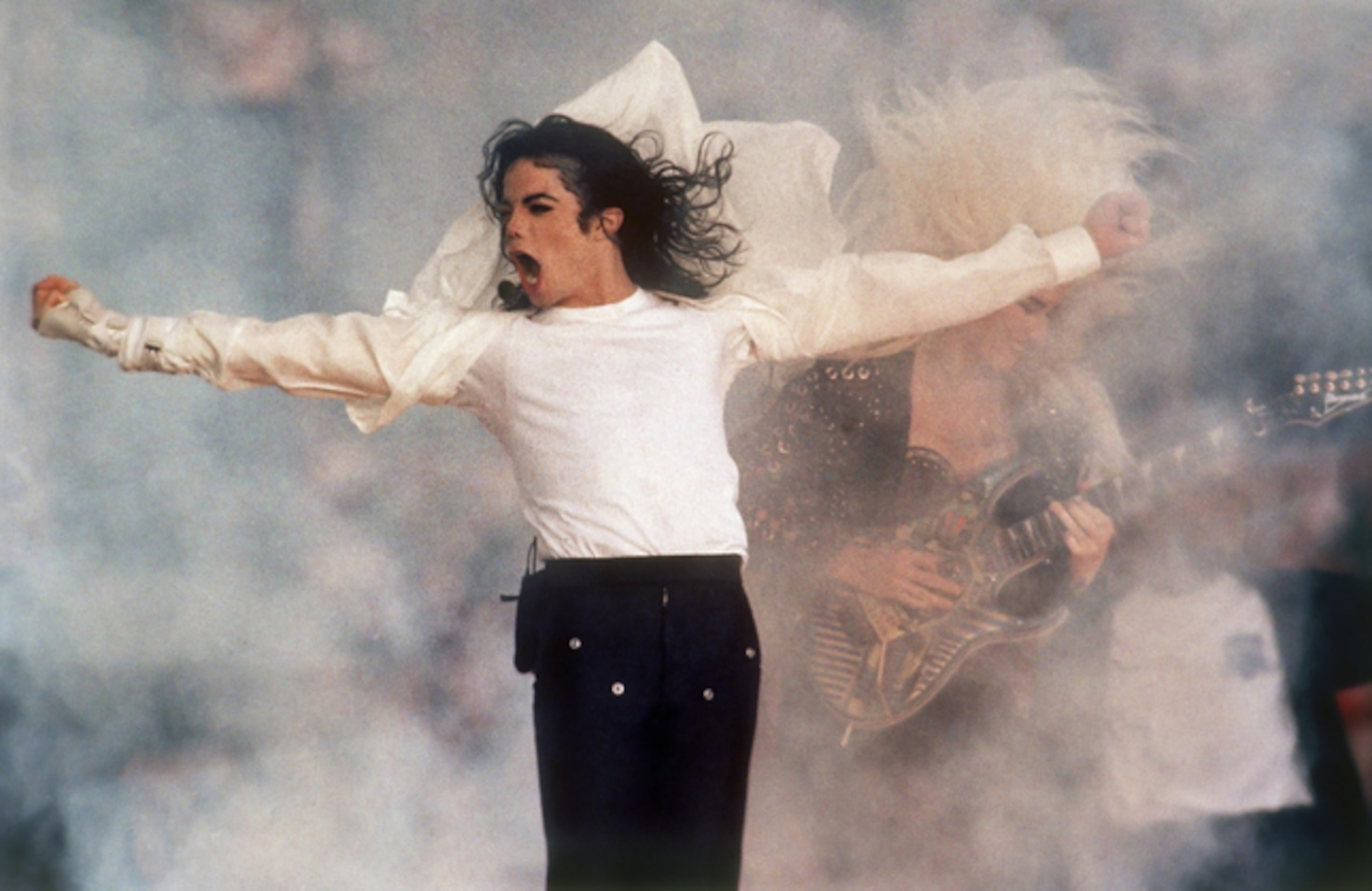
Date: January 31, 1993
Venue: Rose Bowl, Pasadena
Final Score: Dallas Cowboys 52, Buffalo Bills 17
Champion Rating: 5.9
Pitting the Dallas Cowboys against the Buffalo Bills in Super Bowl XXVII was simply unfair, and the score reflected that reality.
Dallas romped in the second-most lopsided Super Bowl victory in NFL history, a performance marked by an infamous gaffe and a halftime performance more memorable than the game itself.
Well after Michael Jackson gave a halftime show for the ages, Cowboys defensive end Leon Lett raced toward the end zone, game and football in hand as Dallas led 52-17. A touchdown would mark the most points ever scored in a Super Bowl—surpassing San Francisco's 55 in Super Bowl XXIV—but Don Beebe had other plans.
Buffalo's dignity-saving receiver raced behind Lett as the latter began to celebrate early, knocking the ball loose before he reached the end zone and creating a meme 20 years ahead of its time.
These are all the important things to discuss from Super Bowl XXVII because the game was a laugher. Dallas boasted one of the top offenses and defenses in the league, and the Bills were already growing weary from their Super Bowl losing streak.
That and they couldn't hang onto the ball, turning it over a championship-record nine times on the day.
No amount of magic Frank Reich could have conjured up in relief of Jim Kelly would have brought the Bills back from the dead that day.
8. Super Bowl VI: 1971 Dallas Cowboys
41 of 48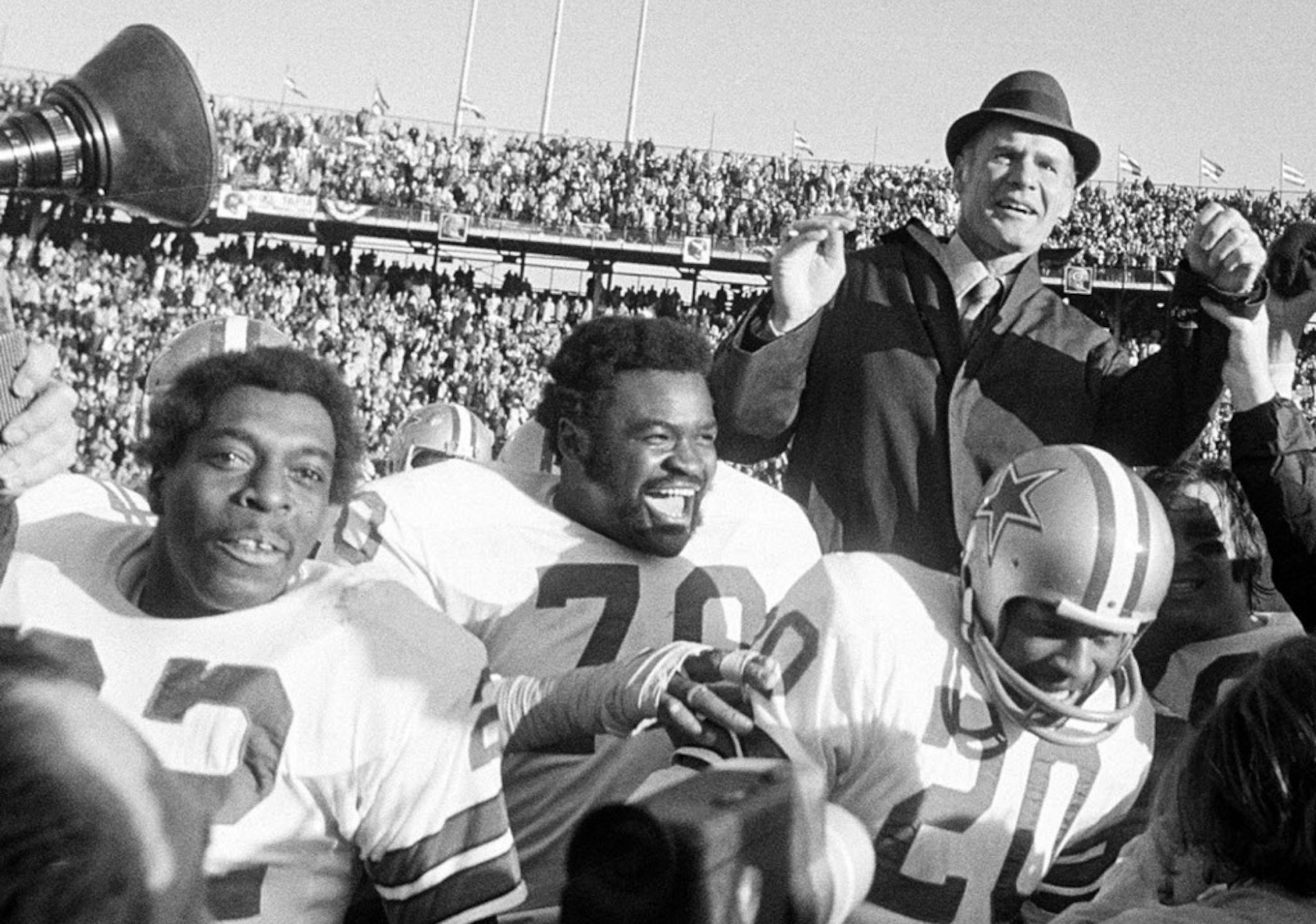
Date: January 16, 1972
Venue: Tulane Stadium, New Orleans
Final Score: Dallas Cowboys 24, Miami Dolphins 3
Champion Rating: 6.3
The 1970s were all about the Dallas Cowboys and the Pittsburgh Steelers. The two curiously juxtaposed cities traded championships and barbs, but it was the 1971 squad out of Dallas that gets the last laugh here with the highest rating among those teams.
If head coach Tom Landry had kept up with his quarterback tomfoolery that season, however, the Cowboys may not have made the playoffs at all.
Roger Staubach couldn't hold onto the starting job,
Once he took over for good, the Cowboys wouldn't lose again.
Dallas closed out the season on a seven-game winning streak, including one of the most impressive Super Bowl victories in history. To date, the Cowboys are the only team to keep an opponent out of the end zone—the Dolphins scored just three points.
To their credit, Don Shula's club would use the humiliating defeat as fuel to propel it to an undefeated season the following year. Before then, the Cowboys would celebrate the first—and most impressive—of their five championship runs.
7. Super Bowl XIX: 1984 San Francisco 49ers
42 of 48
Date: January 20, 1985
Venue: Stanford Stadium, Stanford, California
Final Score: San Francisco 49ers 38, Miami Dolphins 16
Champion Rating: 7.2
Dan Marino vs. Joe Montana. How much better can it get?
After one quarter, the battle of the titans was living up to its billing. Once the league's top defense switched gears, however, it was all San Francisco.
The 49ers had the top scoring defense in the league that season, and that unit flexed its muscle by allowing just 20 points in the two wins heading into the Super Bowl.
The Miami Dolphins scored half that in just the first quarter as they took a 10-7 lead into the second period, but it was all San Francisco from then on.
Montana threw for 331 yards and three touchdowns, adding 59 rushing yards and another score on the ground to beat the Dolphins in spectacular fashion.
6. Super Bowl XXXIV: 1999 St. Louis Rams
43 of 48
Date: January 30, 2000
Venue: Georgia Dome, Atlanta
Final Score: St. Louis Rams 23, Tennessee Titans 16
Champion Rating: 8.0
The final Super Bowl of the 20th century was a doozy of a game.
Super Bowl XXXIV may have been the most exciting in NFL history, and it featured one of the greatest teams of all time that narrowly escaped with victory.
The Greatest Show on Turf debuted in 1999, and it featured a quarterback who had been bagging groceries just a few years before his apotheosis.
Kurt Warner was a little-known backup signed away from the Arena Football League when Trent Green went down with injury. He would lead the Rams offense to a record-breaking 526 points, to date the most any Super Bowl winner has scored in a season.
Lost in that historical hoopla is the fact the Rams defense was pretty good too, ranking fourth in scoring and sixth in total yardage allowed.
As for the game, it was a riveting show with a nail-biting finish that gave us Tennessee receiver Kevin Dyson's indelible stretch for the end zone that came up just short as time expired.
5. Super Bowl XXIV: 1989 San Francisco 49ers
44 of 48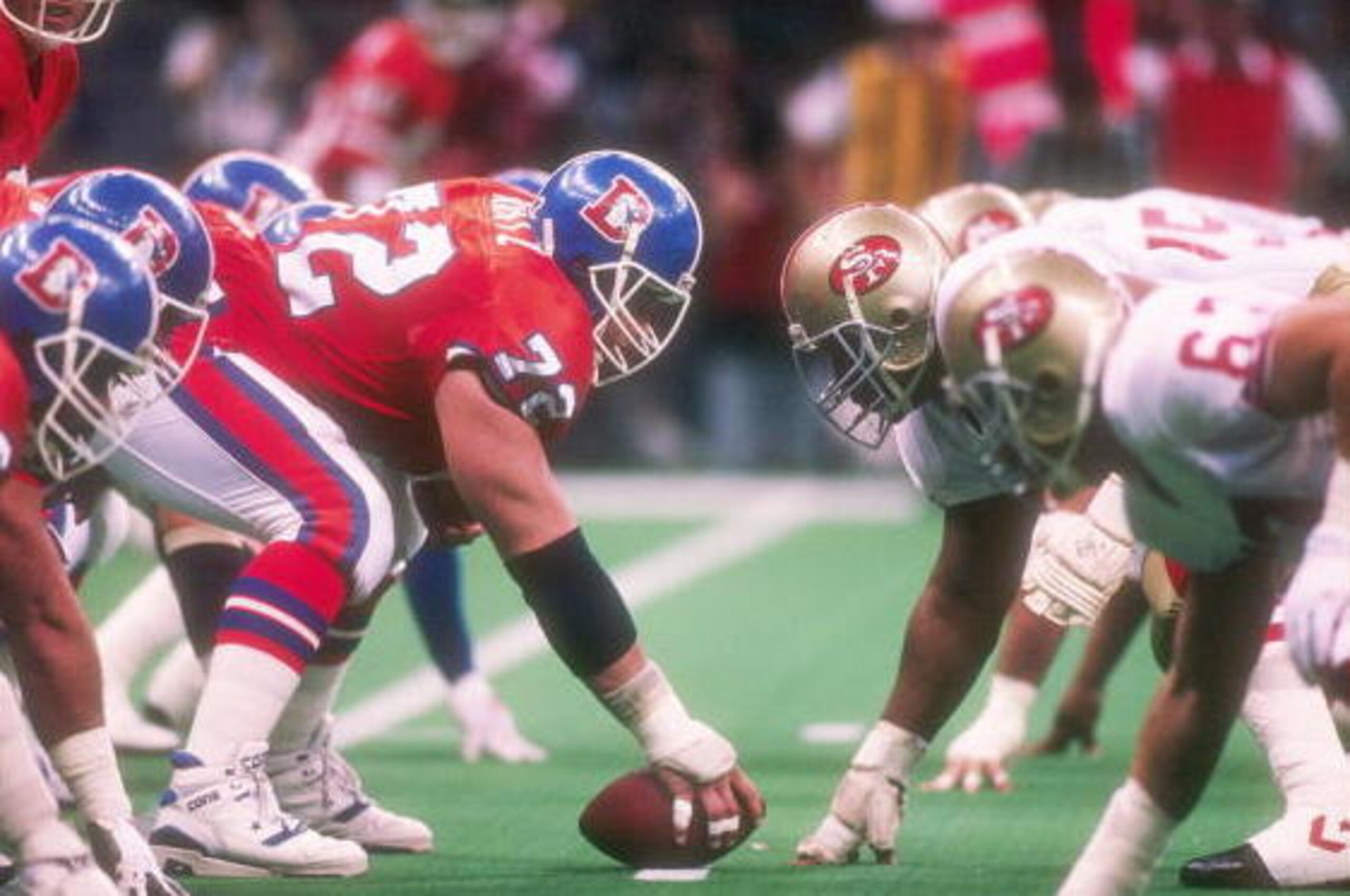
Date: January 28, 1990
Venue: Louisiana Superdome, New Orleans
Final Score: San Francisco 49ers 55, Denver Broncos 10
Champion Rating: 9.3
The last of the great 49ers teams on this list is certainly not the least.
San Francisco crushed Denver, blasting the Broncos in the most lopsided victory in Super Bowl history. It was no contest from the get-go, and everyone saw it coming.
The 49ers were favored by 12 points, and for good reason. They featured the top scoring and total offense and a top-five defense all-around. They scored 442 points on the year while giving up just 253.
Bill Walsh's squad had evolved from upstart champion to NFL juggernaut in less than a decade.
Joe Montana led his squad to a then-record fourth Super Bowl win, capturing his own record with a third MVP award in victory.
4. Super Bowl XXVI: 1991 Washington Team
45 of 48
Date: January 26, 1992
Venue: Metrodome, Minneapolis
Final Score: Washington 37, Buffalo Bills 24
Champion Rating: 9.7
Finally, a full season from whence we can properly judge a champion from Washington.
When pondering the greatest Super Bowl victors in history, the 1991 Washington squad might not come up right away. But it should.
Led by Hall of Fame cornerback Darrell Green, that defense set the tone for a fantastic season. Washington shut out three opponents en route to allowing just 14 points per game, second only to the New Orleans Saints.
Even better was the offense, driven by quarterback Mark Rypien in what was easily the best year of his career. Washington led the league in scoring and was fourth in total offense that season.
Joe Gibbs' squad stymied quarterback Jim Kelly and the powerful Buffalo Bills offense in Super Bowl XXVI, allowing just 10 points through 3.5 quarters before the Bills made it respectable with a pair of touchdowns in the last half of the fourth.
3. Super Bowl XX: 1985 Chicago Bears
46 of 48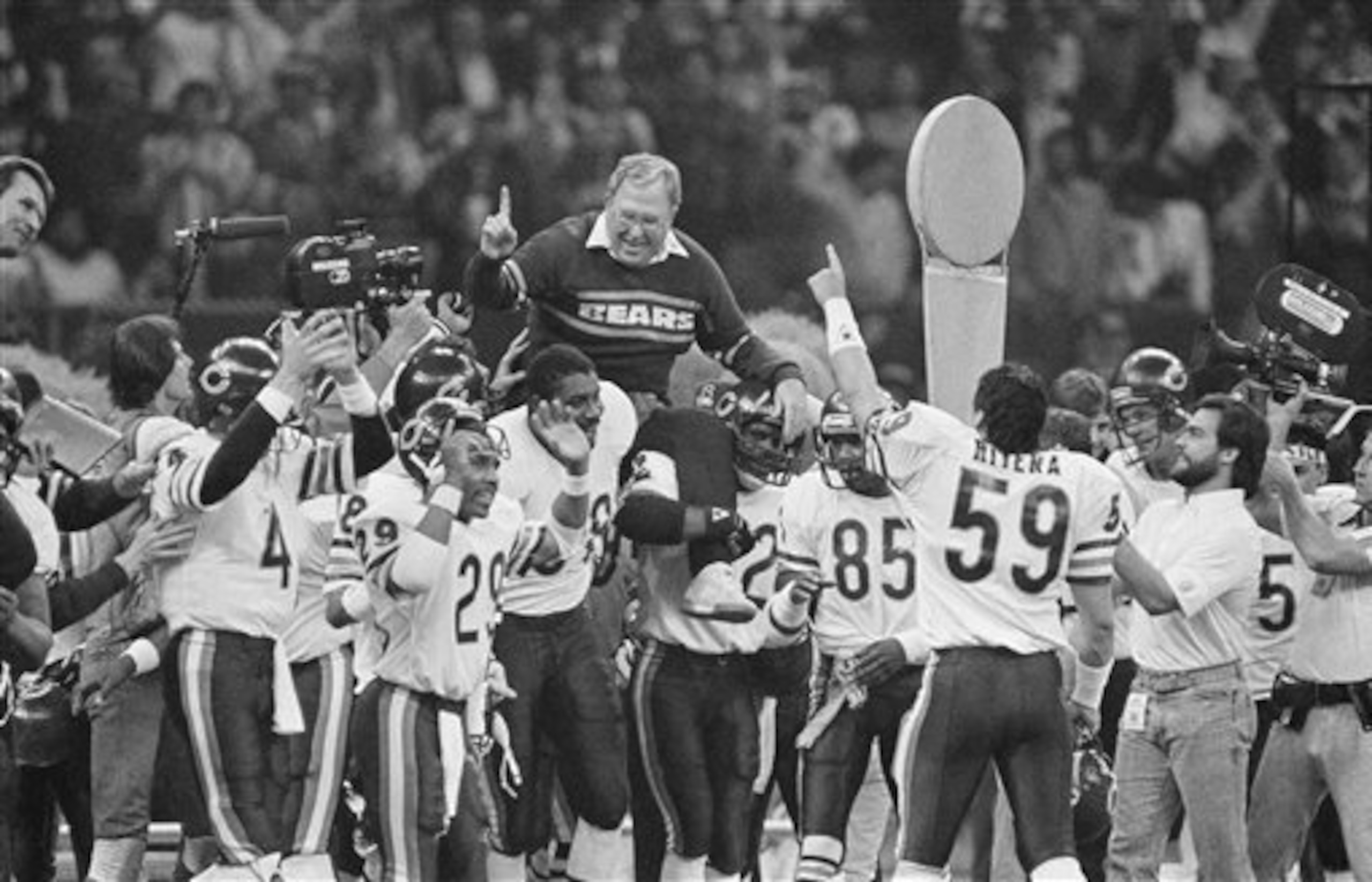
Date: January 26, 1986
Venue: Louisiana Superdome, New Orleans
Final Score: Chicago Bears 46, New England Patriots 10
Champion Rating: 10.5
The New England Patriots actually held a lead in Super Bowl XX. An early fumble gave them the ball at Chicago's 19-yard line, and a field goal staked them to the most misleading start in Super Bowl history. A few hours later, the bloodbath was over.
Who could expect the Patriots to stand a chance, really? They were only up against the greatest defense ever assembled, a unit that propelled the team to a nearly flawless record—its only blemish was a loss to Dan Marino and the Miami Dolphins.
What's lost in the history books is the fact the 1985 Bears featured the second-best offense in the league that season, too. The combination of greatest defense ever with quarterback Jim McMahon's underrated offense made the Bears one of the best Super Bowl champions in NFL history.
Besides, the game that brought us the Super Bowl Shuffle had to be ranked in the top three, right?
2. Super Bowl XXXI: 1996 Green Bay Packers
47 of 48
Date: January 26, 1997
Venue: Louisiana Superdome, New Orleans
Final Score: Green Bay Packers 35, New England Patriots 21
Champion Rating: 10.6
A balefire start gave away to a fourth-quarter stalemate in Super Bowl XXXI.
Green Bay and New England combined for 24 first-quarter points, the most in Super Bowl history. They would score 32 the rest of the way, including zero in the fourth quarter as the Packers put a vise on quarterback Drew Bledsoe and that Patriots offense.
That 1996 Packers squad is one of the more underrated in NFL history.
Featuring Brett Favre at quarterback, Reggie White at defensive end and Desmond Howard as returner extraordinaire, Green Bay ranked No. 1 in the league in scoring offense and defense as well as total defense.
Favre spent Super Bowl XXXI bombing the Patriots secondary, connecting on touchdown passes of 54 yards and 81 yards—a Super Bowl record—and averaging 9.1 yards per attempt. But defense and special teams won the game for Green Bay.
White notched a record three sacks, and Howard won MVP honors with 244 return yards, including a game-clinching 99-yard kick return for a touchdown after the Patriots had pulled within six in the third quarter.
1. Super Bowl VII: 1972 Miami Dolphins
48 of 48
Date: January 14, 1973
Venue: Memorial Coliseum, Los Angeles
Final Score: Miami Dolphins 14, Washington 7
Champion Rating: 24.8
Forget the perfect season, which has been discussed ad nauseam through the years as every team falls short of Miami's unblemished record. It would be easy to rank the 1972 Dolphins squad as the top Super Bowl winner on that merit alone.
That would also be lazy. So let's take a look at how the Dolphins got there—Miami didn't luck its way to 17-0, after all.
The 1972 squad is the only Super Bowl winner in NFL history to rank first in both total and scoring offense and defense. Prorated to a 16-game season, Miami's points differential was sixth-best among victors in the Super Bowl era.
Miami's so-called No Name Defense pitched three shutouts during the regular season and allowed just 12.7 points per game during the playoffs.
To put it simply, the Dolphins dominated the competition.
While a 14-7 final score in the Super Bowl may not seem at all dominating, the scored belied the truth—Miami throttled Washington. The only reason the latter scored any points is because of Garo's Gaffe.
That would be the hilariously inept field-goal attempt in the fourth quarter by Dolphins kicker Garo Yepremian, which was blocked and ultimately returned for a touchdown after he fumbled away a miserable attempt to pass it on the rebound.
Even removing team record from the equation entirely, few teams even come close to matching Miami's impressive 1972 season. Almost any way you slice it statistically, that Dolphins squad was the greatest Super Bowl winner of all time.
All gambling odds courtesy of OddsShark.com. All Super Bowl and statistical data courtesy of Pro-Football-Reference.com. Game history information courtesy of NFL.com.

.jpg?w=2560 "Colts Football")
.jpg?w=2560 "WWE Raw Live Grades 🔠")