
How Vikings Can Make the Most of Each 2015 Draft Pick
The Minnesota Vikings currently own one pick in each round of the 2015 NFL draft, beginning with the 11th overall selection in the first round. With multiple holes on their roster, it will be critical for the Vikings to make the most of each of their draft selections.
Now that Minnesota has found its quarterback of the future in Teddy Bridgewater and put together an above-average defensive core, general manager Rick Spielman, head coach Mike Zimmer and Co. must address as many roster issues as possible this offseason to contend in 2015.
Regardless of what happens during free agency, Minnesota will likely look to add a tall wide receiver, a playmaker at linebacker, offensive line depth, multiple defensive backs and—depending on how the Adrian Peterson situation is resolved—potentially a talented running back.
Given Spielman's history of draft-day trading, it seems unlikely Minnesota will only make seven draft picks this coming May. Based on the amount of depth at positions of need for the Vikings, it would make quite a bit of sense for Spielman to add more draft picks come late April.
Since we are currently unaware of Spielman's draft strategy, however, we can only truly make judgements on what is known—the players who are currently on Minnesota's roster.
Let's take a look at how the Vikings can make the most of each of their current draft selections based on how talent is expected to disperse by round.
Round 1: 11th Overall
1 of 7
As Vikings fans will fondly remember, Minnesota has made seven first-round draft selections since 2012, despite owning only one first-round selection entering each draft, respectively. Included in this group are Matt Kalil, Harrison Smith, Sharrif Floyd, Xavier Rhodes, Cordarrelle Patterson, Anthony Barr and Bridgewater.
While a couple of these selections are beginning to lean towards the "bust" side (Kalil, Patterson), Spielman and his team have had pretty good success in the first round over the past few years.
If Minnesota does end up selecting at pick No. 11, which it seems unlikely it will, Spielman should have multiple options to choose from in order to address a roster hole.
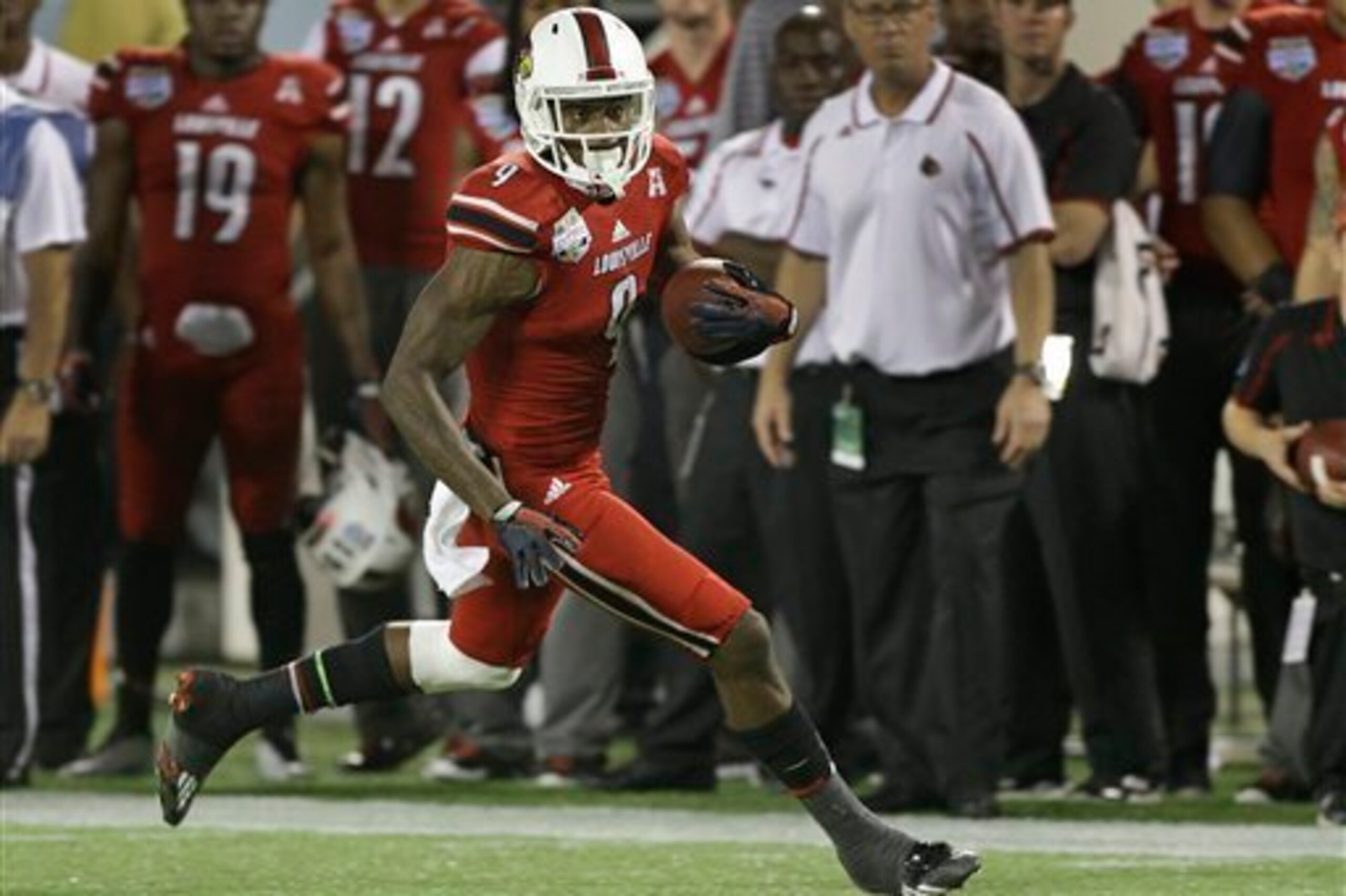
The first—and most popular—option for the Vikings could be to select a true, fundamentally sound wide receiver such as Alabama's Amari Cooper or Louisville's DeVante Parker. Cooper is expected to be a top-10 selection, but many analysts have suggested the possibility of him falling to the Vikings at 11. Parker, on the other hand, is currently expected to be available at 11.
Minnesota could also elect to select a defensive playmaker. Alabama safety Landon Collins is expected to be available, as well as both Clemson linebacker Vic Beasley and Washington linebacker Shaq Thompson.
Finally, if the Vikings are ready to move on from Kalil, the team could select an offensive lineman in the first round. Currently, a few of the top offensive line prospects include: Iowa's Brandon Scherff, Stanford's Andrus Peat, LSU's La'el Collins and Pittsburgh's T.J. Clemmings, among others.
Naturally, what Minnesota does in free agency will influence how it approaches the first round. Regardless, there are a number of routes Minnesota can take and still make the most of its one or (potentially) more first-round selections.
Personally, I am in favor of the Vikings selecting Thompson in the first round—especially if Minnesota proves to be the winner of the Duron Carter sweepstakes.
Round 2: 45th Overall
2 of 7
As one would expect, the best way for Minnesota to make the most of its second-round pick will be highly influenced by how it utilizes its first-round selection.
Despite entering each of the past three drafts with a second-round draft selection, Minnesota hasn't made a second-round pick since 2011—Minnesota selected former Notre Dame tight end Kyle Rudolph 43rd overall.
While this may prove to be the case again, it may be in the Vikings' best interest to compile multiple second-round selections this year. Based on current draft expectations, Minnesota could find year-one starters at multiple positions of need.
Draft projections will obviously change based on pro day performances and combine results, but, as it stands today, there are expected to be numerous pro-ready options available on day two of the 2015 draft.
If Minnesota does select a wide receiver in the first round, the team may be interested in addressing a defensive hole in the second round. Top defensive options expected to be available include: UCLA inside linebacker Eric Kendricks, LSU cornerback Jalen Collins, Florida State cornerback P.J. Williams, Fresno State safety Derron Smith and TCU outside linebacker Paul Dawson.
The Vikings could also find a starting-caliber offensive lineman in the second round. A few options include Colorado State tackle Ty Sambrailo or South Carolina guard A.J. Cann. Both players project as day-one starters in the NFL.
Finally, assuming Minnesota doesn't select a wide receiver in the first round, the Vikings could draft a tall, red-zone threat in Michigan State wide receiver Tony Lippett.
Similar to the first round, Minnesota will have plenty of options to choose from in the second round, assuming it holds on to its pick.
If the Vikings were to select Thompson in the first round, Kendricks or Sambrailo seem to be the best options, based on team needs, who are expected to be available.
Round 3: 76th Overall
3 of 7
The third round is where things begin to get a little bit dicey. While there still is expected to be plenty of talent available, this likely will be the round where many running backs come off the board.
If the Vikings do feel selecting a bell cow running back is a draft need, this is most likely the round to add one. Although running backs such as Wisconsin's Melvin Gordon, Georgia's Todd Gurley and Indiana's Tevin Coleman will likely be gone at this point, there still should be multiple strong options available.
Minnesota's David Cobb originally had a fourth-round grade attached to him, but after an impressive performance in Mobile, Alabama last week, he likely is on the rise.
"Best RB in Mobile this week. RT @RyanBurnsGI: thoughts on David Cobb this week?
— Matt Miller (@nfldraftscout) January 22, 2015"
Personally, I am heavily in favor of keeping the Golden Gophers running back in Minnesota, but there should be plenty of other solid options available as well. Nebraska's Ameer Abdullah, Miami's Duke Johnson, Alabama's T.J. Yeldon and, another riser, Northern Iowa's David Johnson represent just a few options expected to available in the early third round.
Minnesota could decide to address a different position in the third round as well—this would likely be the case if the Peterson dilemma is resolved by him staying put in Minnesota for the 2015 season.
On the defensive side, Louisville safety Gerod Holliman looks to be an excellent prospect, and Southern California cornerback Josh Shaw is a big-frame defensive back who could potentially be an excellent option opposite of Rhodes.
As for offense, Ohio State wide receiver Devin Smith, though a bit on the shorter side, projects as an outstanding deep threat and route-runner, and Florida State guard Josue Matias could slide in on the left side if Minnesota decides to replace the aging Charlie Johnson.
The Vikings made two third-round selections last year, and the team could acquire multiple talented players at positions of need by doing the same this year.
.jpg?w=2560 "Seahawks Chiefs Football")


Round 4: 107th Overall
4 of 7
The Vikings didn't make a fourth-round selection last year, but the team has been known to stockpile fourth-round picks in the recent past, making three selections back in 2012—wide receiver Jarius Wright, fullback (now tight end) Rhett Ellison and wide receiver Greg Childs.
As we begin to enter the later rounds of the draft, the talent, naturally, begins to become few and farther between. Still, the fourth round has yielded plenty of solid NFL players in the past, such as former Idaho defensive end and Vikings legend Jared Allen, who was selected 126th overall by the Kansas City Chiefs in 2004.
This could be another great round to select a running back, as prospects such as South Carolina's Mike Davis or Michigan State's Jeremy Langford could very well still be available.
However, the fourth round may prove to be a great time to select a tall, lengthy wide receiver. Disgruntled wide receiver Dorial Green-Beckham, who has first-round talent but an "undrafted" off-field resume, could very easily fall all the way to the fourth round. If Minnesota is willing to deal with his character flaws—think Randy Moss or Percy Harvin in the past—he could be an absolute steal at this point in the draft. Selecting him any earlier, however, would be dangerous, given that he may not ever see an NFL field.
In addition, Washington State's Vince Mayle is a big-frame receiver the Vikings could use, and Arizona wide receiver Austin Hill could prove to be a productive NFL player.
On the defensive side of the football, Penn State inside linebacker Mike Hull could compete for a role on the Vikings defense in his rookie season, and Miami cornerback Ladarius Gunter has the size and talent to be productive at the NFL level.
Assuming the Vikings haven't already found a big-body wide receiver, I am most partial to selecting a player like Mayle or Green-Beckham at this point in the draft.
Round 5: 141st Overall
5 of 7
As we begin to enter the final three rounds of the NFL draft, the best move generally is to select the best available player, as opposed to drafting by need. Obviously, if there is a tossup between a few options, selecting the player who fills a position of need would be ideal.
The Vikings have had success in the past selecting offensive linemen in the later rounds of the draft, such as former Notre Dame center John Sullivan or former Harvard center Matt Birk.
Personally, I am in favor of attempting to continue this success. It seems likely the Vikings will give Kalil one final year to find his 2012 mojo, but selecting an offensive tackle late in the draft to develop for a season sounds like a cost-effective move.
Enter Wisconsin offensive tackle Rob Havenstein, who has the frame and athleticism to start at the NFL level but likely needs a year or two to develop. He could be selected in an earlier round, due to his upside as a player, but Havenstein would represent a great option for the Vikings in the fifth round.
On the defensive side of the football, Southern California inside linebacker Hayes Pullard could be a fruitful selection at this point in the draft. Again, Pullard could see his name called earlier than the fifth round, but he would be a great depth addition for Minnesota at this point.
Finally, Houston wide receiver Deontay Greenberry appears to be a big, athletic pass-catcher loaded with potential. In my opinion, Greenberry entered the draft a season early, as he still had another year of college eligibility, but he possesses the frame and athleticism to succeed at the NFL level with proper fundamentals coaching.
Although the Vikings likely view acquiring a big wide receiver as a more important need and thus may attempt to fill this hole with an earlier selection, the Pittsburgh Steelers have had quite a bit of success drafting pass-catchers in the middle rounds of the NFL draft.
"#Steelers WR Draft Picks. 2009: M. Wallace (3rd) 2010: E.Sanders (3rd), A. Brown (6th) 2013: M. Wheaton (3rd) 2014: M. Bryant (4th)
— Robert Reidell (@RobertReidell) October 30, 2014"
Round 6: 172nd Overall
6 of 7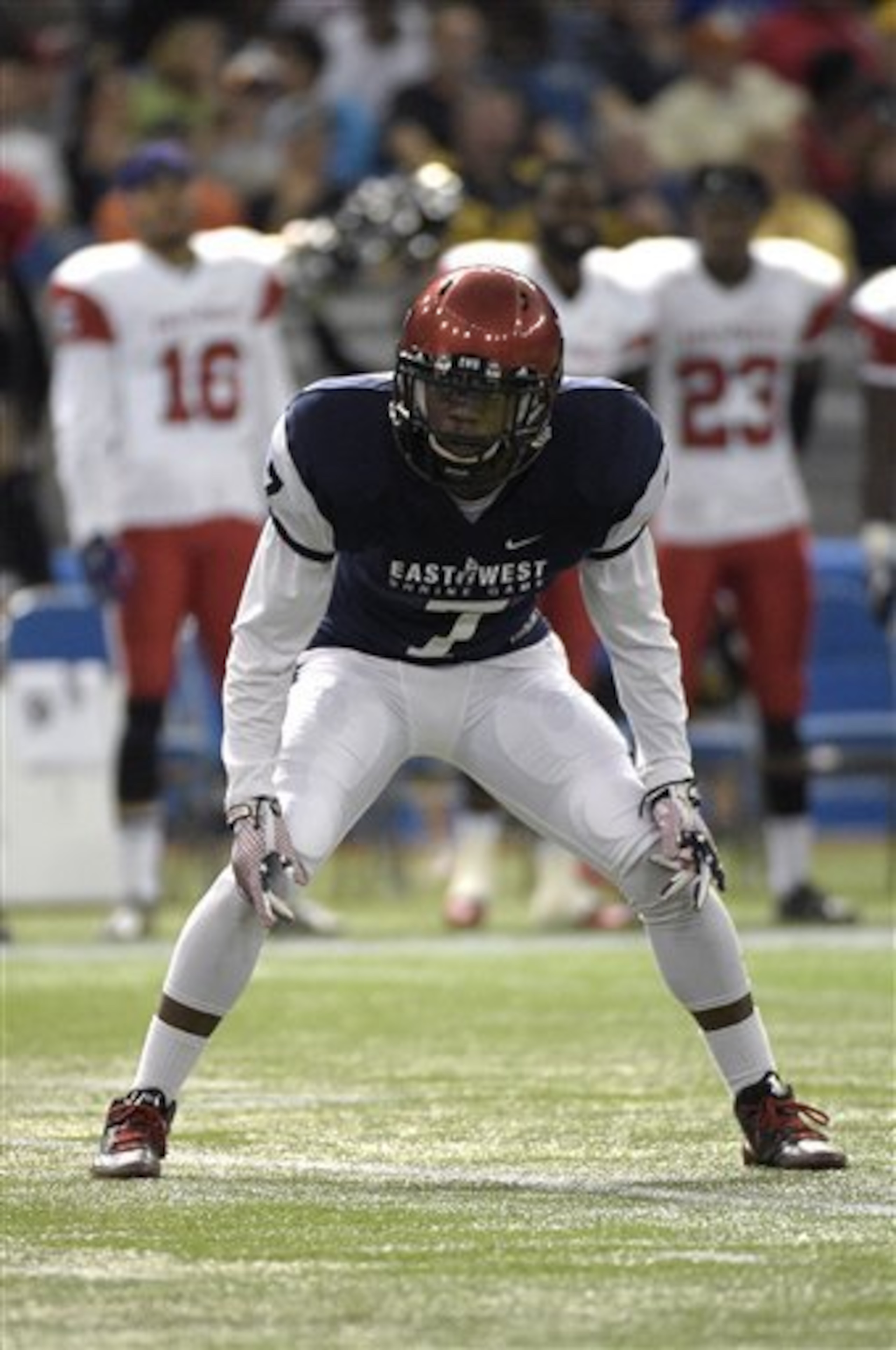
At this point in the draft, teams would be hard-pressed to find a first-year starter. In my opinion, the sixth and seventh rounds of the NFL draft are when teams should begin drafting raw, undeveloped athletes with high upside.
Again, many of these players will rise and fall after pro day workouts and the NFL combine, but as of today, the following players are expected to drop into the late rounds of the draft.
Eastern Washington safety Tevin McDonald, who is a strong candidate to rise up draft boards, would be an excellent add at this point in the draft. The Vikings likely wouldn't mind drafting an upgrade to Robert Blanton—safety Antone Exum may already have an inside track on this position—and McDonald may be a great find.
The Vikings have a history of drafting defensive backs in the later rounds of the draft—in 2014 alone, Minnesota drafted Exum, cornerback Kendall James and cornerback Jabari Price in the sixth and seventh rounds. Given that Minnesota received adequate production from its secondary in 2014, the final two rounds of the 2015 draft is likely the best time to acquire more defensive back talent.
In addition to McDonald, Georgia cornerback Damian Swann currently holds a sixth-round grade. Swann is on the taller side for cornerbacks and could potentially develop into a solid rotational option in the Vikings secondary.
Finally, the sixth round represents a solid area of the draft to find a running back. If Peterson is expected to return, Minnesota could elect to draft a player such as Mississippi State's Josh Robinson—another player I believe entered the draft a year early.
As with previous drafts, the best way for Minnesota to maximize its sixth-round selection in the 2015 draft is to select a player who still requires some grooming but maintains plenty of upside.
Round 7: 203rd Overall
7 of 7
As with the sixth round, it would behoove Minnesota to select a raw talent with high upside potential in the seventh round.
Following the defensive back trend, former Auburn quarterback Nick Marshall is an extremely raw NFL cornerback with seemingly limitless athleticism. As reported by ESPN College GameDay, Marshall, who played in the 2014 BCS national championship as a quarterback with Auburn, will enter the 2015 draft as a cornerback:
"Former QB Nick Marshall will enter the 2015 NFL Draft... As a Cornerback pic.twitter.com/TKzfX1FTF5
— ESPN College Gameday (@ESPNCollegeGD) January 20, 2015"
Given that Marshall has spent his college career playing quarterback, he obviously represents a very raw cornerback option. However, as Seth Emerson stated, Marshall has played cornerback in the past:
"Nick Marshall's long and winding road, from high school star QB, to Georgia cornerback, to Auburn QB. http://t.co/FqQbqg2Dox
— Seth Emerson (@SethEmerson) November 12, 2013"
Marshall has plenty of athletic ability, and as a result, could see his draft stock rise with a strong pro day and great combine measurables, but he currently appears to be a (very) late-round prospect.
Another defensive player who currently holds a late-round grade is Alabama inside linebacker Trey DePriest. DePriest is slightly undersized and a bit limited athletically, but he was an excellent leader in college and could provide solid linebacker depth in Minnesota.
The Vikings could also use their final draft selection on an offensive lineman. Back in 2011, the Vikings found now-starter Brandon Fusco in the sixth round, and Texas A&M guard Jarvis Harrison could have a similar NFL path.
Harrison has a big body and has shown enough athleticism to succeed at the NFL level. It is a long shot, but, due to his 6'4", 344-pound frame, Harrison could end up being an NFL starter in 2015 because he shouldn't need to add mass to play at the NFL level—unlike the Vikings' 2014 late-round draft pick guard David Yankey.
Finally, as you may have inferred, I am a big fan of bringing Minnesota-based prospects back home. South Dakota State running back Zach Zenner, who is listed as a fullback for whatever reason on most draft boards, played his high school football at Eagan, and Stanford inside linebacker A.J. Tarpley played his high school football at Wayzata.
Both Zenner and Tarpley currently project as seventh-round or undrafted prospects, but both are high-character players who potentially could add depth at positions of need for the Vikings.
Draft round projections based loosely on CBS Sports' NFL draft prospects list.
For more Vikings news, statistics and discussion, find me on Twitter @RobertReidell, and be sure to keep tabs on the new Vikings draft website MinnesotaVikingsDraft.com.
.jpg?w=2560 "Raiders Saints Football")