

James Harden, Not Kobe Bryant, Deserves to Be Starter at 2015 NBA All-Star Game
The starters for the NBA All-Star Game will be announced on Jan. 22, and when they are, Kobe Bryant will, in all likelihood, get the nod over James Harden.
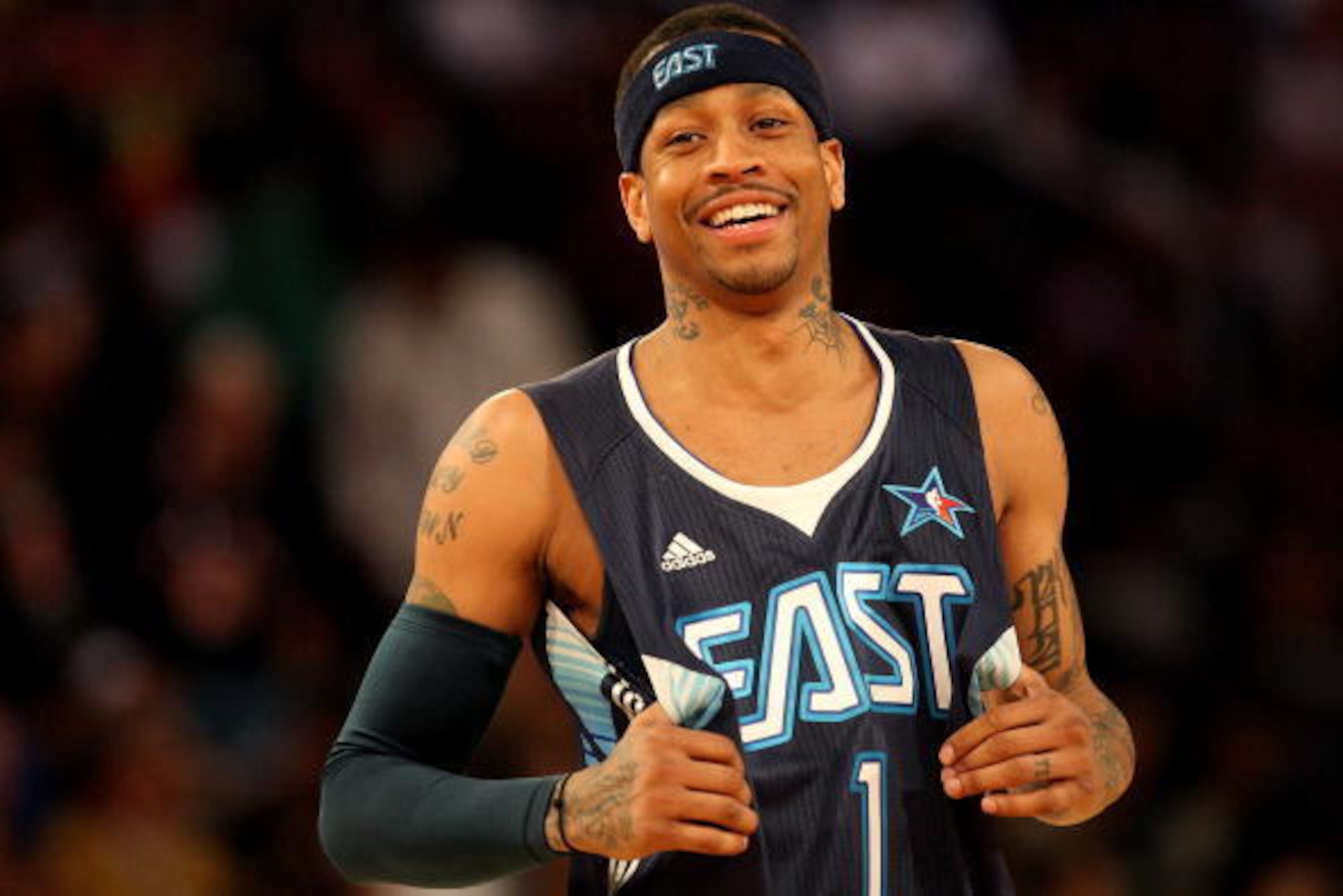
It seems that almost every year there is at least one ridiculous result. Last year, Bryant made it even though he had scarcely played. There was 2011, when Yao Ming got voted in despite having only played five really horrible games in two seasons. Allen Iverson was elected in 2009 and 2010 in spite of putrid numbers.
And for the second time in a row, Bryant's election will be it. Last year, Kobe made it even though he had scarcely played.
TOP NEWS

J-Dub, Wallace May Miss Entire Season
Melo's Quote on Confidence 😎
Celtics at Fault for JT-JB Beef? 🤔
There’s no point in parsing here. Harden unequivocally deserves the nod over Bryant. So do Chris Paul, Damian Lillard, Klay Thompson, Russell Westbrook and Mike Conley. And that’s where the real issue is. It’s not a problem that Bryant is getting an honor he doesn’t deserve; it’s that other players aren’t getting honors they do deserve.
Usually, the outcry is over how horrible it is the player got in, but we forget about the player who was affected by it. Perhaps that’s because typically the snub getting bumped either isn’t as much of a travesty or gets in anyway.
For example, last year, Harden still got the start when Bryant was unable to play. Or when Iverson played in 2010, there weren’t any guards having a particularly great season in the Eastern Conference. And after replacements, the pickings were so thin that Mo Williams got in. This year, though, Bryant is likely to play, and Harden is far more deserving.
Why Harden over Bryant?
The statistical argument for Harden over Bryant is so extreme, it’s almost laughable:
| Player | TRB | AST | STL | BLK | PTS | TS% | PER | WS |
| Kobe Bryant | 5.6 | 5.7 | 1.4 | 0.2 | 22.6 | 47.7 | 17.7 | 0.2 |
| James Harden | 5.6 | 6.7 | 1.9 | 0.9 | 27.1 | 61.0 | 27.2 | 8.9 |
Harden’s season is historic. Only three other players have averaged 25 points, six assists and five rebounds while maintaining a true shooting percentage over 60.0: LeBron James, Michael Jordan and Larry Bird. That company is about as elite a group as there is.
Bryant’s season, on the other hand, is experiencing the opposite extreme. Since the introduction of the shot clock in 1954-55, no player has averaged 20 or more points with a lower field-goal percentage than Bryant’s 37.2.
Team success is similarly contrasted. Harden’s Houston Rockets are 29-13, and that has more than a lot to do with what he’s done. The Rockets have outscored their opponents by 241 points while Harden has been on the court this year and been outscored by 63 while he’s been on the bench—a net difference of 304.
Meanwhile, Bryant’s Los Angeles Lakers have been outscored by 284 points while he’s on the court and outscored their opponents by 18 while he sits—a net difference of minus-302. While the fault for that can’t all be laid at Bryant’s feet, certainly a portion can because of his aforementioned inefficiency.
So Why on Earth Are People Voting for Bryant?
The argument, which is used to justify this sort of disparity, is that this is an All-Star Game, and the fans are just voting for who they want to see. To a point, that’s true, and it would be fine if the All-Star Game were otherwise viewed as only being that.
However, there is more importance put on the contest than it being a mere exhibition. Many players have clauses in their contracts that give them more money if they’re selected to an All-Star Game. And players who start two All-Star Games on their rookie contract are eligible for 30 percent of the salary cap when determining their next contract instead of just 25 percent.
Furthermore, when we’re considering players for the Hall of Fame and their place in history, the number of All-Star appearances is used as a barometer.
At the time the teams are named, we say it’s a popularity contest, but retroactively, it’s treated as though making the team is based on merit. That inconsistency is problematic, and that’s why this argument matters.
Nor is inconsistency the only problem with that argument. It’s more than just being about the most popular players; it’s about being the fan favorite on the most-followed teams.
For example, Jeremy Lin received 148,763 votes as of the third update in balloting. That placed him ninth among backcourt players. Nick Young was 14th among frontcourt players with 62,502 votes. Neither deserves any consideration at all, but both play for the Lakers. They weren’t getting voted for because of their play; they were getting ballots cast for them because of their uniforms.
Furthermore, the premise about the fans “getting to see who they want to see” is flawed. Consider that even Lakers fans aren’t interested in watching Bryant or the Lakers anymore. According to Ben Bolch of the Los Angeles Times, viewers weren’t even turning in to watch him before he started taking games off:
"The Lakers' ratings are near the historic low of 2.11 they averaged all of last season, the worst on record for local Lakers telecasts and a 54% drop from the 2012-13 season, when they averaged a 4.63…
The Lakers' ratings drop could be explained in part by the team's 8-17 record, which is worse than its 12-13 start a year ago. However, superstar Kobe Bryant has played in every game; he did not make his season debut last year until Dec. 8 and played in only six games before sitting out the rest of the season.
"
Some would put the blame for these kinds of results on the fans, but the fault doesn’t just lie with the voters. Watch a broadcast of any game, and you’ll see the announcers pushing for fans to vote for that team’s best player(s).
We’ve advanced a kind of culture where fans are encouraged to put the players on their favorite teams into the All-Star Game, regardless of whether they deserve to be there. And then we attach significance to that.
How to Fix the System
The All-Star Game system is broken. If we want starting the contest to mean something, we need to fix the system.
The most obvious way of doing that would be to overswing the pendulum and take away the vote from the fans entirely. Giving the media, coaches or players the decision-making power here would probably resolve the problem, but it may cause others. Without any say in what happens, fans might lose interest in the game entirely.
Another less extreme solution would allow fans to stay involved in voting but allow for checks and balances. In fact, in some ways, it would give fans even more power. Rather than naming just the starters, the fan vote would determine the bulk of the rosters.
The seven frontcourt players and five backcourt players from each conference to receive the most votes would be named to the team. Then, the coaches would determine, from among those players, who would start. They would also vote on a new 13th spot.
If that were the case this year, based on the third release of votes, the Eastern Conference would be:
| Frontcourt | Votes | |
| LeBron James | Cleveland | 971,299 |
| Pau Gasol | Chicago | 527,582 |
| Carmelo Anthony | New York | 456,186 |
| Chris Bosh | Miami | 354,609 |
| Kevin Love | Cleveland | 260,269 |
| Marcin Gortat | Washington | 155,636 |
| Joakim Noah | Chicago | 139,307 |
| Guards | ||
| John Wall | Washington | 564,977 |
| Dwyane Wade | Miami | 507,326 |
| Kyle Lowry | Toronto | 406,974 |
| Kyrie Irving | Cleveland | 372,065 |
| Jimmy Butler | Chicago | 263,914 |
And this would be the Western Conference:
| Frontcourt | ||
| Anthony Davis | New Orleans | 922,381 |
| Blake Griffin | L.A. Clippers | 490,786 |
| Marc Gasol | Memphis | 476,660 |
| Tim Duncan | San Antonio | 374,814 |
| Kevin Durant | Oklahoma City | 330,297 |
| LaMarcus Aldridge | Portland | 315,405 |
| Dwight Howard | Houston | 211,531 |
| Guards | ||
| Stephen Curry | Golden State | 958,014 |
| Kobe Bryant | L.A. Lakers | 862,568 |
| James Harden | Houston | 690,843 |
| Chris Paul | L.A. Clippers | 401,945 |
| Damian Lillard | Portland | 210,794 |
In that case, Bryant would still get in—and get his last hurrah—but not by taking a starting spot over a far more deserving Harden. Coaches might have a difficult decision trying to determine whether Klay Thompson or Russell Westbrook should fill the 13th opening, but there will always be hard choices to make.
Meanwhile, in the Eastern Conference, all 12 roster spots are deserving, but coaches might give Jimmy Butler or Kyle Lowry the starting nod over Dwyane Wade.
With this method, coaches would be able to calibrate the fans' decision, but fans would still have a say.
In fact, doing it this way could actually increase interest in All-Star voting since more spots would be up for grabs. Furthermore, voting for a 12-man roster might help fans reach beyond just their favorite teams and consider players from other teams.
Sure, some fans might use that as an excuse to stuff the All-Star team with their team's entire roster, I believe that the majority of fans would prefer to see the NBA's best in addition to their favorites.
Obviously, none of this would resolve anything this year, but rather than complain about the results every time they’re announced, it would be nice to see the NBA start addressing the issue. And this seems like a pretty viable solution.
Stats for this article were obtained from Basketball-Reference.com or NBA.com/Stats.
.jpg?w=2560 "Chiefs, Steelers Eye WR Trades")

.jpg?w=2560 "WWE Raw Live Grades 🔠")
.jpg?w=2560 "Multiple NFL Trades Predicted")


