Arsenal's Professional Away Performance Has Been Coming for a While
Arsenal's professional away performance to beat Manchester City 2-0 wasn't an anomaly. It's been coming all season. In fact, it's been coming since the Gunners were thrashed 6-0 at Stamford Bridge last March.
Since then, manager Arsene Wenger has been trying to find ways to craft a more stable, compact shape for tough away games. In the end, though, Wenger didn't need to reinvent the wheel. He just needed the right blend of players to put his ideas into practice.
The grating post-match punditry for the City win was a narrative that acted as if Wenger, after over three decades in management, finally "gets it." It's patronising and ridiculous to the point of being offensive.


.jpg?w=2560 "Seahawks Chiefs Football")
The real post-match talking point should have focused on how the Gunners have the right blend of players, particularly in midfield. Whether by design, chance or accident, Wenger has finally hit on the one thing his team has missed all season: a happy balance.
The balance is most evident in midfield—thankfully, the most important area of the team. Since being forced into recalling Francis Coquelin, Wenger has equipped his midfield trio with the right type of holding player.
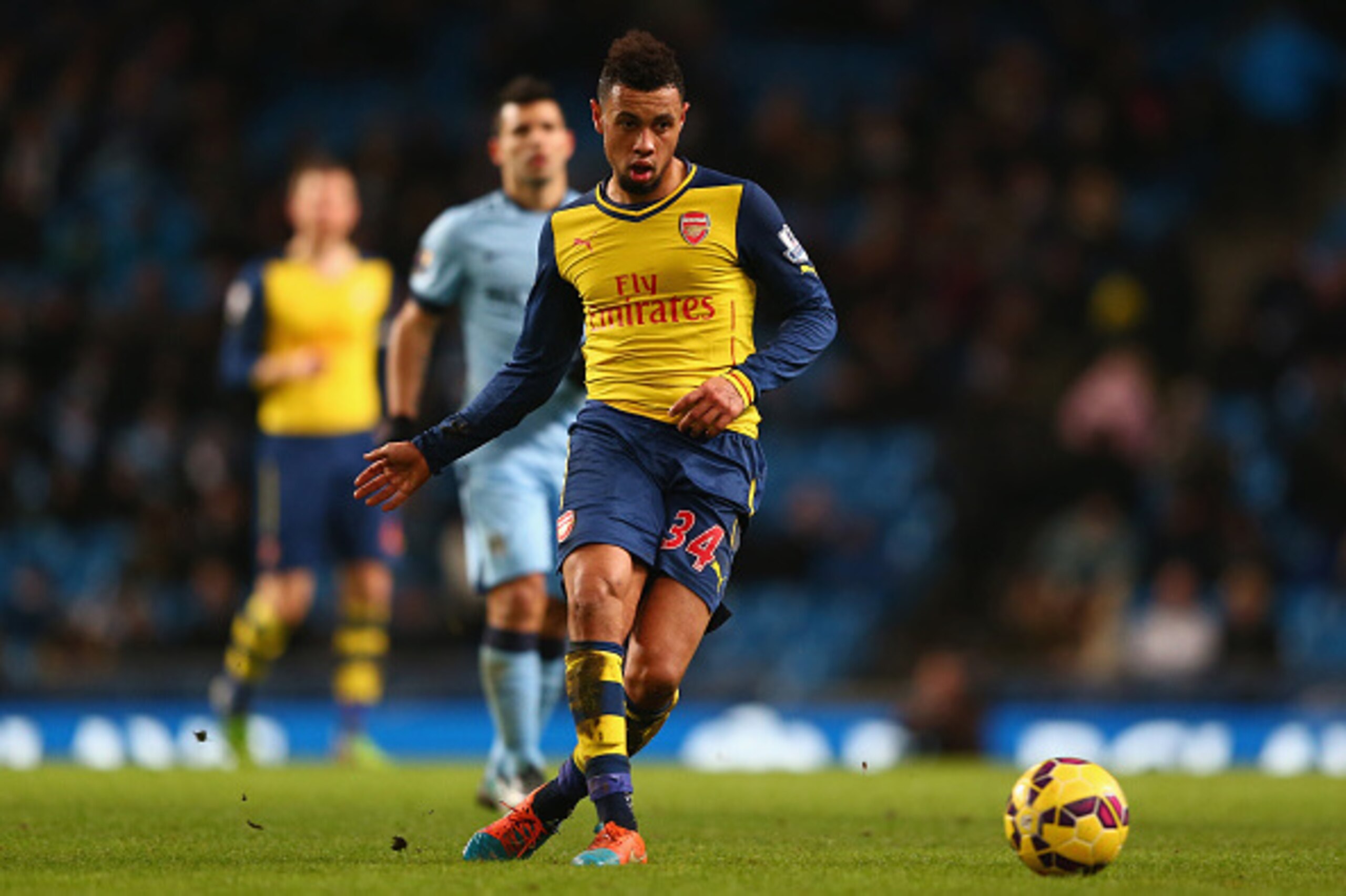
Coquelin is more positionally disciplined than tenacious wanderer Mathieu Flamini. He's also more robust and destructive as a tackler, as well as quicker across the ground than savvy playmaker Mikel Arteta.
Coquelin has all the qualities a midfield spoiler needs, but what's been going on ahead of him is more interesting.
Against City, Wenger deployed the returning Aaron Ramsey and the currently irrepressible Santi Cazorla. Neither maintained a fixed position.
Occasionally, Ramsey pushed forward into the No. 10 role, while Cazorla dropped deeper to provide extra cover for Coquelin and link play. At other times, it was Cazorla further advanced, trying to supply the forward line, while Ramsey's energy and industry were put to use in more defensive positions.
With a complementary midfield trio, boasting one anchor and two fluid foragers, Wenger's quick-striking rope-a-dope was always going to work.
It worked because the Gunners could cede possession and trust Ramsey and Cazorla to swarm around the men in possession. It worked because Wenger could trust Coquelin to very rarely stray from his base in front of the back four and as City schemer David Silva's shadow.
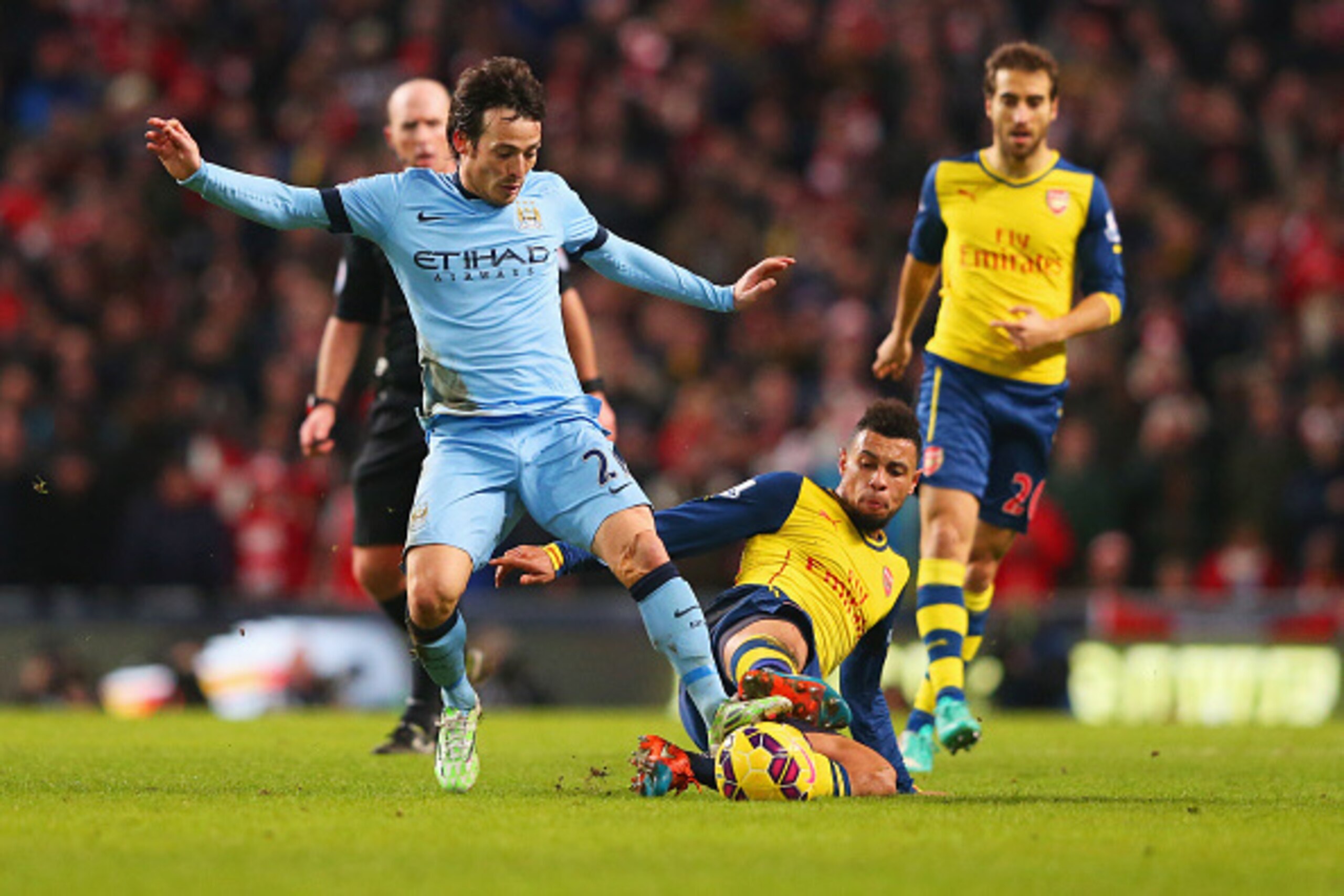
Just as important, Wenger had the right players to press from the front. Alexis Sanchez couldn't turn on the magic in front of goal, but his relentless chase and harry act never gave a plodding and accident-prone City back line a moment's peace.
Meanwhile, Olivier Giroud, that enigmatic target man who veers from brilliance to clueless in a matter of seconds, also never stopped darting across the forward line and posing a physical threat.
Even Alex Oxlade-Chamberlain, sadly often work-shy, more than did his bit pressing full-backs and tucking into the midfield to clog City's central passing lanes.
The young England international lauded the way Arsenal's defensive symmetry began upfront and stayed constant, per Arsenal.com reporter Rob Kelly: "We defended solidly right from the front, all the way to the boys at the back, who were tremendous. I think Francis Coquelin in midfield really gave the back four good protection and we countered well and caused them problems."
Are you getting the picture yet? It's one thing the heat map junkies and Opta generation never admit: Tactics aren't a magic fix-all. They're only as good as the players implementing them.
The problem has been trying to implement more cautious tactics with sides bloated with forward-thinking players. Do you really think the performance at City would've been possible with Cazorla and fellow creator-in-chief Mesut Ozil in the starting 11? Not a chance.
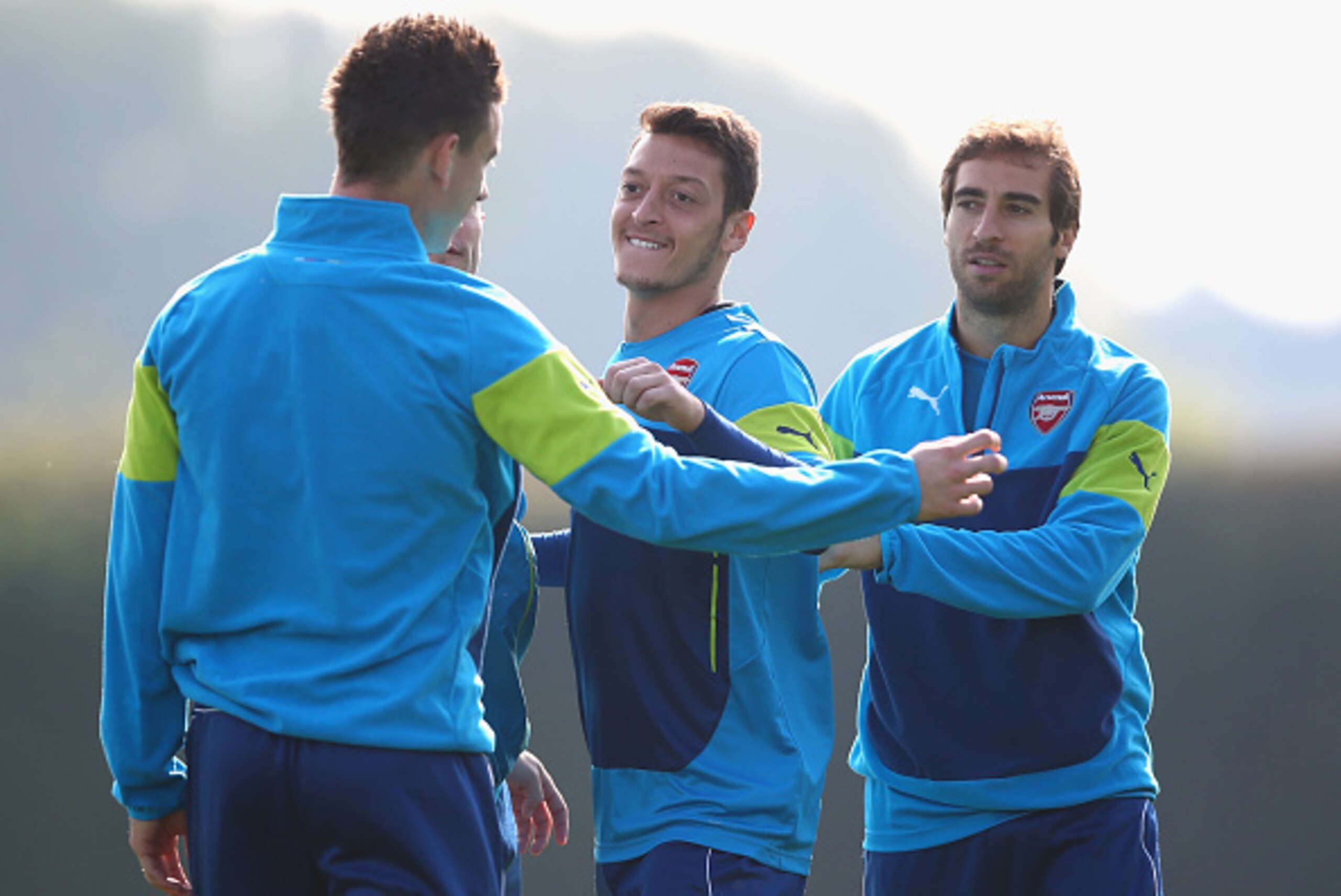
Similarly, the approach wouldn't have worked with Ramsey and Jack Wilshere sharing the same space in midfield. Why? Because there wouldn't have been any balance.
The tactics at City weren't anything new from Wenger. Adopting them without four No. 10s in midfield was the key difference. So was including more players who are willing runners and committed workers.
Ozil is too languid and not the busy worker bee Cazorla is. Theo Walcott can be as deadly as Alexis Sanchez in front of goal, but his idea of pressing from the front is closer to sleepwalking than the Chilean's ceaseless harassment.
How Wenger keeps his team's more professional streak alive now that Ozil, Walcott and Flamini are available is the big talking point post-City. But instead, many pundits seemed more concerned with staring in wide-eyed amazement that a manager who's won trophies in three countries and has never been out of the Premier League's top four could actually engineer a win at the home of a title contender.
There's a lot of short memories around.
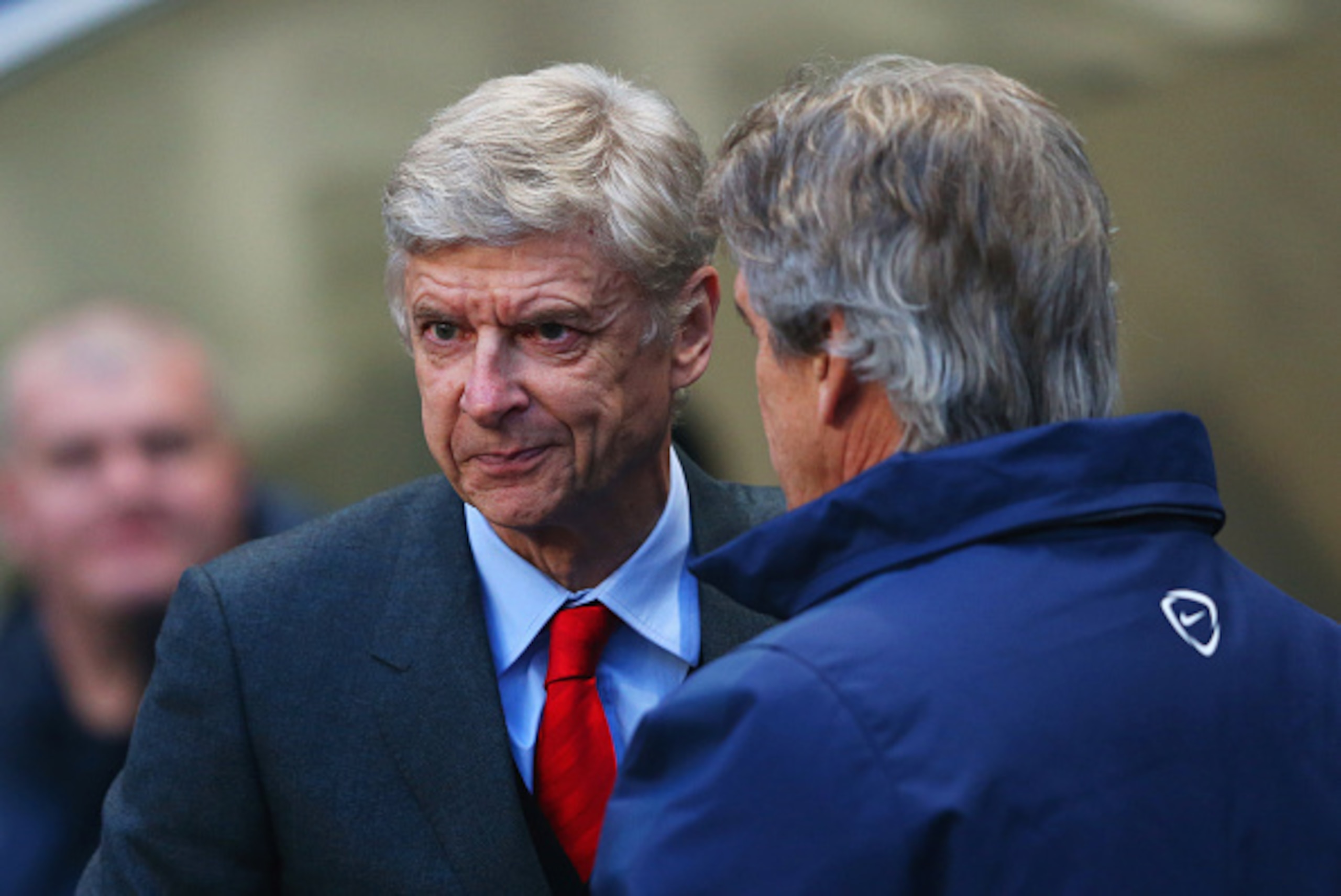
At the moment at least, Wenger has the right group of players to make the steady tactical evolution of this team work. But that process didn't belong just to the players who strutted off the Etihad Stadium pitch, buoyed by triumph.
It's a process the manager, his staff and his squad have been tinkering with all season.
Much has been made of the possession statistics for the City game. The Gunners managed barely over 35 percent of the possession, per Sky Sports.
But this wasn't the first time the Gunners have ceded possession on their travels this season. How about the 2-1 away win over West Ham United in late December?
That day, the Gunners managed just 42.2 percent possession and still won. That rearguard action came a week after Arsenal saw just 36.5 percent of the ball but still drew 2-2 at Liverpool.
One common theme was obvious in both games: The Gunners were content to sit back, absorb pressure and strike on the counter.
Giroud's second-half finish at Anfield was the flourish to a sudden, sweeping move involving just three players and barely many more passes. Arsenal broke with greater frequency at West Ham, scoring twice, although Wenger's men should have helped themselves to many more.
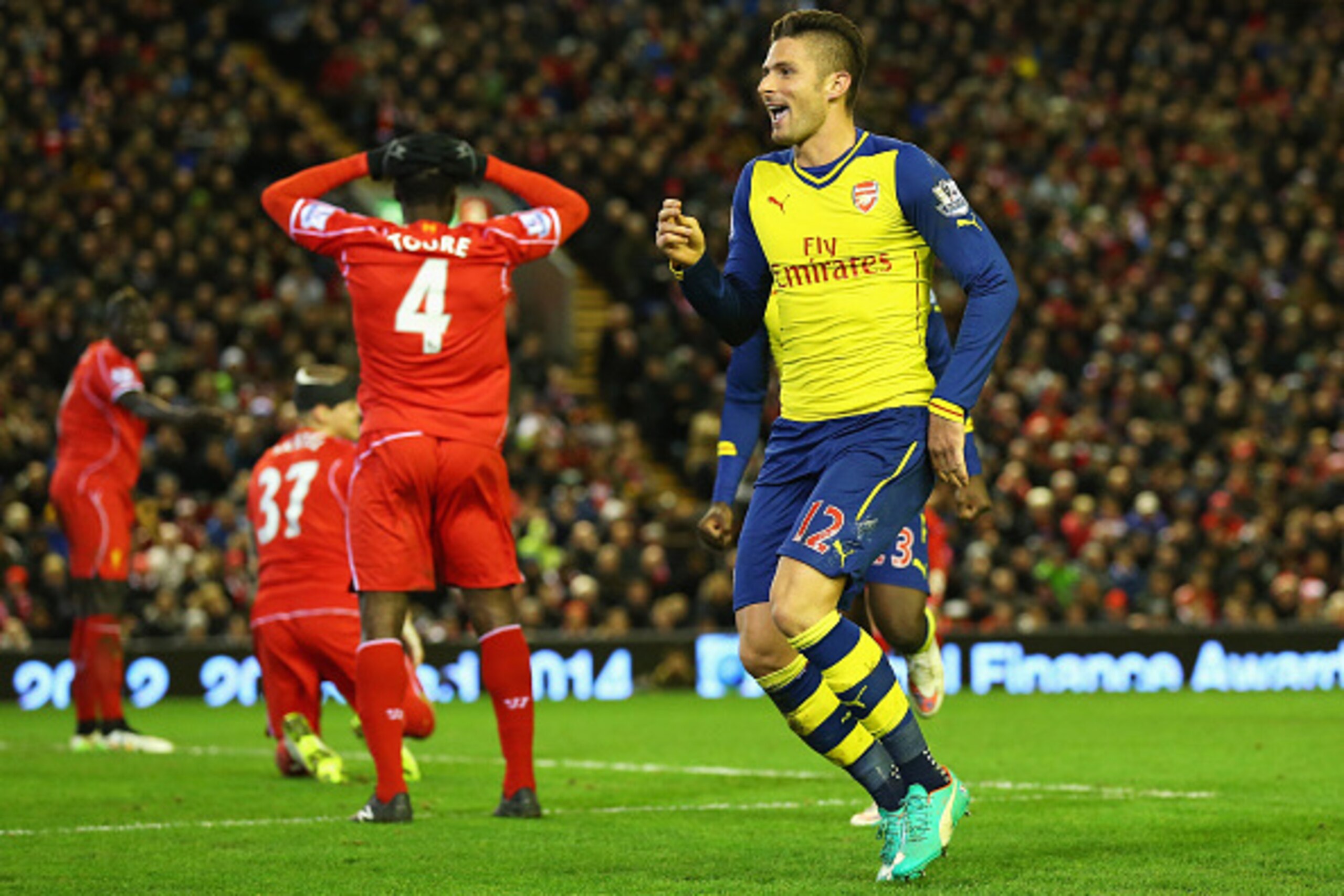
It's no coincidence that Danny Welbeck featured in both games. The generally goal-shy—although he did net the winner against the Hammers—but hard-working forward is perfect for a counter-attacking game.
Welbeck is never shy about pressing and harrying players or tracking back to help his team-mates. His seemingly limitless energy means he's usually the quickest to transition defence to attack and break forward. The ex-Manchester United striker was the consistent outlet at West Ham.
The point is a player like Welbeck lets a manager put a patient, defensive formula into practice. It's a formula Wenger is still tweaking.
At Anfield, he was a little conservative trying to protect the lead—understandable given some of this season's collapses from winning positions. But bringing on Coquelin and left-back Nacho Monreal perhaps handed too much initiative to Liverpool late on.
But like any great dugout general, Wenger learned and adapted the next time his team was protecting a lead away from home. That's why Tomas Rosicky was first off the bench at the Etihad.
The ageing Czech pass-master will never fly into tackles or break up play, but the cerebral 34-year-old has always used the ball well. Rosicky helped Arsenal keep the ball away from City for spells in the second half. It was a proactive approach to negating the opposition.
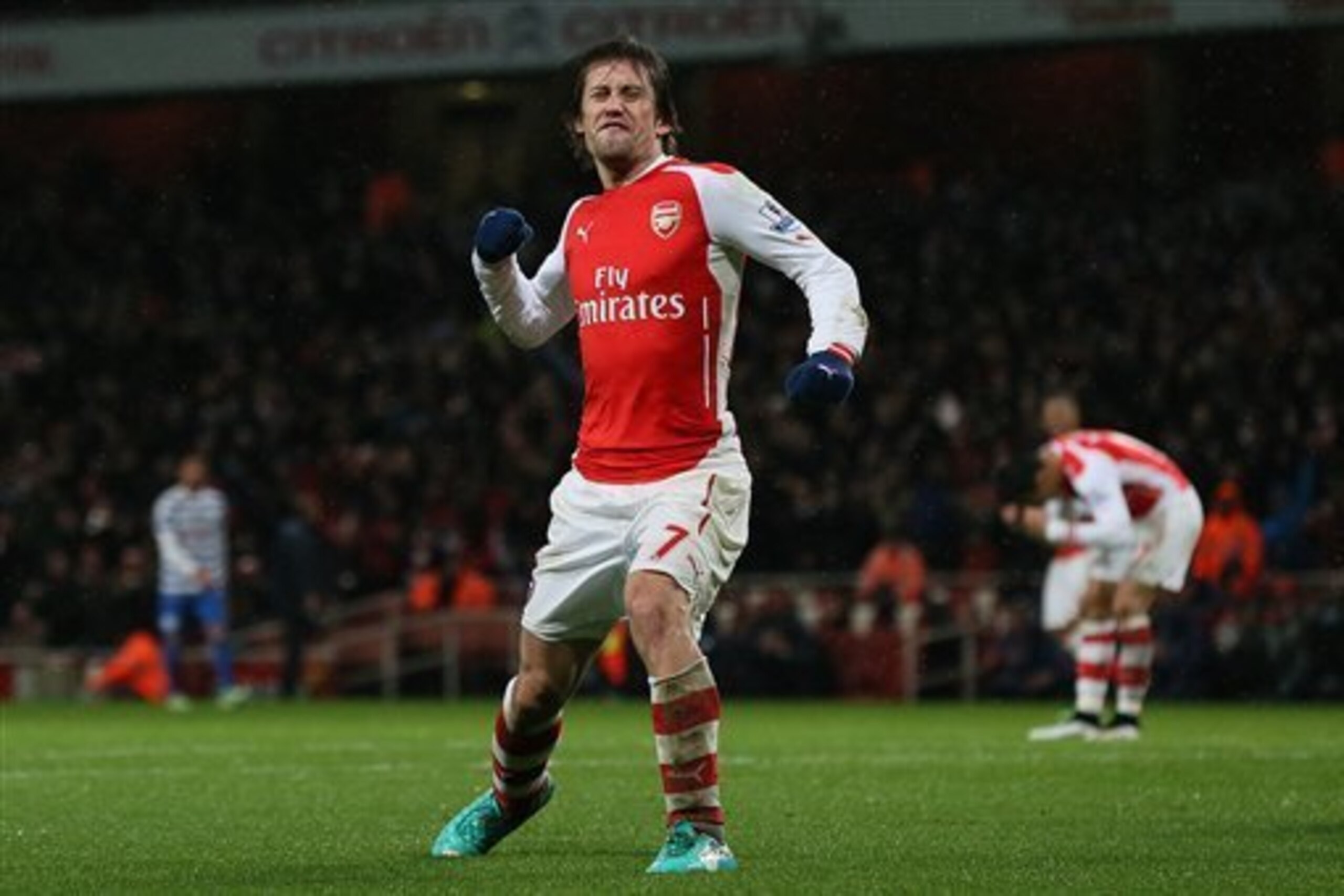
Wenger's next riff on an increasingly effective jab-and-move approach must be to refine his team's guile on the break. Arsenal are still too wasteful from excellent positions whenever they counter.
They squandered three glorious chances against City after doing pretty much the same thing at West Ham. After beating City, Wenger smartly cited this wasteful streak as one blot for the copy book, per Arsenal.com writer Max Jones:
"You could always see that when we won the ball, if the first two passes were right, we would be dangerous. Especially in the second half, Aaron had two chances and even in the first half we had plenty of opportunities. ... The only regret we had was that we didn’t take advantage of many dangerous situations to finish the game off earlier, but overall I think we did very well.
"
Wenger is right to target improvement in this area. It's the only way what Arsenal showed at City can work again.
The performance and the result were rare things in recent years, especially at the home of a top team. But don't kid yourself for a second: Wenger hasn't suddenly "seen the light."
This wasn't an anomaly. It's been coming for a while.