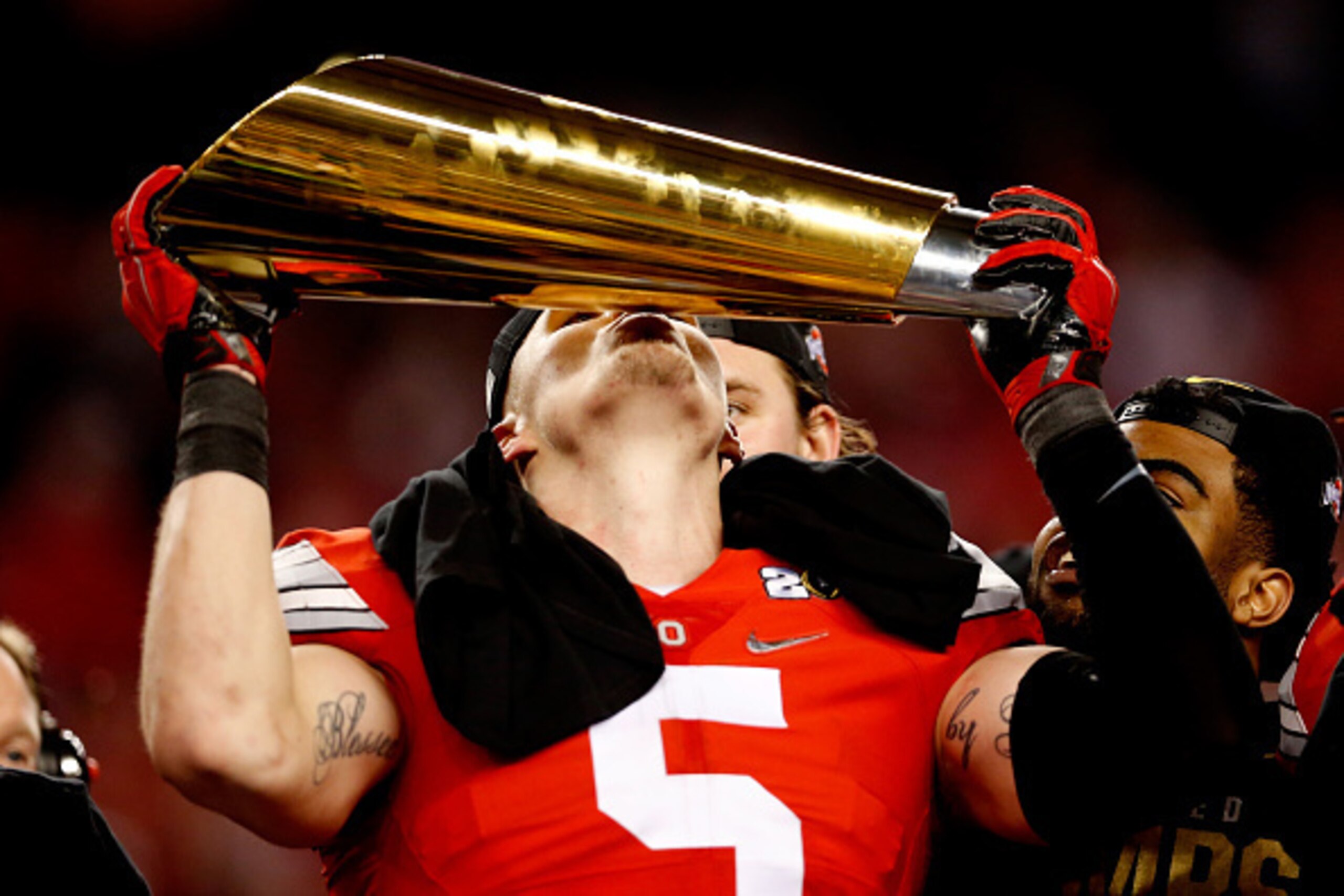

How 2014-15 Ohio State Compares to Every BCS Champion
Ohio State capped a magical season with a 42-20 win over Oregon, beating the Ducks in the inaugural College Football Playoff National Championship and bringing the national title to the Big Ten for the first time since 2002-03.
But how did the 2014 Buckeyes stack up with the teams that came before them: the 16 national champions from the BCS era?
To answer that, we've pitted OSU against each team head-to-head and analyzed a number of factors. Most of them are self-explanatory, and those that aren't are easy to understand.
The simple rating system, explained by Sports-Reference.com, measures point differential against strength of schedule. The F/+ ratings at Football Outsiders (only available after 2004) measure several additional factors against strength of schedule.
Basically, we wanted to make sure the schedule was accounted for.
Based on all the numbers, a subjective call was made between the teams. But in many cases, there was room for debate.
Sound off below, and let us know what you think!
1998-99 Tennessee Volunteers
1 of 16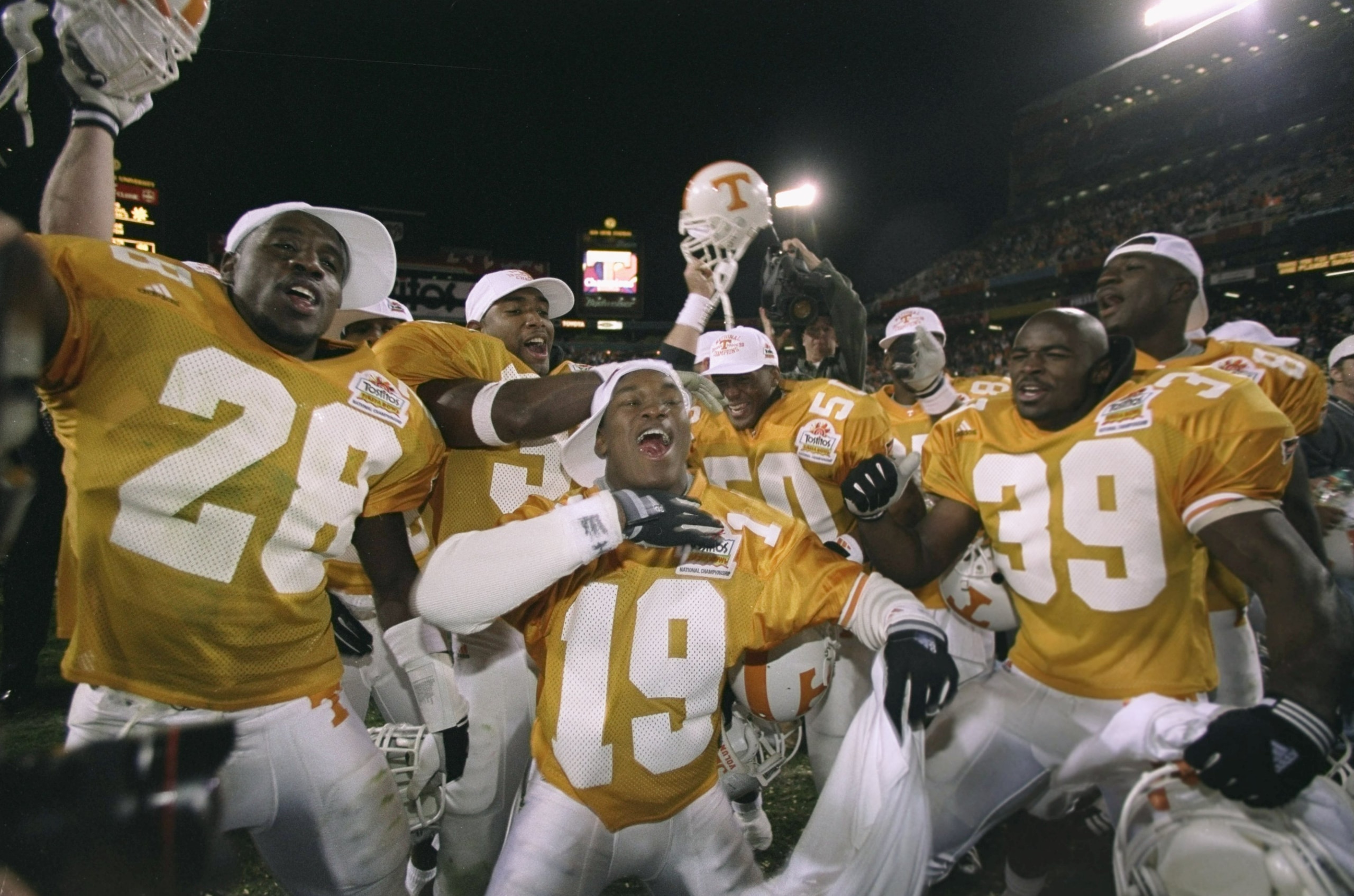
| 98-99 Tennessee | 14-15 Ohio State | |
| Record | 13-0 | 14-1 |
| Points/Game Margin | 18.7 | 22.8 |
| Yards/Game Margin | 88.5 | 169.2 |
| Simple Rating Score | 19.95 | 20.43 |
| Title Game Score | 23-16 | 42-20 |
The first BCS champion was a great but far from dominant Tennessee team. The Vols went undefeated with an offense that rushed twice as many times per game (39.8) as it passed (21.2) and won three games by four points or fewer.
Ohio State, of course, had the one loss to Virginia Tech. But outside of that, it was the better all-around team. It won its games with more conviction, especially at the end of the year.
Advantage: '14-15 Ohio State
1999-00 Florida State Seminoles
2 of 16
| 99-00 Florida State | 14-15 Ohio State | |
| Record | 12-0 | 14-1 |
| Points/Game Margin | 21.3 | 22.8 |
| Yards/Game Margin | 111.6 | 169.2 |
| Simple Rating Score | 23.50 | 20.43 |
| Title Game Score | 46-29 | 42-20 |
The 1999 Florida State Seminoles were similar to the 2014 Buckeyes. Both won their games by an average of roughly three touchdowns, and both beat a legendary dual-threat quarterback—Michael Vick and Marcus Mariota respectively—in the national title game.
FSU had a Heisman Trophy-winning quarterback in Chris Weinke and an explosive receiver/returner in Peter Warrick, and it beat two Top Four teams (Florida and Virginia Tech) in its final two games. Ohio State had better raw yardage stats, but the undefeated thing comes into play.
Advantage: '99-00 Florida State
2000-01 Oklahoma Sooners
3 of 16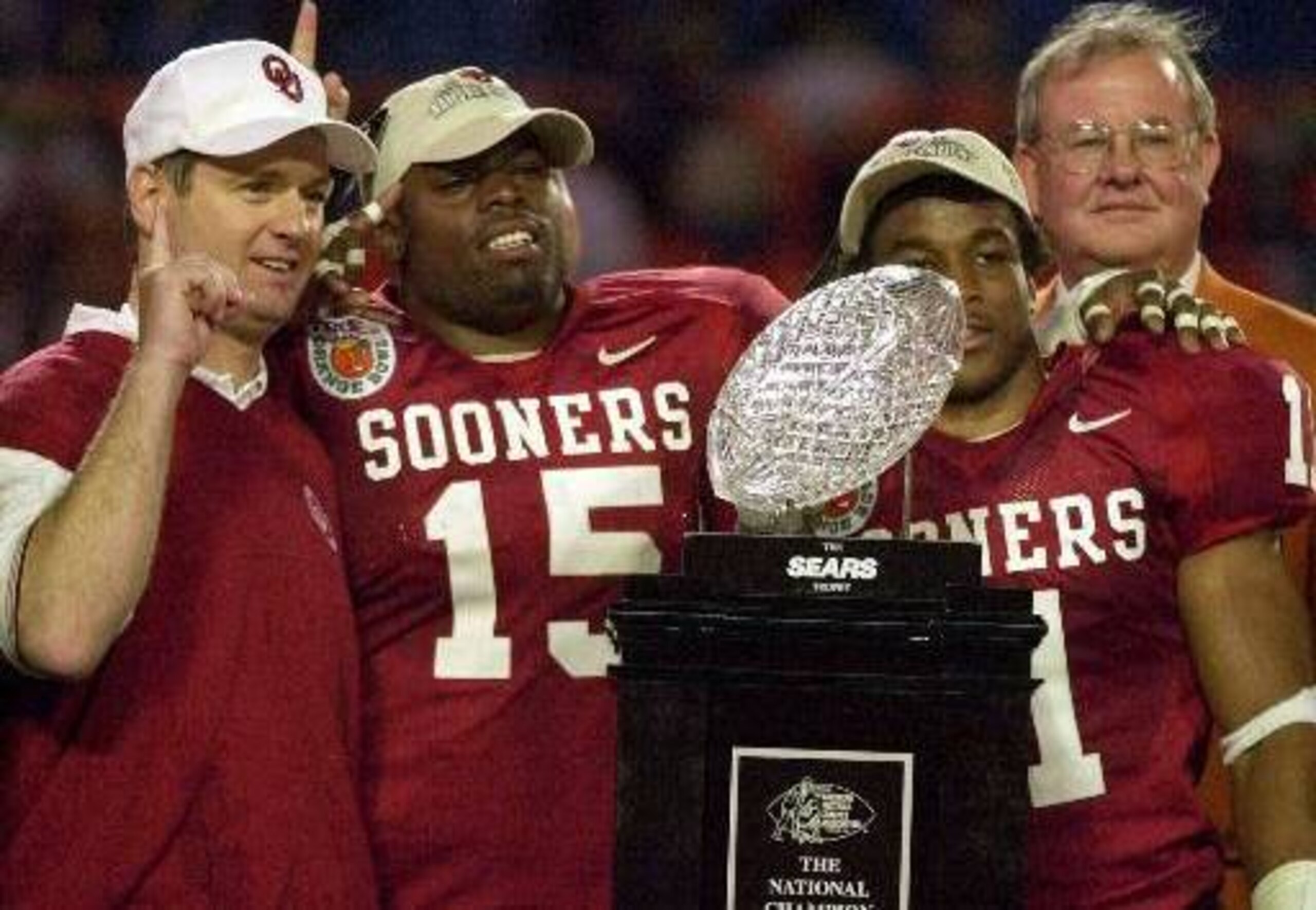
| 00-01 Oklahoma | 14-15 Ohio State | |
| Record | 13-0 | 14-1 |
| Points/Game Margin | 22.1 | 22.8 |
| Yards/Game Margin | 150.3 | 169.2 |
| Simple Rating Score | 21.55 | 20.43 |
| Title Game Score | 13-0 | 42-20 |
Even more than 1999 Florida State, the 2000 Oklahoma Sooners looked a lot like 2014 Ohio State. The points per game are nearly identical, and the yards per game and simple rating score are close.
OU relied on the pass whereas OSU relied on the run, but other than the means of gaining yardage, these teams were closely related. Neither had a single receiver catch 55 passes, preferring to spread the ball around instead of leaning on the same target.
Again, though, the undefeated thing rules as a tiebreaker. Oklahoma did it all without a blemish.
Advantage: '00-01 Oklahoma


2001-02 Miami Hurricanes
4 of 16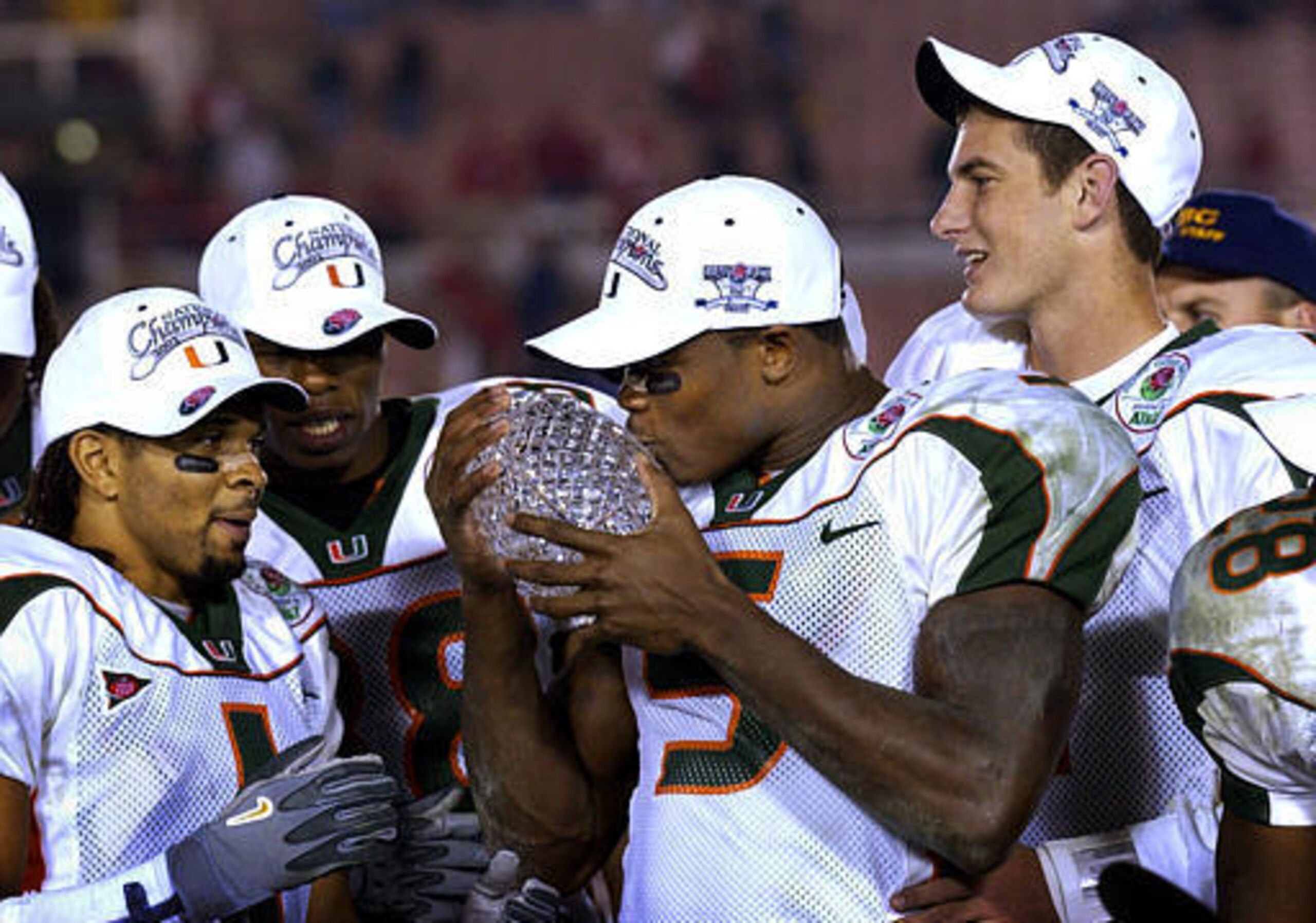
| 01-02 Miami | 14-15 Ohio State | |
| Record | 12-0 | 14-1 |
| Points/Game Margin | 32.9 | 22.8 |
| Yards/Game Margin | 183.9 | 169.2 |
| Simple Rating Score | 26.17 | 20.43 |
| Title Game Score | 37-14 | 42-20 |
The 2001 Miami Hurricanes were as good as they were memorable.
Their 12-0 season was part of a 34-game winning streak that spanned from 2000 to 2003. Thirty-eight players from the roster were NFL draft picks, including 17 who went in the first round. The list of future NFL stars in the starting lineup alone (Clinton Portis, Jeremy Shockey, Kellen Winslow Jr., Andre Johnson, Bryant McKinnie, D.J. Williams, Jonathan Vilma, Ed Reed, et al.) goes on and on.
Ohio State was great this year, but it wasn't transcendent. This Miami team already has a 30 for 30. It beat opponents by 33 points per game and went down as one of the best college teams ever.
Advantage: '01-02 Miami
2002-03 Ohio State Buckeyes
5 of 16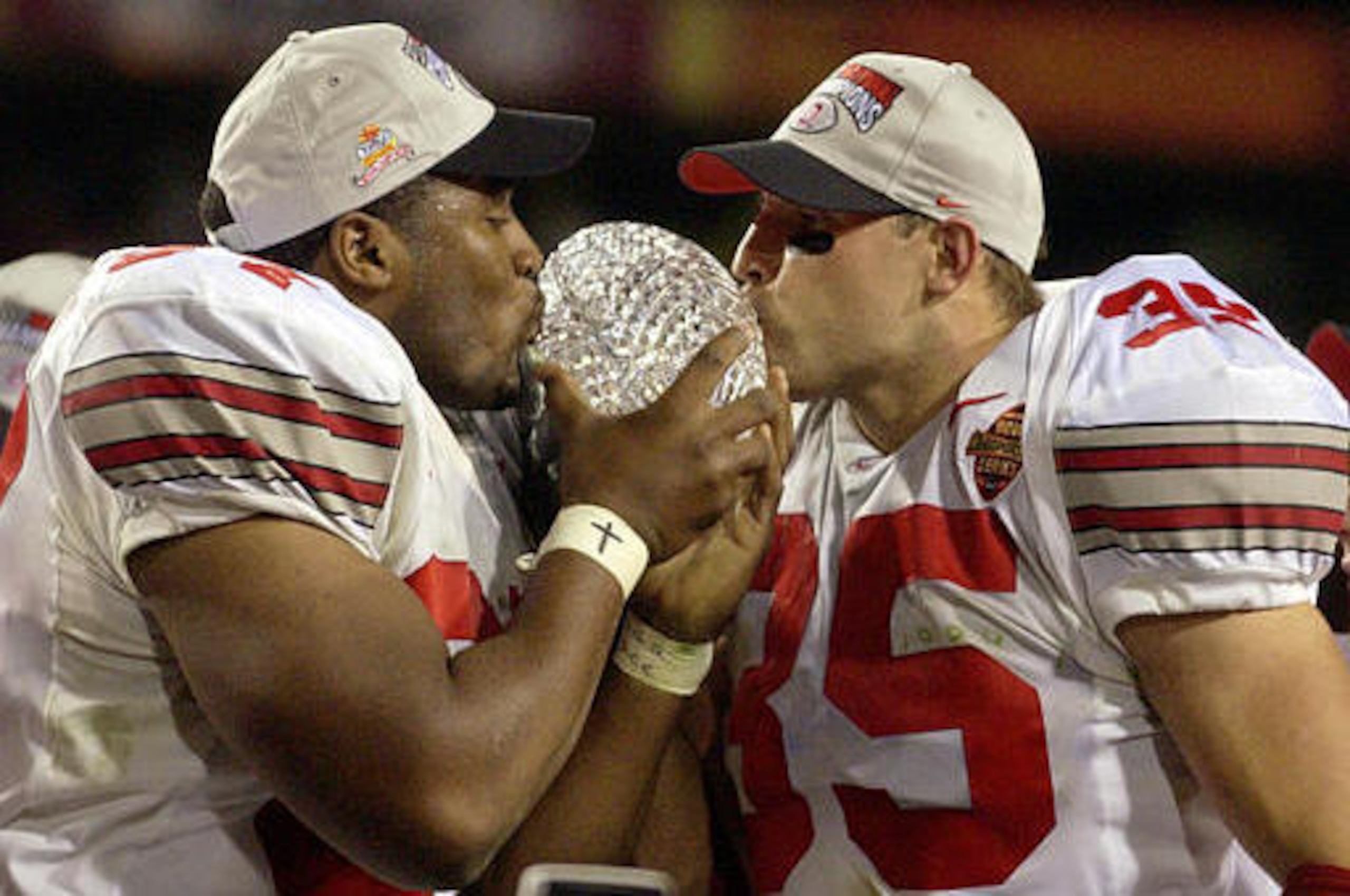
| 02-03 Ohio State | 14-15 Ohio State | |
| Record | 14-0 | 14-1 |
| Points/Game Margin | 16.2 | 22.8 |
| Yards/Game Margin | 43.6 | 169.2 |
| Simple Rating Score | 18.13 | 20.43 |
| Title Game Score | 31-24 | 42-20 |
Ohio State's CFP national champion was better than its BCS national champion, posting superior numbers in almost every category.
The only place the 2002 Buckeyes excelled over the 2014 Buckeyes was in the loss column; unlike this year's team, they didn't lose a game. They also ended Miami's 34-game winning streak in dramatic fashion, winning the Fiesta Bowl 31-24 in double overtime.
Because of their no-loss record and because they beat a historically relevant opponent, the 2002 Buckeyes were more memorable than this year's group. But the truth is they weren't as good. Total yards is an imperfect statistic, but outgaining opponents by fewer than 50 yards per game still means something.
Advantage: '14-15 Ohio State
2003-04 LSU Tigers
6 of 16
| 03-04 LSU | 14-15 Ohio State | |
| Record | 13-1 | 14-1 |
| Points/Game Margin | 23.9 | 22.8 |
| Yards/Game Margin | 166.4 | 169.2 |
| Simple Rating Score | 20.85 | 20.43 |
| Title Game Score | 21-14 | 42-20 |
The 2003 LSU Tigers are the team this year's Buckeyes most closely resemble. The points per game, yards per game, simple rating score and records are all similar. LSU bounced back from a loss to unranked Florida to win it all, just like OSU did with unranked Virginia Tech.
Obviously, the styles were different. LSU was a defensive juggernaut with a capable offense; OSU was an offensive juggernaut with a capable defense. But the dominance was closely the same.
This time, though, there is no undefeated thing to function as a tiebreaker. In fact, Ohio State's triumph in the CFP gives it the record advantage. LSU beat a good Georgia team in the SEC Championship Game and a good Oklahoma team in the Sugar Bowl, but even that pales in comparison to beating Alabama and Oregon.
Advantage: '14-15 Ohio State
2004-05 USC Trojans
7 of 16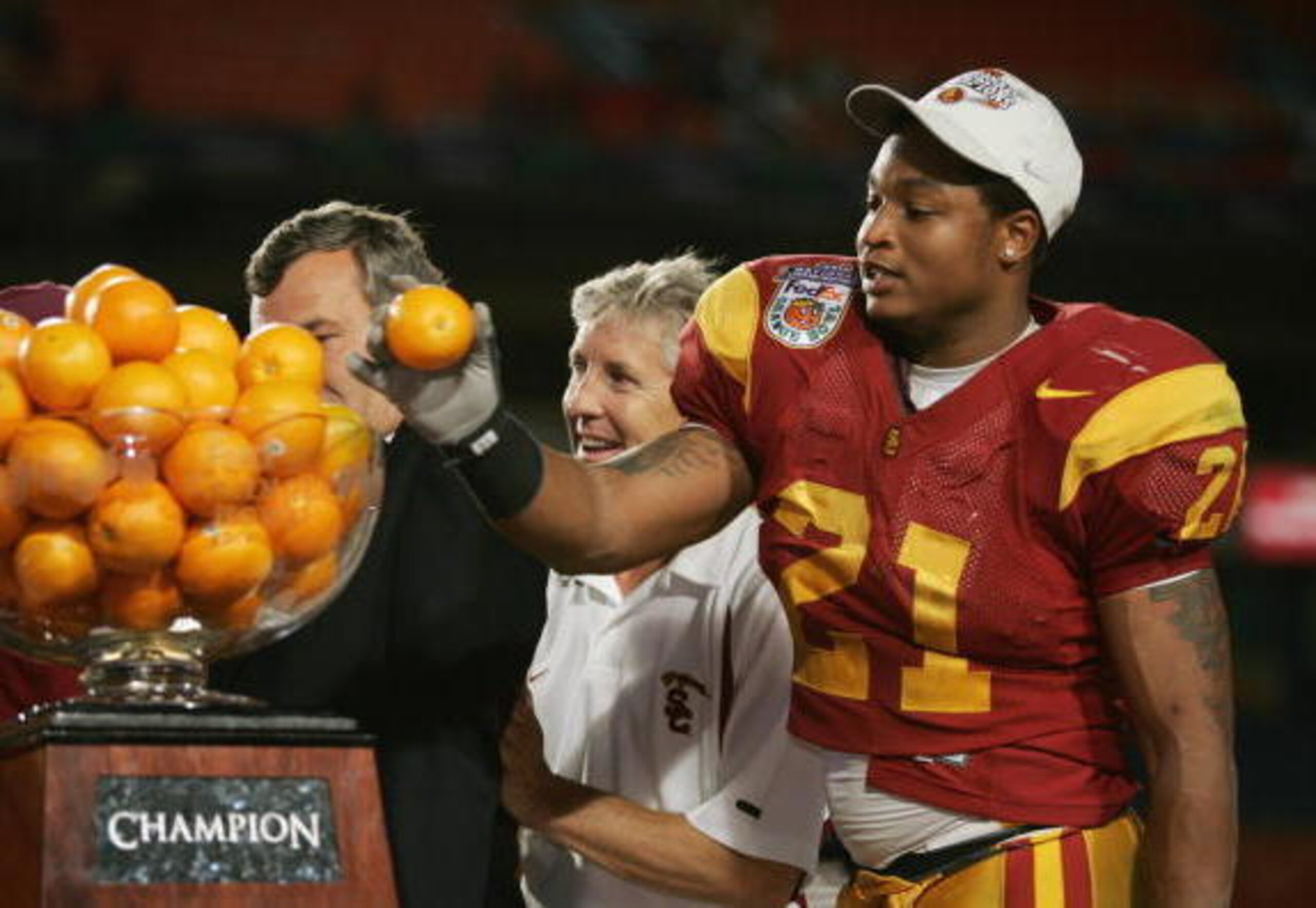
| 04-05 USC | 14-15 Ohio State | |
| Record | 13-0 | 14-1 |
| Points/Game Margin | 25.2 | 22.8 |
| Yards/Game Margin | 169.8 | 169.2 |
| Simple Rating Score | 26.06 | 20.43 |
| Title Game Score | 55-19 | 42-20 |
A team on par with the 2001 Miami Hurricanes, the 2004 USC Trojans trampled just about everyone they played.
Their BCS title has since been vacated—a product of the Reggie Bush impermissible benefits sanctions—but the mark they left on college football will never be erased. Bush, Matt Leinart, Lendale White and Dwayne Jarrett helped form the No. 6 scoring offense in the country; Shaun Cody, Mike Patterson, Lofa Tatupu and Matt Grootegoed helped form the No. 3 scoring defense.
"I think they're great, and they sure proved it," Oklahoma head coach Bob Stoops said after losing the Orange Bowl to USC 55-19, per The Associated Press (via ESPN.com). "We just got whupped."
Ohio State fans can understand why this was easy.
Advantage: '04-05 USC
2005-06 Texas Longhorns
8 of 16
| 05-06 Texas | 14-15 Ohio State | |
| Record | 13-0 | 14-1 |
| Points/Game Margin | 33.8 | 22.8 |
| Yards/Game Margin | 209.2 | 169.2 |
| Simple Rating Score | 24.98 | 20.43 |
| Title Game Score | 41-38 | 42-20 |
| F/+ Rating | +39.9% | +42.9% |
The same way the 2002 Buckeyes ended Miami's 34-game winning streak in dramatic fashion, the 2005 Texas Longhorns ended USC's 34-game winning streak in dramatic fashion, beating the Trojans in the Rose Bowl on a last-second touchdown run by Vince Young.
Unlike those 2002 Buckeyes, however, the 2005 Longhorns had one of the most dominant seasons of the BCS era. They averaged 50.2 points per game and allowed fewer than 17. A backfield shared by Young and Jamaal Charles looks even better now than it did at the time.
The early-aught Hurricanes, the mid-aught Trojans and the late-aught Alabama Crimson Tide are mentioned as our modern "dynasties." But the 2005 Longhorns, as a self-contained, one-year unit, could have stuck with any team from the BCS era.
Advantage: '05-06 Texas
2006-07 Florida Gators
9 of 16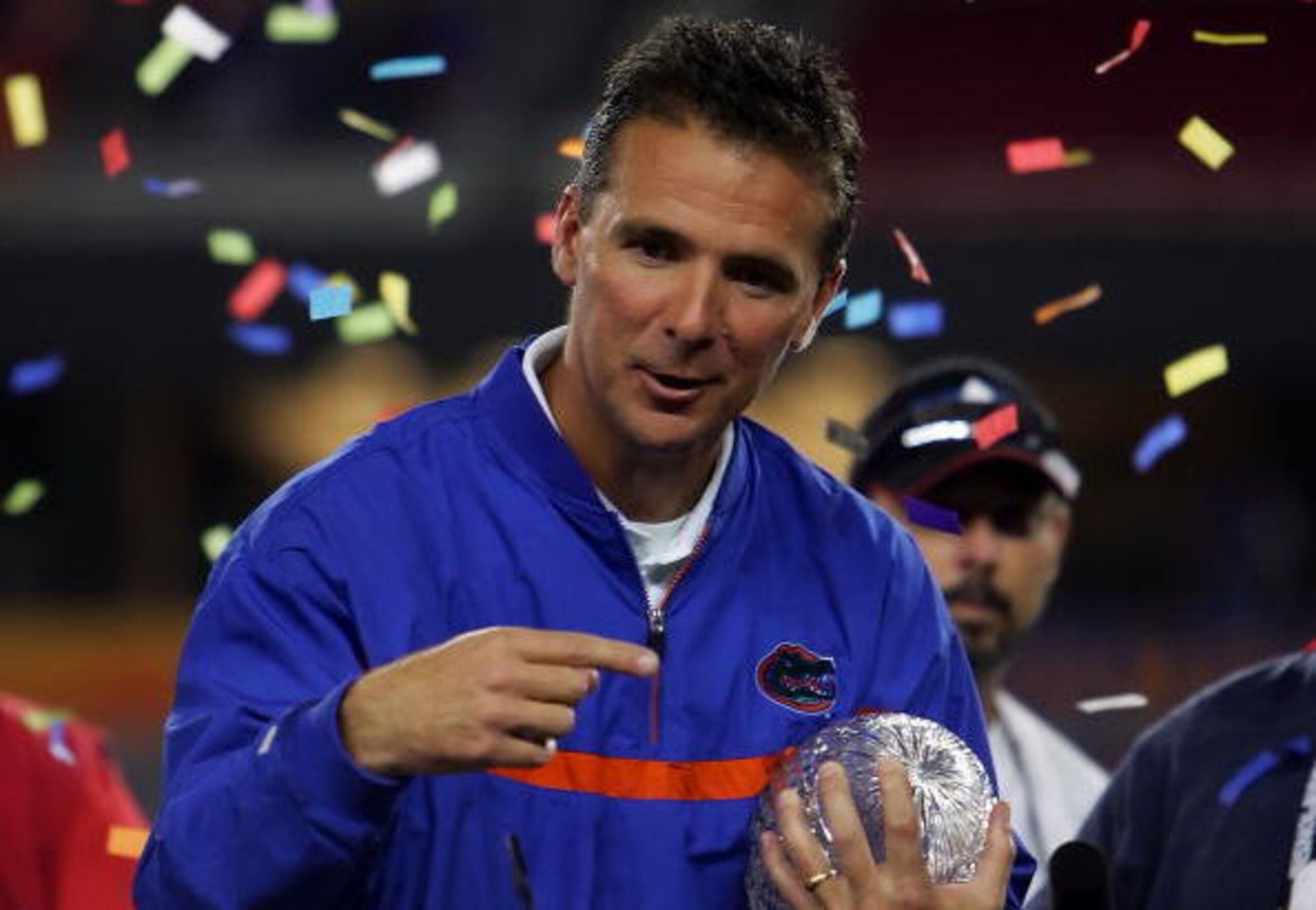
| 06-07 Florida | 14-15 Ohio State | |
| Record | 13-1 | 14-1 |
| Points/Game Margin | 16.1 | 22.8 |
| Yards/Game Margin | 140.7 | 169.2 |
| Simple Rating Score | 19.66 | 20.43 |
| Title Game Score | 41-14 | 42-20 |
| F/+ Rating | +31.3% | +42.9% |
Urban Meyer's first national champion was not as good as his third national champion, falling slightly behind 2014 Ohio State in almost every metric.
The 2006 Florida Gators had a better loss (at No. 11 Auburn) than this year's Buckeyes, but they also survived a litany of close calls. They won by one point at Tennessee, seven points against Georgia, six points at Vanderbilt (?) and one point at home against South Carolina.
Of course, the Gators atoned for that by creaming Ohio State in the BCS National Championship Game, launching the era of SEC football dominance and Big Ten football malaise. With Meyer, though, the Buckeyes would have been able to hang with…well, Meyer.
Advantage: '14-15 Ohio State
2007-08 LSU Tigers
10 of 16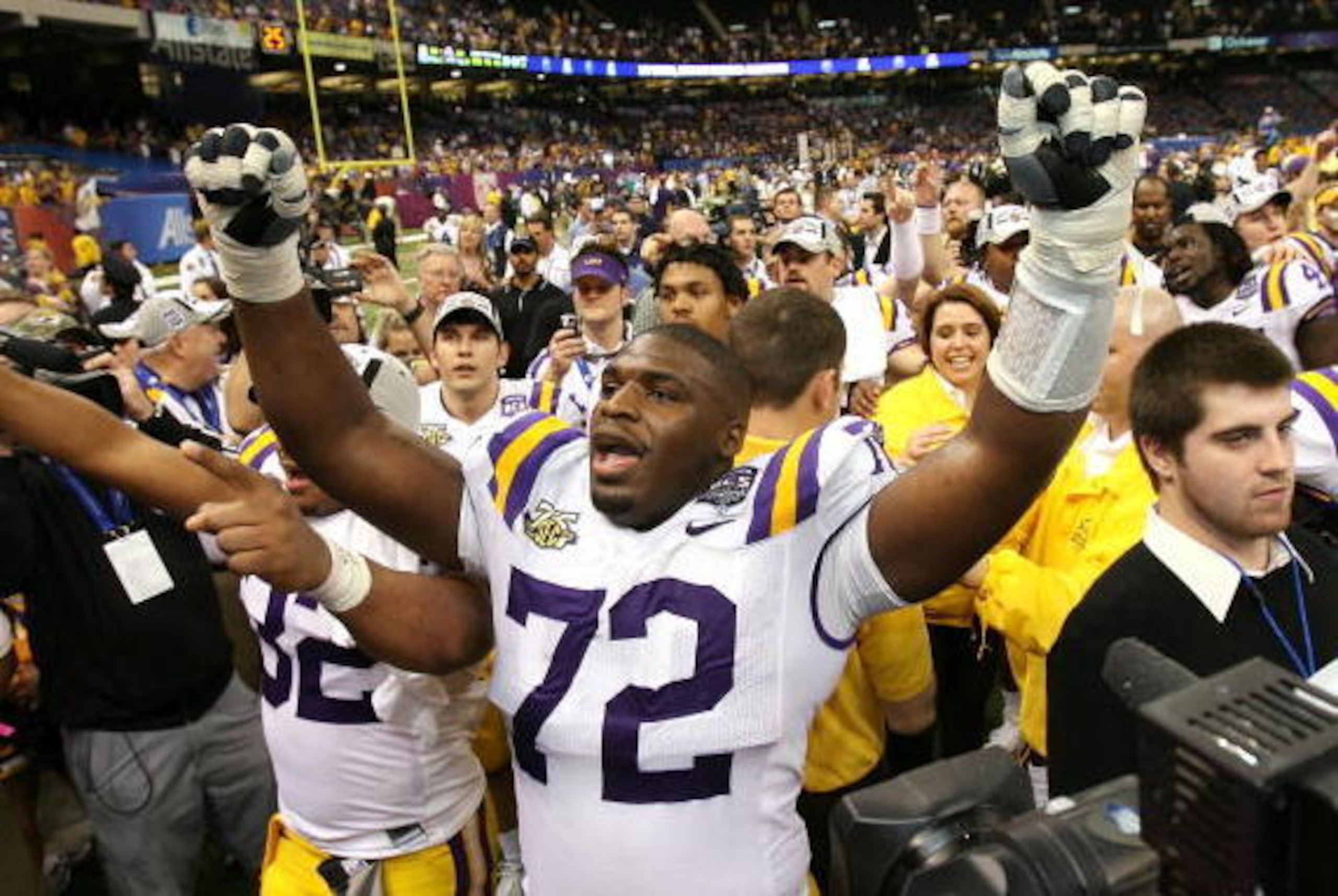
| 07-08 LSU | 14-15 Ohio State | |
| Record | 12-2 | 14-1 |
| Points/Game Margin | 18.7 | 22.8 |
| Yards/Game Margin | 150.6 | 169.2 |
| Simple Rating Score | 18.41 | 20.43 |
| Title Game Score | 38-24 | 42-20 |
| F/+ Rating | +33.7% | +42.9% |
It's a clean sweep for the 2014 Buckeyes, who were, like most other national champions since 1998, better than the 2007 LSU Tigers.
This isn't to say that LSU was bad; Ohio State fans, more than anyone, can attest that it wasn't. Despite their two-loss regular season, the Tigers whooped the Buckeyes in the BCS National Championship Game, lending further credence to anti-Big Ten sentiment.
But there's a reason Les Miles' team had two losses. Without some luck other places, it wouldn't have even had a chance to play for the national title. It was the best team in college football in 2007 but only because 2007 lacked any truly great teams.
Ohio State this year was a truly great team.
Advantage: '14-15 Ohio State
2008-09 Florida Gators
11 of 16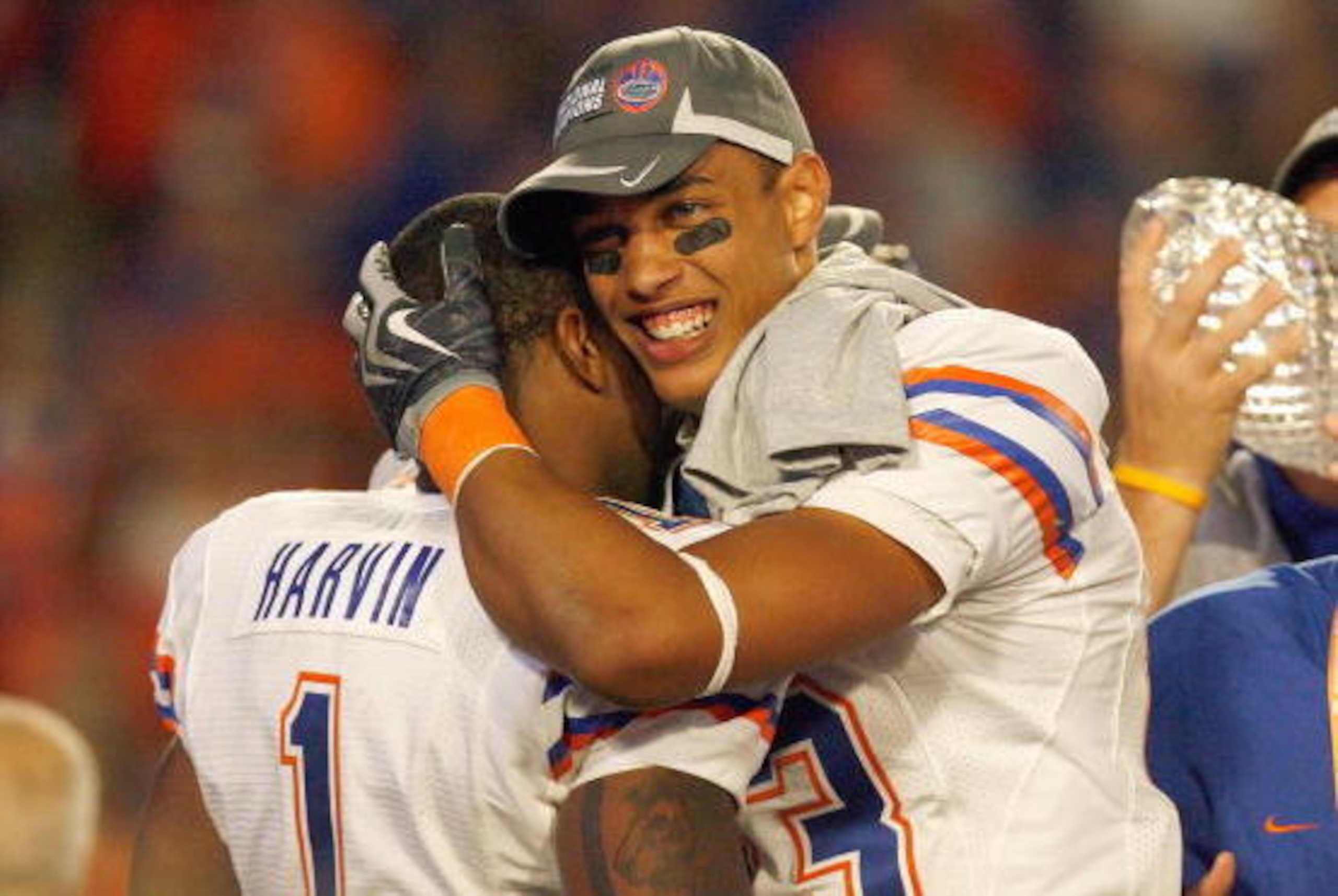
| 08-09 Florida | 14-15 Ohio State | |
| Record | 13-1 | 14-1 |
| Points/Game Margin | 30.7 | 22.8 |
| Yards/Game Margin | 159.8 | 169.2 |
| Simple Rating Score | 25.37 | 20.43 |
| Title Game Score | 24-14 | 42-20 |
| F/+ Rating | +49.4% | +42.9% |
Urban Meyer's second national champion was better than his third, although it's not as lopsided as one might think.
In fact, there are a lot of similarities between Meyer's 2008 Florida Gators and his 2014 Buckeyes, starting obviously with the out-of-nowhere loss in the regular season. But the offense OSU shaped to accommodate Cardale Jones looked a lot like the offense Tim Tebow ran in Gainesville too.
Meyer knows how to play to his quarterback's strengths.
Still, 2008 Florida was the stronger team on paper, winning games by an average of roughly 31 points. It did so despite playing an SEC schedule, which was harder than OSU's Big Ten slate.
Advantage: '08-09 Florida
2009-10 Alabama Crimson Tide
12 of 16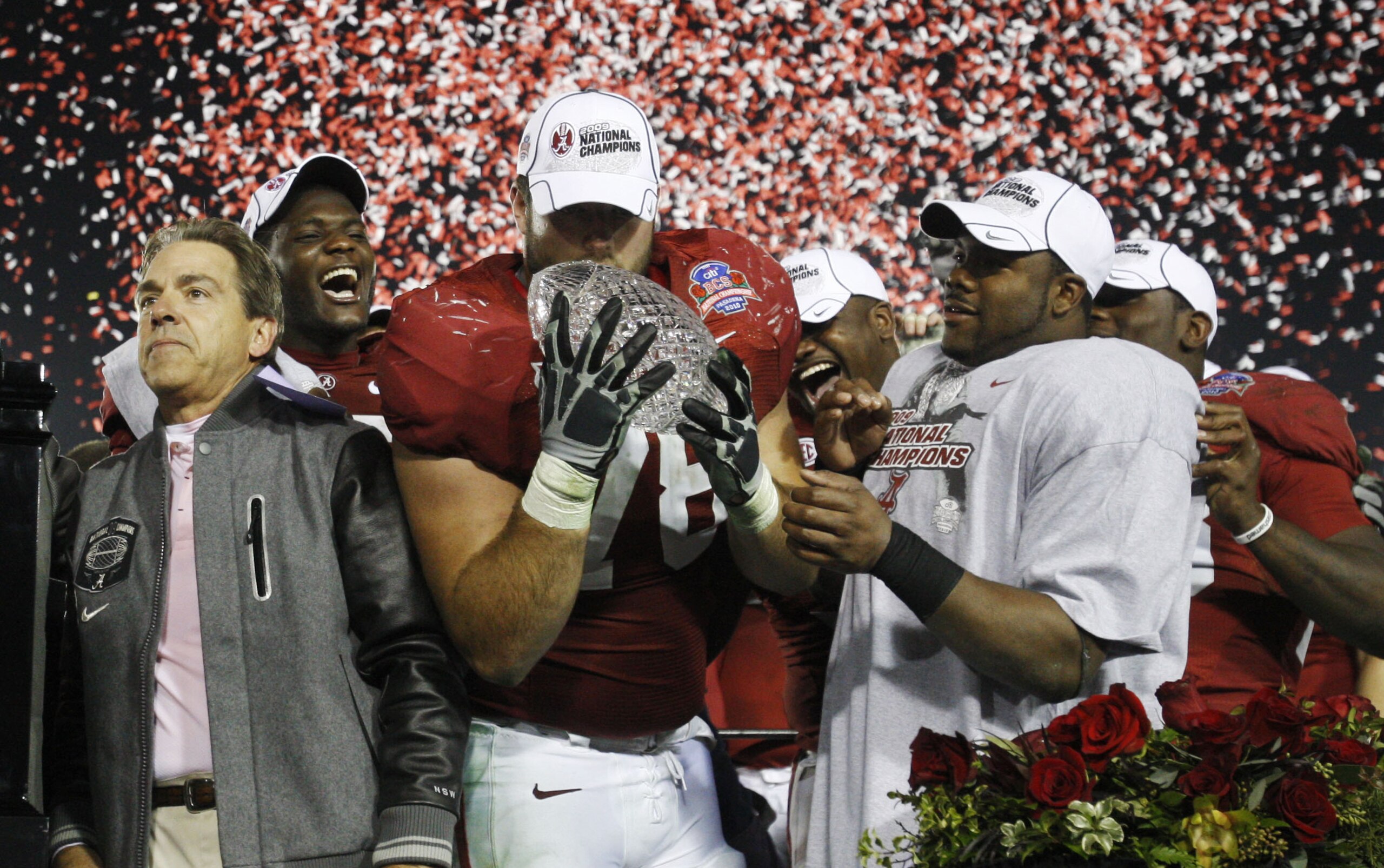
| 09-10 Alabama | 14-15 Ohio State | |
| Record | 14-0 | 14-1 |
| Points/Game Margin | 20.4 | 22.8 |
| Yards/Game Margin | 157.6 | 169.2 |
| Simple Rating Score | 23.69 | 20.43 |
| Title Game Score | 37-21 | 42-20 |
| F/+ Rating | +41.2% | +42.9% |
Nick Saban has won three national titles at Alabama, but only once has his team gone undefeated.
Strangely enough, that the lone undefeated team—the 2009 squad in question—was in many ways the weakest of the group. It had the lowest points-per-game margin, yards-per-game margin, simple rating score and F/+ rating. And the team it beat in the national title game (Texas) lost its quarterback (Colt McCoy) in the first quarter.
Still, the 2009 Crimson Tide rank near the 2014 Buckeyes in most metrics, and they did it with an undefeated record. They had a Heisman-winning running back in Mark Ingram and the No. 2 scoring defense in the country. They weren't exciting to watch, but they were almost impossible to beat.
Advantage: '09-10 Alabama
2010-11 Auburn Tigers
13 of 16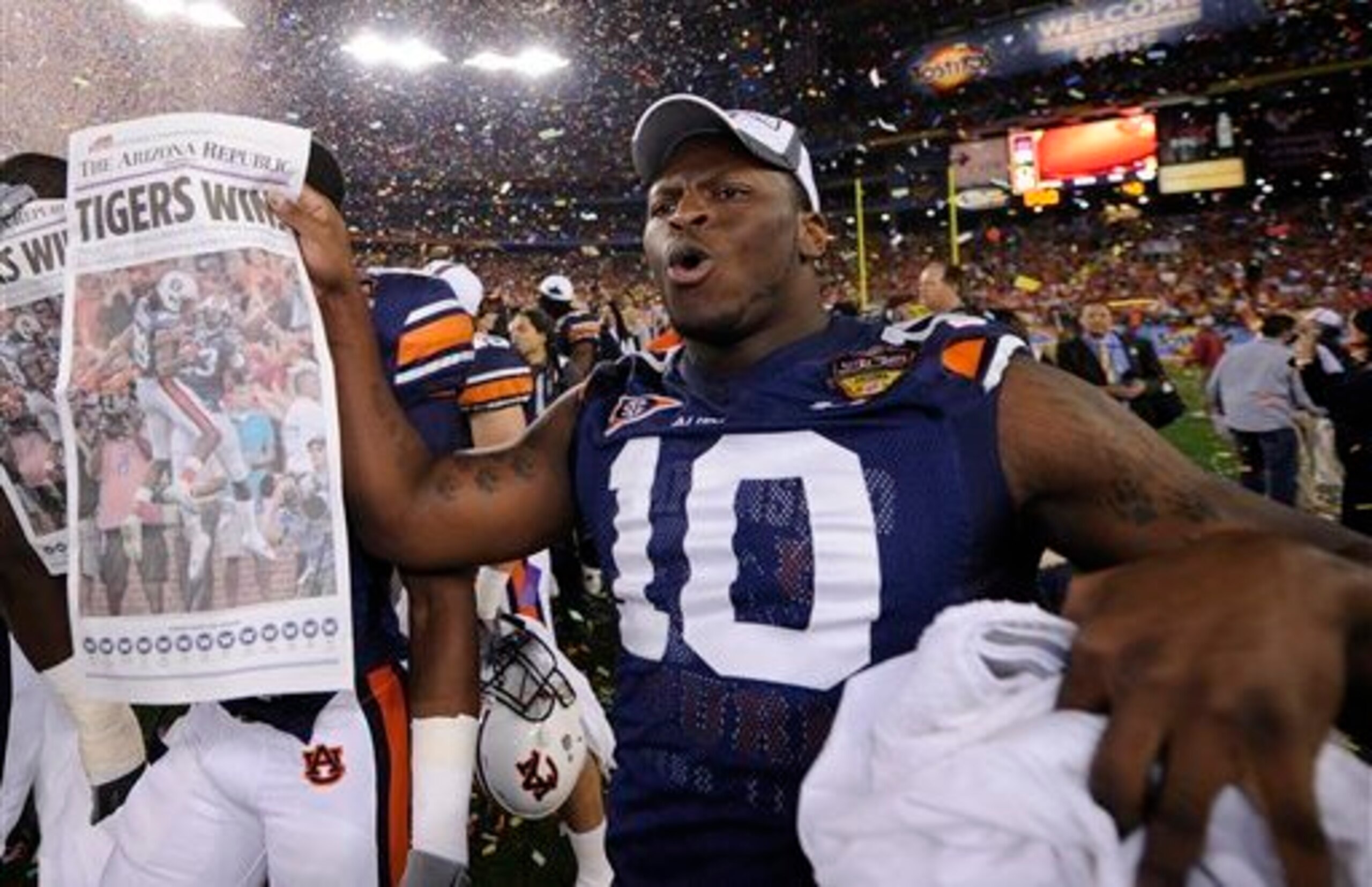
| 10-11 Auburn | 14-15 Ohio State | |
| Record | 14-0 | 14-1 |
| Points/Game Margin | 17.1 | 22.8 |
| Yards/Game Margin | 130.8 | 169.2 |
| Simple Rating Score | 20.66 | 20.43 |
| Title Game Score | 22-19 | 42-20 |
| F/+ Rating | +36.5% | +42.9% |
The 2010 Auburn Tigers went 14-0 but were still one of the weaker BCS champions.
They had Cam Newton on offense, Nick Fairley on defense and a deep cast of high-level role players, but they never truly dominated opponents. They needed a manic, Newton-inspired comeback to beat Alabama in the Iron Bowl and a wild, knee-never-touch-the-ground run from Michael Dyer to beat Oregon in the national title game.
The Tigers allowed 24.1 points per game (No. 53 in the country) and finished behind Boise State and Alabama on the F/+ ratings. They were a very good team and a deserving national champion, but despite the undefeated record, empirical data suggests the 2014 Buckeyes would have beaten them.
Advantage: '14-15 Ohio State
2011-12 Alabama Crimson Tide
14 of 16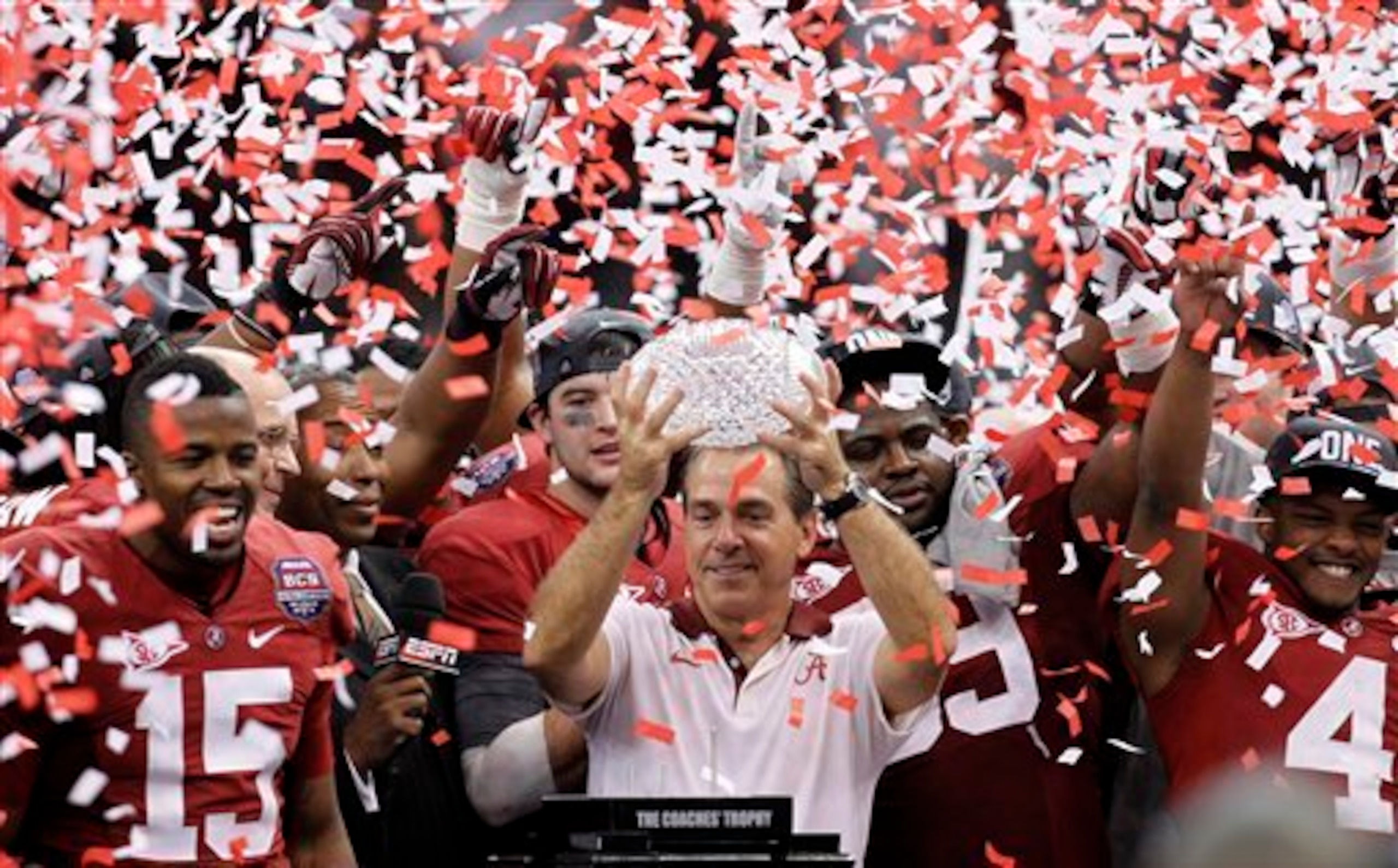
| 11-12 Alabama | 14-15 Ohio State | |
| Record | 12-1 | 14-1 |
| Points/Game Margin | 26.6 | 22.8 |
| Yards/Game Margin | 246.0 | 169.2 |
| Simple Rating Score | 24.44 | 20.43 |
| Title Game Score | 21-0 | 42-20 |
| F/+ Rating | +53.9% | +42.9% |
The 2011 Crimson Tide were a machine: Their yards-per-game margin was the highest of any BCS champion, and their F/+ rating was the highest since the stat was first recorded (2005).
Their only loss came in one of the most famous (infamous?) regular-season games of the modern era—LSU 9, Alabama 6—but they revenged LSU with a 21-0 win in the national title game They broke a BCS-era record with just 8.2 points allowed per game.
"Let's just say it: The 2011 Alabama defense stands among the greatest ever in college football," wrote Matt Hinton, then with Yahoo Sports, after the season. "…It's so good, it's unwatchable."
The 2014 Buckeyes were prettier than 2011 Alabama, but they weren't better. Arguably no team from the BCS era was.
Advantage: '11-12 Alabama
2012-13 Alabama Crimson Tide
15 of 16
| 12-13 Alabama | 14-15 Ohio State | |
| Record | 13-1 | 14-1 |
| Points/Game Margin | 27.8 | 22.8 |
| Yards/Game Margin | 195.5 | 169.2 |
| Simple Rating Score | 24.51 | 20.43 |
| Title Game Score | 42-14 | 42-20 |
| F/+ Rating | +50.6% | +42.9% |
Not quite as good as the previous version, the 2012 Crimson Tide were still one of the strongest BCS champions.
The defense "regressed" from allowing 8.2 points per game to 10.9 points per game, but it still led the country in scoring defense. And the offense, led by AJ McCarron and Eddie Lacy but relying heavily on true freshmen T.J. Yeldon and Amari Cooper, took a big step forward to compensate, averaging 38.7 points per game.
Ohio State still had the better offense, but in this case, Alabama wasn't far behind. Its offensive line did to every team it faced what Ohio State's offensive line did to Oregon. But it didn't take as long to come together as the 2014 Buckeyes, losing only after a magical performance by Johnny Manziel.
Advantage: '12-13 Alabama
2013-14 Florida State Seminoles
16 of 16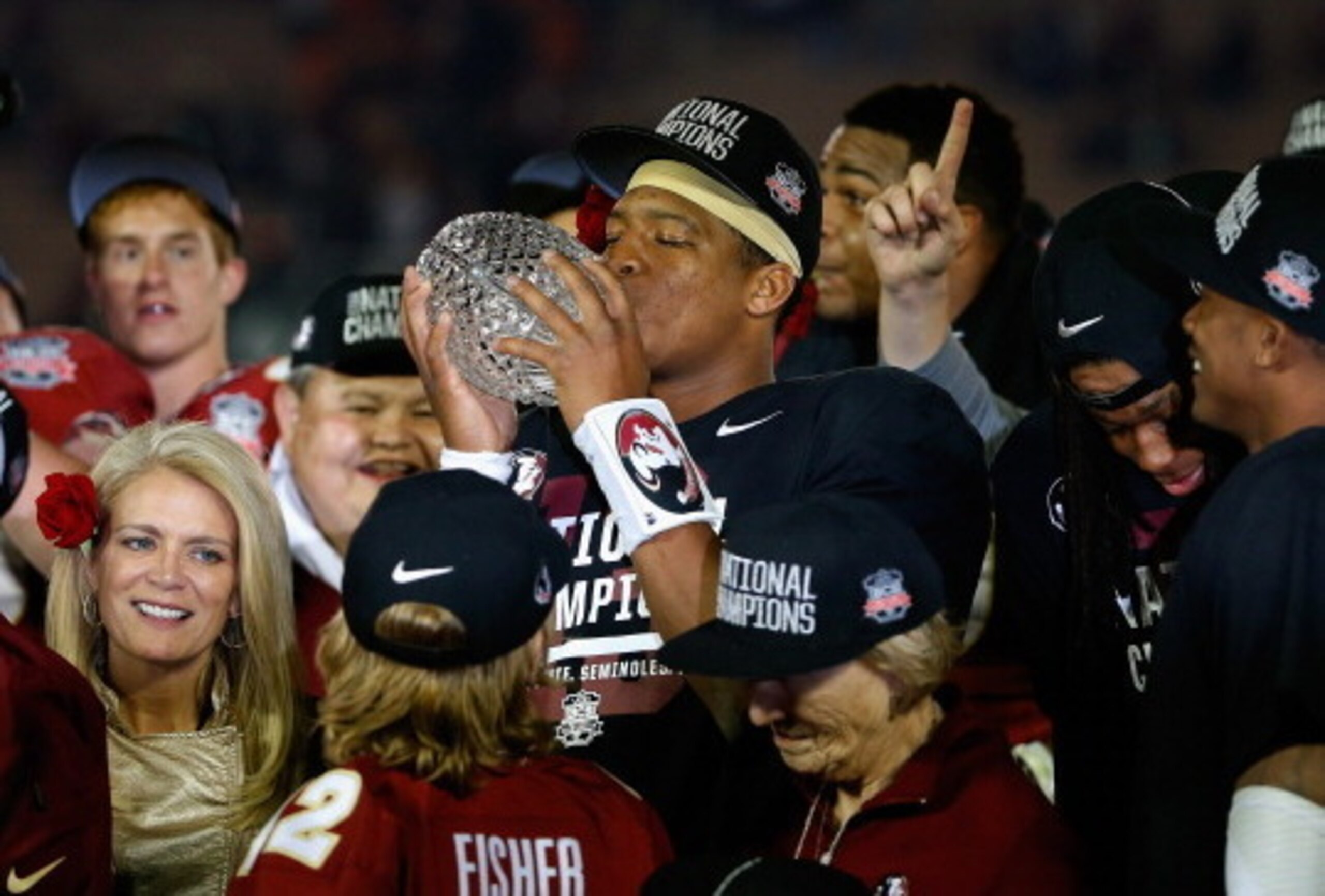
| 13-14 Florida State | 14-15 Ohio State | |
| Record | 14-0 | 14-1 |
| Points/Game Margin | 39.5 | 22.8 |
| Yards/Game Margin | 237.7 | 169.2 |
| Simple Rating Score | 23.36 | 20.43 |
| Title Game Score | 34-31 | 42-20 |
| F/+ Rating | +49.2% | +42.9% |
The 2013 Florida Seminoles should be remembered for what they were independent of what happened the following season.
What they were was one of the most dominant teams we've ever seen.
The only BCS champion with a higher yards-per-game margin than 2013 FSU was 2011 Alabama, and FSU wasn't far off. It had a Heisman-winning quarterback in Jameis Winston, a deadly three-headed monster in the backfield, a deadlier three-headed monster at wide receiver and a defense that finished No. 1 in the F/+ ratings.
Ultimately, defense is what separates the 2013 'Noles from the 2014 Buckeyes. Ohio State came on at the end of the year, jelling with time and experience, but struggled in spots during the regular season. FSU never had a game like Ohio State's against Indiana, in which Tevin Coleman rushed for 228 yards on 23 carries.
That was the Buckeyes' 11th game of the year.
Advantage: '13-14 Florida State
Final Tally
Ohio State ranks better than six and worse than 10 BCS champions. Part of that is up for debate—the comparisons with 1999 Florida State and 2000 Oklahoma, more so than any others, could have gone either way—but it still puts the 2014 Buckeyes in good company.
They are a perfectly average national champion.
Which is to say: They're really, really good.
.png?w=2560)

.jpg?w=2560 "Chiefs, Steelers Eye WR Trades")





.jpg?w=2560 "Raiders Sticking with Cousins")