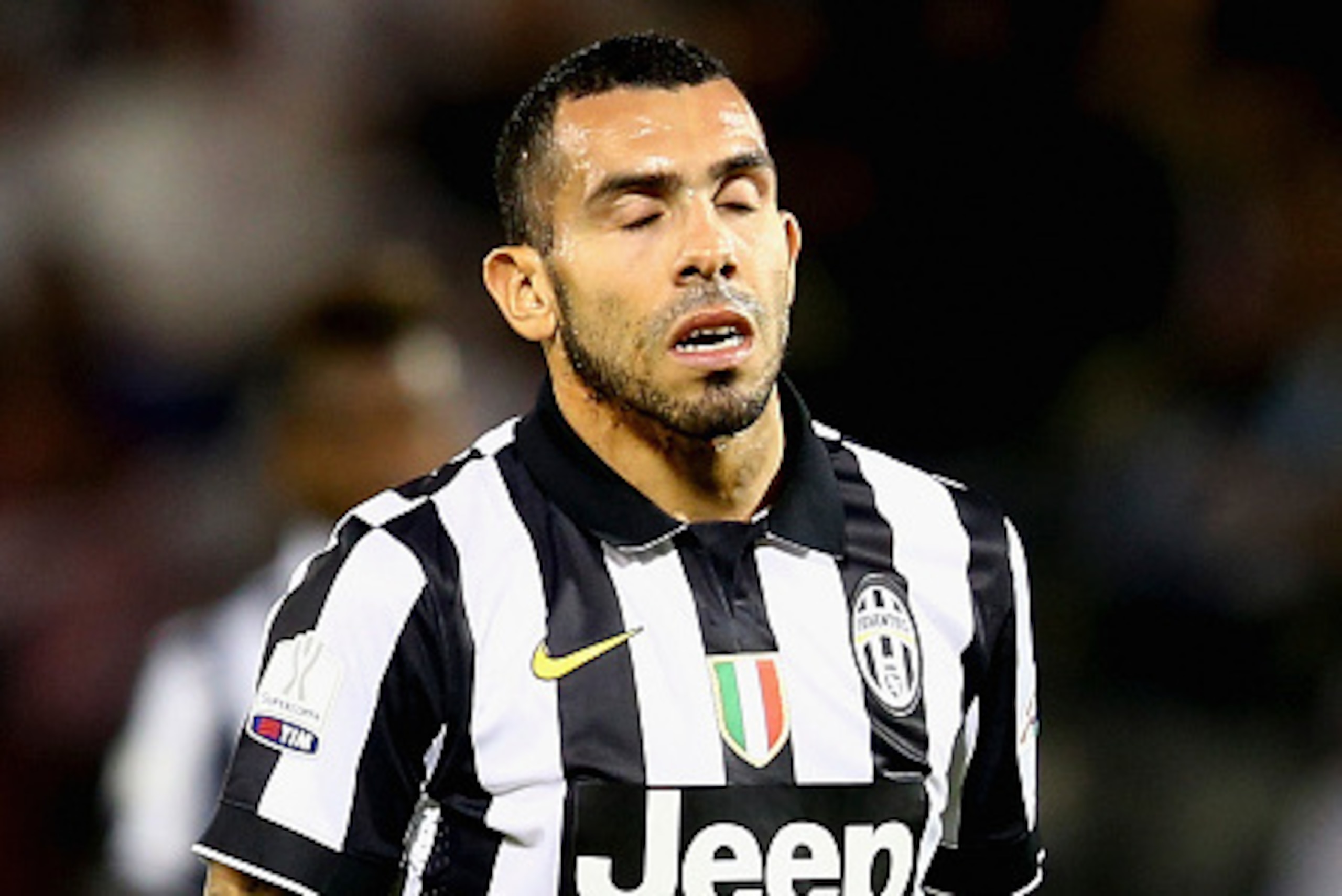

Juventus Struggles: Analyzing What's Ailing the Scuffling Bianconeri
Juventus remain on top of the league in Serie A, but the three-time defending champions are in a precarious position. Worthy challengers Roma are only a point behind the Bianconeri, who have only won one of their last six games in all competitions.
The swoon dates back to the beginning of December, after the team's last-second victory over city rivals Torino became the emotional high-water mark of the season and extended their overall winning streak to six.
Since then, they've played a pair of scoreless draws and blown four separate leads, including two in one game in the Supercoppa against Napoli. That match was lost on penalties despite Gianluigi Buffon's impressive, three-save performance during the kicks.
Fans the world over are wondering what on earth is wrong with the team. Over the last three years they have rolled over all opposition, but now they haven't been able to finish off teams that they would have put to the sword during their championship run.
What's the matter with Italy's champions? We're going to look at three things that could be major factors in keeping Juve in the doldrums.
Fatigue
1 of 3
One of the reasons many prognosticators tipped Juve for their fourth consecutive championship was the team's depth. That depth, however, has been severely tested this term.
Injuries have hit the team hard this season, particularly in defense. Andrea Barzagli has missed the entire campaign after off-season heel surgery. Martin Caceres exacerbated a thigh injury in the October meeting with Roma and has only just been passed fit to rejoin the team. Romulo has been on the shelf since a sports hernia operation in September. Kwadwo Asamoah will be out until February or March with a knee injury.
All these injuries have forced Juve's healthy defenders to play a huge amount of minutes. Leonardo Bonucci and Giorgio Chiellini can be backed up only by Angelo Ogbonna. Granted, Ogbonna has broken through in his second year with the club, but Chiellini and Bonucci still aren't getting enough rest. That's showed in their performance, particularly with Chiellni, who has been uncharacteristically sloppy this season.
The same goes for Stephan Lichtsteiner and Patrice Evra. The only healthy player even marginally capable of backing the full-backs up at this point in the season is Simone Padoin. According to WhoScored, Lichtsteiner has started 14 of Juve's 17 Serie A contests and appeared as a sub in two more. He also started all six Champions League games and the Supercoppa.
The Swiss Express is the definition of an engine player, but even he has limits. Those limits are even greater on Evra, who has hardly any pace left and won't be a viable player if he has to play every single game between now and March or April.
There are problems elsewhere, too. The midfield is extraordinarily deep, but it's not always healthy. In particular, Arturo Vidal and Andrea Pirlo have struggled to find full form after missing the beginning of the season with knee and thigh injuries, respectively.
The strikers have been a rotating threesome of Fernando Llorente, Alvaro Morata and Carlos Tevez. Because the former two don't necessarily mesh well together, Tevez has been on the field nearly every game. He has played in 16 games in the league—starting 14—and all six Champions League matches. Unless the team's hierarchy get a sudden rush of confidence in Sebastian Giovinco, that's not likely to change. If Tevez were to get injured, where the goals would come from would be anyone's guess.
The World Cup this summer is also a factor here. Twelve Juventus players took part in the tournament. Only three clubs—Bayern Munich, Manchester United and Barcelona—had more, and only three further teams—Real Madrid, Chelsea and Napoli—had as many.
The Italian national team in particular draws heavily on Juve for their core. Bonucci, Chiellini, Gigi Buffon and Claudio Marchisio logged extensive starters' minutes for the Azzurri in the last World Cup cycle. When you factor in the team's participation in the 2013 Confederations Cup, Italy's Juve contingent has essentially been playing high-level soccer for three years without any significant break.
The fatigue factor has been on display in spades the last month. Juve started games against Sampdoria and Inter incredibly strong, dominating proceedings to the point where they were the only team in the game. Even then, the team has lacked sharpness when trying to make the final pass and finish. By the second half, the team has unravelled, and their opponents not only equalized but looked the better bet to win if the game.
This team's legs are tired. A return to health will be a start. Additions to the team in the January transfer window would also go a great way to alleviating that strain. Porto center back Rolando has been connected with Juve for a while and according to CalcioMercato.it (h/t Football Italia) is close to a move to Turin.
Barcelona full-back Martin Montoya is determined to move away from Catalonia to get more playing time, and AS reported shortly after Christmas that Juve representatives were set to fly to Spain to begin negotiations.
With a little more depth and the ability to rest, the Bianconeri may be able to regain their swagger.
Formation Change
2 of 3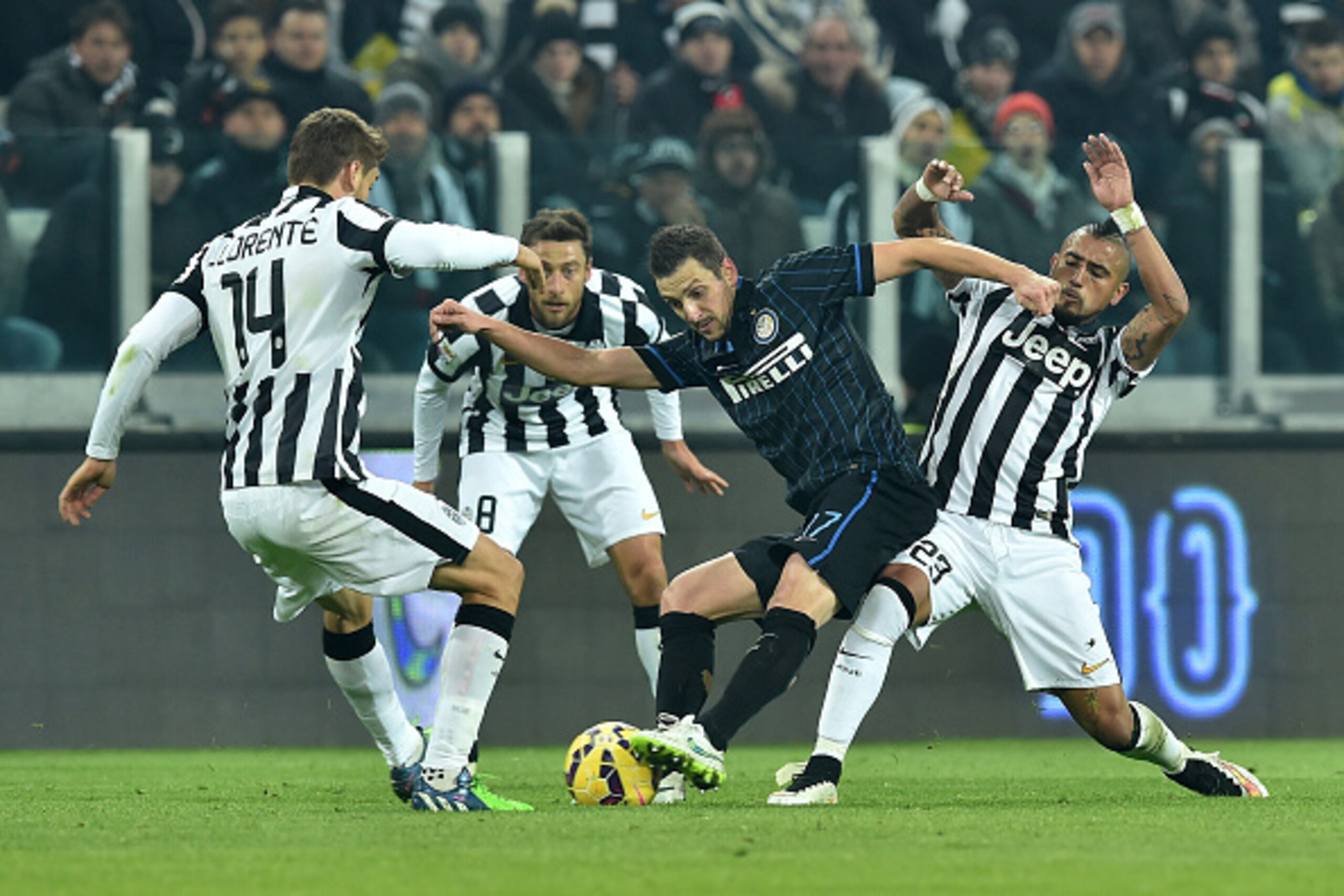
When Massimiliano Allegri took over as Juventus manager in July, he kept the team in the 3-5-2 shape that Antonio Conte used for most of his tenure.
This was mostly a matter of convenience. The coaching change was abrupt and the system was what the players knew best.
Unfortunately it became clear early on that Allegri didn't know how to get the best out of the formation. The Bianconeri attack was static. The ball was cycled around the top of the opposing penalty area hoping to finally find an opening or force a defender to make a mistake. It was becoming easier to for teams to park the bus and hold out against the successive waves of attack.
After a pair of 1-0 losses in the Champions League, Allegri finally made a change in November and inserted a 4-3-1-2 formation. There was an immediate result. Juve claimed a thrilling 3-2 win against Olympiakos to put their Champions League campaign back on track. Five days later, they utterly destroyed Parma by a 7-0 count.
After another dominating performance in a 3-0 win against Lazio, the gears began to grind. Juve looked sluggish in their 2-0 Champions League win against Malmo and struggled for much of the Derby della Mole until Andrea Pirlo's dramatic winner. After that, the only time they've looked like Juventus was their year-ending win against Cagliari.
This kind of dry spell is to be expected when a team makes a major formation change in mid-season. Juve fans have seen this very recently: during Conte's undefeated 2011-12 season.
A surplus of center backs and a lack of a viable left-back and wingers spurred Conte to shift from the 4-3-3 he ran at the beginning of the season to the 3-5-2 that he used to run roughshod over Serie A. Except it didn't start out that way.
When Conte first instituted the 3-5-2 it was a disaster. Stephan Lichtsteiner struggled to adapt to life as a wing-back. The midfield became overcrowded. From the beginning of February to mid-March, Juve drew seven of eight games and dropped out of first place. Conte had to put the 4-3-3 back on the field and work out the kinks before unleashing the 3-5-2 again—this time to devastating effect.
Growing pains are natural for any in-season system change. Allegri's switch is no different. Inter's equalizer on Tuesday was a prime example. Chiellini and Bonucci lost contact with each other and the former ended up roaming far up the field, leaving Bonucci exposed to Mauro Icardi's run.
Time will settle the Bianconeri's back line. Up front, a true trequartista would go a long way towards giving Juve back their sharpness in front of goal.
Once Allegri's new system takes firm root, the team's form will likely tick back up. Whether they will go on a run like the '11-12 unbeatens—who won 11 of their last 12 games at a combined score of 29-3—remains to be seen.
Coaching Change
3 of 3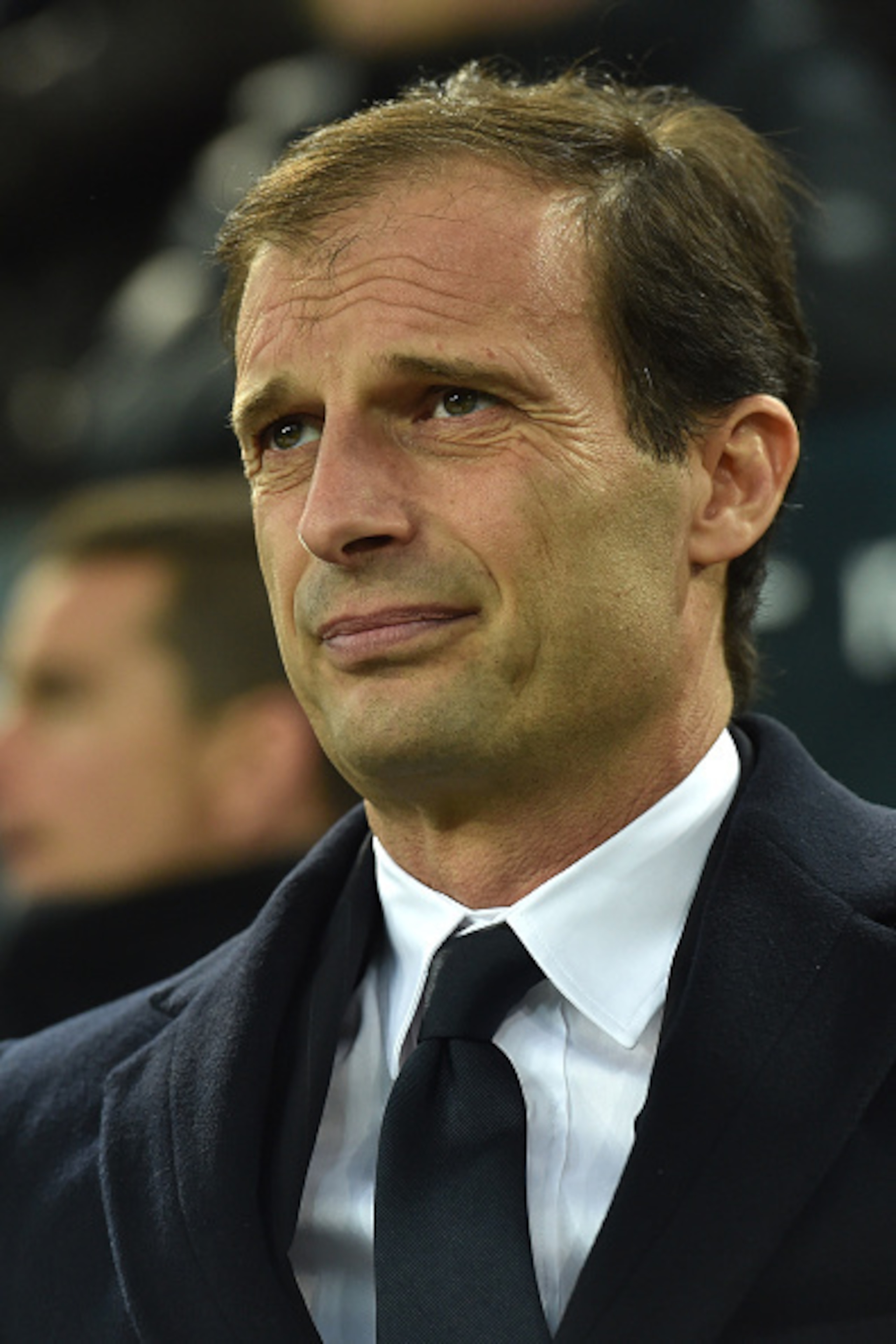
The transition from Antonio Conte to Max Allegri was abrupt, but the differences between the two have been stark.
When Conte was at the helm, Juve's attacks followed a pre-determined plan. Movements were drilled relentlessly in training, to the point where most every move the Bianconeri made was a choreographed sequence aimed at the opposing goal.
Conte's Juventus was like a machine. They knew where the ball was going to go and they knew when it would get there. All that was in question was whether or not the finishing touch would be there.
Allegri, on the other hand, is a proponent of a much more free-flowing game. His attack allows the players and ball to flow organically, coming up with attacking moves in a more improvisational way.
In December, Allegri voiced the belief that in the modern game individual quality and creativity means more than tactical nous. That belief is reflected in the way his players play. Allegri's Juve is much more individualistic than the one Conte controlled.
A less palpable difference is the team's mentality. Conte's Juve was famous for having an exemplary grit and will to win. It was a mentality that seemed to be pumped from the hyper-competitive coach directly into his players. They always barreled forward, hardly ever giving up on a game. If they were down, they found ways to equalize, then to go ahead.
With the more laid-back Allegri in charge, that mentality is not the same. When the team takes an early lead, the team's pace slacks off. Possession becomes less urgent, and the back line drops further and further toward their own end line.
An example of this was the Supercoppa. After Carlos Tevez's early goal, Juve looked more like they sought to protect that slim lead rather than extend it. Napoli attacked in waves, and the onslaught was only ended when Gonzalo Higuain equalized and a second goal became necessary. The dogged determination to win that was so clear under Conte isn't seen as much with Allegri in charge.
Questions as to whether Conte or Allegri is the better coach for the team are unanswerable right now. Any answer to that question from a fan is likely still skewed by the pain still felt over Conte's abrupt departure from the team in July.
His detractors will hold up Allegri's progression to the knockout rounds of the Champions League this year as an improvement from Conte's tenure. Those people forget too quickly that Conte finished top of a more difficult group two seasons ago—and with a team that was much less talented than this one.
Their approaches are very different, and the squad looks to still be adjusting to Allegri's more laid-back attitude. The change was fast, and the learning curve was always going to be steep. Whether or not the team adjusts to it in a positive way or if it is a detriment is yet to be seen. For Juve to move forward, however, that adjustment must be completed.




.jpg?w=2560 "Chiefs, Steelers Eye WR Trades")

.jpg?w=2560 "WWE Raw Live Grades 🔠")
.jpg?w=2560 "Multiple NFL Trades Predicted")


