

Vikings Draft Needs: Where Does Minnesota Need Help Most?
The Minnesota Vikings will continue to build their roster through the draft in the coming offseason, addressing needs by the addition of young talent.
Offensively, building around Teddy Bridgewater should be the team's primary focus. He put the skills of a franchise quarterback on display late in the season but needs help on many levels.
Restocking the offense with talent gives Bridgewater the best chance to ultimately succeed as a passer.
Minnesota will aim to fill holes in Mike Zimmer's defense. Building blocks like Everson Griffen, Sharrif Floyd, Anthony Barr, Xavier Rhodes and Harrison Smith provide the foundation for the entire unit. Now Minnesota must focus on adding depth at numerous spots and maybe even finding new starters at a position or two.
In identifying needs, the Vikings will consider aspects such as positional value, depth, competition at the position and age of incumbent players.
The following needs are listed from most to least pressing.
Offensive Line
1 of 5
Revamping the offensive line is the first objective.
The Vikings gave up 51 sacks in 2014, earning a No. 27 ranking in Football Outsiders' adjusted sack rate. The offense also earned a poor grade in pass blocking from Pro Football Focus (subscription required): No. 26 in the league.
The OL will remain unchanged on the right side, with both Brandon Fusco and Phil Loadholt returning from injury. Minnesota also holds a top center in John Sullivan.
The unit's left side is what needs addressing. Matt Kalil might get another year to prove he is not a lost cause, but that would require a contingency plan. Minnesota should also look for an upgrade at left guard, as Charlie Johnson's play continues to worsen.
In taking an offensive guard early, the Vikings would require a clear upgrade over David Yankey, who the Vikings drafted in the fifth round last year. He played no snaps in 2014, so the option is realistic.
Minnesota could also opt to cut the cord on Kalil, immediately replacing him at left tackle with another young player. With the right prospect, the Vikings could fill the spot at left guard in the short term and then move the player out to left tackle if the Kalil experiment ultimately fails.
Either way, the unit needs more competition and more quality blockers immediately. Upgrades would quicken the growth of Bridgewater and the entire offense.
Linebacker
2 of 5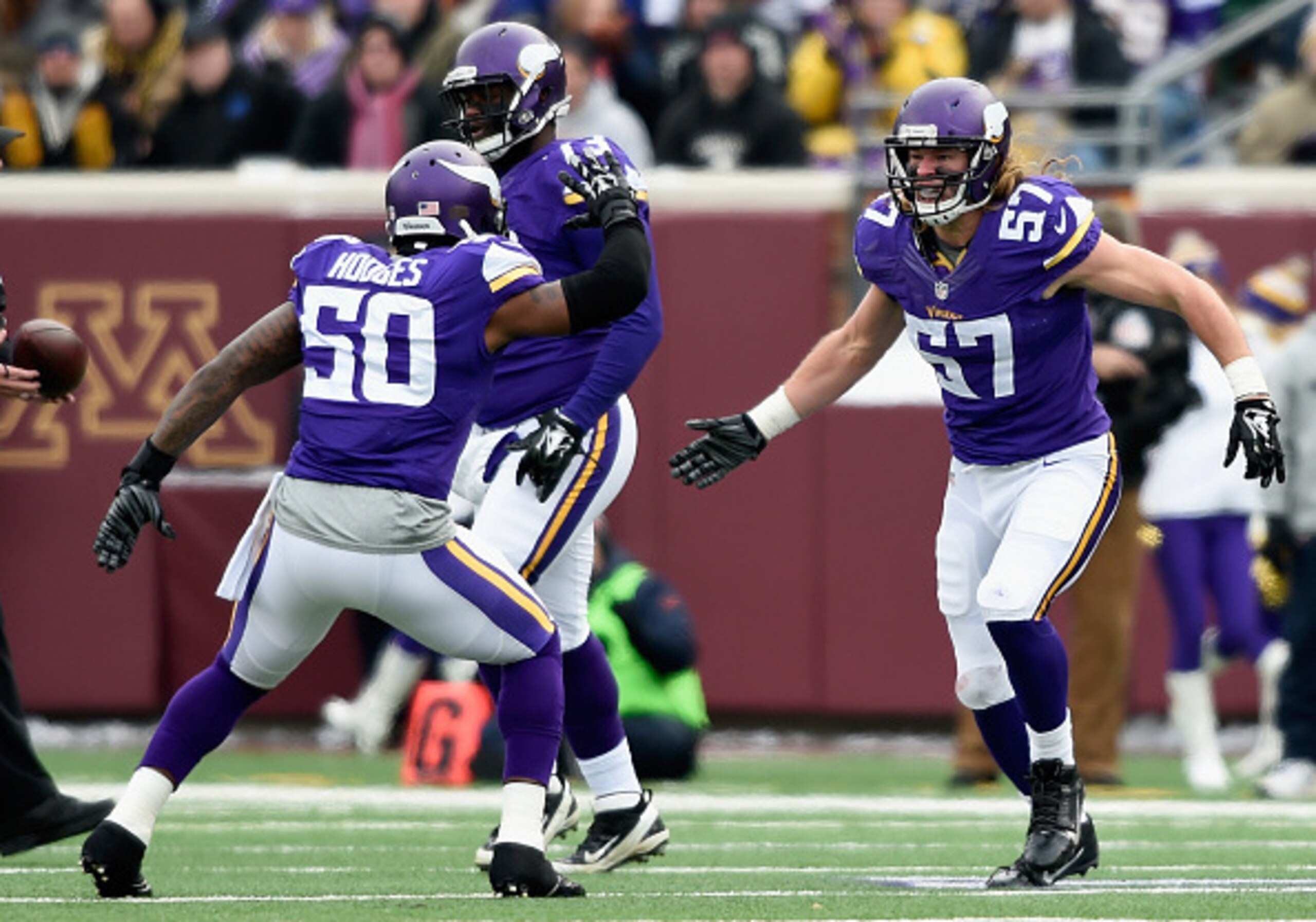
Zimmer's defensive scheme asks a lot from linebackers.
Defensive backs are mostly uninvolved in run defense, which is much different than the previous Tampa 2 scheme. Linebackers are now tasked with covering more ground in run defense, and they generally hold greater responsibility as a result.
Free agency and age dictates the pressing need in the LB corps.
Veterans in "Mike" LB Jasper Brinkley and "Will" LB Chad Greenway could both reasonably be done as Vikings. Even with both in the lineup, the defense needed more from its second wave for most of the 2014 season.
Minnesota, like most NFL teams, spends the majority of its snaps in the "Nickel" package, which leaves the "Will" and "Sam" backers on the field.
As a result, the Vikings will prioritize the Will spot, looking for Anthony Barr's running mate. Any rookie LB brought in will likely compete with Gerald Hodges for the starting spot. Hodges played well for stretches at the end of the season but might still be too error-prone for Zimmer's liking.
The Mike spot holds less importance due to a decreased snap count. If Brinkley is gone for good, Audie Cole will be the competition in the middle.
Minnesota's defense has few glaring holes. Even with 2015 returns from Greenway or Brinkley, the Vikings should address the linebacker position to infuse the unit with youth and bring in more competition for starting spots.
Secondary
3 of 5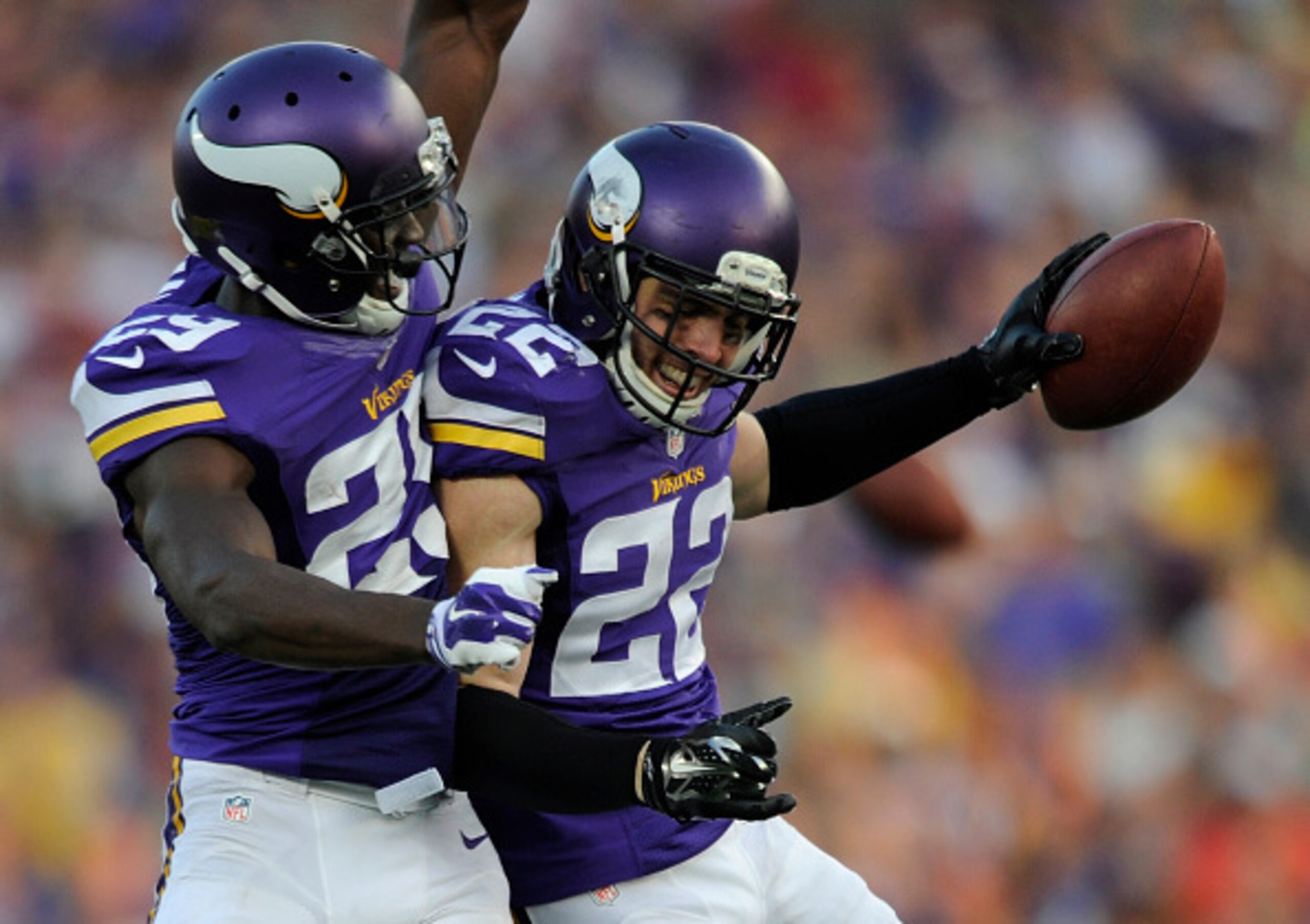
The secondary has its primary playmakers.
Harrison Smith plays a versatile role from his safety position, affecting offenses in coverage, in run defense and as a blitzer. Coverage also hinges on Xavier Rhodes, a cornerback who began successfully shadowing opposing No. 1 receivers late in the season.
After those two, the Vikings are left searching for answers.
Free-agent addition Captain Munnerlyn was a disappointment in 2014. No. 3 cornerback Josh Robinson struggled with bigger receivers and showed lapses in confidence once again. The safety spot next to Smith boasts no top talents either, with neither Robert Blanton nor Andrew Sendejo proving to be a final answer this season.
Minnesota could opt to go all in at the CB position, using another high pick on a coverage specialist on the outside. More realistically, the team will want to add competition and depth in its CB ranks.
A similar story could be told about the safety spot.
A first-round pick to flank Smith seems unlikely, as the position does not require the kind of athlete that comes with a high pick. It would be too expensive a luxury. Instead, the Vikings should look to add a rookie who can compete initially and then win the job down the road.
The Vikings must continue to remake the secondary with players fit for the new defensive scheme. A few of the holdovers from the Tampa 2 have proven less than adequate.
.jpg?w=2560 "Seahawks Chiefs Football")

.jpg?w=2560 "Colts Vikings Football")
Wide Receiver
4 of 5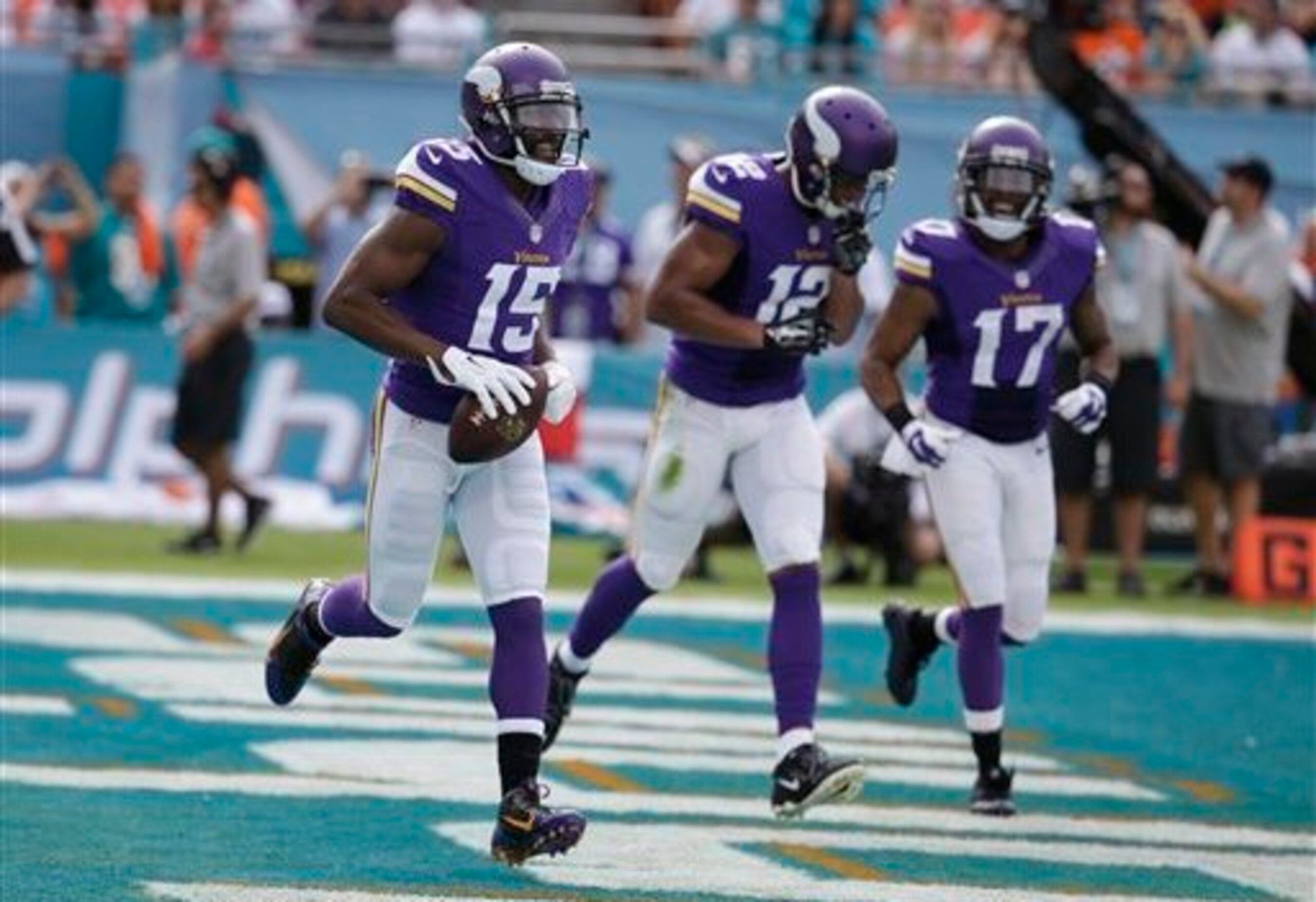
Minnesota has a predicament on its hands at wide receiver.
One the one hand, the team has a deep corps of pass-catchers. Greg Jennings, Charles Johnson and Jarius Wright are all viable NFL starters. Cordarrelle Patterson also holds some potential for the future as the No. 4.
Conversely, the group has no true No. 1 receiver.
Minnesota needs the type of receiver around which a passing game can be built. Both Jennings and Wright are most effective from the slot as complementary players. Johnson is still a raw receiver and has shown no ability to win jump-ball situations.
As it stands, the offense lacks the type of receiver it can rely upon week to week as its primary target.
When the Vikings analyze their draft decisions, WR might be an all-or-nothing position. They might not address the position at all if not with a player in the first or second round.
Depth is not necessarily the issue.
The Vikings need a No. 1 instead. Taking that type of receiver early makes sense as a match with Bridgewater. The two could forge a connection that lasts for years, one that carries an offense for stretches in games.
When the going got tough in 2014, Minnesota's lack of a No. 1 target became an issue.
Running Back
5 of 5
The return of Adrian Peterson would immediately eliminate the need for reinforcements at running back. With no certainty of that, however, the Vikings will look to upgrade the backfield.
A determination on Jerick McKinnon's future must then be made. He flashed the skills of a true load-carrying back in 2014. If the coaching staff believes he possesses that ability down the road, a back to platoon with him becomes necessary.
Matt Asiata is not that player for the long haul. He lacks significant upside on a per-carry basis. The acceptable role for him is entirely too limited. Optimally, he would be the third back and only be used in emergency situations.
Asiata is also a restricted free agent, so Minnesota could let him go altogether. If the team rolls into draft day with only McKinnon and Joe Banyard in the fold, a draft pick at RB will be a must.
In complementing McKinnon, the Vikings will eye a back who contributes heavily in the passing game, especially in pass protection. Proficiency in short-yardage runs is also important. Basically, Minnesota will be after a rich man's version of Asiata.


.jpg?w=2560 "WWE Raw Live Grades 🔠")

