

Lions 2015 NFL Offseason Draft Scouting Guide
The dawn of draft season has arrived in blustery Detroit. The prospect of adding fresh new talent to a rising team coming off its most successful season in decades should help warm the spirits of Lions fans who are fighting the winter's chill as well as the frosty playoff loss in Dallas.
Picking later in each round is a pleasant problem. While the Lions will miss out on the consensus top prospects, several solid options should be available in the early rounds. It might be cliche to talk about taking the best player available, but when picking later in the round, that strategy is often the best course of action.
While it's still early in the process, here is a preliminary guide to which positions the Lions need to address. A few players available in different realms of the draft for those spots are also highlighted.
Current Picks Owned
1 of 7
Round 1, 23rd overall
Round 2, 54th overall
Round 3, 88th overall
Round 4
Round 5
Round 6
Round 7
By virtue of their 11-5 regular-season record and first-round playoff loss, the Lions own the 23rd overall pick in the first round.
Arizona and Pittsburgh also finished 11-5 and lost in the Wild Card Round. Because of that, the picks get shuffled around a bit in the ensuing rounds, where the Lions pick 22nd, 23rd or 24th.
The actual numeration beyond the third round is yet to be determined. The NFL awards the compensatory picks from the third through seventh rounds later in the spring.
Biggest Need: Interior Offensive Line
2 of 7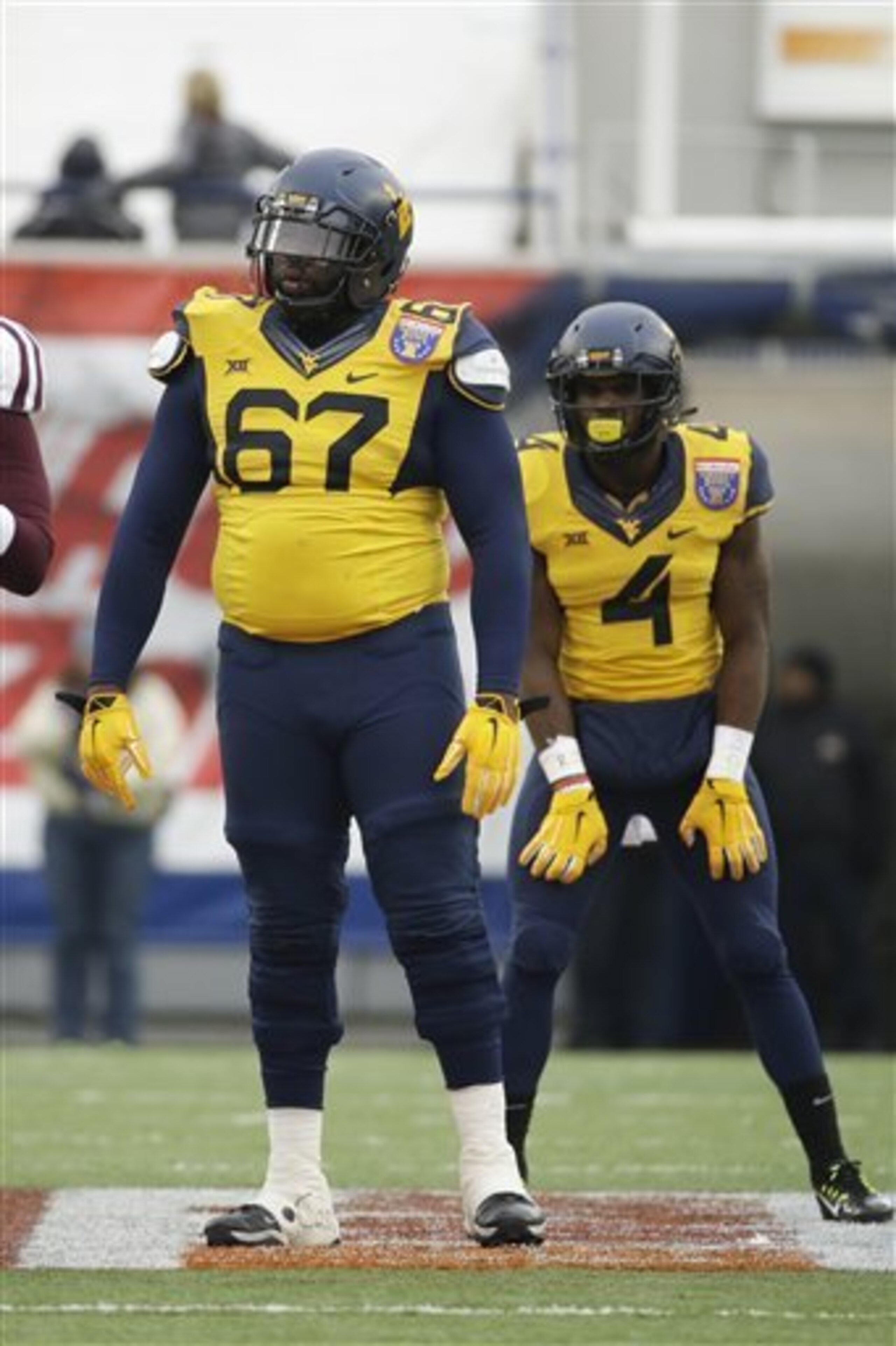
Making offensive line the primary need for Detroit is somewhat speculative. Should the three free-agents-to-be at defensive tackle (Ndamukong Suh, Nick Fairley, C.J. Mosley) all depart, that position would rocket to the top.
The offensive line has two longtime starters who are also hitting free agency in center Dominic Raiola and left guard Rob Sims. Those two aged veterans figure to be much lower priorities to re-sign than the defensive linemen, notably Suh. Right guard Larry Warford is coming off an injury-ravaged sophomore campaign as well, and the depth behind them is inadequate.
This presents a quandary in terms of how to approach the draft. This class does not feature any guards or centers worthy of the 23rd overall pick. The next few rounds are pretty deep in talent at both guard and center.
Last year's third-round pick, Travis Swanson, will fill one of those holes. He got better every week in relief duty at both right guard and center, which is his natural position.
Another option is to use the first-round pick on an upgrade at left tackle and then kick current starter Riley Reiff inside to guard to replace Sims. While Reiff is an adequate tackle, he has the characteristics to thrive at guard. When I asked general manager Martin Mayhew about this very concept last year, he was quite cool to the idea, so we'll just focus on the guards.
A.J. Cann
The top guard on Matt Miller's most recent big board, Cann offers great quickness and technique as a blocker. He picks up second-level rushers adeptly and is good as sustaining blocks. His critics will say he sustains by getting away with an inordinate amount of holding, but recent events have shown NFL teams get away with that pretty handily too.
Cann is not a great mover, and that doesn't make him a great fit for the running offense the Lions deployed last season. Pulling is not his forte, but Sims wasn't good at that either. Maybe Detroit plays to the strengths of the linemen and deploys a more straightforward blocking scheme. If so, Cann would make a lot of sense in the second round...if he's still available.
Quinton Spain
The West Virginia product (pictured) is a massive wall of a blocker who has started at both tackle and guard. At 6'5" and 332 pounds, he is physically imposing. The Petersburg, Virginia, native plays as you would expect for a man of his size; he's powerful, nasty and not afraid to play through the whistle.
Spain's pass protection is inconsistent, in part because his hands can be slow and high. He is good at recovering thanks to light, quick feet for a man of his girth, but doing that against NFL pass-rushers is a different story from playing in a spread attack in the free-wheeling Big 12. Spain is a prospect for the third or fourth round whom most of the national media is still sleeping upon.
Adam Shead
Oklahoma's left guard doesn't have great mobility, but he's a bedrock in pass protection. He plays with a style reminiscent of Sims in his better days; he's a strong-shouldered, smart player who gets the job done without fanfare or noticeable attention during the game. Shead projects as an adequate starter but not a Pro Bowler, which keeps his draft stock in the fourth or fifth round. In Detroit's offense, adequate is, well, adequate enough.
Need: Defensive Tackle
3 of 7
Even if Suh and/or Fairley (it's almost certainly or) returns, there would still be a need to infuse some more youthful talent to the defensive line.
When Fairley went down in 2014, end Jason Jones became the third tackle. Even 250-pound Darryl Tapp wound up getting reps at tackle out of desperation. 2014 fifth-rounder Caraun Reid saw little action and doesn't appear ready to be more than a rotational reserve anytime soon.
The best defensive tackle in the draft is USC's Leonard Williams, but he will be long gone by the time Detroit picks at No. 23. Some options exist for Detroit in the earlier rounds, however.
Malcom Brown
The Texas Longhorns junior, who has already declared for the NFL draft, took a big leap in 2014 after underwhelming in his first two years in Austin. He improved his technique, notably his initial punch and hand placement to keep blockers at bay. Brown is good at making himself skinny to penetrate through gaps and get into the backfield quickly. He doesn't anchor well and will run himself past the play, although his eye for the ball in run defense did improve in his junior campaign.
Brown is a realistic option for Detroit in the first round. His ability to quickly defeat blockers is definitely appealing. A good workout season could elevate him out of reach, however.
Eddie Goldman
Once a prized recruit for Florida State, Goldman certainly looks the part. At 6'4" and 315 pounds, he moves fluidly and adeptly generates power from his legs and shoulders. There were flashes of greatness during his Seminoles career, notably the Louisville game last fall where he bagged a huge sack and set up camp in the Cardinals backfield all night.
The biggest issue is consistency. Great at times, he's often invisible the rest of the time. Take the Rose Bowl against Oregon:
"Hasn't been a great day for #FSU DT Eddie Goldman so far. Quiet first half and was the player run through by Royce Freeman on last touchdown
— Dan Hope (@Dan_Hope) January 2, 2015"
He recorded just three tackles and zero sacks in Florida State's final six games, which is alarming. Physical potential is great and is likely to get Goldman selected in the first round. The Lions would be gambling by picking him, but the coaching staff could keep his fire burning bright. It worked with Fairley, who is stylistically similar, and therefore it's not unreasonable to consider the Lions taking him in the first round.
James Castleman
Fans probably know the Oklahoma State product most for his prodigious offensive output in the Cowboys' impressive bowl win. He lined up as a Wildcat and scored on a touchdown plunge but really showed his athleticism on this play:
"Oklahoma St. DT James Castleman with a TD in 1st half rumbles for a 50 yard catch to seal Cactus Bowl. https://t.co/nrxRIhj6Ud
— Zach (@ZachGreenberg58) January 3, 2015"
As for his work on defense, he's not a big-time penetrator but more of a space-eater. He's better at holding the point of attack and stacking/shedding to make a play near the line of scrimmage. That suits him for the Mosley role as the stouter third tackle. He projects as a fourth- or fifth-round pick.
.jpg?w=2560 "Seahawks Chiefs Football")


Need: Running Back
4 of 7
Detroit's running game steadily improved throughout the season. The Lions averaged 4.2 yards per carry in the final eight games—more than a full yard improvement from the first eight.
Yet the Lions lack a playmaking back. Joique Bell is a solid runner and receiver but not a home run threat, and he's 29. Reggie Bush—if he's not a cap casualty—is fragile, 30 years old and makes more negative plays than positive ones. Theo Riddick is a good receiver but also struggles to stay on the field.
This is one of the deepest and most talented running back draft classes in years. If you're looking for a first-round back in Detroit, you're probably going to be disappointed:
"Asked Mayhew how big of a need tailback is this offseason. Shot it down.
— Kyle Meinke (@kmeinke) January 8, 2015"
Yet the general manager will have intriguing options in the next few rounds.
Duke Johnson
The Miami Hurricanes back is the object of many Lions' fans affection if my Twitter feed is any guide. It's deserved, because he is an electrifying runner and the big-play back that Bush just has not reliably been in Detroit.
You can hear a nice breakdown of Johnson from Matt Miller here. As he points out, The U's all-time leading rusher projects somewhere between Detroit's first- and second-round picks at this point. If he somehow falls to the 54th pick, he should get strong consideration.
Jay Ajayi
Boise State's Ajayi is sort of a younger, quicker Bell. He can grind yards between the tackles and almost never goes down on first contact. He can catch the ball, turn his shoulders and get up the field nicely. His vision and ability to set up blocks when bouncing runs are outstanding.
"1) Still very early, but my top-3 RBs are Gurley, Gordon and Jay Ajayi. I'm higher on Ajayi than most but I'm okay with that. All-around RB
— Dane Brugler (@dpbrugler) January 8, 2015"
As Brugler notes, not everyone is so high on the Broncos stud. That could allow a patient Mayhew to seize him in the third round.
Malcolm Agnew
In the late rounds, one of the names to watch is speedy Malcolm Agnew from Southern Illinois. He's a transfer from Oregon State with some of the fastest feet on either side of the Mississippi. Like Johnson, he's an inside-out slasher who can plant his foot and explode to full speed quickly.
He stands just 5'9" but is a well-built 207 pounds and showed enough strength to bowl over defenders at the FCS level. Agnew is an intriguing sleeper who could be a nice choice for Detroit in the sixth or seventh round.
Need: Cornerback
5 of 7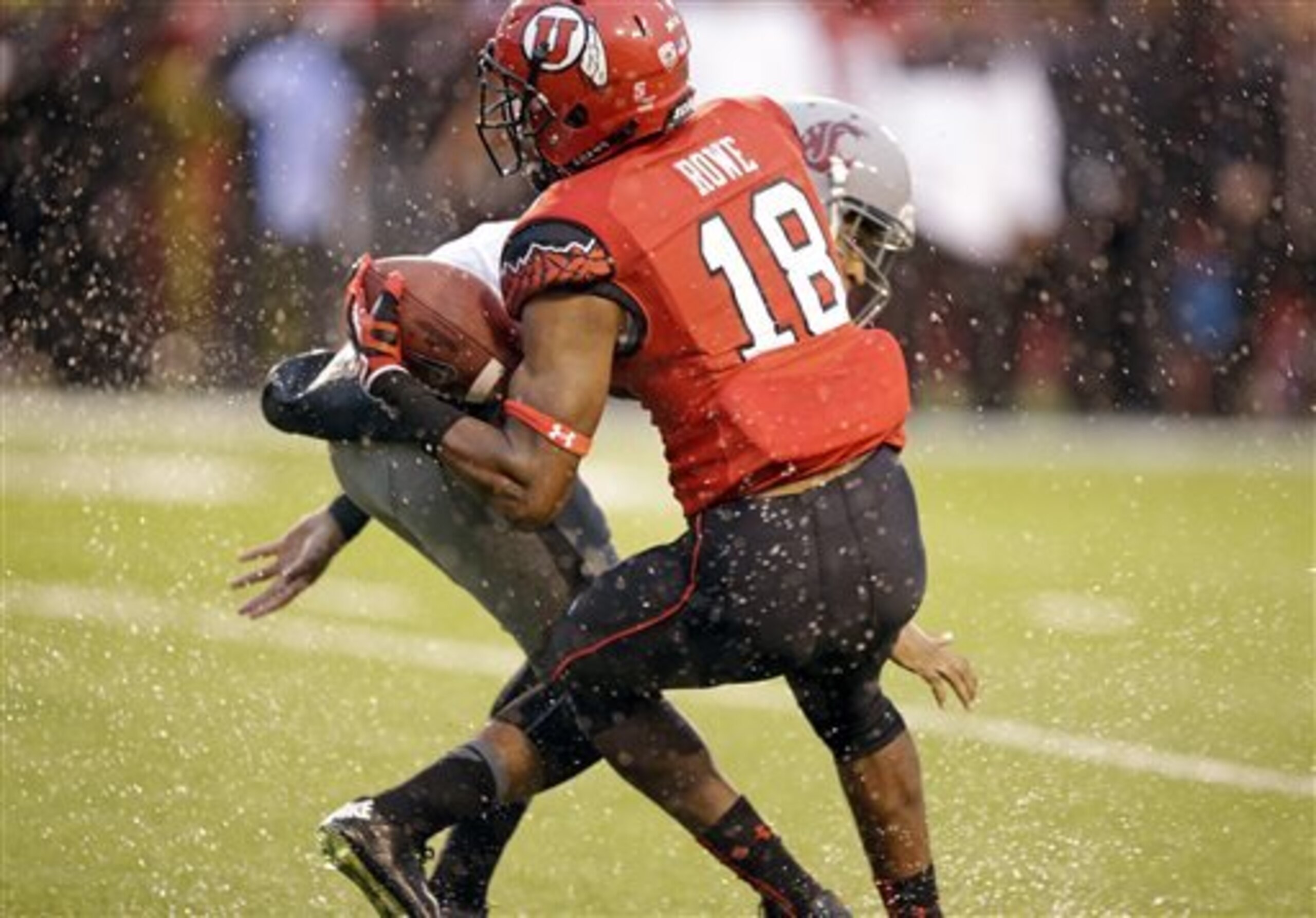
For several seasons the default position of naive, lazy national pundits was to pencil in a cornerback for Detroit in the first round. Ironically, it's probably now a bigger need than most project.
One starting spot is in good hands with Darius Slay, a second-round pick in 2013. Rashean Mathis has been the fellow starter, but he's an unrestricted free agent and will be 35 in the summer.
Even if Mathis returns, there is a dire need for another outside cornerback to pair with Slay. Mayhew's draft history shows he favors speed and tackling ability in his corners, with a strong preference for cover man taller than 6 feet.
While it was a black hole in 2014, the inside slot positions should be better with healthy returns from Bill Bentley and 2014 fourth-rounder Nevin Lawson. If Detroit takes a corner, it will be an outside player.
Trae Waynes
Lions fans in the Mitten State probably know Michigan State corner Trae Waynes well already. No. 15 for the Spartans has been a key fixture in a strong defense with his aggressive press-man coverage and physical style.
Those traits, as well as his high school track-star speed, will give him great appeal for Detroit in the first round. In what is either convenient coincidence or a harbinger of things to come, Matt Miller ranks him 23rd overall, just where the Lions pick in the first round.
The biggest knock on Waynes is his lack of instincts in coverage. While he's a great athlete, he is more of a quick reactor than a savvy cover man. He will get caught guessing and staring into the backfield, too.
Eric Rowe
Rowe (pictured) was a marginal draft prospect as a safety for Utah entering 2014, but when the Utes moved him to cornerback, his stock shot up. He has excellent size at 6'1" and 208 pounds and legit football speed:
"#Utes CB Eric Rowe received NFL Combine invite. Look for him to shoot up boards as #NFLDraft nears—6-foot-1, lengthy, physical, 4.4 forty.
— Jon Siddoway (@JSiddoway) January 7, 2015"
He aced an early test by breaking up three passes intended for star Michigan wideout Devin Funchess in their September matchup which I attended, showing quick feet and surprising power from a corner. While many project him in the middle rounds right now, it says here Mayhew will have to pull the trigger in the second if he wants Rowe in Detroit.
Cam Thomas
Western Kentucky's Cam Thomas has the same length and swift speed as Rowe, and he's shown he is very good with the ball in the air. In his sophomore and junior seasons, the Delaware native combined for eight interceptions and 17 passes defended.
His numbers went down as a senior, but that's because teams got wary and stopped throwing in his direction so much. Thomas is crafty at using inside technique (forcing the outside receivers wider), a staple of Detroit's coverage scheme, and he's a solid tackler despite not being a big hitter.
Like Waynes, he will guess at times and doesn't always anticipate routes or moves well. Those detriments, and the fact he played in the lower Sun Belt and Conference USA leagues, likely relegate him to fourth- or fifth-round status. He could play his way up with a strong performance in the Shrine Game practices, where Mayhew is annually one of the few general managers seen in the stands.
Need: Return Specialist
6 of 7
Normally this is an ancillary attribute that boosts a player's stock. In Detroit's case, it's a primary factor with the normal position role being a secondary job.
Jeremy Ross filled the role for most of the last two seasons, but poor decisions and a decline in effectiveness put his status on thin ice. He didn't do much as the fourth wide receiver, either. While Golden Tate and Reggie Bush have both been electrifying return men in their NFL careers, Tate is too valuable to the offense in his receiver role, and Bush has an uncertain (at best) future in Detroit.
Tyler Lockett
The Kansas State dynamo would be an upgrade over Ross as both a return specialist and as a wideout. Lockett, the son of former NFL wideout Kevin Lockett, was a consistently prodigious return man in his four years in Manhattan. He returned four kickoffs and two punts (both in 2014) for touchdowns, leading the nation in punt return average as a senior.
He's the Big 12's all-time leader in kickoff return average and sixth in NCAA history. Yet he's also quite an accomplished receiver, with 187 receptions in the last two seasons. The quickness and open-field jets that serve him so well as a returner translate as a route-runner.
He could handily take over the slot/No. 3 wideout role as well as man the return duties in Detroit. He does have a small frame for a 5'11" guy, and he often uses his body to help catch the ball, which does lead to drops at times. He's a candidate for the third-round pick.
Nelson Agholor
The USC early entrant is a higher-end wideout than Lockett; he's bigger at 6'1" and able to line up both in the slot and outside.
"Another non-1st round WR I’m in on (if he declares) is USC’s Nelson Agholor. Productive, can run vert routes, knows how to get open. WCO guy
— Terez A. Paylor (@TerezPaylor) December 31, 2014"
Agholor returned two punts for touchdowns in both 2013 and '14, and he excels at quickly getting north/south on his returns. While he's a better receiver prospect than Lockett, he too struggled with drops and lapses of concentration. He was also a below-average kick returner for the Trojans. Detroit would need to take him in the second round.
D'Joun Smith
Florida Atlantic isn't noted for being an NFL pipeline, but senior corner D'Joun Smith could kill two birds with one stone in Detroit.
He's an aggressive—at times overly so—cover man who has the Dre Bly trait of believing he can intercept every single pass thrown to his side of the field. He's a little smaller and slower than Mayhew likes his corners to be at 5'11" and with a 4.5-ish 40 time, but he looked legit in facing guys like Auburn's Sammie Coates.
Smith doubled as a good kick returner. His 26.29-yard average ranked 17th nationally, but what makes it impressive is that he didn't have one longer than 49 yards. That means he consistently churned out returns well beyond the 20 even if he did not break any for touchdowns. It's worth noting FAU elevated Smith over the conference leader in returns because he was more reliable at establishing better starting field position.
He projects as a second- or third-round pick, depending on his speed numbers and performance during Senior Bowl practices.
Potential Sleeper Picks
7 of 7
It's darn near impossible to forecast which players the Lions are going to take in the final couple of rounds, but here are three who fit a role and could make the active roster as rookies.
Zach Vigil
Utah State linebacker Zach Vigil is an attack dog who dominated the Mountain West Conference. He's an instinctive hustle-and-flow kind of backer with good pop behind his pads. He thrived at exploding to the point of attack with good anticipation and quick reactions.
Vigil put up some serious numbers for the Aggies, as noted by Torin Koos of the Deseret News:
"Vigil’s numbers this season are doing plenty of talking. He ranks eighth in the nation in tackles (11.1 per game), ninth in the nation in tackles for loss (1.54 pg), and is tied for his team’s lead in total sacks (8.0) with B.J. Larsen. He’s two tackles-for-loss from setting the Utah State school record.
"
He lacks great speed and is smallish at about 240 pounds, which will likely push him down to the sixth or seventh round if he's even drafted at all. He also has a propensity to dive for tackles instead of taking an extra step and making surer contact.
In Detroit he could capably fill the backup inside linebacker role as well as contribute on special teams. The Lions could be quite thin at linebacker if Stephen Tulloch is a cap casualty and free agents Ashlee Palmer and Josh Bynes (a restricted free agent) depart.
Dean Marlowe
James Madison is another school that is not noted for producing NFL talent, but it has a potential draft steal in safety Dean Marlowe. The 6'2", 205-pound New York native did enough at the FCS level to earn an invitation to the Shrine Game.
He's a playmaker at safety who is adept at forcing fumbles and providing highlight-reel hits. He also picked off two passes against Liberty, showing excellent anticipation and not being fooled by the action in front of him. His quick reactions and closing speed are both legit NFL-caliber.
Marlowe was lightly recruited, as he was a lightweight option quarterback in high school, but he beefed up in his time in Harrisonburg, Virginia. He looks more like a viable, polished NFL talent than Jerome Couplin, who played in the same collegiate conference before joining the Lions (and now Eagles) as an undrafted free agent last summer.
Chris Bonner
Another small-schooler, Colorado State-Pueblo quarterback Chris Bonner is a late-round candidate who has attracted a small but quite loyal fanbase:
"I have a higher grade on Colorado State-Pueblo QB Chris Bonner than I do Colorado State QB Garrett Grayson who will be at the @seniorbowl.
— Jordan Plocher (@StarvingScout) January 7, 2015"
"Heard from someone at the Medal of Honor practices that CSU-Pueblo QB Chris Bonner looked good so far. Ideal size, great arm. One to watch.
— Eric Galko (@OptimumScouting) January 6, 2015"
He's easy to notice at 6'7" and with a great downfield arm. He'll naturally draw comparisons to 2011 third-rounder Ryan Mallett with those attributes, but Bonner has a quicker delivery and much better feet.
.jpg?w=2560 "Raiders Saints Football")



