
San Diego Chargers' 2015 Offseason Draft Scouting Guide
Draft season is a chaotic and confusing time on the NFL calendar, especially for a team with plenty of needs like the San Diego Chargers. But don’t fret—the Chargers' 2015 offseason draft scouting guide is here to help.
This guide will look at the Chargers’ three biggest needs, which prospects best fit those needs, late-round targets, potential surprise picks, general manager Tom Telesco’s draft history and what the Chargers’ overarching philosophy should be heading into the 2015 draft.
In other words, it is a one-stop shop for all Chargers draft topics.
Since it’s only January, some of these issues may no longer be a concern once free agency wraps up. But that also means crucial 2014 players for San Diego could be heading elsewhere.
Needs will be either alleviated or worsened. Luckily, the draft heals many ailments.
Let’s kick it off with something big: What are the Chargers looking for in Round 1?
Biggest Need: Offensive Tackle
1 of 7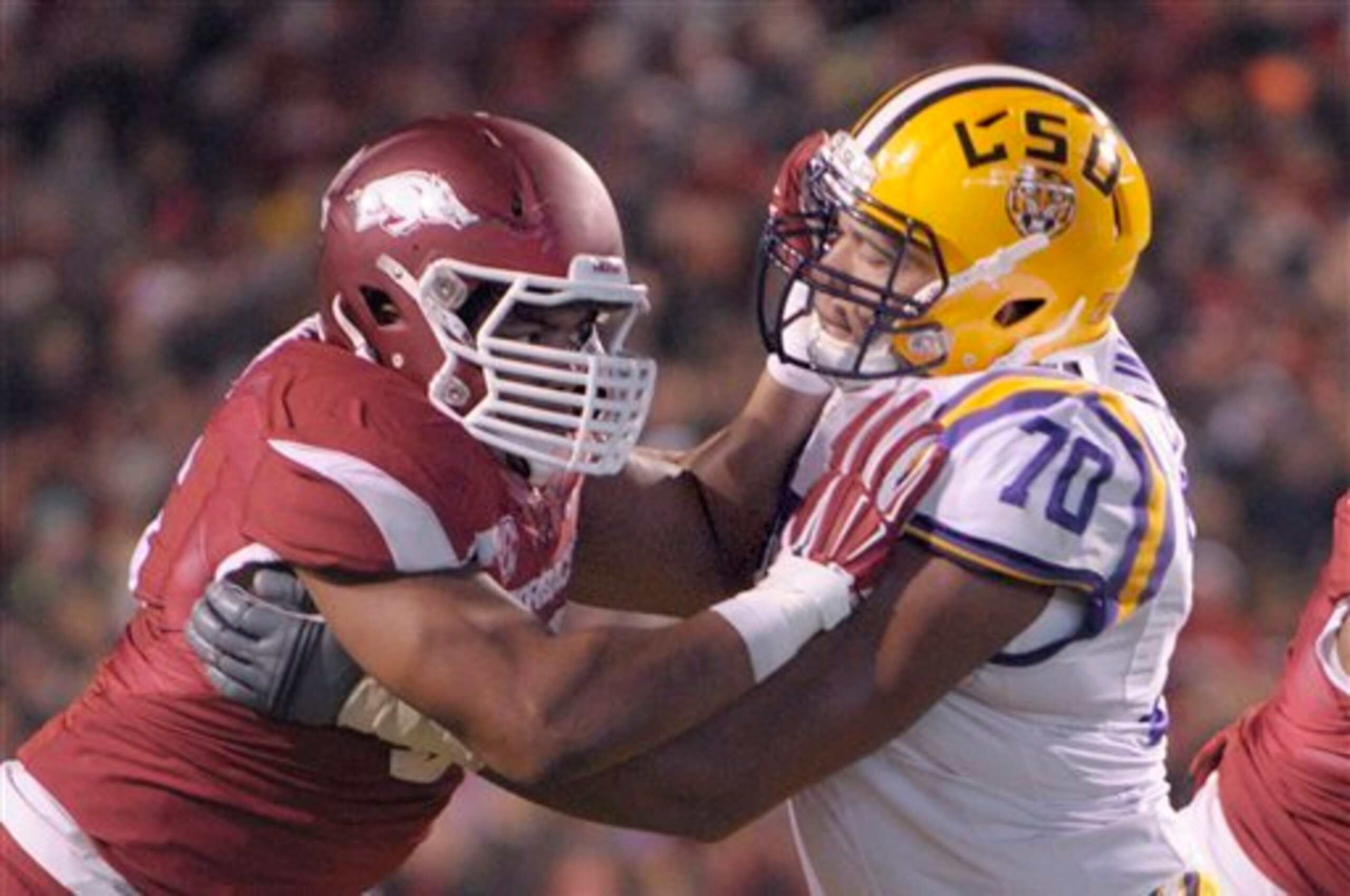
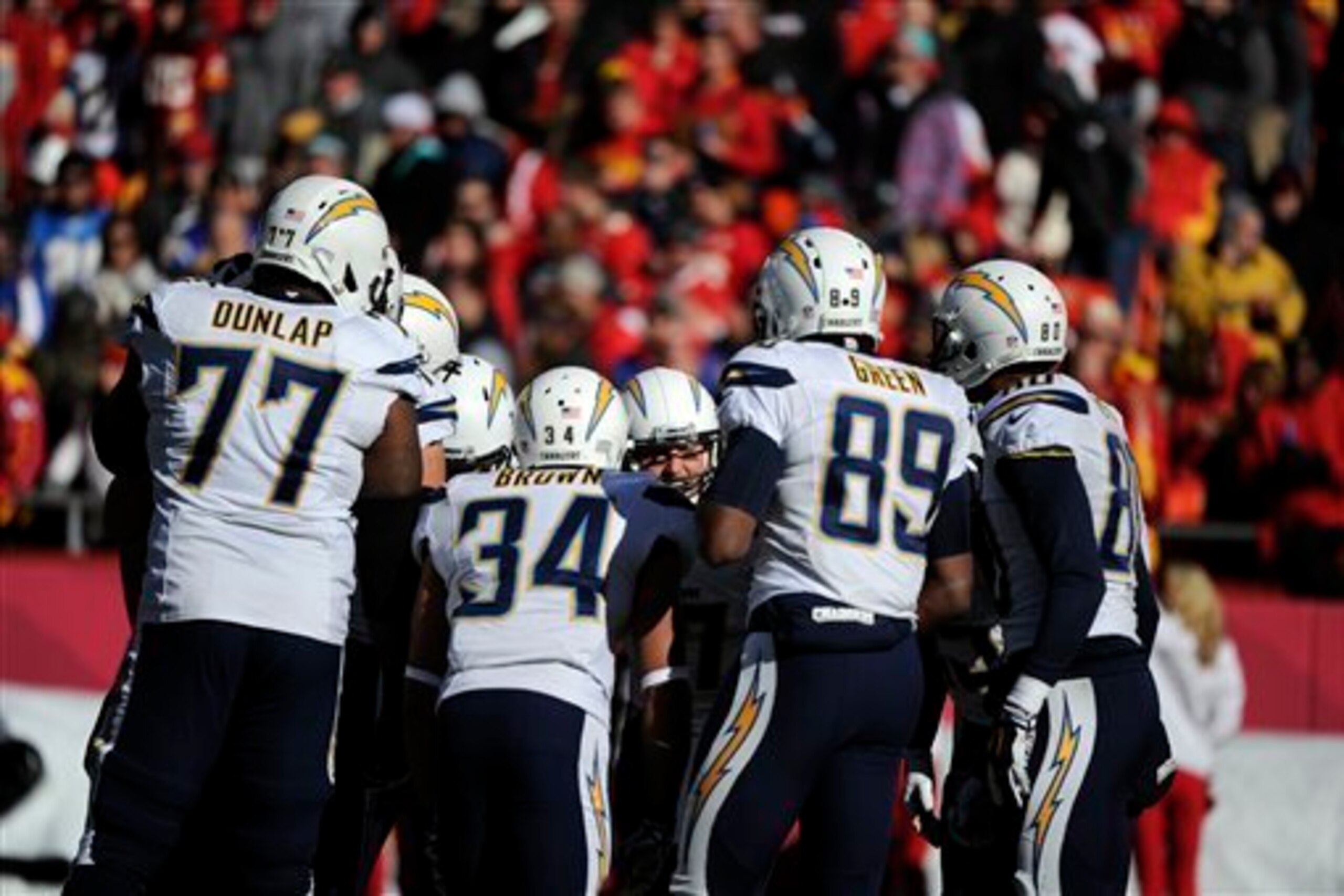
With veteran left tackle King Dunlap hitting free agency this year, along with murmurs of right tackle D.J. Fluker converting to guard, according to Tom Krasovic of U-T San Diego, the Chargers desperately need help at both tackle spots. Philip Rivers can only take so many more hits from guys like Von Miller and Justin Houston. It’s time to get a young prospect who can stick on the line for years to come instead of relying on stopgap options.
The Chargers pick 17th in the first round of the draft. LSU’s La’el Collins (6’5”, 321 lbs) should be available at that spot. Some see Collins converting to guard in the NFL, but the Chargers wouldn’t mind that—they need help at all line positions. He’s one of the most powerful blockers in the class and makes a big impact in the running game.
Other prospects for the Chargers to look at include Miami’s Ereck Flowers (6’6”, 324 lbs) and Colorado State’s Ty Sambrailo (6’5”, 310 lbs).
Flowers has struggled with injuries, but he looks like a franchise tackle when healthy. He is surprisingly nimble and brings aggression in the running game.
Sambrailo has nice movement skills and few weaknesses, but functional strength and level of competition are concerns. Both players are potential Day 2 picks.
The Chargers may address tackle in free agency by going after a veteran like Michael Roos or Andrew Whitworth. That still doesn’t rule out Collins in Round 1—he could become a valuable guard much like Zack Martin, the Cowboys’ rookie sensation who played tackle in college, or he could replace Fluker at right tackle. One move won’t cure this mess.
Second Biggest Need: Defensive End
2 of 7
Corey Liuget is the only player of note on the Chargers defensive line, and he really needs help. Defensive end Kendall Reyes is now a rotational player. Nose tackle Sean Lissemore is a low-upside veteran. The rest of the guys are mainly castoffs and former undrafted free agents.
Talent needs to be injected into this unit, and it starts with adding a 3-4 defensive end to play alongside Liuget and learn from him.
Oregon’s Arik Armstead (6’8”, 285 lbs) would be a quality Day 1 option in that regard. Although he’s raw and has leverage difficulties due to his height, Armstead is underrated as a pass-rusher and could grow into a dominant defensive lineman.
Florida State’s Mario Edwards Jr. (6’3”, 294 lbs) and Stanford’s Henry Anderson (6’6”, 282 lbs) are both intriguing Day 2 options.
Edwards is uniquely athletic for his size, versatile and disruptive as a pass-rusher. His weight has been an issue this season.
Anderson displays proficient hand use and technical ability, although he brings a low ceiling. He is a good two-gap player, which is an ideal fit in defensive coordinator John Pagano’s scheme.
Look for San Diego to pursue a 3-4 end on Day 2. Anderson is a plug-and-play type of prospect who would bring consistency as a run defender. He’d be a nice find in Round 3.
Third Biggest Need: Center
3 of 7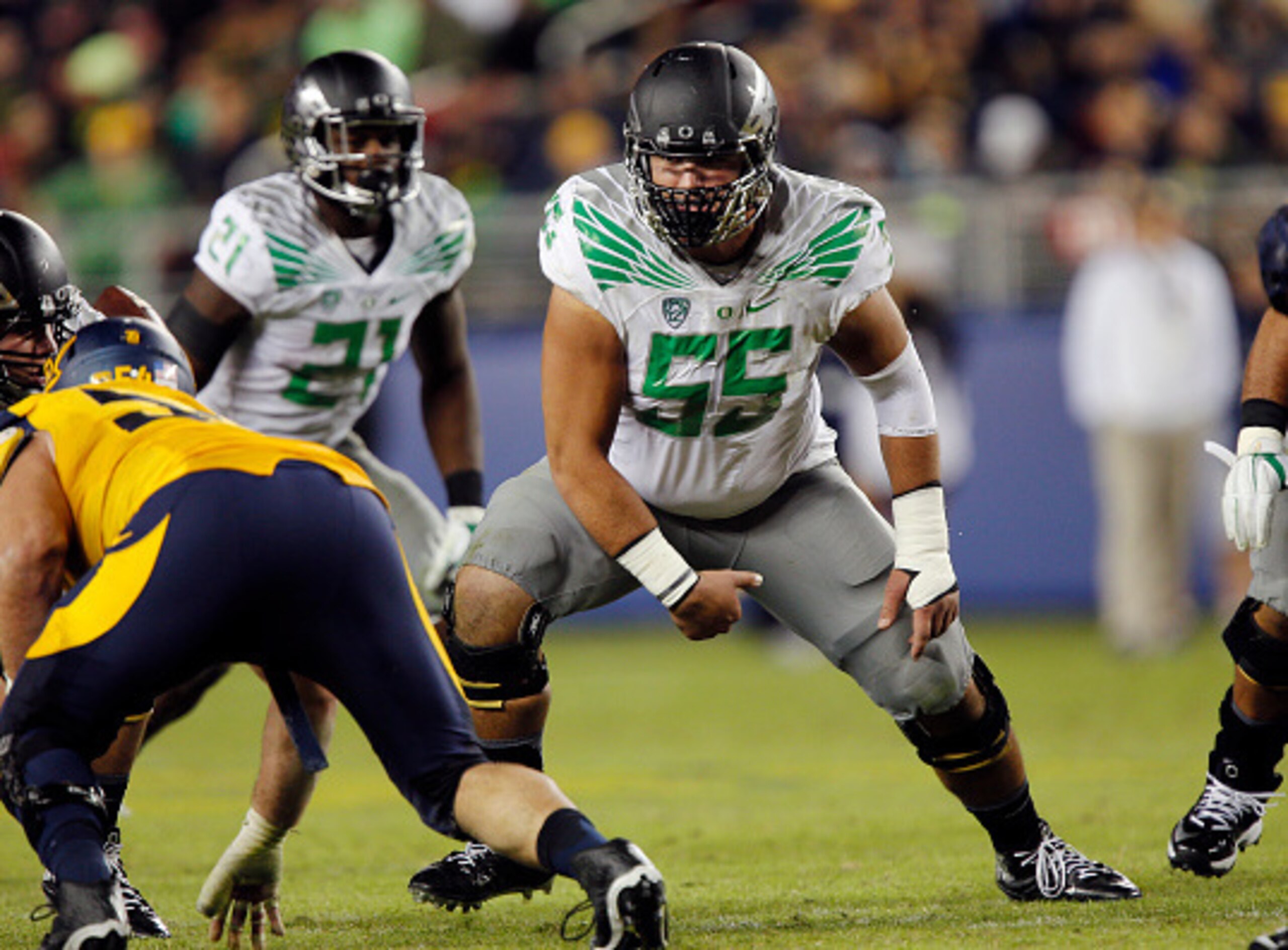
The Chargers had more trouble with centers in 2014 than any other team in recent memory. They started an unprecedented five centers in 16 games due to horrifically bad injury luck. And with longtime center Nick Hardwick a free agent coming off a neck injury, the issue won’t go away on its own.
Florida State’s Cameron Erving (6’6”, 308 lbs) looks like a future star at the position despite his lack of experience. He can play any other position on the line as well. He will be a hot commodity in the second half of Round 1.
Potential Day 2 picks include Oregon’s Hroniss Grasu (6’3”, 284 lbs) and Auburn’s Reese Dismukes (6’3”, 295 lbs).
Grasu has dealt with a knee injury this season, but on the field he is athletic and technically sound. He needs more strength to improve his impact in the run game.
Dismukes was the anchor of a complex and varied Auburn running game. He is a strong blocker who lacks athleticism.
The injury issues with Grasu might scare the Chargers off after what they had to deal with in 2014. However, he is worth the gamble in the second round—he would be a nice fit in San Diego’s quick-hitting passing game and should be able to put on additional weight.
.jpg?w=2560 "Seahawks Chiefs Football")


Day 3 Targets
4 of 7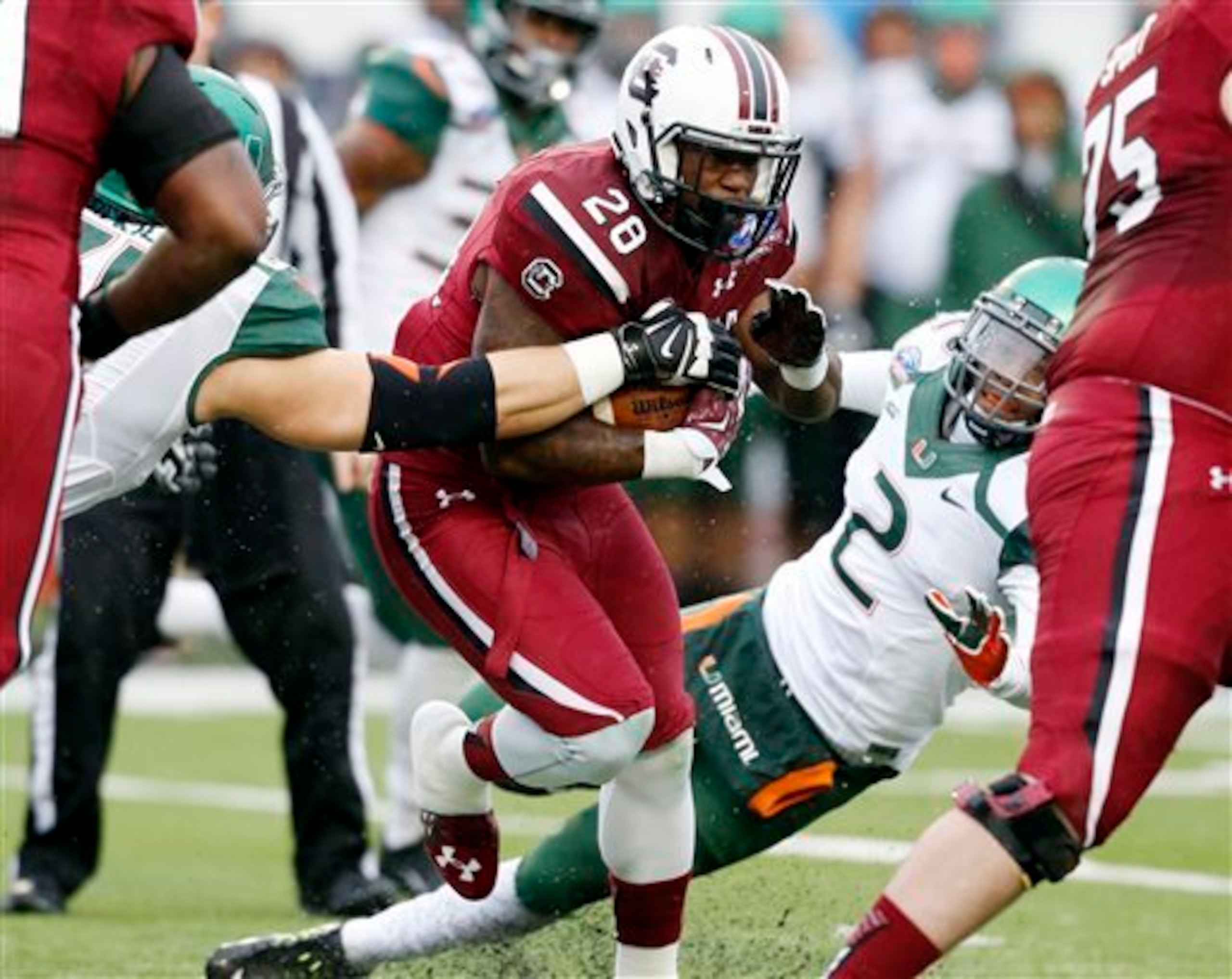
The Chargers have a lot of needs, so it would be impossible for them to address every hole in the first three rounds. If they do go Collins-Grasu-Anderson on Days 1 and 2, that would leave running back, cornerback, guard, outside linebacker, wide receiver and strong safety as potential areas of focus.
Running Back
This year’s running back class is stacked, which means several prospects below the Todd Gurley-Melvin Gordon tier will fall into the later rounds.
South Carolina’s Mike Davis, Alabama’s T.J. Yeldon and Boise State’s Jay Ajayi all could be available in Round 4 due to the NFL’s view on running backs. Further down the list include Texas’ Malcolm Brown and Michigan State’s Jeremy Langford.
None of these players would be bad options, although the Chargers should be specifically looking for someone to replace Ryan Mathews as the up-the-middle power runner. Davis or Langford would nicely complement Danny Woodhead and Branden Oliver.
Cornerback
Both Brandon Flowers and Shareece Wright are 2015 free agents, which leaves the Chargers with Jason Verrett and little else at the position.
It’s easy to get cornerbacks in the draft—what’s difficult is finding good ones, especially in the later rounds. To minimize this risk, San Diego should look for an experienced and versatile player who can contribute immediately on the thin depth chart.
Texas’ Quandre Diggs, Texas A&M’s Deshazor Everett and Tennessee’s Justin Coleman all fit the bill as longtime starters. Diggs in particular would be a nice fit—he can play both outside and in the slot.
Outside Linebacker
The duo of Melvin Ingram and Jerry Attaochu could develop into something beautiful, but it never hurts to add extra talent on the edge.
Norfolk State’s Lynden Trail (6'7", 260 lbs) could be a developmental prospect due to his combination of size and speed. Kentucky’s Za’Darius Smith would be the safer pick—he is tenacious and displays good hand usage. He could contribute immediately as a run-stopping specialist and special teams player.
Potential Surprise Selections
5 of 7
Historically, the Chargers are no strangers to surprising on draft day. Telesco hasn’t made any blockbuster selections yet in his time as general manager, but that may change this year with the growing concern of Rivers’ future with the franchise. A shake-up is a distinct possibility.
Baylor QB Bryce Petty on Day 2
Whether Rivers stays with San Diego or not, his age (33) and injury troubles (he played through a bulging disc in 2014) should have Telesco contemplating the team’s future at signal-caller.
Bryce Petty (6’3”, 230 lbs) is a divisive prospect due to Baylor’s wide-open offense. However, he has plenty of physical talent, and he improved as the season went along. CBS Sports has Petty pegged as the No. 94 overall prospect in the 2015 draft.
With quarterbacks always rising come draft day, Petty has a good chance at hearing his name called on Day 2. The Chargers may be the ones to pick him if they think Rivers will depart as a 2016 free agent.
Georgia RB Todd Gurley in Round 1
Mathews was a great prospect coming out of Fresno State, but Todd Gurley (6’1”, 226 lbs) is even better. He’s an explosive, powerful runner who can catch as well. He’s the total package. An ACL tear suffered in November will bump him down the boards a bit, which might allow San Diego to snatch him.
The Chargers need a lead back, with Mathews testing free agency. Gurley would be Mathews 2.0 once his injury fully heals. A Gurley-Woodhead-Oliver backfield sounds like an outstanding committee that would allow the Chargers to perfect their clock-controlling style.
There are certainly more pressing needs, but it would be a blast to watch.
Arizona State WR Jaelen Strong in Round 1
Keenan Allen spent a good portion of 2014 on a milk carton. Eddie Royal is a free agent, and Malcom Floyd (33) and Antonio Gates (34) aren’t getting any younger. The Chargers need a young receiver to grow with Allen while taking the load off of Floyd and Gates.
The lengthy Jaelen Strong (6’4”, 205 lbs) could fill that role. He accumulated more than 1,000 receiving yards and scored double-digit touchdowns in 2014. Due to his height and leaping ability, lobbing it up is never a bad option for the quarterback.
Like the Gurley pick, it looks fun on paper, but Rivers would likely be much happier with a lineman to keep him upright.
GM Tom Telesco's Draft History
6 of 7
Since Telesco has only been general manager for two full seasons, it is tough to make a definitive verdict on his success in the draft. However, the early signs are promising—Telesco has done well on Days 1 and 2, drafting Keenan Allen, D.J. Fluker, Manti Te’o, Jason Verrett, Jerry Attaochu and Chris Watt.
None of those players are Pro Bowlers yet, but the Chargers have gotten nice contributions out of all six when they've been healthy.
Telesco’s short track record on Day 3 hasn’t looked as good. None of his late-round selections have made an impact, and a few have been cut before the regular season (Marion Grice, Tevin Reese). The only exception is nose tackle Ryan Carrethers, who showed potential in his rookie season before an injury setback.
A big reason for Telesco’s Day 3 struggles is the Chargers’ lack of late-round picks. He drafted just six players in both 2013 and 2014, and he has six picks to work with again this year due to the Sean Lissemore trade.
This is a Mike Tannenbaum style of drafting, which isn’t a good thing—the draft is simply too much of a crapshoot to come away with only a couple of players who stick on the roster for more than a year. It would be best to follow Bill Belichick’s model of stockpiling picks and using them to draft players or help in trades.
Again, it’s too early to tell for Telesco and his front office crew, but overall there have been more ups than downs.
The Chargers' 2015 Draft Approach
7 of 7
What should the Chargers’ overarching philosophy be for this year’s draft? Should they be focusing on upside, or should they try to find immediate contributors? Do they need to focus on need, or do they need to grab the best player available?
This is a crucial draft that will play a big role in the futures of Telesco, Rivers and Mike McCoy. These questions need to be asked.
The Chargers’ utmost priority should be to accumulate young and talented depth. They have had a thin roster these past couple of years, and that’s mainly because they just haven’t drafted that many players. They need guys with high ceilings the coaches can develop and bring into the rotation.
The lack of depth bit the Chargers this season, which meant no postseason. Too many undrafted free agents and castoffs received major playing time in 2014. Yes, injuries played a big part of that, but every team deals with injuries. It’s unavoidable. The best teams are those that have talented depth players ready to break out once starters begin to go down.
The Chargers haven’t had that luxury.
So it’s all about getting more bodies on the depth chart. Trading down or trading a veteran to acquire more picks could help beef up the draft haul. Telesco has a good hit rate when it comes to the draft—he just needs more picks to make the most of it.
If the Chargers go the Belichick route, they won’t be forced to play guys like Richard Marshall and Ronnie Brown in crucial moments. Instead, they can see what their talented youngsters have to offer—that’s the same floor with a higher ceiling. And that leads to better seasons.
All listed heights and weights are via Rotoworld.com.
.jpg?w=2560 "Raiders Saints Football")



