

How Arsenal's Attack Can Thrive Without a Target Man
The best part of Arsenal's 2-0 win over Hull City to begin the defence of the FA Cup won last season was the proof the Gunners don't need a target man to thrive in attack.
Injuries and suspensions have meant manager Arsene Wenger putting prolific wide forward Alexis Sanchez back through the middle. You get the feeling that's where Wenger wanted to play the Chile international to begin with.
But whenever he's done it this season, the results and performances have been disappointing. A draw away at Everton early in the campaign showed Sanchez struggling to make the central striker role his own.
TOP NEWS

Live Ballon d'Or Ceremony Winners 🎉
Alexia Wins Ballon d'Or 🏆

Final Men's Ballon d'Or Rankings 📊
He was even more peripheral in the 2-0 defeat at Southampton on New Year's Day. Yet Sanchez produced arguably his best performance in an Arsenal shirt (admittedly, there are a few contenders) to dismantle Hull.
In the process, he proved how effective he can be as the focal point of Arsenal's attack. Not as a fixed target but a roving weapon opposition defenders have a nightmare of a time attempting to track.
Sanchez never gave Hull's back line a moment's peace at the Emirates Stadium. He came short, spun wide, drifted off both flanks and darted between central gaps.
Sanchez frequently found himself on the end of passes steered through the lines. The result was a dominant display, one capped by the decisive second goal, per Who Scored:
His constant movement always gave Arsenal's midfield players a consistent target to aim for. It was no surprise playmakers Tomas Rosicky and the brilliant Santi Cazorla both shone.
Their creative distribution aimed at the varied, quick and clever running of Sanchez produced the lightning-fast fluidity that's at the core of Wenger's football philosophy.
With that philosophy briefly revived by the less pressurised atmosphere of the cup, the Gunners were as impressive as they've been in some time, according to ESPN reporter Miguel Delaney:
Sanchez has never previously had this success when playing through the middle for Arsenal. So what was different this time compared with his outings as a centre-forward against Everton and Southampton?
Well, the first thing is Hull are struggling and injury depleted. Those problems led to a largely passive approach from last season's beaten finalists.
However, the state of the opposition is only a surface-deep reason. The onus was still on Arsenal to reinvigorate the sharp passing and swift movement that are a badge of honour for Wenger-coached teams.
One factor sure to have helped that cause was the change of context. A home cup tie against a side Arsenal are expected to beat lifted the tension among a testy and, in some cases, downright fickle and vitriolic crowd.
Without the (disproportionate) weight of expectation that's followed Wenger and his players into every Premier league game this season, the Gunners were liberated, and it showed.
But enough of the amateur psychology, the main on-pitch reason behind Sanchez's more successful foray through the middle was the return of Theo Walcott. Arsenal's most destructive attacking threat may be frustratingly brittle, but he makes a huge difference to this team's style of play.
Walcott's electric pace and intelligent off-the-ball runs created the additional space Sanchez needed but didn't get against Southampton. Squawka Football writer Mohamuud Jama expertly pinpointed how Walcott helped Sanchez flourish:
"Against Southampton on New Year's Day, most of Alexis’ work came outside the area as the Chilean, quite naturally, was drawn towards the ball despite playing as the focal point to his side’s attack. This allowed the Saints to squeeze up and suffocate Arsenal’s game with no threat in behind for the Gunners.
Walcott has completely changed that perception, which means Alexis playing as Arsenal’s central striker is now both a viable and lethal option for Wenger.
Arsenal’s £35m man produced another all action display when he went in search of the ball, yet Steve Bruce’s back four were continuously occupied as Walcott attempted many incisive runs inside the full-backs, with Arsenal’s attack looking more fluid than it has been in recent weeks.
"
Watching Walcott and Sanchez torment Hull with overlapping runs and electric breaks, it was easy to be reminded of the days when Thierry Henry and Freddie Ljungberg did the same to Premier League defences.
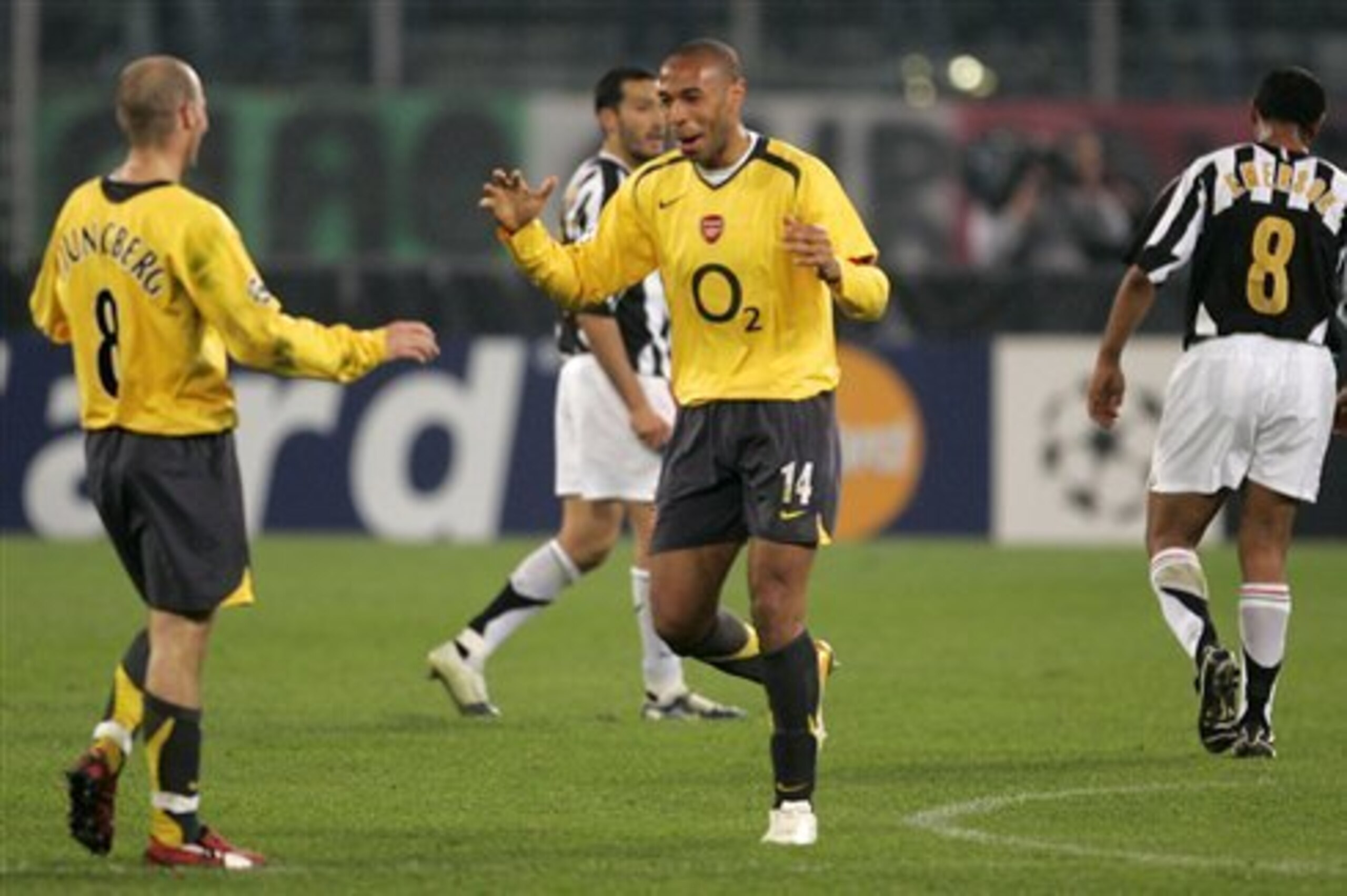
Back then, Wenger built his attack on the idea of revolutionising the traditional No. 9 role. Henry drifted left, Ljungberg ghosted in from the right. All the while Dennis Bergkamp, another mercurial brain with no fixed position, threaded the passes to match their runs.
But since losing Henry and later Robin van Persie, Wenger has turned to the safety of a target man. Olivier Giroud is never likely to be a reliable finisher, but his value to Arsenal has been clear.
The former Montpellier man's height, strength and aerial talents make him an outlet ball whenever Arsenal are under pressure at the back, or are being pressed in midfield.
In this sense, Giroud is the fixed target man. He exists so that players such as Cazorla, Rosicky and Mesut Ozil can play off and around him, turning his clever and instinctive flicks and knockdowns into scoring chances.

When it works, it produces moments of elaborate brilliance. Jack Wilshere's goal against Norwich City last season, along with Rosicky's against Sunderland from the same campaign, serve as the prime examples.
But the trade-off for sometimes literally being able to pass the ball into the net is a slower build-up. Even when a long ball is launched Giroud's way, he has to wait for midfield runners to support.
But with Walcott and Sanchez up front, the approach is a lot more sudden. Arsenal have the option of splitting defensive gaps from deeper because they have pace to get in behind. Alternatively, the Gunners can launch a ball over the top to Walcott, something that prevented Hull defenders from squeezing down on Sanchez the way the Saints did.
On a general level, there is simply greater movement up front when Arsenal aren't aiming for a target man. Wenger has previously called on Giroud to vary his runs, per L'Equipe (h/t Sky Sports): "Once he told me I am too frank in my runs, too predictable."
The Gunners boss knows how limited activity along the forward line stifles the verve he wants his players to attack with.
It's no coincidence Wenger was quick to praise Walcott's movement when assessing the wide forward's comeback appearance against Hull, per Arsenal's official Twitter feed:
Along with creativity, pace and movement make up the three core characteristics that define the way Wenger's best teams played. Having all three together is only possible with a faster, more fluid forward line.
That should mean a reduced role for Giroud during the remainder of the season. It wouldn't be the first time Wenger has chosen speed over brawn since Giroud arrived at the club.
He left the Frenchman on the bench at times during the first half of his debut season in 2012. At the same time, Wenger experimented with Gervinho's pace and movement through the middle.
He also gave Walcott a rare foray centrally. A Walcott, Lukas Podolski and Alex Oxlade-Chamberlain attacking trio helped Arsenal win 5-2 at Reading in mid-December 2012, arguably the Gunners' best league performance of that season.
Returning to a similar formula, with Sanchez flanked by Walcott, Chamberlain, or perhaps Danny Welbeck, would rekindle some of the old magic.
It would suit Sanchez because he would play in a dynamic similar to the one he operates in at international level. He's most often partnered with Queens Park Rangers forward Eduardo Vargas for Chile.

Neither is a traditional No. 9, but both dovetail superbly thanks to their skill, technical guile and pace.
It's that pace that would make the Sanchez-Walcott partnership vital for Arsenal. It would allow the Gunners to play on the break more often. Wenger's not-physically imposing, defensively vulnerable side could sit deep and strike on the counter.
Critics of this view will rightly point to the lack of a player who can hold the ball up as a potential issue. This is something Wenger saw with Walcott during the 2012/13 season.
But it's a price worth paying if it means a greater emphasis on the type of passing Arsenal do best. That's quick-witted, quickly executed distribution between the lines. It's what Cazorla, Rosicky and Francis Coquelin were able to do as Walcott and Sanchez criss-crossed along the front against Hull.

The Gunners would still have the option of Giroud's height and strength off the bench, or for certain away games. In this sense, the towering Frenchman would represent the often mooted, but rarely explained, plan B many claim Wenger lacks.
More importantly, playing without a target man and turning pace loose through the middle would let Arsenal play the game Wenger's best teams always played. The game that made an instant star of pitch-level sprinter Nicolas Anelka and reshaped fleet-footed winger Henry into the best striker the Premier League has known.
He may have been forced into it through circumstance, specifically Welbeck's injury and fatigue, along with Giroud's suspension. Or, as Jama noted, he may have always intended to play this way this season.
But whatever his motivation, Wenger should continue letting Arsenal play without a natural centre-forward. He should continue trusting pace and movement over a fixed target man.

.jpg?w=2560 "Seahawks Chiefs Football")





