Which Conference Is Most Likely Left Out of 2015-16 College Football Playoff?
You don't need an advanced math degree to realize that five doesn't go into four without some hurt feelings. The first College Football Playoff can serve as a cheat sheet for this complicated problem, which will again be an issue in 2015.
There are five power conferences that feed teams into the playoff system, but there are only four semifinal spots. This guarantees at least one league won't get an invite to the playoff party, with the Big 12 forced to watch from the sidelines this year.
Assuming that no league is able to land more than one team into next year's final four—remember when the SEC was supposed to get two or three into the semifinals?—it means there's going to be an unhappy conference next December. But which one?


It would be easy to simply pick the Big 12 again, seeing as its lack of a conference title game no doubt had an impact on the selection committee's rankings. But there were more factors than just the absence of a 13th game by which to judge Baylor and TCU; that needs to be taken into consideration for 2015.
For this article, we'll look at what each power conference expects to bring back (in terms of top teams) and analyze the nonconference matchups between Power Five conferences that no doubt will impact playoff resumes.
Strength at the top
| ACC | 5 | 2 |
| Big 12 | 3 | 2 |
| Big Ten | 4 | 3 |
| Pac-12 | 6 | 1 |
| SEC | 5 | 2 |
This is a fluid area, in that we're basing things off how schools that fared well in 2014 will be able to handle their losses due to graduation, early draft declarations, injuries and coaching changes. So much can happen between now and September, but it's the data we have available.
There were 23 schools from the power conferences that won at least nine games this past season, and 10 of those won at least 11 games. That's the best place to start when looking at the projected strength of each league in 2015, as most of the better programs figure to remain at or near the top.
Of the power conferences, the one that stands out most is the Pac-12. The leader with six nine-win teams, it had five of those in one division. This rivals the strength that the SEC West was described as having all season, with one major difference: The Pac-12 South went 4-1 in bowl games, compared to the SEC West's 2-5.

"Pac-12 South in 2015 is going to be a free-for-all," tweeted Dan Greenspan of the Associated Press.
The Pac-12's other nine-win team is Oregon, playing in Monday's national championship game. But the Ducks could be in line for a significant drop-off next year with the expectation that quarterback Marcus Mariota turns pro.
None of the other playoff qualifiers from this season figure to fall back as much as Oregon, though ACC representative Florida State will go through the most notable change in appearance with quarterback Jameis Winston headed to the NFL early. The Seminoles have been the standard-bearer for that league the past two years, but this could open the door for Clemson, Georgia Tech or Louisville to rise up and claim the conference title.
Whether that will be enough to warrant a semifinal bid, though, is uncertain.
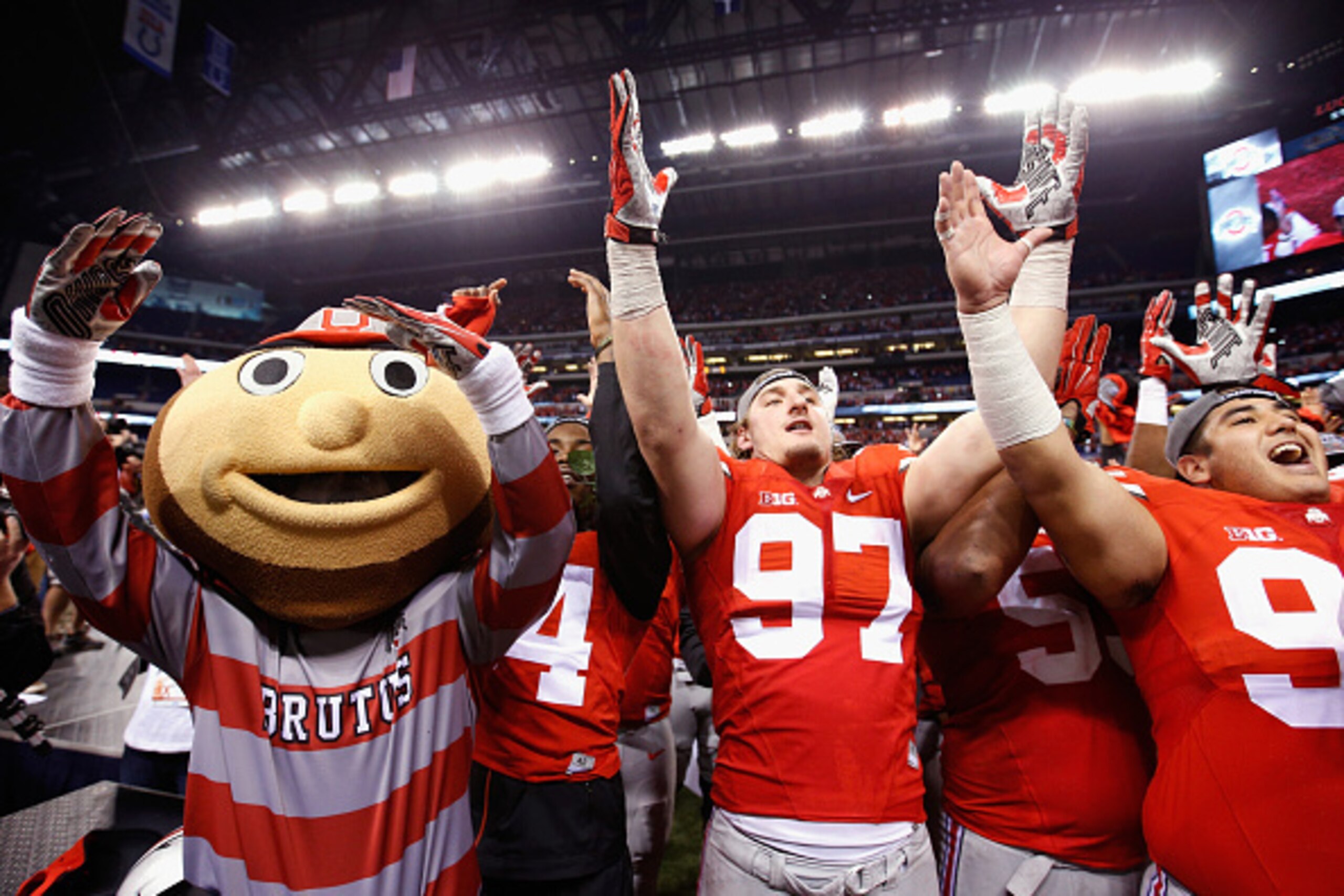
National finalist Ohio State appears to be the playoff team with the best shot to return next season, which keeps the Big Ten in the discussion. If not, Michigan State should be right up there as well.
The SEC seems almost a guarantee to land a playoff spot unless its bowl woes carry over into 2015 and relegate the league to a lesser status. That doesn't seem likely, though.
That leaves the Big 12, which despite having the fewest number of nine-win teams (three) was the only conference with two schools to win at least 11 regular-season games. All signs point to both Baylor and TCU being as good next season as they were in 2014, if not better, though after how this year's playoff scenario played out it might take an unbeaten record to guarantee a semifinal spot.
Who they play
| ACC | 12-13 | 21 (10 home, 8 road, 3 neutral) | 1 |
| Big 12 | 6-11 | 8 (3 home, 5 road) | 3 |
| Big Ten | 11-15 | 17 (8 home, 8 road, 1 neutral) | 1 |
| Pac-12 | 13-4 | 10 (3 home, 6 road, 1 neutral) | 3 |
| SEC | 11-11 | 11 (5 home, 2 road, 4 neutral) | 4 |
A common discussion throughout this past season, when it came to comparing teams' playoff resumes, was strength of schedule. While schools don't have control over who they face in their conferences, they do have a say in the non-league games, and the key ingredient is getting matchups with other power teams.
All four 2014 semifinalists had at least one game against another power league team (or Notre Dame) this past season, and the results of those games played a significant role in their getting into the playoffs. Not just winning them—as was the case with Ohio State, where it's only loss was to ACC foe Virginia Tech—but simply by having them on the schedule.
Though it didn't wind up mattering in the end, the fact that TCU had played Minnesota while Baylor faced non-power teams only in its nonconference slate seemed to play a bigger role in deciding who was more playoff-worthy than the fact Baylor beat TCU head-to-head.
In 2015, we're going to get a heavy dose of power-on-power matchups; 43 to be exact. That includes Notre Dame's nine games against power opponents, six against ACC teams as part of its de facto league membership and annual games against Pac-12 teams Stanford and USC and an opener against Texas.
The Notre Dame arrangement means the ACC will play more nonconference games against power opponents than any other conference, and more than twice what both the Big 12 and Pac-12 have scheduled. This can be both a positive and a negative for the league, since it provides plenty of resume-boosting opportunities but also more chances to stumble.
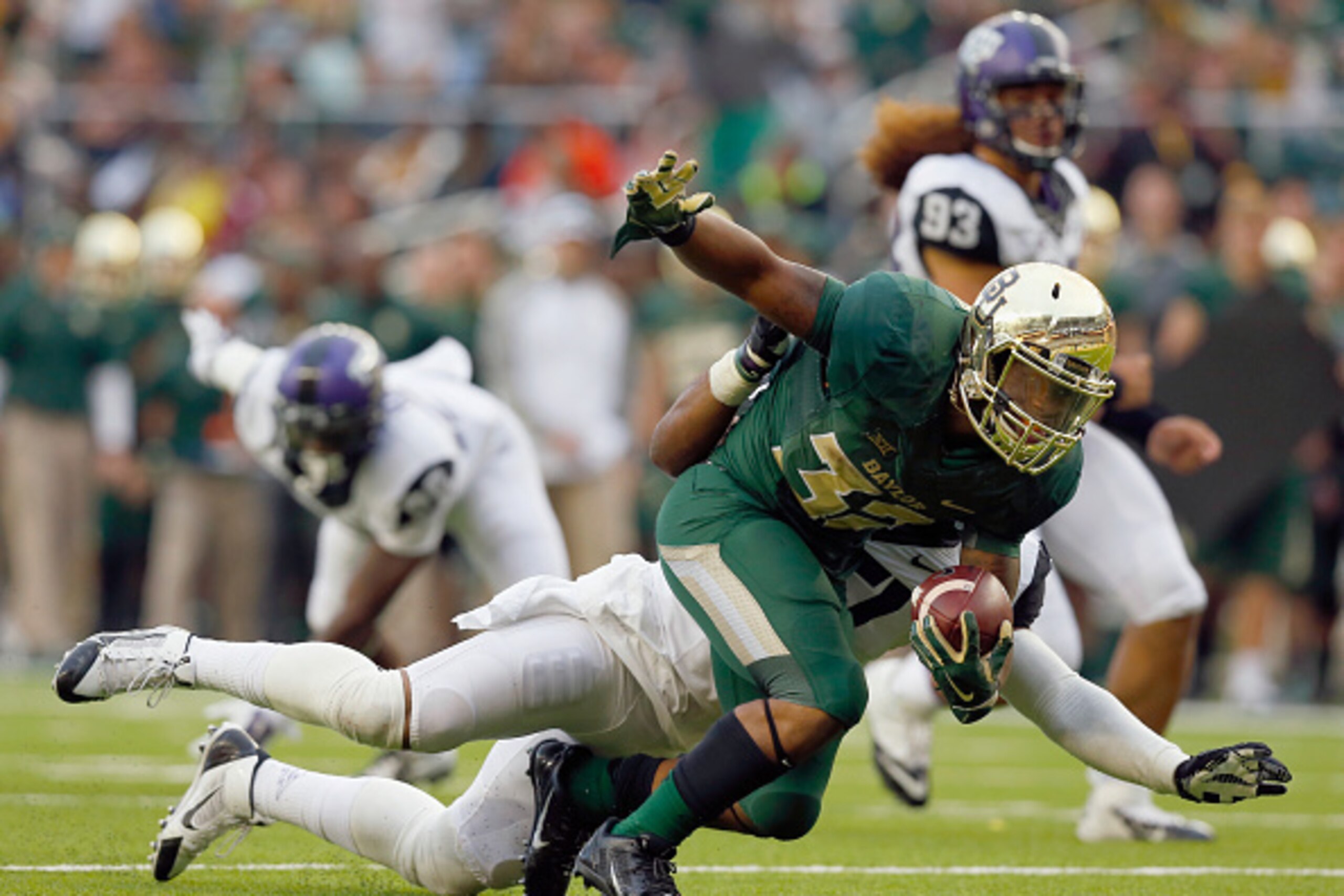
The Big 12 has only eight power conference games set up, down from 10 a year ago, as Kansas State and Oklahoma State join Baylor in the column of schools facing only Group of Five or FCS teams. This puts a premium on the league's few matchups, with Oklahoma (at Tennessee), TCU (at Minnesota) and Texas (at Notre Dame) carrying the flag.
The Big Ten and SEC stand pat with their number of these games, with the SEC only having to play two true road games against power opponents. That's Georgia's biannual visit to Georgia Tech and LSU's visit to Syracuse, though four schools (Alabama, Auburn, South Carolina and Texas A&M) have lined up high-profile, neutral-site clashes.
The Pac-12 has the best chance to capitalize on its matchups, as all but three of the 10 are on the road or at neutral sites. Most notably: Oregon goes to Michigan State, USC goes to Notre Dame and Arizona State opens against Texas A&M in Arlington, Texas.
The pick
Taking into account what's coming back and what lies ahead, our choice for the power conference whose playoff invitation gets lost in the mail is the Atlantic Coast Conference. Unless Florida State is able to work its unbeaten magic again or Clemson can dethrone the Seminoles and run the table, this league won't have the resume to make the semifinals.
Second choice for missing out would be the Big 12, for the same reasons that got in the way in 2014. The league doesn't challenge itself enough, and with even fewer key nonconference games to enhance its reputation there's going to be the need to go unbeaten. The Baylor-TCU winner will be in the mix, but not if it has more than one less win, and even if then.
The Pac-12's hopes ride on making sure its South Division lives up to the billing. Three of the five powers bring back their starting quarterbacks and plenty of other important pieces, but the fact they all have to face each other can be a problem if one doesn't emerge from the pack. Oregon saves the conference by dominating its side, making up for every South team losing at least twice in league play.

That's what kept the SEC from not having more than one team in the semifinals in 2014, as hoped, but because Alabama was able to emerge with only one defeat the league's pedigree made that a non-issue.
And for the Big Ten, which was basically left for dead after a horrible run in nonconference play this past season, a similar subpar effort figures to be an issue for playoff eligibility if it's something that effects the top contenders and there's a crowd at the top.
The four leagues that landed playoff spots in 2014 were lucky in that they each had a clear winner, a conference title champion who either won convincingly or (in Florida State's case) continued with the status quo. That formula might not result in a bid next year, however, which is part of what makes this new playoff system so exciting.
Follow Brian J. Pedersen on Twitter at @realBJP.
.png?w=2560)

.jpg?w=2560 "Chiefs, Steelers Eye WR Trades")