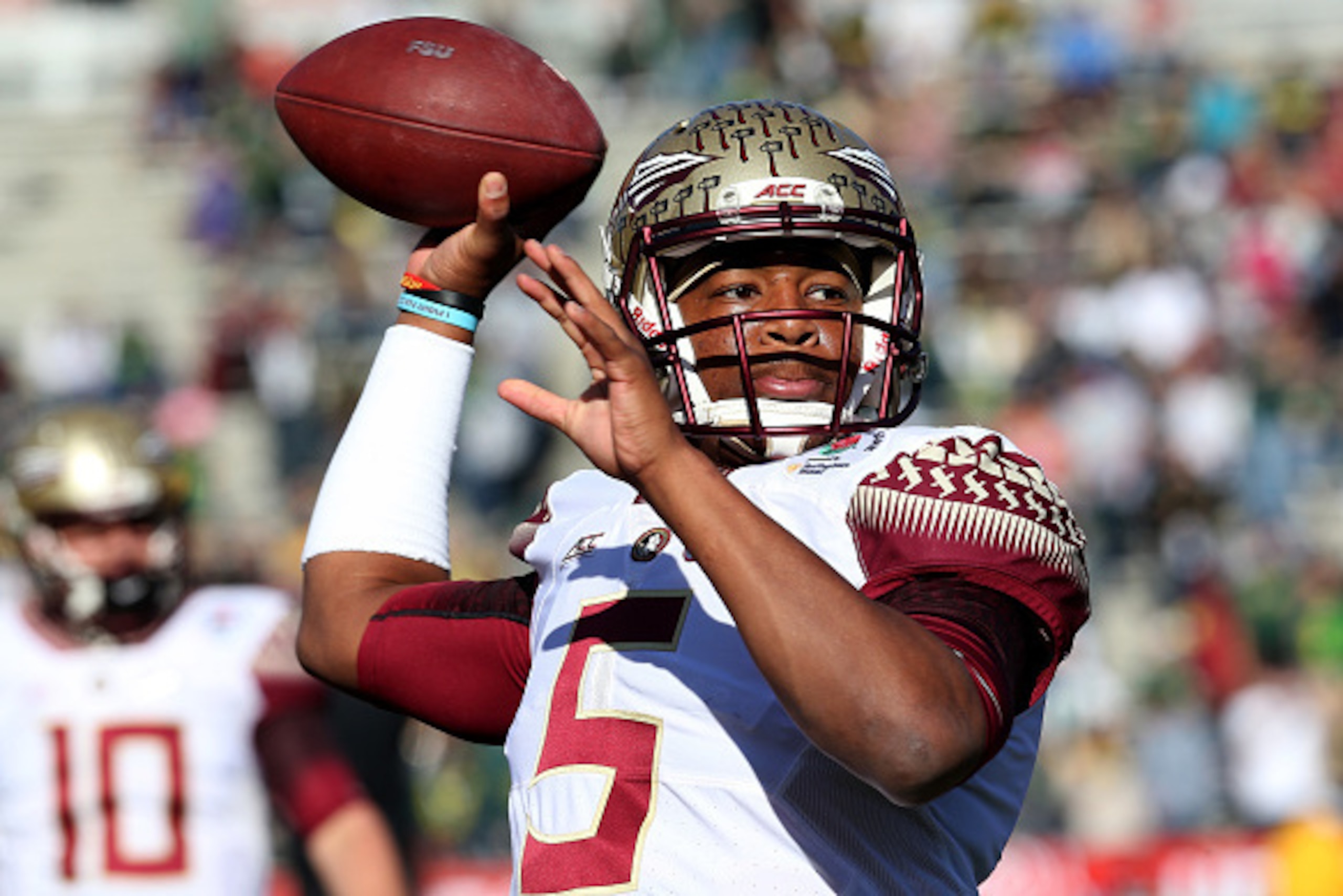

New York Jets 2015 NFL Offseason Draft Scouting Guide
If the New York Jets are ever going to get back on track in their rebuilding process, they need to have much more success in the draft than in the recent past.
The Jets do not have nearly as many selections as last year (six to 12), but the fact that they are picking near the top will give them a chance to land several top prospects. The Jets have so many needs that just about every position outside of the defensive line is in need of an upgrade, giving them a ton of options throughout the draft.
Here is an early scouting guide for New York, featuring prospects who could potentially fill the Jets' current needs.
Picks Owned
1 of 8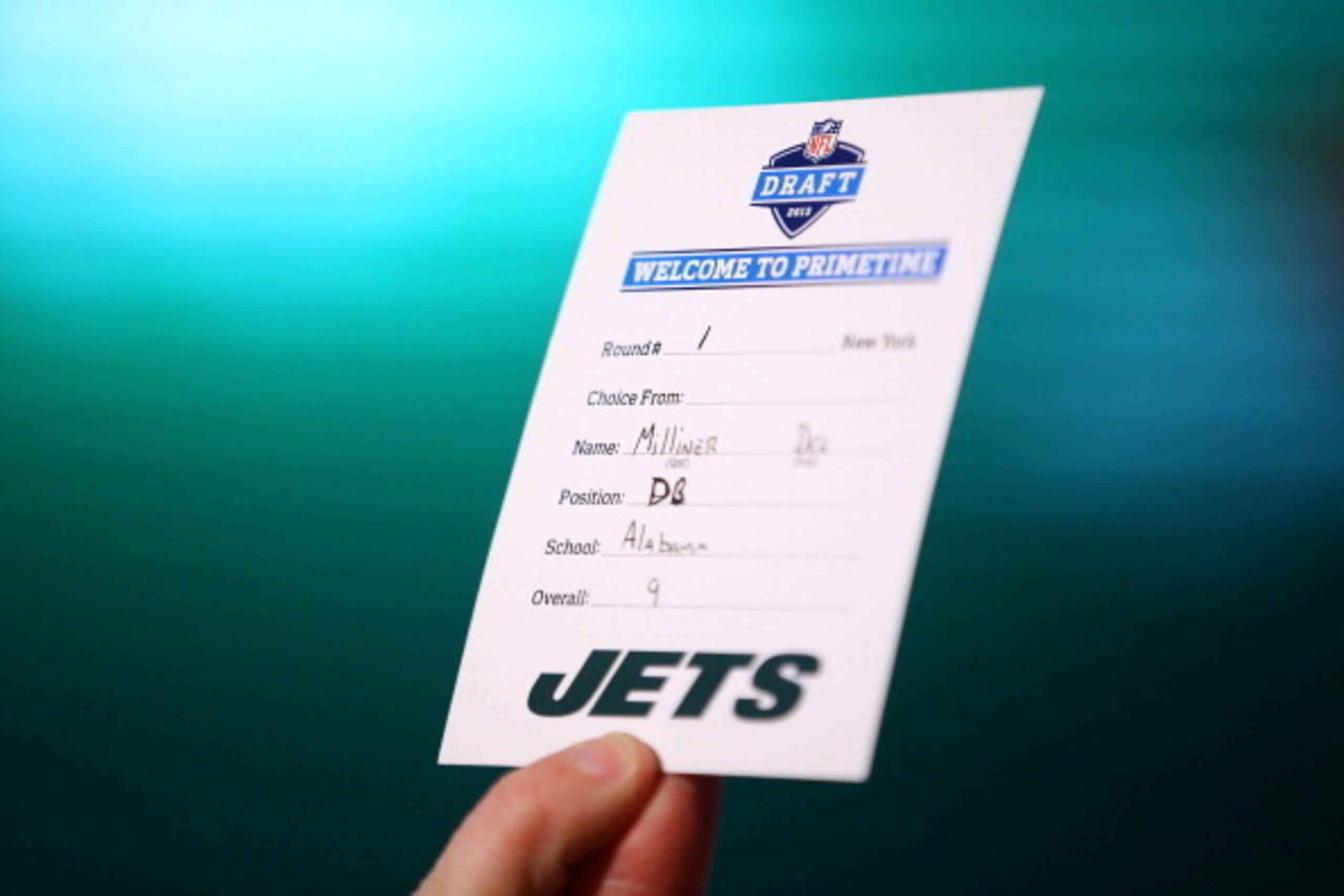
Round 1, sixth overall
Round 2, 38th overall
Round 3, 70th overall
Round 4*
Round 5
Round 6*
Round 7
The Jets' fourth- and sixth-round picks remain in limbo from the midseason trade for receiver Percy Harvin. If the Jets decide to release Harvin, they only yield a sixth-round pick. However, the pick can improve to a fourth if Harvin remains on the roster.
Given Harvin's $10.5 million salary next season (and the fact that the Jets can cut him without any leftover cap penalties), it seems to be a long shot for Harvin to remain with the team, at least at his current deal.
It remains possible for Harvin to come back on a lesser deal, but for now, it makes more sense for the Jets to retain their fourth-round pick (and $10.5 million of cap space) to improve the team, especially with a new general manager in place.
The exact order of rounds four through seven are still pending from the results of compensatory picks later in the spring.
Jets Need: Quarterback
2 of 8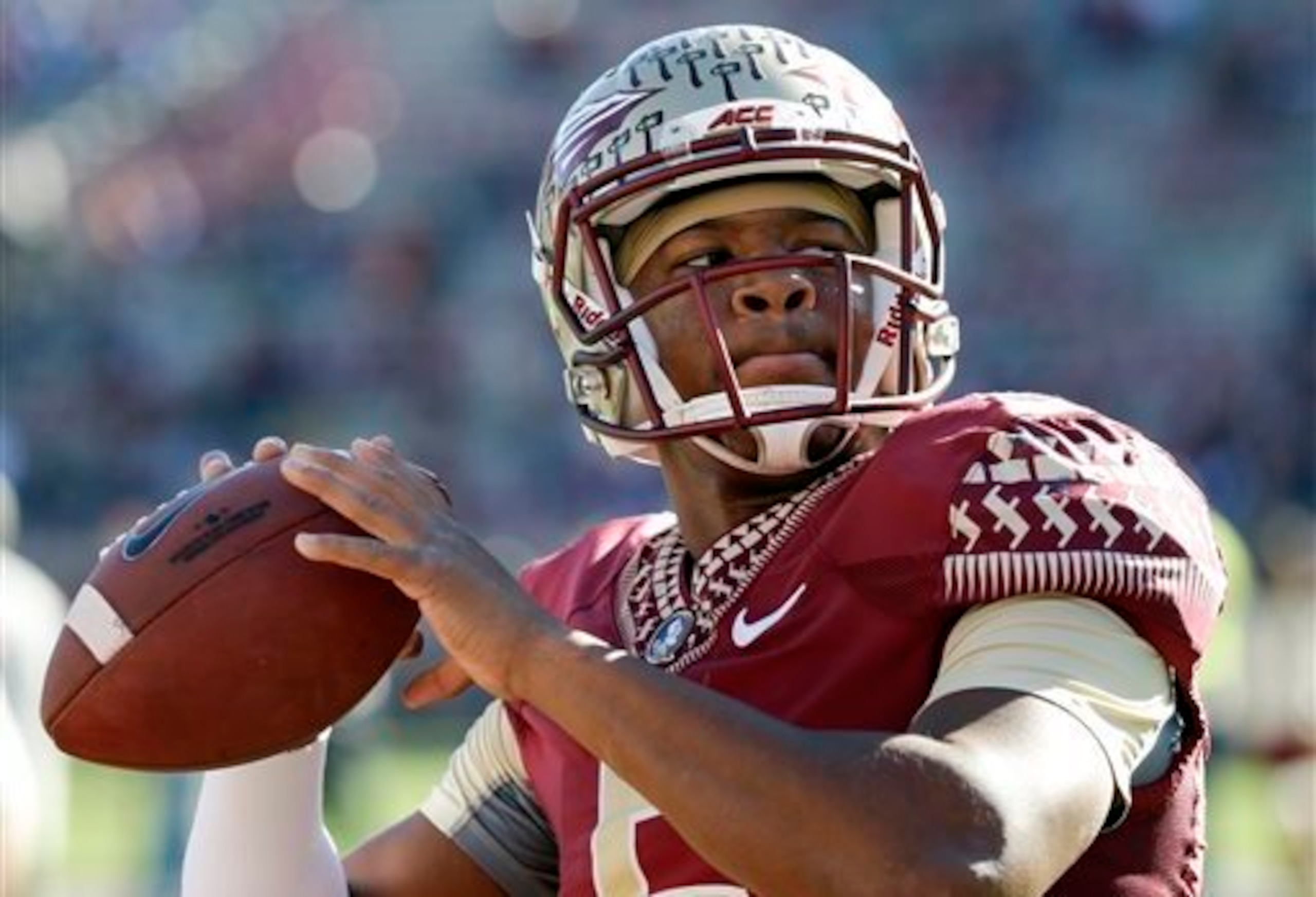
No matter what the Jets do this offseason, there is no way they enter next season assuming Geno Smith will be their starter. A new regime will likely want its own handpicked quarterback to build around, not the previous administration's leftovers.
While they could certainly add a stopgap quarterback in free agency, the draft is where the Jets will ultimately find their quarterback of the future.
Marcus Mariota, Oregon
The only chance the Jets will land Marcus Mariota will either be through an Robert Griffin III-esque trade-up or if the teams needing a quarterback ahead of them elect to take Jameis Winston instead.
In terms of physical skill and character, Mariota is as clean of a prospect as it gets. However, there is some concern as to whether his experience in a relatively simplistic Oregon offense will translate to the next level.
Jameis Winston, Florida State
Assuming Mariota is the first quarterback taken, Winston is a much more realistic option for the Jets with the sixth overall selection. Winston's on-field skills are not in question—whether he can stay on track off the field in the NFL limelight, however, is a big question mark.
Winston has been involved in quite a wide range of off-field altercations, ranging from rape allegations to crab-leg theft. Depending on how they view his character, teams will either fall in love with or learn to despise Winston as a prospect.
Bo Wallace, Ole Miss
Bo Wallace is the prototypical developmental quarterback. At a huge 6'4" stature, Wallace has a good arm and can make accurate throws while remaining just mobile enough to keep defenses honest.
However, Wallace's production is a bit bloated because of the offense he plays in, much like Mariota. If he can take a year or two to develop on a roster, he has starter potential in the NFL down the road.
Jets Need: Guard
3 of 8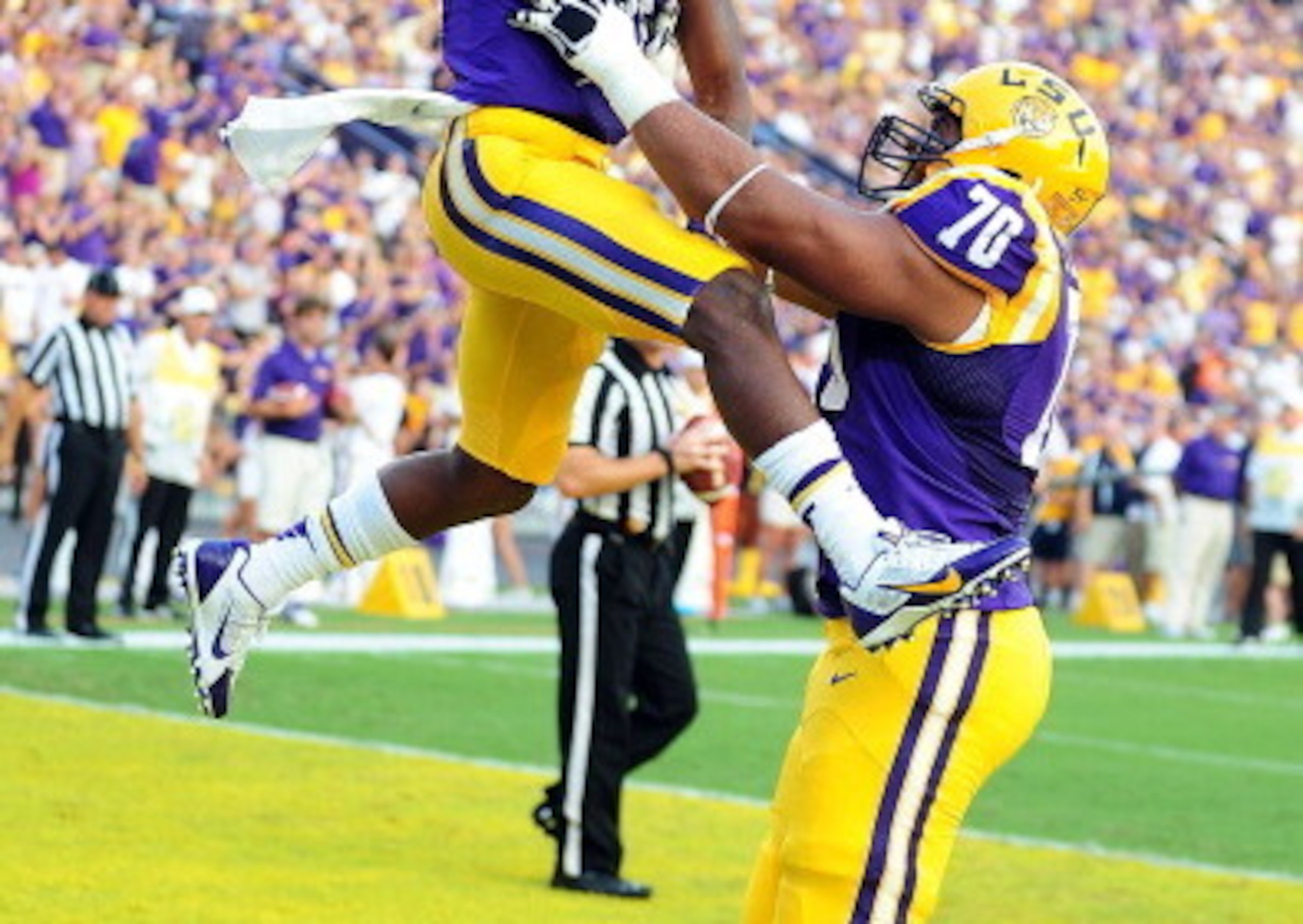
With Willie Colon set to hit free agency and none of the recent draft picks taking the starting job by the throat, the Jets could be faced with finding two new guards by next season. Using an early pick—perhaps even their first—may not be the most popular move, but it could save their offense from another disastrous season.
La'el Collins, LSU
La'el Collins may have played tackle at LSU and will make for a very good one in the NFL, but he has even more potential at guard, where he started his collegiate career. Collins is well-known for his ability to maul down defenders in the run game, finishing out every play. His sheer presence will bring an element of nastiness to the Jets line that they have been missing since 2009.
Collins will not be cheap in terms of draft compensation—he is not likely to survive the first 15 picks.
John Miller, Louisville
With so many needs, it seems unlikely that the Jets will use their top pick on an interior offensive lineman, making mid-round prospects like John Miller much more realistic.
Miller is a sound technician who can start right away and last for a long time. His reputation maintaining durability and reliability will get him drafted somewhere in the middle rounds.
Josue Matias, Florida State
Unlike Miller, Dominican Republic native Jose Matias is a tremendous athlete, making him excel in pass protection against quicker rushers. While relatively average in getting leverage in the run game, Matais will be able to start right away in the NFL because of his ability to pass protect—an area where the Jets struggled mightily in 2014.
.jpg?w=2560 "Seahawks Chiefs Football")


Jets Need: Wide Receiver
4 of 8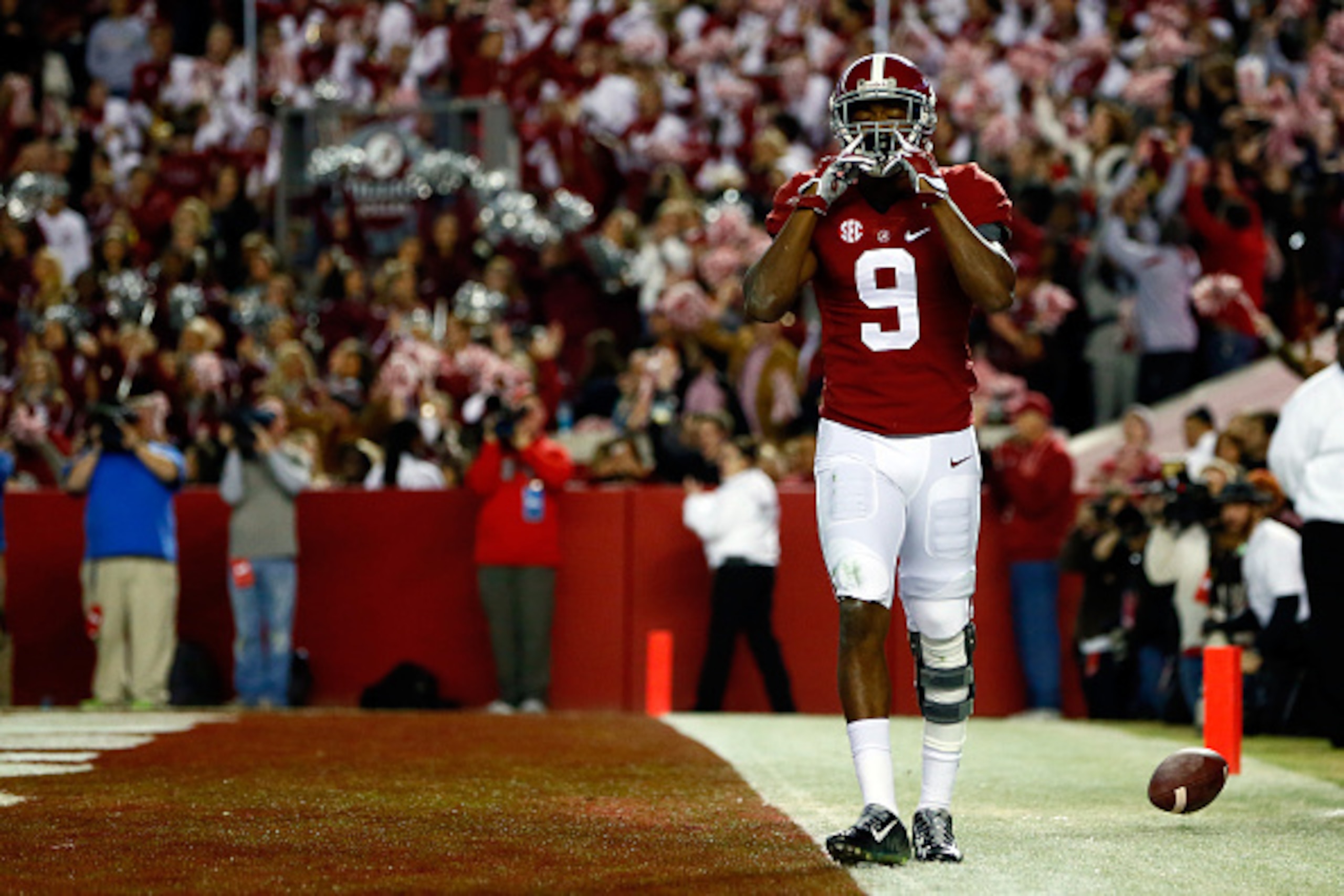
If the Jets decide to retain Percy Harvin in some fashion, this position is instantly placed on the backburner. However, assuming the Jets cut ties with the oft-injured $10.5 million man, adding a reliable target opposite Eric Decker becomes a top priority.
Amari Cooper, Alabama
This most "proven" receiver of this class, Cooper has been lighting up the Alabama scoreboard since his freshman season. Quick, explosive and fast with great hands and leaping ability, Cooper is the whole package.
At 6'1" Cooper does not have a towering, Calvin Johnson-esque frame, but he has all the tools to develop into a top-flight No. 1 receiver in the NFL. If he is available when the Jets pick sixth overall, there should be no hesitation in pulling the trigger.
Kevin White, West Virginia
Unlike Cooper, White was a revelation in 2014, exploding onto the scene to become a top receiver prospect.
Also unlike Cooper, White is much more specialized in winning jump balls, much akin to Alshon Jeffery. He does not have the speed or explosiveness of Cooper, but his basketball-style of play will translate well into the NFL, where receivers are growing bigger and bigger by the season.
Ty Montgomery, Stanford
If the Jets find themselves in need of a receiver and elect not to use their sixth overall pick on one, they cannot make the same mistake as the previous regime and wait to pick one up later in the draft.
Montgomery is not on the same level as Cooper, but he is similarly well-balanced, capable of running a full route tree as a dynamic athlete. He should get strong consideration at the top of the second round.
Jets Need: Cornerback
5 of 8
The Jets went through so many cornerbacks last season that only one, undrafted Marcus Williams, was able to keep his starting job since Week 7. Even if Dee Milliner comes back healthy and lives up to his stats as a top-10 pick, the team still needs at least one starting outside and slot cornerback.
Marcus Peters, Washington
There are not many concerns surrounding Peters as a talent—he would be a top-15 pick based on skill alone.
There are, however, character concerns following his dismissal from the team midseason following an altercation with a coach. Peters comes with plenty of risk, but he could potentially fix the Jets' cornerback situation at the top of the second round.
D'Joun Smith, Florida Atlantic
D'Joun Smith may not come from a football powerhouse school, but he has all of the skills that translate well to the NFL. His speed, fluidity and burst make him an excellent option for teams looking for a man-to-man cornerback—as long as they are willing to overlook the fact that he comes from a smaller program.
Kevin Johnson, Wake Forest
With great movement ability and ball skills, Kevin Johnson is just a bigger frame away from being a prototypical NFL cornerback prospect, especially in the slot. However, he will be a liability in the run game with his 175-pound frame, making him more of a target in the latter part of Day 2.
Jets Need: Safety
6 of 8
Even if Calvin Pryor manages to develop into a quality player, the Jets still need help at this position with 32-year old Dawan Landry headed for free agency.
Pryor has been considerably better in his strong safety role, which would force the Jets to look at more rangy, cover safeties who fit the free safety mold.
Kurtis Drummond, Michigan State
With great instincts and ball skills, Kurtis Drummond has all the skills Pryor was supposed to have. While a tad lean for the position (6'1", 202 lbs), Drummond has a skill set that fits just what the Jets need at the position and could be had on the second day of the draft.
Adrian Amos, Penn State
If the Jets are looking to increase their versatility in the back end, they should look no further than Adrian Amos. With experience at both cornerback and safety, Amos can be placed virtually anywhere on the field in most any defense.
Justin Cox, Mississippi State
Cox leaves a little to be desired in the straight-line speed department, but he has great quickness and flexibility to turn and run. A transfer from Mississippi State Community College, Cox will also need to improve on his consistency when tackling if he is going to last at the next level.
Jets Need: Inside Linebacker
7 of 8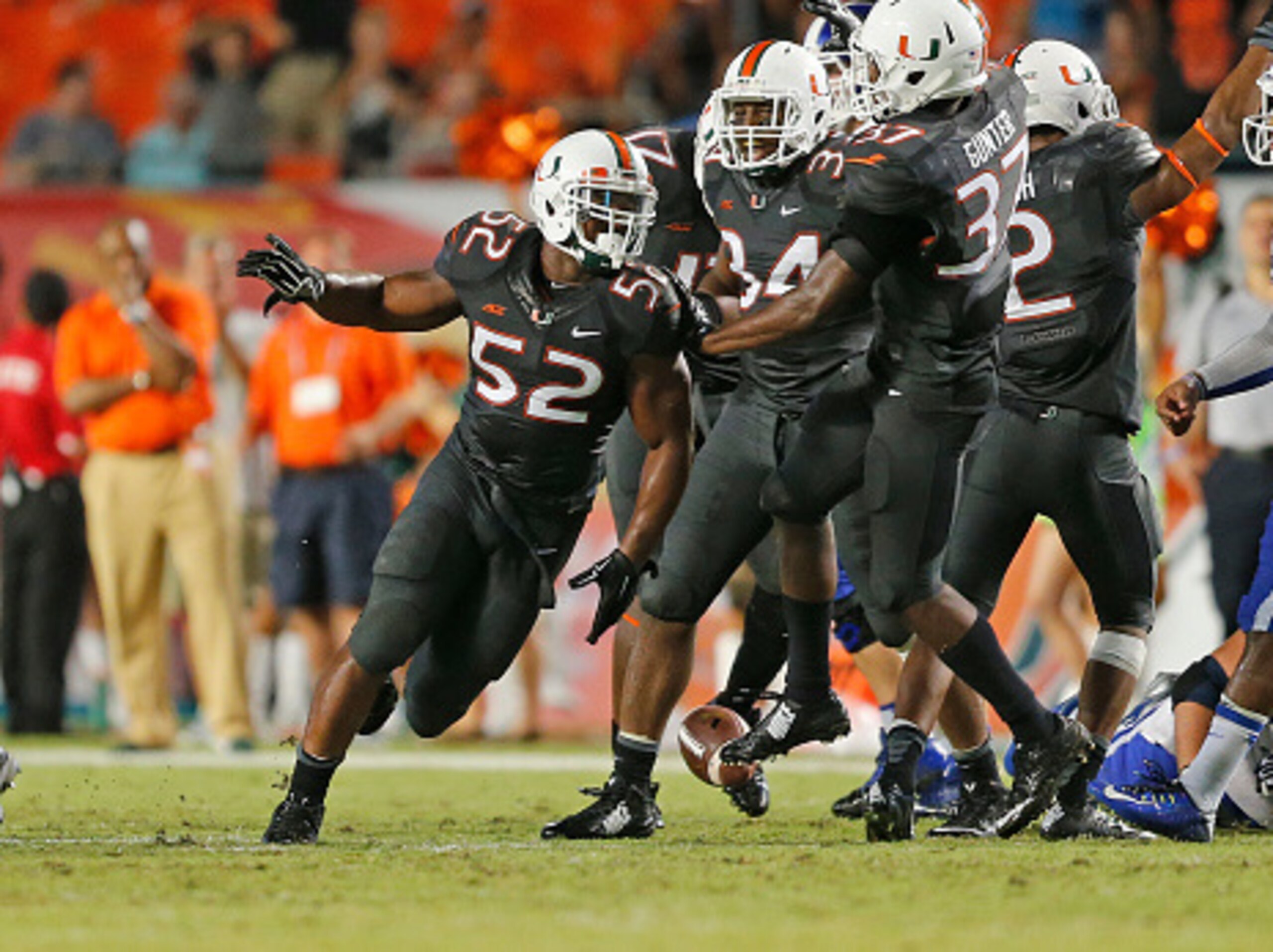
The severity of this need hinges directly on whether the Jets decide to retain veteran linebacker David Harris in free agency. Even if Harris is retained to fill the starting position opposite Demario Davis, depth is a concern with special teams ace Nick Bellore a pending free agent as well.
With the coaching situation still in flux, there is no telling if the Jets will stick with a base 3-4 personnel or revert to a 4-3, leaving all players on the board for the time being.
Denzel Perryman, Miami
The highly touted defensive leader of the Miami Hurricanes has just about everything NFL defenses are looking for in a linebacker: toughness, versatility, physicality and athleticism. He excels in pass coverage, an area where the Jets have struggled throughout Rex Ryan's tenure.
While not quite the athletic freak as fellow prospect Vic Beasley, Perryman is a complete linebacker who will fit into whatever scheme the Jets bring in.
Ramik Wilson, Georgia
An explosive runner with great quickness for the position, Ramik Wilson fits the prototypical mold of a "finesse" linebacker who wins with speed over power. As much upside as he has as a third-down linebacker, he may struggle in the NFL to get around blockers without simply running around them.
Trey DePriest, Alabama
On the complete opposite end of the spectrum from Wilson is Tre DePriest, a classic two-down thumper who fits the mold perfectly as an inside 3-4 linebacker. Asking him to play as a three-down coverage linebacker is a recipe for disaster, but he can thrive in a specific run-stopping role on first and second down.
Jets Need: Outside Linebacker
8 of 8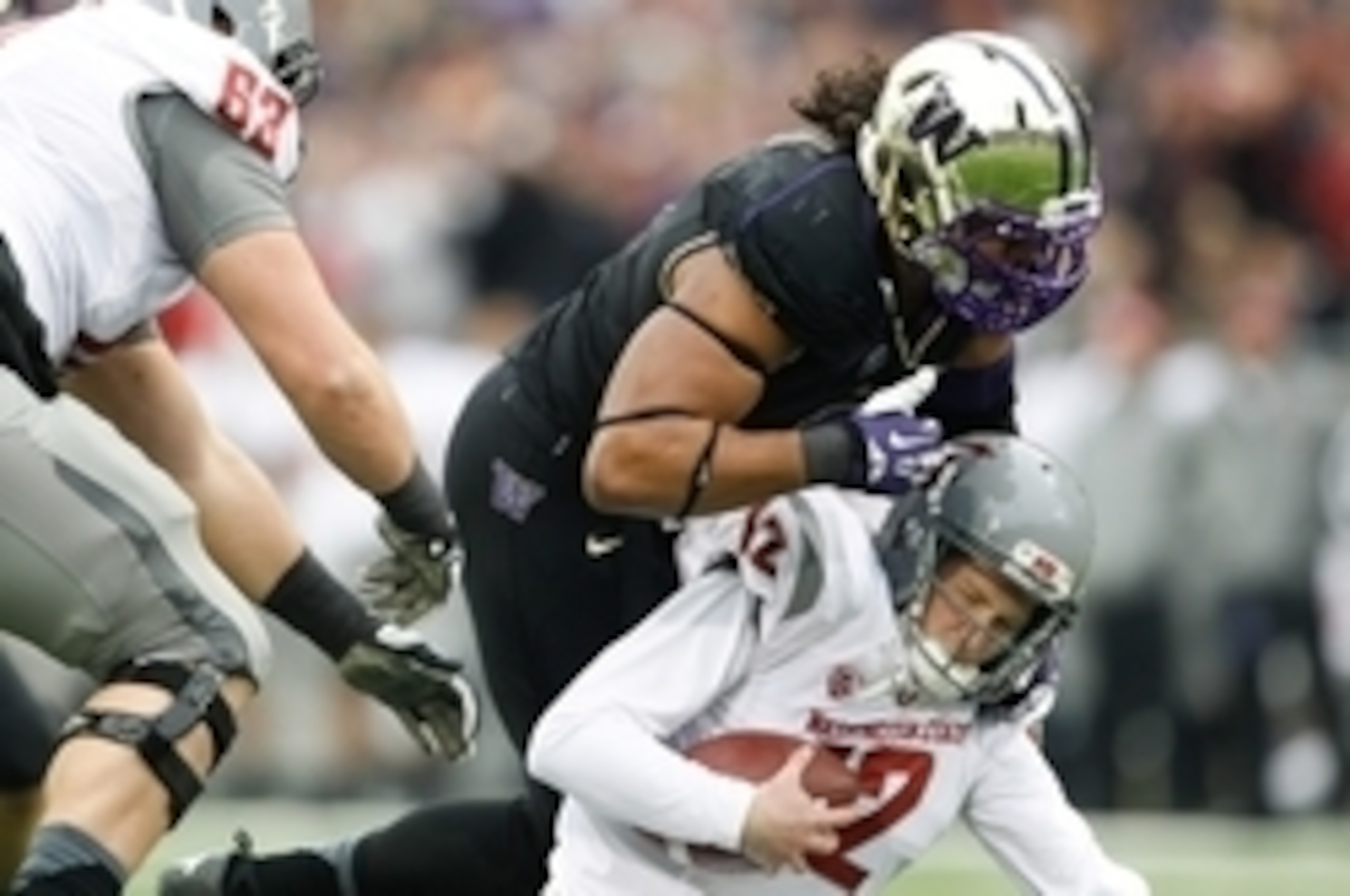
The Jets still have two players under contract to get them through next season at outside linebacker: Quinton Coples and Calvin Pace. However, both players have expiring contracts at the end of 2015, and the Jets need to be prepared for the possibility of losing them.
Hau'oli Kikaha, Washington
Hau'oli Kikaha is not the most explosive player on the field, but his intense on-field demeanor and power make him a quality all-around outside linebacker prospect.
He sometimes can get too aggressive, causing him to miss tackles and lose gap responsibility, but his work ethic and relentless motor will make coaches fall in love with him.
Jordan Jenkins, Georgia
Flexible and athletic, Jordan Jenkins has the makings of a quality pass-rusher in the NFL. However, at just over 250 pounds, Jenkins falls into the dreaded "tweener" category that makes him difficult to project at the next level.
If a team is willing to "redshirt" him for a season and allow him to put on some mass, he has good value as a potential starter in the middle rounds of the draft.
Lynden Trail, Norfolk State
With supreme balance and athleticism, Lynden Trail has a ton of upside as a stud pass-rusher if teams are willing to overlook the fact that he hails from Norfolk State.
His is a bit light in his lower body, forcing him to win with speed as opposed to leverage. He could also improve in his hand usage, but this is a coachable aspect in the NFL.





