Bowl Predictions 2014-15: Breaking Down Best Remaining Non-Playoff Games
Not every game can have national championship implications. Of course, you, Mr. or Ms. I Just Watched the Damn Duck Commander Independence Bowl For No Apparent Reason, know this. Since the advent of the BCS there have been roughly eleventy billion bowl games that don't mean a gosh-darn thing and like 20 that matter.
With the introduction of the College Football Playoff, we get a whopping three with real-life implications. So...progress!
But those who have been around college football long enough know judging these games by how they'll be remembered in history is flawed. After all, fans of teams don't start watching Full House reruns on TV Land when their team drops its second game, do they? Two-loss teams are all but eliminated from the title picture even in the playoff format.


College sports are, as cliche as it sounds, about something more than championships. As a Penn State alum, I watched every second of its Pinstripe Bowl victory over Boston College. Why? I have no idea. I've been graduated for over two years, don't have any friends on the team and am generally agnostic about sports-rooting interests.
I did it because that's what you do. That said, not everyone can waste four hours watching two teams battle to go above .500. Some just want to know which games are actually worth watching from a football sense. Here are a few of the notables.
Peach Bowl: No. 9 Ole Miss vs. No. 6 TCU
Ole Miss and TCU each looked like national championship contenders at certain points this season. Hell, TCU thought it was going to compete for a title when the final rankings for the College Football Playoff were revealed.
It wasn't to be. Ole Miss, which vaulted to prominence by taking down Alabama, finished with three losses in its last five games. Only an upset win over rival Mississippi State, knocking the Bulldogs themselves out of championship contention, proved to be a salvation.
TCU came into conference championship week ranked third in the country, took care of business in a 55-3 win over Iowa State and somehow left the weekend sixth. The Horned Frogs have perhaps the most rightful gripe against Ohio State gaining the fourth seed. It's a debate that has long since ceased, but it's hard to believe a team that won 55-3 in its final game is any less impressive than it was the months prior.
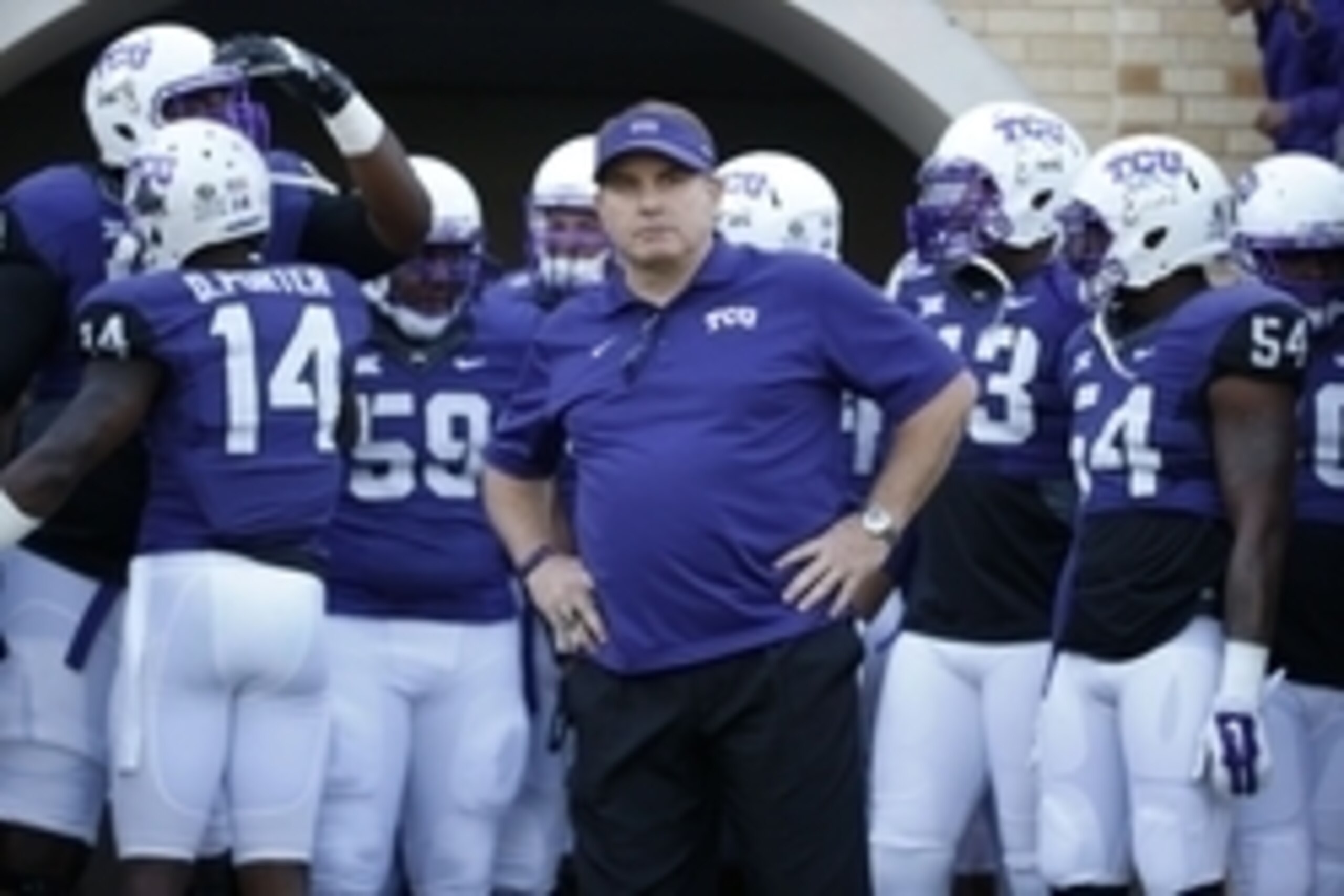
“We feel like this is a playoff game,” TCU coach Gary Patterson told reporters, per Carlos Mendez of the Star-Telegram, taking the most politically correct approach possible. “Ole Miss is a team that was as high as third in the nation, that played at a very high level, that could have been in the playoffs, lost a couple heartbreakers—exactly what I would want as a coach. The kids are going to practice hard because they know the competition level.”
The game itself pits two highly similar teams. Ole Miss and TCU built their resumes on the defensive side of the ball, where the Rebels ranked first nationally in points per game against and the Horned Frogs among the nation's best on a per-possession basis. Football Outsiders' FEI-plus ratings, which adjusts to opponent and situation, had Ole Miss third nationally and TCU ninth.
Their separation is also minimal on the offensive side, though counting stats would indicate otherwise. TCU's 46.8 points per game were the second-best in the country, while Ole Miss ranked 30th. But much like the defensive rankings, the two are far closer on an adjusted basis. Using the same FEI-plus metric TCU drops to No. 20 on offense, and Ole Miss is one spot behind.
That said, I'm more inclined to trust TCU's defense than Ole Miss' offense. Bo Wallace is an enigmatic figure, as mistake-prone at times as he is brilliant in others. On the other sideline Trevone Boykin became a Heisman Trophy candidate and is one of the most valuable players in the nation.
I expect this to come down to the wire. I just trust Boykin over Wallace with the game on the line.
Score: TCU 27, Ole Miss 24
Orange Bowl: No. 7 Mississippi State vs. No. 12 Georgia Tech
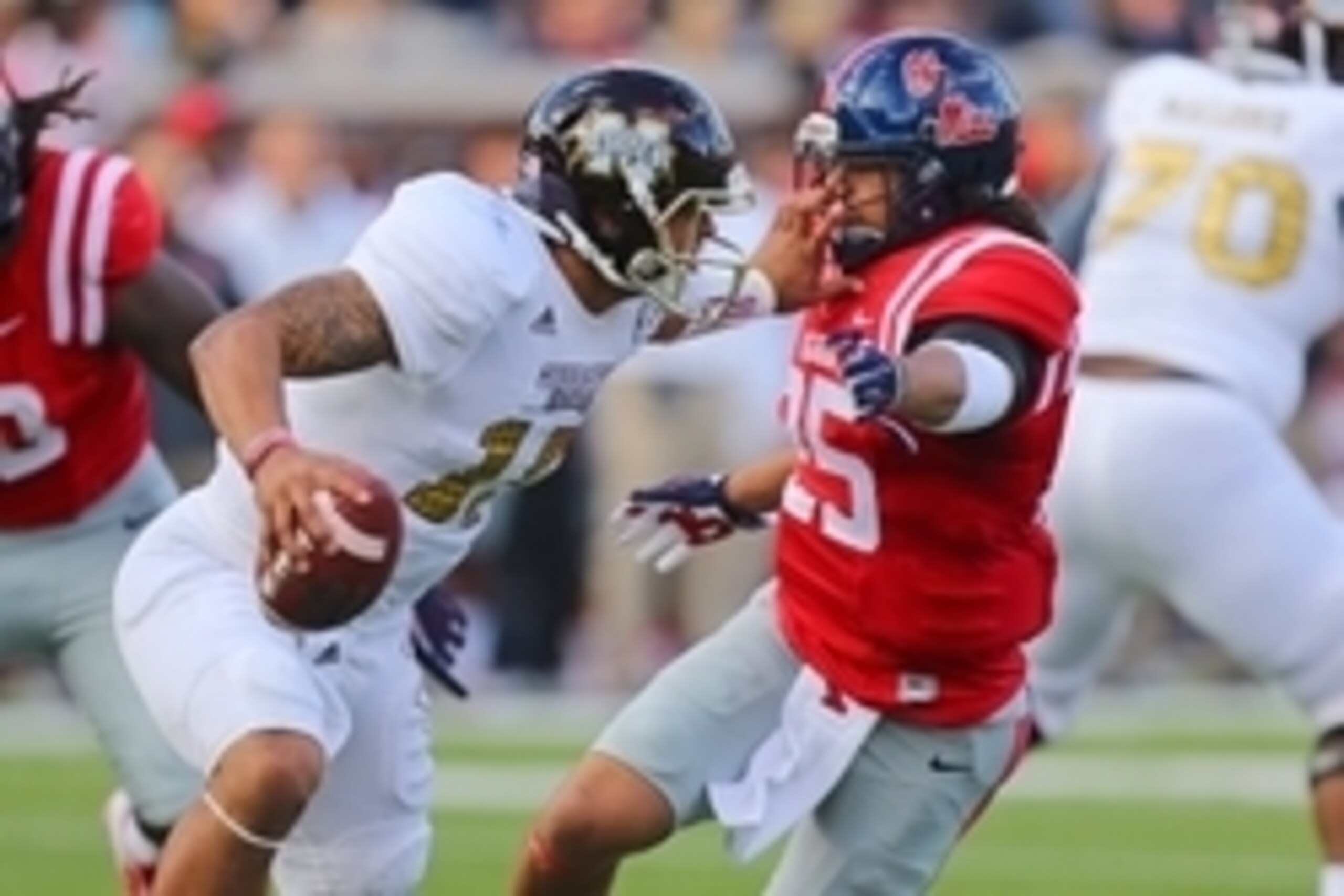
Georgia Tech has the most unstoppable offense no one ever discusses. Paul Johnson's straight-outta-1923 offense isn't much in the way of "fun" or "innovation," but it's damn effective. The Yellow Jackets averaged 333.6 rushing yards per game and attempted fewer than 200 passes. Only four teams attempted fewer passes per game.
It turns out steering against the curve works. Georgia Tech's offense blitzes the nation in nearly every available college football metric available. Second-place Oregon is closer to fifth-place Auburn than it is to Georgia Tech in offensive FEI-plus. Narrow that down to Football Outsiders' OFEI, and the results become even more staggering.
To put it in the most lay possible terms: On every possession, opponents know Georgia Tech is going to run the ball down their throats. On nearly every possession it works. Twelve Yellow Jacket players had at least 100 yards rushing during the regular season, which seems frankly impossible. They rushed for 4,337 yards despite not having a 1,000-yard rusher.
This will be the biggest defensive challenge yet for Mississippi State, which has been closer to solid than great against the run. The Bulldogs allowed 3.7 yards per carry this season, an upper-crust number that's gotten much less attention than their supposed struggles against the pass. Yardage numbers would suggest Mississippi State had one of the six-worst secondaries in college football.
A closer examination of those numbers exposes a propensity for allowing big plays rather than a defining weakness. Opponents completed 52.1 percent of their passes against the Bulldogs (12th-best nationally) and threw for 16 touchdowns against 15 interceptions. None of this will matter against a Georgia Tech team that has zero interest in passing, but Mississippi State may actually be better against the pass than run.
What happens when we flip the script, you ask? Oh, nothing. Mississippi State just becomes an obvious favorite. Whereas the Yellow Jacket offense may be at an advantage, their defense isn't good enough to stop Dak Prescott and Co. Georgia Tech struggles against both the run and pass, atoning for opponents' high completion percentage in the latter by causing turnovers and totally folding in the former.
Barring a major in-game injury, there is no reason to reasonably expect Georgia Tech to have much defensive success.
Score: Mississippi State 45, Georgia Tech 35
Lightning Round
Cotton Bowl: No. 8 Michigan State vs. No. 5 Baylor
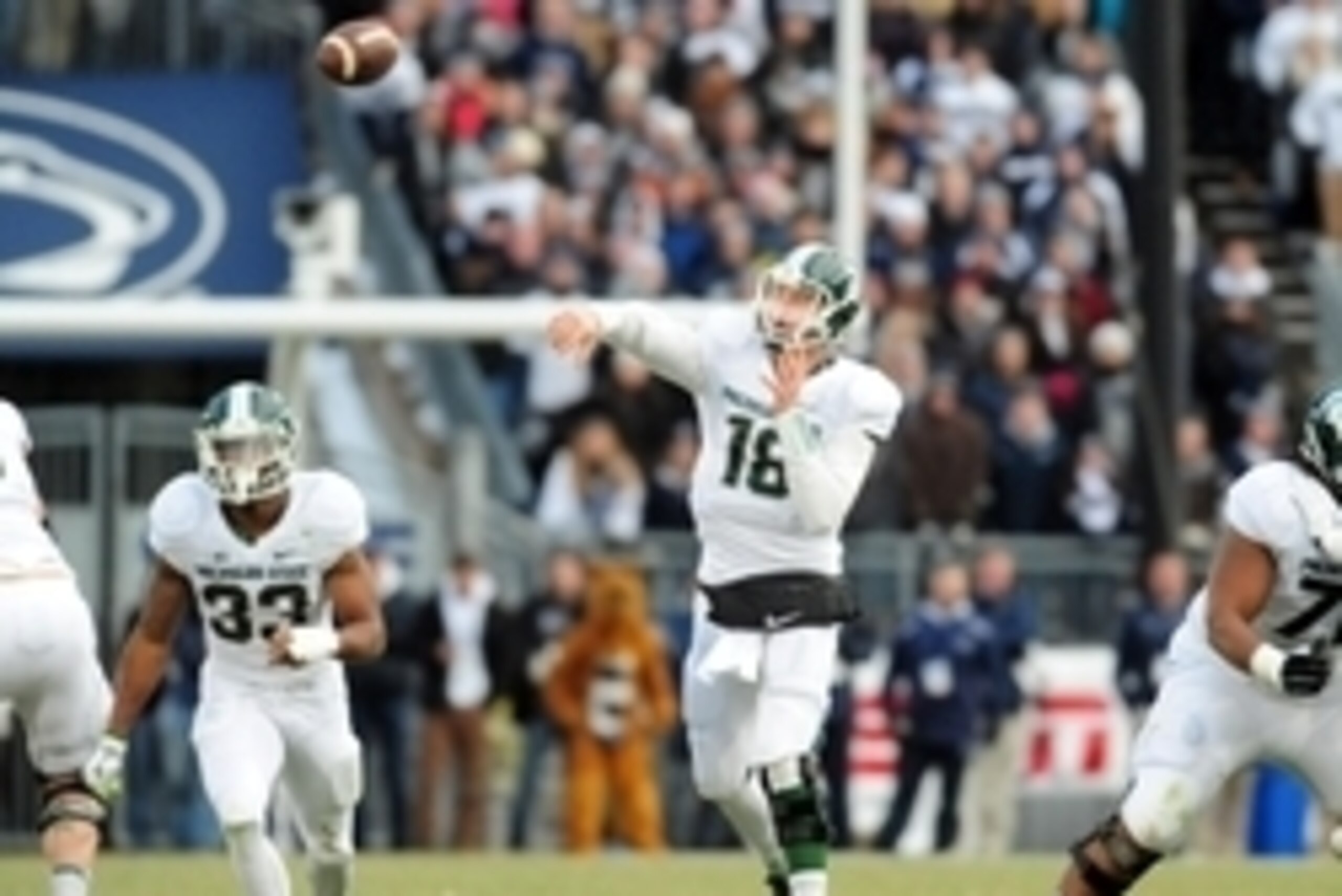
This is more entertaining on paper than reality. Michigan State has one of the nation's best offenses and its typical stellar defense, while Baylor has looked increasingly vulnerable down the stretch. The Bears allowed their last three opponents to scare them to varying degrees, with their defense falling apart and their offense forced to share too much of the load.
While still brilliant, Baylor isn't quite the world-beater it was in 2013 offensively. Football Outsiders' No. 11 ranking of the Bears was perhaps the most eye-opening facet of research I've done assessing bowl games. Given Mark Dantonio's recent bowl-game success—a must considering how bad he was early in his tenure—I give a semi-significant edge to the Spartans.
Score: Michigan State 42, Baylor 31
Fiesta Bowl: No. 20 Boise State vs. No. 10 Arizona
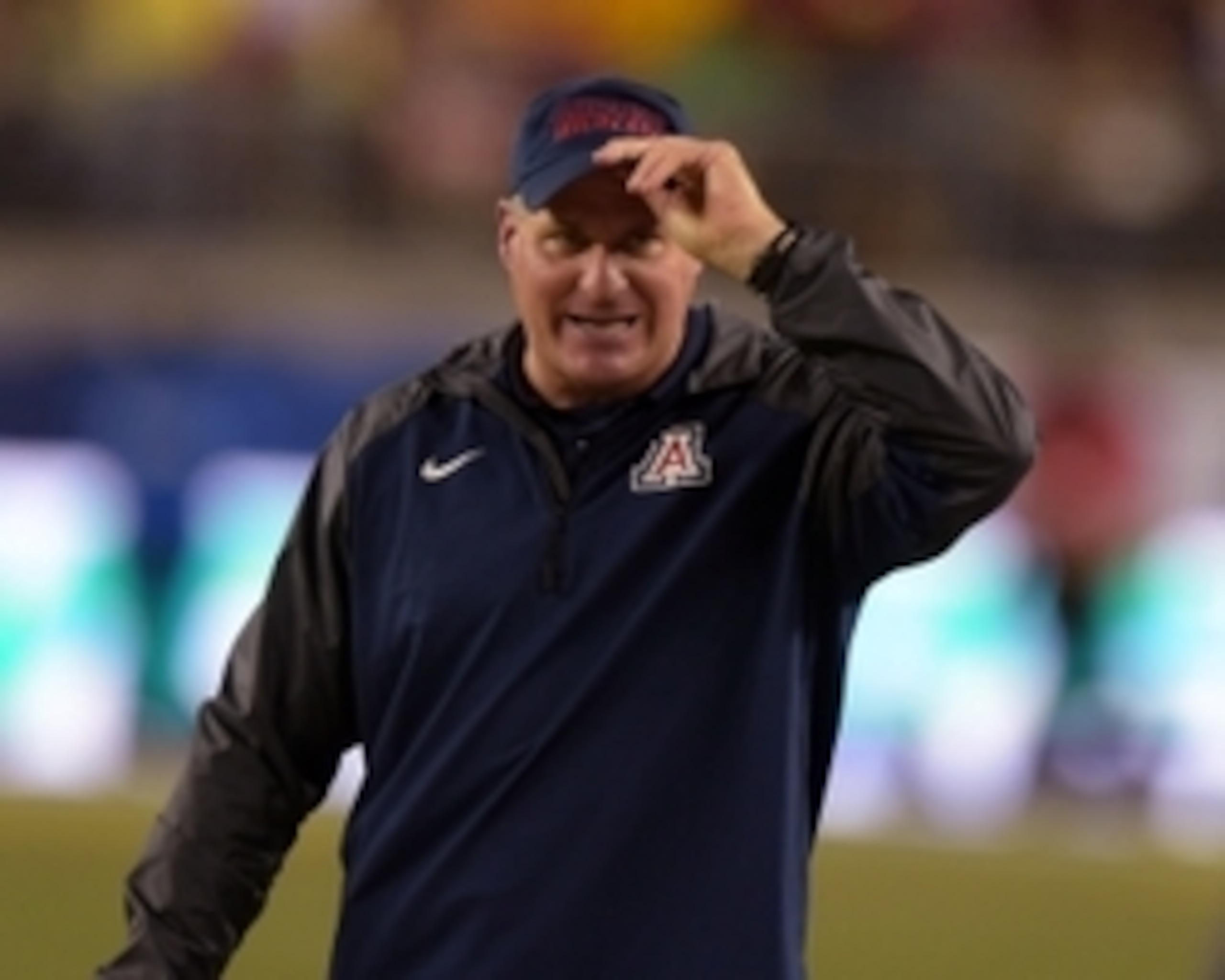
The worst of the six major games comes without much intrigue. Boise State could do its semi-regular thing of upsetting a Power Five team, but a win over Arizona is not nearly as transformative as the Oklahoma triumph from 2006. One could argue with a straight face that Boise State is a more established program on the national scale than Arizona, which is only in Year 3 of the Rich Rodriguez rebuild.
I tend to side with Power Five teams in these games for obvious reasons. We'll do the same here and cross our fingers Rodriguez can do the one thing he never did at Michigan: win a BCS (or whatever it's called now) game.
Score: Arizona 41, Boise State 24
Follow Tyler Conway (@tylerconway22) on Twitter.
.jpg?w=2560 "Malik Beasley Negotiating Plea Deal (AP)")

.jpg?w=2560 "Jonathan Taylor Landing Spots")
.jpg?w=2560 "Aikman Blasts Cowboys WR 🫣")