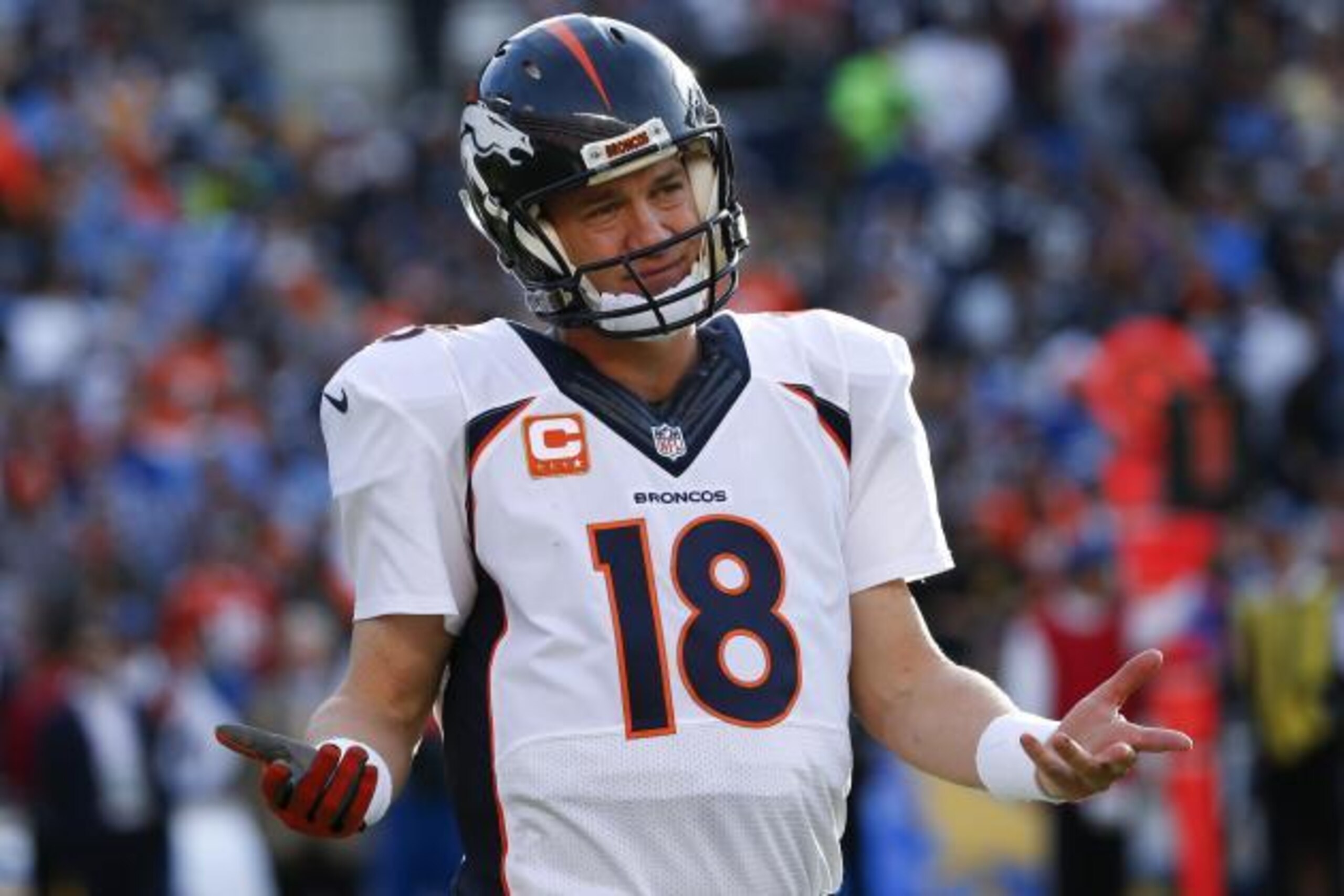

Manning and Broncos Offensive Line Struggle to Get on Same Page
For the Denver Broncos, Monday night's game against Cincinnati was supposed to provide answers. Instead, after an entertaining back-and-forth encounter that ended 38-27 in favor of the Bengals, they left with more questions—specifically how to get the best out of Peyton Manning and this offensive line.
The majority of the discussion surrounding this game over the coming week(s) will be centered on Peyton Manning.
While his performance was concerning for a number of reasons—namely uncharacteristically poor decision-making—minimizing the conversation to include only Manning's shortcomings would mean overlooking a number of concerning items for the Denver Broncos as a whole.
TOP NEWS
.jpg?w=2560 "Titans Giants Football")
OBJ Calls Out Giants After Release
Lamar Jackson Day-to-Day

Live Live: Updates from every NFL game
Against Cincinnati, the game plan for Denver would have been simple: Win the battle at the line of scrimmage and force Andy Dalton to beat you with his arm.

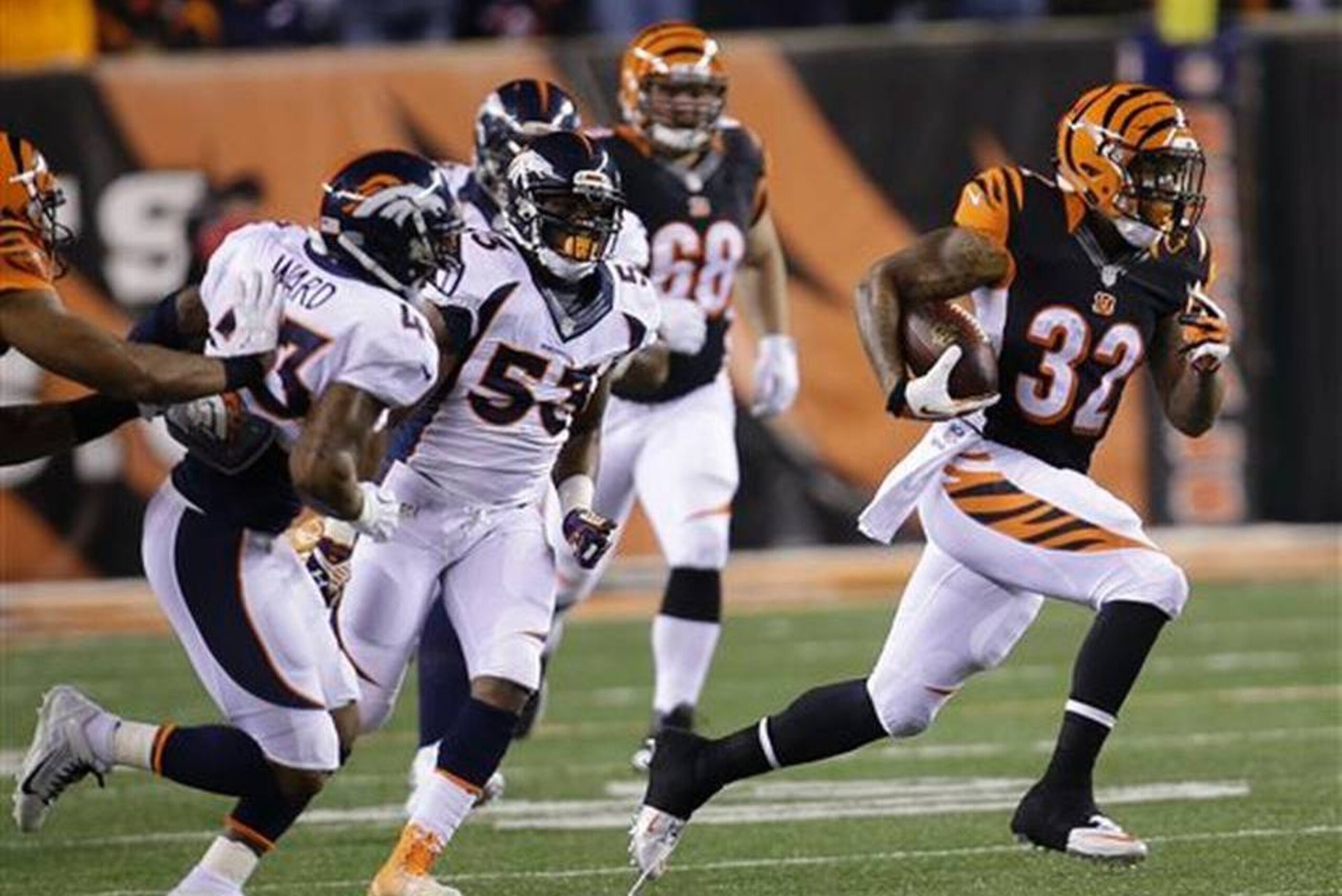
Given that Andy Dalton finished the contest 17-of-26 for only 126 yards, with A.J. Green a non-factor due to an arm injury sustained early in the first quarter, it shows just how unsuccessful the Broncos were against the Bengals on the ground.
Starting the game without Brandon Marshall, the team's leading tackler, and Danny Trevathan, the Broncos were already behind the eight ball against the sixth-best running game in the league.
Without two of their key run-stopping linebackers, the Broncos did their best impression of their opponent's 24th-ranked rush defense, allowing more yards on one Jeremy Hill rush (85) than they typically allow in entire contests (71.6).
According to Around the NFL writer Chris Wesseling, the Broncos allowed a total of 166 rushing yards in the first half alone—a feat that hasn't been matched by a Bengals team in over 15 years.
Concerning as it may be that the Broncos failed so abjectly at stopping the run, one of Denver's primary concerns going into the playoffs will be that this offensive line is unable to provide the sustained pass protection Manning needs to engage in pass-heavy play-calling.
During the four-week period in which the Broncos adopted a run-first mentality on offense, the offensive line appeared to have regained its composure. As implied by The Denver Post's Mike Klis, the Broncos O-line benefited from a more balanced offense that didn't require as much pass protection.
However, that's not the case. The Broncos O-line isn't benefiting from a more balanced approach but from a run-heavy one. In the three weeks building up to the Cincinnati game, the Broncos ran the ball 112 times to only 74 passes.
Where Klis is correct, however, is that Manning and his offensive line are clearly out of sync. When the team's passing game is on, its offensive line and running game is off.
When the Broncos commit to the run, Manning struggles to find a rhythm and his play is sub-par. For a team with Super Bowl aspirations, that's extremely concerning.
This dilemma has never been more clear than against Cincinnati. On the last drive of the second quarter through the end of the third, Manning went 16-of-20 for 215 yards and the offense scored three touchdowns. However, as a result of that pass-heavy play-calling, the offensive line disintegrated.
Against the worst pass-rushing team in the league, the Broncos offensive line allowed two sacks and eight quarterback hits. Most notably, defensive end Carlos Dunlap was beating right tackle Louis Vasquez so often that ESPN's color analyst Jon Gruden frequently questioned why the Broncos weren't giving him any help.
To be fair to Vasquez, perennial Pro Bowler Ryan Clady wasn't doing much better. When he wasn't stopping the pass rush, he was conceding a number of crucial holding penalties, one of which negated a 30-plus-yard pass to Demaryius Thomas.
Over the year, two things have become crystal clear about Manning. Under pressure, he is a completely different quarterback. According to Pro Football Focus (h/t The MMQB's Greg A. Bedard), in the games where Manning is pressured on over 20 percent of dropbacks, he has thrown six interceptions. After Monday's performance, make that 10.
Secondly, when Manning throws more than 40 passes in a game, his QB rating takes a nosedive and his mistakes go through the roof. In games in which he has thrown fewer than 40 passes, Manning's QB rating is 117.3. In games where Manning throws more than 40 passes, his rating drops to 87.6.
Additionally, 13 out of his 15 interceptions this year came from games in which Manning has thrown more than 40 passes.
Whether that is down to reduced arm strength, age or poor offensive-line play is a matter of conjecture. What is not up for debate, however, is that if the Broncos want to win when it matters, head coach John Fox and the coaching staff have to find a balance that works for all parties—not just one or the other.
If you want to talk sports, hit me up on Twitter, @Alex_W_Price.



.jpg?w=2560 "Saquon Out for Game")
