Auburn Football: Can a Great Defense Coexist with Gus Malzahn's Offense?
AUBURN, Ala. — There's no doubt what Auburn's strength will be as long as Gus Malzahn roams its sidelines.
The sweater-vested, bubble gum-chewing, glasses-wearing Arkansas native rose from high school assistant to SEC-winning head coach in a little over two decades because of his offensive brand of football.
Malzahn literally wrote the book on how to win with a no-huddle offense.


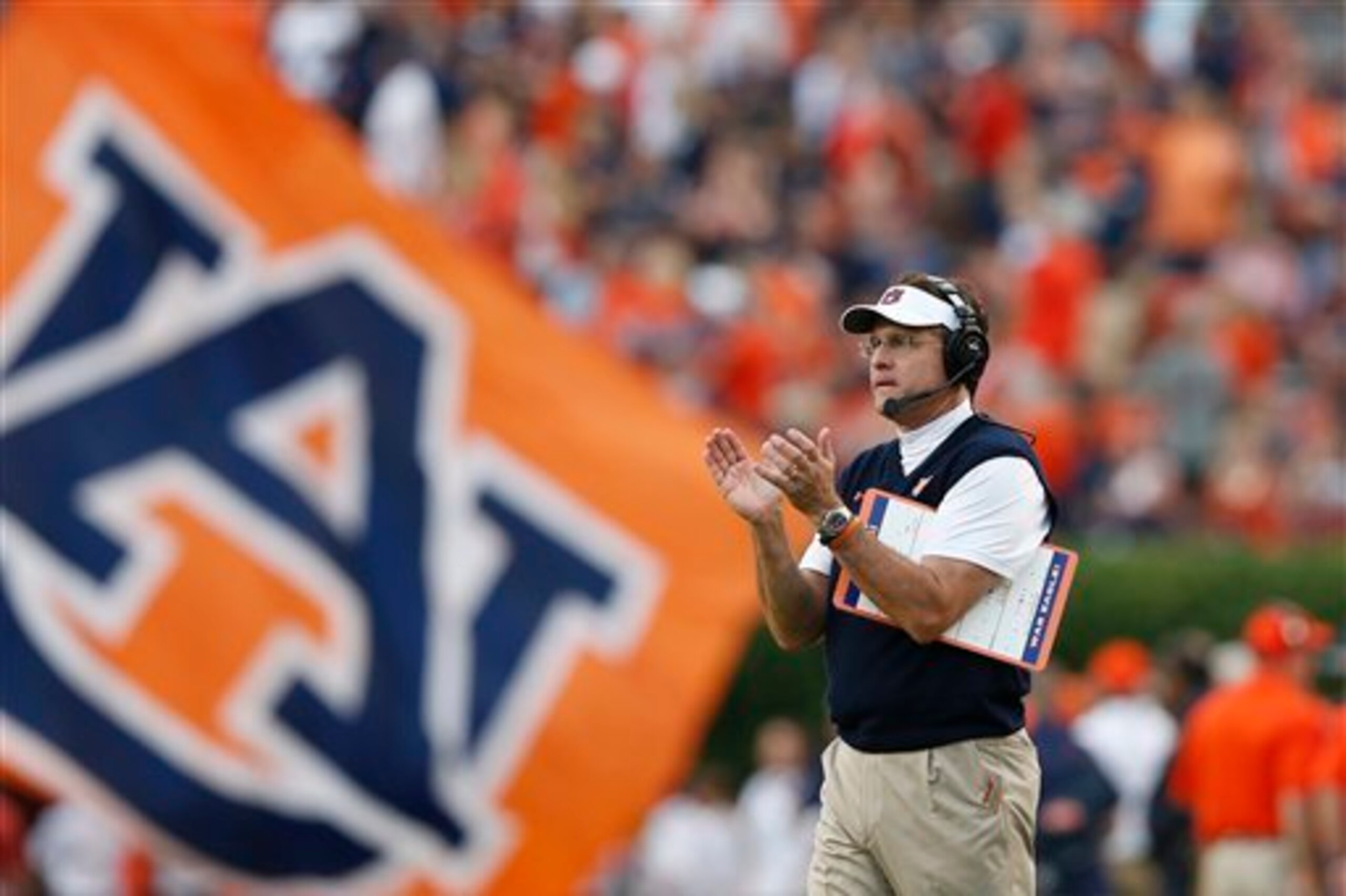
But throughout Malzahn's second season as Auburn's head coach, the other side of the ball has gotten all the attention on the Plains—and not in a good way.
Although the Tigers made several improvements in major defensive categories from a season that ended with an SEC title and a close loss in the national championship game, there will be a new defensive coordinator on the Plains after an 8-4 regular season:
| Yards per Game | 388.7 (61st) | 420.7 (87th) |
| Yards Allowed per Play | 5.6 (73rd) | 5.9 (95th) |
| Passing Yards per Game | 239.2 (85th) | 257.7 (102nd) |
| Rushing Yards per Game | 149.5 (46th) | 163.0 (63rd) |
With Malzahn firing Ellis Johnson after a year that the Tigers actually put up better defensive stats, it is apparent the Auburn head coach wants to see a big change from the other side of his roster.
But how much can Malzahn and fans of his team expect defensively out of a team that wants to score quickly and run as many plays as possible? Does elite balance between these two seemingly opposing agendas exist for other teams?

Ole Miss
Well, a quick glance at a school one state over doesn't look so encouraging for those hopes.
The Ole Miss Rebels were early-season contenders for the SEC West crown after defeating Alabama and finished the regular season with the country's top scoring defense and 13th-best total defense.
However, after leading the SEC in plays per game in 2012 and 2013, the Rebels went from averaging 78 plays per game to just 70 in 2014.
It was all by design, as Ole Miss head coach Hugh Freeze looked to lean on his swarming "Land Sharks" defense to get Ole Miss into national-title contention.
Freeze told The Clarion Ledger's Hugh Kellenberger in October:
"You're more concerned now with not putting yourself in the hole because of negative plays, whether they be turnovers or negative-two (yards) or negative-threes. When you go fast the possibilities increase as defenses catch up to it. … Last year we had quite a few negative plays in the tempo world that we're bad schematically against a call.
"
But while slower offense and better defense was the way in Oxford this season, another SEC West school—one that averaged around the same number of plays per game as Auburn did—got the best of both worlds while cranking up its offensive tempo.
Alabama
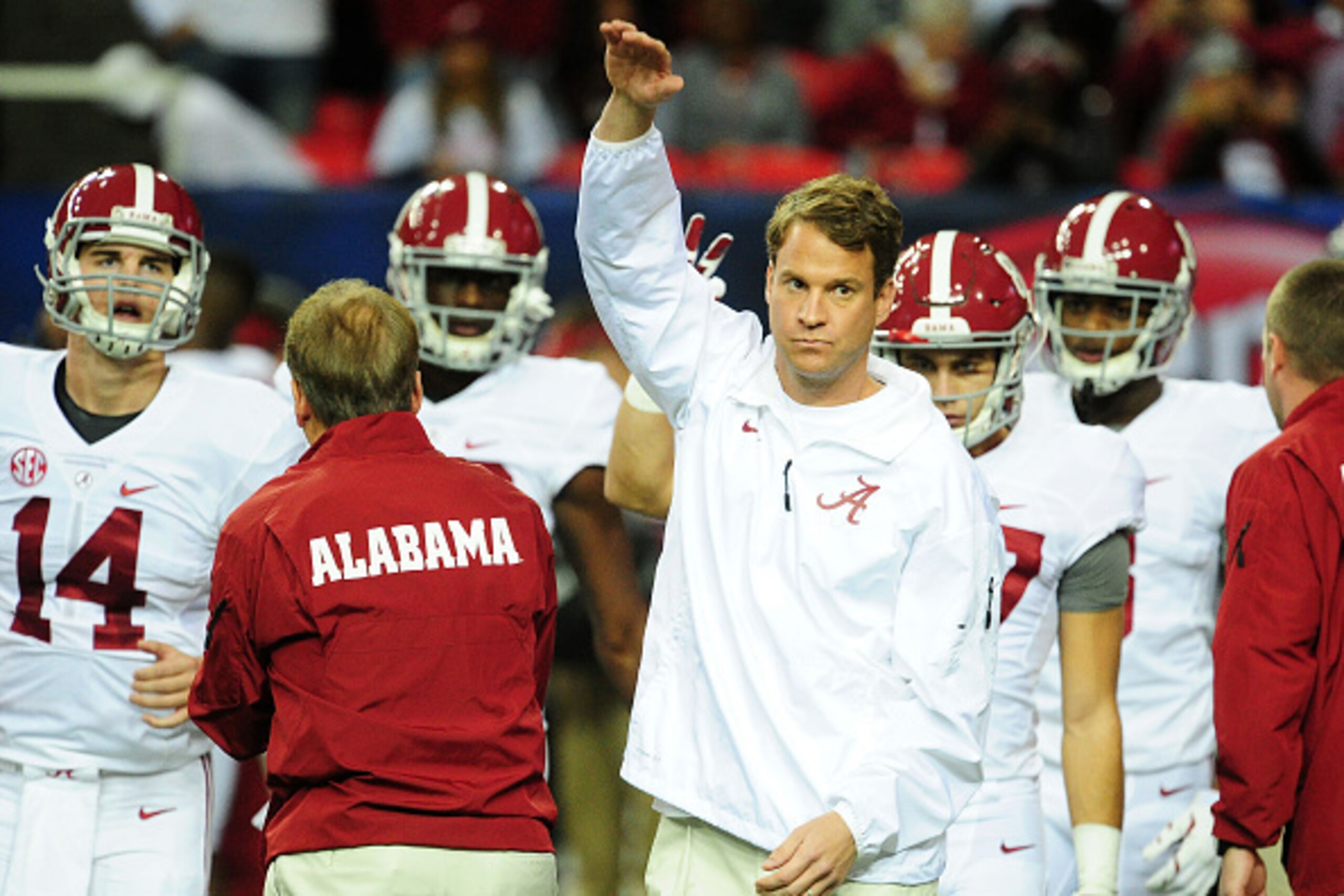
Under new offensive coordinator Lane Kiffin, Alabama experimented with the no-huddle look at times and finished the 2014 regular season with another SEC Championship and the No. 1 seed in the College Football Playoff.
According to average plays per game and Football Outsiders' Adjusted Pace—an advanced metric that "compares a team's plays per game to its expected plays per game (based on run-pass rates)"—Auburn and Alabama had similar offensive speed in 2014:
| Plays per Game | 72.75 | 72.92 |
| "Adjusted Pace" FBS Rank (Football Outsiders) | 39th | 50th |
| Offensive Yards per Game, FBS Rank | 17th | 16th |
| Defensive Yards per Game, FBS Rank | 61st | 11th |
Kiffin's new twist on the Alabama offense came at no detriment to Saban and Kirby Smart's defense, though, as the Crimson Tide actually improved in yards allowed per play from 4.83 in 2013 to 4.68 in 2014.
Saban might have been a vocal opponent of no-huddle offenses in the past, but his new offensive coordinator's use of it has gotten the defensive-minded coach's stamp of approval.
Saban said after the SEC Championship Game, per USA Today's Dan Wolken:
"We toyed with it early this season and it was a little bit of a work in progress getting to it, but because [quarterback Blake Sims] executes it so well and makes really good reads it’s been really beneficial to us. It’s what he does best and the rest of our players kind of fit in that too, and if we didn’t do it I don’t think we’d be here where we are right now.
"
Though Auburn's biggest rival ranked in the top 20 nationally in both offense and defense with a newer pace, Alabama is still far from a hurry-up, no-huddle program.

Clemson
For the best case of defensive success with a wide-open, spread-it-out offense, look at the top of the FBS's total defense leaderboard.
The Clemson Tigers led the nation in yards allowed per play and per game in 2014 while running an offense coached by Chad Morris, a Malzahn protege and the new head coach at SMU.
Although the Tigers ranked No. 62 in total offense due to a few key injuries throughout the season, Morris' unit still averaged three more plays per game than Malzahn's offense and ranked 13 spots ahead of Auburn in Football Outsiders' Adjusted Pace ranking.
A commitment to playing fast-paced offense didn't stop Clemson from becoming the nation's top defense this season.
Judging by the success up in Death Valley this season, Malzahn's fast-paced offensive philosophy shouldn't be a hindrance toward future success for Auburn's defensive coordinator.
No matter who is tasked with rejuvenating a dormant Auburn defense, one thing is for certain—the hurry-up, no-huddle style on the other side isn't going anywhere.
"When we get our tempo going at the rhythm, we really feel good about playing fast," Malzahn said in October. "That's who we are. Each coach does evaluations of each team in the offseason and all that, and we like to put the hammer down."
All quotes were obtained firsthand unless otherwise noted. All recruiting rankings and information courtesy of 247Sports. All stats courtesy of cfbstats.com.
Justin Ferguson is Bleacher Report's lead Auburn writer. Follow him on Twitter @JFergusonAU.
.jpg?w=2560 "Jaguars Colts Football")
.jpg?w=2560 "Malik Beasley Negotiating Plea Deal (AP)")
.jpg?w=2560 "Aikman Blasts Cowboys WR 🫣")

.jpg?w=2560 "Jonathan Taylor Landing Spots")