What Percy Harvin Injury Means for Future with Jets
The New York Jets will be making plenty of big decisions over the next few months, starting with which players they want to retain from this mess of a season as they try to get this "delayed" rebuild off the ground.
One of the biggest decisions they will have to make is on wide receiver Percy Harvin, acquired in a trade from the Seattle Seahawks last October for a conditional fourth-round selection.
The Jets were likely hoping to use the remainder of their lost season to evaluate Harvin on and off the field before making any kind of long-term investment in him, but given the indicated severity of the ankle injury he suffered against his former team, the Minnesota Vikings, the Jets may have been given all of the intel they are going to get.
.jpg?w=2560 "Commanders 49ers Football")
.jpg?w=2560 "Colts Football")
.jpg?w=2560 "DOLPHINS-AIKMAN")
Harvin's situation is complex for several reasons: For one, he has carried with him a reputation of being a bit of an off-field headache, literally and figuratively.
Between constant migraines that sidelined him early in his career to apparently dividing the locker room in Seattle, Harvin's constant movement between teams in such a little amount of time is alarming. Injuries, including a torn labrum that kept him out for the vast majority of the 2013 season, have been equally as concerning.
On the field, Harvin can be a difficult player to plan for—not just to defend. Smaller in stature, Harvin is a misfit as an outside receiver but has a level of explosiveness and playmaking ability few can match. Traditionalist offensive coordinators need not apply to coach a player like Harvin.
Still, a team as starved for talent as the Jets is in no position to be picky when it comes to adding game-changing players. Now that the Jets have had a sample of what life with Percy would be like, what, if any, type of investment should they make in him?
The Price
| Calvin Johnson | Detroit Lions | $16,207,143 |
| Larry Fitzgerald | Arizona Cardinals | $16,142,857 |
| Percy Harvin | New York Jets | $12,849,000 |
| Mike Wallace | Miami Dolphins | $12,000,000 |
According to Rotoworld, Harvin is set to make $10.5 million next season followed by salaries of $9.9, $9.95 and 11.5 million in 2016 and beyond. As good of a player as a healthy Harvin is, he's not nearly as productive as his these numbers would suggest.
As it stands now, Harvin is the third-highest paid receiver in the league, behind only Calvin Johnson and Larry Fitzgerald, according to Over the Cap.
The Jets, however, are not committed to paying out any more of Harvin's salary beyond this season. If released, the Jets pay no cap penalty—surely a major reason why the Seahawks were finally able to move him.
| 2014 | $6,470,588 | $6,470,588 | $6,470,588 |
| 2015 | $10,500,000 | $0 | $0 |
| 2016 | $9,900,000 | $0 | $0 |
| 2017 | $9,950,000 | $0 | $0 |
| 2018 | $11,150,000 | $0 | $0 |
Essentially, the Jets can either pay Harvin as his contract stands (unlikely), try to renegotiate a more reasonable contract (most likely) or flat-out move on from him after the season. Assuming he stays in power, general manager John Idzik would like to get more out of a sixth-round pick he traded than just a rental gadget receiver on a losing team anyway.
The Jets brought in Harvin the day after falling to 1-6. Their postseason hopes were nonexistent—bringing in Harvin at this point gave the Jets an evaluation period before investing any kind of money into such a unique offensive talent with so many injury and off-field question marks.
On-Field Value

The Jets offense was anything but "fixed" upon Harvin's return, but there is no doubt that they were a more productive team that was more difficult to defend with him in the fold.
In terms of yardage, Harvin has enjoyed one of the most productive stretches of his career since joining the Jets. His 129-yard performance against the Kansas City Chiefs was a career-high. He scored his first touchdown about a month later against his former team (Vikings) to cap off a 124-yard performance.
The Jets have made good use of Harvin's abilities because, unlike the Seahawks, they have been willing to use him both as a classic receiver and a "gadget" player. Harvin has rewarded the Jets' belief in his ability to be a complete receiver by making big plays on the sideline:
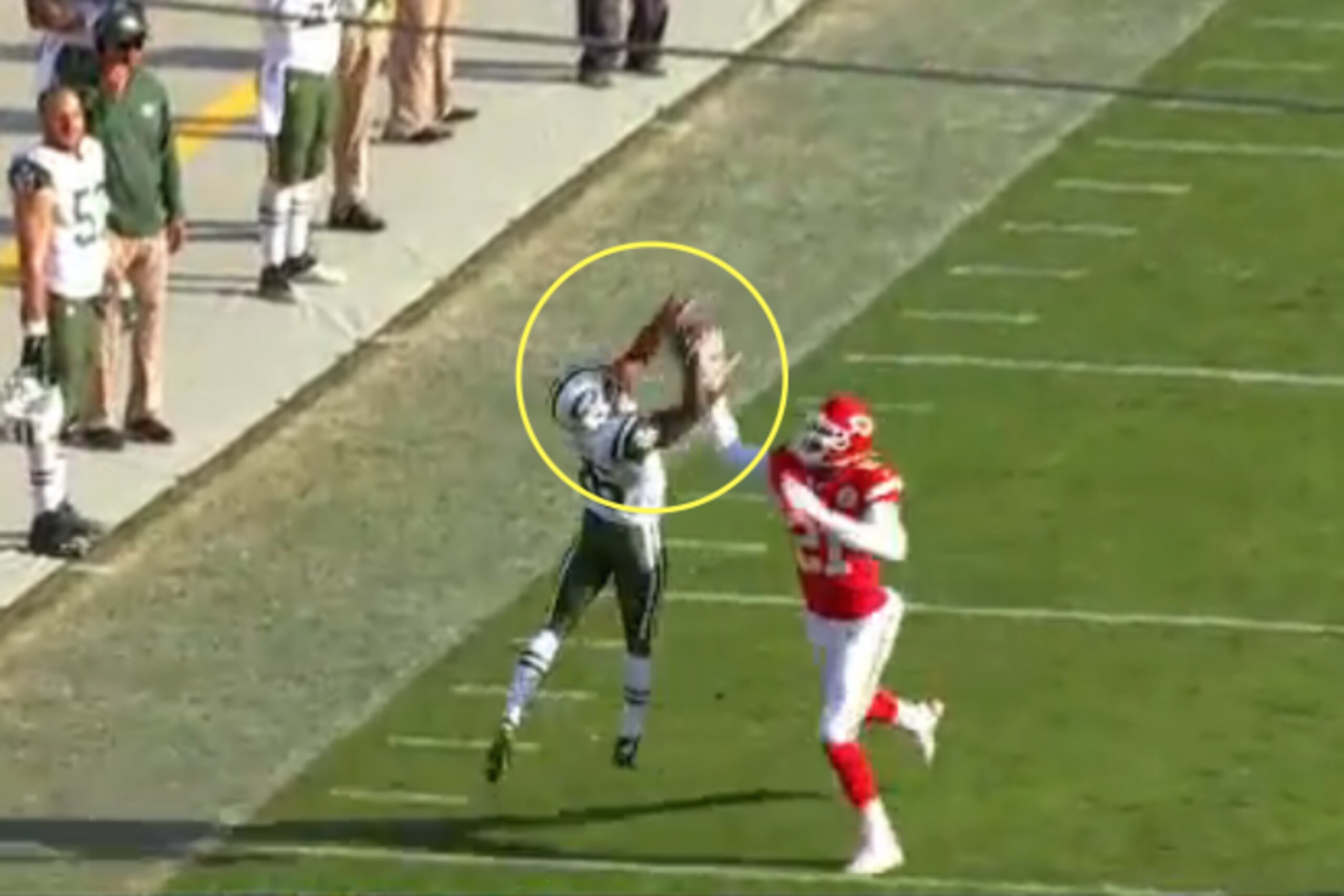
Harvin may appear to fit like a glove in Marty Mornhinweg's offense, but there is no telling whether he will make the same seamless transition into a new offense following inevitable changes to the coaching staff.
Essentially, the Jets will be unable to make an informed decision on whether to invest in Harvin until they finalize their coaching situation and establish an offensive philosophy. Plus, retaining Harvin prematurely may alienate some coaching candidates who don't view Harvin in the same light as Mornhinweg and Rex Ryan do.
What to Invest?
Assuming next year's coaching staff is happy to have Harvin on board and uses him in a similar way that this administration has, Harvin would be worth big-time money to the Jets or any other team—if injuries were not such a massive concern.
Just when everything appeared to be clearing up for Harvin, the Jets were staunchly reminded that the true danger of bringing him in has nothing to do with his character or ability. Simply put, he has not been nearly reliable enough from a health standpoint for a team to see a return on its heavy investment, as evidence provided by SportsInjuryPredictor.com indicates:
| 2014 | Ankle | TBD (likely 4) |
| 2013 | Hip | 15 |
| 2012 | Ankle | 4 |
| 2012 | Shoulder | 2 |
| 2011 | Rib | 1 |
| 2011 | Rib | Practices |
| 2010 | Head | 2 |
| 2010 | Ankle | 1 |
| 2010 | Hip | 1 |
| 2009 | Head | 1 |
| 2009 | Shoulder | 1 |
In addition to six documented injuries in college, Harvin has suffered an alarming rate of ailments during his time in the NFL—a trend that has shown no signs of changing anytime soon.
No sane team is going to hand Harvin a deal anywhere near what he is scheduled to make—but a team in need of playmakers would certainly be willing to bring him on board for a manageable price.
Heck, a team would be willing to pay for Harvin if it knew it could count on him on a week-to-week basis—which makes an incentive-laced contract more than sensible in this situation. Having him in the building with his rights on hand, the Jets will have every chance possible to retain him on a more manageable and value-centric contract.
It is nearly impossible to determine exactly how likely it is we will see Harvin wearing Jet green next season without knowing what management changes will be made. As long as Harvin is willing to concede the type of risk he is from an injury standpoint, hammering out an incentive-heavy deal that ranks in the upper-echelon of receivers—that reflects his ability—is more than possible.
Advanced statistics provided by ProFootballFocus.com (subscription required).
.jpg?w=2560)
.jpg?w=2560 "NFL Paris Football")

.jpg?w=2560 "Malik Beasley Negotiating Plea Deal (AP)")