Eagles Secondary Remains a Primary Concern Heading into Stretch Run
Seattle Seahawks wide receiver Doug Baldwin had Philadelphia Eagles safety Malcolm Jenkins spinning in circles on a 23-yard touchdown catch, a scoring play that proved to be the final nail in the coffin on Sunday. All told, it was just one of six completions of 20 yards or more against the Birds during a 24-14 defeat at the hands of the defending world champions.
Different week, same familiar result.
| Stats | 258.1 | 26 | 10 | 91.1 |
| Rank | 26th | 28th | 21st | 18th |
.jpg?w=2560 "Commanders 49ers Football")
.jpg?w=2560 "Colts Football")
.jpg?w=2560 "DOLPHINS-AIKMAN")
Philadelphia has been getting burned for big plays in the passing game like no other this season, leading the NFL comfortably in 20- (58) and 40-yard completions (14) surrendered—perhaps the main reason for concern over the Eagles’ chances of embarking on a deep playoff run this January.
Jenkins has been one of the few individuals largely above reproach this season in Philly’s 26th-ranked pass defense, but the sixth-year veteran played his worst game as an Eagle versus the Seahawks. According to the game charters at Pro Football Focus (subscription required), Jenkins was abused for nine receptions on 11 targets for 111 yards and Baldwin’s score, perhaps offering a glimpse as to why the New Orleans Saints opted to let him walk during the offseason.
But Jenkins has been far from the problem all season long. The honors go to starting cornerbacks Bradley Fletcher and Cary Williams, who take turns as the whipping boys on the outside, along with safety Nate Allen, having been on the hook for a handful of those long-gainers, including the 85-yard backbreaker in the final minutes of a 24-21 loss to the Arizona Cardinals in Week 8.
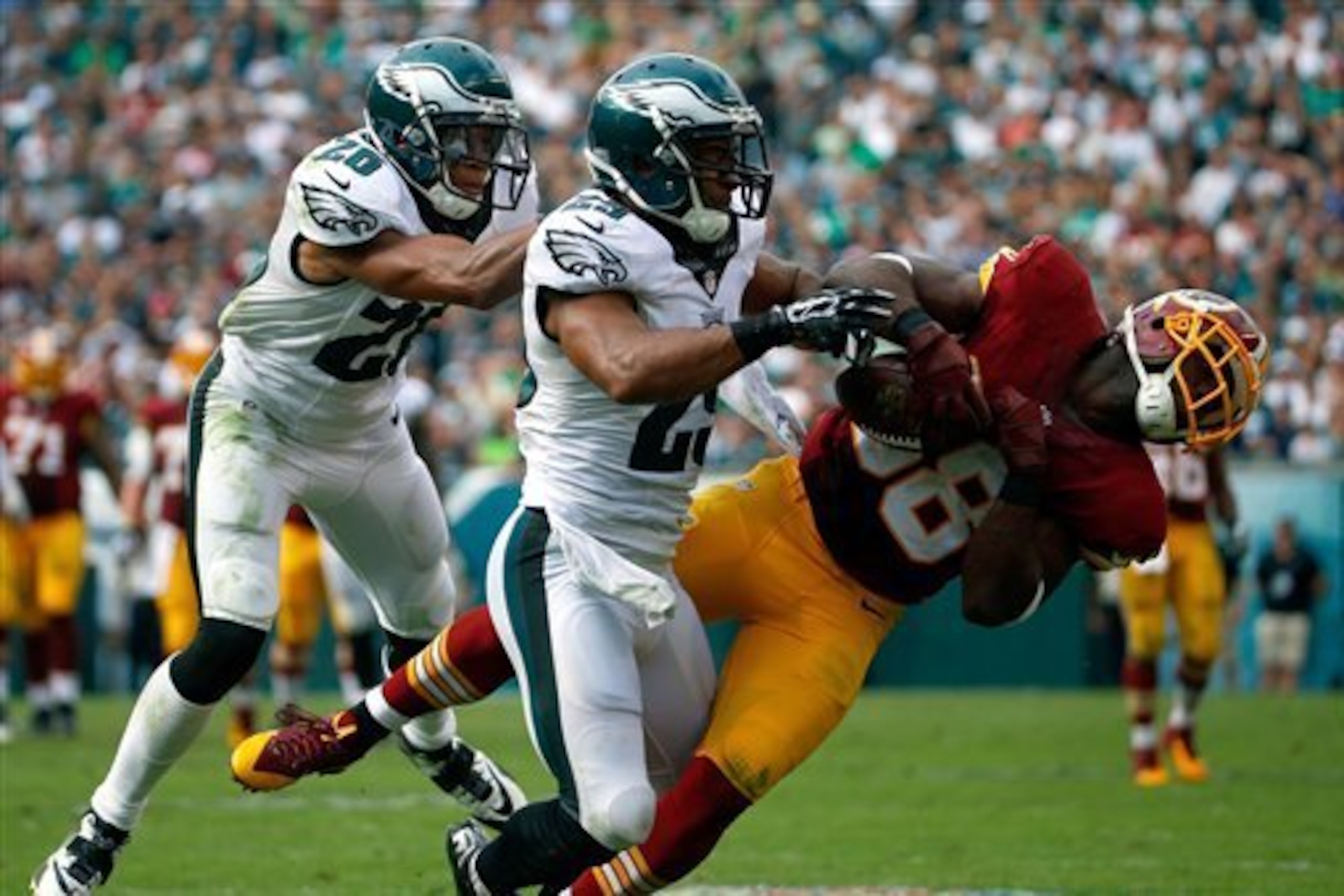
You know, the usual suspects. With the exception of Jenkins, and corner Nolan Carroll pitching in on dime personnel, Philadelphia’s defensive backfield remains intact from a season ago, when the unit finished 32nd versus the pass.
Obviously, the secondary must play competently at least some of the time, because the Eagles have managed to reach nine wins so far, well within striking distance of a playoff spot. In fact, Fletcher, Williams and Allen all do draw praise from time to time, for instance for their performances over the likes of the Carolina Panthers, Tennessee Titans and Dallas Cowboys in recent weeks.
Usually such strong efforts can be traced to other factors.
When the Eagles offense manages to build big leads, it forces opponents to put the ball in the air. And once offenses become one-dimensional, they become susceptible to Philadelphia’s dominant pass rush, which is second in the NFL with 44 sacks this season.
| Wk 2 @ IND | A. Luck | 20/34 | 172 | 3/1 |
| Wk 8 @ ARZ | C. Palmer | 20/42 | 329 | 2/0 |
| Wk 11 @ GB | A. Rodgers | 22/36 | 341 | 3/0 |
| Wk 14 vs. SEA | R. Wilson | 22/37 | 263 | 2/0 |
There’s something else at work here, too. The Eagles secondary feasted on inferior quarterbacks and inferior wide receivers in many of their best outings of 2014. The unit has fared quite differently against the likes of the Seahawks or Green Bay Packers, teams with established signal-callers.
Russell Wilson completed 22 of 37 passes for 263 yards and two touchdowns for Seattle on Sunday, one of the passer’s most prolific games through the air this season. Aaron Rodgers was razor-sharp in Green Bay, completing 22 of 36 passes for 341 yards and three touchdowns in the Packers’ 53-20 victory back in Week 11. Neither player committed a turnover.
This is especially problematic because these two teams are widely considered the class of the NFC, or favorites to go to the Super Bowl. That means the road to the Lombardi Trophy likely goes through one or both—and the Eagles have presented little evidence they are capable of stopping either offense.
Sadly, there aren’t really a bevy of other options available, either.
Brandon Boykin is about as good a slot corner you will come across, but this coaching staff has been hesitant to put him in a starting role, mostly due to his size (5’10”). The third-year player has also struggled in spots himself this season, despite finishing 2013 tied for second in the NFL with six interceptions.
Carroll—a free-agent addition from the Miami Dolphins—seemed to be jockeying for Fletcher’s job in training camp but was set back by an injury and has since been relegated to the dime package. There’s no indication Carroll will be taking over for anybody any time soon.
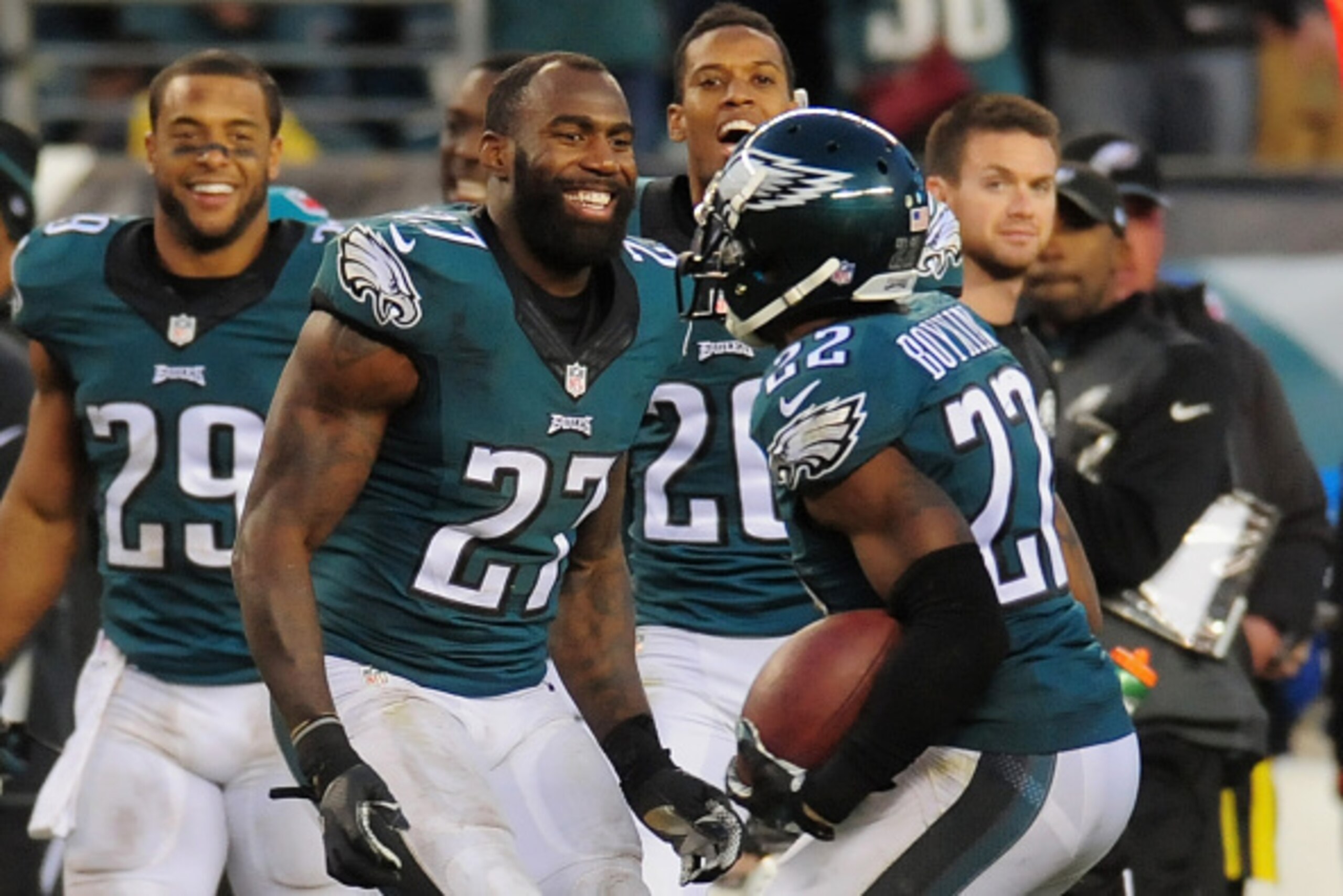
Bill Davis said not to expect any changes at cornerback as far back as early October, when the defensive coordinator told Reuben Frank for CSNPhilly.com the Eagles didn’t have other options—seemingly a swipe at Boykin and Carroll: “If there’s a change that should be made, I promise you I’d make it, but right now, there’s really not a move to make.”
The situation is even grimmer at safety, although Allen has actually played well minus a few memorable lapses. Still, there are definitely no other options there since second-year player Earl Wolff went on injured reserve with a knee injury.
Philadelphia’s secondary is what it is, is what we thought it was before the season began. It’s a perfectly acceptable unit when things are going well and the Eagles are playing with the lead or getting pressure on the opposing quarterback.
But you can’t hide your secondary in the playoffs, not against guys like Wilson and Rodgers, who have proven they can pick this group apart with relative ease. If you’re looking for reasons why the Eagles may not be long for the tournament once it begins in January, you needn’t look much farther than this defensive backfield.
.jpg?w=2560)
.jpg?w=2560 "NFL Paris Football")


.jpg?w=2560 "Malik Beasley Negotiating Plea Deal (AP)")