Hasta la vista, Michael Jordan. Kobe Bryant has other NBA giants to catch.
Like Karl Malone and Kareem Abdul-Jabbar.
Possibly.
TOP NEWS
.jpg?w=2560 "NBA Gambling Charges")
Malik Beasley Negotiating Plea Deal (AP)

Yaxel: Luka Not MJ 🗣️
Knicks, Spurs On Wrong Side of History
Not one for harping on accomplishments passed, Bryant is undoubtedly done looking at Jordan. He usurped the six-time champion on the Association's all-time scoring list, where he now sits third with 32,310 points, behind only Malone and Abdul-Jabbar.
For old time's sake, here's how the Bryant-Jordan debate looks at the moment:

Jordan also had this to say on Bryant's scoring accolades, per The Associated Press' Steve Reed:
Fans, players and coaches alike made sure Bryant basked in the moment Sunday night as well:
Moment's over.
Though Bryant's time with the Los Angeles Lakers is nearing its conclusion, he still has plenty of shots left in that 36-year-old body of his. More importantly, he has plenty of points left to score.
Will he be able to pump in enough to leave either or both of the two legends ahead of him in the dust? Or is it more likely that he'll remain permanently situated at No. 3, until he's the ghost another bucket-getter is chasing?
Let's make like an on-air weatherman with a degree in floral management and guess the answer.
Catching Karl
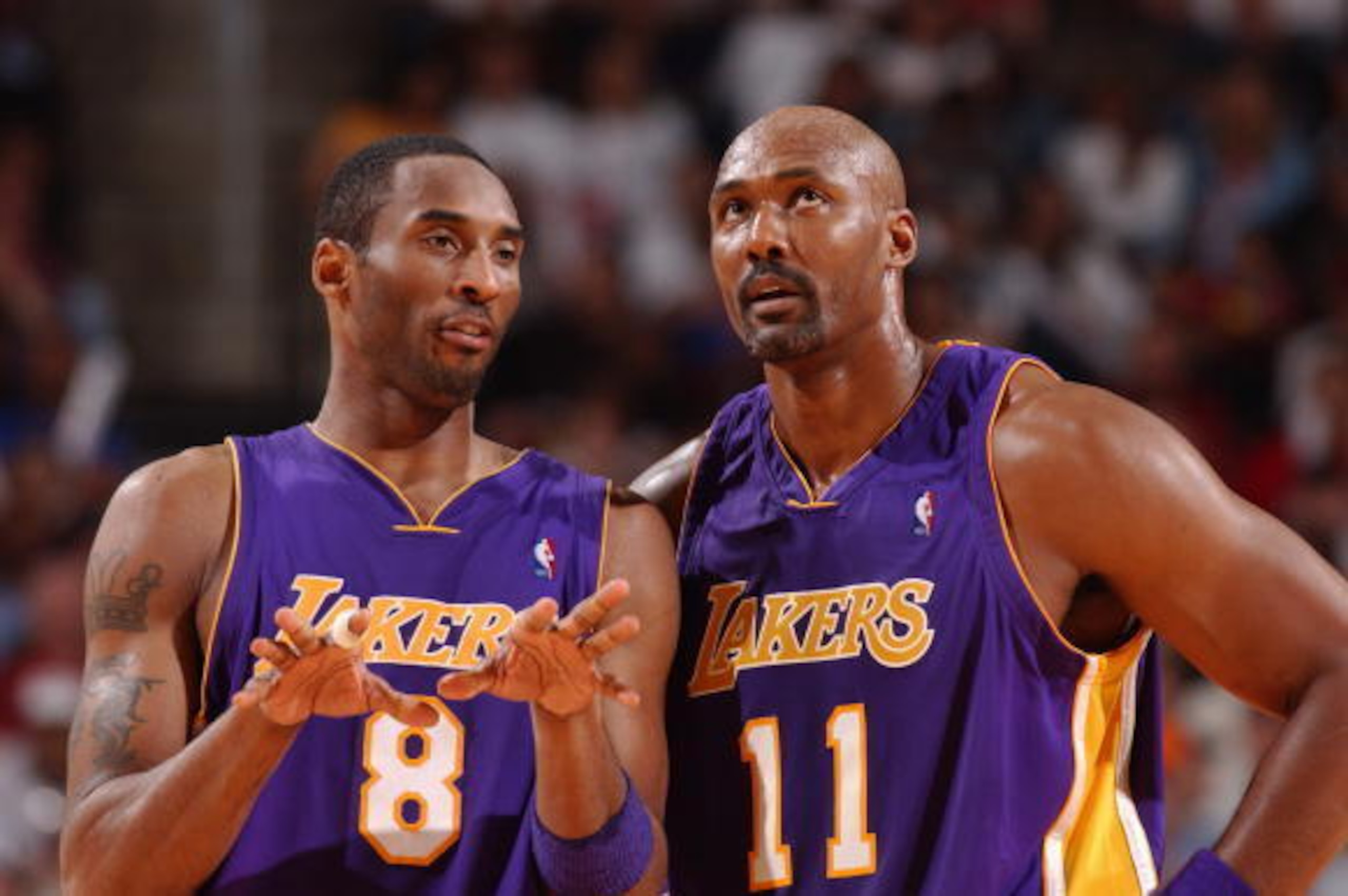
Malone ranks second on the all-time scoring docket. It took him only 19 seasons to amass 36,928 points, a figure aided by the fact that he missed just 10 regular-season contests through his first 18 campaigns. (Yes, you read that right.)
Bryant will remain well short of that mark when he finishes 2014-15, which is also his 19th season. Right now, he trails Malone by 4,618 points. If we assume he averages 25 points per game—not unreasonable considering he's north of 25 now—it would take him 185 contests to snatch second place.
Even if we were to also assume that he'll play in every game between now and the end of next season, this means he would have to play beyond his current contract. There are 58 games left in 2014-15, so he could appear in 140 at most before next summer.
If the goal is to surpass Malone before the end of next year, Bryant would have to go bonkers. To total the necessary points in the given time would require him to average about 33 points per game. And that is, again, banking on him appearing in every game.
While Bryant has eclipsed 30-point benchmarks in the past—three times—it's been nearly 10 years (2006-07) since he last did so. No player over the age of 32 has ever averaged more than 30 points per game either.
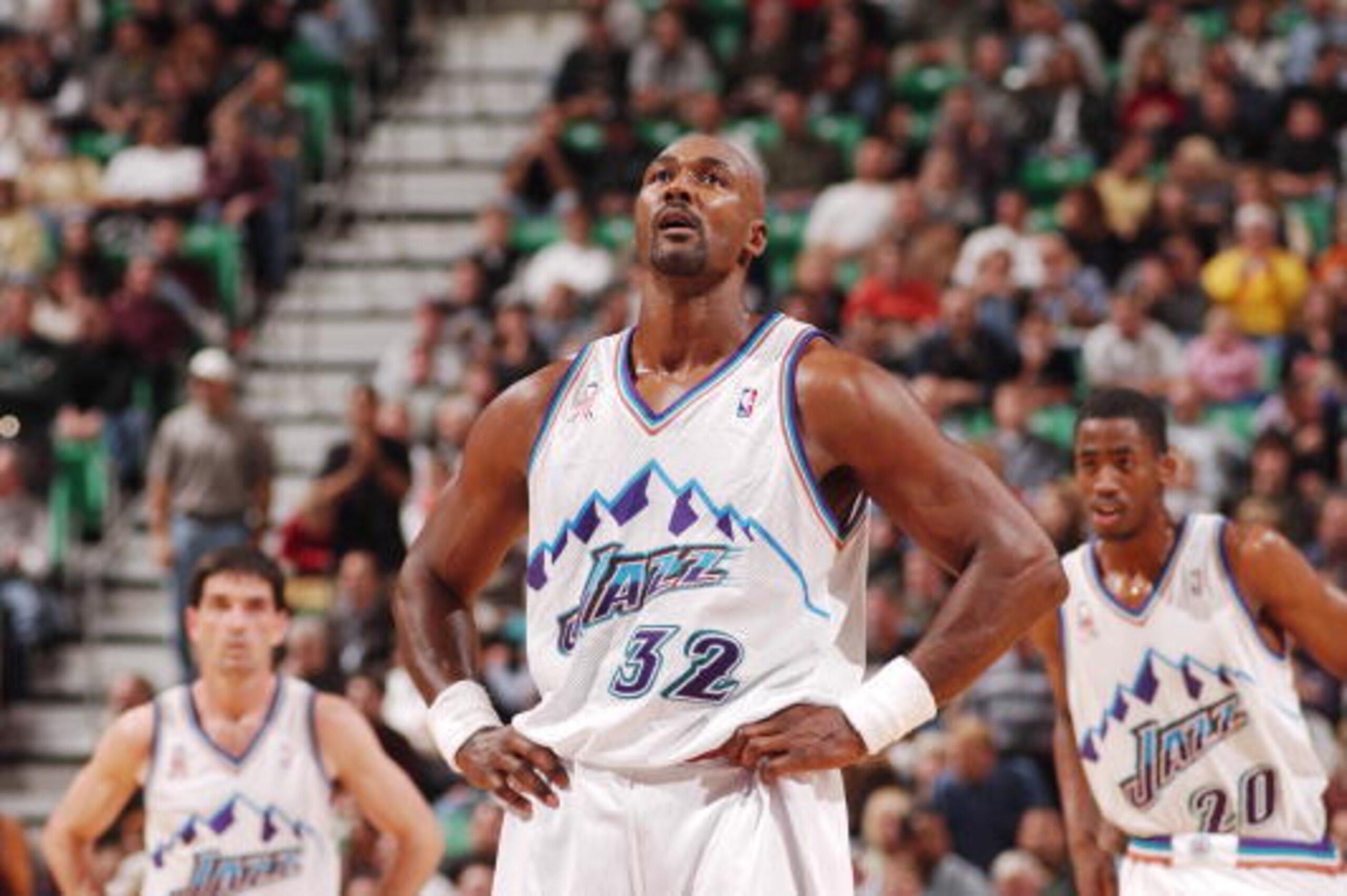
Passing Malone, then, demands that Bryant play into 2016-17, giving himself another 222 tilts to bolster his point totals. If he was to play in each one of those games, he would have to average a very reasonable 20.9 points.
Is that possible?
The success that Malone experienced at a similar stage of his career implies it is. He played through five seasons, appeared in 366 games and tallied 7,982 points after his 36th birthday.
Minutes come into play here, though. Malone only had 14 seasons of wear and tear on his body by the time he turned 36; Bryant had 18 to his name when he turned 36 this past August, and the minute differentials are staggering as a result:
Having logged 4,000-plus more regular-season minutes than Malone—and more than 7,000 more overall—it's difficult to see Bryant duplicating his counterpart's post-36 longevity.
No NBA player has made it through more than 21 seasons, and Bryant will only be the fifth to last at least 20. Matching Malone's after-36 season total would force him to play three more after 2015-16, giving him 23 for his career. That's unrealistic.
There's also the matter of production. Look at how Malone's numbers declined during his final five seasons:
Aging players typically don't improve. Though Bryant's usage rate has skyrocketed in light of the Lakers' situation, history tells us that's going to change. If the team adds another superstar in the near future, his numbers could plummet, much like Malone's did in 2003-04, when he played for a superstar-stuffed Lakers squad that included Bryant, Shaquille O'Neal and Gary Payton.
Still, because we're idealists, Malone can serve as a beacon of hope. He averaged around 73 regular-season appearances per year after turning 36. Let's say Bryant averages 70 appearances. And let's also say he plays at least one more year after his current contract expires—even though he intimated otherwise in November.
"Nah, not really,” he said when asked if he can envision playing beyond 2015-16, per USA Today's Sam Amick.
Too bad. We're (theoretically) prolonging his career for him.
Reaching 70 appearances this season dictates he have 47 more in the tank. Those 47, plus 140 for the next two years, gives him another 187 games to score.
Below you'll find a vast array of scoring-average options for those remaining contests, in addition to how many points that means he'll have registered for his career. Note that Malone's 36,928 touchstone is also charted for reference:
Sustaining an average of 25—24.7 to be more exact—points per game would be Bryant's sweet spot. Malone himself notched 21.8 points per night during his final five years. It's not insane to see Bryant, assuming health, exceed his offensive production and, inevitably, his point totals.
Catching Kareem
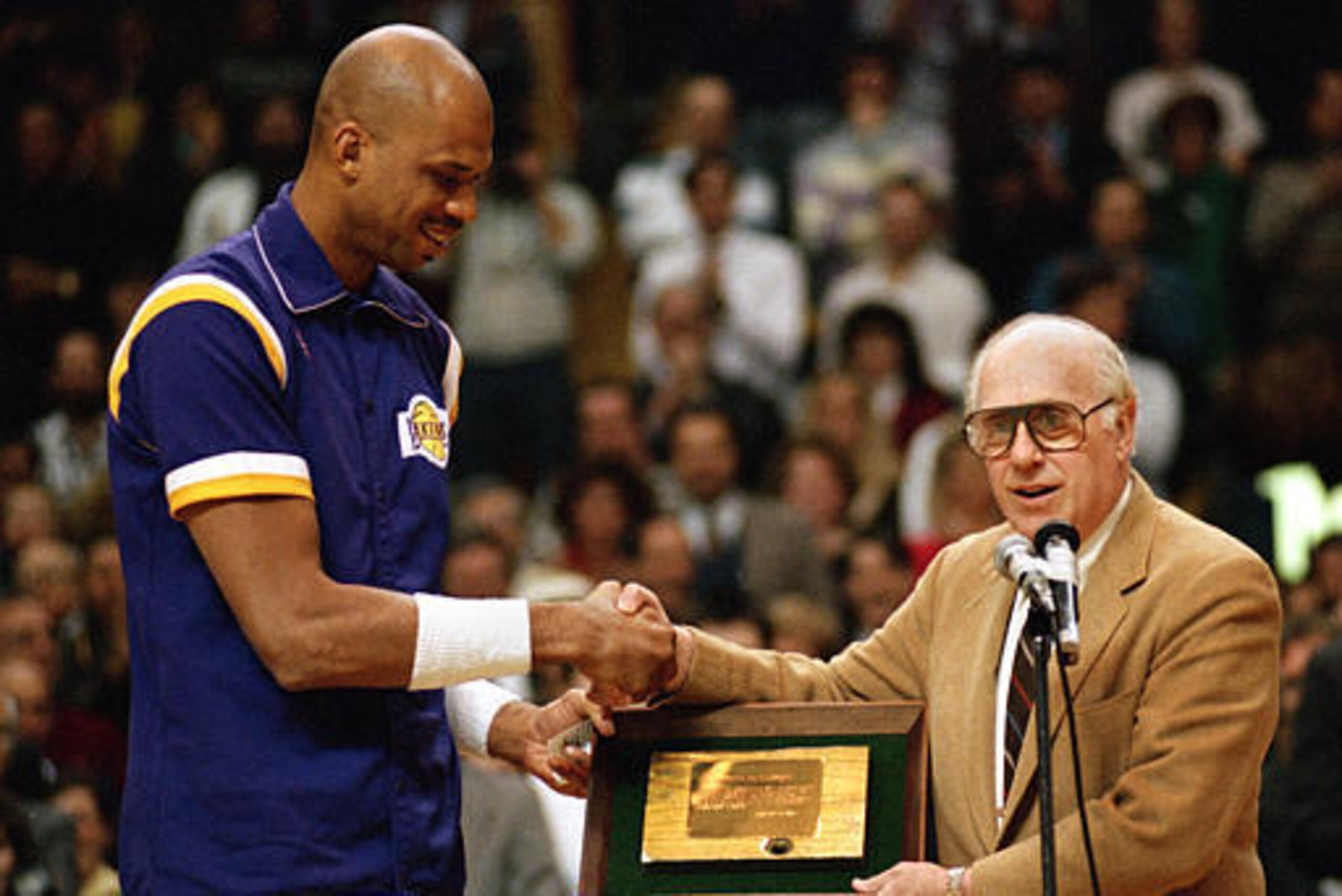
Unseating Abdul-Jabbar is going to be difficult.
Crazy difficult.
Abdul-Jabbar has 38,387 points to his name, putting him 6,077 ahead of Bryant. If the latter averages 25 points per game for the rest of his career, it would take him 244 contests to assume Abdul-Jabbar's place. And with only 58 remaining in 2014-15, that would force Bryant to play into 2017-18, at which point he will be 39.
On the off chance Bryant wishes to displace him by the end of his current contract, well, he better become accustomed to disappointment.
Playing in every game between now and the end of next season affords him 142 appearances, if you'll recall. Making up the ground separating him from Abdul-Jabbar would require Bryant to average roughly 42.8 points per game the rest of the way.
Only one player has ever averaged 40 or more points per game for an entire season: Wilt Chamberlain. Bryant will have to get used to the idea of playing longer if he's hell-bent on passing Abdul-Jabbar.
Much longer.
Using our assumption from before—which posits that Bryant will play into 2016-17 while averaging 70 appearances (187 overall) per year—doesn't do the trick. Or at least it shouldn't.
Ahem:
It would take an average north of 32 points per game—32.5—between now and the end of 2016-17 for Bryant to secure that top spot. Even if we went super ideal and counted on him playing in all 222 possible contests, he would still need to clear around 27.4 points a night.
The only way Bryant can hope to be No. 1 is if he plays even longer, like Abdul-Jabbar himself did. Similar to Malone, he only played 14 seasons prior to his 36th birthday, yet his minutes totals didn't pale in comparison to Bryant's:
There's a definite disparity when it comes to playoff mileage, but the regular-season totals are close. Abdul-Jabbar would play six seasons after turning 36, logging another 14,325 minutes. And though his numbers declined, he would also put in another 8,577 points while averaging more than 78 appearances per year.
For the sake of consistency—and, quite honestly, continued idealism—let's again say Bryant will average 70 games in every season he plays until retirement. Let's also push his shelf life to 2017-18, forcing him to play 22 total years.
After factoring in the 47 remaining appearances for this season, along with the 210 for the three after it, Bryant would have 257 games left in his tank. Here's what that could do for his scoring totals:
Lasting that long and playing that much while averaging around 24 points per game—23.7—would render Bryant the all-time scoring leader. But that's a monstrously tall order to ask of someone who would be closing in on 40 and likely putting another 8,000-plus minutes on his treads.
Abdul-Jabbar also never eclipsed the 24-point plateau following his 36th birthday. He averaged above 20 three times and only 18.2 overall. Bryant would need to obliterate that pace if he's to knock him off, lest he be forced to play beyond 2017-18.
Who Can He Catch?

There are an inordinate number of different ways in which Bryant could catch Malone and Abdul-Jabbar. The above scenarios are simply there to remind us all how hard it is. If Bryant refuses to continue playing beyond next season, it's almost impossible for him to surpass either one.
Assuming he plays in all 140 possible games by the end of his contract, here's one last look at what he must average in order to catch them:
Moving past Malone is totally possible; dislodging Abdul-Jabbar is not. Any chance Bryant had at dethroning him vanished with his ruptured Achilles and the injury-infested 2013-14 that followed. As Sports On Earth's Will Leitch wrote last season while reflecting on Bryant's chances of supplanting Abdul-Jabbar:
"It didn't seem that way not long ago; he was given a legitimate shot just last March. And it has obviously been in Kobe's mind. He's no dummy, he knows this isn't a championship team he's signing up for. (If he wanted another title more than he wanted the scoring title, he'd go all Clyde Drexler/Charles Barkley and follow LeBron around at the veteran minimum.)
He probably thought he had a chance too. But this is normal: We often think we're watching history in the making. And we're often not.
"
This is one of those times in which we're witnessing a specific kind of history. Bryant has now toppled Jordan. If he warms up to the concept of playing through 2016-17, Malone's record is not out of reach. Not if Bryant keeps firing away.
Breaking the record he always seemed destined to break, though, is a topic for another lifetime. Bryant won't pass Abdul-Jabbar. He won't. And though he's prided himself on disproving critics and escaping conventional wisdom for almost two decades, this is one form of traditional thought he can't evade.
Third place will have to do for now.
Second place is there for the taking if his body allows it.
First place is the ghost he won't ever catch.
But that doesn't mean he can't enjoy what's left of the chase.
*Stats are courtesy of Basketball-Reference.com and are accurate as of games played on Dec. 14, 2014.



.jpg?w=2560 "Aikman Blasts Cowboys WR 🫣")
.jpg?w=2560 "Jonathan Taylor Landing Spots")