

Jim Haslett Must Simplify Washington Redskins Defense
There have been many great minds who've made pioneering contributions to the art of defensive football in the NFL. Buddy Ryan shaped the 46, an uber-pressure defense. Dick LeBeau molded the fire zone blitz into a coherent scheme. Monte Kiffin did the same for the Tampa 2.
But regardless of the names applied to their exotic schemes, all three of those defensive gurus would probably agree on one thing: To be a good defense, you first have to be able to line up and know your assignment.
Please take note Jim Haslett and the Washington Redskins.
TOP NEWS
.jpg?w=2560 "Titans Giants Football")
OBJ Calls Out Giants After Release
Lamar Jackson Day-to-Day

Live Live: Updates from every NFL game
It's been another season of generally poor defense in Washington. Haslett has been a fixture in the nation's capital since 2010 when Mike Shanahan hired him to install the 3-4 defense—at the time, the fashionable scheme in the league.
But in his fifth season, Halett's players still don't know how to line up properly and execute the basics. Basic is the last word that should be used to describe Haslett's overly complex scheme, despite what this team might tell you.
Too much scheme and a litany of injuries has resulted in a unit that ranks 27th in points allowed. The perfect storm enveloped Haslett and his players in Week 13, when the Redskins D surrendered six touchdowns to Andrew Luck and the Indianapolis Colts offense.
Those touchdowns broke down to scoring passes covering 3, 30, 48, 73 and 79 yards. Just for good measure, the Redskins also yielded a 49-yard touchdown run.
Receivers were left so wide-open there's little point trying to add another humorous phrase to the host that have already been used to emphasize just how bad Washington's coverage was.

In fact, Thomas Boswell of The Washington Post put it best:
"By then, Luck made an electrifying discovery. Washington had left all of its defensive backs at the team hotel. In their place, ushers and soda salesmen were given burgundy-and-gold uniforms and told, 'Nobody understands Jim Haslett’s defenses anyway, so just run around at random. We’ll hope they drop the ball.' It worked as usual: Indy quickly led 21-3.
"
Boswell's well-placed, sarcasm-laden jab into Haslett's ribs raises a couple of key points. The first is just how valuable is complexity in a defensive scheme?
Pretty much every time you watch a Washington game, regardless of particular network coverage, a commentator will tell you how difficult Haslett's defense is to figure out for opposing quarterbacks.
You know it's coming, even though you're probably wondering why does this opponent seem so worried about a defense that's been mediocre, at best, for half a decade? The more said commentators ramble on about the complexity of Haslett's schemes, the variety, the pressure, the more you wonder if you've been missing something all these years.
Well, you needn't worry. Your eyes haven't deceived you. It hasn't been the '85 Chicago Bears in disguise.
The truth is Haslett's defense is too complex. There's no other way to account for the alarming number of communication issues, missed assignments and big plays allowed.
Free safety Ryan Clark didn't mince his words when describing the carnival of horrors that took place in Indianapolis, per Mark Ambrogi of The Washington Times:
"It’s embarrassing to be a part of, it’s embarrassing to be a leader of a group of individuals that plays like that, including myself. You don’t give the rest of the team a chance to play. You don’t give the rest of your team an opportunity to win the game.
It’s not a situation where you are getting beat because a guy is better. You’re not doing your job and that’s to a man in the secondary. Everyone has to be accountable. You’re not supposed to sleep on Sunday night when it goes like this. I don’t.
"
If Clark think it's bad to be a player in that situation, trust me, it's also no picnic being a fan.
Ambrogi also carried quotes from head coach Jay Gruden that detailed some of the lapses against the Colts:
"One was a basic three-deep call and we don’t have anybody in the deep third. One was a Cover 2 call and we don’t have a safety playing a half. Players have to start stepping up and taking some accountability at some point. We’ve got to do a better job coaching. To have those guys wide open like that is unheard of on simple coverage calls.
"
This is where things get really scary. Haslett needs to simplify his defense, but then again, you can't get much more simple than Cover 3 and two-deep.
So it's either a case of the schemes being a little too elaborate, or the coaching isn't coherent and structured enough to help players understand. The smart money should be on it being a lethal combination of both.
Clark and Gruden each referenced the injury-enforced inexperience the secondary has dealt with this season. It's true that veterans DeAngelo Hall, Tracy Porter and E.J. Biggers have spent most of this season on the shelf.
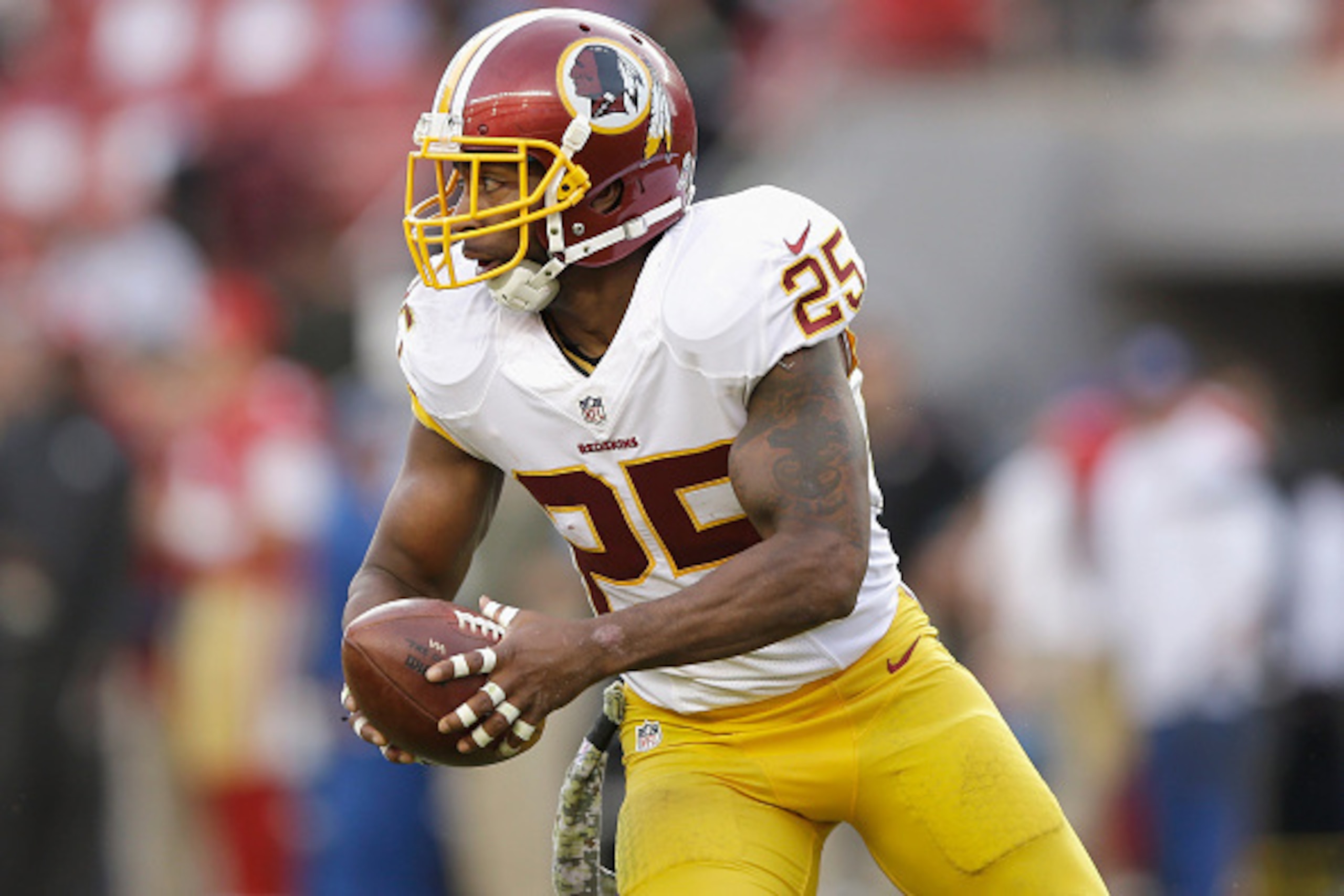
Their absences have forced players such as practice squad members Greg Ducre, Chase Minnifield and Phillip Thomas into prominent positions on the depth chart. Haslett has also been starting a second-year corner in David Amerson, along with rookie Bashaud Breeland.
But he's also had a 35-year-old ex-Super Bowl winner in Clark, as well as 30-year-old Brandon Meriweather playing safety. Injuries aside, Haslett has never been able to establish the right balance and find a group that will jell in the defensive backfield.
He hasn't been able to coach his players to get the basics right. If young cornerbacks don't know what they should be doing against certain route combinations and breaks, that's down to coaching, or a lack thereof.
Mike Jones of The Washington Post identified Amerson, the team's top pick in the 2013 NFL draft, as a player who too often appears out of his depth:
Getting confused "every time" is a staggering indictment of this defensive scheme. Haslett and secondary coach Raheem Morris are equally culpable.
They are culpable because injuries and inexperience can't explain the numerous mismatches this defense manages to find itself in. During the fiasco in Indianapolis, Jones detailed one particular nightmare:
He was referencing Fleener's catch en route to his 73-yard score. The Redskins had a pass-rushing outside linebacker covering a big-bodied "move" tight end with wide receiver-like skills over the middle. The result was inevitable.
This isn't the first time such an obvious mismatch has been allowed to develop. Remember when inside linebacker Perry Riley Jr. was in single coverage against Tampa Bay Buccaneers rookie wide receiver Mike Evans in Week 11? You couldn't be surprised that a 56-yard touchdown soon followed.
These are either mix-ups or serious flaws in design. They hint at a lack of cohesion in the rush and coverage combination, as well as not enough communication to assign and trade off receivers pre-snap.
That leads to the deeper question: What exactly does this Washington defense do?
How exactly would you answer that? Do they zone blitz? Play zone behind a swarming front seven? Are they a man coverage defense?
There are so many possible answers, yet not one of them directly applies to Haslett's D. That's the essence of the problem.
There's no core concept, idea or identity underpinning this group of players. Every good defense needs a structure.
You might say the Seattle Seahawks play Cover 3 with press techniques mixed in. That's their core defense. The San Francisco 49ers play Cover 1 behind a four-man rush. That's their core defense. The Arizona Cardinals are going to attack you with man-blitz pressures. That's their defense.
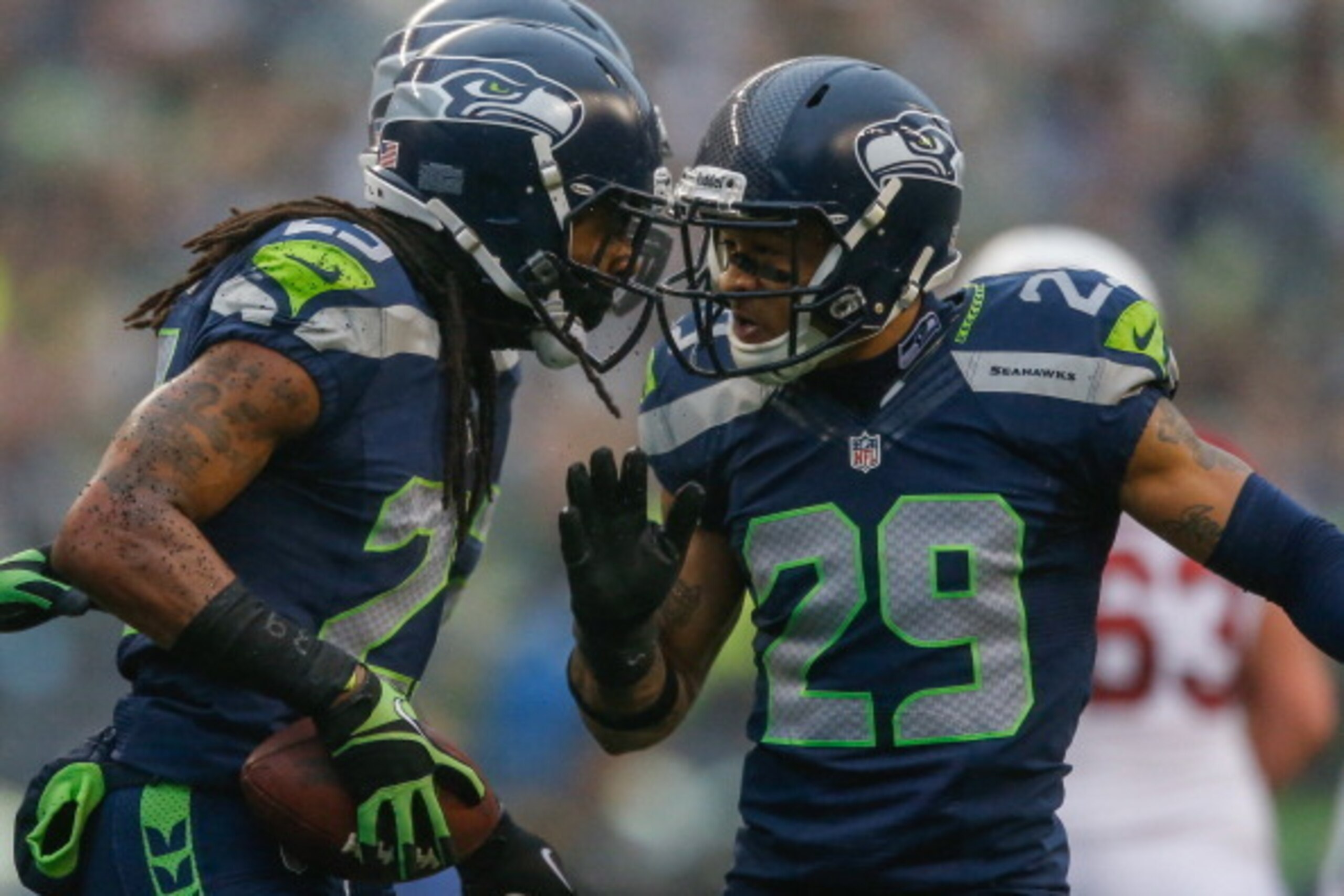
Where's the one principle Washington's defensive players can hang their helmets on? Haslett's rudderless group simply doesn't have one.
Of course, no defense stays the same play-to-play. The Seahawks, 49ers and Cardinals don't do these core things every snap.
But their respective identities provide a starting point from which everything else—any wrinkles, disguises or different fronts—flows from. Players know what's expected of them, what they're supposed to do.
Obviously, the better the players, the better a scheme looks. The 49ers have been the prime example.
When he's had everyone healthy and available, coordinator Vic Fangio has enjoyed an embarrassment of riches. He's had a premium edge-rusher in Aldon Smith, a dominant two-gap end in Justin Smith and a pair of All-Pro inside linebackers in Patrick Willis and NaVorro Bowman.
With this talent at his disposal, Fangio has rarely deviated from a four-man rush. He's rarely blitzed, substituted or mixed up his coverages. Honestly, why would he?

Of course, Haslett hasn't been blessed with that level of personnel, something Jason Reid of The Washington Post has noted:
"Hired to convert Washington from a 4-3 to a 3-4 alignment, Haslett hasn’t had the best talent with which to work. Washington has lacked a dominant run-stuffer at nose tackle and premier edge rushers — the most important positions in a 3-4. That’s not on Haslett.
At some point, though, it no longer matters what you’ve lacked. You have to make do with what you have.
"
Ultimately though, Reid's last statement echoes loudest. Producing tough defenses, even from scant resources, is what top coordinators do.
Fangio started this season with Aldon Smith serving a nine-game suspension and Bowman in the treatment room. He's since lost Willis for the year. The 49ers also completely overhauled their secondary during the offseason.
Yet the San Fran D is ranked eighth in points and fourth in yards. If you don't think that's down to coaching, you're kidding yourself.
Todd Bowles has worked similar wonders in Arizona this season. His unit lost linebackers John Abraham, Karlos Dansby and Daryl Washington, along with linemen Darnell Dockett and Calais Campbell (the latter has since returned).
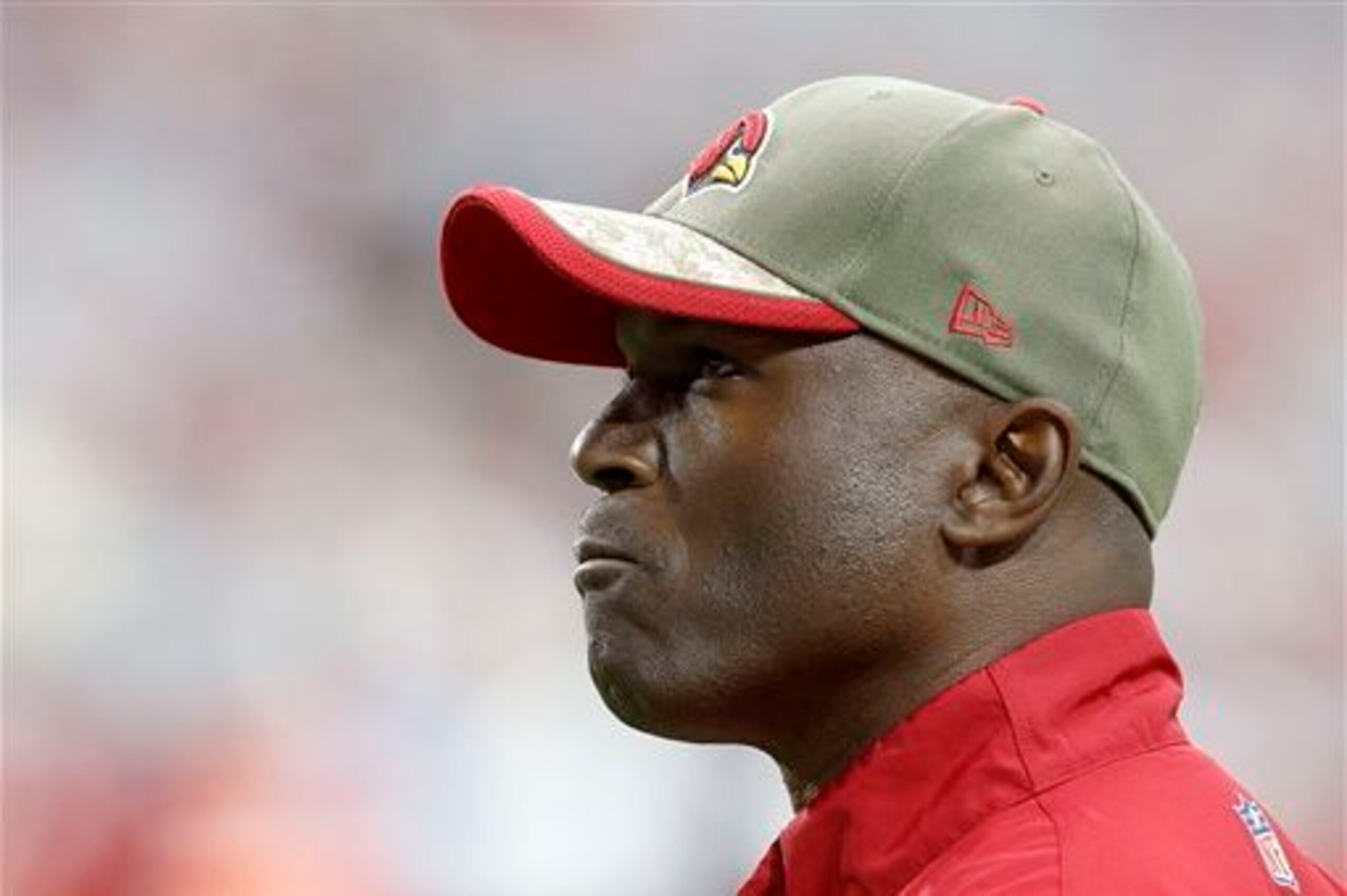
But those absences haven't prevented the Cardinals from being the fourth-stingiest scoring defense in the league, as well as the ninth toughest to run against.
Bowles' players know what they're supposed to be doing. They usually travel with a diet of man coverage behind a sophisticated array of heavy blitz pressures.
The Cards have played that scheme so often, they've become masters at it. Bowles has put a firm basis in place and his players have reaped the rewards.
You don't build a house on a shaky foundation. You don't build an NFL defense on one either.
Unfortunately, Haslett and the Redskins have been trying to build without any foundation at all.
All statistics via NFL.com.



.jpg?w=2560 "Saquon Out for Game")
