Can Charlotte Hornets Reverse Early-Season Disaster?
They thought they’d left the bad old days behind—dust-shrouded failure that should’ve been more distant than it appeared in the rear-view mirror.
In the wake of last year’s mini-renaissance, the Charlotte Hornets were supposed to seize yet another step on their trek to NBA respectability. Instead, the 2014-15 campaign has been a maelstrom of more of the same: poor play, bad body language, the furtive flailing of a franchise fated for the basement.
The Hornets have both the pieces and the big-picture perspective to solve this season’s thus-far flummoxing puzzle. It’s another pair of factors—patience and time—that could prove the tougher tests.
TOP NEWS

Pic of LeBron's Helicopter Commute 🚁

Duren Calls Out 'False' Rumors

NBA Power Rankings Entering Preseason 🔢
In any other year and in any other conference, a 4-14 record would be a near-insurmountable hole. This season, in this Eastern Conference: a mere knee-high ditch.

Three-and-a-half games currently separate the Hornets from the No. 8 seed Indiana Pacers, a team that started the season under a far more sinister sign—savaged by injuries and certain for the cellar.
Charlotte’s first order of business? Recapture its steady-stout defense, which finished the 2013-14 slate ranked sixth in overall efficiency (101.2). That figure has spiked to 106 in the season’s early going, or 25th in the league.
Perhaps most alarming of all, the Hornets are yielding a league-worst 64.6 percent opponent field-goal percentage on shots from within five feet or fewer, per NBA.com. If ever there was an indictment of Al Jefferson’s abilities as an interior defender, this is it.
The issues go well beyond Jefferson, of course. It’s that the pitfalls point to something other than simple execution that has head coach Steve Clifford rather understandably concerned. Per Peachtree Hoops' Kris Willis:
""Right now it doesn't matter what you tweak if you don't show up and play,” - Charlotte coach Steve Clifford
— Kris Willis (@Kris_Willis) November 30, 2014"
Effort, enthusiasm, passion—these are all common crutches for coaches in crisis, ones whose absences can be gleaned from either side of the ball.
Really, though, the fulcrum buckling beneath these Hornets is even more fundamental still: chemistry. Specifically, how Charlotte’s once-sturdy gestalt has stalled with the arrival of Lance Stephenson.
Following his decision to bench the former Indiana Pacer down the stretch of two recent games, Clifford took a not-so-subtle jab at Charlotte’s $27 million man.
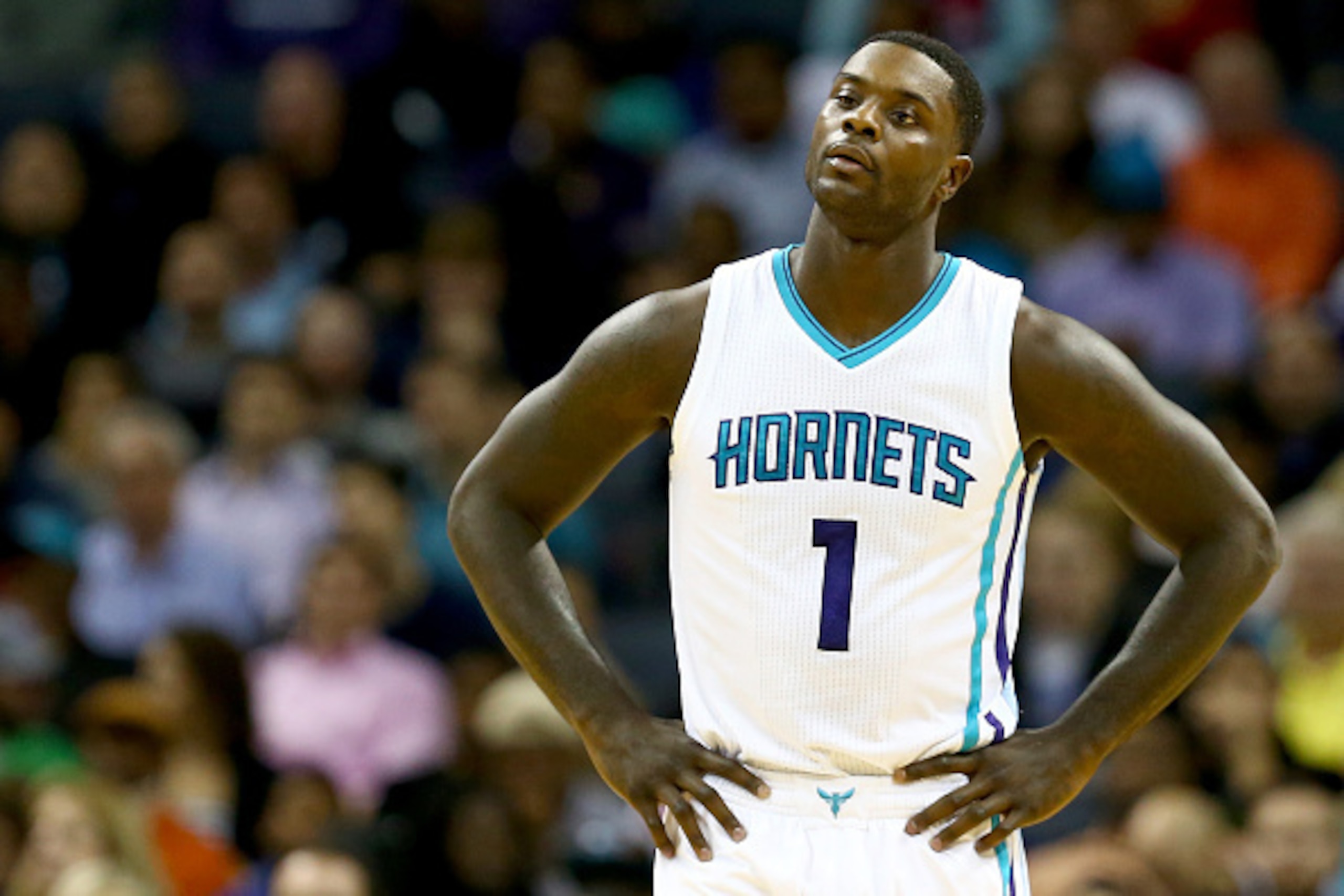
"To be fair, one of the things that's made it more difficult for him is that he came here and people proclaimed him as the next superstar," Clifford told ESPN.com’s Michael Wallace. "He's not a star. He's a guy that has talent to become a star. To be a star in this league, you have to do it over years."
Since then, reporters aplenty have scrambled to connect the dots between Stephenson’s recent woes and the trail of ill will tracing back to his days with the Pacers:
The addition of Stephenson—long-lauded for his idiosyncratic brand of playmaking—was supposed to help bolster Charlotte’s 24th-ranked offense from a season ago. The early returns, however, have been anything but encouraging.
| Season | Points | Rebounds | Assists | PER |
| 2013-14 | 13.8 | 7.2 | 5.4 | 14.7 |
| 2014-15 | 9.6 | 7.7 | 4.6 | 10.5 |
In fact, the mercurial wing has failed to make an impact on either side of the ball, with Charlotte registering an offensive rating of 97.2 and a defensive rating of 105.6 with Stephenson on the floor, per NBA.com.
Disconcerting developments aside, scapegoating Stephenson as the Hornets’ principal problem fails to account for the myriad other manners in which these once-plucky upstarts have forsaken expectations.
Indeed, the team’s ledger reads like a what’s what of last year’s statistical improvements fallen suddenly by the wayside:
| Player | 2013-14 PER | 2014-15 PER | 2013-14 WS / 48 | 2014-15 WS / 48 |
| Kemba Walker | 16.8 | 14.8 | .093 | .044 |
| Al Jefferson | 22.7 | 21.1 | .146 | .102 |
| Lance Stephenson | 14.7 | 10.5 | .130 | -.020 |
| Gerald Henderson | 13.1 | 9.3 | .071 | .019 |
| Michael Kidd-Gilchrist | 12.0 | 19.0 | .098 | .181 |
And don’t discount the loss of another, seemingly superfluous piece—a player SB Nation’s Liam Boylan-Pett explains was an unsung cog in Charlotte’s clunky-but-serviceable offense:
"[Josh] McRoberts hasn't gone into Miami and lit up the scoreboard for the Heat, but he's certainly missed in Charlotte. Sure, he only put up 8.5 points and 4.8 rebounds per game for the Hornets, but as a front court mate to Al Jefferson, his 30 minutes per game were valuable. Team owner Michael Jordan said McRoberts kept the team organized on the court, calling him a connector. In his wake, Cody Zeller and Marvin Williams have split time, and neither have proven to be much of a difference maker.
"
Whether all this amounts to an accurate bellwether or a simple case of early-season blues, it’s impossible to say. What’s become increasingly clear, though, is that rebranding and lingering goodwill alone are seldom guarantors of greater fortune.
The same qualities that helped the Hornets defy the doldrums a season ago—pluckiness, precociousness, a willful disregard for playing to downtrodden type—aren’t without their counterweights. Chief among them: comfort, complacency and the long-gone luxury of being able to sneak up on unsuspecting opponents.

It’s difficult to imagine Charlotte’s tailspin continuing apace; sooner or later the mean will reel the Hornets upward. Enough, perhaps, to force their way back into the playoff conversation.
In the meantime, though, lie the growing pains of a would-be power. Unlike other upstarts of seasons past, however—your Oklahoma City Thunders and Indiana Pacers—Charlotte’s journey has been less about slow and steady steps forward than an overnight transformation. From perennial laughingstock to seeming team of tomorrow in far too little time.
Speaking of time, there's still plenty of it to prove us all wrong. Right now, it’s about the Hornets—who should know enough about NBA despair to never want to return—remembering how to prove themselves right.
.jpg?w=2560 "OBJ Calls Out Giants After Release")