Russell Wilson Back on Track, Has Seahawks Eyeing Playoffs
This season hasn't gone as anticipated for Russell Wilson and the Seattle Seahawks.
Entering Week 12, the team was tied with the San Francisco 49ers in the NFC West, which was a not-so-unpredictable position to be in. However, Seattle was knotted in second place with a 6-4 record rather than first with a better win percentage.
Instead of leading the division and conference on their way to the playoffs, the Seahawks entered this weekend needing a victory to keep their postseason-bound train on track.
.jpg?w=2560 "Chargers Mack")
.jpg?w=2560 "Green Bay Steelers Football")
.jpg?w=2560 "Giants Football")
Importantly, their opponents were the 9-1 Arizona Cardinals—the team leading the NFC West and the one the Seahawks were hoping to catch. With two games left against the Cardinals on their schedule, Seattle's turnaround wasn't unfathomable, but a pair of victories were requisites rather than options.
Like many late-season divisional battles, this game proved to be a low-scoring affair, as the Seahawks pulled out a 19-3 win.
As Wilson said after the game, via Q13 Fox, "[The players] were talking about getting our swagger back... I feel like we got it back."
Even though the defense dominated the Cardinals' Drew Stanton-led offense, Wilson still had a lot to do against one of the best units in the NFL. To compound Wilson's quest, he was working behind an overmatched offensive line.
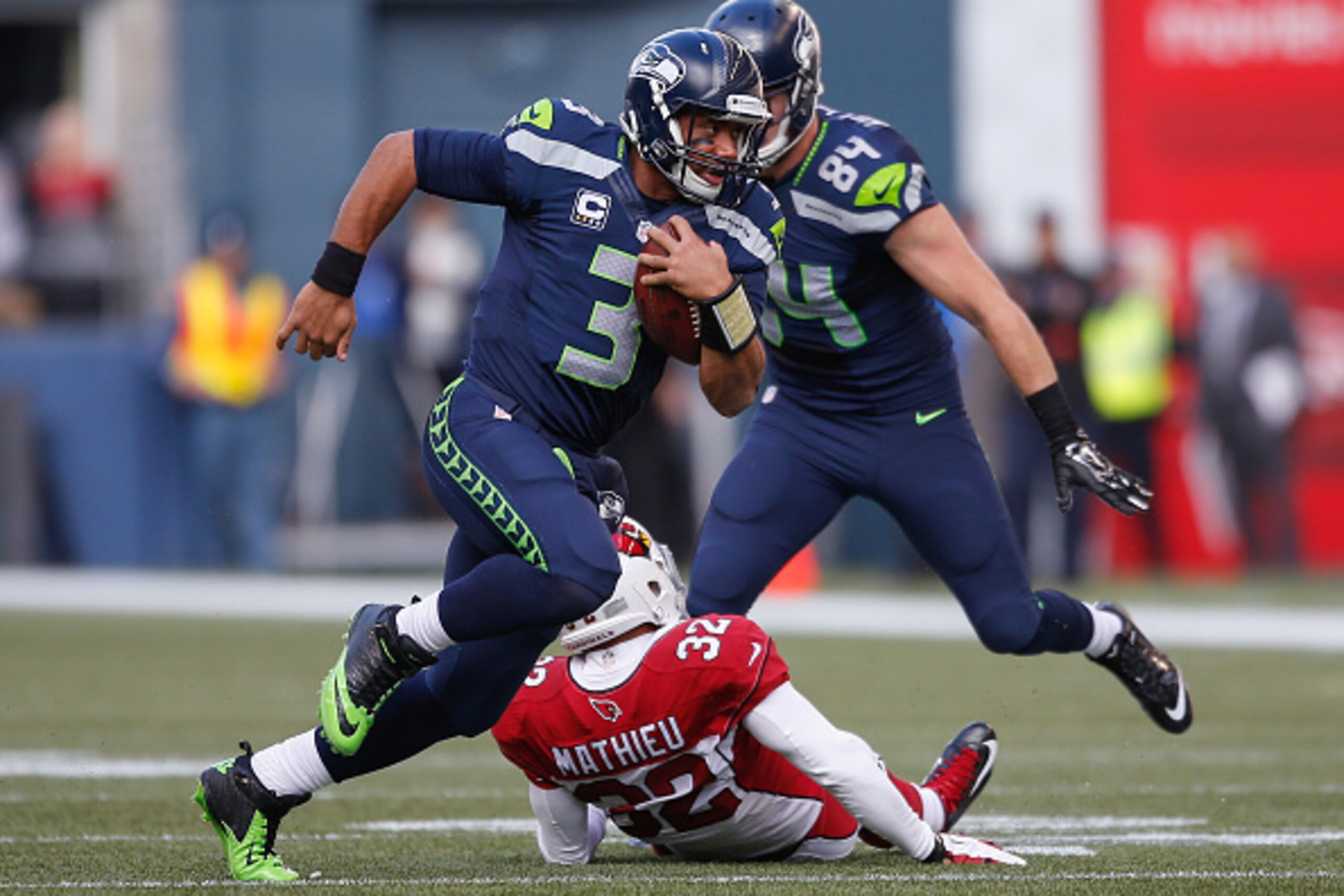
Individually, Wilson hasn't had a good season as a whole. Instead, his performances have peaked and fallen from week to week.
On a number of occasions he has been spectacular, with games against Washington, the St. Louis Rams and the New York Giants standing out in particular. Wilson's performances haven't really been reflected in his passing statistics, as he's had only one 300-yard passing performance this season.
Instead, he has made important throws while relying on his rushing ability to compensate for a lack of passing affluence.
That was the case again against the Cardinals, as Wilson threw the ball 22 times for just 221 yards and a touchdown. He completed 17 of those 22 passes to keep the offense efficient, while also tacking on 10 rushing attempts for 73 yards, including a long of 40.
These rushing numbers came on a day when Marshawn Lynch was bottled up, as he tallied just 39 yards on 15 rushing attempts.
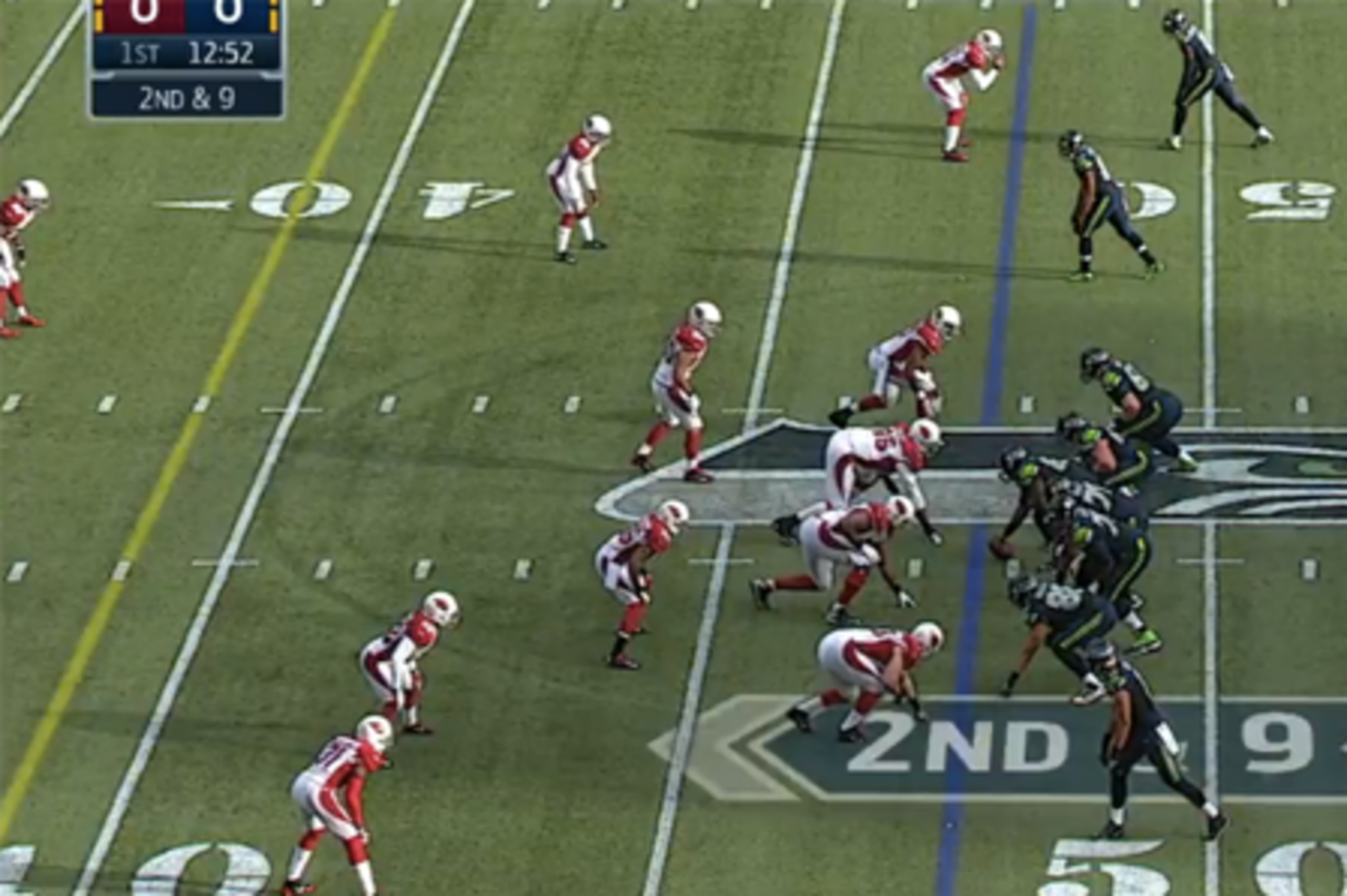
Wilson's first significant play of the game, pictured above, came on just the Seahawks' second offensive snap. After Lynch was limited to just one yard on his first carry, the Seahawks were stuck in a 2nd-and-9 situation on which the defense could blitz Wilson more comfortably.
That is exactly what Cardinals defensive coordinator Todd Bowles did.
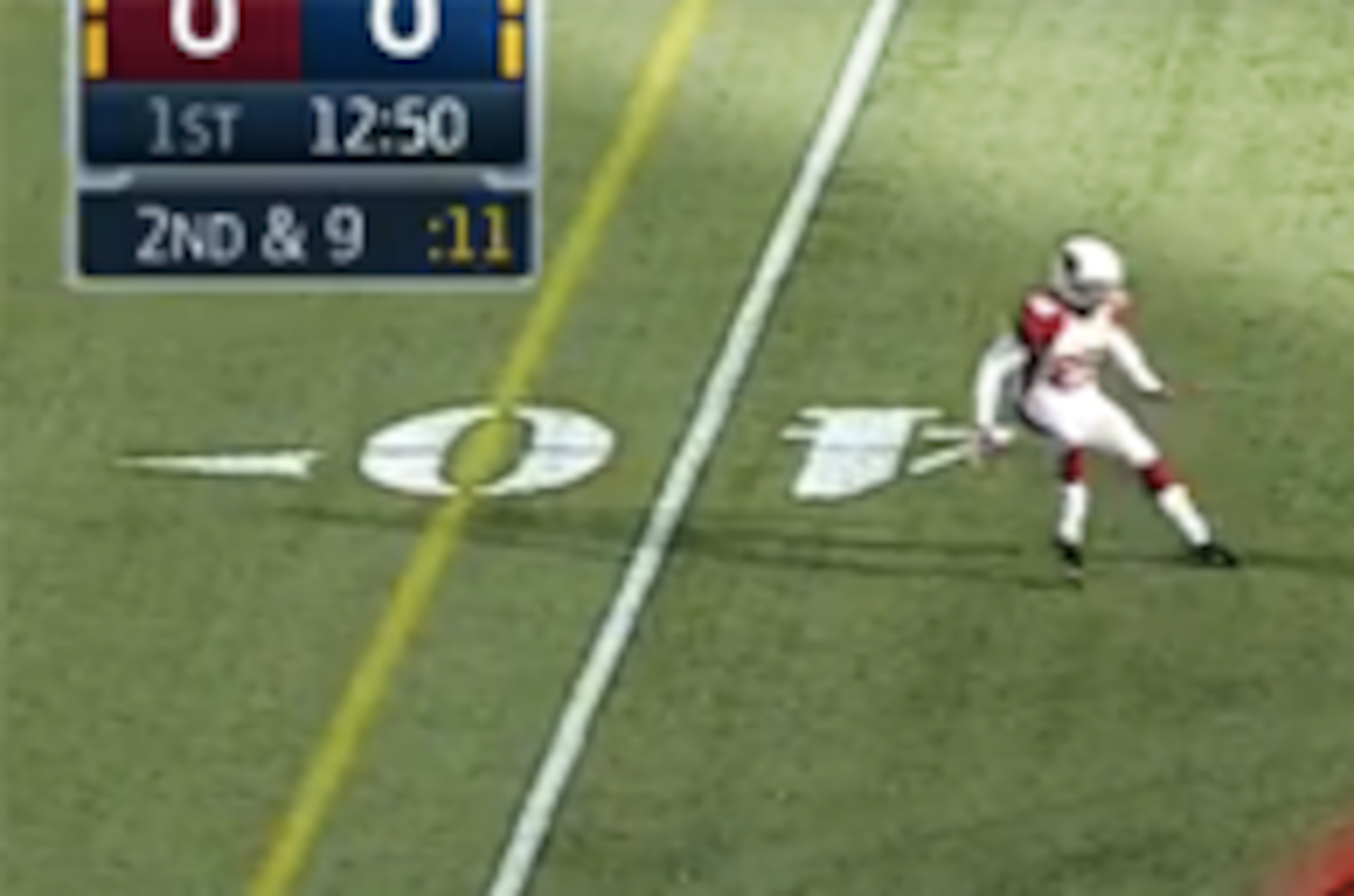
As soon as Wilson got the ball, he was looking to his right. That played perfectly into the defense's play call, as it was blitzing from the other side of the field. Importantly, Wilson's eyes drew linebacker Larry Foote away from the middle of the field.

While seemingly leading Foote further toward the sideline, Wilson felt the back-side pressure and adjusted slightly in the pocket to give himself time to throw the ball comfortably. While doing that, he located his tight end, Tony Moeaki, in space underneath.
This is the kind of pocket play that coaches love because Wilson does myriad things to attack the defense at its weakest point.
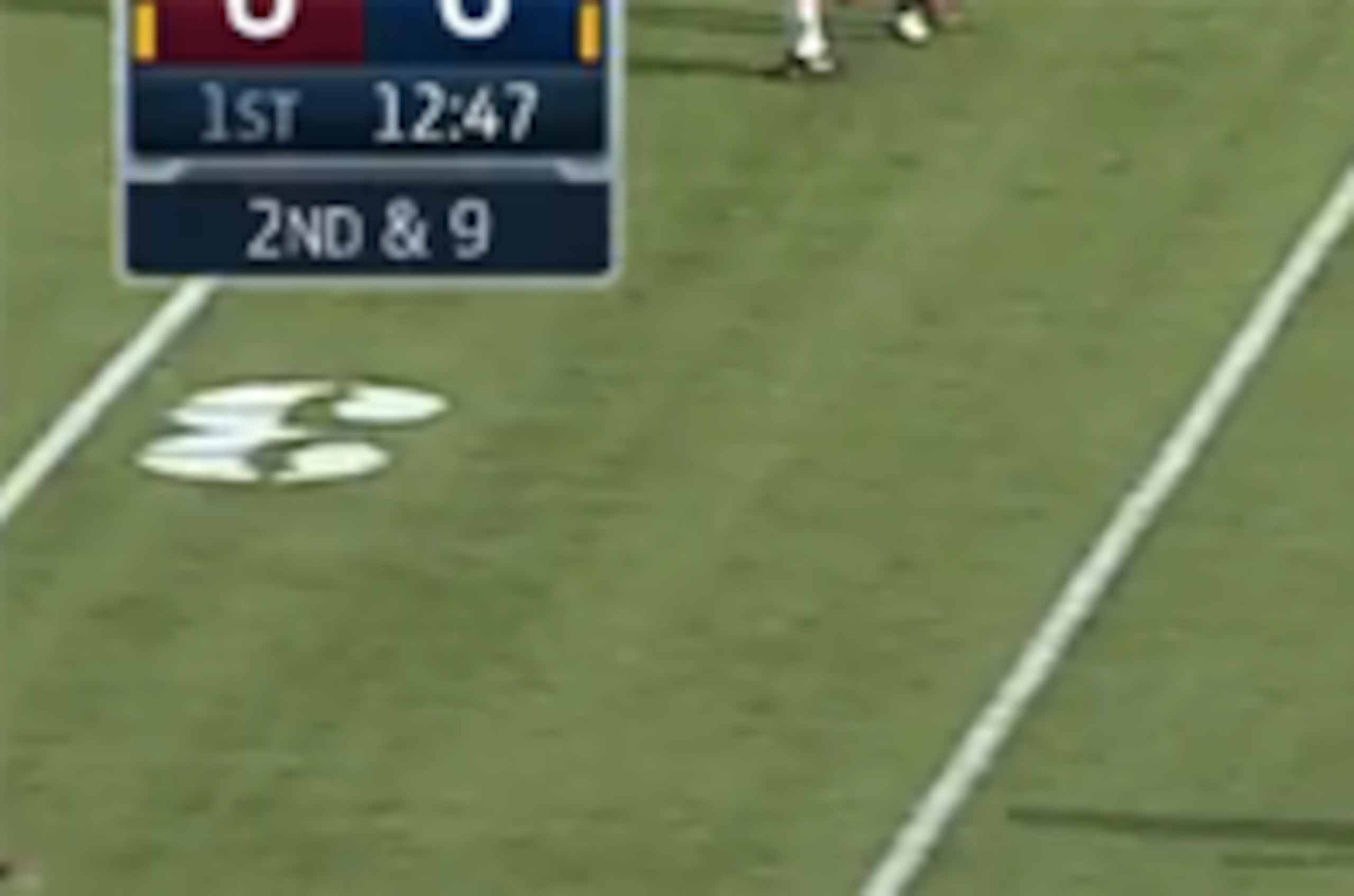
An accurate throw to Moeaki afforded him the opportunity to turn downfield and run hard for a 17-yard gain. That play not only overcame a 2nd-and-9, but it also set up the Seahawks offense in scoring position. Seattle would eventually settle for a field goal at the Cardinals' 9-yard line, but this was the biggest play of the drive.
The next drive stalled quickly, but on the final play of the first quarter, Wilson found Ricardo Lockette for a 48-yard reception.
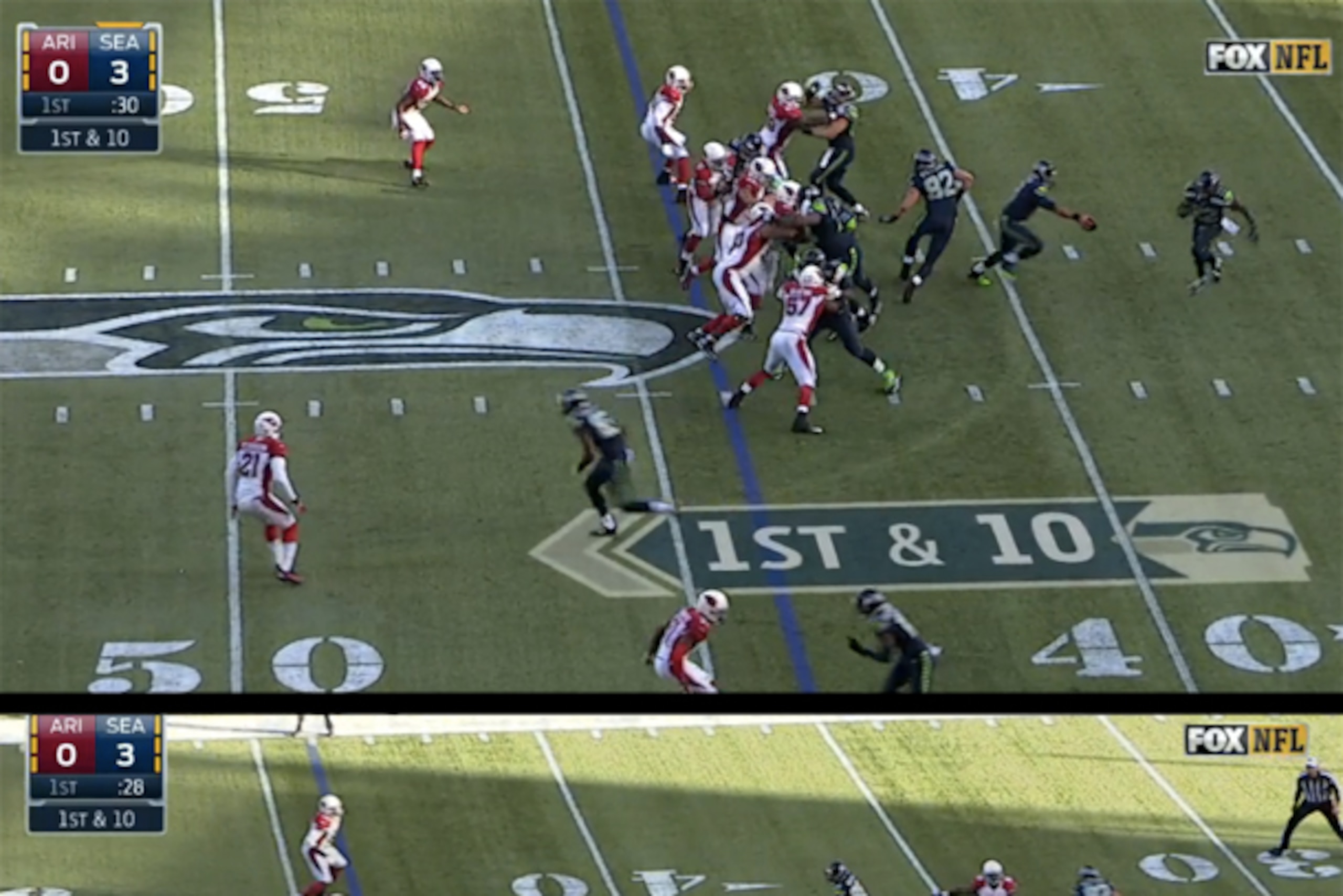
As far as 48-yard plays go, this one was fairly straightforward. Wilson had to throw the ball down the field, but when the Cardinals blitzed and the Seahawks ran play action, he was able to execute from an exceptionally clean pocket.
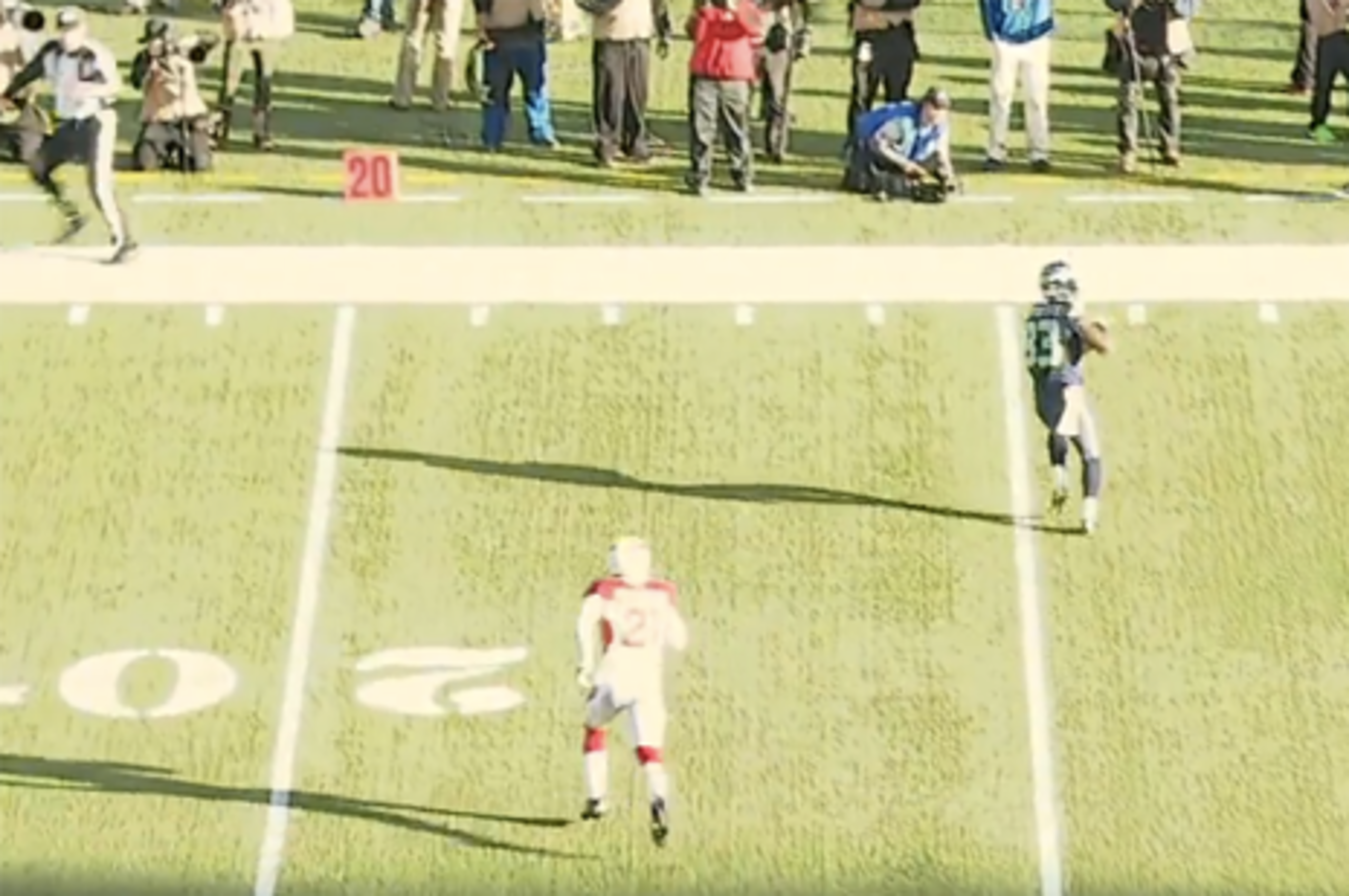
Behind the blitz, the Cardinals' coverage confused itself to allow Lockette to run free on a deep crossing route. Wilson found him by the sideline, getting the ball to him accurately to allow him to turn and run unopposed. He didn't get to the end zone, but he did set up the offense in the red zone at the Arizona 8-yard line.
Two sacks on Wilson prevented a touchdown, but in a tight game, the team's second field goal proved to be important.
After that scoring drive, the Cardinals got the ball deep in their own territory. As he is wont to do, Cardinals head coach Bruce Arians came out aggressively, letting Stanton throw to Andre Ellington for a 15-yard gain to start the sequence.
That aggression quickly worked against him, though, as Stanton badly underthrew a pass intended for John Brown that was intercepted by Byron Maxwell.
Maxwell set up the Seahawks offense close to midfield at the Arizona 48-yard line. The Seahawks weren't immediately in scoring position, but it would only take Wilson one play to get them there.
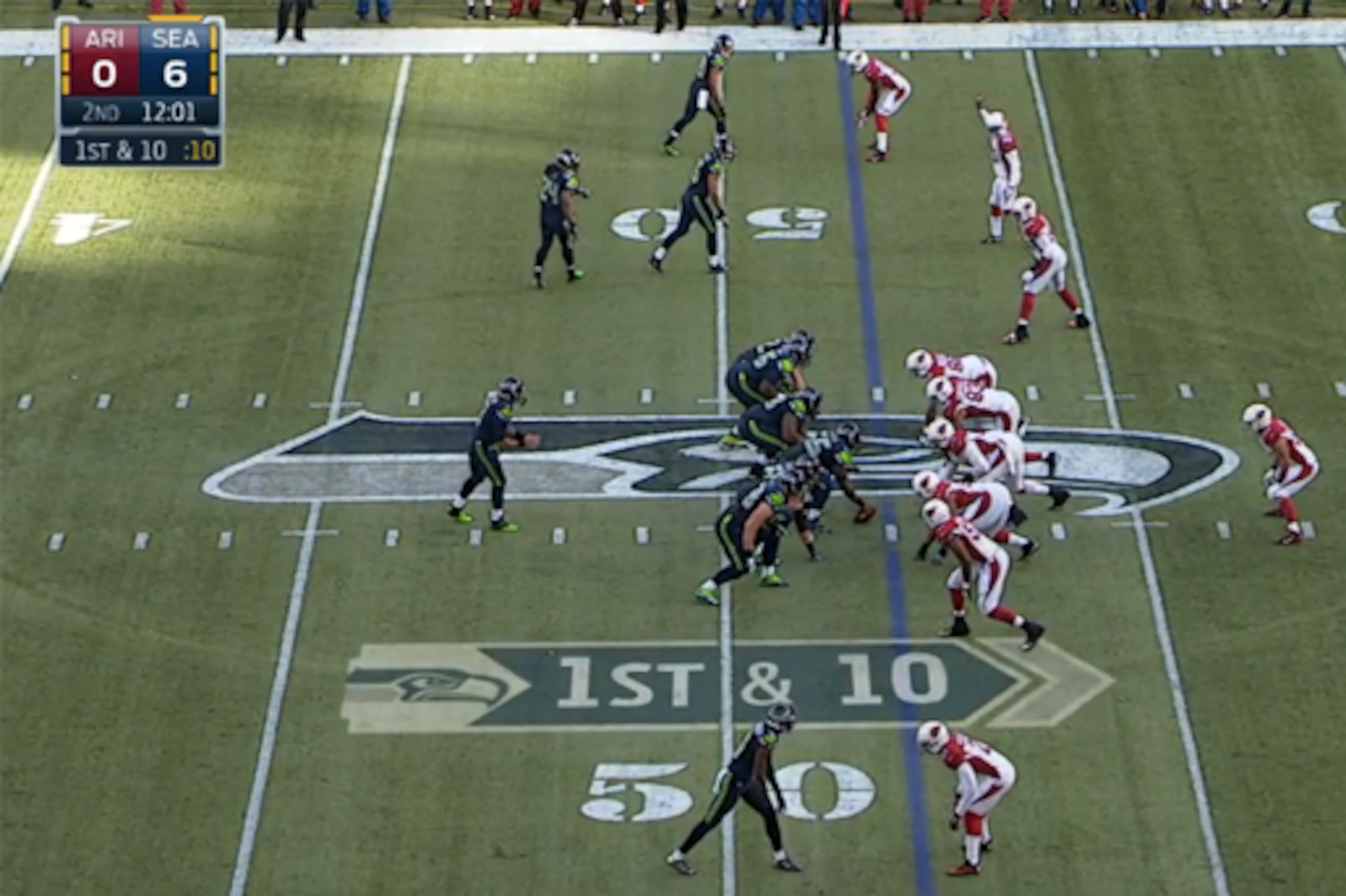
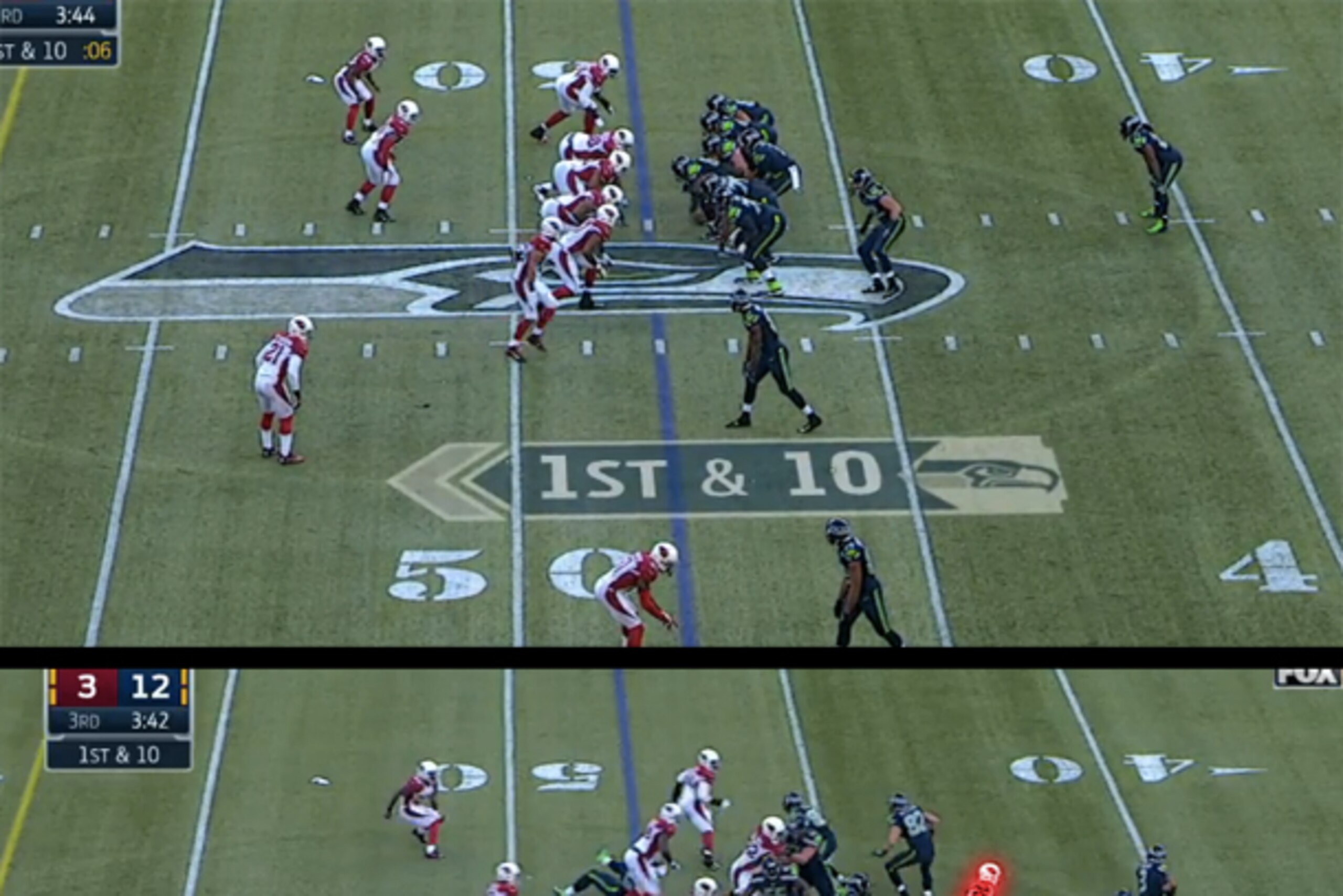
On 1st-and-10, the Seahawks spread the field with Lynch lined up next to Wilson in the shotgun. However, after a moment, Lynch motioned out wide to the top of the screen. He was in the ideal position to catch a screen pass with three receivers in front of him.
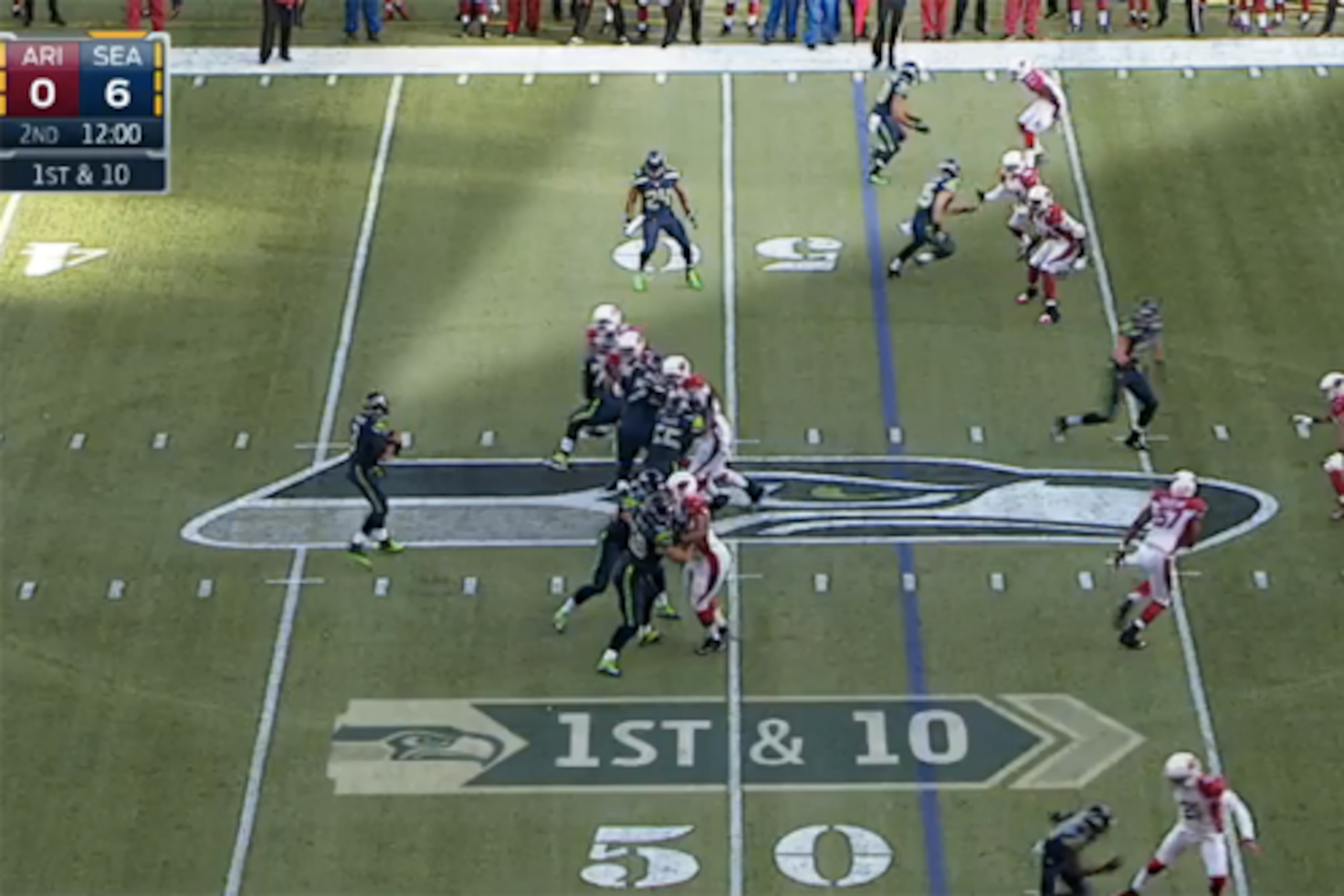
Lynch motioned for the screen pass, but Wilson didn't immediately throw the ball to him. Instead, he held it for a moment, faking the throw to Lynch while surveying the defensive backs. Based on how they reacted, Wilson made his decision.
The middle of the defensive trio outside overcommited to the screen, giving Wilson the chance to throw the ball in behind him.
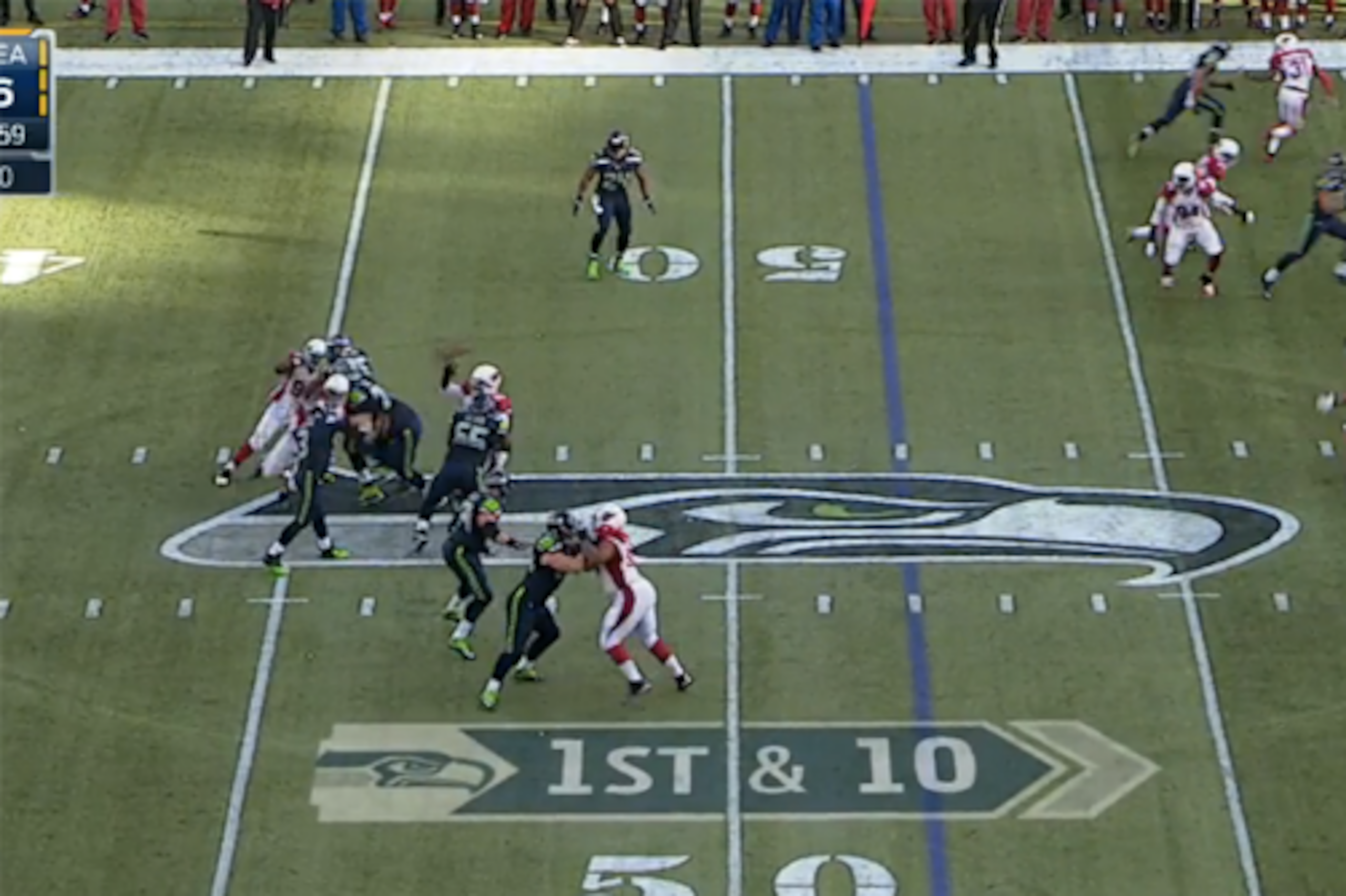
Wilson made a very quick decision and threw a fastball to Jermaine Kearse. His pass arrived somewhat high, but that was less important than Wilson's quick read and high-velocity pass. The speed at which Wilson got the ball to Kearse allowed him to catch the ball in space.
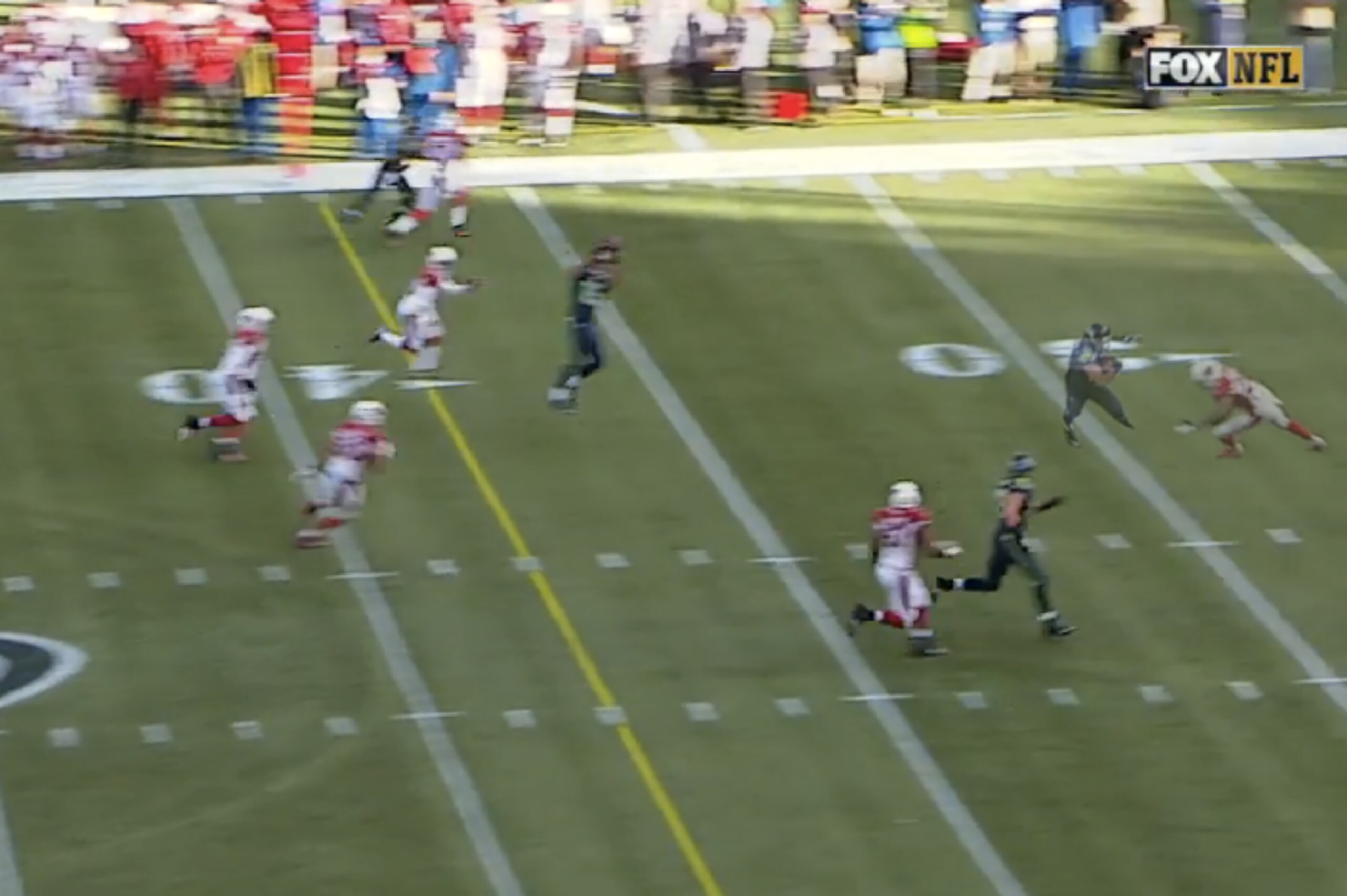
Even though the underneath defensive back bought the fake, Kearse was running directly into the path of an arriving safety. If Wilson had waited for a split second or if his pass didn't have the velocity it did, Kearse would likely have been lit up.
At the very least, he wouldn't have had any opportunity to turn and protect himself.
This play brought the offense down to the 29-yard line, so it was immediately in Steven Hauschka's field-goal range. On the following play, Wilson couldn't fit the ball in to a covered Kearse in the end zone, before Calais Campbell sacked Wilson in the pocket when the defense blitzed.
That put the offense in an almost insurmountable 3rd-and-16, forcing it to settle for another field goal.
Up until that point in the first half, Wilson was creating all of his positive plays with his arm from the pocket. But then, midway through the second quarter, Wilson set up the offense in Cardinals territory with a 40-yard running play.
As this article details, Wilson has been a phenomenal running quarterback in the NFL this year, and he has done it in different ways.
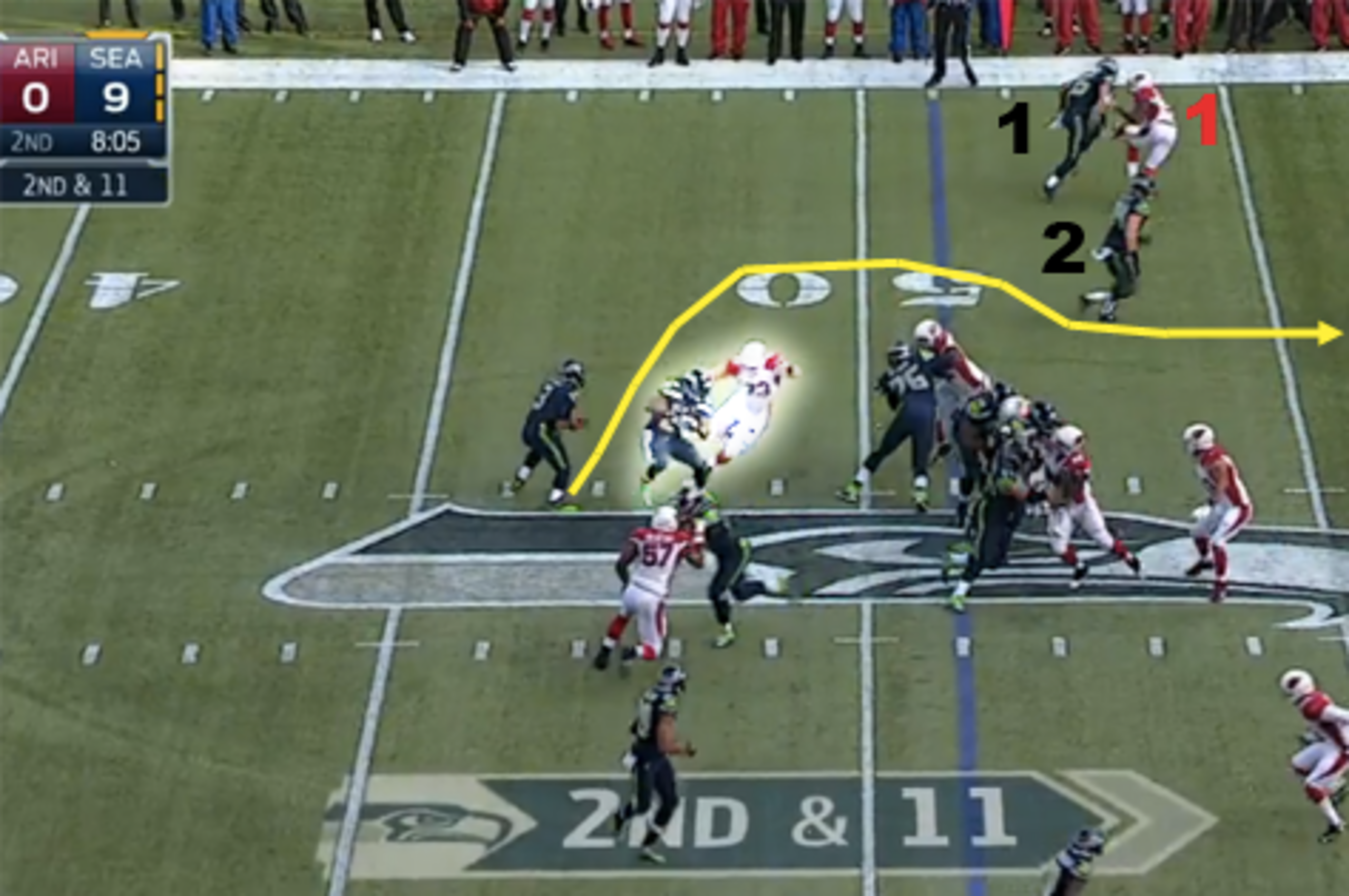
On this occasion, Wilson's 40-yard gain was a result of an option play off the left side of the offense. He pulled the ball away from Lynch when he saw that he had two blockers and two defensive backs to the left side without any initial edge contain.
Wilson showed off impressive acceleration as he sprinted down the field unopposed. He was eventually forced out of bounds, and a holding penalty at the end of the play cut the gain to just 30 yards. In spite of that, the offense was once again in position to kick a field goal.
That field-goal attempt was blocked, but Wilson's big play should still be noted.
A kneel-down brought the first half to an end on the Seahawks' next drive, before their first offensive sequence of the third quarter was stalled by another sack—one that wasn't really Wilson's fault as his offensive line allowed a free rusher against a four-man rush.
The Seahawks' next score came after a blocked punt that set up the offense at the Arizona 24-yard line. After two Wilson rushes left the Seahawks facing a 3rd-and-8, a false-start penalty pushed the offense back further into a 3rd-and-13 situation.
From there, the Seahawks settled for a short gain and three easy points.
After all of those field goals, the game was still close, even though the Cardinals offense had proved ineffective. Wilson needed to lead a touchdown drive to solidify the victory late in the third quarter. With two big plays, that is exactly what he did.
On 1st-and-10, the Seahawks ran a hard play action that failed instantly. A defensive lineman was sent freely after the quarterback, and because Wilson had to carry out the play fake, he couldn't see him while running away from the line of scrimmage.
Fortunately for Wilson, he was moving at speed from the start of the play.

Wilson never fully turned around. Instead, when he angled his head back toward the line of scrimmage, he recognized the impending pressure in his peripherals. This allowed Wilson to quickly adjust and extend the play back across the free defender to re-establish his base to throw the football.
After a moment of holding the ball, Wilson recognized a receiver free in the flat.
That receiver was Lynch, who broke into the flat after initially having nobody to block. Lynch caught the ball and carried it downfield for a 23-yard gain, but Wilson did most of the work to extend the play and create the opportunity.
To end this drive, Wilson threw a touchdown pass to tight end Cooper Helfet, but his most significant play came earlier than that on a 3rd-and-11.

Initially, the Seahawks spread the field with five receivers and just Wilson alone in the backfield in the shotgun. The Cardinals only rushed four defenders and played man coverage underneath. This meant that when Wilson dropped back in the pocket, he had time to survey the field, but he also saw a lot of space in front of him.
Wilson wasted no time in leaving the pocket and rushing up the middle because the Cardinals' pass rush had created a wide gate for him to run through.
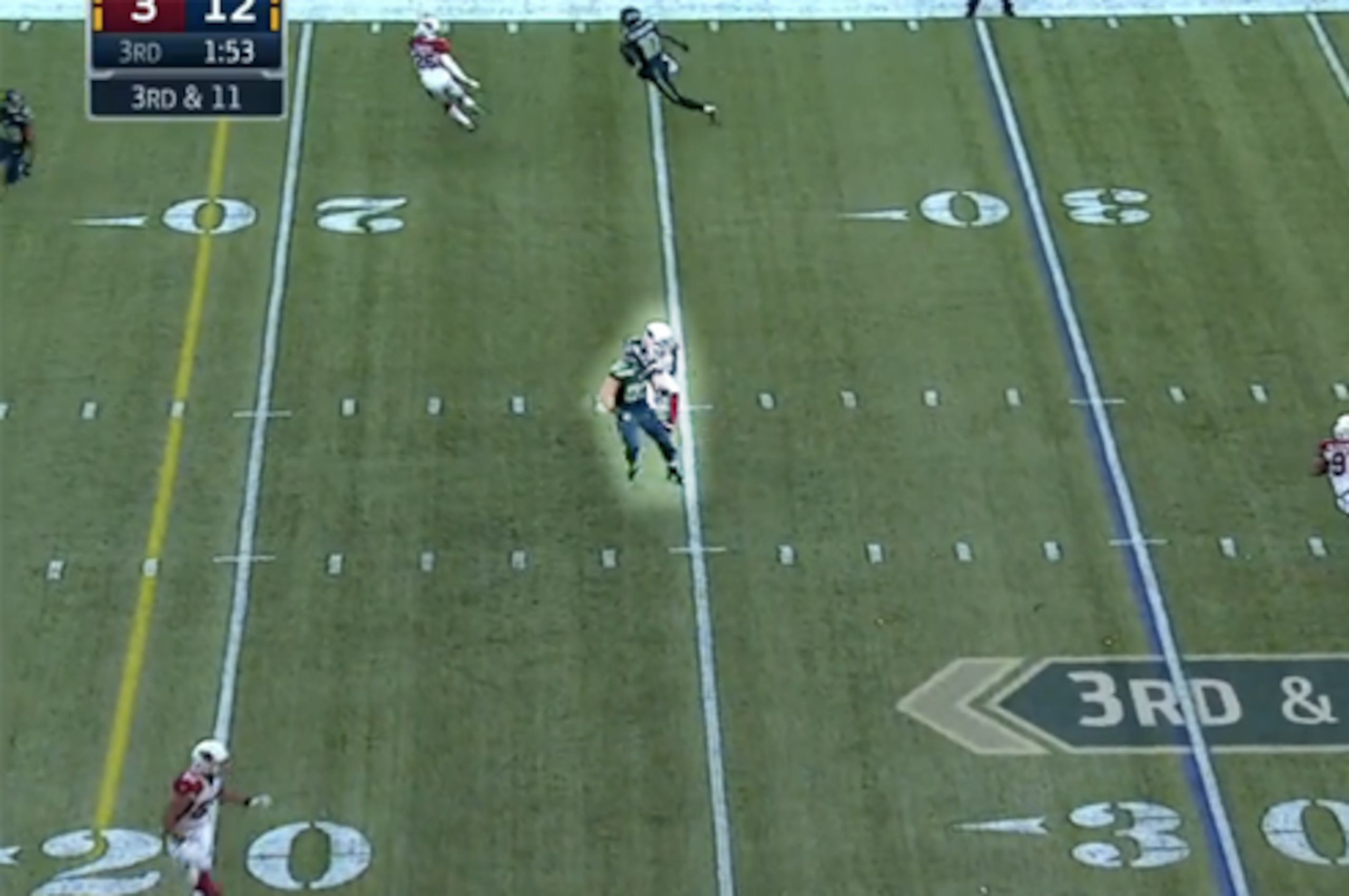
Only one defender was in position to prevent Wilson from making it to the first-down marker. That defender had his eyes on Wilson while trailing his receiver across the middle of the field. Wilson knew he needed to manipulate him before advancing past the line of scrimmage, so he pump-faked the ball to the crossing route.
This made it impossible for the defender to fully commit to the quarterback.
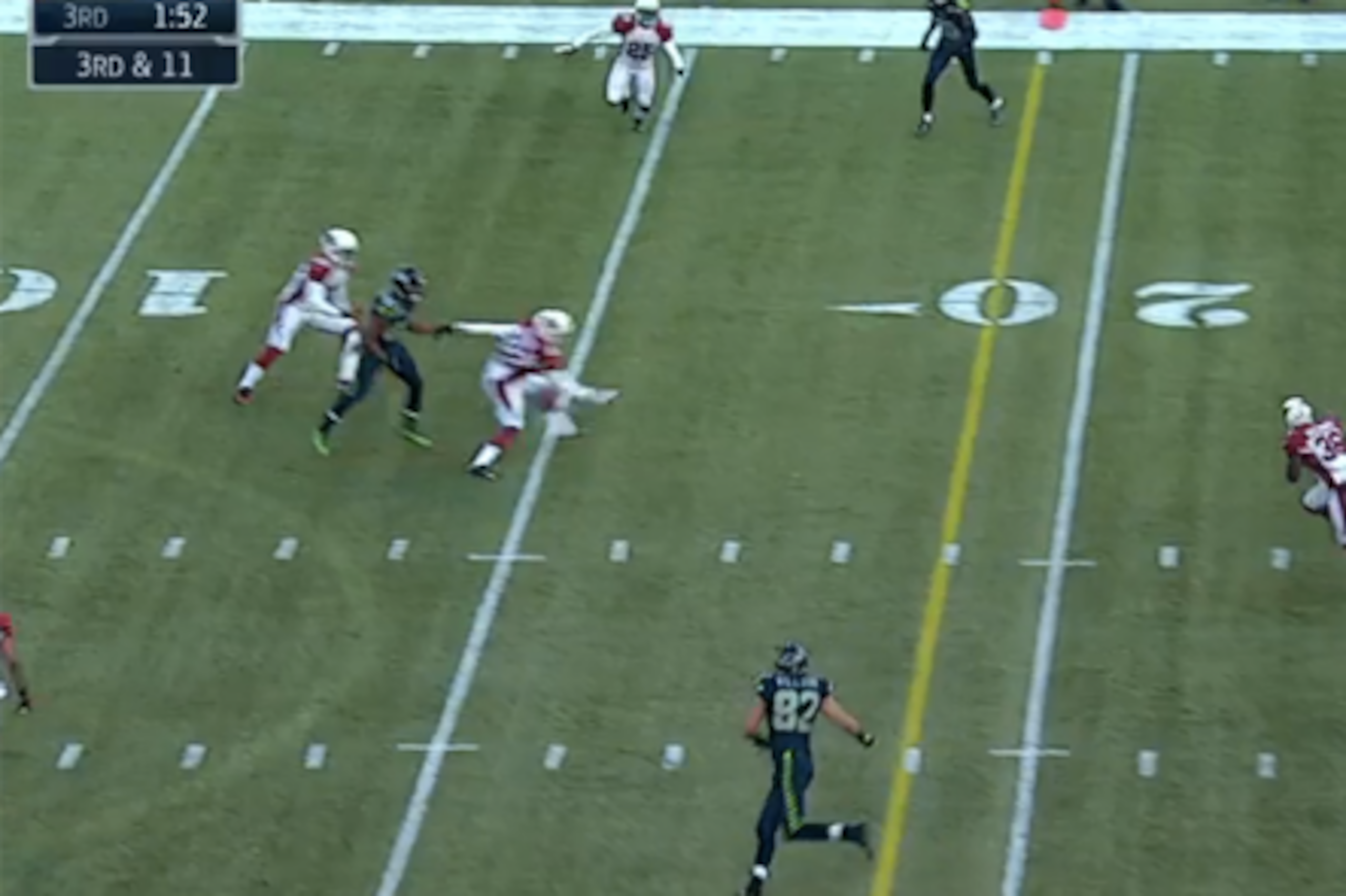
With the play fake and Wilson's athleticism, the first down quickly came within touching distance. Although deeper defenders advanced to try to meet him at the first-down marker, Wilson comfortably got there and even extended the play outside for another five yards.
The touchdown throw to Helfet was a smart checkdown, but the tight end did most of the work after the catch.
Wilson didn't play consistently well in this game, but his skill set allowed him to keep the offense efficient while sprinkling in important plays. That is the benefit to having such a versatile, talented player at the most important position in the game.
He still isn't replicating the level of play that he showed off early on last season and with the Seahawks as a whole a lesser team this year, he will need to be better moving forward. Wilson will need to put up bigger numbers in the passing game and help the offense score touchdowns instead of settle for field goals.
Last year's playoff run was relatively simple for the young quarterback, but this year's has essentially already begun. In this contest in particular, his inconsistent play was better than what Stanton offered the Cardinals, so he was able to drag his team to victory.
Over the coming weeks, with games against the San Francisco 49ers, the Philadelphia Eagles, the Cardinals again and the resurgent St. Louis Rams, Wilson must continue to improve.
In this contest in particular, that appeared to be the biggest difference between the two teams.
.jpg?w=2560 "Seahawks Cardinals Football")
.jpg?w=2560 "Commanders Cowboys Football")