How the Washington Redskins Can Make Things Easier for Robert Griffin III
Jay Gruden's term as head coach of the Washington Redskins, however it ends, will ultimately be judged by only one thing: whether or not he made Robert Griffin III a better quarterback.
That's why Gruden was hired, but his task is no easy one. He's dealing with a brittle young player, extremely raw in the fine arts of passing and reading defenses.
That makes Gruden's first priority making the game easier for Griffin. In order to do that, Gruden should take a page from the Kansas City Chiefs.
TOP NEWS
.jpg?w=2560 "Chargers Mack")
Every Trade's Best Trade Asset 🔁
.jpg?w=2560 "Green Bay Steelers Football")
Insiders: Cowboys Overpaid for Porter
.jpg?w=2560 "Seahawks Cardinals Football")
MHJ's Potential Trade Value 📉
In two seasons, Andy Reid has won 17 of 26 games and took a 2-14 team to the playoffs in his first year. Reid's done it all with Alex Smith as his quarterback.

Under Reid's tutelage, the former San Francisco 49ers draft flop has gone from derided game-manager to prospective "franchise quarterback" earning an offseason deal worth $68 million.
In 24 starts, Smith has thrown 34 touchdown passes, compared with only 11 interceptions. Smith and the Chiefs serve as a case study of how to help a limited quarterback thrive and build his confidence.
It's a template based on a few key concepts. Specifically, those concepts boil down to giving a passer quick throws to make based on easy reads.
Let's take a look at these concepts in action.
Quick Throws into Big Plays
Turning quick, underneath throws into big plays has become a staple of the Chiefs offense. Here's a great example from Week 10's 17-13 win over the Buffalo Bills.
The play came in the first quarter and was designed to get A.J. Jenkins free over the middle:

To do that, tight end Anthony Fasano and wide receiver Dwayne Bowe ran vertical patterns (red arrows) to take their coverage deep. These routes naturally cleared out space underneath.
Notice also how tight end Travis Kelce released on a screen into the flat (blue arrow). This gave Smith an obvious checkdown in the event of tight coverage or pressure.
An in-built safety valve is something a quarterback always needs. Smith rarely throws a pass without one.
He also used a play-action fake to star running back Jamaal Charles to attract linebacker attention and further split the middle of the defense:
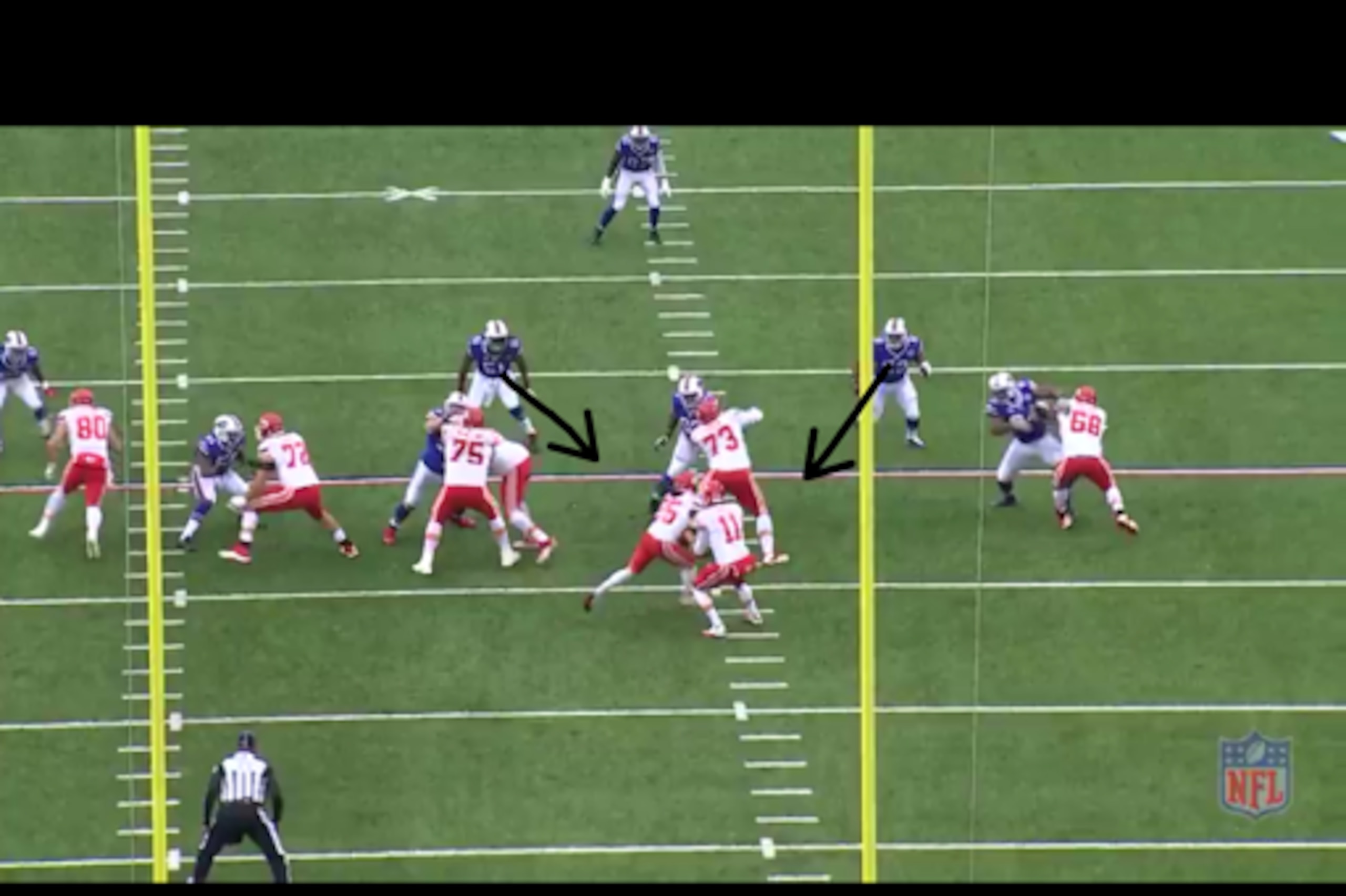
Once the routes were set, Jenkins was wide open over the middle. Coverage was taken away from him by the deep patterns and Kelce's underneath release:
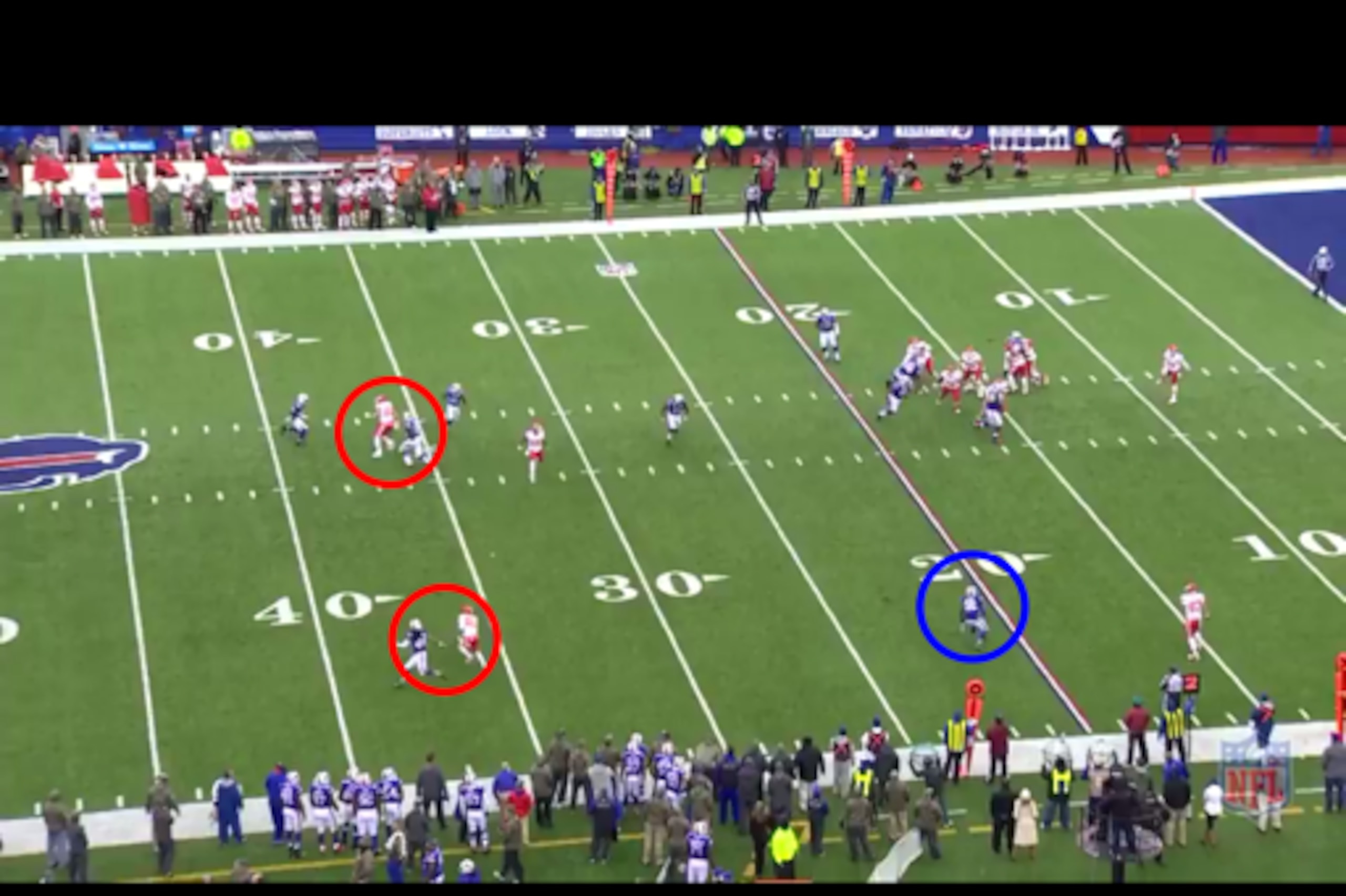
Smith now had two quick reads to make. First, he looked Kelce's way for the safe, short-range throw:
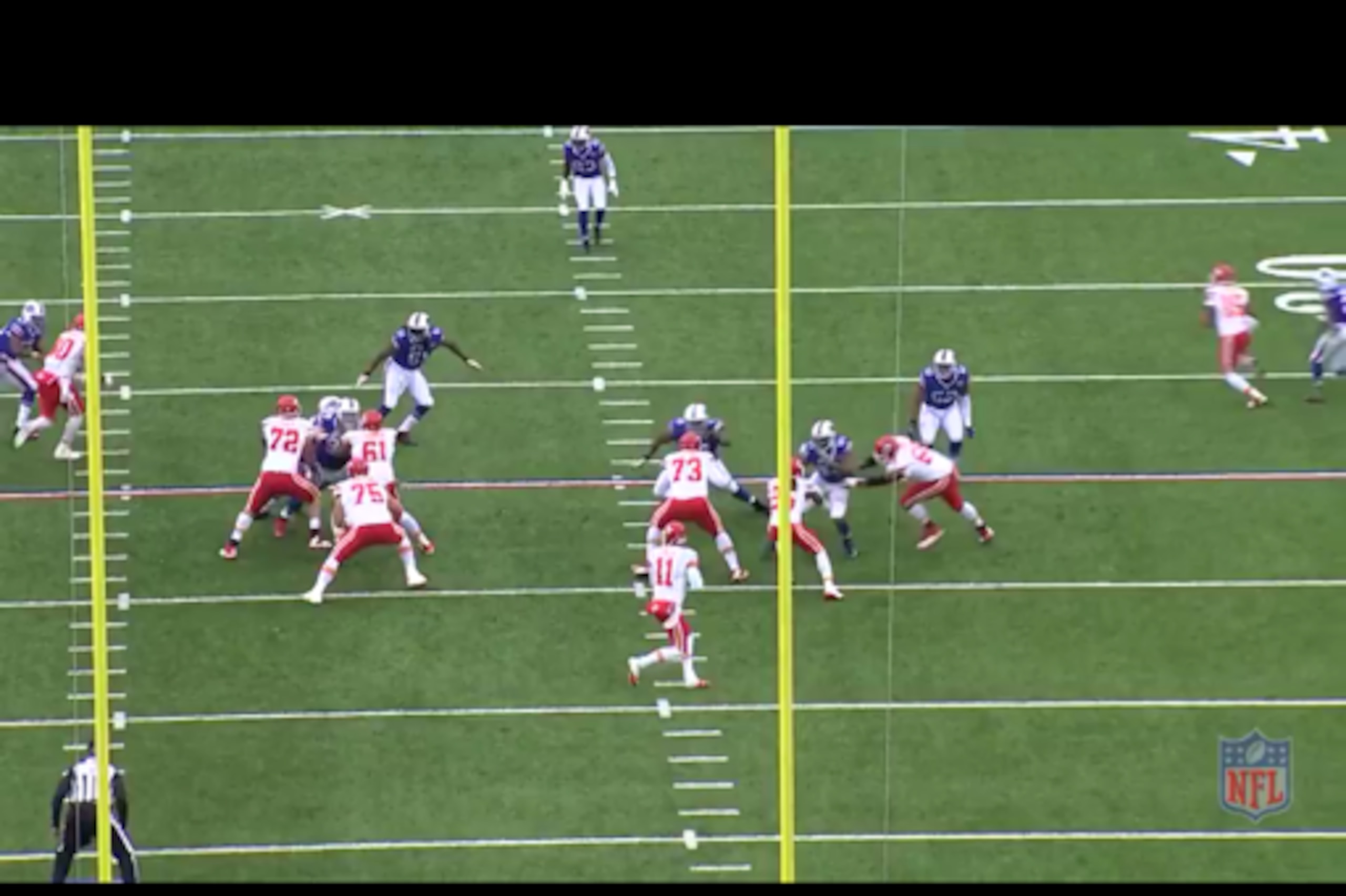
But he soon progressed to Jenkins after seeing the wideout crossing the field uncovered. Jenkins took the pass and scampered for a 45-yard gain:
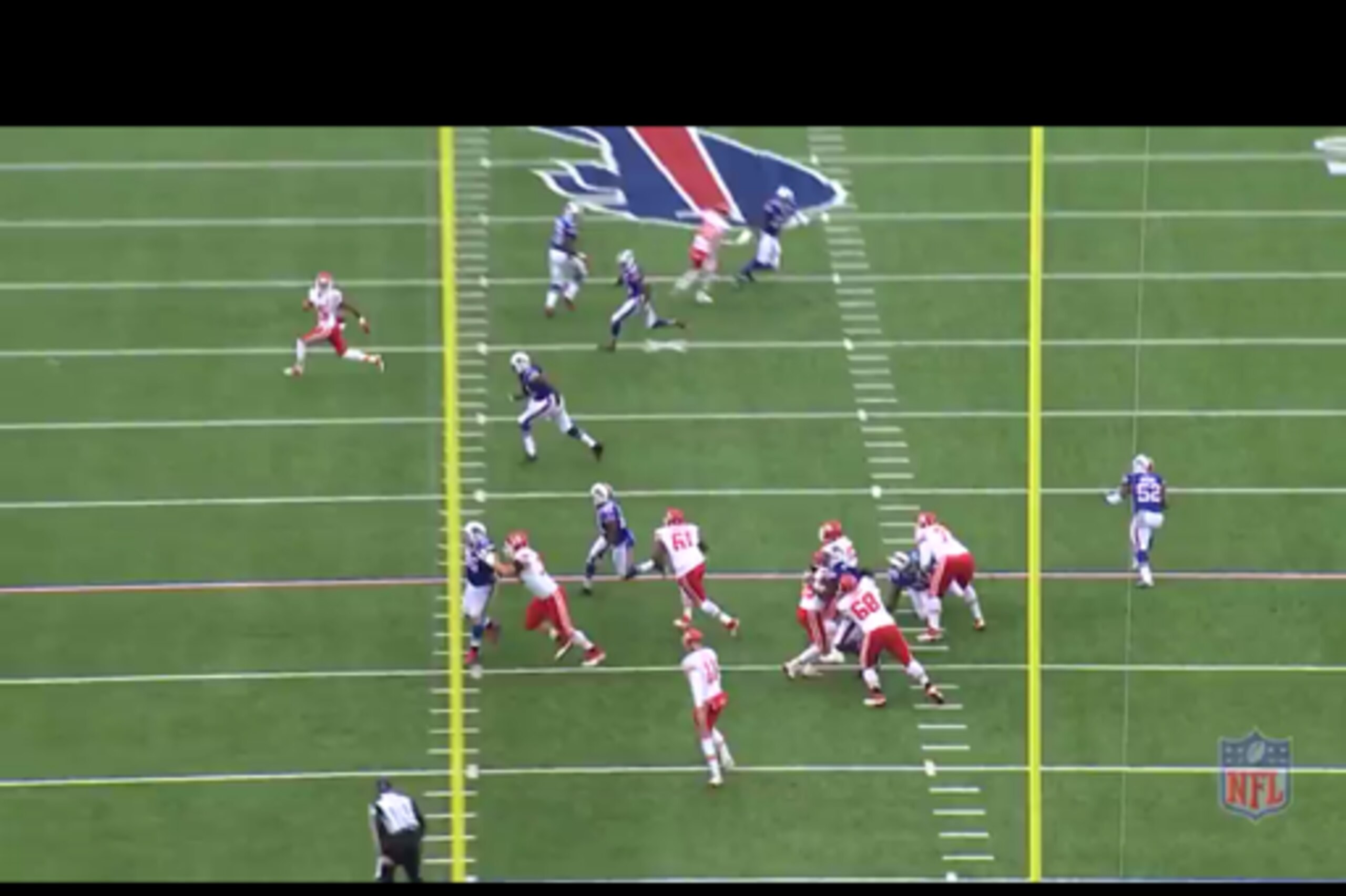
This play was basically an extended middle screen. It was cleverly packaged with a play-fake to use a strong running game as a decoy and take underneath defenders away from Smith's receivers.
Smith was given a short-range option he could go to if his downfield targets were covered. Further afield, Smith had an easy throw to make to generate a big gain.
That's the anatomy of creating yards through the air no matter who's under center.
Reid and offensive coordinator Doug Pederson gave Smith more than one read, but the design of the play meant he could make his choice in no time at all.
A similar play occurred during the second quarter of the Chiefs' 24-10 win over the New York Jets in Week 9. The design featured a three-tight end set with Fasano, Demetrius Harris and Kelce overloading one side of the offensive line:

The play featured five routes. Kelce would run to the back of the end zone (yellow arrow). Fasano would also break vertically to the middle (red arrow). Harris would break underneath those releases on a shallow crossing pattern (blue arrow).
On the other side of the formation, running back Knile Davis ran a circle pattern into the middle, while wideout Frankie Hammond broke to the post.
Smith now had two underneath outlets in Davis and Harris. But he also had an outside release from Hammond, as well as two vertical patterns to aim for in the middle.
However, this play wasn't about numbers. It's beauty lay in manipulating the Jets defense to help Smith make the best read. The targets of the manipulation were the inside covering defenders:

Each member of the inside coverage would be drawn to one of the five routes:
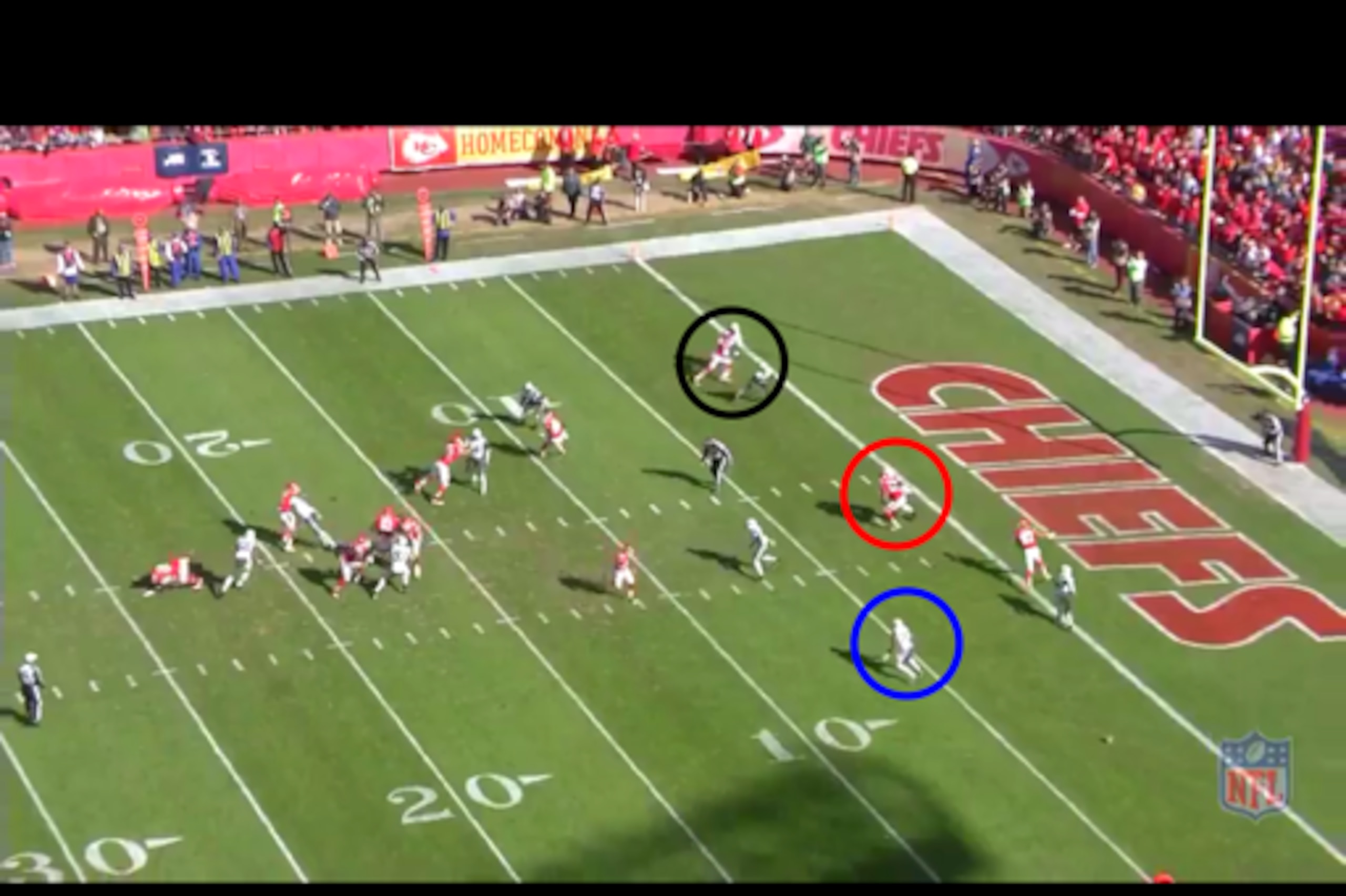
One safety hung back over the top of Hammond's release (black circle). The deep safety had to cover Fasano running to the middle of the end zone (red circle). Meanwhile, the slot corner rotated underneath toward either Harris or Davis.
This action left Smith with a simple choice. His best matchup was now 6'5", 260-pound Kelce against a cornerback. Smith wasted no time connecting with his tight end for an easy 12-yard score:
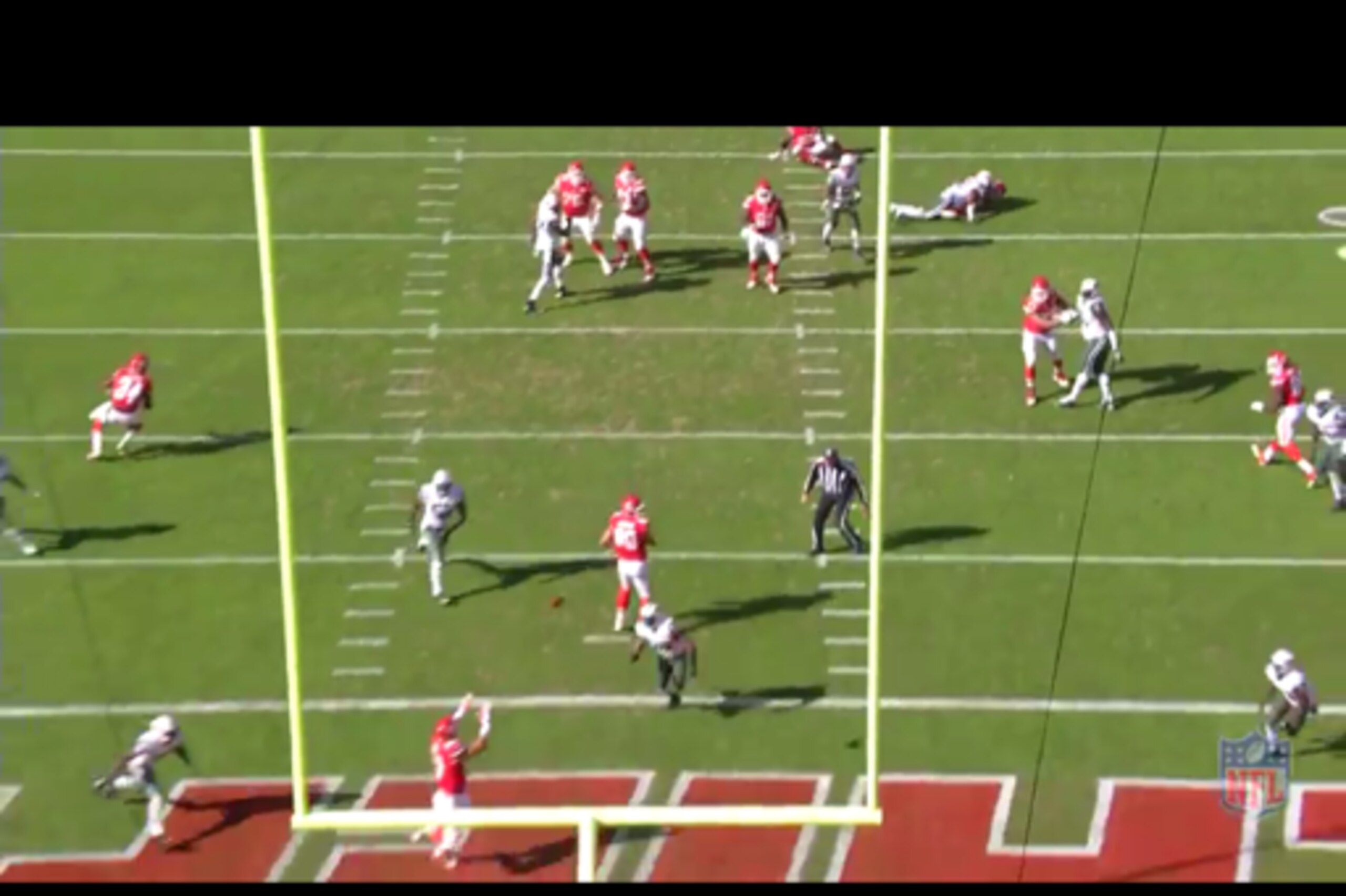
Smith could have hit any one of his five reads that was left uncovered. His decision was based entirely on where the covering defenders went.
Had the slot corner not gone underneath, Smith may well have targeted Davis. Had the deep safety not locked onto Fasano, he would've been the target. It really is that simple.
That level of simplicity is noting to be mocked. Instead, it's the best way to help a quarterback make quick decisions. That's particularly important for a young quarterback lacking experience, expertise and comfort reading defenses.
These plays help Smith scan the field with both clarity and confidence. That's certainly something Griffin would benefit from.
He's often been guilty of locking on to his first read and as good as telegraphing his intent. However, that needn't be such a bad thing given the right design.
Targeting the First Read
Taking another page from the Reid-Pederson playbook, consider this gem from Kansas City's Week 7 23-20 road win over the San Diego Chargers.
It's another five-pattern play, but one featuring four slant routes:

Slants are a staple of the Chiefs passing game. Here they were run together with four receivers breaking into the middle. Notice also how Charles swung to the flat on a safety-first screen. There's that checkdown again.
By flooding the middle zones with slants, the Chiefs created favorable matchups. They challenged San Diego's Cover 1 underneath defenders with tough assignments against in-breaking receivers in front of them, whom they were trailing from behind:
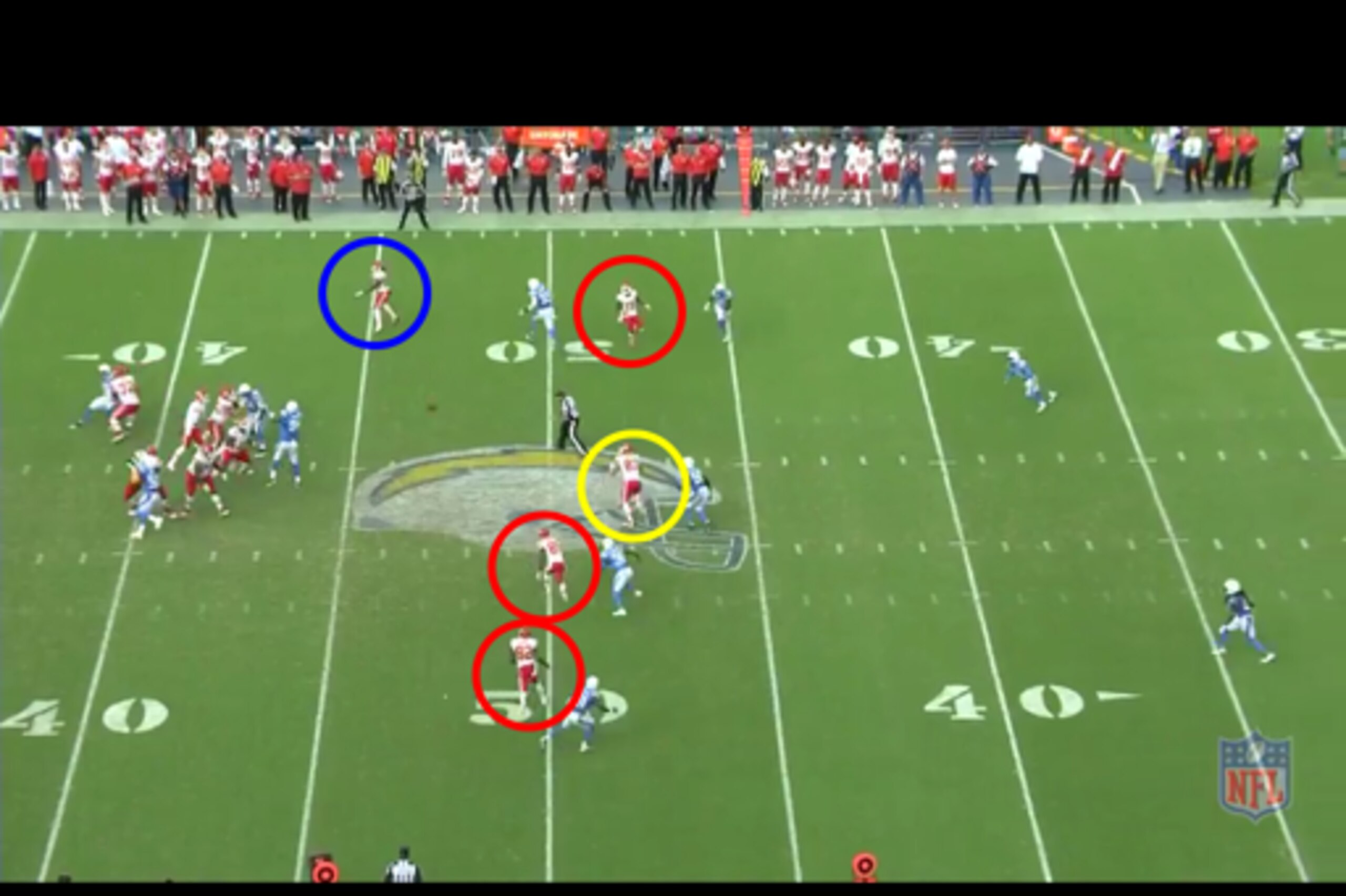
The best matchup was the size advantage Kelce offered from the slot. That made Smith's choice and throw an easy one. He took one quick look for Kelce's slant route:
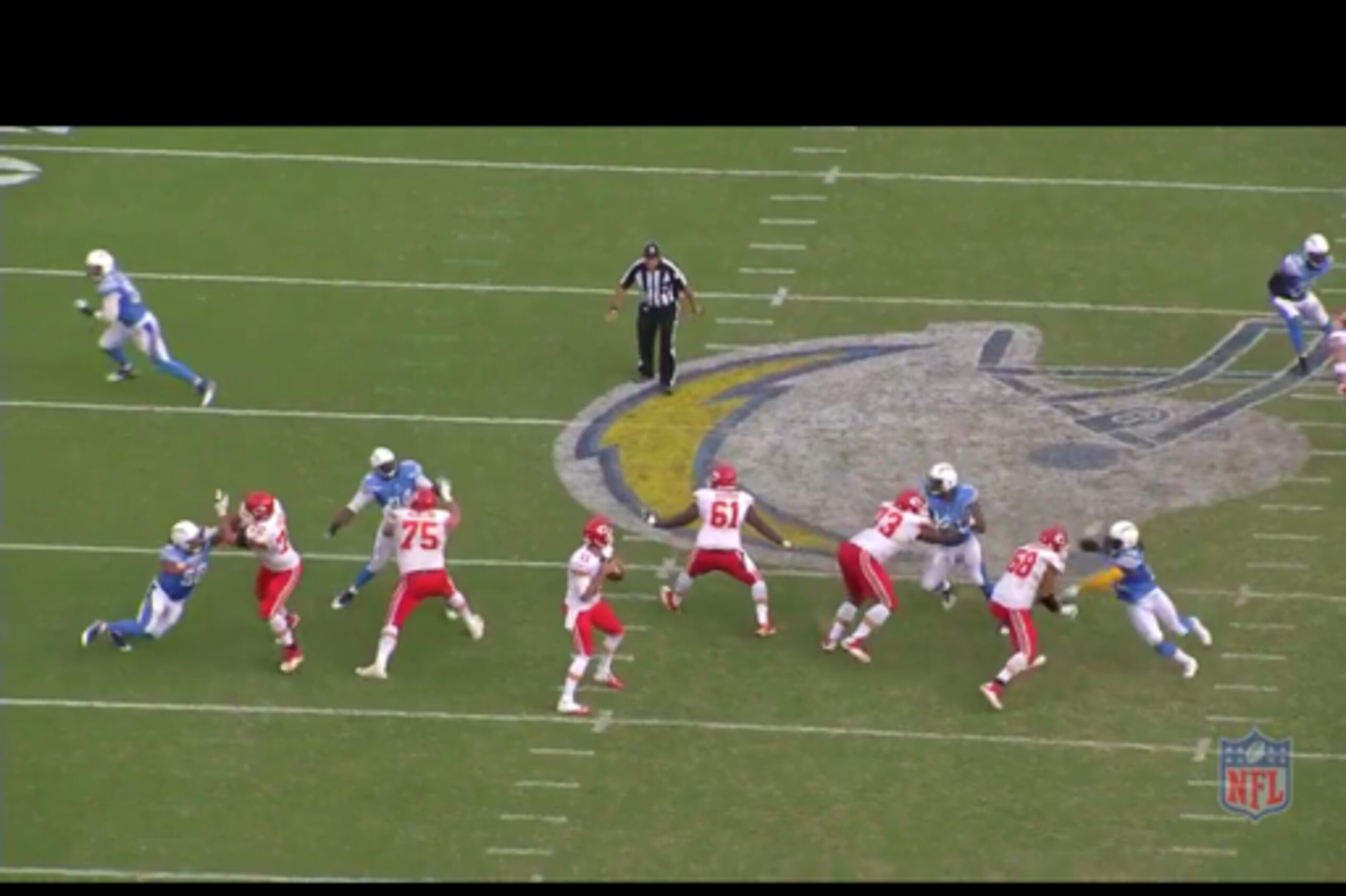
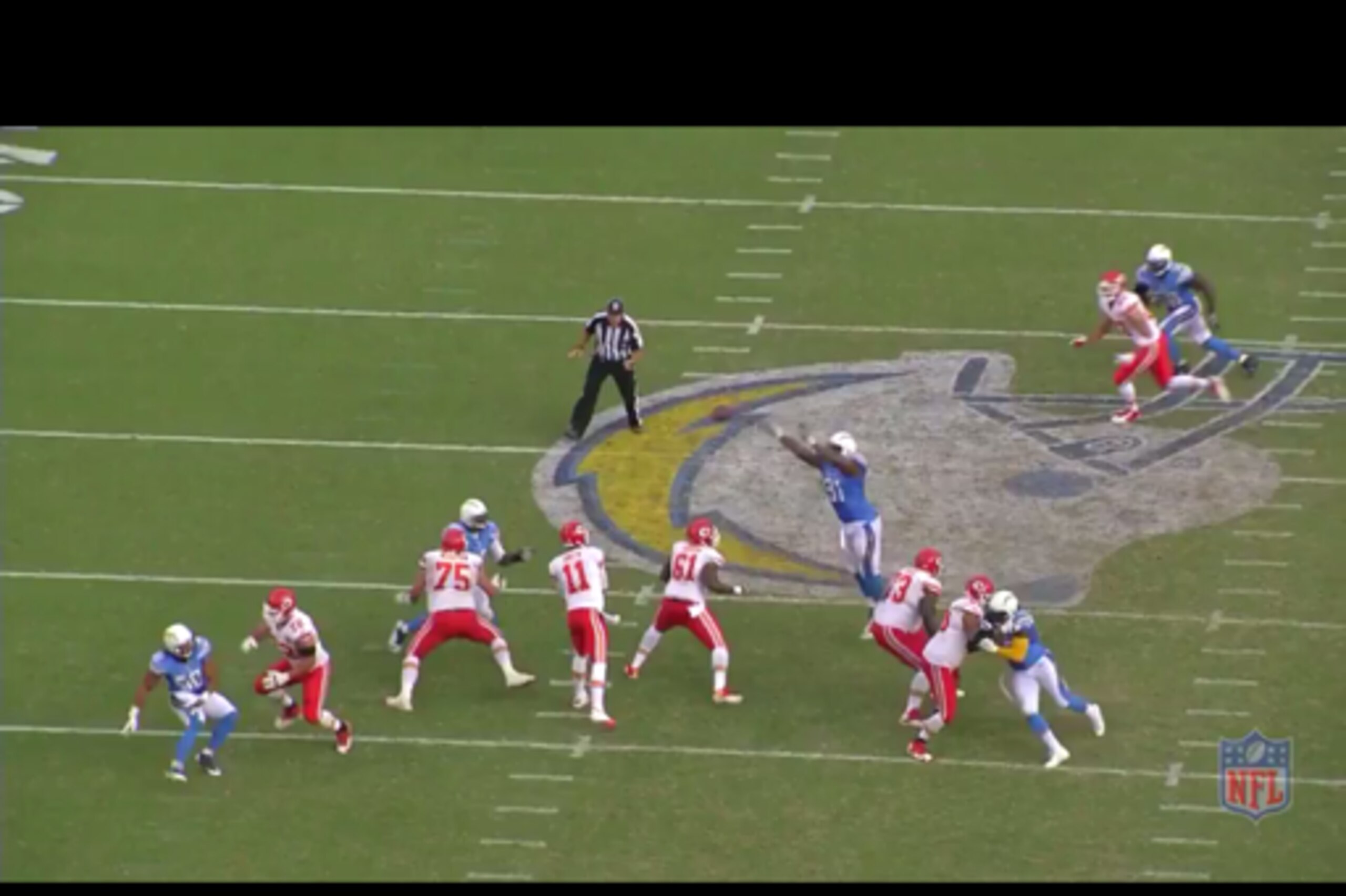
Once the big tight end worked in front of the linebacker, his wide frame made breaking up the pass next to impossible. Smith hit Kelce on the run for 16 yards:
Back in September 2013, when Smith's play was helping lead the Chiefs to an unbeaten start, Bleacher Report analyst Matt Bowen detailed how concepts similar to this help the quarterback:
"In third-down situations with seven-to-10 yards to go, defenses should expect the "2212 route" (2=slant, 1=flat) or "All Slants" from 2x2 alignments. This is a three-step read for Smith, where he can either target the inside slants (think Cover 1) or throw to the tight end in the flat.
"
This kind of quick-hit throw is something Griffin needs more of. It's the best way to fix his troubling habit of holding onto the ball for too long and taking avoidable sacks.
A one-read pass play like this can be packaged effectively around Griffin's mobility as another way of avoiding pressure. A great example came on Washington's first offensive play in Week 9's 29-26 loss to the Minnesota Vikings.
The play was a bootleg pass with multiple routes built in. The design was drawn up to free Pierre Garcon from the slot across the middle:
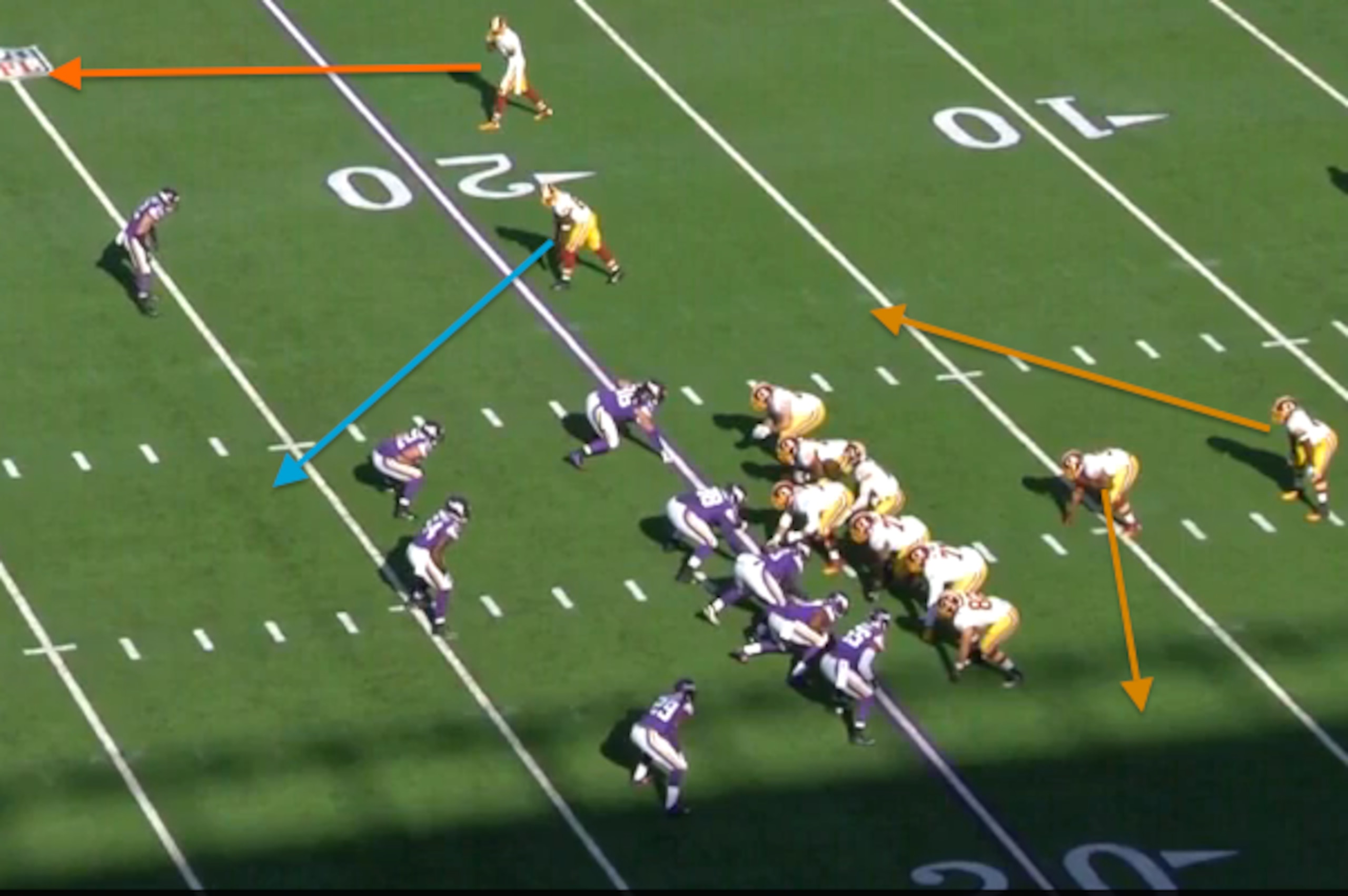
Space would be cleared by an outside post pattern by DeSean Jackson. He pushed coverage deep.
At the same time, running back Alfred Morris and fullback Darrel Young released to the flats. They drew linebacker attention.
Garcon simply ran into the void underneath the retreating deep coverage and behind the short-range defenders:

Griffin also drew defenders down to the line of scrimmage via a play-action fake to Morris:
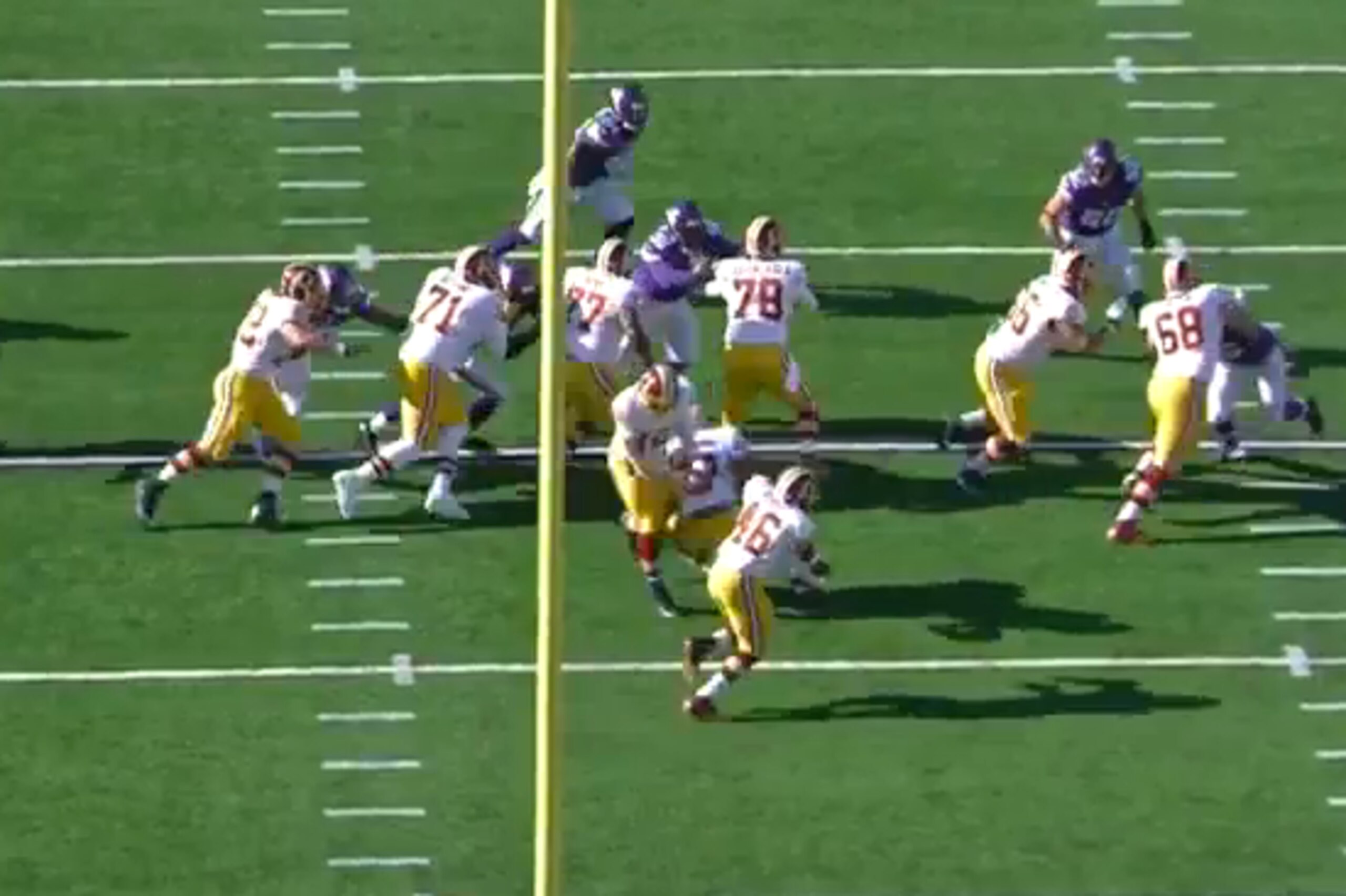
That not only opened up the middle, it also gave Griffin the freedom to roll out from the pocket. From there, he had an easy throw to make to connect with Garcon for 11 yards:
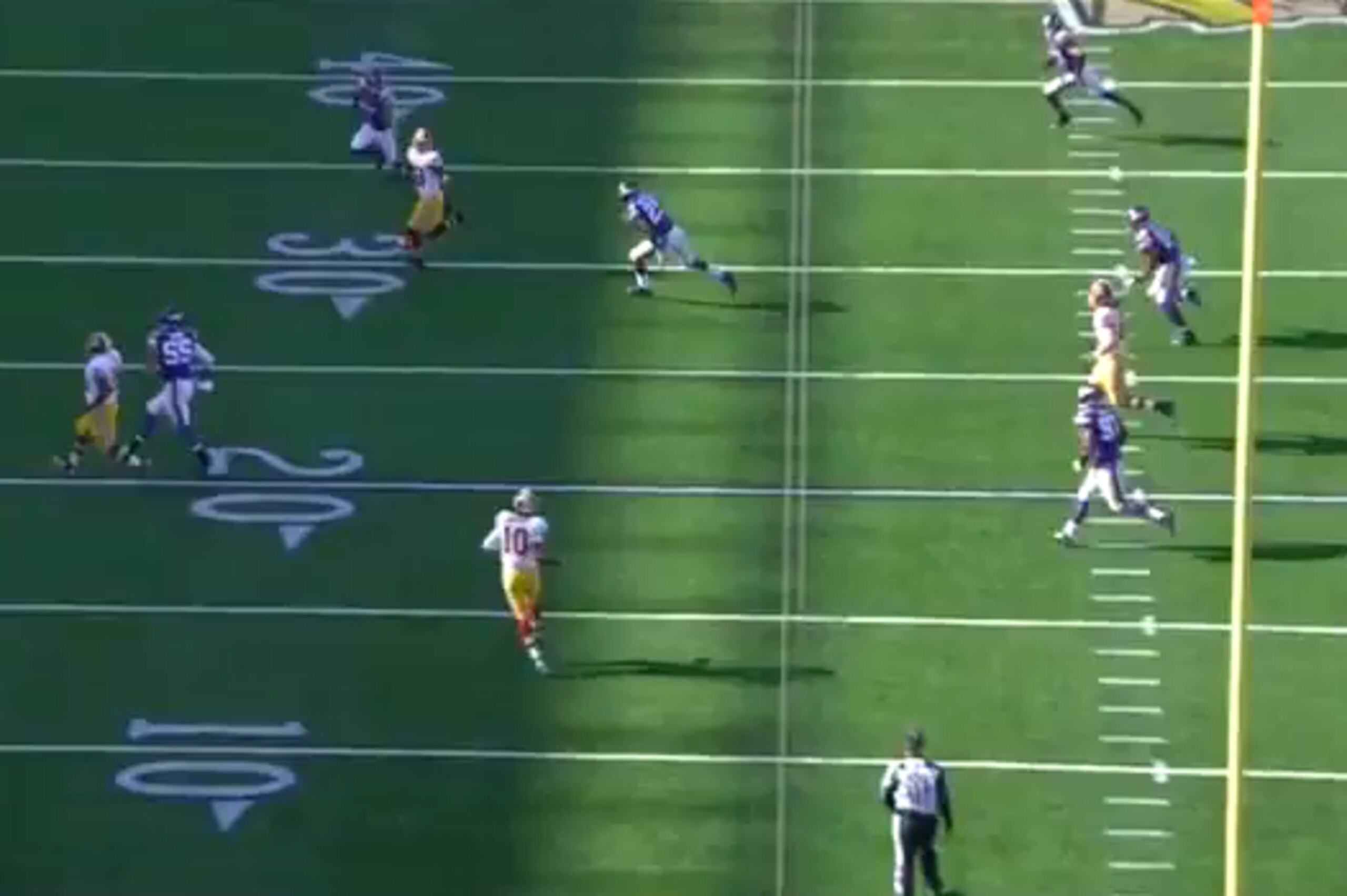
The read was quick, as the play was designed to free Garcon. The throw was easy because the design worked and left Garcon wide open on the run.
If Griffin had gotten into trouble, he could have dumped the ball off to Young in the flat. So there was a natural outlet packaged alongside a quick and easy read.
These are the type of plays that should be a feature of a Griffin-led offense. They can build his confidence, as well as getting him into the habit of making quicker decisions.
The same things can be achieved via greater use of the team's running backs as receivers. That means more screen passes.
Backfield Receivers and Screen Passes
No discussion of a Reid-coached scheme would be complete without reference to screens. Few, if any, teams in the NFL execute screen passes as well as the Chiefs.
They are underpinned by misdirection and the premise of getting speedy playmakers in space, mismatched against covering defenders. Have a look at this superb example from Week 5's 17-22 loss to the San Francisco 49ers.
The play began with rookie De'Anthony Thomas rotating from a split alignment in a bunch set to join Charles in the backfield:
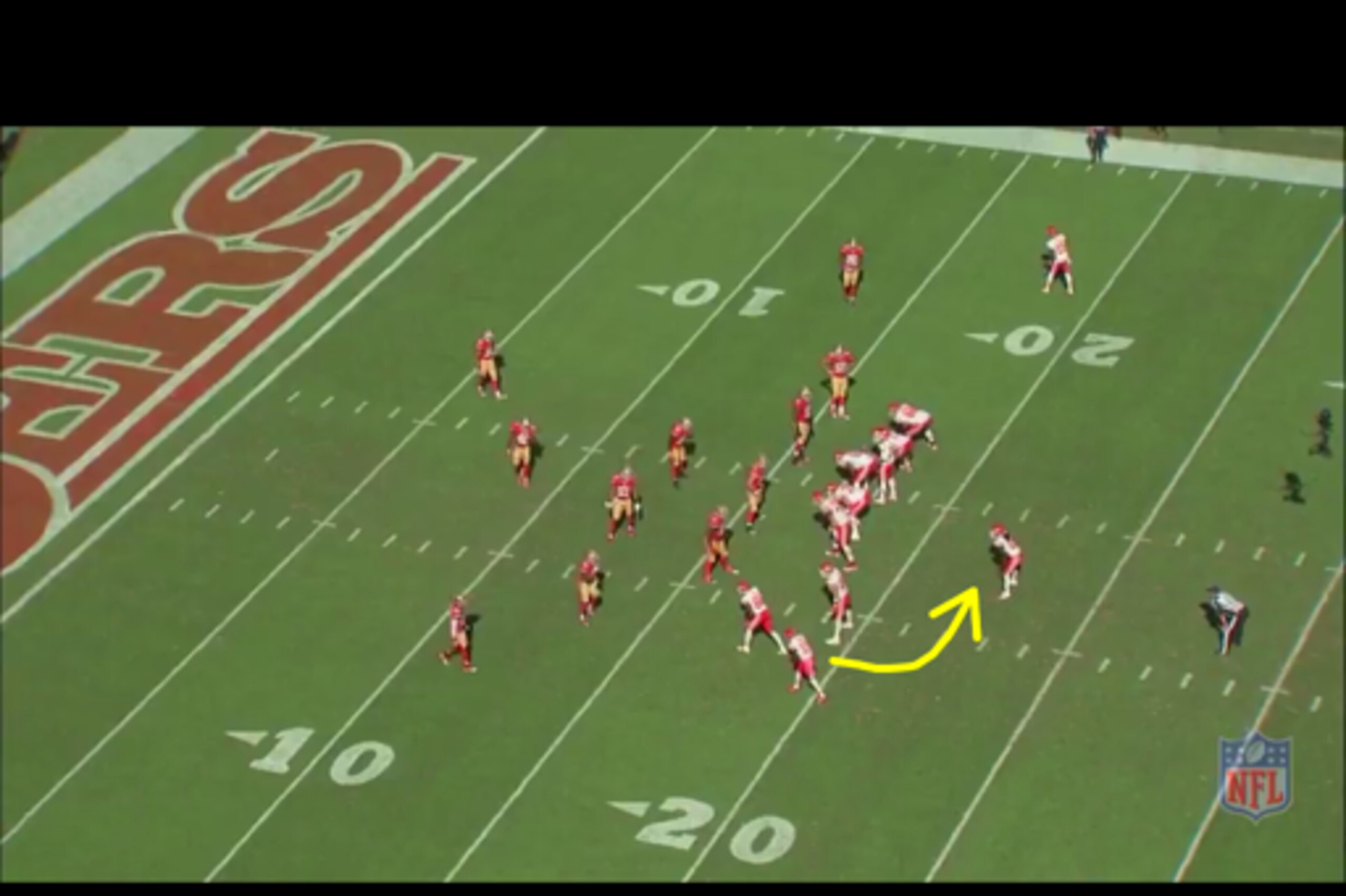
Both Charles (red arrow) and Thomas (yellow arrow) ran swing patterns in opposite directions into each flat.
The screen was set by a downfield block from center Rodney Hudson (black line) releasing to the linebacker level. On the outside, Thomas would have a convoy comprised of Fasano and Bowe (blue lines):
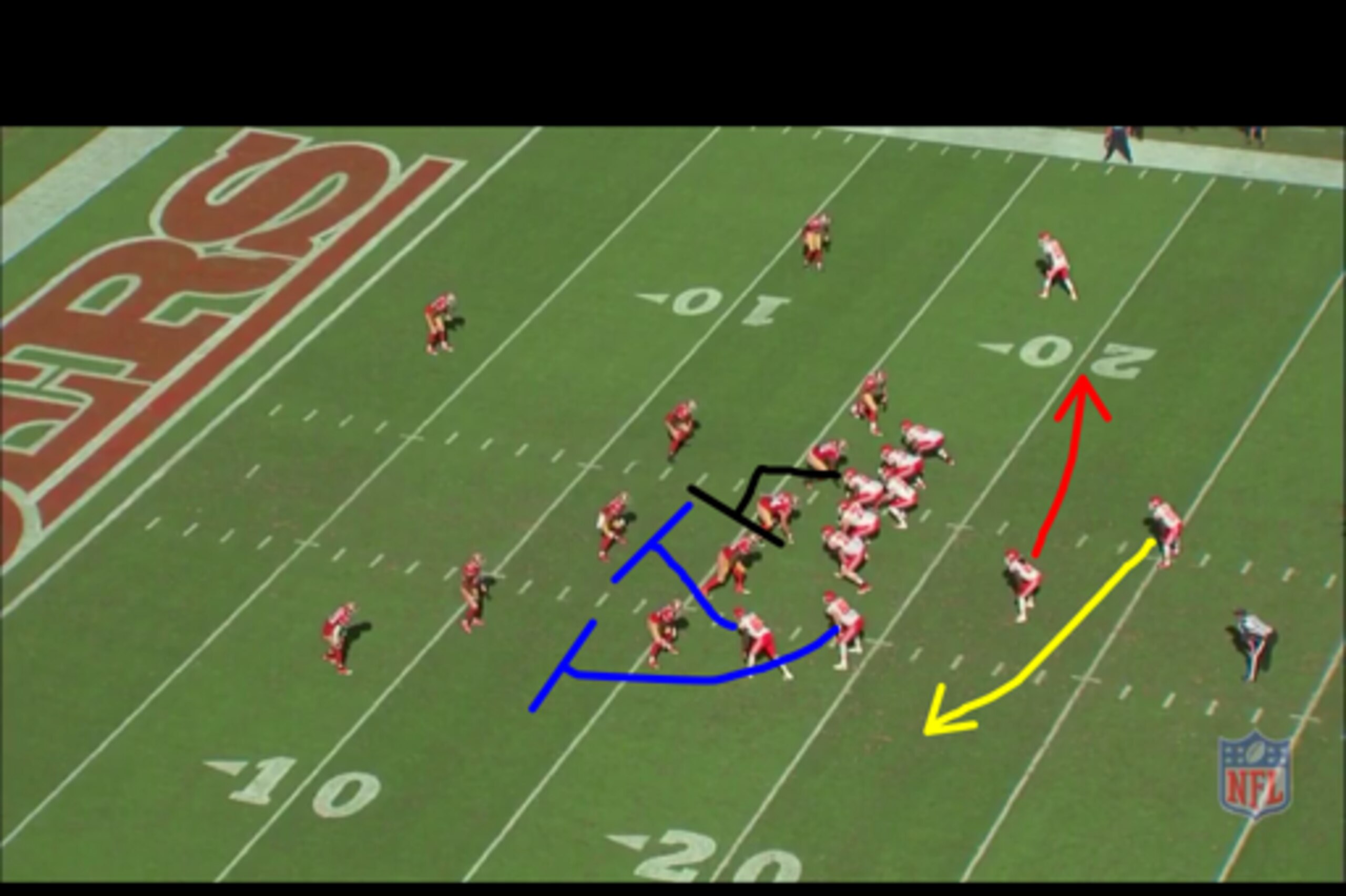
Smith's throw was so simple the 49ers defense had a right to be insulted. He simply looked Charles' way first, likely a fake, before turning and flipping the ball to Thomas:

Bowe and Fasano made their blocks, as Hudson continued to lead Thomas toward the end zone. Hudson made the final and key block as Thomas glided in to complete a 17-yard score:

This play required the minimum from the quarterback. Smith knew the design well, sold it and wasted no time making a throw he couldn't miss.
The same principles can work when running backs release to the middle. A fine example came during Kansas City's 34-15 win over the Miami Dolphins in Week 3.
The play was designed for Joe McKnight to run a circle pattern into the underneath, middle zone:
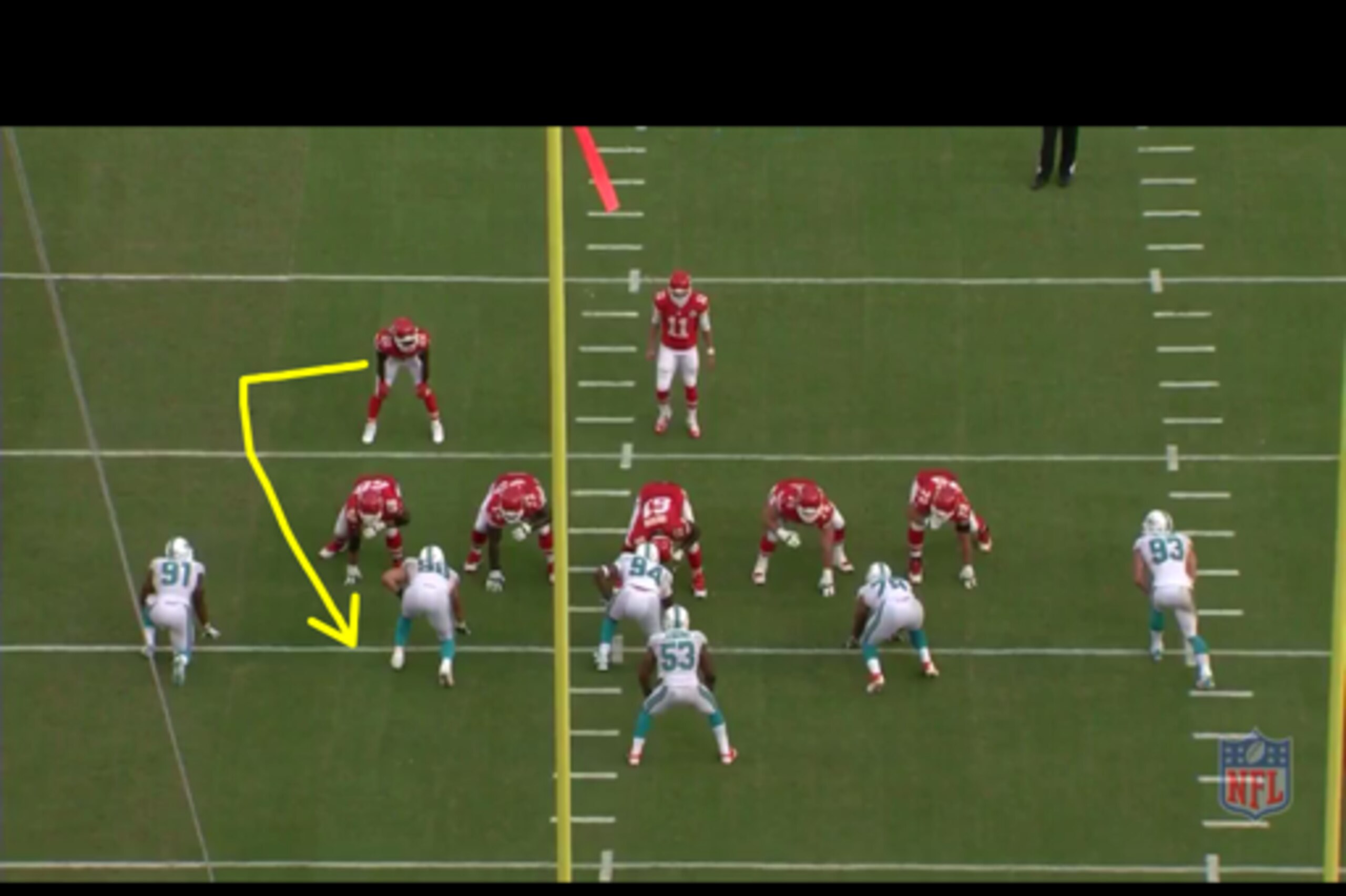
Again, Reid and Pederson's formation was cleverly packaged to manipulate a defense. A trips set on one side (black circles), naturally committed the Dolphins to shifting the strength of their coverage to that side:

On the other side, splitting Kelce out as a wide receiver created single coverage along the sideline. That favorable matchup on the outside committed the deep, single-high safety to look Kelce's way.
That meant McKnight would be isolated against linebacker Jelani Jenkins (red circle). However, Miami planned to blitz Jenkins though the middle.
That meant shifting the coverage responsibility on McKnight. You can see Jenkins pointing to defensive end Cameron Wake, signalling the need for him to peel off into coverage.
This meant the Chiefs would have an excellent matchup of a D-lineman against a running back underneath:

McKnight easily beat Wake to the inside, giving Smith a quick and easy throw to make to beat the blitz:

This was a true blitz-beater, one Smith could hardly miss. The play also showed the value of incorporating running backs in the passing game more often.
This is something the Redskins should definitely do more to make things easier for Griffin. Unfortunately, the likes of Morris, Young and Roy Helu Jr. are too often ignored unless it's third down.
As suggested in this article, the type of plays Gruden and McVay have called on third downs should be utilized more often on earlier plays.
A screen pass to Morris during the first quarter against the Vikings is a good example. The play involved Morris creeping through the rush of the Minnesota defensive line:
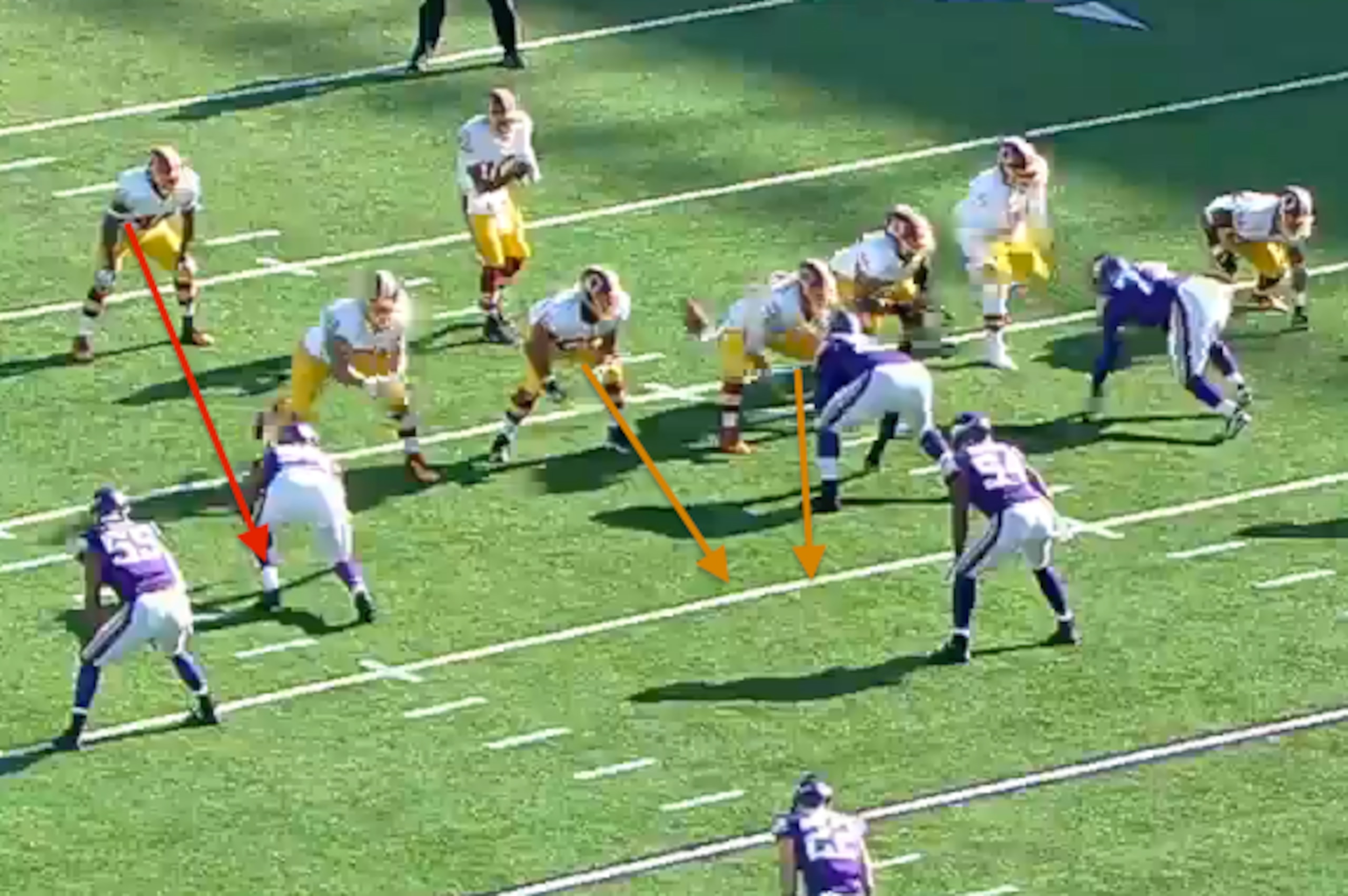
He would have a screen formed by right guard Chris Chester and center Kory Lichtensteiger.
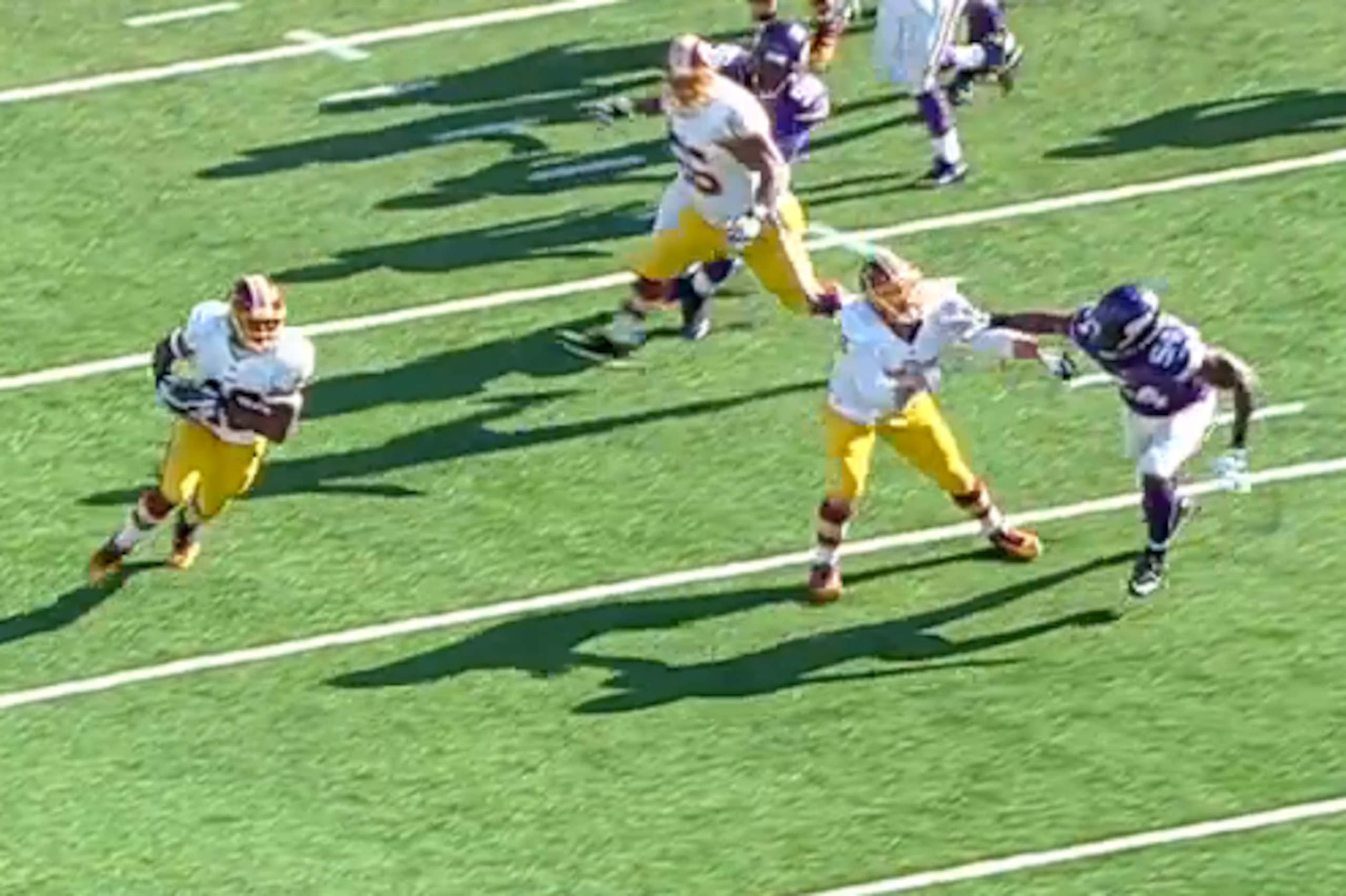
As Griffin made his quick throw to Morris, Chester and Lichtensteiger soon set their blocks:

Lichtensteiger kept the linebacker at bay, allowing Morris to turn a short pass into a 16-yard gain:
Quick, safe throws like these help to settle a quarterback. But they are also easy routes to big plays. Those two things are what can turn a limited passer into a highly effective one.
That's the lesson the Redskins can learn from the Chiefs offense. Gruden has some similar ideas to the ones Reid has used to make Smith a star. But it's time he used them more to accelerate Griffin's development.
Some might smirk at the idea of taking a page from the league' 30th-ranked passing game, one where no wide receiver has caught a touchdown yet this season.
But that's merely a number, one far from the whole story. It's better to think of taking a cue from a starter who has consistently won games and always protected the football.
Surely, those are things Washington has to want from Griffin.
All statistics via NFL.com.
All screen shots courtesy of CBS Sports, Fox Sports and NFL.com Game Pass.
.jpg?w=2560 "Giants Football")