The Utah Jazz have stockpiled a lot of young talent over the past couple of years. They've taken full advantage of the benefits attached to losing by building with first-round picks.
Trey Burke, Alex Burks, Gordon Hayward, Enes Kanter, Dante Exum, Rudy Gobert, Rodney Hood—all of these guys were personally hand-picked by Utah management in the draft.
And there's a lot to like about each individually. The Jazz missed on Paul George in 2010 and Kawhi Leonard in 2011, but for the most part, they've done pretty well for themselves based on the hand the lottery dealt them.

But now they're looking at a core with Hayward, 24, the oldest guy of the bunch. The Jazz won just 25 games last year, and though we'll likely see some encouraging improvements in 2014-15, it's probably going to be another long, losing season.
Utah will have some personnel decisions to make soon with regard to their rebuilding plan. And here's the fear—that the Jazz end up committing to a roster that's ceiling is capped by logjams and limited individual upside.
And it starts at point guard, despite the Jazz having two promising options at the position.

Utah went with a worry-about-it-later approach by taking Exum, a point guard, one year after Burke. And the fit isn't overly convincing.
You'd imagine the ultimate goal here long term is for the two to play together, which means that Exum must play off the ball, given Burke stands just 6'1" and probably wouldn't fare to well at the 2.
But by playing Exum off the ball, it forces him to play to his weaknesses as a shooter and away from his strengths as a playmaker.
And it takes away from what drove his massive appeal in the first place—Exum has the potential to be a monster mismatch at the point. Not at shooting guard, where he'll have the ball less and likely draw bigger defensive wings.
As long as Burke is on the floor, Exum's playmaking opportunities will be limited.
“I think I’m still comfortable at the point,” Exum told Jody Genessy of the Deseret News following one of his summer league games. “I still want to get the ball in my hands as much as possible. I didn’t get it a lot in my hands these last couple of games.”
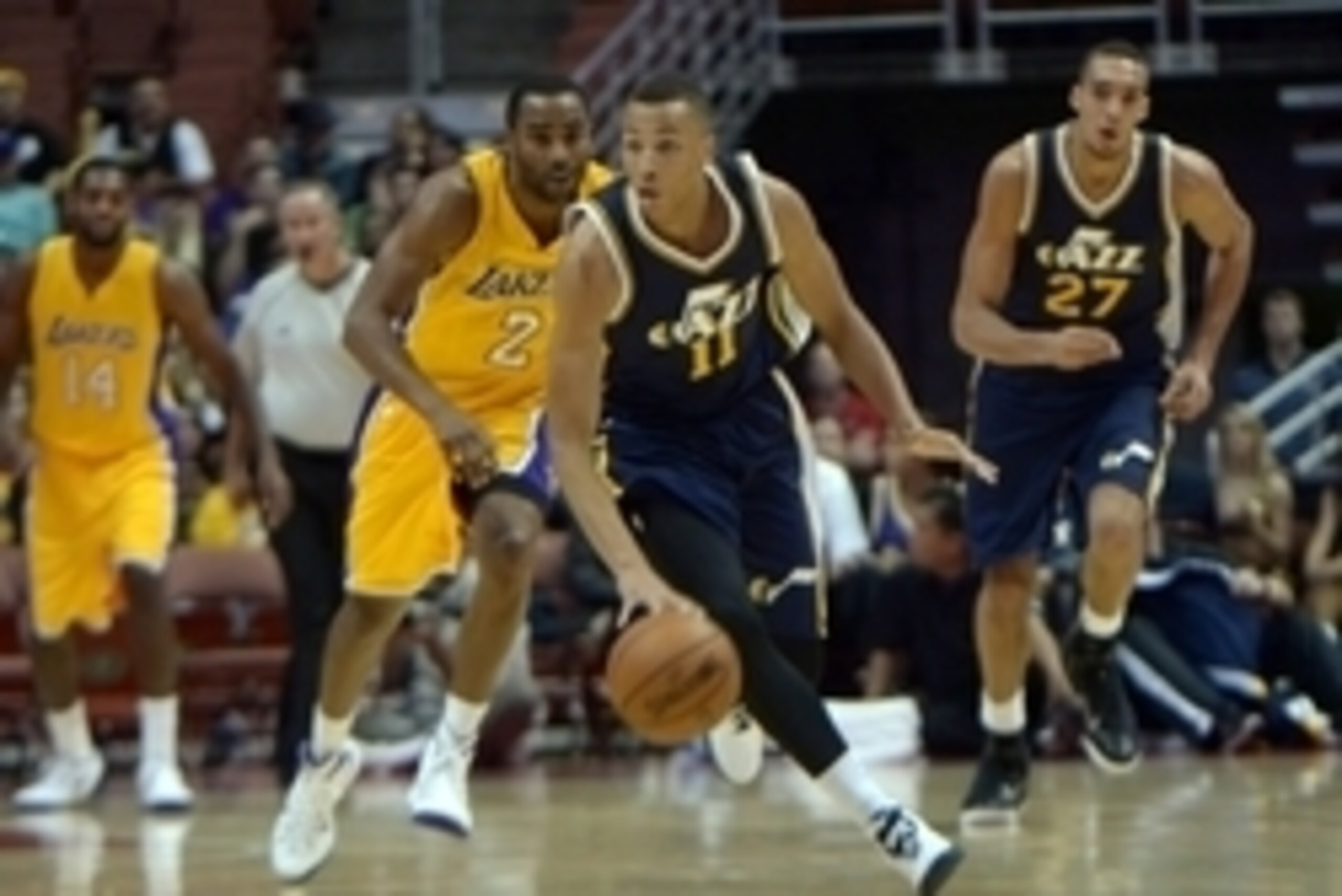
Based on the look of things, it seems as if the Jazz plan on grooming Burke, who's clearly more ready to run the team right now, as their floor general moving forward.
A skeptic with regard to Utah's strategy might argue that Exum is losing valuable early reps to a guy whose ceiling is a few stories lower. Burke might help the Jazz win more games in 2014-15, but is that worth jeopardizing the development and possible future of a potentially more rewarding player in Exum down the road?
You worry that Burke's presence will prevent Exum from ever taking off and that Burke himself will eventually hit the wall. One of the reasons why eight teams passed on him in a weak draft was because of his lack of perceived upside.
The frontcourt situation in Utah is also somewhat murky. Management recently made the decision not to extend Kanter, a likely result of his questionable fit alongside Derrick Favors, whom the team is heavily invested in.
Favors and Kanter have had some issues gelling together. It's not surprising—both of them live in the paint and essentially crowd each other's space. That's why coach Quin Snyder has had Kanter working on his three-ball—to stretch the floor and give each big man a little more room to score.
But anyone who's watched Kanter over the years knows that's not his game.
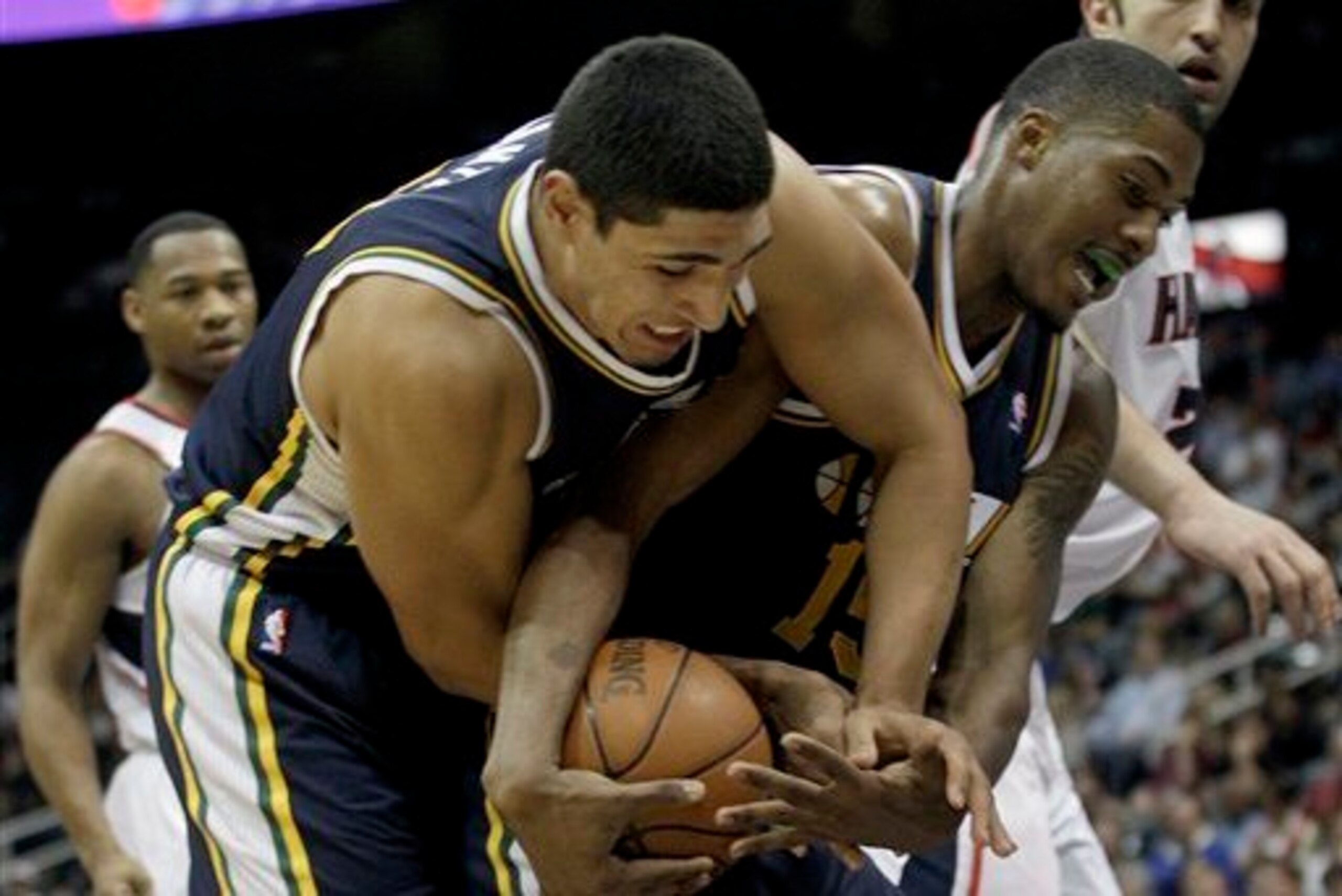
Regardless, he should draw plenty of interest next summer on the restricted free-agent market, but with Favors at the 5 and promising center Rudy Gobert waiting to blow up, the Jazz might want to pocket that money and save it on a different need.
If Utah decides it doesn't feel it's right to lose a starter for nothing, it will likely be forced to overpay and commit to a frontcourt that lacks natural cohesion.
Moving back to the backcourt, the Jazz will also have a decision to make on Alec Burks, who has until midnight October 31 to agree to an extension or he too will become a restricted free agent next summer.
Grantland's Zach Lowe shared what he believed will take to lock him up:
"A four-year, $28 million extension might seem an overpay given Burks’s record, but it could turn into the new TV-deal version of those $4 million–level extensions teams gave Thabo Sefolosha, Quincy Pondexter, and Jared Dudley. Those deals weren’t home runs, but they provided good value at most times, and can return actual assets in trades.
"
The Jazz must decide whether to pay around $7 million a year today or risk him erupting in 2014-15 and drawing much greater interest as a free agent.
If Utah does bring back Burks—and it eventually ends up moving forward with Burke as the long-term answer at point guard to pair with Hayward, who's making around $15 million a year, and Favors, who's making $12 million—then chances are this is the same core Jazz fans will be looking at in a few years.
It looks promising now, but relative to the brutal Western Conference, is this a group we should expect to make significant noise even in two or three seasons?
They could have room to sign a quality restricted free agent, but the Jazz haven't exactly been known for luring them in recently.
This is a fun team to watch and one that's only going to improve. Burke looks poised for a more efficient season, as does Hayward, who spent time with USA Basketball this summer. Favors took a huge step last year. So did Burks.
But now the big question—how much upside do these guys have left in the tank, and will their fit together in Utah make it possible for them to reach it?
Hopefully, the Jazz don't find themselves stuck in nowhere land—not good enough to compete for the playoffs, not bad enough to land a top draft pick and not attractive enough to bring in any impact names.

.jpg?w=2560 "NFL House in Paris Closes for Protests")
.jpg?w=2560 "Trevon Diggs Cut by Seahawks")