Can Toro Rosso's Daniil Kvyat Fill the Gap Left by Sebastian Vettel at Red Bull?
What a difference a year makes.
Tuesday marked 12 months since Scuderia Toro Rosso announced the signing of somebody called Daniil Kvyat to replace Daniel Ricciardo, who was on his way to world champions Red Bull to succeed Mark Webber, from the 2014 Formula One season.
Toro Rosso's statement last October was a bolt out of the blue to those who had long expected Antonio Felix da Costa, the highly rated Portuguese driver, to partner Jean-Eric Vergne for this season, with Kvyat barely registering on anyone's consciousness despite marching his way towards the GP3 title, a series previously won by Valtteri Bottas and Esteban Gutierrez.
.jpg?w=2560 "NFL Paris Football")

.jpg?w=2560 "Seahawks Chiefs Football")
Not only was he considered a long shot for a Toro Rosso drive, he wasn't even the most famous Russian teenager targeting an F1 career with Sergey Sirotkin, as reported by ESPN F1 at the time, getting miles under his belt in preparation for a potential race debut with Sauber.
Now, however, it is safe to say that the entire F1 community knows who Kvyat is—and his profile will only continue to grow.
It took just 14 grand prix appearances for Red Bull to decide that the gangling 20-year-old represented their future.
The Milton Keynes-based outfit showed no hesitation in promoting Kvyat to replace Sebastian Vettel for 2015, confirming the Russian's rise over the Japanese Grand Prix weekend in the exact statement which contained the news of the four-time world champion's departure from the team at the end of the season.
Red Bull could have moved for Fernando Alonso—who, according to Sky Sports' James Galloway, had negotiated his release from Ferrari just days earlier—but team principal Christian Horner told Sky Sports that the Spaniard was never an option.
They could have made an effort to lure Lewis Hamilton—who is likely to take the world championship from Vettel's grasp over the next month or so—from Mercedes but, again, this was a no-goer.
Instead—for the second time in a year—they placed immense faith, trust and confidence in Kvyat, a reflection of their dedication to producing homegrown talent and an indication of just how much they rate the latest cab to come off the rank of their celebrated Young Driver Team.
Just as Vettel identified the end of this season as the right moment to leave Red Bull, Kvyat will arrive at the ideal time for a new kid on the block, with the outfit beginning a new era as Adrian Newey, the chief technical officer, and Guillaume Rocquelin, who would have been the Russian's new race engineer, adopting new roles.
A team in transition, presumably, would allow the 20-year-old time to adjust to life at a world championship-winning outfit—but who's to say he will not be instantly on the pace?

The almost immediate success achieved by Vettel and Ricciardo, the only drivers to climb to the very top of the Red Bull tower prior to Kvyat, has set the standard for the next wave of graduates.
And considering that his career thus far has followed a similar trajectory to that of the German, Kvyat may find himself in the unusual position of being compared to the man who went before, rather than the driver sitting on the opposite side of the garage, in 2015.
Like Vettel, Kvyat was 19 years of age when he participated in his first grand prix, becoming the youngest-ever points scorer in the sport's history at the end of his debut race.
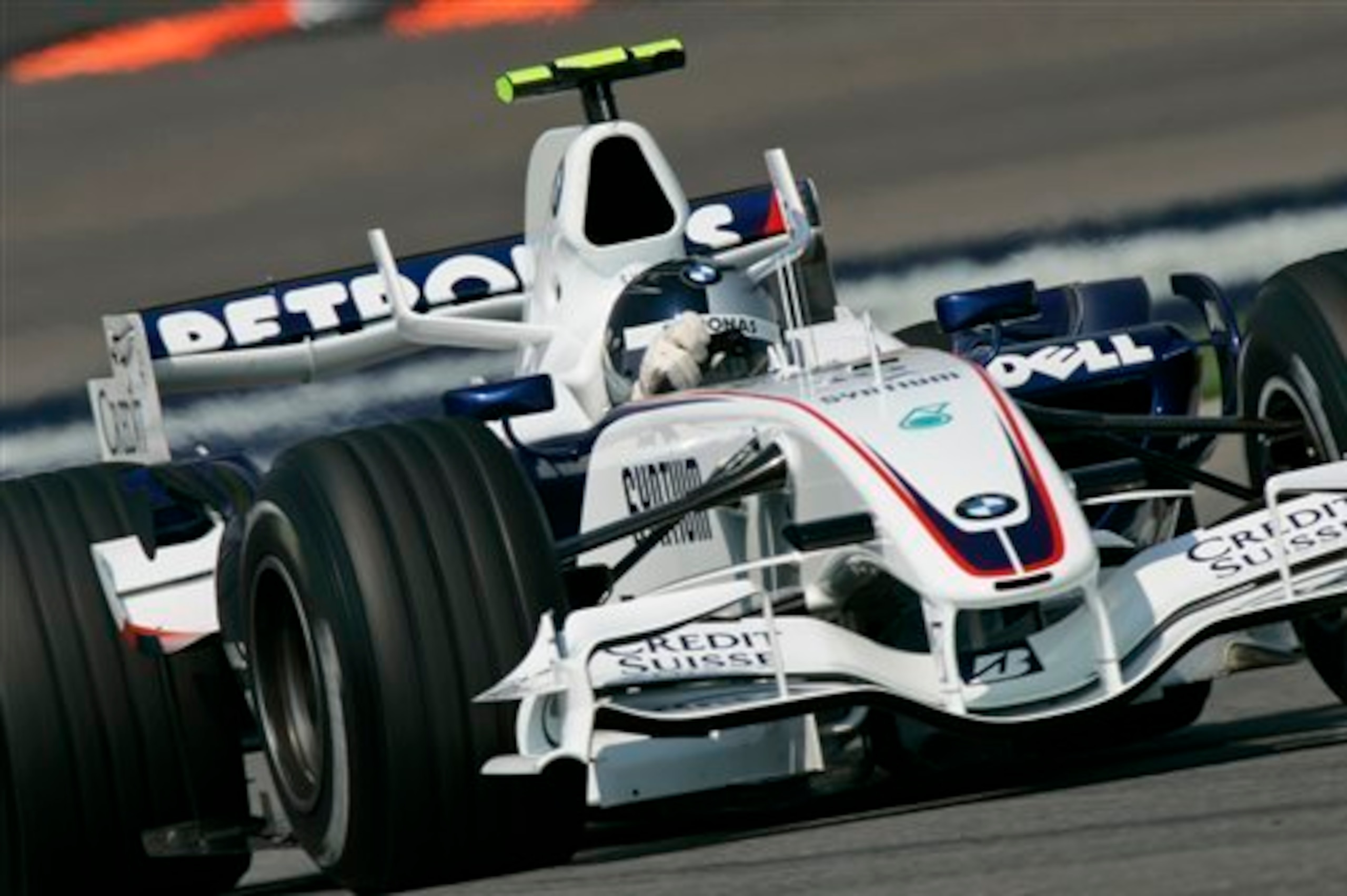
And—perhaps more intriguingly—Vettel, too, secured a promotion to Red Bull after just one full season at Toro Rosso.
Despite winning for Red Bull in just his third race for the outfit, the 2009 Chinese Grand Prix, it was not until the latter stages of the 2010 campaign—or even the beginning of 2011, his third full season at the team—that the German began to possess the aura of a formidable, error-free competitor.
His first four races of 2008, after all, all ended in retirement, and clumsy spins and losses of control—despite taking his breakthrough win at Monza that year—continued to plague his performances until the day he became world champion for the first time.
Kvyat, in contrast, is arguably more polished at this stage of his career than Vettel was, with each of his four retirements in 2014—in Monaco, Canada, Austria and Germany—due to the reliability issues suffered by his car rather than the consequences of human error.
The most notable misdemeanour of his rookie campaign, in fact—a tangle with Alonso in the qualifying session for the Malaysian Grand Prix—was a 50-50 incident, highlighting his general cleanliness behind the wheel in comparison to other first-timers in recent seasons.
Although Kvyat, with a best finish of ninth, has not secured a name-in-lights result on a par with Vettel's 2008 Italian Grand Prix win, the Russian has provided hints of his talent.
He out-qualified Vergne, as per the official F1 website, by six tenths in Q2 to on his way to seventh in Austria—an event where Renault-powered cars, on paper, should have been severely disadvantaged—and started from a career-best fifth at his home race with a lap that was, according to Formula1.com, almost eight tenths quicker than the Frenchman's Q3 effort.
Just how Kvyat will measure alongside Ricciardo next year, however, is difficult to predict.
The logical path would be for the Russian to spend around half a season just getting used to a new environment and the step up in class, yet the same was said of the Australian as he prepared to partner Vettel less than a year ago.
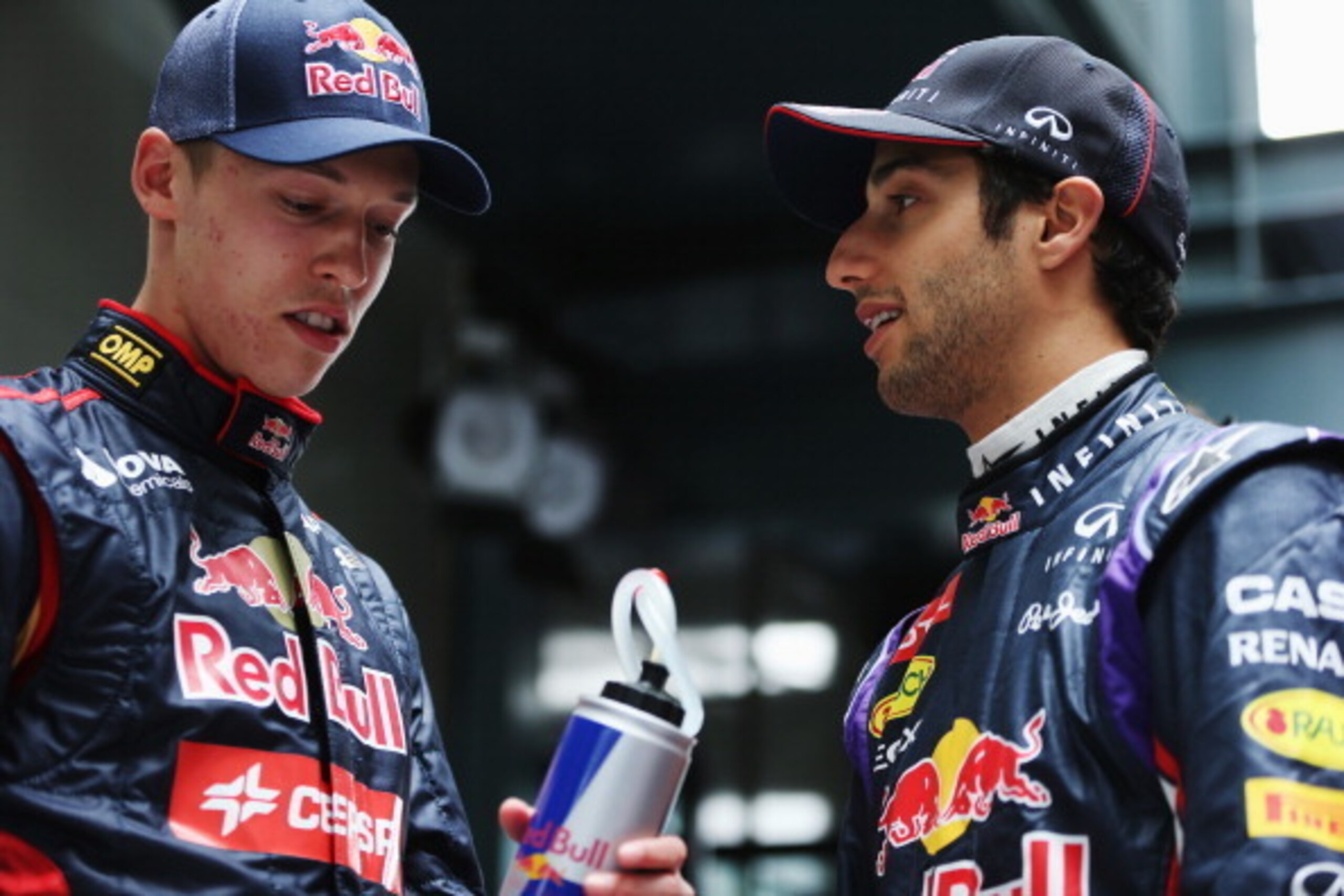
Changes behind the scenes at Red Bull and the absence of Vettel, the focal point for the last six seasons, should ensure that Ricciardo—despite his excellent 2014—and Kvyat will begin next season with relatively equal status, and you wouldn't bet against the straightforward, blunt and raw racer from claiming the upper hand.
Red Bull's driver line-up may look a little less fashionable in 2015, but it'll have just as much firepower.