Ryan Tannehill and Offense Show Growth as Offense Evolves
At the root of the Miami Dolphins’ dominant 27-14 victory over the Chicago Bears was the stellar game plan formulated by offensive coordinator Bill Lazor.
On the field, it was the Dolphins’ young starting quarterback, Ryan Tannehill, who stole the show with his performance.
Casual observers will look at the Dolphins’ box score and see Tannehill’s completion percentage of 78 percent, which is the second-best of his career. What also can be seen is Tannehill’s ability to move the his team downfield without making a critical mistake, as evidenced by his two touchdowns and zero interceptions. His 277 yards passing were complemented by effective running on his part; his impressive effort of 325 total yards was the fourth-highest of his career.
TOP NEWS
.jpg?w=2560 "NFL Paris Football")
NFL House in Paris Closes for Protests
.jpg?w=2560 "Seahawks Chiefs Football")
Trevon Diggs Cut by Seahawks
.jpg?w=2560)
B/R's Expert Week 7 NFL Picks 🔮
The statistics were fantastic for Tannehill, who played just his sixth game in only his second offense since high school. But what we saw on the field goes further than what the numbers indicate. A majority of the first five games of the season showed Tannehill only able to piece together one solid half of play at a time, which was frustrating and confusing.
Against the Bears and their signal-caller, Jay Cutler, however, Tannehill proved to be the better quarterback in the Miami victory.
His performance wasn’t much of an anomaly, as Tannehill had a similar outburst against Oakland just two games ago, and his second half against the Green Bay Packers in Week 6 was filled with examples of him extending plays.
But finally, against Chicago, Tannehill looked totally in control of the offense for four quarters. When Tannehill struggles, he often looks stiff and rigid in the pocket, which likely is a product of lacking confidence. That appeared never to be an issue against the Bears, and it hasn’t been for nine out of the last 11 quarters (Tannehill didn’t play the final quarter against the Raiders due to the blowout).
"Ryan Tannehill in the past six quarters: 37/47 (78.7%), 437 yards, 4 TDs, 7 carries, 88 yards, 1 TD.
— Alessandro Miglio (@AlexMiglio) October 19, 2014"
Figuring out why Tannehill has evolved into a more dangerous and consistent quarterback isn’t hard, but it requires having a league-wide perspective. Looking at other quarterbacks who have gone through a system change since the end of 2013, we see a pattern of a quarterback enduring growing pains, followed by improved play on his part. New York Giants quarterback Eli Manning said this after a month in the new offense, according to Dan Graziano of ESPN.com:
"We got the ball out quick. The receivers made catches. They had good runs after the catch. It was efficient. We mixed it up. I thought last week we made some steps to get better, and this week was even stronger.
"
A QB with a strong knowledge of the offense is critical for the unit to perform effectively; the quarterback has to have excellent timing with his receivers. If the receivers are running their routes too deep or shallow, the timing of the quarterback’s read could be greatly disturbed. For a younger quarterback like Tannehill, this can cause him to freeze and deliver the ball late.
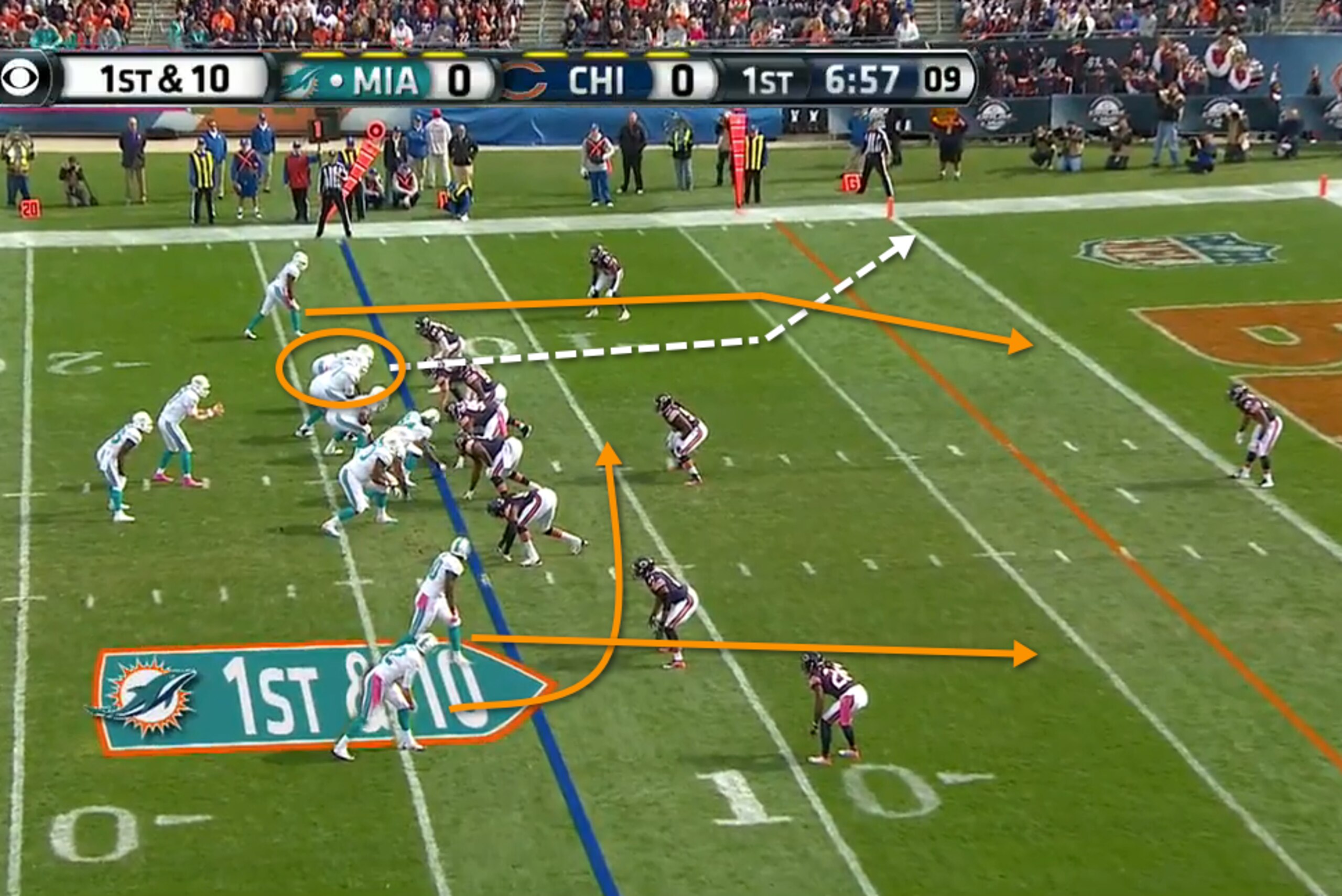
What made Week 7 special for Tannehill was his ability to get through his progressions quickly, keeping his eyes downfield when pressure approached. Although Tannehill was sacked four times, he never looked antsy in the pocket after taking hits.
On Tannehill’s second-quarter touchdown pass to Mike Wallace, Tannehill went through three progressions and then threw to Wallace. The speedy wide receiver was just creating separation as the ball arrived, which is textbook quarterback play.
"#Dolphins WR Hartline: "We were really confident out there as an offense. I felt like we could kind of do anything and be effective at it."
— Andrew Abramson (@AbramsonPBP) October 19, 2014"
The Dolphins offense kept its balance despite not having the success running the ball it's grown accustomed to this season. Miami averaged just 4.2 yards per carry, but if we remove Tannehill’s contributions, that average dips to 3.29 yards per carry.
With 33 carries and 32 pass attempts, Chicago’s defense had to respect Miami's play-action passes, which the Dolphins used often throughout the game. This opened up intermediate routes, which are Tannehill’s specialty. Offensive coordinator Bill Lazor deserves major credit for calling such a balanced game.
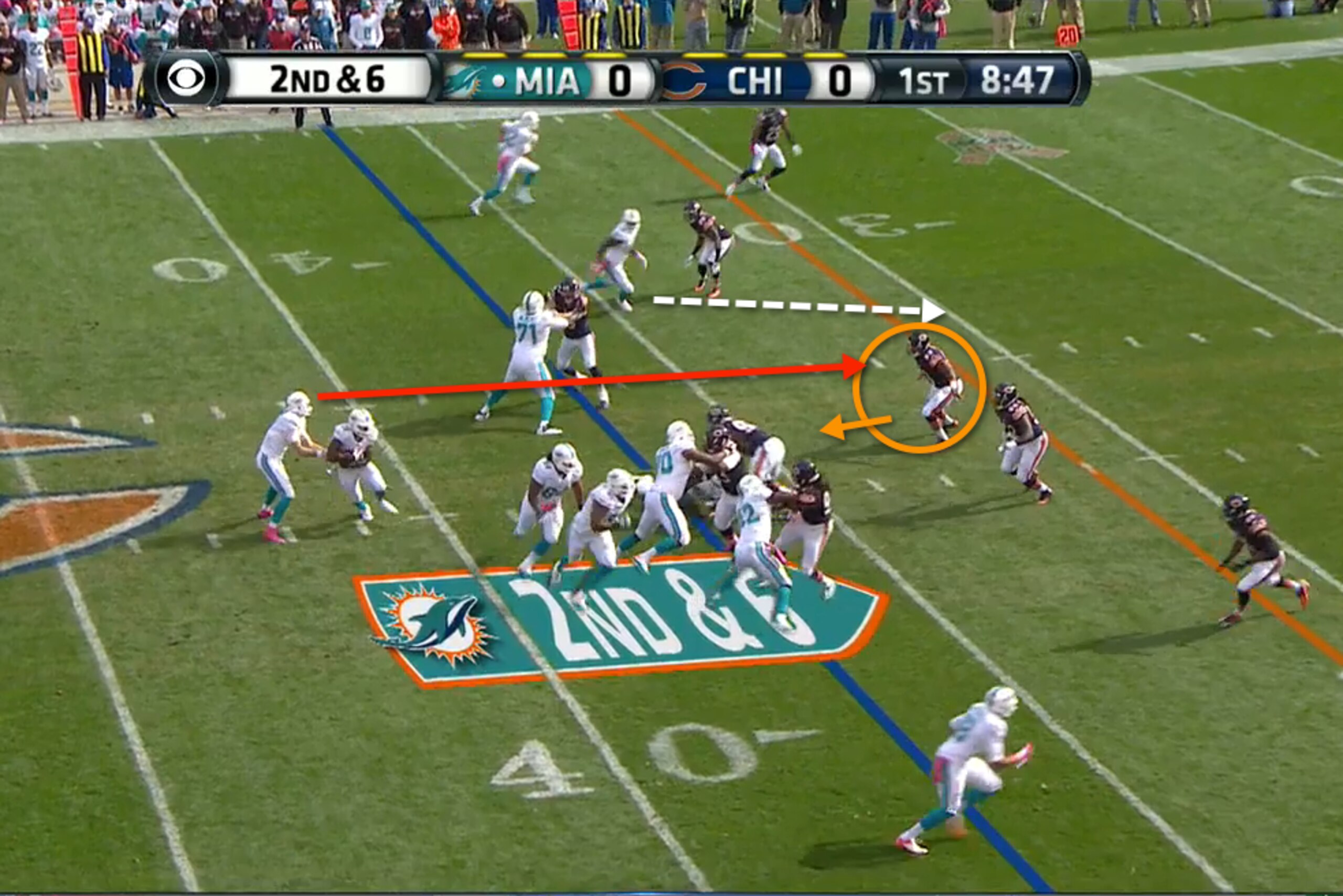
There have been times this season when Dolphins receivers haven’t gotten proper depth on their routes, leading to an area congested with defenders. That was never a problem on Sunday, and Tannehill didn’t get caught overthinking as a result. By having a receiver running a route at every level, Miami's offense stretched the Chicago defense and forced Bears defenders into single coverage.
Coaching to the strengths of players is critical for success, and Lazor implemented a game plan that accomplished that feat in Week 7. Featuring a lot of motion throughout the game, the offense kept a rhythm all afternoon. By getting Tannehill out on boot-action and play-action, he played looser and found safety valves when downfield receivers were smothered.
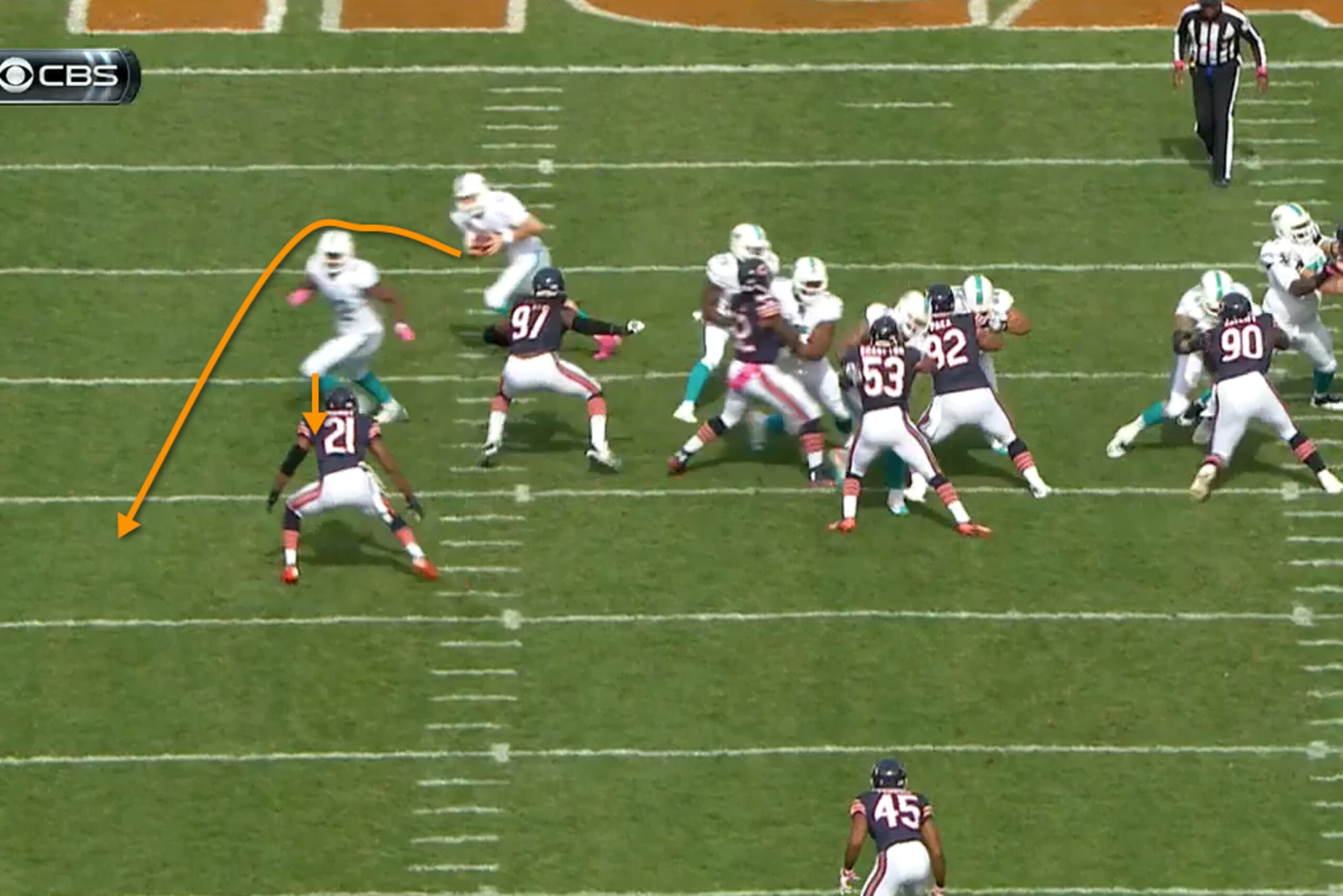
Sometimes, the little plays lead to big drives. Miami’s offense sustained a drive of eight or more plays six times against the Bears, and three had 12 or more plays. With 24 first downs, the Dolphins were constantly chipping at the Bears defense and keeping Chicago's explosive offense on the sidelines for 37 minutes.
For the Dolphins, this is the recipe for success. Having offensive balance takes the pressure off Tannehill and his receivers, who have dropped fewer passes recently and seem to be playing well within the scheme. As the players become more comfortable in Lazor’s offense, there should be less thinking and more playmaking.
Miami’s victory against the Bears could be a turning point in the Dolphins' season. The Dolphins offense must continue to execute at a high level to reach the playoffs in 2014. With the blueprint set, the fireworks could just be starting.
All stats used are from NFL.com or sports-reference.com.
Ian Wharton is a Miami Dolphins Featured Columnist for Bleacher Report, a contributor for Optimum Scouting and an analyst for FinDepth.
.jpg?w=2560 "Titans Colts Football")