Despite Loss, NY Giants QB Eli Manning Deserves Credit for Improved Play
Win or lose, it’s become a habit every week to hear New York Giants quarterback Eli Manning tell reporters how he has to play better.
OK, so there is no denying certain facts, such as Manning is currently the quarterback of a Giants team that has been outscored 118-49 in its four losses, all coming against teams that have a combined 21-5 record after Week 7.
Lost in the mess that is the Giants’ crumbling 2014 season is the fact that Manning has quietly rebounded from last year’s horror show despite the shortcomings of the talent around him.
TOP NEWS
.jpg?w=2560 "NFL Paris Football")
NFL House in Paris Closes for Protests
.jpg?w=2560 "Seahawks Chiefs Football")
Trevon Diggs Cut by Seahawks
.jpg?w=2560)
B/R's Expert Week 7 NFL Picks 🔮
Let’s look at some of the bright spots to emerge from the man who has been under center for 11 seasons.
Improved Accuracy
When offensive coordinator Ben McAdoo came into town with the intentions of implementing elements of the West Coast offense, there were concerns that Manning, who won two Super Bowls and went to three Pro Bowls by working in a vertical passing system, would flounder like a fish out of water.
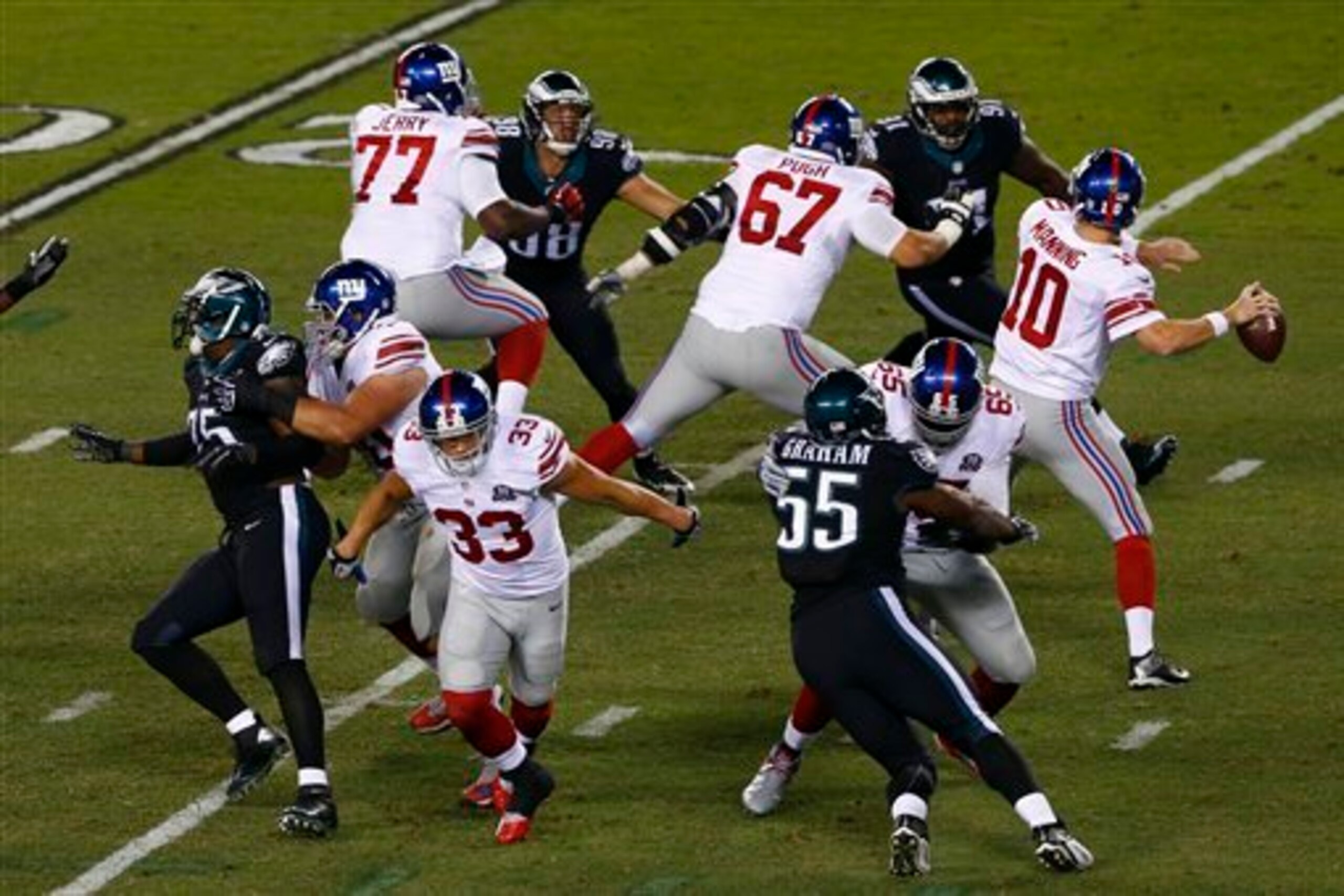
Those concerns were further amplified in the preseason, when, per Pro Football Focus (subscription required), Manning completed 20 out of 41 pass attempts for a team-low 48.8 percent with just one touchdown on 106 snaps.
Following a shaky Week 1 showing in which he completed 54.5 percent of his pass attempts, Manning has typically been money. In all but Week 6 (when he completed 56.5 percent of his pass attempts against the Philadelphia Eagles), Manning has completed at least 60 percent of his passes, including a 63.6 percent completion rate in Week 7 against Dallas in a losing effort.
If you factor in that Manning has been victimized every week by dropped passes—unofficially, his receivers and backs have dropped about 15 balls this year—one can only wonder how much better his completion percentage, which currently stands at 64.9 percent, might be.
A Reduction of Bad Throws
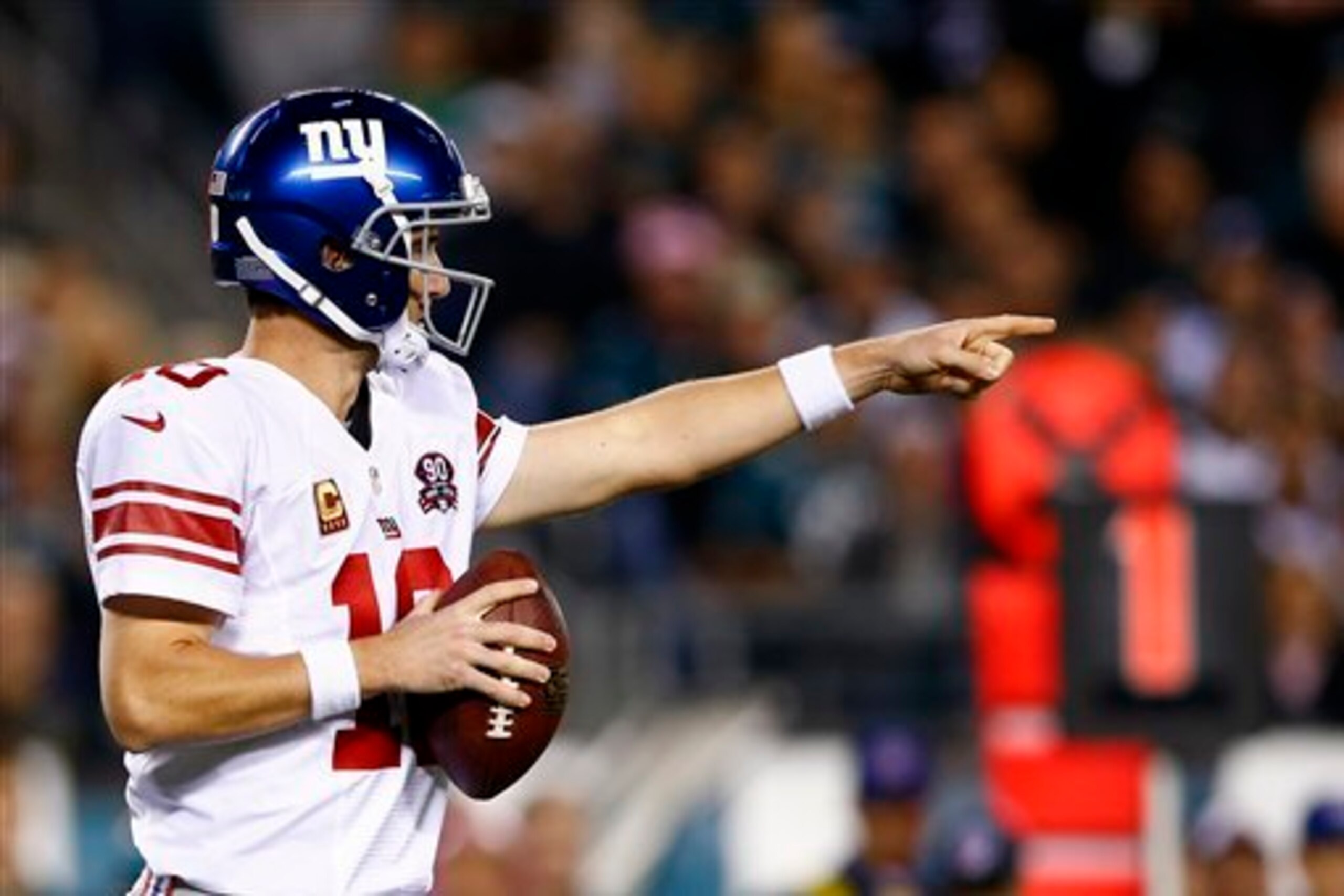
In years past, Manning was all about trying to make a play. If that meant trying to force a ball into tight quarters, then so be it.
The problem with that approach is that it led to turnovers, which are never a good thing.
The good news is that Manning has cut down on his poor throws that have resulted in interceptions. After seven games in 2013, Manning had thrown 15 of his 27 interceptions, per PFF.
After seven games this year, he has thrown just five interceptions, one of which came on a fluky type of play in the end zone a couple of weeks ago against Washington.
An Increase in Touchdown Passes

For all of the questions that came with Manning’s receivers, running backs and tight ends, somehow he has found a way to make throws that result in points.
Through seven games, he now has thrown 14 touchdown passes. Per Pro Football Reference, that is the third time in his career he has accomplished that feat, with the other two times coming in 2006 and in 2010.
A Promising Future
Barring injury, there is no reason to believe that the 33-year-old Manning, whose current contract ends after the 2015 season according to Over the Cap, can’t continue to lead the Giants offense for years to come.
If the Giants are heading for a rebuilding period after this season—and as each loss piles up, it sure looks like that might be the case—Manning has shown that no matter how old he gets, he’s still very much capable of not only leading the offense, but also consistently playing at a competitive level.
Advanced statistics courtesy of Pro Football Focus (subscription required) unless otherwise noted.
All quotes and information obtained firsthand unless otherwise sourced. Follow me on Twitter @Patricia_Traina.
.jpg?w=2560 "Titans Colts Football")