
Jarryd Hayne's NFL Tilt: Positions He Can and Can't Play
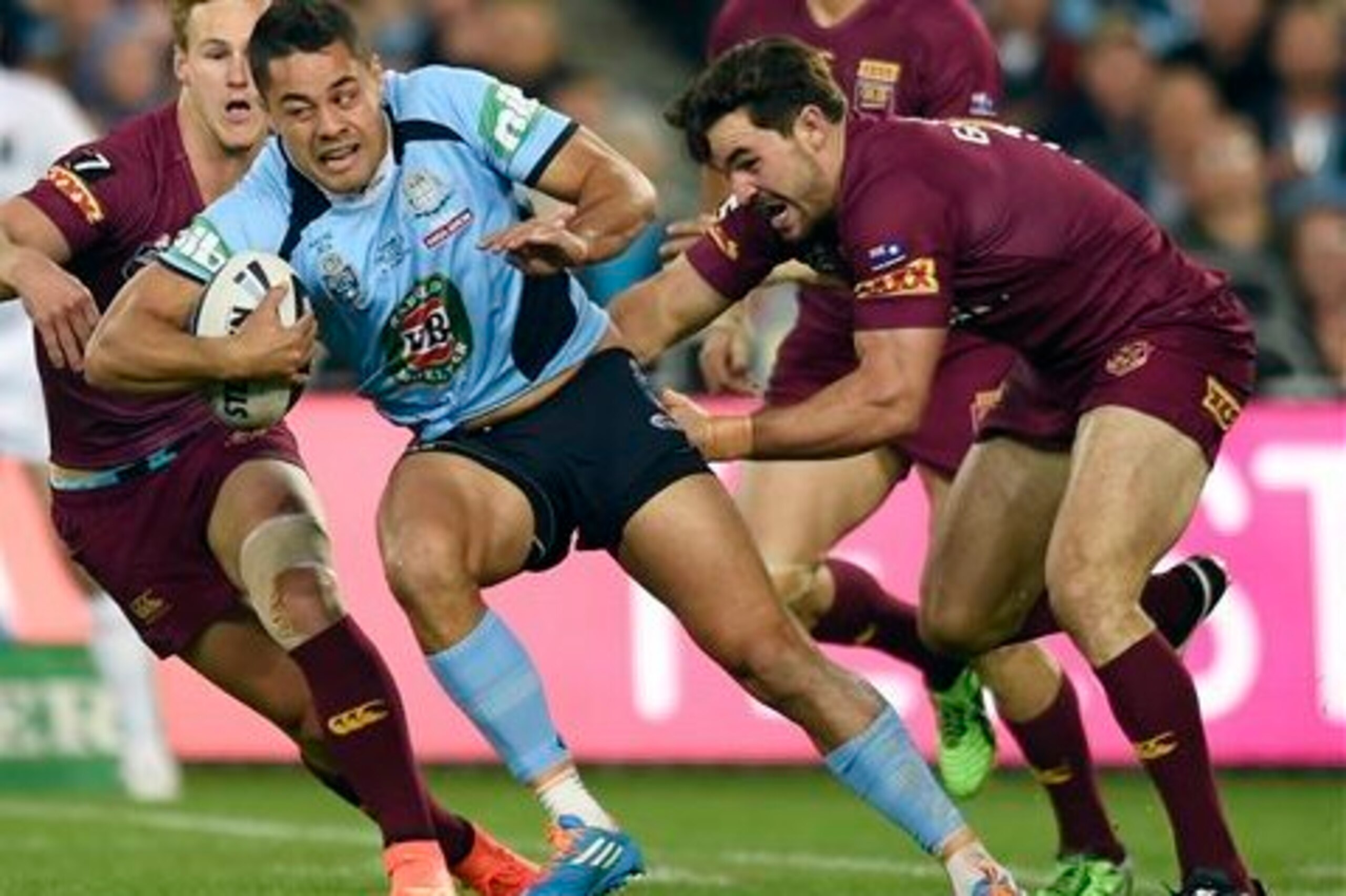
Australian rugby league star Jarryd Hayne has announced he is quitting the NRL to attempt a career in the NFL. I've watched Hayne terrorize NRL defenses (including my beloved Dragons) for years, so it would be hard to bet against him making a decent show of it.
At 26 years old and coming off his best season since debuting in the NRL eight years ago, Hayne is certainly at his peak (although arguably the time to attempt such a move would have been five or 10 years ago). So too, Hayne's talent cannot be overstated, having been one of the sport's top five stars for the better part of a decade.
However, personally, I can't see it happening. Rugby league players are essentially all-rounders: they run, they pass, they kick, they tackle, they catch. NFL is full of guys who have honed usually no more than two of these skills; each role is so heavily specialized that there's no need for a jack of all trades when you've got 53 guys on the active roster.
Hayne is mindful of this and is giving himself a full year of training and preparation to crack the NFL. The way I see it, there are three positions he could maybe play and three that (while they might look appropriate) he definitely can't.
Third-Down Back
1 of 6I actually figure this is Hayne's best option, as it suits his gifts as a relative all-rounder.
He's unlikely to be an every-down running back; he's accustomed to having more time and space to identify and run through gaps, not to mention having spent his career in a game more focused on picking up 30 yards per possession, rather than grinding out four or five.
Moreover, when they're running the ball, NFL running backs need to cope with a swarm of defenders running at them and only them. Hayne won't enjoy the luxury of defenders hanging back on the chance he passes to someone else, as happens in rugby league.
As Hayne is a well-rounded athlete, using him as a third-down back opens up his abilities as a receiver while also maintaining him as a rushing threat. He's in the Darren Sproles mould, but with a bit more size and power, and a little less acceleration off the mark.
Outside Linebacker
2 of 6Most foreigners and latecomers to American football to have secured an NFL contract in non-kicking positions have done so as defensive players.
Colin Scotts, the first Australian to play in the NFL as a non-kicker, played as a defensive end for the University of Hawaii and was drafted in the third round of the 1987 draft by the St. Louis Cardinals. His 6'5" frame combined with surprising speed and agility (developed as a schoolboy rugby star) held him in good stead before a freakish Achilles tendon injury cut his career short.
Defensive end Ziggy Ansah was Detroit's rookie of the year last season, despite the fact the Ghanaian only started playing the game at the age of 21 while attending BYU on an academic scholarship, having intended to ply his skills on the basketball team. Meanwhile, defensive tackles Lawrence Okoye and Jesse Williams are both currently on the 49ers practice squad and the Seahawks' Injured Reserve respectively, having also picked up the game late (though Williams was a star at the University of Alabama).
Hayne is a good tackler and definitely has the speed of an outside linebacker, but he'll need to add about 30 pounds of muscle to bring him up to NFL standard. His main advantage here would be in the passing game as he possesses the agility to evade blockers when rushing the quarterback, and his ball-handling skills should see him make a few picks here and there.
His main obstacle will be learning to read offenses, as aspects like anticipating the snap count can take years to develop. Also in doubt is Hayne's ability to withstand the physical toll of this position having already played years of professional rugby league, while one might also question whether he has the requisite hunger for tackling (read: savagery) to make it as a linebacker.
Kick/Punt Returner
3 of 6Hayne has pegged this position as his best option. It's not hard to understand why, considering he works best as an elusive player in the open field, and as a fullback he's comfortable catching high balls while defenders rush at him.
The big question is whether he's quick enough. Hayne is fast over 100 yards, but the NFL tends to put more of a premium on acceleration, which is why 40-yard dash times are so closely scrutinized. Hayne's ability to compete over those first 10-20 yards is going to determine if he makes it or not.
Again, we also have the question of how well he'll handle having 10 defensive players targeting him and only him, while in rugby league there's usually no more than three or four defenders targeting you at all times, as the rest have to make sure they're covering the other 12 players who might receive the ball.
One final, more philosophical question is whether he is really going to be satisfied as a kick returner. On average, he'll field about four or five returns per game, and with many of those kicks he'll be forced to simply kneel for a touchback. Devin Hester is arguably the greatest kick returner to ever play the game, but probably would have received significantly more adulation had he been half as successful as a wide receiver. While Hayne may feel he has accomplished all he can in rugby league, he was the biggest star in the game and it's a big step down to essentially become a bit-part player on a 53-man roster.
.jpg?w=2560 "NFL Paris Football")
.jpg?w=2560 "Seahawks Chiefs Football")
.jpg?w=2560)
Wide Receiver
4 of 6With his speed, Hayne will never compete as anything other than a possession receiver, and even then his hands may not be good enough. A rugby league pass is usually delivered to one's chest from relatively close proximity at a consistent speed, and even then it still gets dropped sometimes. Hayne isn't going to have any advantages when it comes to reaching one-handed for a bullet pass.
Wide receiver is a position many might think comes most naturally to rugby league and rugby players (hey, it's just running and catching) but it's actually a bit more foreign than it appears. There is no other sport which sees players run erratic routes from a standing start in the hopes that a team-mate might throw them the ball.
Tight End
5 of 6Hayne will have the hands of a TE, but it's hard to imagine him ever having the requisite blocking ability. Hayne has been tasked with tackling guys bigger than him before, but nothing on the scale of what he'll find in the NFL.
So too, at 6'2", his height is probably a bit below what is required for the position. He can build up his upper body strength as much as he likes, but there's nothing he can do about the reach of his arms.
Safety
6 of 6Technically, as the last line of defense, safety is the closest thing to Hayne's position as a rugby league fullback. In terms of how each game is actually played, though, they're still worlds apart.
Yet again, Hayne just won't be fast enough to make it as a safety, nor is he likely to develop the timing needed for the position, which probably takes years to learn: keeping your hands off your opponent before hitting them at full speed the moment the ball touches their hands.
Hayne might be able to get a pick or two, but those moments will be greatly outweighed by the many times he sees the ball thrown over his head for a faster receiver to catch it and streak into the end zone.
.jpg?w=2560 "Titans Colts Football")