Breaking Down Washington Redskins' Deep Passing Game
Washington Redskins head coach Jay Gruden should take one good thing out of Week 5's 27-17 home defeat to the Seattle Seahawks: His offense found its swagger in the form of the deep passing game.
Gruden schemed two plays to put wide receiver DeSean Jackson behind Seattle's vaunted "Legion of Boom" secondary. The two receptions accounted 117 yards and included a 60-yard touchdown catch.
Let's take a look at how Gruden, Jackson and quarterback Kirk Cousins beat the Seahawks deep. The first play was the 60-yard bomb Jackson took to the end zone in the second quarter.
TOP NEWS
.jpg?w=2560 "NFL Paris Football")
NFL House in Paris Closes for Protests
.jpg?w=2560 "Seahawks Chiefs Football")
Trevon Diggs Cut by Seahawks
.jpg?w=2560)
B/R's Expert Week 7 NFL Picks 🔮
The play would feature four vertical routes to challenge Seattle's zone-based coverage structures. The two routes to focus on were Jackson's on the outside and tight end Niles Paul's on the inside:
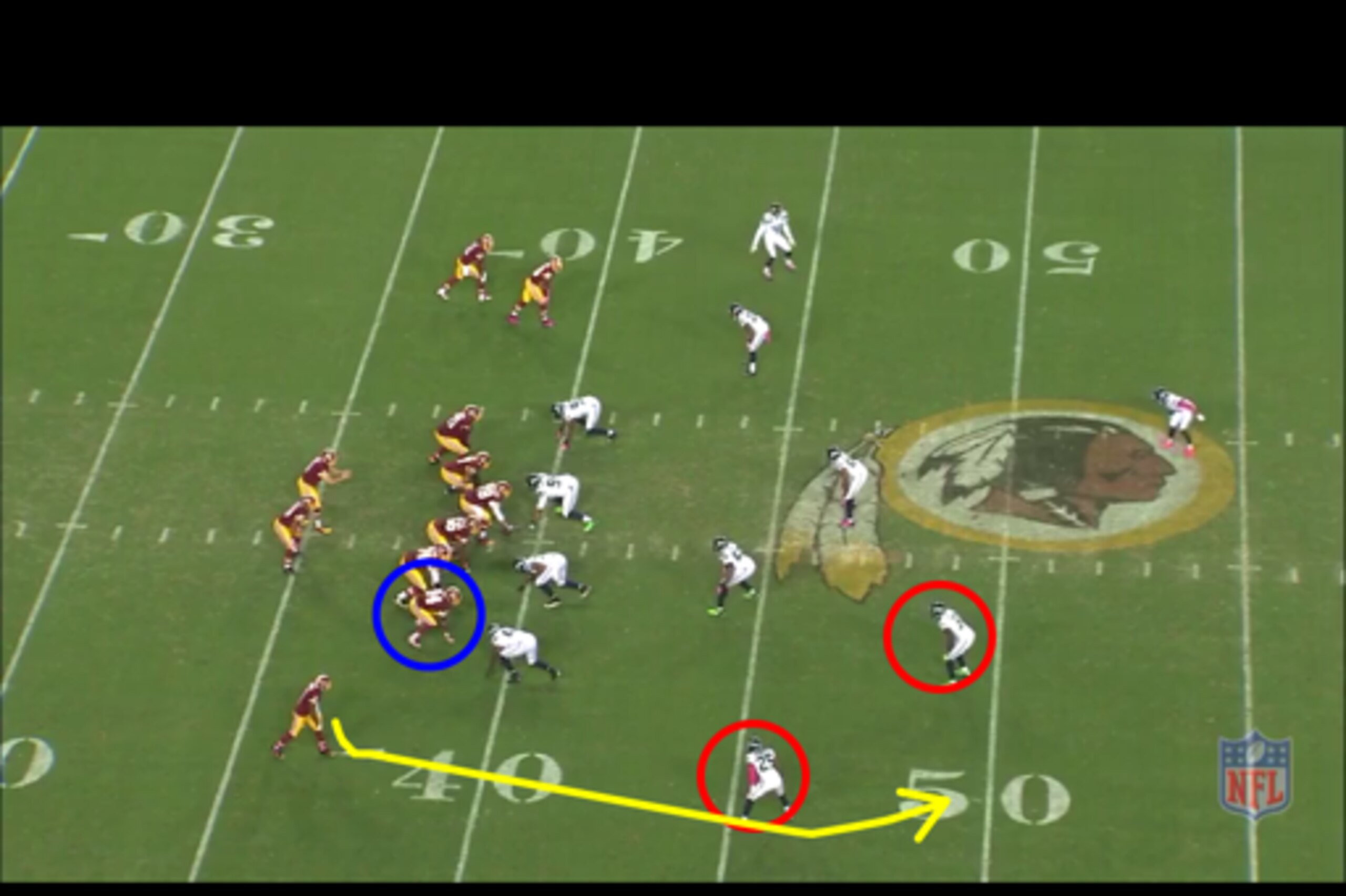
Jackson would run a post up the sideline, while Paul would stretch the inside seam vertically. The idea was to challenge strong safety Kam Chancellor and cornerback Richard Sherman.
The key part of Jackson's route was to first run short toward the sideline. He was running an out-and-up concept, one intended to fool Seattle's coverage.
Because the Seahawks were dropping into their familiar three-deep shell, Sherman was rotating to protect the deep outside third, leaving Chancellor with the underneath responsibility:
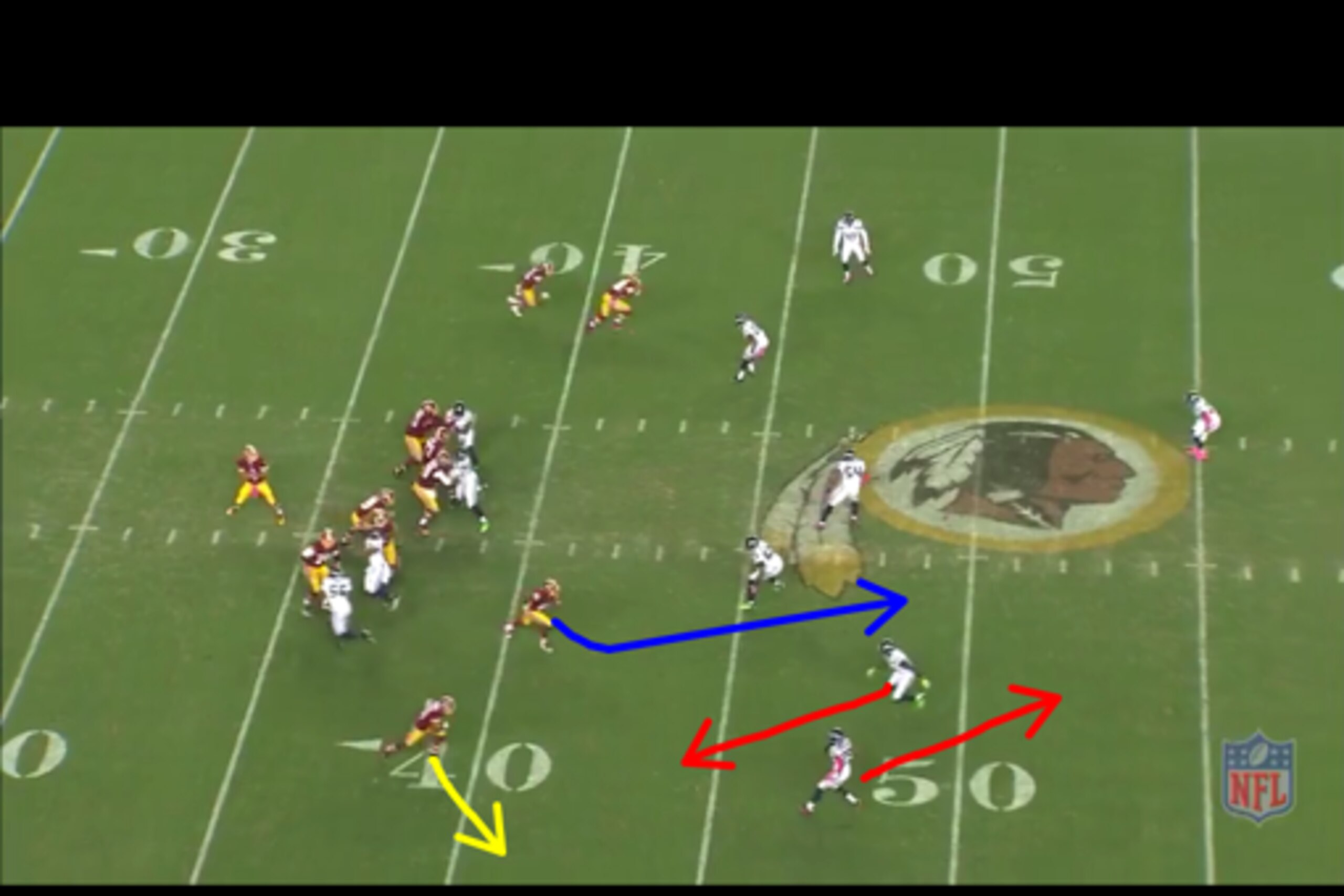
That meant Sherman focused on Paul's vertical release while Chancellor went for Jackson's initially short route. This was exactly the mismatch Gruden was hoping to create:
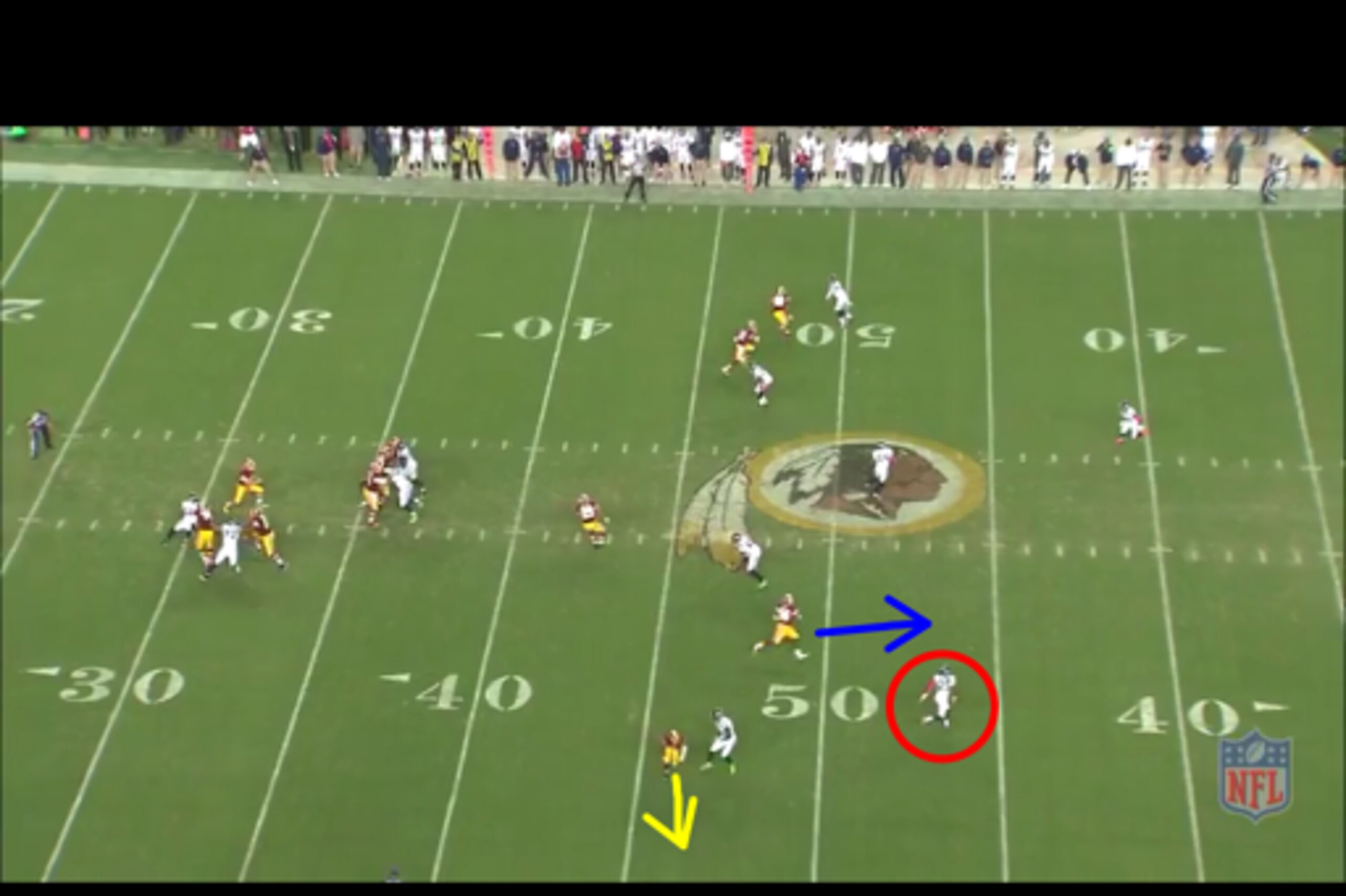
As soon as Jackson turned upfield and accelerated, Chancellor was beaten. Because Sherman had initially looked inside to Paul, he was out of position to react to Jackson's double move:
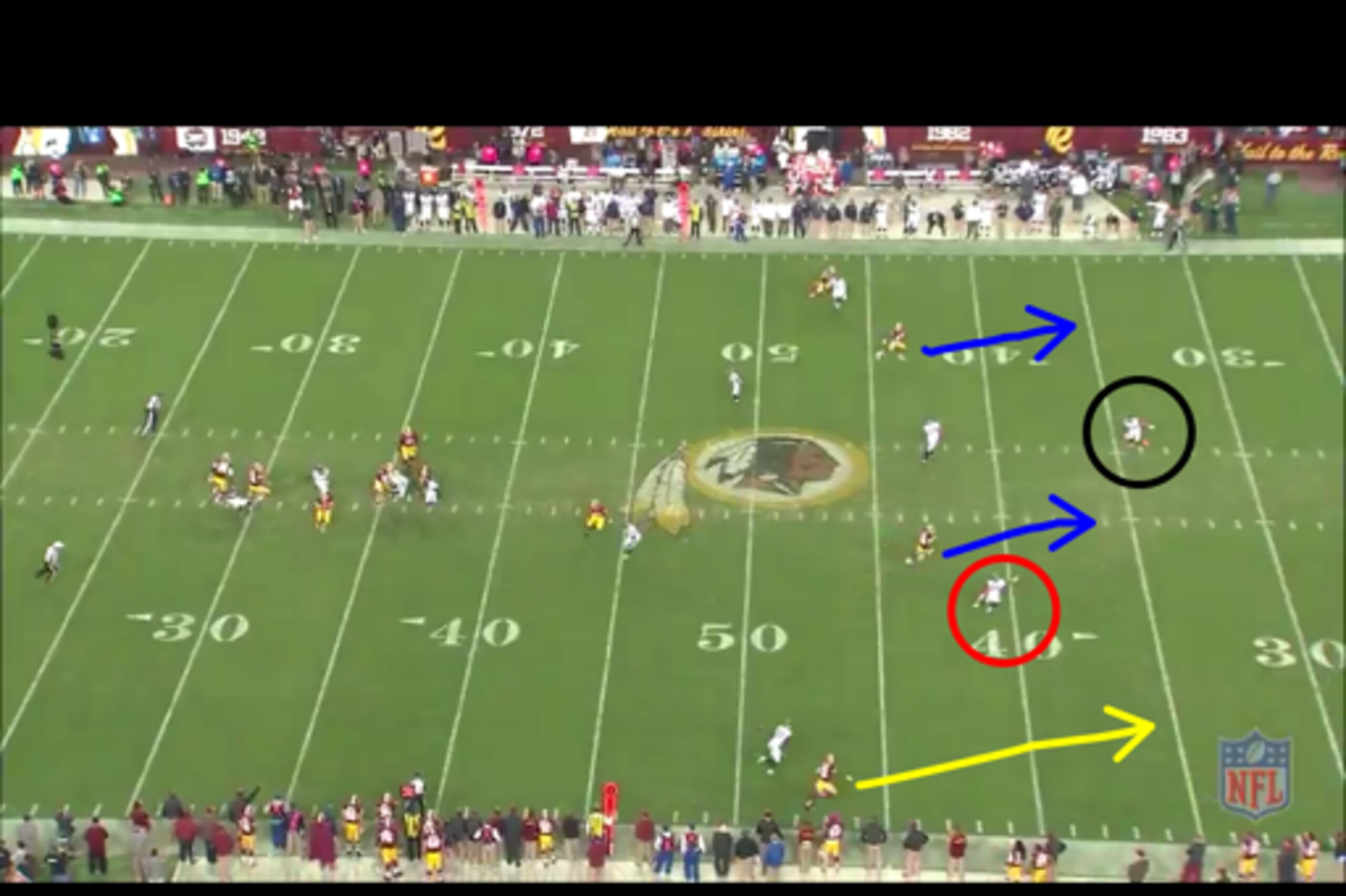
The vertical routes on the other side had drawn the attention of free safety Earl Thomas (black circle). He was also out of position to rotate and help bracket Jackson.
By the time Cousins dropped the ball over Jackson and into his stride, Sherman and Thomas were never going to catch the fleet-footed burner:
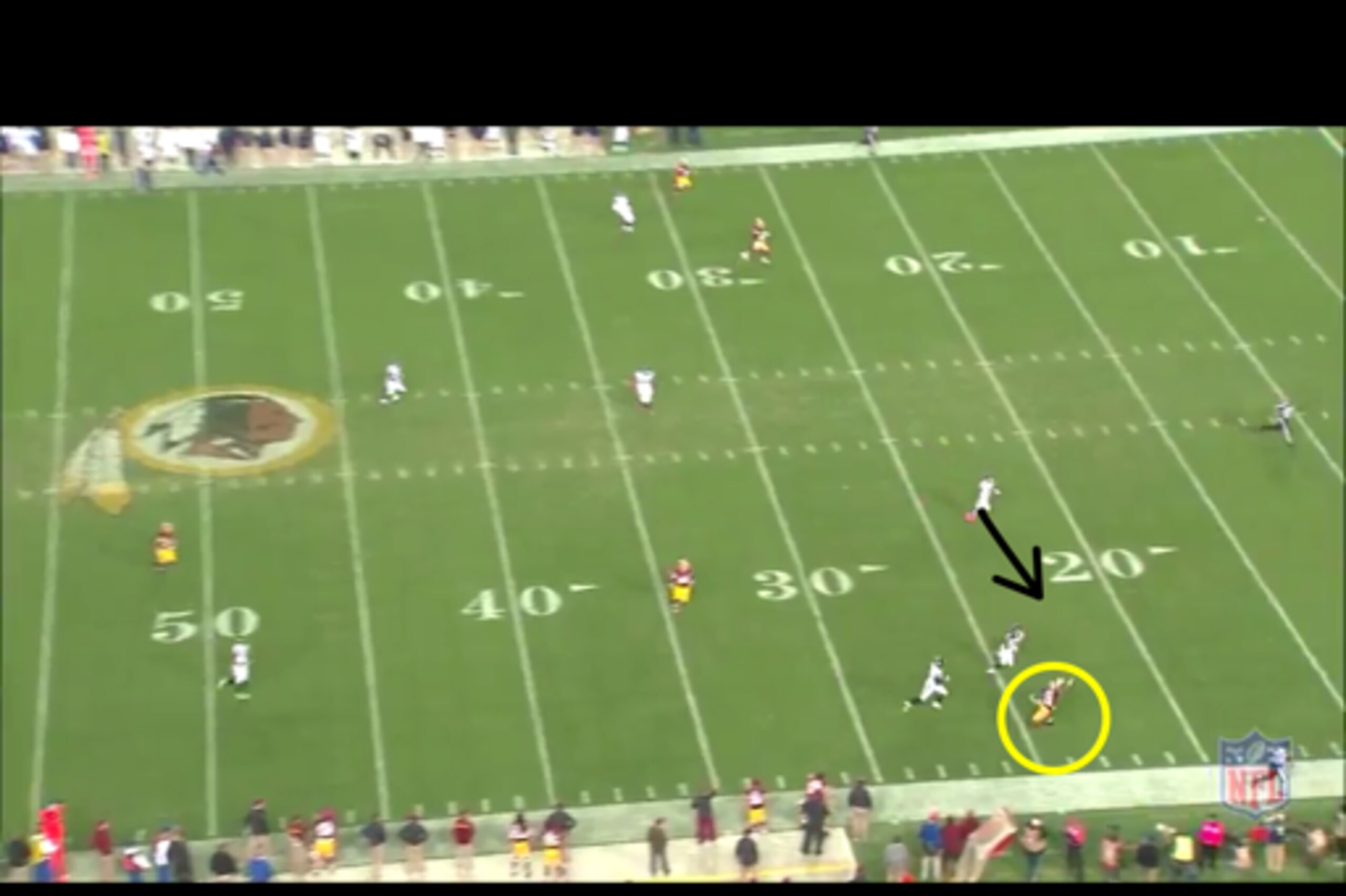
It's not often the Seahawks surrender a 60-yard scoring play. They certainly don't give one up so easily.
Gruden and offensive coordinator Sean McVay skilfully combined design with the threat of Jackson's deep speed. That threat had the Seahawks uncharacteristically playing off coverage instead of their usual press techniques. But no defense can afford to give Jackson a free release on the outside. This is the inevitable result for a unit that makes that mistake.
The idea of flooding a secondary with vertical routes is something Gruden often used as offensive coordinator of the Cincinnati Bengals. It helped free A.J. Green for a plethora of big plays.
A great example came on the road against the Chicago Bears in Week 1 of the 2013 NFL season. On this occasion, Gruden used multiple deep patterns to fracture Chicago's classic Cover 2 structure:
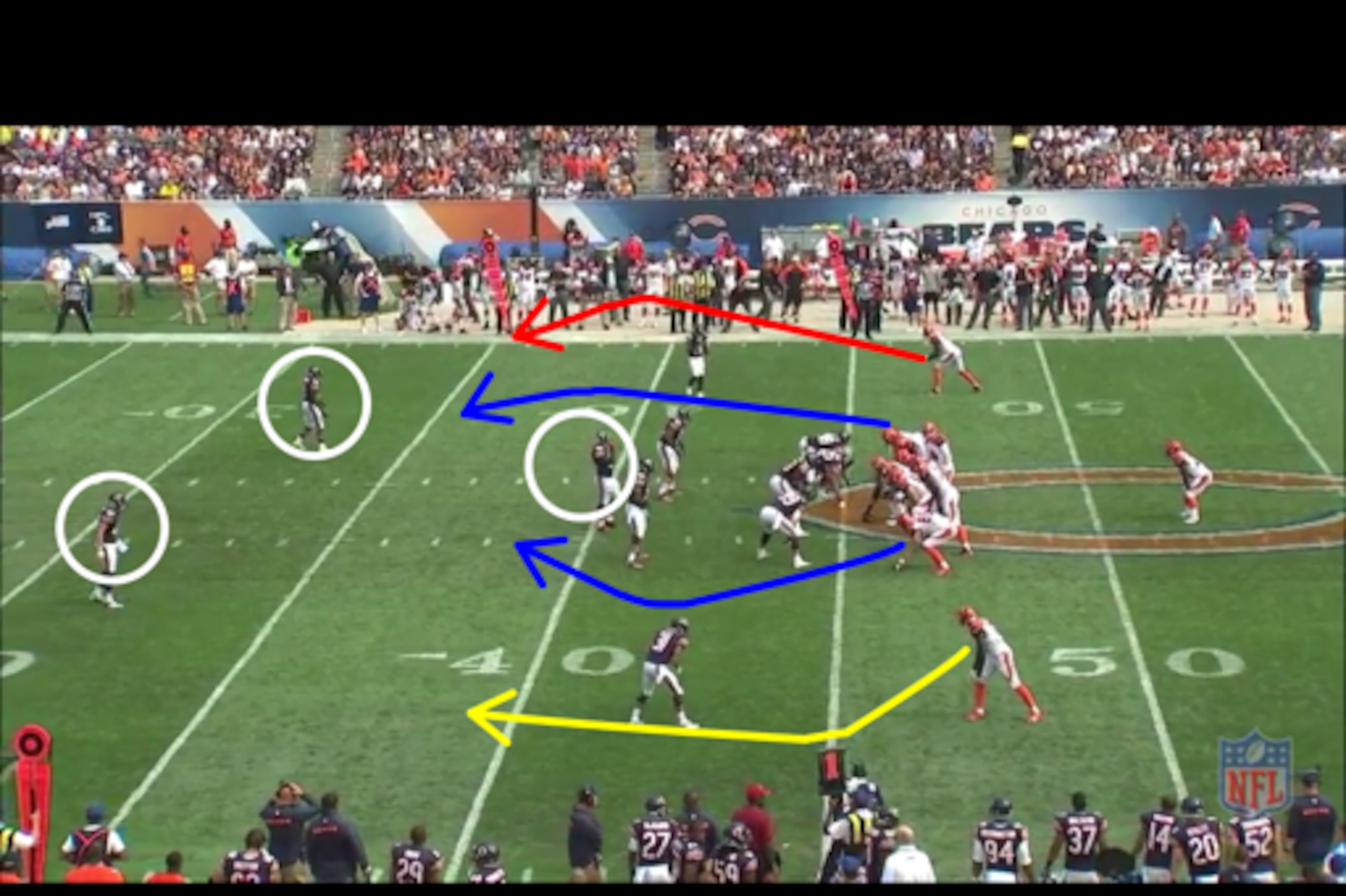
He used two receivers to attack the outside while a pair of tight ends stretched the inside seams. The inside routes would challenge the Bears' two deep safeties as well as the middle linebacker, who would drop into the middle in true Tampa 2 fashion.
The idea was for the inside routes to occupy the safeties, giving Green a one-on-one matchup on the outside. That's just what happened:

With safety Major Wright overplaying to the inside, Green was left free to get beyond cornerback Tim Jennings up the sideline:
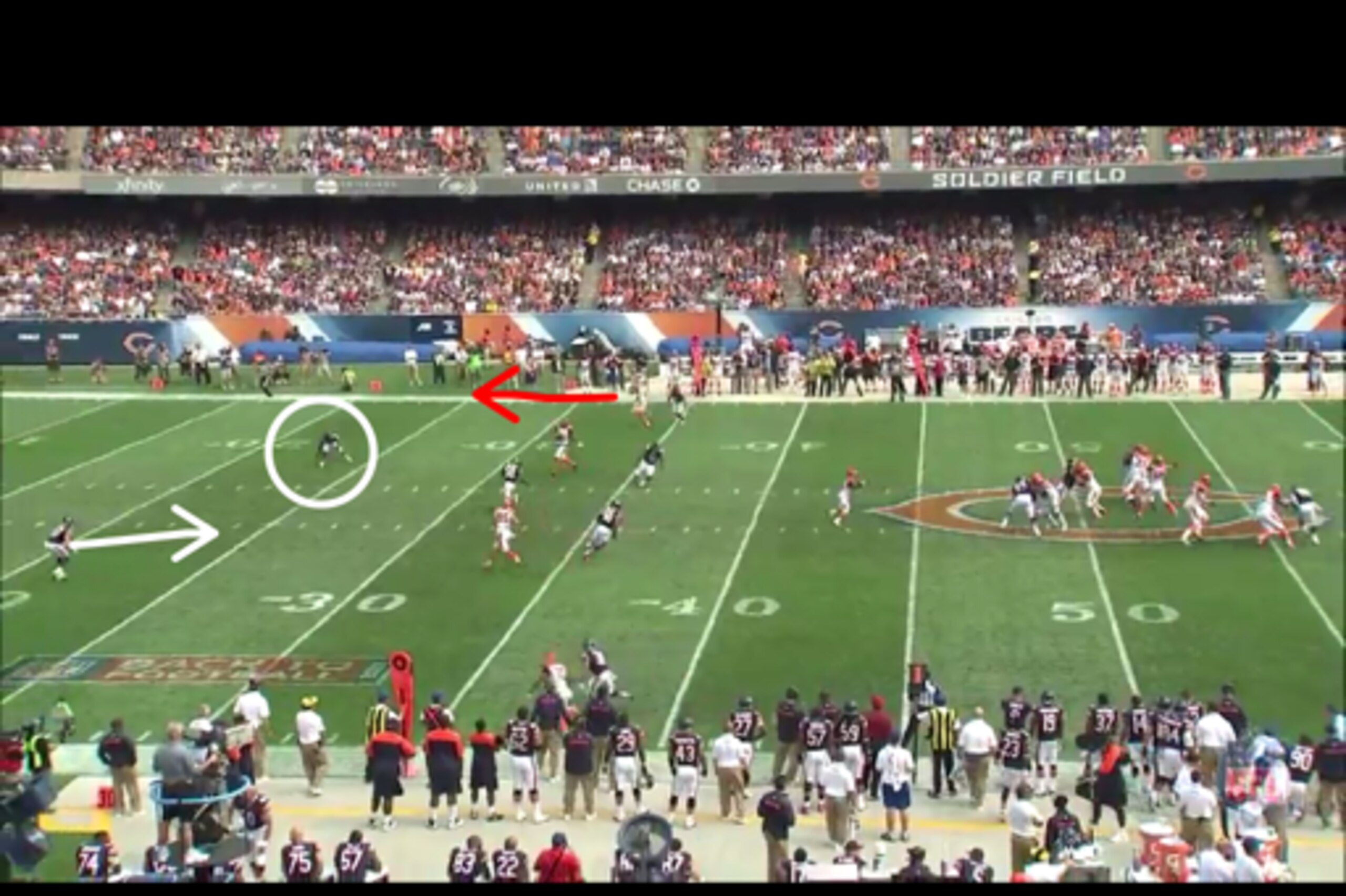
With Jennings beaten, Wright was too late to rotate over the top and had a bad angle to chase Green down. The play resulted in a 45-yard touchdown:

Gruden is now using some of these same concepts to free Jackson the way he did for Green. Given how often these designs created big plays for Green, this bodes well for Washington's pass offense.
Gruden also got Jackson free for a second time against the Seahawks. This time it was the first play of the third quarter and involved a route combination between Jackson and Pierre Garcon.
The play started with Garcon coming across the formation in motion to join Jackson:
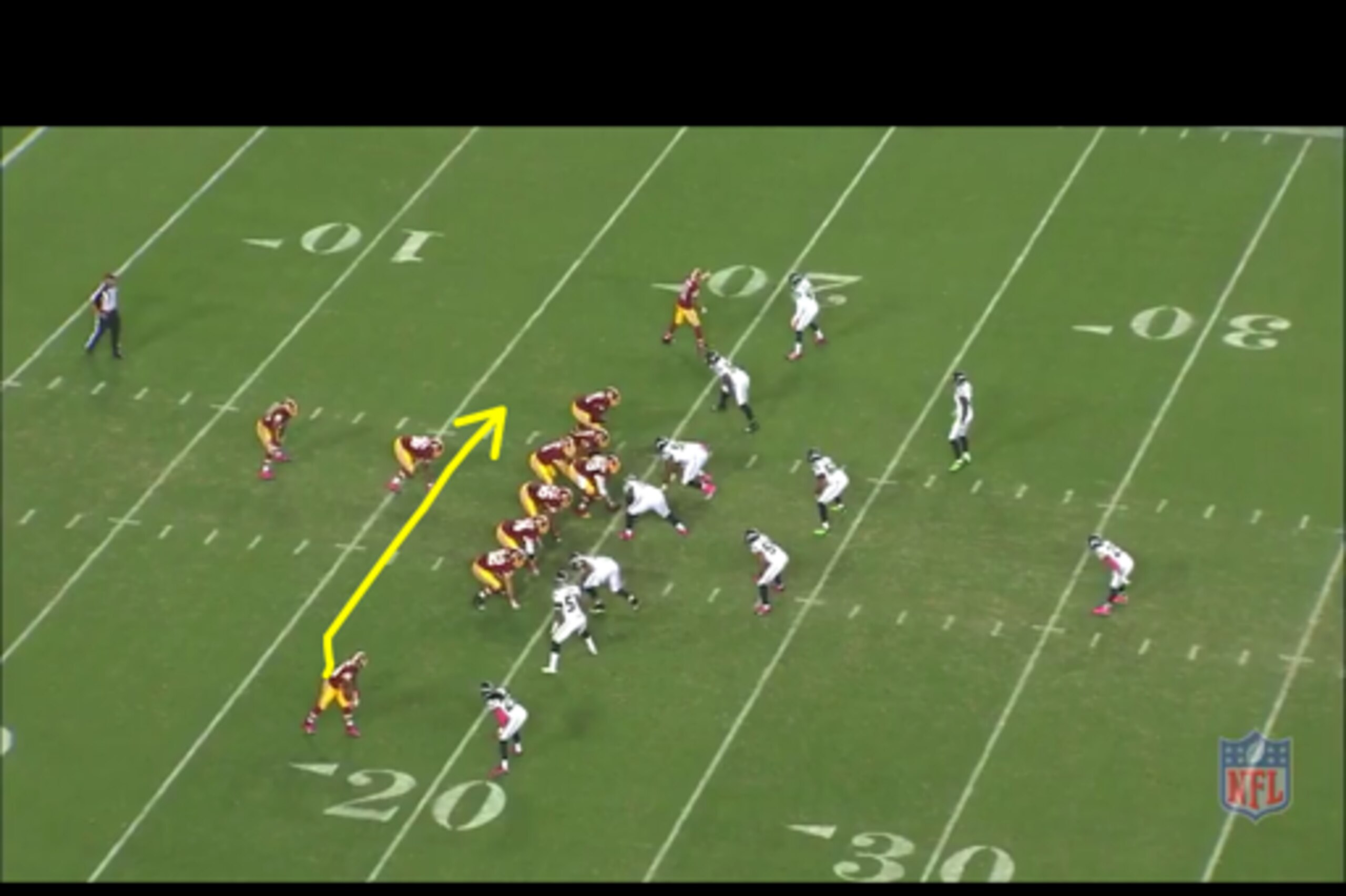
Because Sherman rarely ventures across the other side of the field, the Seahawks adjusted by putting Chancellor over Garcon. Again, the Redskins had manipulated the defense to get a matchup they wanted.
At the snap, Garcon and Jackson would break in opposite directions:
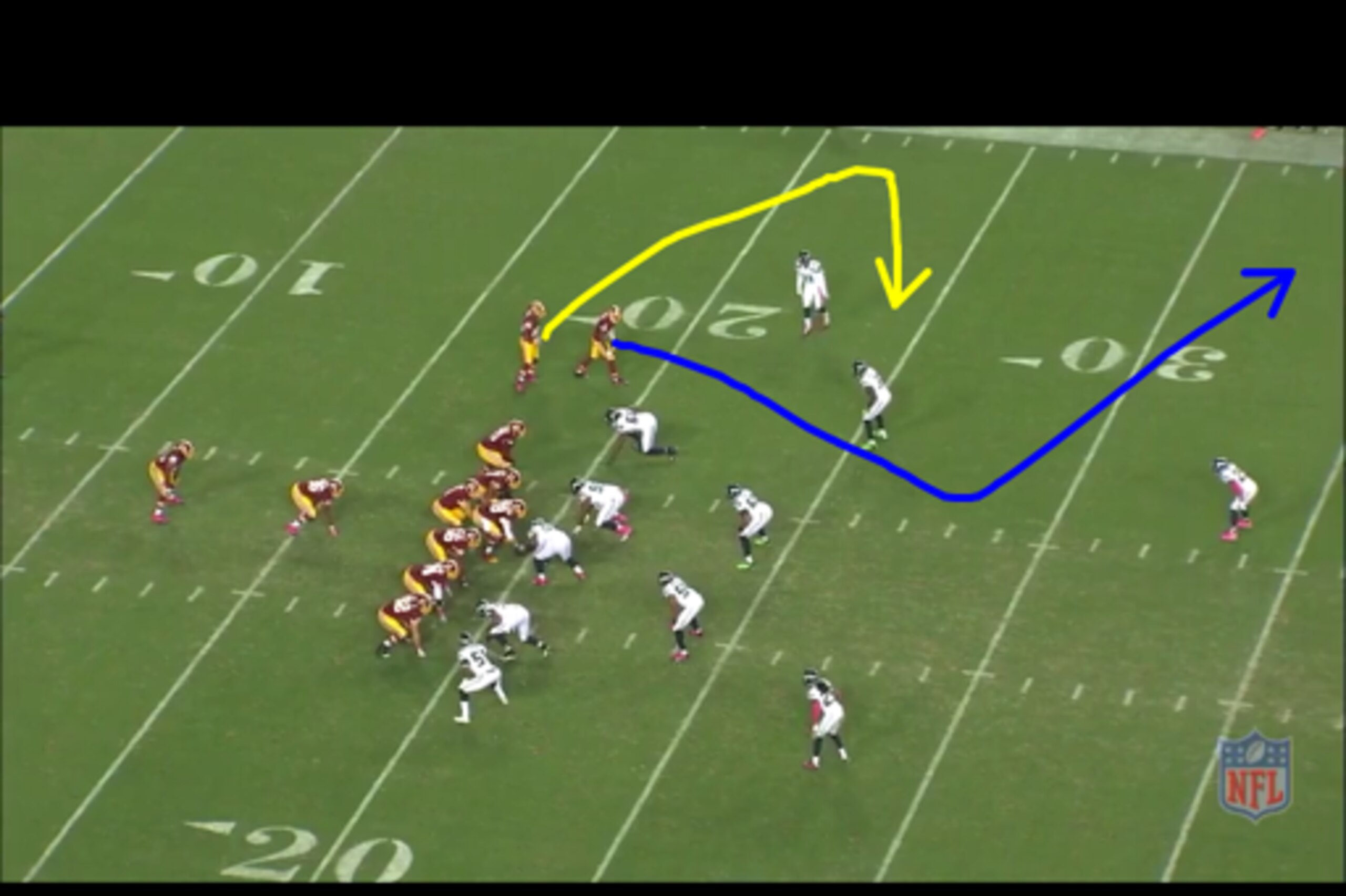
As the outside receiver, Jackson would break to the inside before turning his route upfield to attack deep. By contrast, Garcon would break to the outside before shortening his route into a crossing pattern over the middle.
Essentially, Gruden had his two best receivers exchange routes twice. The idea was to get Thomas to again overplay to the inside. It worked superbly.
As Garcon crossed underneath Jackson, he drew the attention of both Sherman and Thomas. Because Thomas had zeroed in on the inside movement of Garcon and Jackson, he was woefully out of position when the latter adjusted his route and went vertical:
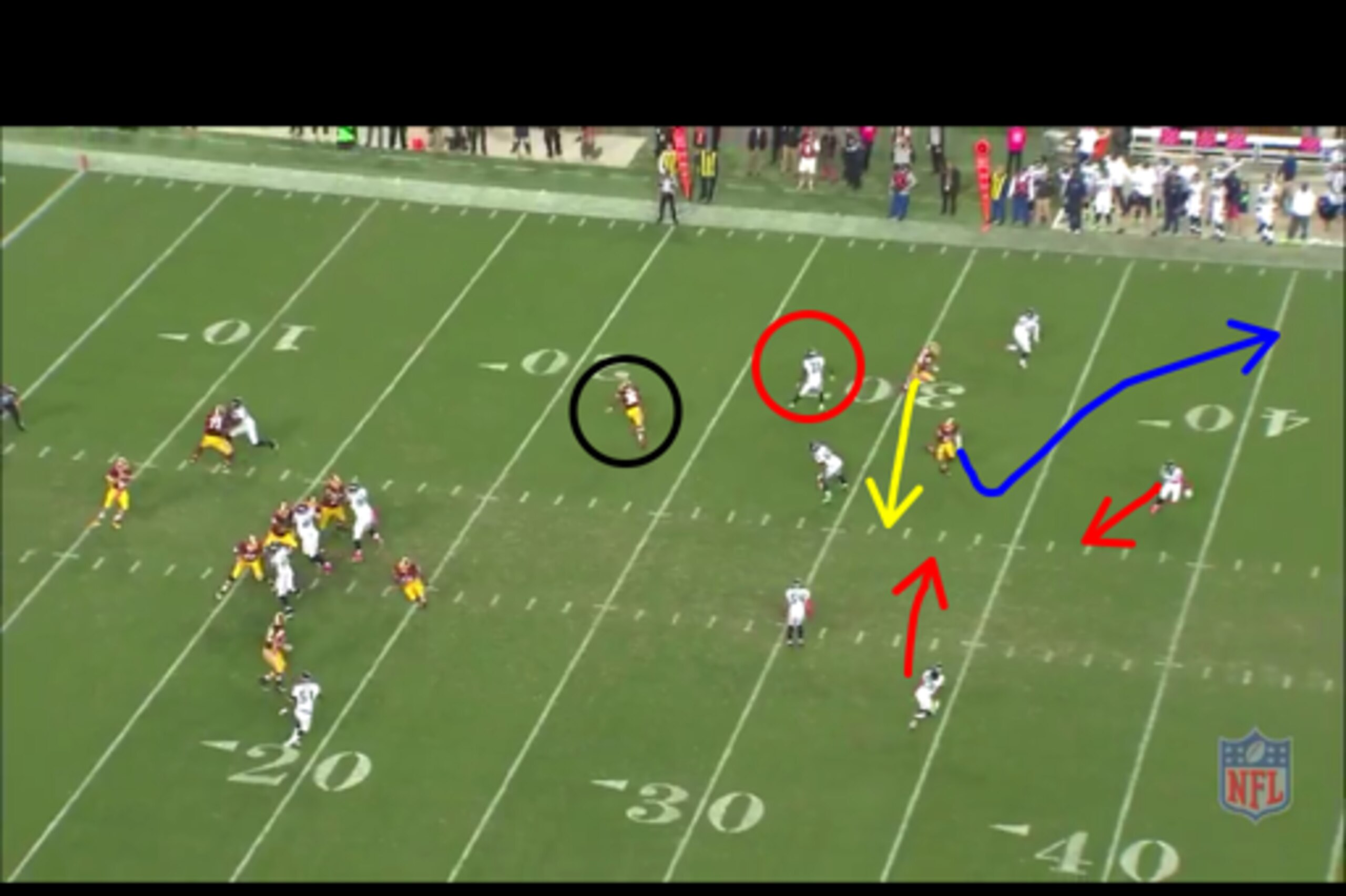
A nice wrinkle to the play involved a short-range release by fullback Darrel Young (black circle). His pattern occupied Chacellor and the linebacker level, giving Garcon and Jackson more room to work behind.
With Thomas out of position, Jackson got beyond Seattle's secondary again and hauled in a 57-yard catch:
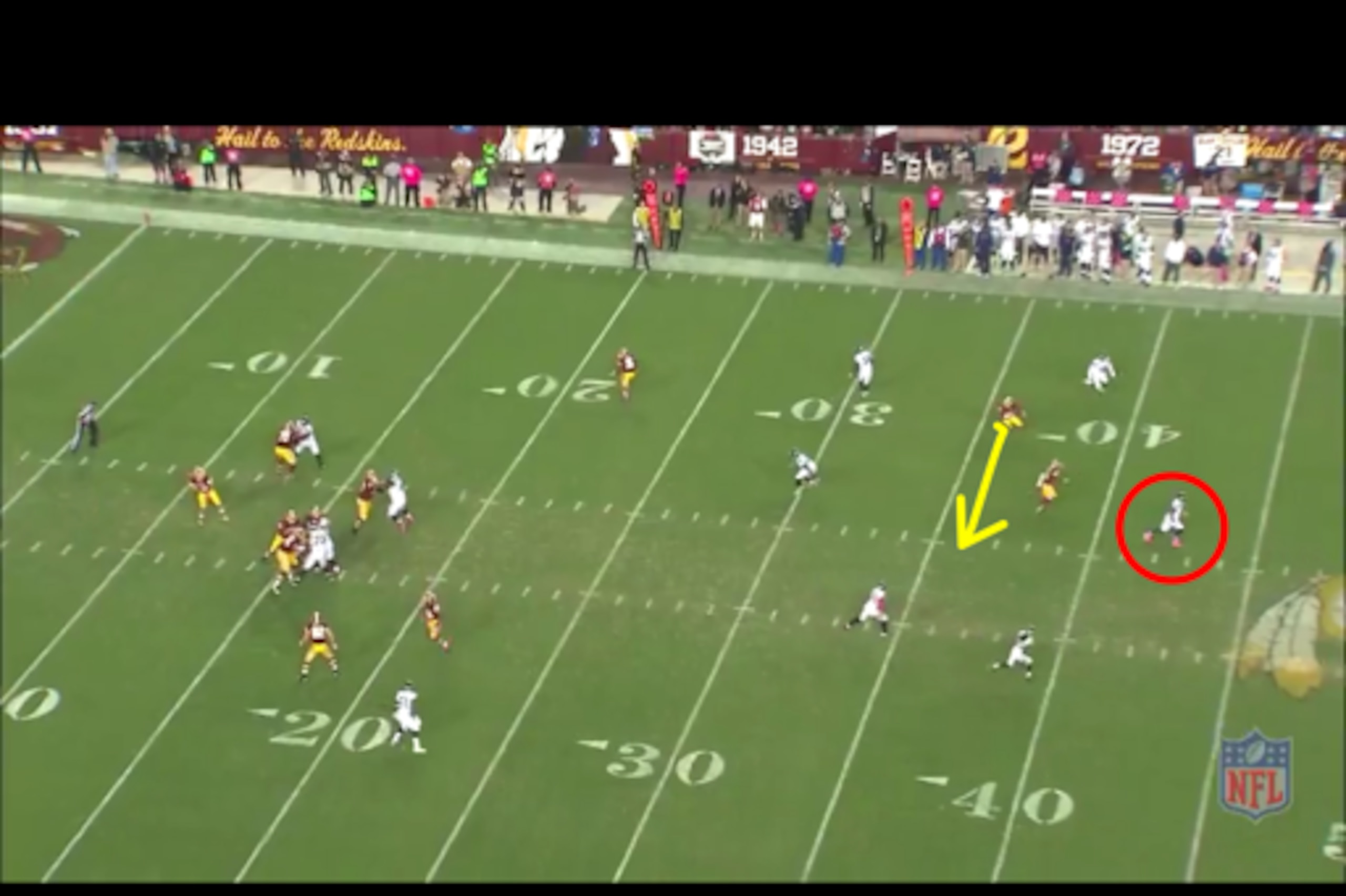
This play was similar to the way the Denver Broncos exposed the Seahawks in Week 3. It used two receivers bunched and exchanging vertical routes, something highlighted in last week's game-plan article.
The other key concept at work here was the route combination. It's a staple of every West Coast-style offense like the one Gruden runs.
Garcon and Jackson combined to produced a hi-lo concept. That's something Gruden has often used to create big plays through the air.
He did exactly that with the Bengals in Week 7 of last season against the Detroit Lions. The play involved Mohamed Sanu running a slant underneath while Green went deep on the outside:

A key was Cincy quarterback Andy Dalton faking a handoff to running back BenJarvus Green-Ellis. This quickly drew Glover Quin, the safety on Green's side of the field, toward the line of scrimmage:
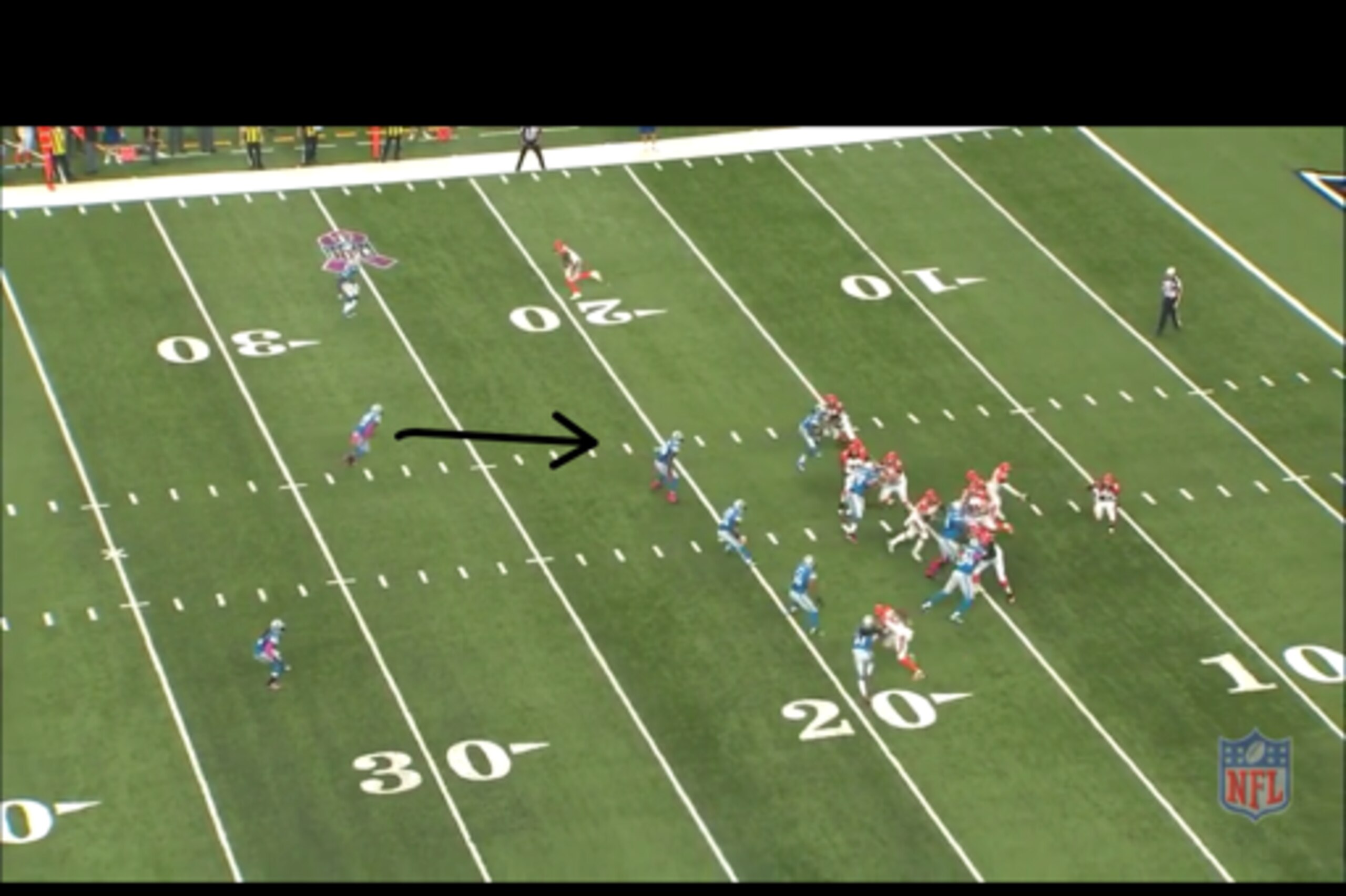
After the play-action fake, Dalton moved the pocket by rolling out. As he did, the hi-lo concept was developing:
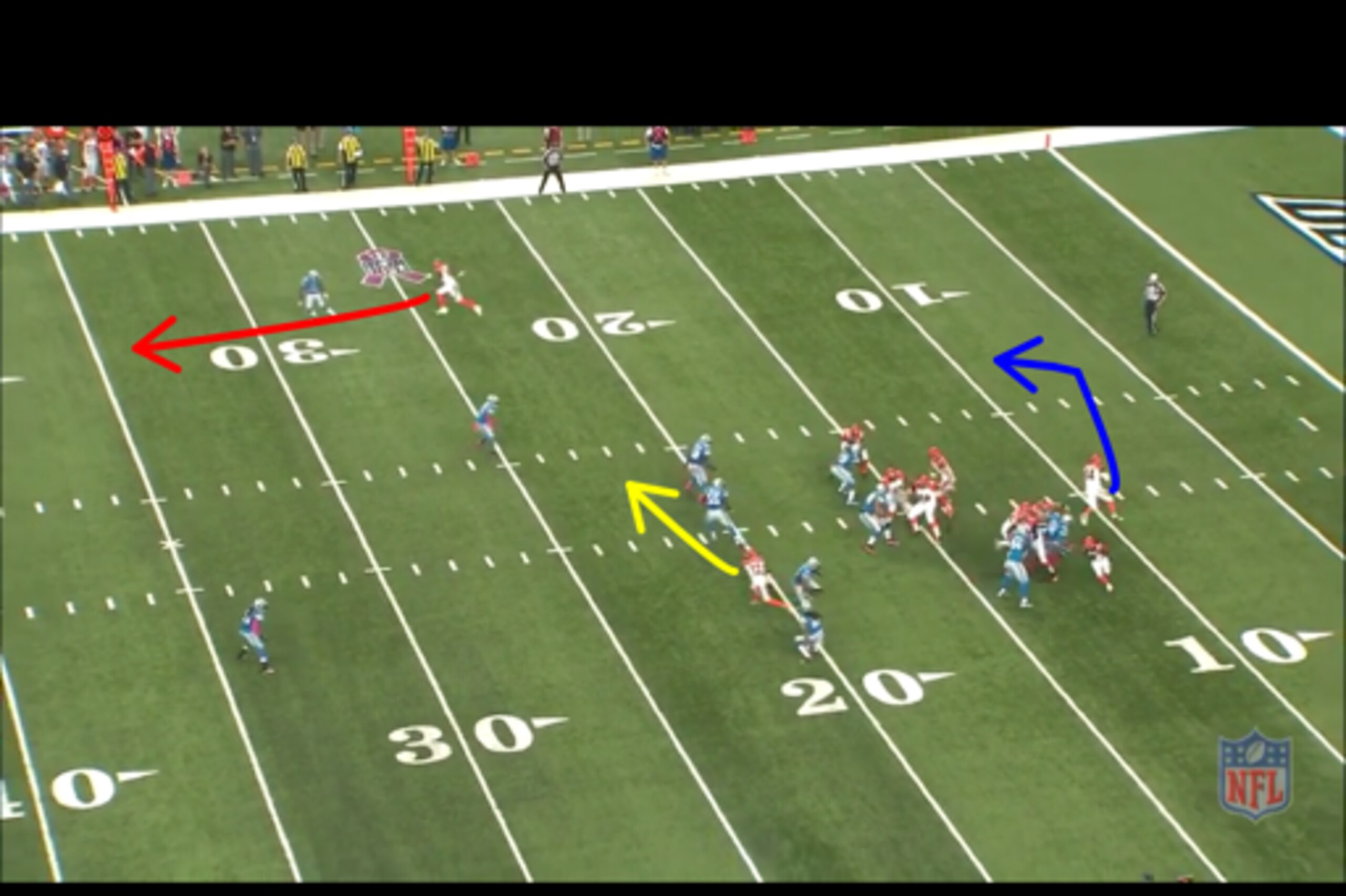
Sanu's underneath crossing pattern drew the attention of both safeties, but this left Green single-covered on the outside:
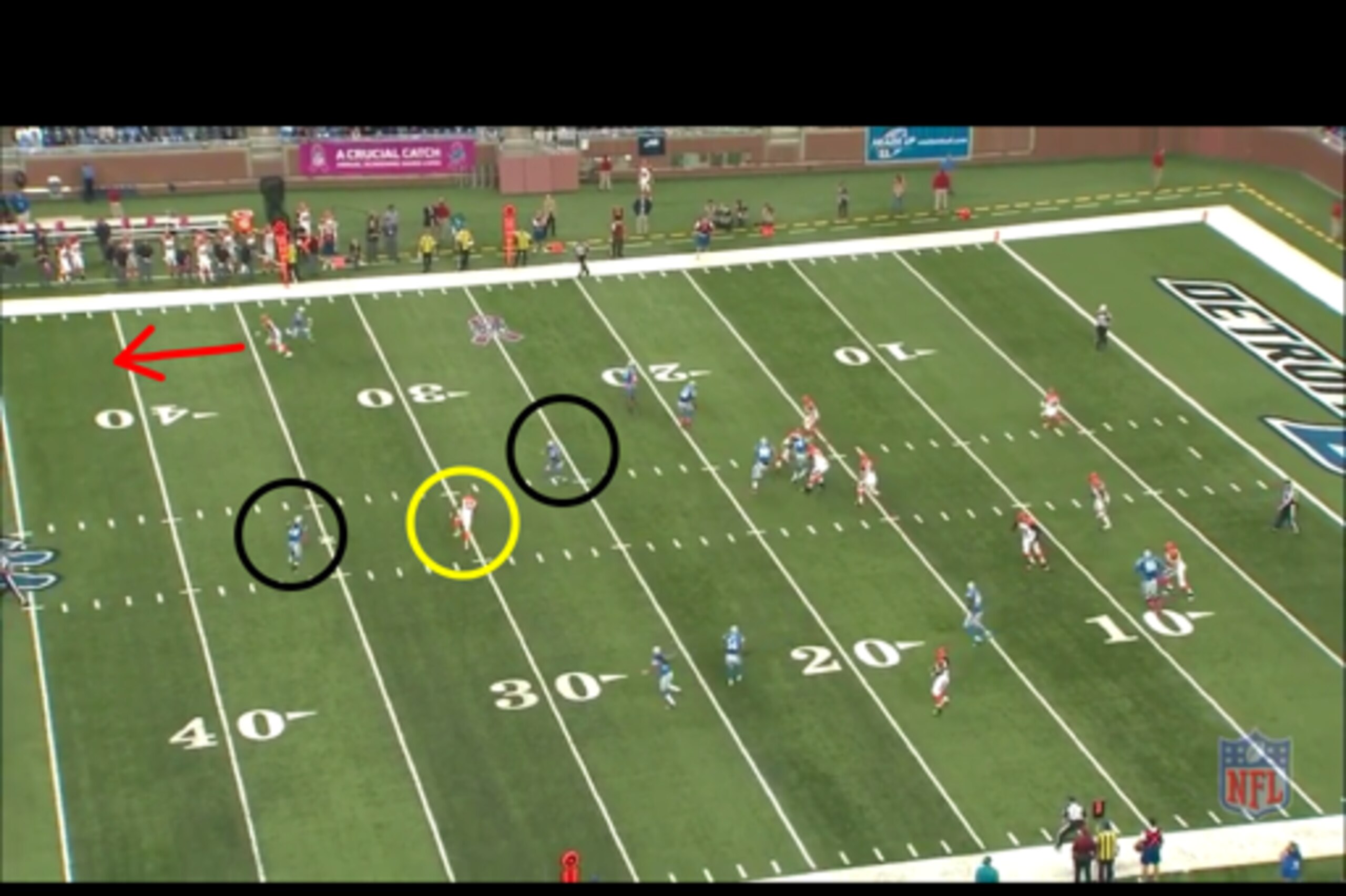
Not surprisingly, his speed soon took him past his covering defender. He was left open to haul in Dalton's pass and complete an 82-yard touchdown:

This play, with its hi-lo concept packaged around a play-action fake and a bootleg from the quarterback, should be very familiar to fans of Washington. The team ran it often during four seasons operating the Mike Shanahan offense.
When the running game is working well, which it didn't against the Seahawks, this design is lethal. It takes advantage of the mobility and arm strength of both Cousins and normal starter Robert Griffin III.
But unlike in previous seasons, the Redskins now have a game-breaking deep threat in the form of Jackson. His presence is why vertical strikes must be the defining feature of this season's passing game.

Gruden has every weapon he needs to routinely to attack defenses deep. Jackson, Garcon and Andre Roberts can all get behind coverage.
In Paul and eventually Jordan Reed, Gruden has two ultra-athletic hybrid tight ends who can certainly stretch the middle. When Alfred Morris and Roy Helu Jr. are clicking the running game will create multiple opportunities off play action. Gruden even has two strong-armed passers to execute his clever designs.
The only thing that can destroy the plan is more feeble play from the offensive line. The group has been inconsistent this season but has still given Cousins enough time to connect with Jackson for a clutch of big plays.
With more consistent protection up front, Washington can boast a deep passing game which every defense left on the schedule will fear.
All statistics via NFL.com.
All screen shots courtesy of CBS Sports, ESPN and NFL.com Game Pass.
.jpg?w=2560 "Colts Football")