The Los Angeles Lakers are about to meet Steve Nash for the first time, and though it's happening a little later than initially hoped, the 40-year-old two-time MVP can still make a lasting impact on the team.
Naturally, Kobe Bryant's ongoing quest to defy age and doubt is the biggest story of the upcoming season in L.A. His return gives the 2014-15 campaign meaning—even as the Lakers will struggle to keep pace in a brutal Western Conference.
Nash can lend significance to this season as well. Though not a part of the future in Los Angeles, Nash could help set the Lakers up for one that might be brighter than expected.

Item One: Health

It'd be ridiculous to talk about how Nash can help the Lakers without first acknowledging something: He hasn't been able to do so in the past because his body wouldn't allow it. Nash has played just 65 games in two seasons with L.A., and he's been physically limited in virtually every one of them.
We all know the backstory. A fractured leg ruined his first year, and he spent his second battling nerve issues that made day-to-day mobility a total crapshoot. That's why it's not an exaggeration to say the Lakers have never seen the real Nash.
He's been somebody else the entire time.
Now, in his 19th season, Nash says he's healthy—albeit with the reservations of a man acutely aware of his own frailty, per Mike Bresnahan of the Los Angeles Times.
"It's been a crazy drive for me...Maybe I'm starting to get to the other side of it...but it's very tenuous," Nash said. "It's such a monster to me over the last 18 months or two years that I'm not conceding anything to that beast...Just to be out there and feel pretty free is nice."
Per B/R's Dan Favale: "Most have long given up trying to downplay Nash's setbacks and hiccups and bumps, though. Rightfully so, too."
Still, Nash showed familiar flashes in the Lakers' exhibition opener against the Denver Nuggets, hitting a delightfully sneaky wrong-footed, no-jump runner over a bewildered Timofey Mozgov and knocking down open shots with ease.
He also controlled the ball when he had it on offense, routinely probing the lane and creating passing angles where they shouldn't have existed.
In short, Nash did Nash things.
And if nothing else, his improbable return to form showed the Lakers that even the last two years, dark as they were, don't have to be a permanent condition. If Nash can get healthy, anything's possible.
Fun and Function
We get it: Nash's ability to make this season a meaningful one for the Lakers is tied to his health. He can't turn L.A. into a watchable, effective, exciting offensive team if he can't get on the floor.
But let's say his nerve issues really are behind him. Let's say Father Time takes pity on him for one season after running him through the ringer over the last two. If that's the case, the Lakers may instantly regain a valuable NBA commodity: They'll be fun to watch.
It's easy to forget now, but Nash isn't far removed from single-handedly controlling this era's most exciting offensive team. He ran the Phoenix Suns' beautifully unselfish, fast-paced attack well into his late 30s, and he can do the same for the Lakers.
If it's true, as it seems to be, that Bryant plans to spend less time handling the ball on the perimeter and more time hovering near the blocks, Nash might see more opportunities to orchestrate. In the past, he had to concede touches to a perimeter-oriented Kobe.
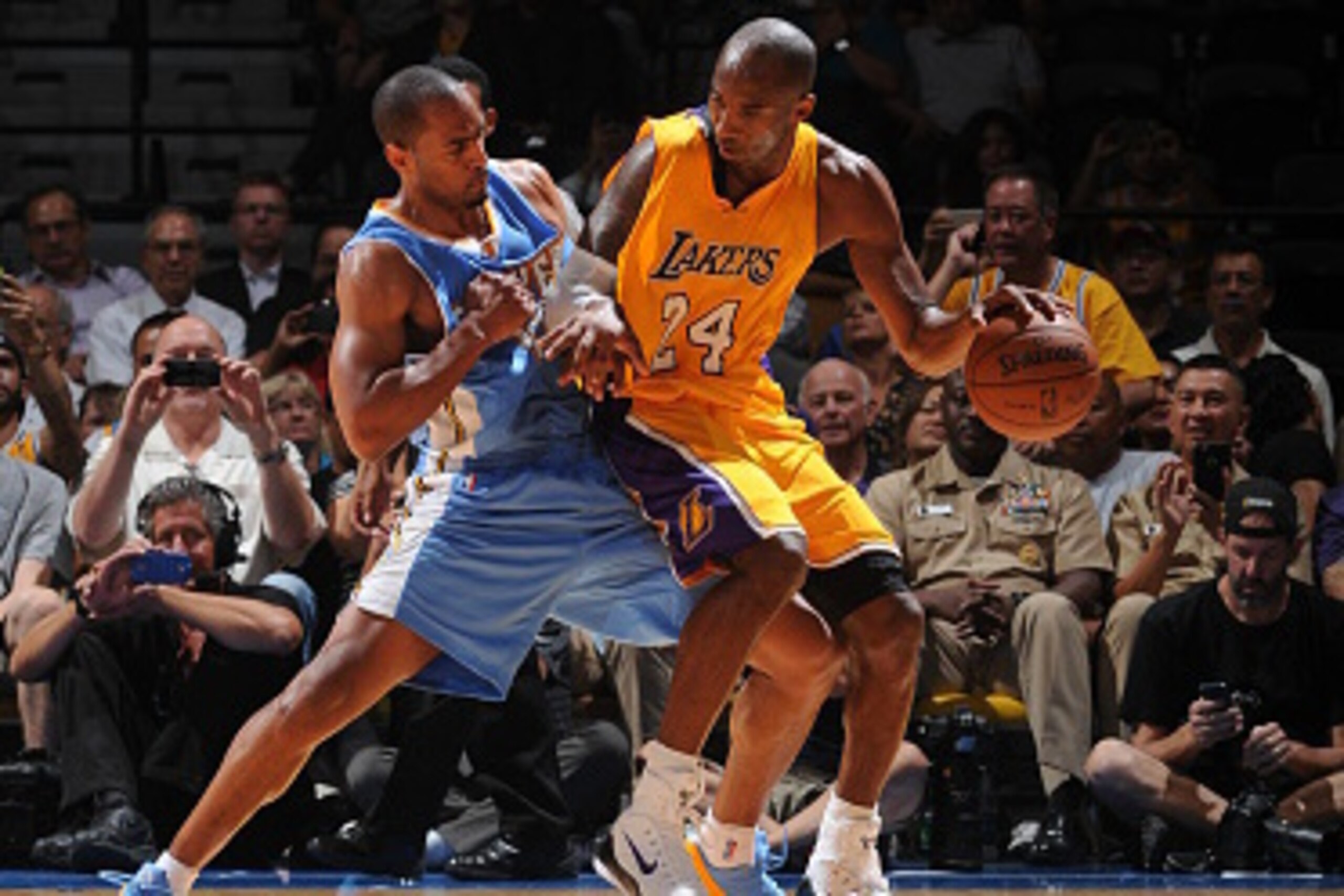
When a healthy Nash has the ball, efficient offense is basically a given. His sole purpose is to create high-yield chances—occasionally for himself, but mostly for others. And his ability to do that has never been based on speed or athleticism; it's been rooted in brains, spatial reasoning and an inherent talent for seeing plays develop ahead of time.
Those things don't disappear, and Bryant gushed about the way Nash made life easy for teammates after the Denver game:
Yeah, but who cares? Nash is a short-timer with the Lakers, and he won't be around to have the same influence on the offense after this season. Why does it matter if he turns L.A. into an effective scoring unit this year?
Well, for starters, the Lakers need to establish some kind of team culture going forward. And Nash's influence has a way of lingering. When he puts his stamp on a franchise, it changes team and teammate—often long after he's gone.
Look at the way the Suns continue to run and focus on guard play. Look at how Goran Dragic, a Nash protege, has come into his own as a scoring and distributing dynamo.
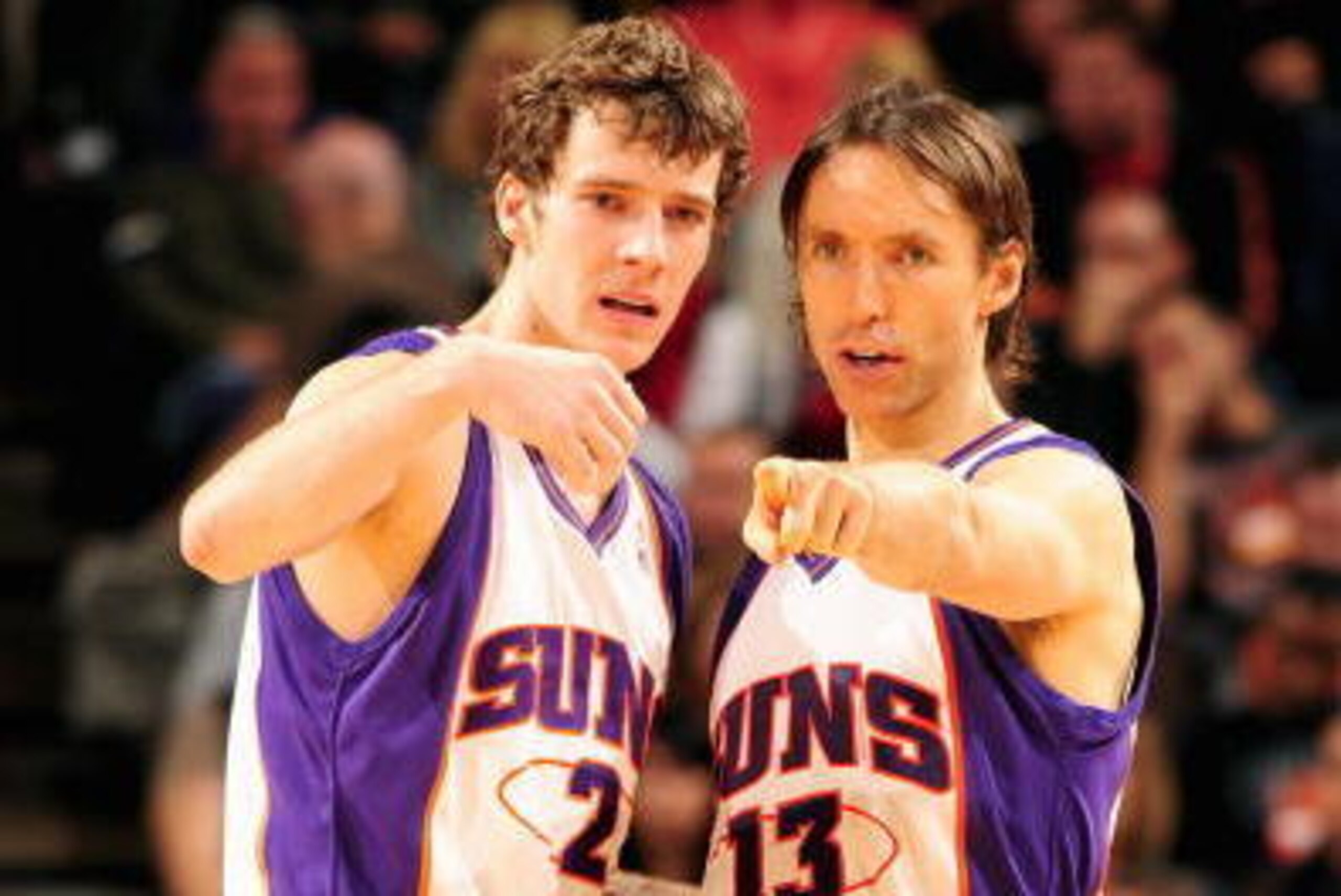
"Among the many lessons gleaned from Nash, then implemented into his own game: the probe dribble.
I learned, well, I took it from (him),' Dragic said. 'When I was a rookie, he was doing that in practice and games all the time.'
"
Now look ahead to the way Nash's game might set a tone the Lakers organization could follow into the future—one based on unselfishness and offensive harmony. If Jeremy Lin is in L.A.'s future plans, it'll be a boon for him to absorb Nash's infectious (in a good way) lessons. Jordan Clarkson and Julius Randle, two of the Lakers' young cornerstones, couldn't ask for a better role model.
If Nash can show the Lakers how to play the right way this season, maybe they'll continue to do so long after he retires.
A Big Draw Gets Bigger

The Lakers will always have advantages in courting free agents. They play in Los Angeles, a marketing hotbed, and the weather's not so bad, either. As an organization with a rich championship history, they can also appeal to players' reverence for the game's history—though it's hard to know how much a current player really cares about what happened decades before he was born.
The problem with the Lakers lately, though, is that they've only been able to lean on non-basketball assets like marketing opportunities, weather and history when courting free agents.
That's because the on-court product has been lacking the past two seasons.
If Nash's influence takes a Lakers organization recently marred by a lack of basketball direction and turns it into something that actually seems like it might be fun to be a part of, he'll do the franchise a major favor.
Hiring Byron Scott, an old-school disciplinarian who believes in conditioning and, perplexingly, lots of two-point shots, is one step toward restoring a sense of order in Los Angeles. Bryant playing a more measured game is another.
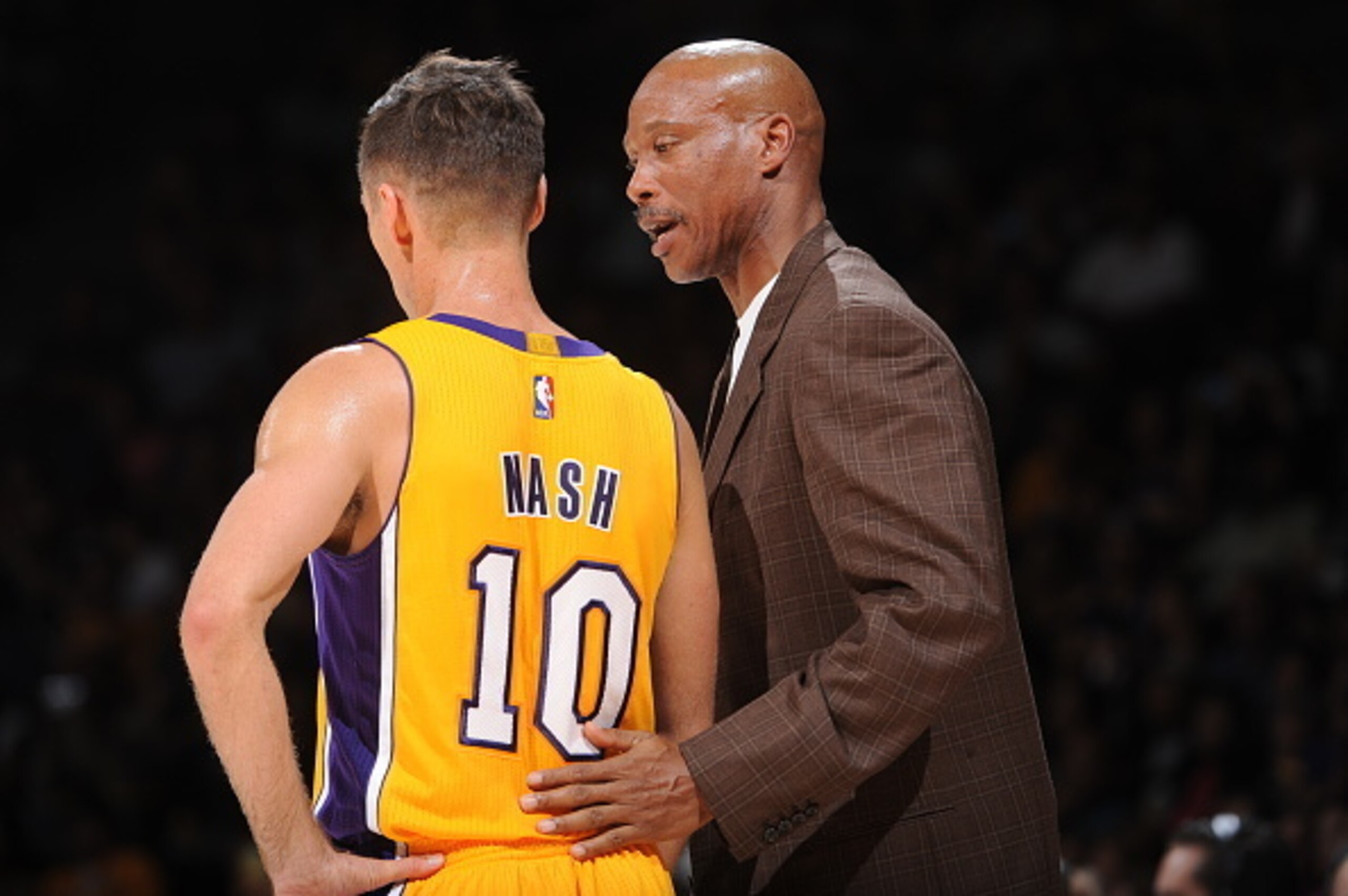
Allowing Nash to control the offense would help in that effort, imbuing a chaotic franchise with something reliable and, not least of all, nice to watch. When free agents think of the Lakers this time next year, maybe more positive associations will come to mind than they have the past two summers.
If they do, Nash might be a big reason why.
Moving Forward

Make no mistake, the 2014-15 season is a transitional one for the Lakers.
They can talk all they want about championships, and there's nothing wrong with dreaming big. Realists understand L.A. is playing out the string with Bryant's contract, allowing him to wind down his career as an alpha, and getting ready for the next phase in the organization's development.
That next phase might go smoother if Nash inspires teammates who stick around to be a part of it. And it won't hurt if he helps the Lakers look like a more functional place to play.
So while this probably isn't the way the Purple and Gold hoped Nash's time in Los Angeles would go, they can still gain something from his presence this season.
And it might contribute to an eventual return to dominance.

.jpg?w=2560 "NFL House in Paris Closes for Protests")
.jpg?w=2560 "Trevon Diggs Cut by Seahawks")