Oregon Football: What Ducks Must Do to Avoid 2nd Straight Loss
The last time the Oregon Ducks lost two consecutive games during a single season was in 2007, when they dropped games to Arizona and, you guessed it, UCLA. In order to avoid a similar fate seven years later, the Ducks must take control of the game early, bring the heat defensively and play a much smarter brand of football.
A loss to UCLA would be a devastating blow to Oregon’s postseason dreams—dreams that were rekindled after a week that turned the college football world upside down. A road win against one of the best teams in the Pac-12 should instantly vault the Ducks back to the top of the Pac-12 power rankings and re-establish them as postseason contenders.

.jpg?w=2560)
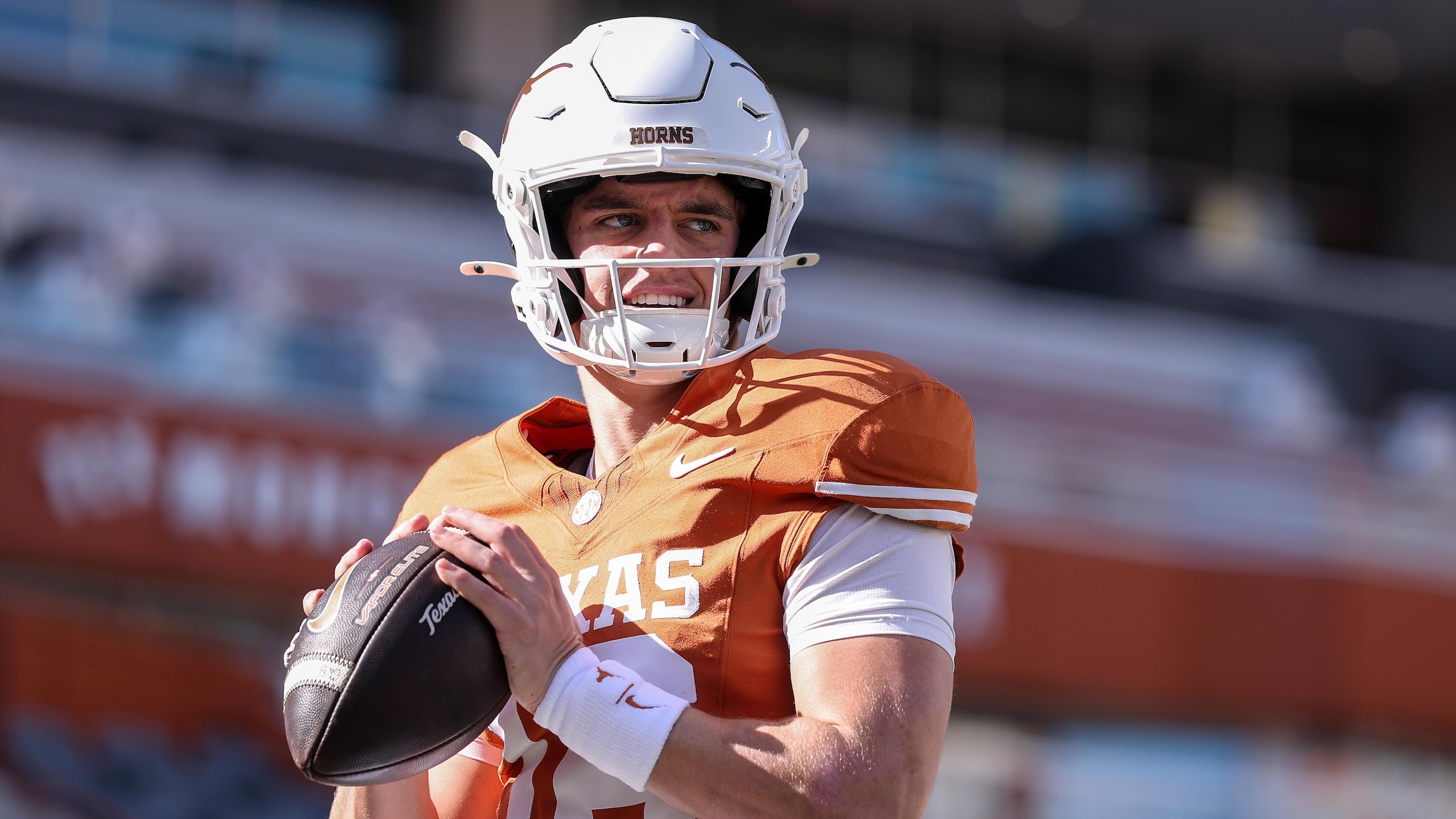
Here’s what Oregon must do to beat UCLA at the Rose Bowl on Saturday:
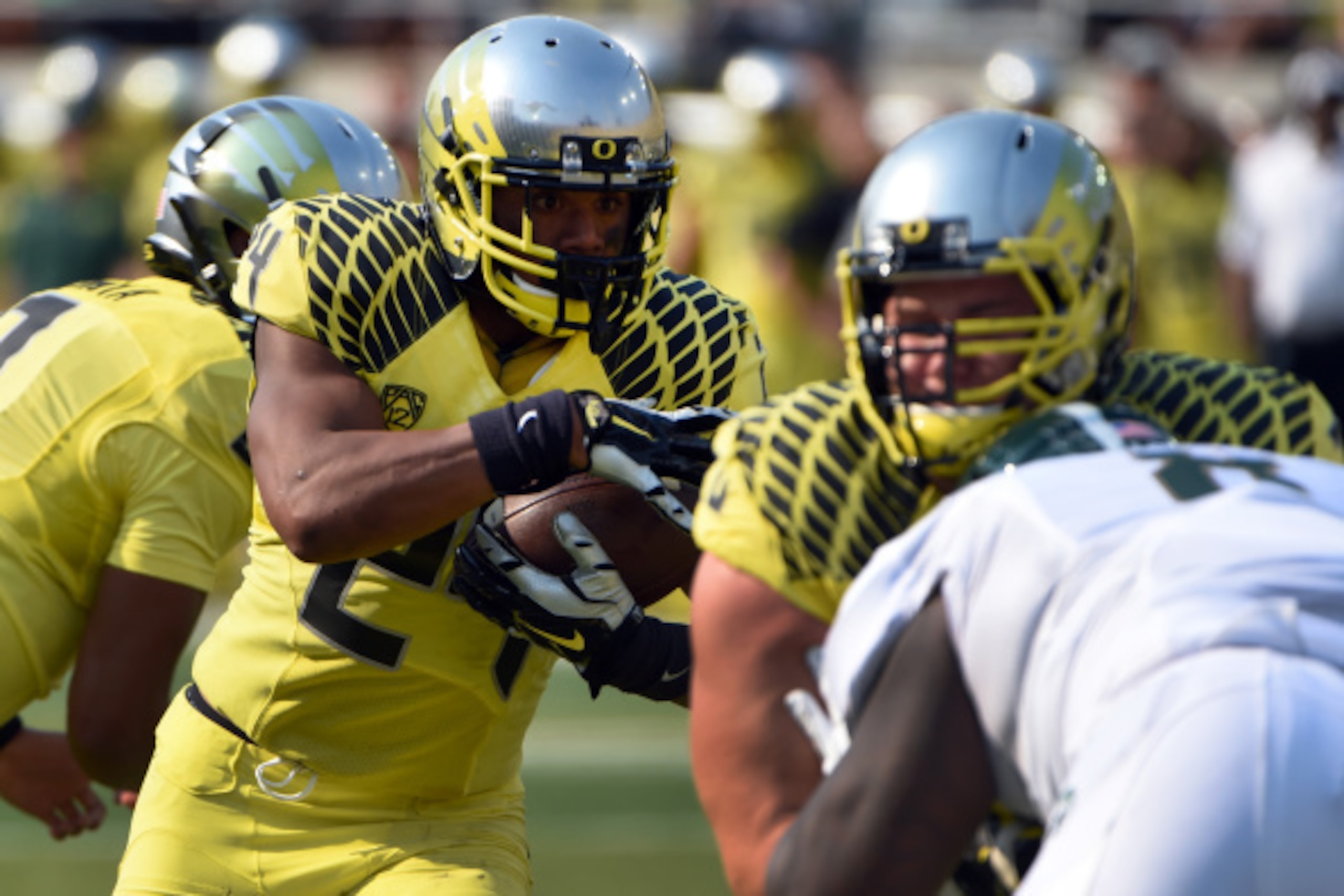
Ground Game Must Get Going
While Oregon’s running game hasn’t been dreadful this season—ranking No. 34 in the country, having rushed for 209 yards per game—it hasn’t been as successful as it has been in past years.
Yes, LaMichael James, Kenjon Barner and De’Anthony Thomas are gone. However, the combination of Thomas Tyner, Royce Freeman, Marcus Mariota and Byron Marshall should form one of the most successful rushing attacks in the entire nation.
Oregon’s offense is predicated on the success of the zone read and the ability to establish a strong running game. When the Ducks fail to run the ball, defenses have the ability to key in on Mariota and the passing game. While Mariota can twist around defenses with his legs, he’s most effective when his legs are the Ducks' third-best offensive option.
In two conference games so far this season, the Ducks have run for a grand total of 316 yards on 83 carries—an average of 3.8 yards per carry—and have yet to score a rushing touchdown.
By comparison, in the Ducks' three nonconference games this season, Oregon rushed for 729 yards on 115 carries—an average of 6.34 yards per carry. While the Ducks faced South Dakota and Wyoming in two of those nonconference games, they did face a Michigan State team that currently ranks No. 4 in the country in rush defense.
Against the Spartans the Ducks rushed for 173 yards on 40 carries—an average of 4.3 yards per carry. By no means are those numbers up to Oregon’s lofty standards. However, they are very strong numbers against the fourth-ranked rushing defense in the nation.
So what happened to the Ducks' rushing attack, which has ranked in the top 10 in yards gained per carry since 2007? Everything goes back to blocking.
Oregon’s success in the running game has less to do with the running backs and more to do with the offensive line and its ability to consistently create holes for the backs to hit.
It’s tough to run the ball when your offensive line has more holes than a slice of Swiss cheese.
Moreover, the Ducks depend heavily on their wide receivers to block downfield. While the wide receivers have been more successful in their duties than the offensive line has, they still have not been able to spring the backs open enough to hit home run-type plays.
The Ducks desperately need their offensive linemen and wide receivers to create space for the running backs, and the offense in general, to be successful. Without a solid running game to depend on, the Oregon offense becomes a pass-happy offense that is forced to convert many more third downs than it should be forced to. Without a running game, Oregon’s “blur” offense turns into a “dud” offense.
In order to beat UCLA—ranked No. 64 against the run this season—the Ducks will have to be successful in the run game and take some pressure off Marcus Mariota and the wide receivers. The Ducks' offensive line can help itself in pass protection by establishing a running game early against the Bruins.
If the Ducks have a successful day on the ground, they’ll have a great shot at knocking off the Bruins. It would also help if the Ducks defense could turn up the heat and spice things up a bit.
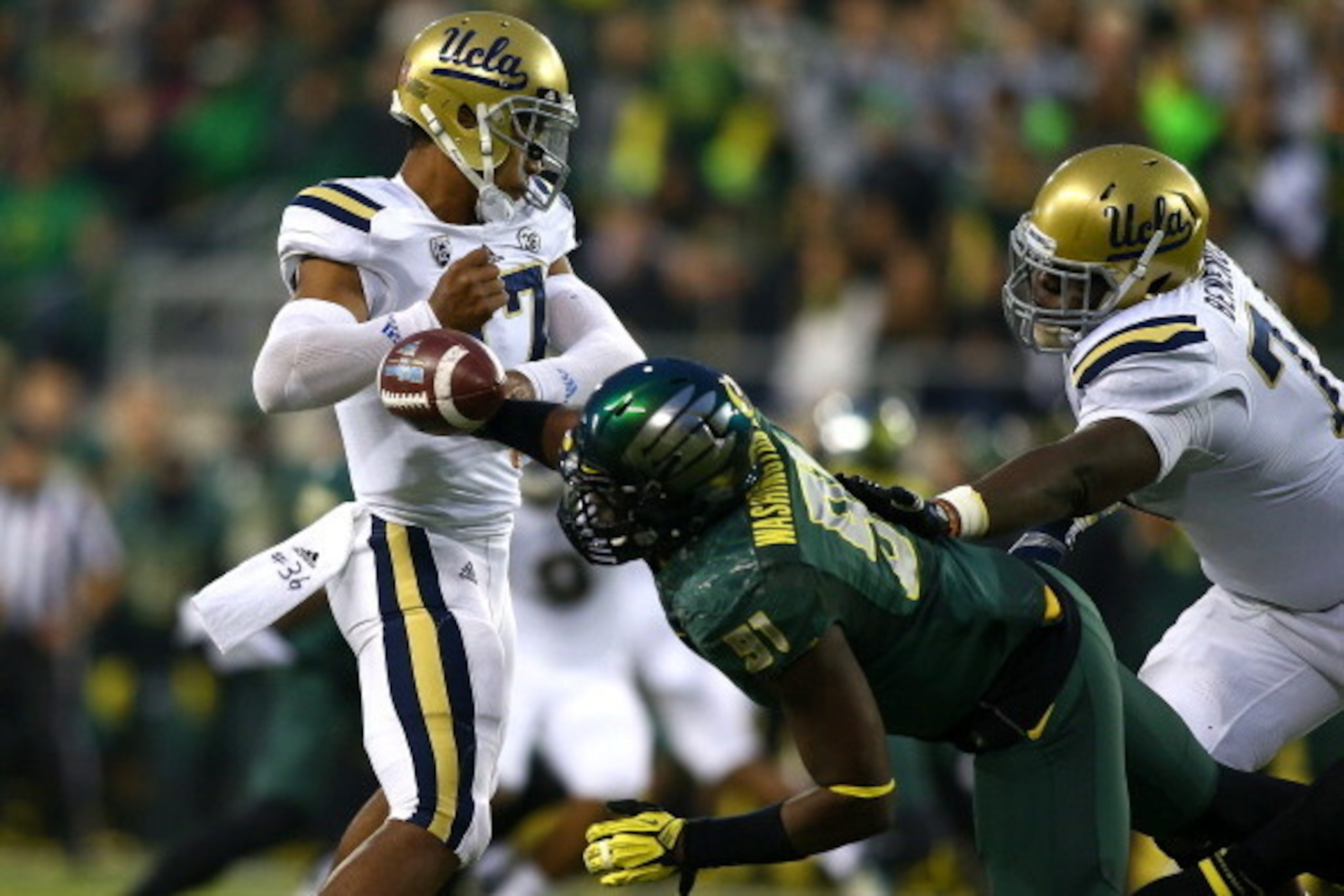
Bring The Rush
Despite the fact that the Ducks rank No. 19 in the country in sacks this season—averaging 3.2 sacks per game—and third in the Pac-12 Conference, their pass rush has yet to make a significant impact on opposing quarterbacks.
The Ducks are ranked No. 119 out of 125 eligible schools against the pass this season—giving up an average of 309.6 yards per game through the air. In terms of total defense, the Ducks are ranked No. 102 in the country and are allowing 453.8 yards per game.
Oregon’s defense has struggled to make an impact on opposing offenses for a couple of reasons—poor secondary play, vanilla coverages, blown assignments and inexperience, to name a few. However, one way to combat UCLA’s offense, which is ranked No. 36 and is averaging 465.4 yards per game, is to attack its weak offensive line.
The Bruins' offensive live has surrendered 4.6 sacks per game this season, which ranks them No. 123 out of 125 teams in the country. Last week against Utah, a game that UCLA lost 30-28, the Bruins allowed quarterback Brett Hundley to be sacked 10 times.
UCLA’s offense has a clear weakness. The Ducks must relentlessly attack it even if it means giving up the occasional big play and being more vulnerable in the secondary.
Outside linebackers coach Erik Chinander’s eyes lit up when asked this week about bringing pressure against UCLA this weekend, according to Andrew Greif of The Oregonian.
"You always want to put pressure on everybody,” said Chinander. “I love pressure.”
While defensive coordinator Don Pellum hasn’t dialed up the pressure much this season, he will need to against the Bruins.
Oregon’s defense has shown that it doesn’t have the ability to sit in zone coverage and defend the pass for extended periods of time. Brett Hundley is an incredibly talented passer and is extremely mobile. If the Ducks give Hundley the opportunity to sit back in the pocket and extend plays with his mobility, Oregon’s defense will be beaten over and over again.
Push has come to shove for the Ducks defense; however, there is a way out of the current rut they’re stuck in. It’s called pressure. If the Ducks want to avoid consecutive conference losses, Pellum would be wise to crank the heat on Oregon’s pressure from simmer to boiling hot.
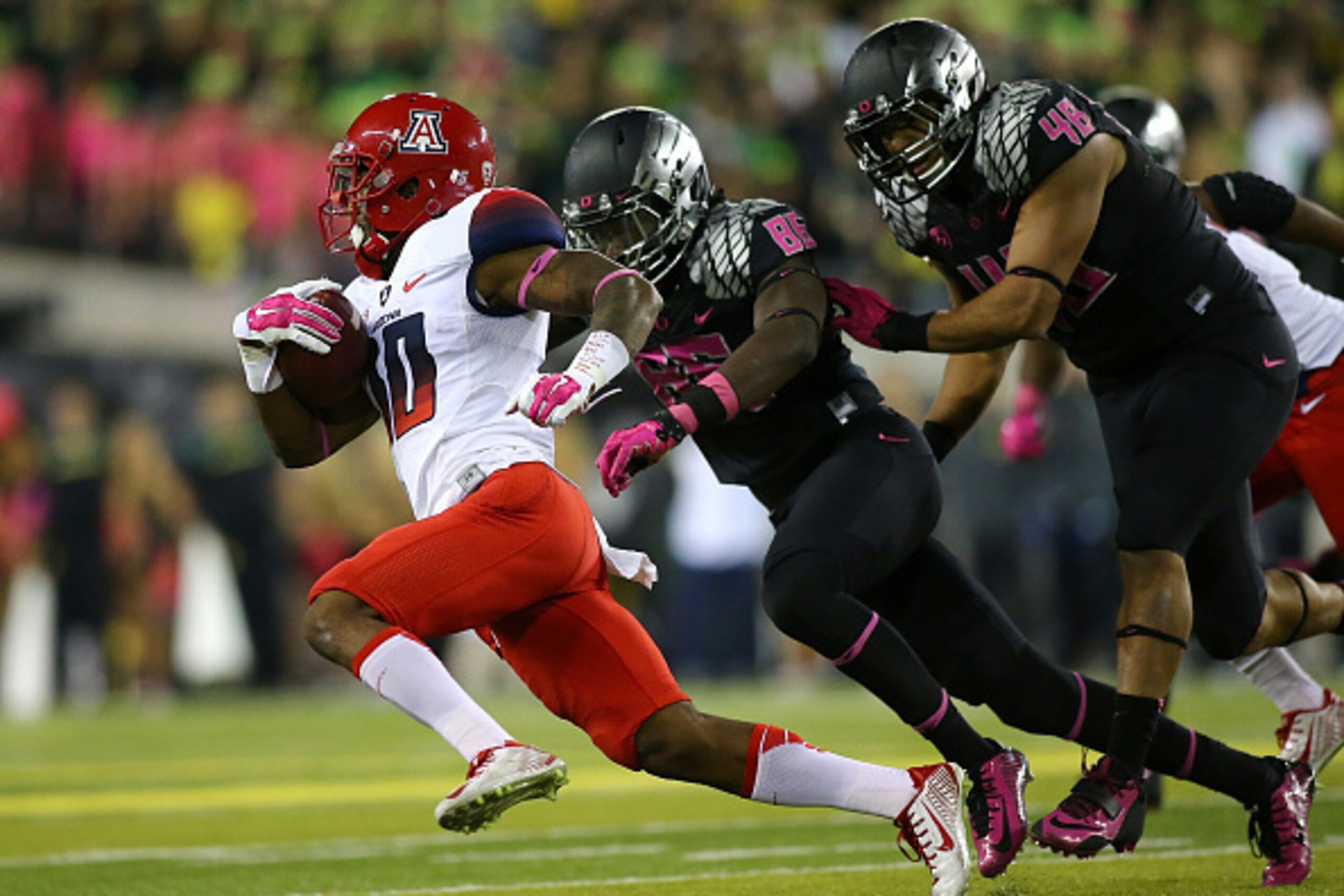
Avoid Penalties
Last week against Arizona, the Ducks committed 10 penalties that resulted in a loss of 79 yards, including two crucial penalties—one on linebacker Tony Washington and one on cornerback Troy Hill—on Arizona’s final drive that led to the game-winning touchdown.
Through five games this season, the Ducks have committed 42 penalties—ranked No. 102 in the nation—for 333 yards, an average of 66.6 yards per game. Quite simply, the Ducks have been an undisciplined team in all three phases so far.
If the Ducks are going to re-establish themselves as the class of the Pac-12, they’re going to need not only to play better, but also to play smarter.
Oregon has a huge opportunity against UCLA this weekend. A road win versus a ranked conference opponent is the best way for the Ducks to reinsert themselves in the College Football Playoff picture.
The Ducks squandered an opportunity last week to keep their perfect season intact. However, due to the wild events of last weekend, they were granted another opportunity to establish themselves as real championship contenders this season.
It’s time for the Ducks to show the country what they’re really made of. By nightfall on Saturday, we’ll know exactly who the 2014 Ducks are and where they’re heading this season.
Jason Gold is Bleacher Report’s lead Oregon writer. Follow Jason on Twitter @TheSportsGuy33.

.jpg?w=2560 "NFL House in Paris Closes for Protests")

.jpg?w=2560 "Trevon Diggs Cut by Seahawks")