New York Jets vs. San Diego Chargers: Breaking Down San Diego's Game Plan
The San Diego Chargers face a young quarterback on the brink in Week 5 after facing a young quarterback on the rise in Week 4.
New York Jets quarterback Geno Smith isn’t viewed favorably right now by most Jets fans—he has thrown five interceptions in four games, and New York is sitting at 1-3, not taking advantage of the New England Patriots’ recent struggles.
Meanwhile, the Chargers and Philip Rivers are smoothly operating at 3-1 after topping rookie Blake Bortles and the Jacksonville Jaguars Sunday.
TOP NEWS
.jpg?w=2560 "NFL Paris Football")
NFL House in Paris Closes for Protests
.jpg?w=2560 "Seahawks Chiefs Football")
Trevon Diggs Cut by Seahawks
.jpg?w=2560)
B/R's Expert Week 7 NFL Picks 🔮
With Smith and Rex Ryan beginning to sweat about their job security, the Jets could go into full-fledged desperation mode and unleash the kitchen-sink game plan: using every trick in the book to stun a comfortable team and get their season back on track. The Chargers might have to play on their toes.
The best way for San Diego to combat this is by simply doing what works best against New York—confuse Smith and toy with its suspect secondary. This blueprint has already been laid out by Detroit, which beat the Jets in Week 4.
The Chargers have the tools to take what the Detroit Lions did in a one-score win and mold it into a three-score victory if they execute at a high level. As always, that’s easier said than done, and San Diego needs to look at key turning points in the Jets-Lions game to see what it needs to do and how. That’s what we’ll do here.
Defensive key to the game: Take advantage of obvious passing situations
New York is a run-heavy team and for good reason: Chris Ivory is one of the league’s most underrated running backs, center Nick Mangold is having a throwback year and Smith’s struggles are apparent. Brian Costello of the New York Post provided the Jets' "offensive NFL rankings":
The Jets will get theirs on the ground, despite San Diego’s improved run defense—it’s when they throw the ball in obvious passing situations that the Chargers must take advantage of Smith and his deficiencies.
When Smith gets time in the pocket, he is a capable NFL quarterback. According to Nathan Jahnke of Pro Football Focus, Smith leads the league with a 57.1 completion percentage on plays where he holds onto the ball for at least 2.6 seconds.
A big reason for that is the threat of New York’s running game, as pass-rushers play more conservative and safeties get closer to the line of scrimmage on first and second down. The Jets’ hammer of a run game forces teams to dial back their exotic blitz packages. Smith faces less complex coverages as a result, thus getting more time in the pocket.
It sounds like a good offensive philosophy, but there is a reason the Jets are 1-3—Smith can’t deal with a rush if the defense only has to think about the pass. That’s when the blitzing and, consequently, the pressure happen.
In Week 4, Smith had a quarterback rating of 8.8 under pressure, per Pro Football Focus. The Lions defense thrived by taking advantage of Smith’s lack of pre-snap recognition in the fourth quarter. Let’s take a look at its biggest defensive play.
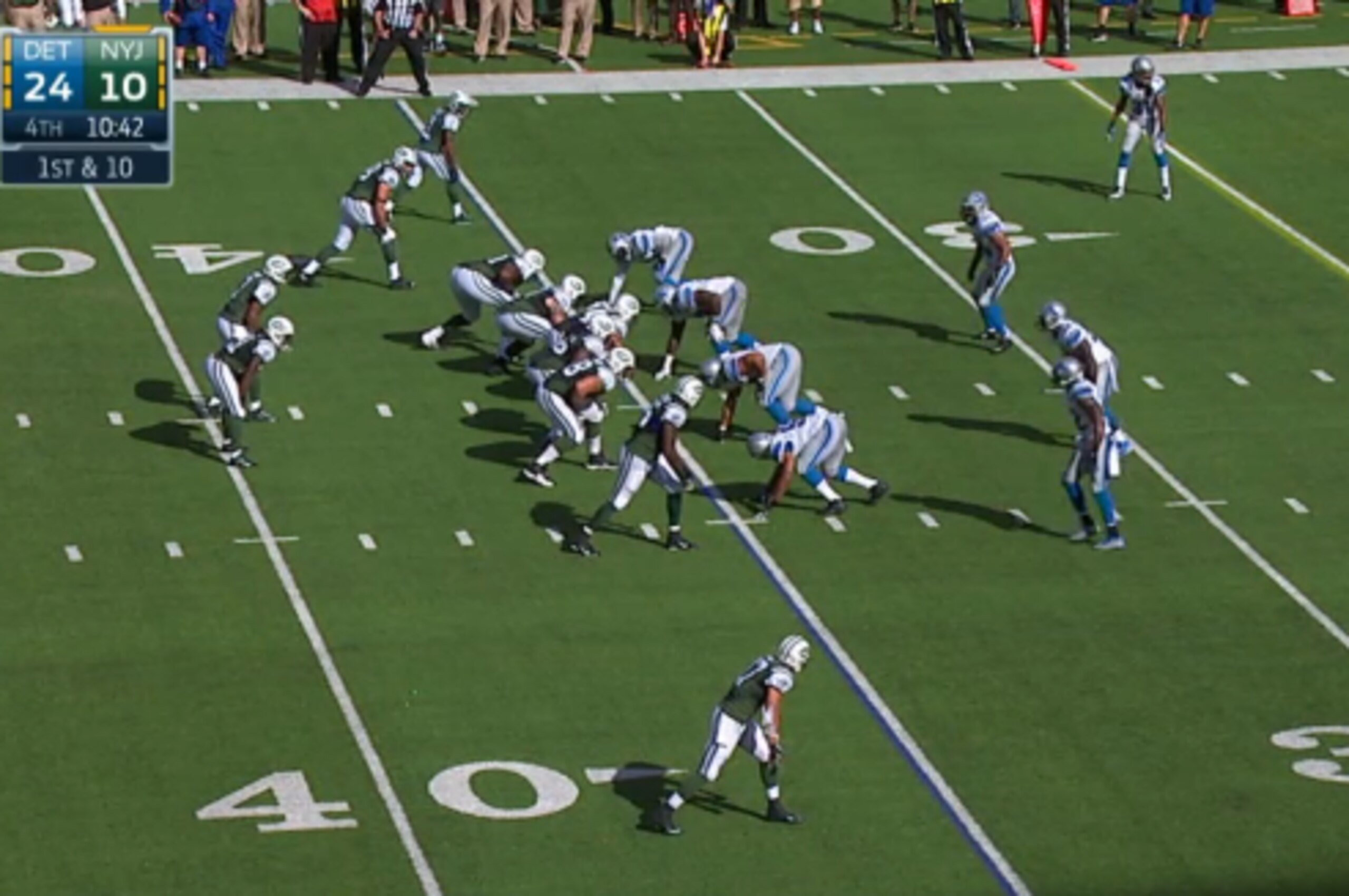
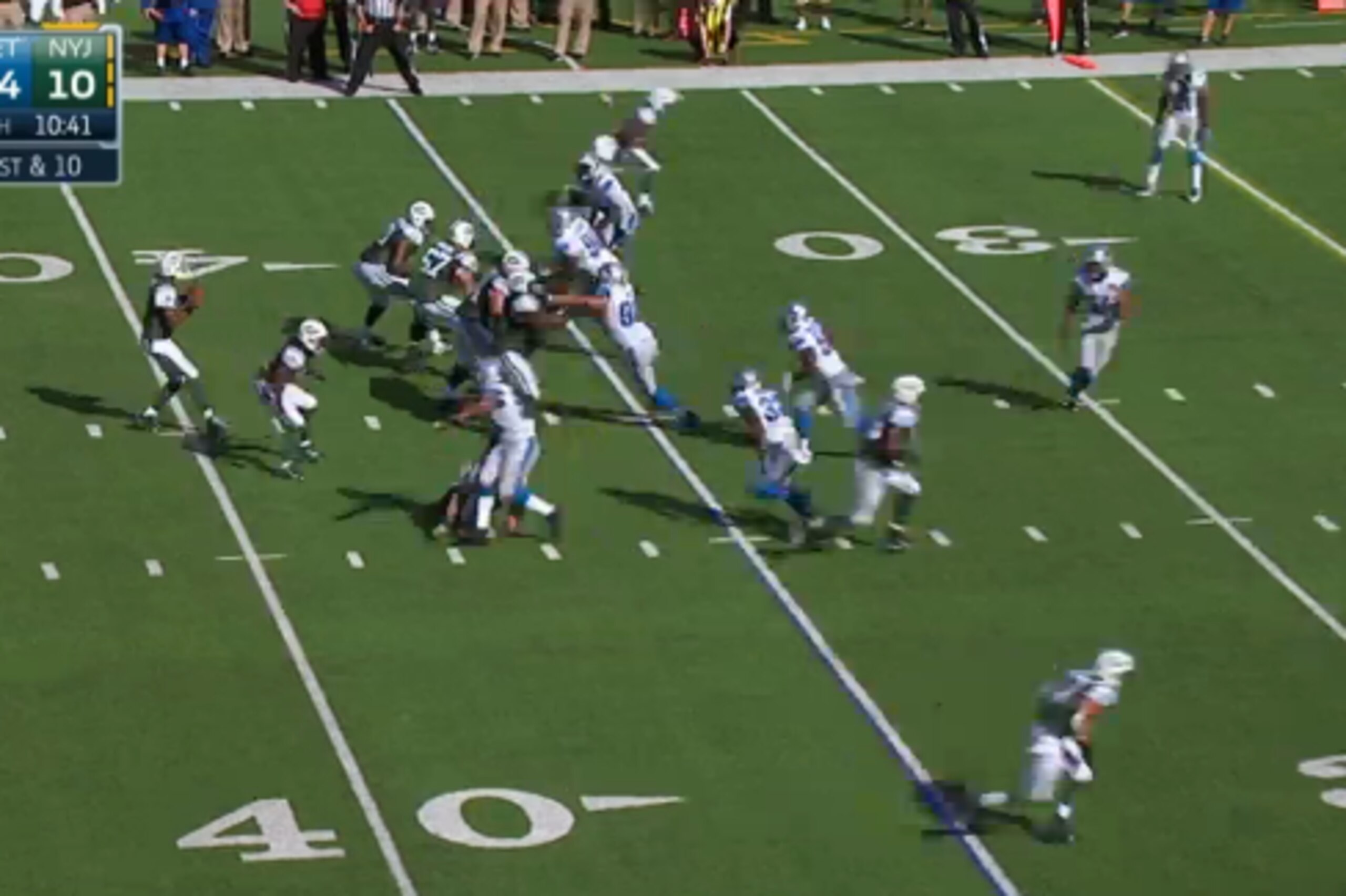
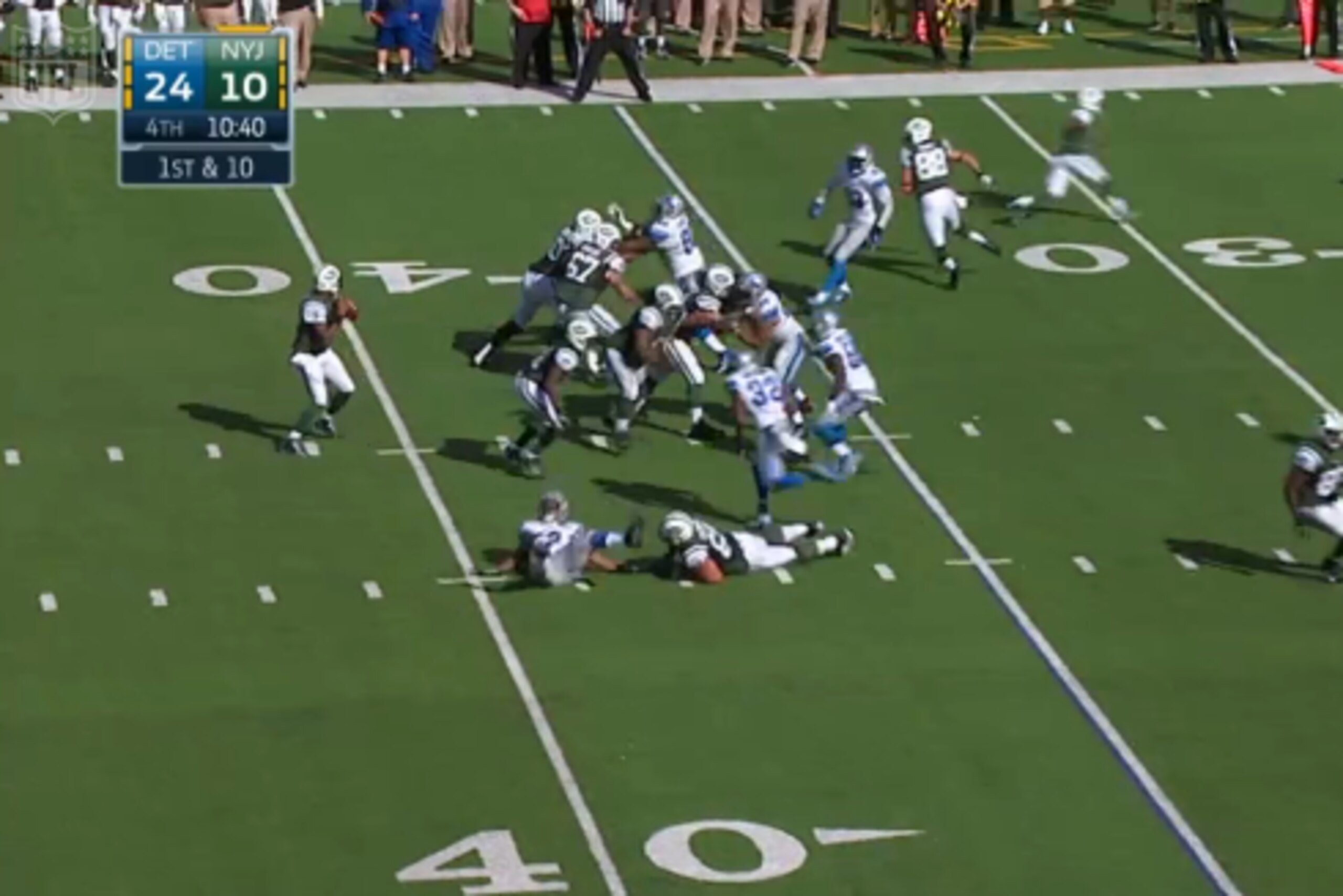
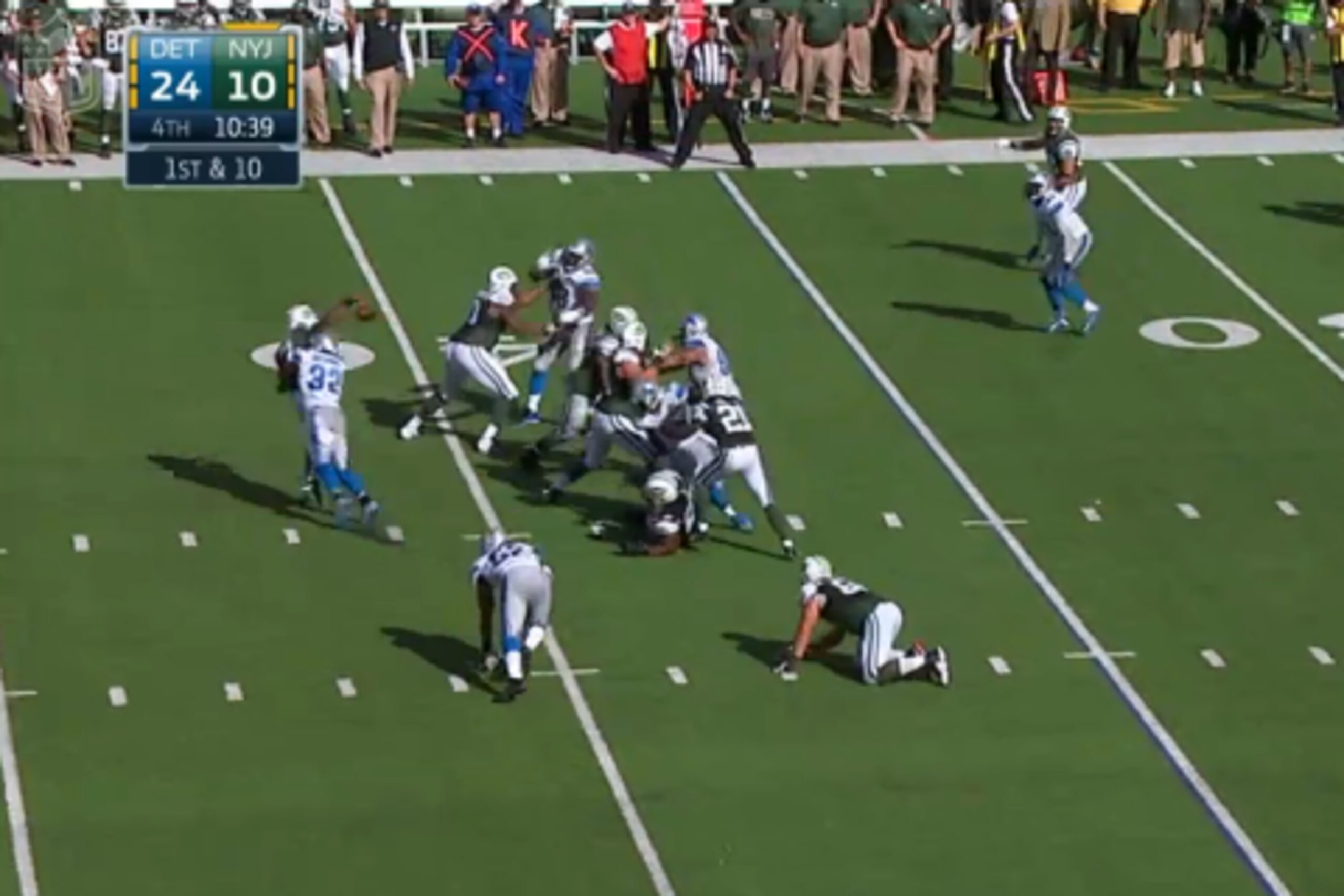
Detroit took a calculated gamble, and it paid off. Ihedigbo is one of the NFL’s more frequent blitzers at safety, a luxury most teams don’t have. Not many would be able to execute the same play with the same result.
Luckily for the Chargers, safety Eric Weddle can do a little bit of everything on defense. While he is most known for his glorious beard, range in pass coverage and wrecking shop against the run, Weddle can blitz as well. His six career sacks are unusually high for a safety, and his versatility can slow down the Jets more than Ihedigbo did.
The response to more Weddle blitzes is obvious among Chargers faithful—will defensive coordinator John Pagano, notorious for his conservative defense, actually be willing to carry out this plan?
That won’t be answered until the game is over. However, Pagano should carry out this plan, despite the inherent risk of a safety blitz. Costello highlighted the Jets' low ranking regarding "red-zone offense and defense":
The Jets’ ineffectiveness in the red zone means he should be willing to take chances. If they get burned by a mistimed blitz, New York is unlikely to take advantage and turn it into a touchdown. At worst, San Diego just has to withstand a Nick Folk field goal.
Costello pointed out the offense’s weakness near the goal line. Did you notice what other Jets unit struggled in the red zone? That’s right—the defense. For the Chargers offense to continue humming along, it needs to exploit this. That requires getting to the red zone first.
Offensive key to the game: Take the cornerbacks deep
Lead back Donald Brown is doing absolutely nothing, and the Jets have the scariest defensive line in football. If Brown averages more than three yards per carry Sunday, the Jaguars will win the Super Bowl.
In other words, the ground attack should not be counted on.
However, the Chargers’ passing offense is among the league’s best—it might be the best through four games. And Antonio Allen, the Jets’ starting cornerback who converted to safety this year, should be the player it targets.
Allen has been stunningly decent, even though the Jets assigned him to his new position out of necessity. His tackling is sound. His 6’1” frame allows him to challenge big, No. 1 receivers. He has gotten a few pass deflections.
But the Lions took advantage of the one area Allen really struggles in as an inexperienced corner—the deep ball.
Combined with rookie safety Calvin Pryor, who is ranked 63rd at his position in pass coverage, per Pro Football Focus (subscription required), half of New York’s secondary spends far too much time peeking into the backfield. Allen and Pryor’s downfield mentality hurt the Jets in their close loss, as Jeremy Ross roasted them for a 59-yard touchdown.

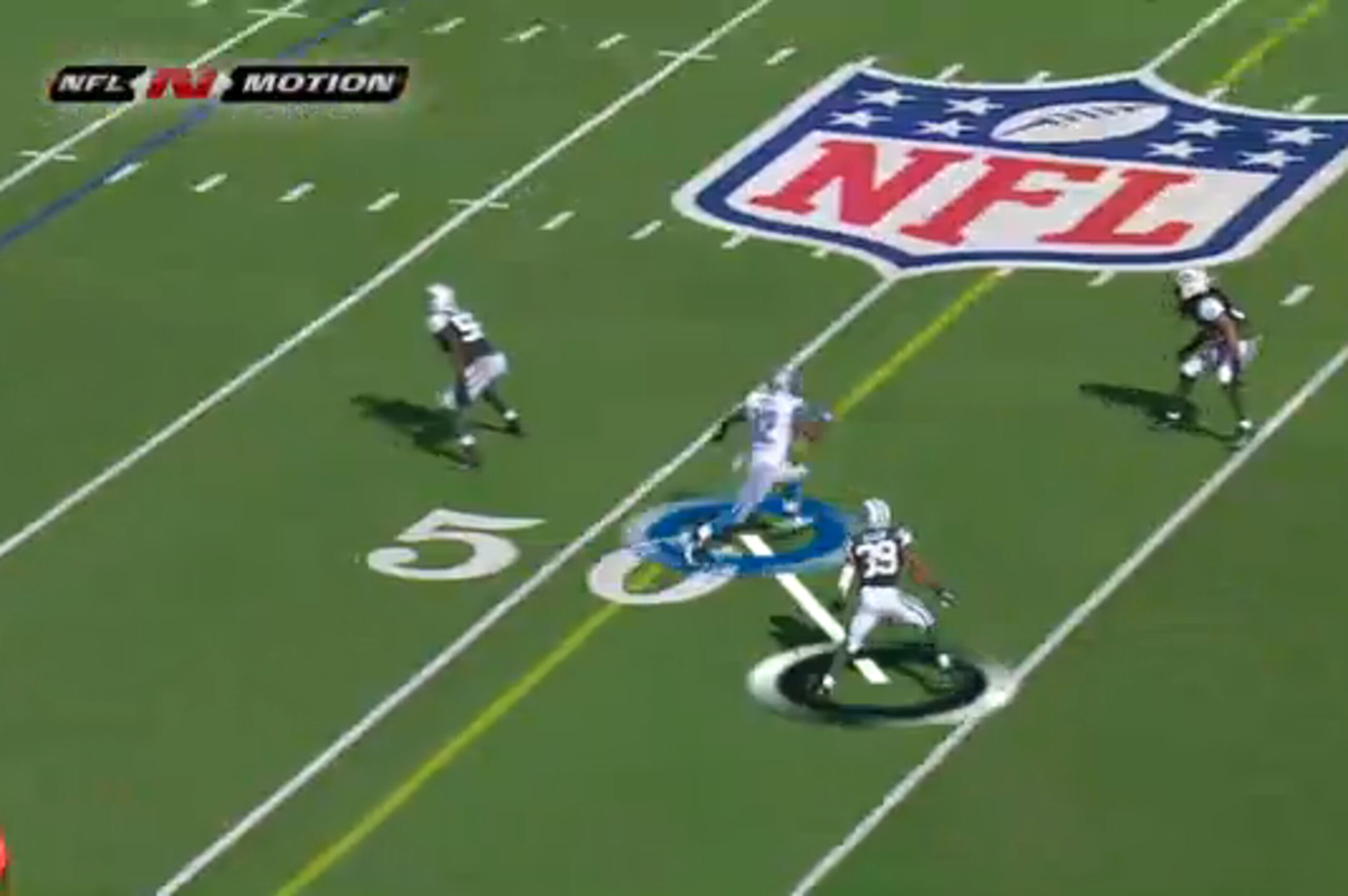
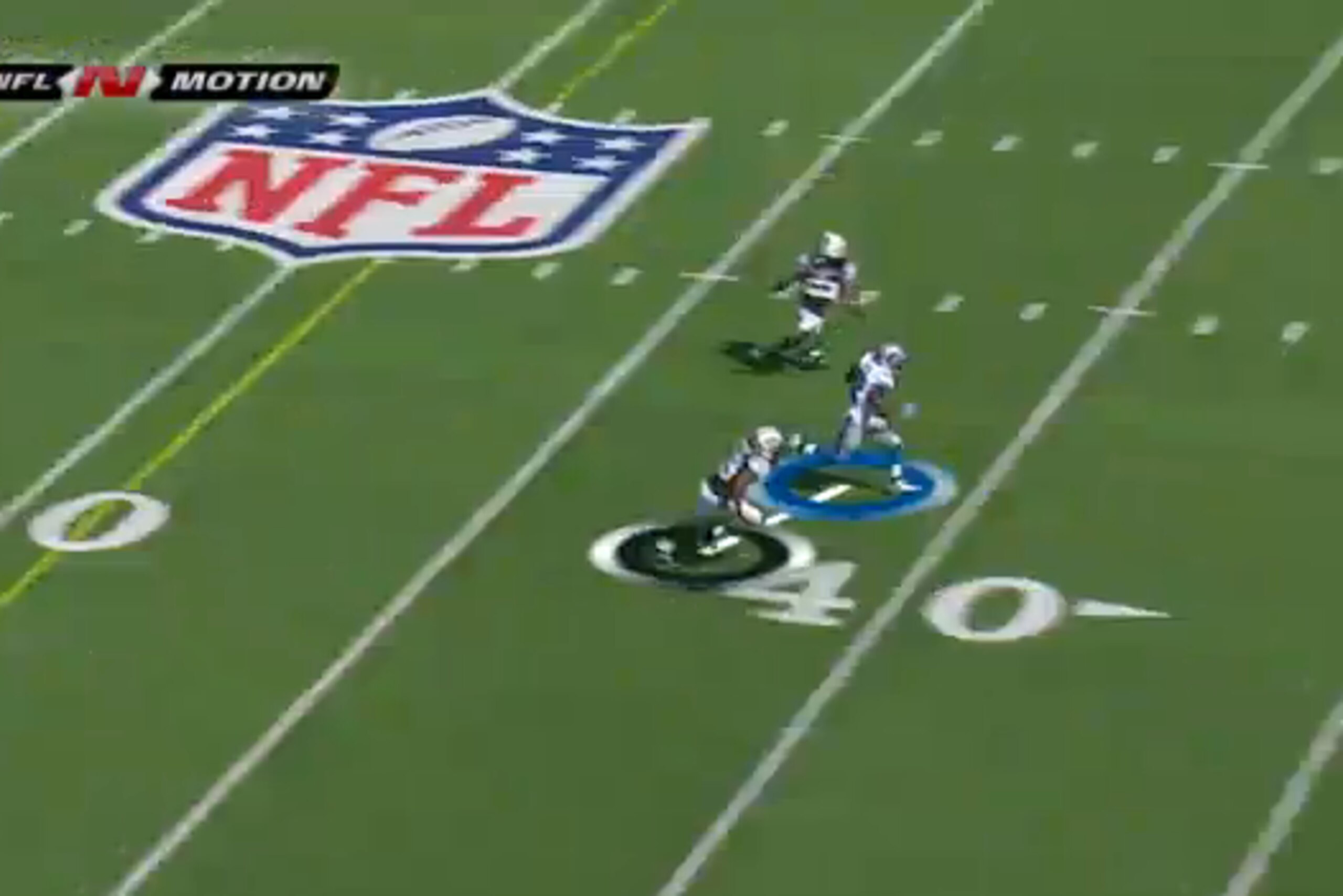
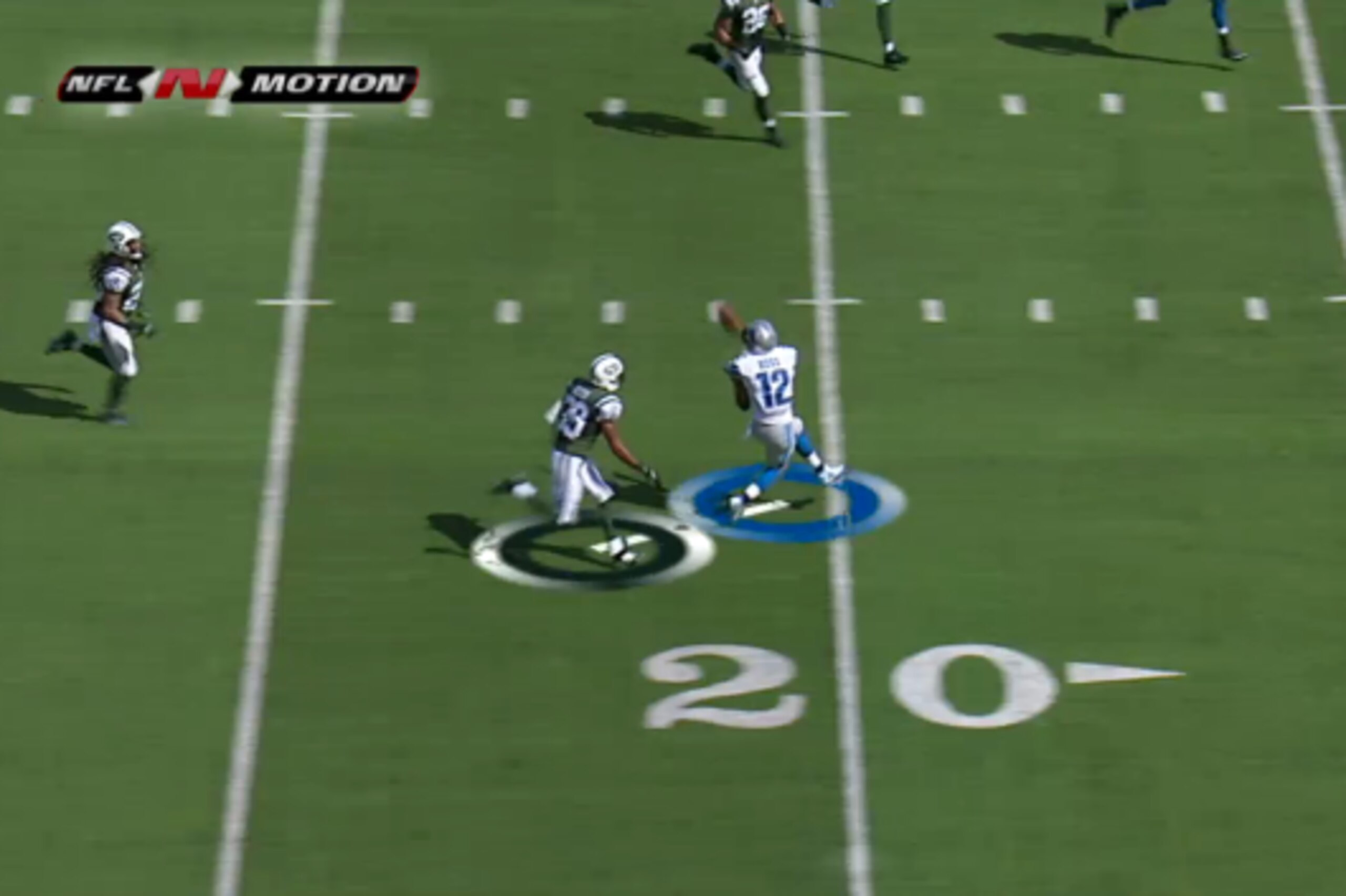
Detroit’s perfect execution certainly didn’t help New York here. Matthew Stafford pump-faked to buy Ross some time and keep Allen and Pryor occupied. And according to ESPN.com’s Michael Rothstein, Ross said Stafford changed the route because the defensive backs were closer to the line of scrimmage. Pump fakes and pre-snap adjustments are two of the many areas in which Rivers excels.
Most of the blame on the play can be attributed to Allen not Pryor—he said so himself, per Darryl Slater of NJ Advance Media (for NJ.com). Allen is a smart player who will continue to grow as he gets used to his new position. The Jets should be thrilled he is this good this early. But on Sunday, he will be a weak point, and the Chargers have the perfect deep threat to slice through any broken coverage.
Malcom Floyd continues to be a vital role player in San Diego, getting chunk plays down the field when Keenan Allen and Eddie Royal aren’t open closer to the line of scrimmage.
Numbers similar to his two-catch, 98-yard game at Buffalo wouldn’t be surprising—Rivers has a 149.3 quarterback rating when throwing to Floyd deep right, according to Pro Football Focus (subscription required). That’s the area of the field where Ross scored his touchdown, and Floyd is the better player.
Ryan is considered one of the NFL’s best defensive minds for a reason, and he isn’t going to let Floyd run wild without some sort of countermeasure. But since Floyd is so effective gliding down the field, it just might take the kitchen sink to stop him. The Chargers can use that to their advantage, spreading the wealth to other targets, while Floyd draws multiple defenders. On paper, it’s a sound game plan.
The Chargers’ offense should rely on big plays against the Jets’ corners while the defense takes advantage of Smith on passing downs. The Jets aren’t an easy win by any stretch—all three of their losses were one-possession games—but these are some very exploitable weaknesses that desperation won’t cure. San Diego takes it.
.jpg?w=2560 "Titans Colts Football")