Dolphins' Offensive Adjustments Key in Miami's Week 4 Win
In order to defeat another NFL team 38-14, a great game plan must be developed throughout the previous week by the coaching staff, and on Sunday, the players must execute at a high level. In the Miami Dolphins’ victory over the Oakland Raiders in Week 4, that’s exactly what happened.
The Raiders have yet to find the winning formula this season, as they are 0-4. That doesn’t mean that they haven’t been a competitive team, however. Their away games against the New York Jets and New England Patriots prove so.
Likely the most important takeaway in the Dolphins’ win was how the offense finally seemed to jell. Offensive coordinator Bill Lazor implemented adjustments into his game plan and play-calling after two lackluster performances by his players, and it worked like a charm.
TOP NEWS
.jpg?w=2560 "NFL Paris Football")
NFL House in Paris Closes for Protests
.jpg?w=2560 "Seahawks Chiefs Football")
Trevon Diggs Cut by Seahawks
.jpg?w=2560)
B/R's Expert Week 7 NFL Picks 🔮
With the successful formula in hand and the team entering a needed bye week, we’re going to look at the adjustments made and see why they were so effective as the Dolphins triumphed in Week 4.
Offensive Balance
Although statistics can be loaded and are able to be manipulated however needed to support an argument, the Dolphins’ offensive play-calling so far has been cut and dry. Take a look at the chart below, which accounts for the average amount of run and pass plays in the Dolphins’ two wins and two losses.
| Average No. of Runs | Average No. of Passes | Average Total Yards | Average Offensive Points Per Game | |
| Dolphins' Wins | 36.5 | 31.5 | 397.5 | 32 |
| Dolphins' Losses | 20.5 | 46 | 311 | 11.5 |
When the Dolphins have prioritized the run game in their offensive attack, the passing lanes open up and quarterback Ryan Tannehill is given more time in the pocket to survey the field. In Miami’s two victories, the offense has been much more effective when running the ball more than passing it, which exhibits the transformation the offense has made since 2013.
The Dolphins are currently sixth in the league rushing the ball, averaging 142.2 yards per game, according to NFL.com. Even with Knowshon Moreno out with an injury, the Dolphins have been able to average five yards per carry with Lamar Miller as the lead back. By running so effectively, Miami set themselves up for short-yardage situations on third downs, which has also had a positive impact on their conversion rate.
Improved Spacing
In Week 4, using Miller as the focal point of the offense allowed Tannehill to play his best game of the season. Not only did the running game keep the defense guessing, but also the Dolphins used play-action fakes to freeze the Raiders linebackers near the line of scrimmage.
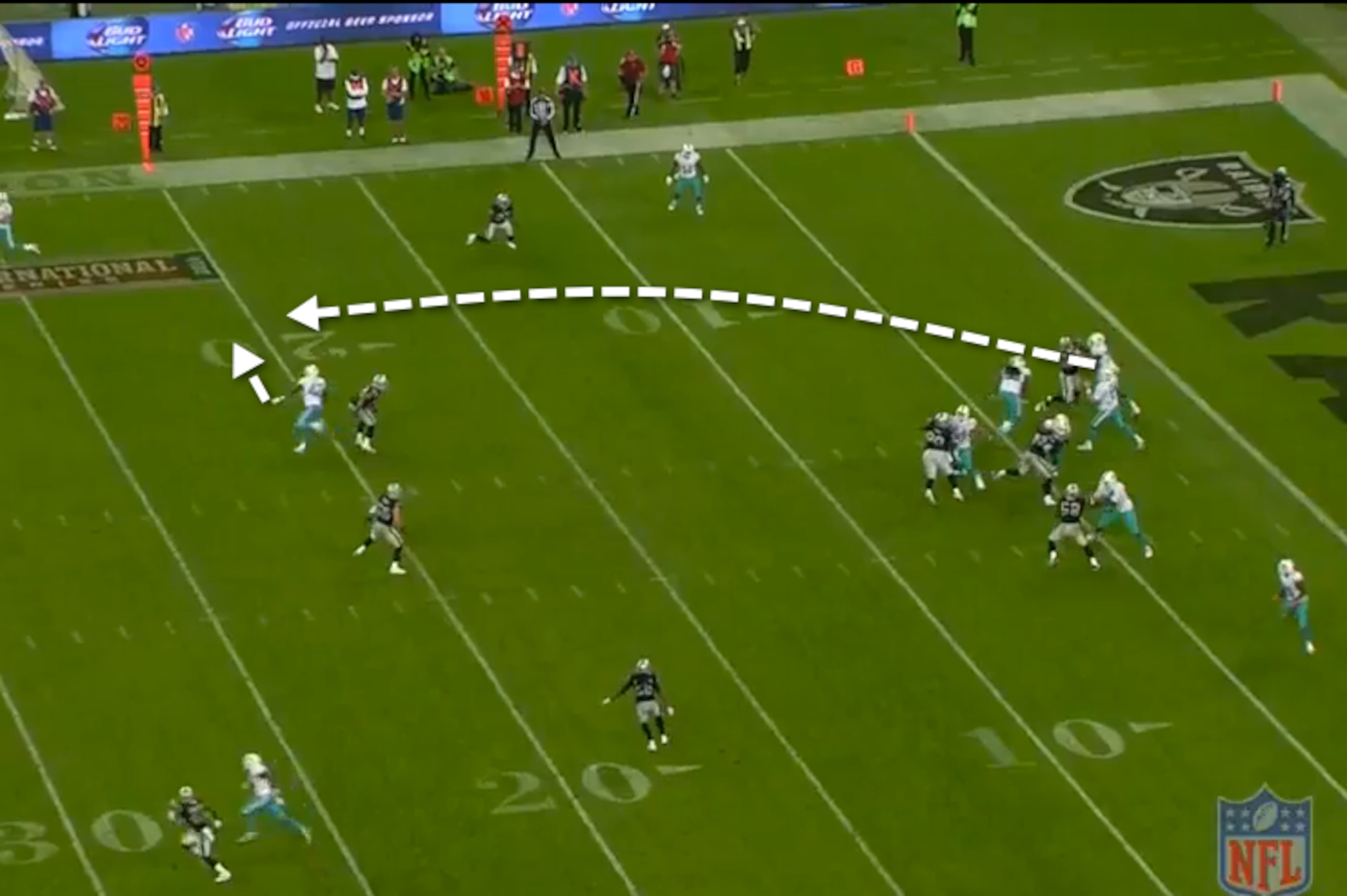
The game plans used in Weeks 2 and 3 produced little opportunities to spread the defense out. Receivers were often running short routes like crosses, which can be stopped by routine zone defenses. The lack of room to throw to caused Tannehill to be unsure of his reads, because there were few opportunities to lead his target open.
That changed in Week 4, and Tannehill made quick progressions through his receiving corps. One of Tannehill’s best talents is to throw an accurate seam pass, as he showed on his 35-yard completion to Brian Hartline in the third quarter. The screenshot below illustrates how Tannehill read the coverage and delivered a dime over the cornerback. In fact, Hartline was Tannehill’s third read on the play, which further shows how much of a rhythm Tannehill found himself in.
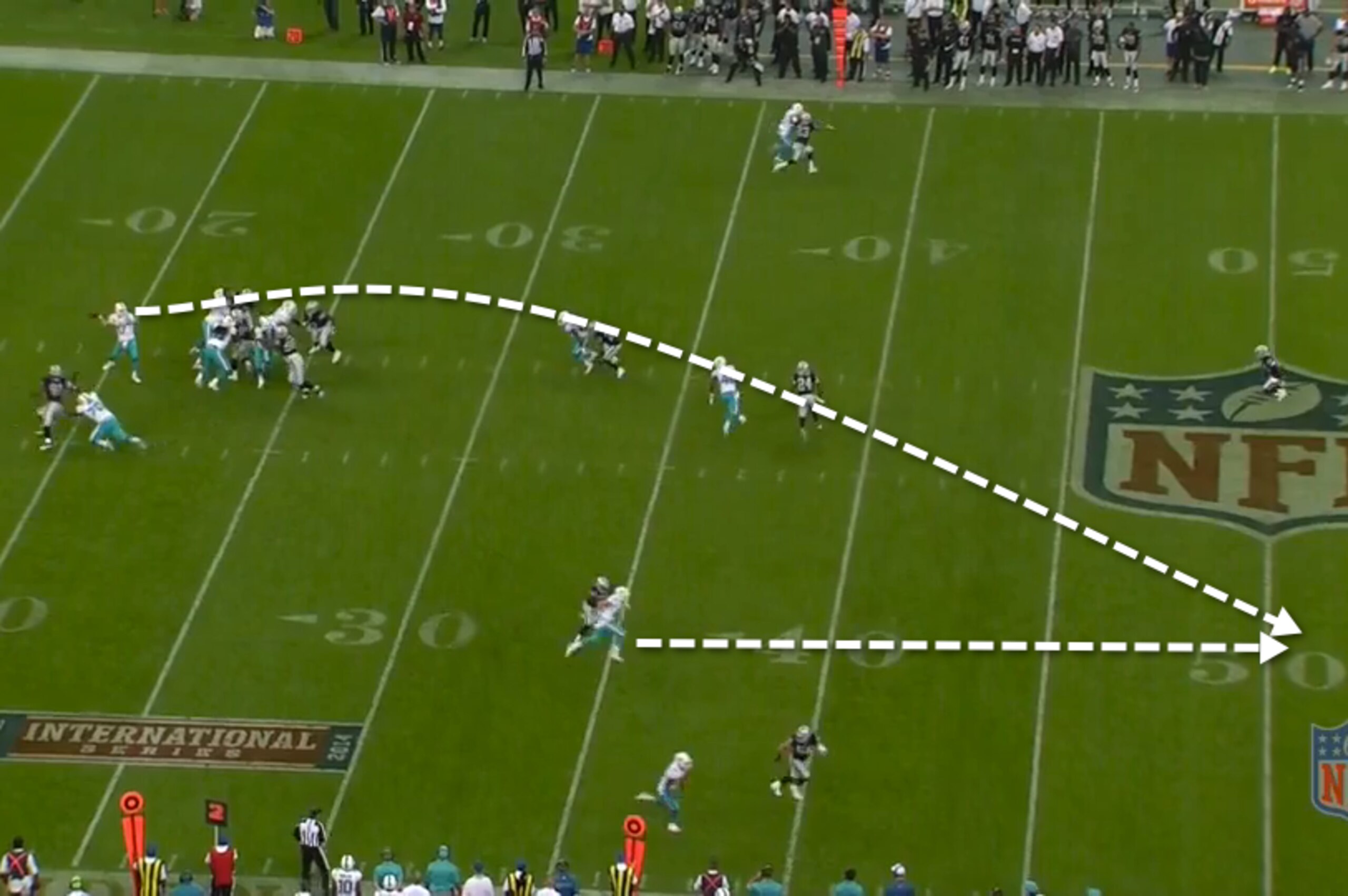
Hartline had room to work with because of the two outside wide receivers and an underneath dig route by tight end Charles Clay over the middle. With the routes being spread across the entire field, the safety couldn’t cheat over toward any specific man. Tannehill recognized the opportunity and led his man open.
Lazor was wise to keep Tannehill working in the middle of the field. Not only were the Raiders missing two of their starting linebackers, but the Dolphins receivers have a considerable advantage over many third and fourth cornerbacks. The Dolphins lack a top-flight, alpha wide receiver, although they’re deep with good players.
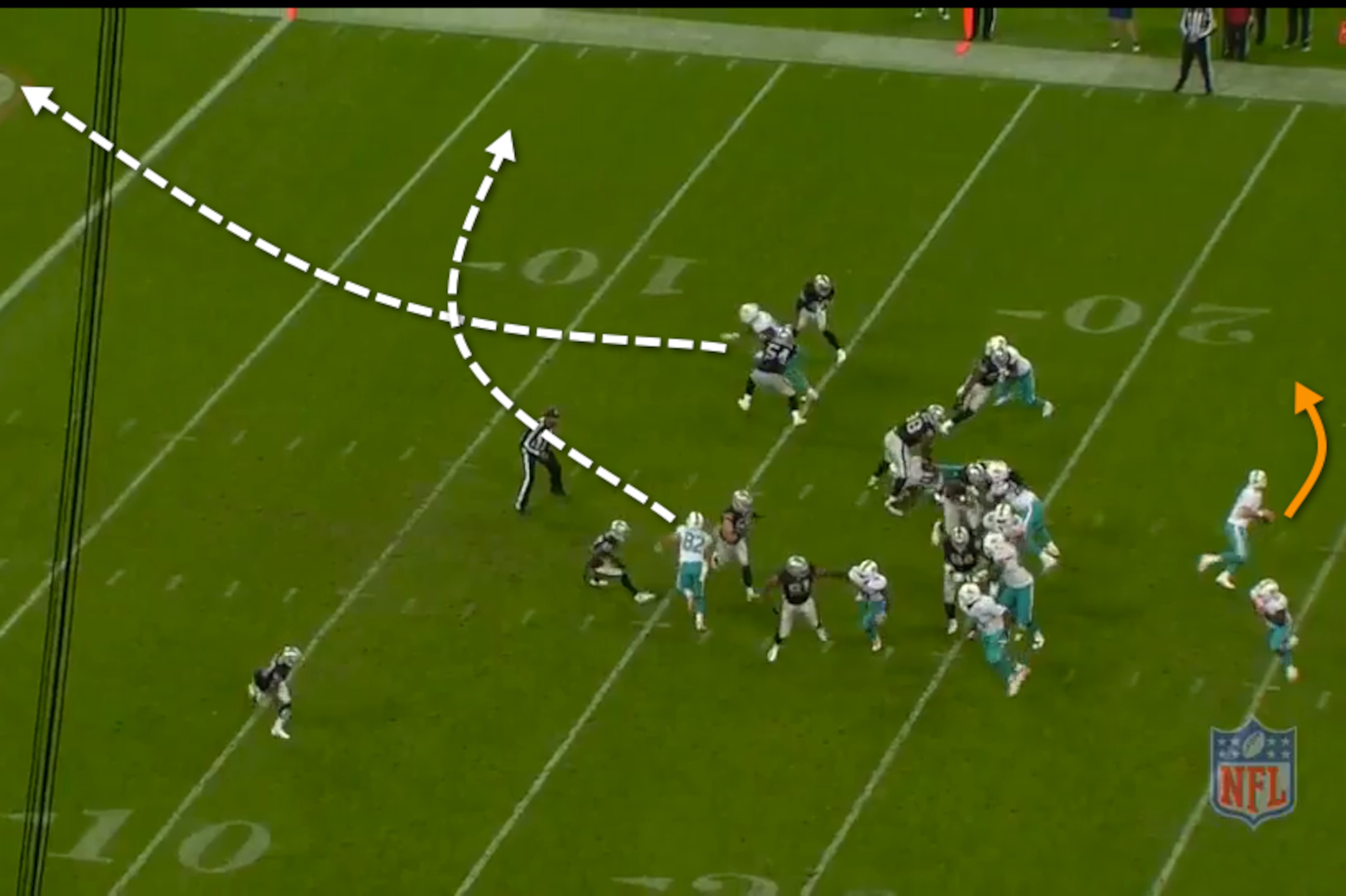
On Tannehill’s perfect pass to tight end Dion Sims in the end zone for a touchdown, Sims was able to win early in his route, and Tannehill was on the move on a designed play action. Tannehill has performed well when moving in his career, and he was able to take advantage of the two-layer play design by Lazor. The fake pitch froze the Raiders cornerback, which limited his ability to drop back into coverage to defend Sims.
Win with Numbers
There’s been an enhanced focus in the NFL and college football in recent seasons to force the defense to think quickly, and that can be accomplished by increasing the tempo of snaps or motion. The Dolphins offense through the first three weeks had shown use of motion in the first half, only to stop using it in the second half. In Week 4, Miami had a man in motion pre-snap on 21 plays, according to self-charting. That’s seven more than we’ve seen in a game so far.
By putting a man in motion, the offense can switch the strong side of the formation, or reveal what coverage the defense is in. The motion also can cause coverage mistakes because of miscommunication. The Dolphins used coverage often to get an advantage with numbers.
When Tannehill targeted his receivers in the flats, such as the play above, it was a simple read. He saw that Miami had a numbers advantage, or at worst, put his receiver in a one-on-one situation with a defensive back. The four passes Tannehill whipped over helped gain six or more yards with ease and helps take the pressure off the quarterback and offensive line.
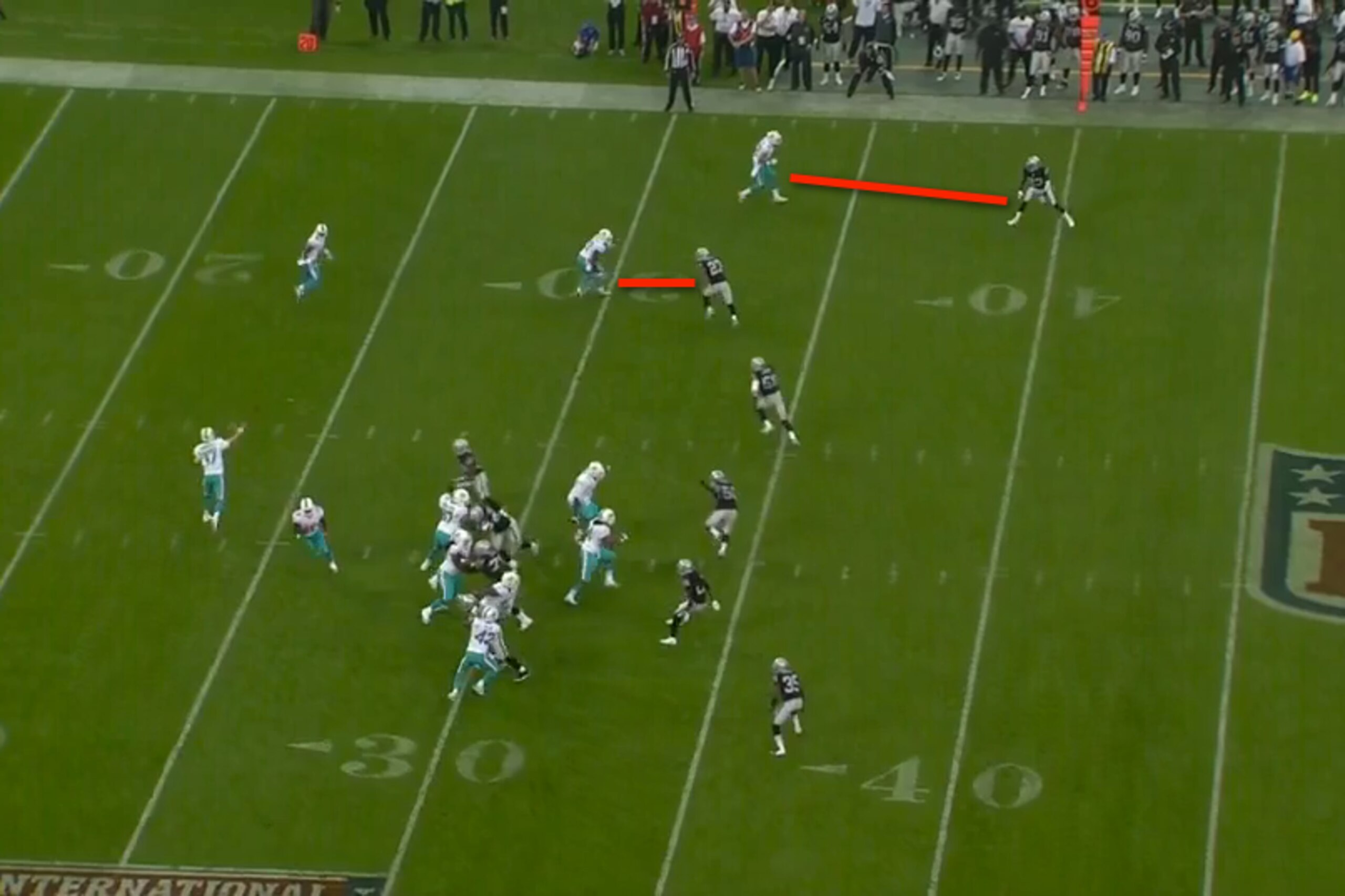
The numbers game also applies to the running attack. As mentioned, Miami was incredibly effective running the ball. A major reason why is the zone blocking scheme, and how well Miller has been reading the running lanes. On the picture below, see how Miami has a “hat” on every defender. By accounting for every defender, the playmaker’s job becomes much easier.
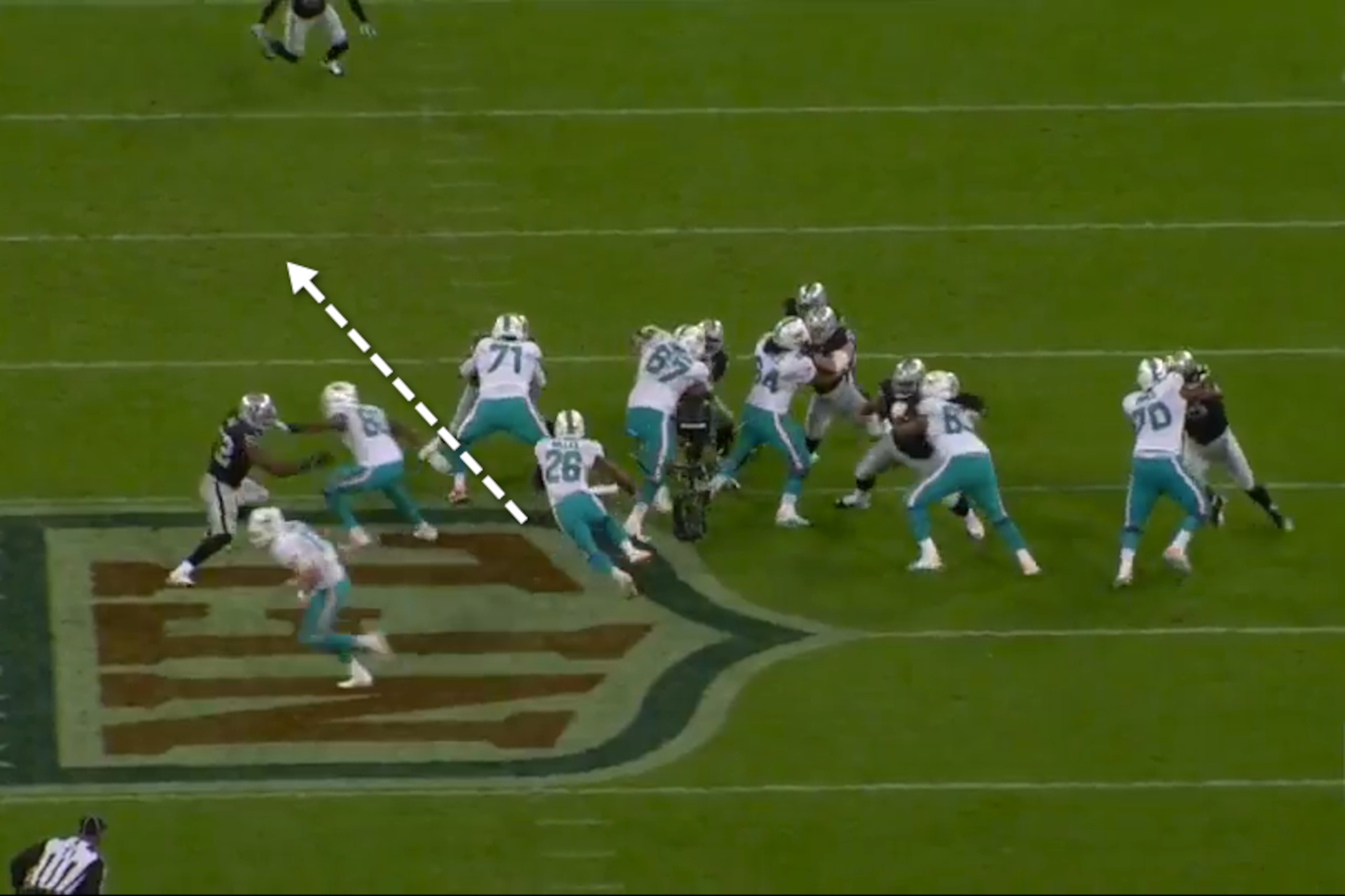
On Tannehill’s 18-yard run, he read the edge defender of Oakland and as the defender bit on the read option as the ball hit the mesh point, Tannehill pulled the ball away and followed lead blocker Charles Clay for a big run. The amount of defenders that Tannehill sees as the play develops determines his play. If the edge player stays disciplined and doesn’t pursue Miller, Tannehill knows he has lost Clay as a lead blocker in space, because Clay would have to block the edge defender.
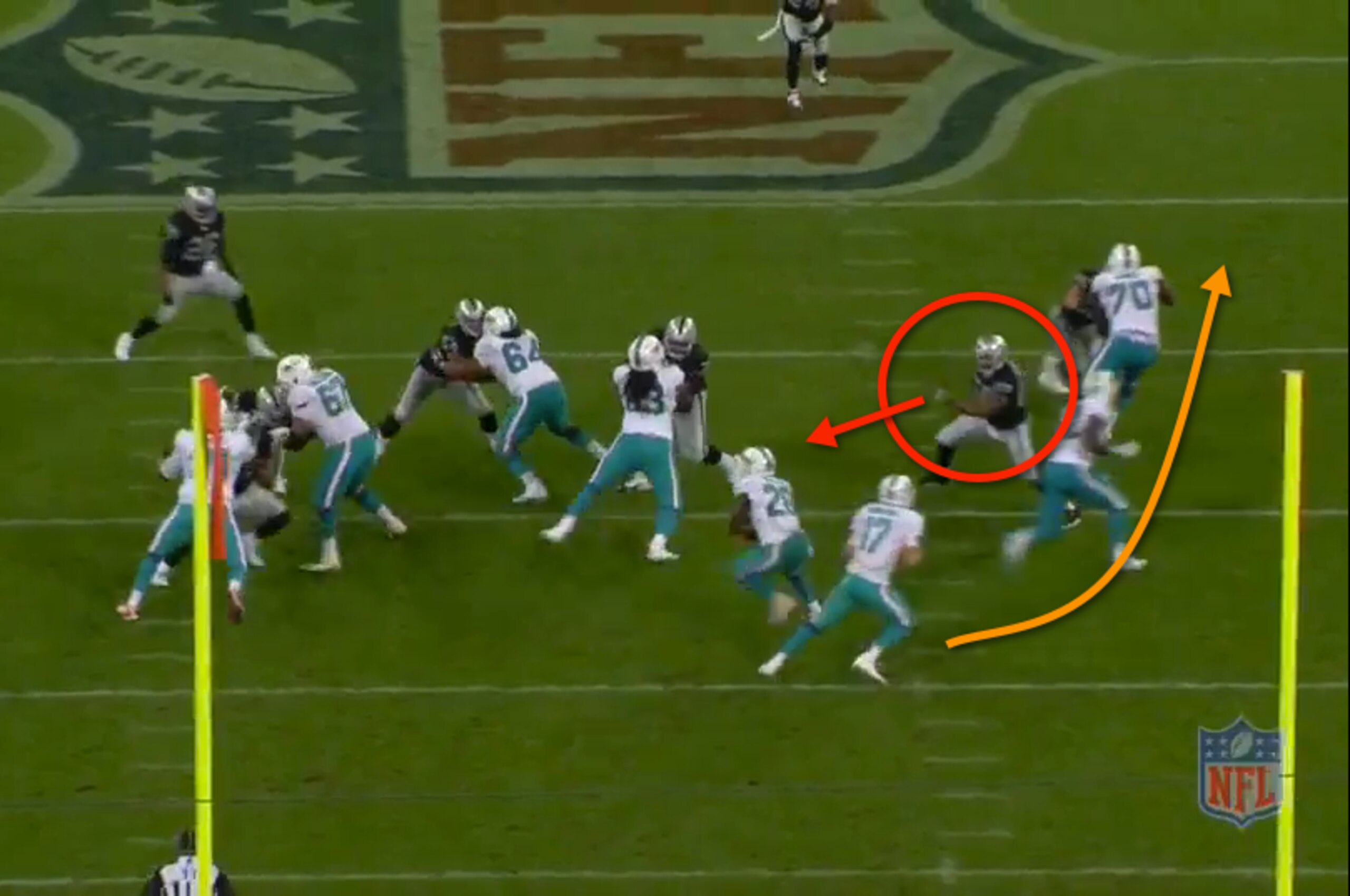
It’s simple math, but making a mistake can be devastating for the defense.
As long as the Miami Dolphins offense continues to exploit overzealous defenses, they’ll continue posting impressive point totals. Knowing their strengths, it’s important for Miami to continue being a dominant running team, and have Tannehill deliver haymakers to the defense.
With these key adjustments in hand entering the bye week, Miami can continue to tinker and improve their situational game-planning and execution levels. There’s always room to get better in the NFL. In Week 4, the Dolphins showed just how high of a level they can play when everything is clicking.
All stats used are from ESPN.com or sports-reference.com.
Ian Wharton is a Miami Dolphins Featured Columnist for Bleacher Report, contributor for Optimum Scouting, and analyst for FinDepth.
.jpg?w=2560 "Titans Colts Football")