Breaking Down San Antonio Spurs' Power Forward Position for 2014-15 Season
The San Antonio Spurs' power forward position has not seen flux in quite some time.
Since 1997, Tim Duncan has manned the position beside a series of talented centers ranging from David Robinson to Fabricio Oberto.
But as the future Hall of Famer gears up for what could be his final season, the Spurs are preparing to undergo a hefty transition—as will their power forward position.

Led by Duncan and Boris Diaw, the team enjoyed plenty of success in the paint in 2014, and with few changes following the re-signing of Diaw and the return of Duncan, San Antonio is in store for another season of solid production from their 4 corps before the position undergoes a sweeping transformation.
San Antonio Power Forwards in 2013-14

The Spurs are, by custom, a well-rounded squad. Without depth at every end of the lineup, the success they enjoyed in 2014 would hardly have come so easily, if at all.
But for the viewer's digest regarding what made the Spurs stand out en route to the title, zeroing in on the power forward position offers plentiful insight.
For starters, a team can't go wrong with Duncan headlining the interior unit. Even at 38 years of age, the seasoned big man was a dynamic two-way presence with unparalleled veteran savvy. He averaged 15.1 points and 9.7 rebounds in under 30 minutes of action per night.
And before the "Tim Duncan is a center!" herd comes out swinging, I'll stand behind my view on the Duncan positional debate presented in my breakdown of the roster center corps:
"And in 2014-15, he'll still be a power forward in a large number of the five-man rotations that San Antonio will employ. Next to Tiago Splitter—a 6'11'' defensive presence with an offensive game limited to the post—Duncan isn't the designated center. But in every other situation, the Big Fundamental will assume the center role.
"
Per 82games.com, the Spurs' most-used lineup last season featured the aforementioned duo at the power positions, allowing Duncan to take on lighter defensive matchups and play the high post on offense.
In this role, he has become a reliable interior facilitator, responsible for a vast portion of the success sparked by the team's top-tier ball movement.
And through his role as the distributor in the paint, Duncan also expedited the growth of Tiago Splitter and turned the starting post tandem into a two-pronged attack. Defenses couldn't simply centralize their focus on Duncan. His ability to find Splitter—or any open man, for that matter—made that wholly unwise.
Beyond his role within the offense, the future Hall of Famer enjoyed plenty of individual success. He benefited from a decreased workload by maximizing his efficiency and using his fundamental aptitude to compensate for any lost athleticism.
But he was hardly the team's only success story. Though Duncan has defied odds by maintaining his superstar status despite the perils of age, the unsung hero of the Spurs' championship was Boris Diaw.
Diaw, like Duncan, epitomized the Spurs system through his elite distributing prowess, contributing to the constant ball movement that characterized the team's offense. Able to play both inside and outside the perimeter, Diaw stretched the floor and created ideal spacing.
He was a threat from virtually anywhere on offense and provided the team with a bench spark on both ends before being inserted into the starting lineup to put the exclamation point on the Spurs' 2014 playoff run.
As a whole, Duncan and Diaw provided the team with balanced production in both the first and second units, and their ability to make others around them better simply cannot be overlooked, even if the stats show only a glimpse.
Though Jeff Ayres in the third unit has work to do before he can be relied upon as a consistent option, San Antonio's 4 slot was well-represented through Duncan and Diaw, who both succeeded in exceeding expectations and carrying the team to new heights.
Grade for 2013-14: A
Offseason Changes

The best news of the offseason came with the announcement that Diaw, a free agent, would be returning to San Antonio for the 2014-15 season. Though it isn't exciting in the sense that it brings any change, the move guarantees that the Spurs will retain one of their key contributors as they look to repeat.
The only other noteworthy summer development came during the NBA draft, when San Antonio selected UCLA point forward Kyle Anderson.
Anderson, 6'9'' and 230 pounds, is currently listed as a shooting guard by ESPN. But as his measurements suggest, Anderson is fully capable of dipping into the frontcourt's minutes should he earn himself a role in the rotation.
According to a scouting report by DraftExpress.com's Jonathan Givony, Anderson's size is as crucial as his skill:
"Anderson has excellent size at 6-9 in shoes with a mammoth 7-2½ wingspan. Despite playing point guard for much of the season, Anderson is big enough to defend most NBA power forwards, which gives him very unique versatility the right coach can tap into.
Anderson's size made him an incredible mismatch at the college level, as he was simply bigger, longer and/or more skilled than virtually any player he matched up with all season. He sees over the top of defenses from the perimeter, a huge boon with his tremendous court vision, can take a smaller opponent down to the post, and can shoot over the top of virtually any matchup thanks to his extremely high release point. His unique skill-set changes the other team's game-plan, as he needs to be guarded by a player much taller than your traditional point guard.
"
Anderson enters San Antonio with a Diaw-like repertoire, and should thrive offensively in a system that benefits pass-happy players.
However, defensively, he's caught between forward positions, lacking the athleticism to guard swingmen and the strength to cover traditional power forwards in the post. With athleticism significantly harder to gain than bulk, it's likely that Anderson will inch closer to playing the 4 over the course of his career.
Either way, it's unlikely that he'll make a sizable impact from the start, but in situations that demand stretch 4s, Anderson provides the Spurs with an alternate mismatch-creating option.
2014-15 Outlook
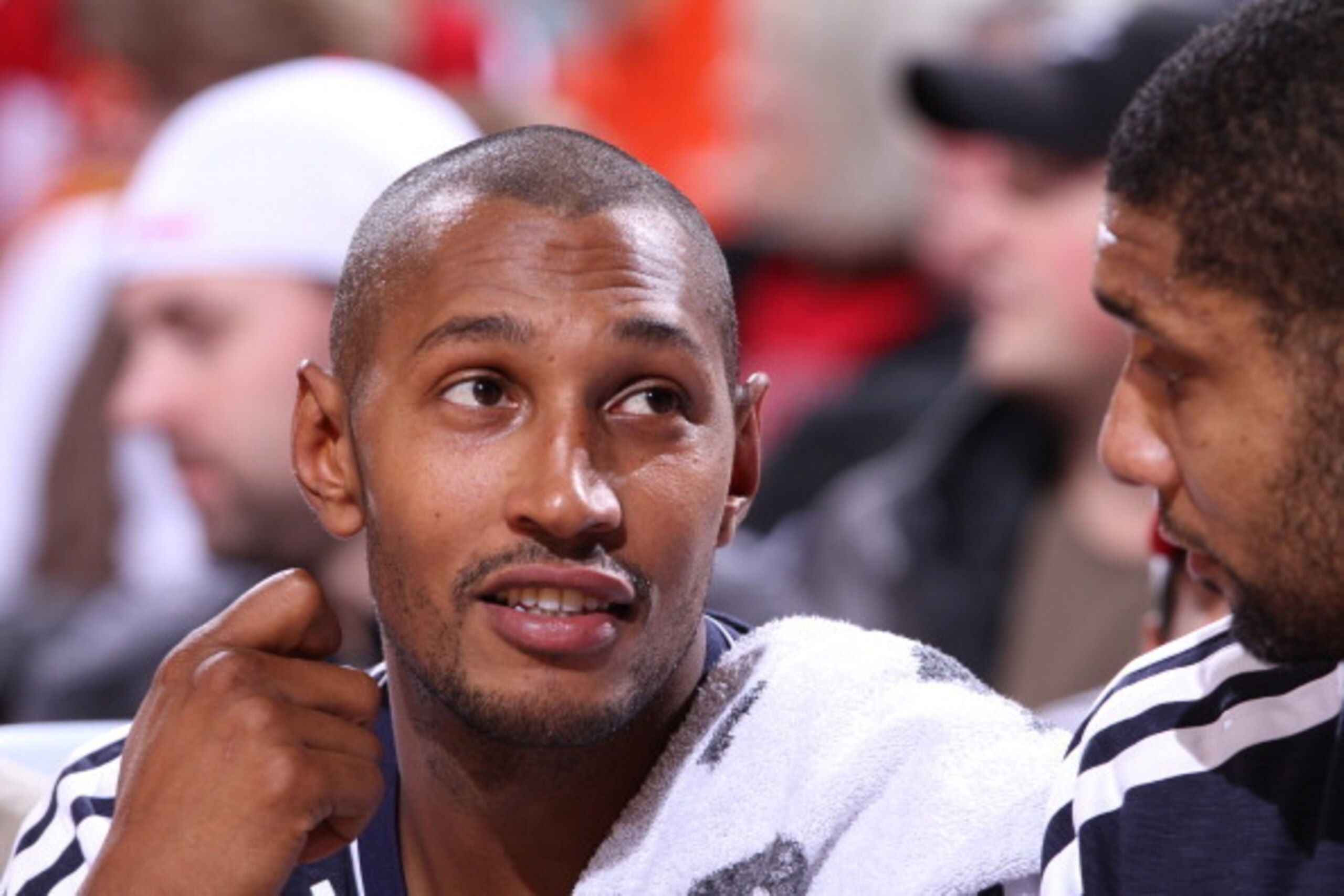
When San Antonio last played, the starting lineup featured Diaw beside Duncan in the post.
During the series with Miami, the team elected to make the switch after beginning the series 1-1, and with visible success stemming from the rotation change—San Antonio won its next three games—there's a decent chance that the Spurs' opening day lineup features a similar starting duo inside.
Without question, Diaw proved his potential as a starter during last year's season. The big man brought a wide range of contributions to the lineup, including better floor spacing, interior distribution and reliable scoring from numerous positions on the court.
As an increasing number of teams elect to utilize the stretch-4 option rather than a traditional power forward, defensive mobility is necessary, and Diaw provides that in greater amounts than Splitter does.
That said, the move wouldn't only be a reaction to the team's success with Diaw at the position. It would also allow for increased depth at the center position, as it would allow Splitter to serve as Duncan's reserve rather than his complement in the paint.
Since they—outside of the very green Aron Baynes—are the team's only near-7-footers, it's not unlikely that the team will resort to the strategy used in their first season together, wherein they didn't spend too much court time together.

Of course, that's not to suggest that the duo won't spend any time together. They were simply too successful in 2014 for that to happen.
However, adapting with the times is an absolute must, and giving Splitter the chance to play behind the Big Fundamental would not only increase depth but also prepare the Brazilian big man for when Duncan is no longer available as a security blanket.
Even so, any role changes will be minor and likely experimental. Production-wise, we can expect more of the same from both Duncan and Diaw.
And, quite frankly, that's a very good thing.

.jpg?w=2560 "NFL House in Paris Closes for Protests")
.jpg?w=2560 "Trevon Diggs Cut by Seahawks")