
Auburn vs. Kansas State: Game Grades, Analysis for Tigers, Wildcats
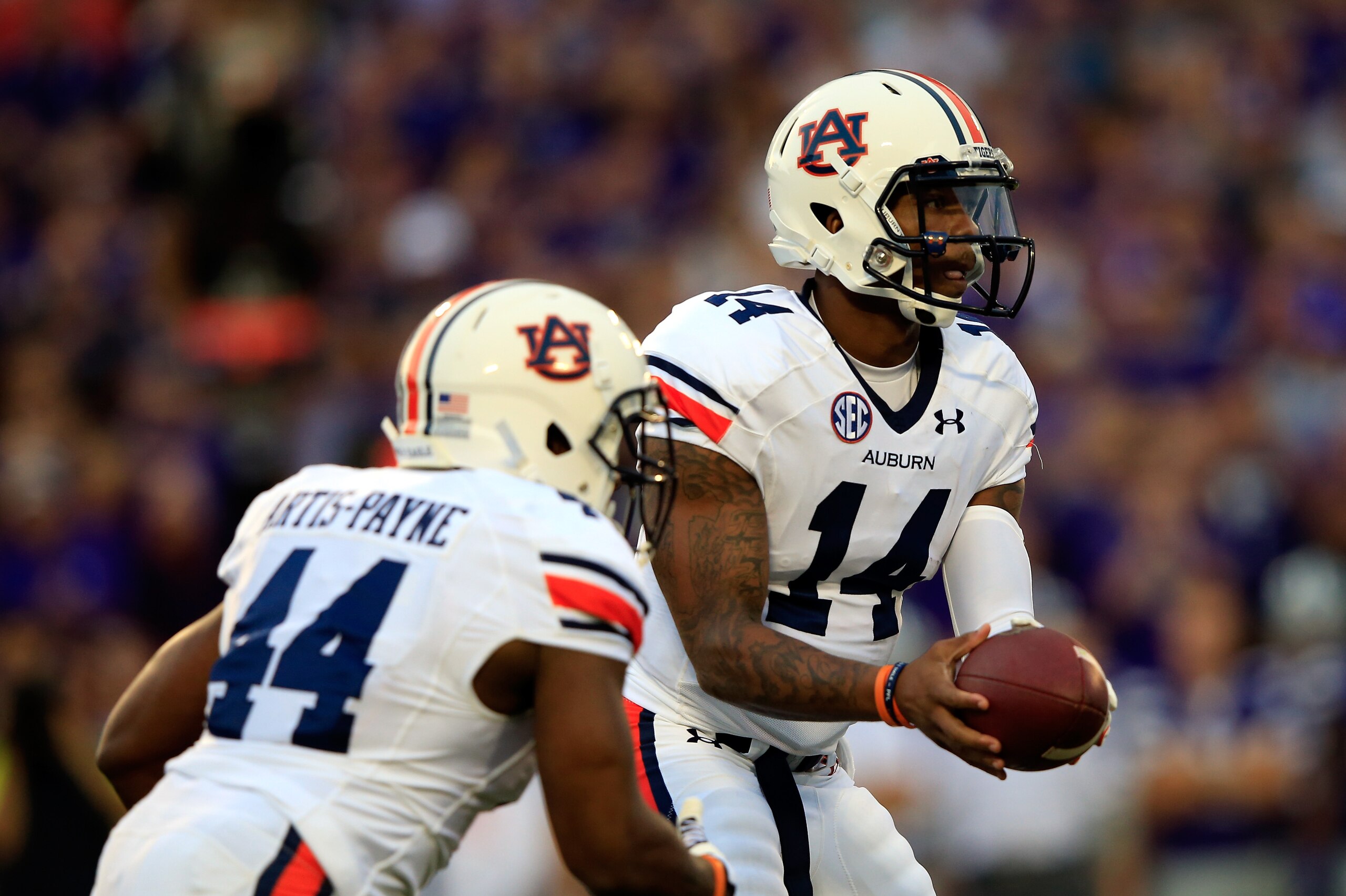
It wasn't easy by any stretch, but the No. 5 Auburn Tigers managed to labor through a tough 20-14 victory over the rugged No. 20 Kansas State Wildcats.
Give a ton of credit to Kansas State's defense in this contest. Auburn entered the game averaging over 330 rushing yards per contest. The Wildcats held the Tigers' vaunted rushing attack to 128 yards on 45 attempts (which equates to 2.8 yards per carry).
With the ground game stalling, Auburn quarterback Nick Marshall took it upon himself to win the game with his arm. Huge throws to Duke Williams and Ricardo Lewis ultimately won the game for the Tigers.
.jpg?w=2560 "AP Poll Top Five Week 9")

Kansas State was beset by a horrid kicking game and untimely turnovers. Without these uncharacteristic flubs, Bill Snyder's team likely would have won.
Final stats from the game can be found here at NCAA.com.
Check out the first-half and final grades for both the Tigers and Wildcats. Additional analysis for different position units will also be addressed.
| Position Unit | First-Half Grade | Final Grade |
| Passing Offense | C | B |
| Pass Defense | C | B |
| Rushing Offense | D | C- |
| Run Defense | A | A |
| Special Teams | A | A- |
| Coaching | B | B+ |
Auburn Tigers Game Grades
Passing Offense
The grade for this category would be higher, if Marshall wasn't victimized by a series of drops. Williams in particular didn't do his signal-caller any favors. He dropped a would-be touchdown in the first half.
Marshall's prowess as a passer was impressive throughout the night. He isn't a pure thrower in the sense of the term. However, he stepped up and threw darts down the field. Marshall also was able to convert at a high clip on third-down attempts.
Auburn went 2-of-7 on third down in the first half. For the game, the Tigers finished 10-of-18. A big reason was Marshall's ability to engineer strong drives in the second half.
Pass Defense
K-State signal-caller Jake Waters was sustaining some success in the first half. The absence of veteran captain Jermaine Whitehead was especially evident. Jonathan Jones was flagged for two pass-interference penalties on one drive.
As the game progressed, the unit settled. Trovon Reed had a nice diving interception in the second half. More than anything, the unit kept stud wide receiver Tyler Lockett from beating them deep. Lockett had six catches for only 45 yards.
Rushing Offense
Perhaps the biggest shock of the contest was Auburn's lack of effectiveness in running the ball. To be fair, K-State had a wonderful scheme for Malzahn's offense.
Although Auburn did rush for 145 yards on the night, it came on 28 carries. The Tigers rushing attack is one of the most prolific in all of college football (as evidenced by 330.0 yards a game on the ground). For this reason, the grade is very low.

Run Defense
On the flip side, the Tigers defensive front, led by Gabe Wright, Angelo Blackson and Montravius Adams, was stout all night. The unit limited Waters' effectiveness as a runner, holding the K-State signal-caller to minus-7 yards rushing.
On the night, Kansas State rushed for 40 yards on 30 carries. The paltry 1.3 yards per carry total is directly related to the outstanding effort by Auburn's defensive line. Linebacker Kris Frost also was very active in penetrating the gaps and making plays.
Special Teams
Auburn was solid in all phases of the kicking game. Kicker Daniel Carlson connected on both of his field-goal attempts. If there was one area to improve in, it'd be punt coverage. Lockett did average 23.7 yards per return. This statistic kept Auburn from receiving an "A."
Coaching
Malzahn didn't call a poor game by any stretch. Most of the ineffectiveness in the run game did stem from Kansas State's strong defensive effort.
In the second half, Malzahn rolled Marshall out more, and he was able to find greater success in the passing game. As the game progressed, Malzahn pushed the tempo considerably. The offense was able to get into a rhythm, and put points on the board.
| Position Unit | First-Half Grades | Final Grades |
| Passing Offense | B+ | B- |
| Rushing Offense | F | D |
| Pass Defense | B | C+ |
| Run Defense | A | A |
| Special Teams | D | D- |
| Coaching | A | A |
Kansas State Wildcats Game Grades
Passing Offense
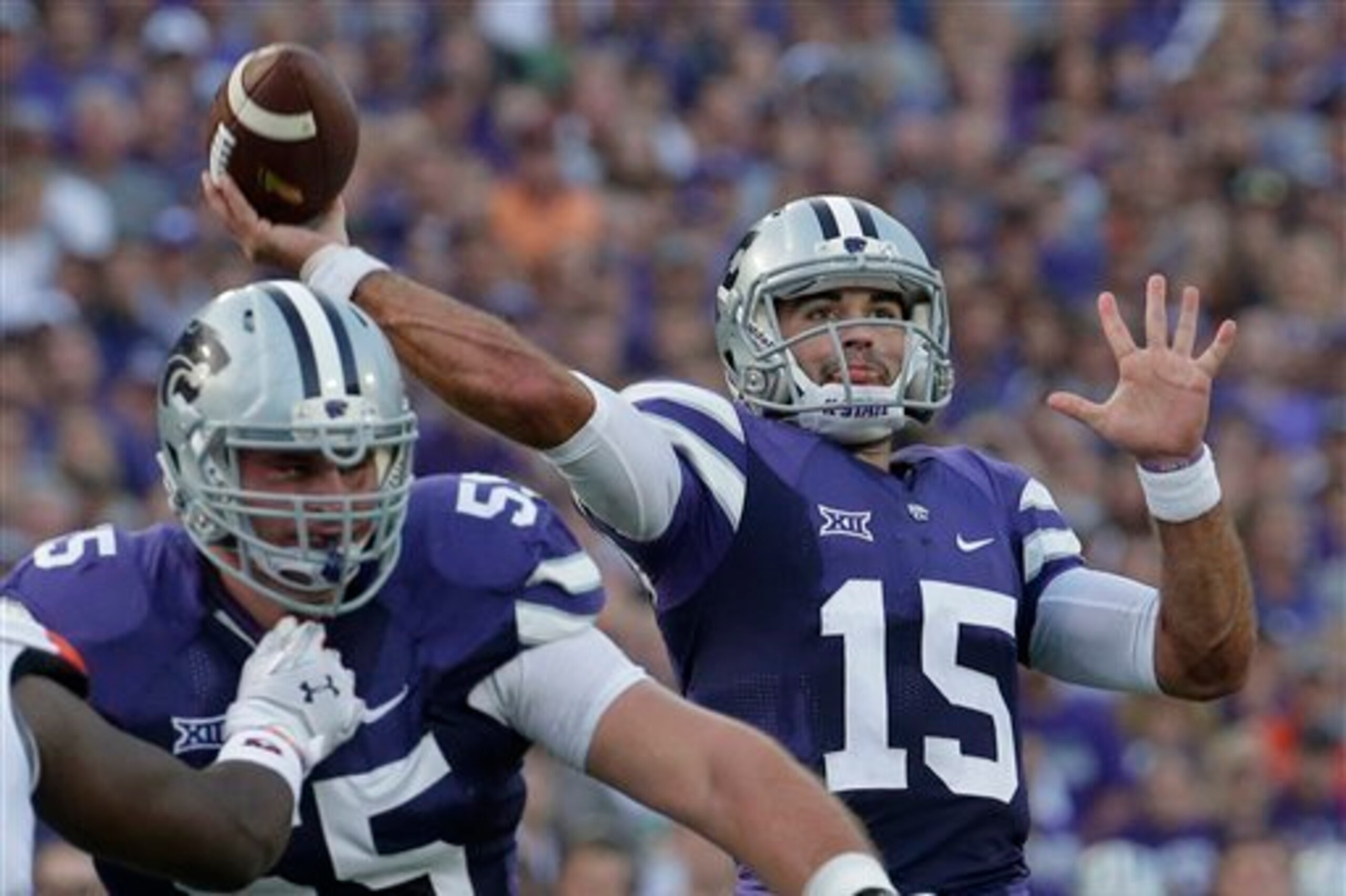
Jake Waters got off to a nice start early. Throwing for 157 yards in the first half, he found receiver Curry Sexton early and often. Sexton led the team with 11 catches for 121 yards. As the game progressed, Auburn's pressure up front hindered Waters' ability to attack downfield.
Waters threw two picks on the night, one coming on a play in which he was flushed from the pocket and threw an errant pass. The other interception was a drop in the end zone by Lockett. Although he didn't throw a touchdown pass, he managed the game well.
Waters finished 24-of-40 for 245 yards.
Pass Defense
K-State's secondary was solid in the first half. Marshall wasn't able to find success throwing deep to Williams or Sammie Coates.
The second half was a different story.
A 40-yard touchdown toss from Marshall to Lewis opened up Auburn's offense. Williams also proved to be a handful most of the night. He would have had a second touchdown, if not for a drop. On a 3rd-and-9 attempt with two minutes remaining in the game, Marshall found Williams for a 39-yard gain—a play that ultimately ended K-State's chance at a comeback.
Rushing Offense
The Auburn defensive front posed problems all night for K-State's offensive line. Simply put, there weren't many holes for Waters, Charles Jones and Demarcus Robinson to run through.
Robinson and Jones did get rushing touchdowns, but the unit only rushed for 40 yards on 30 carries. A big part of the K-State ground game is Waters running the football on read-option plays. He was held to minus-7 rushing on 11 carries.
Run Defense
This was the most impressive unit on the night, perhaps for either team. K-State did a masterful job of plugging up the lanes up front. The defensive line also did a terrific job of keeping containment and not allowing Marshall to have a big game operating the zone-read option.
Auburn entered the matchup averaging 330.0 yards per game on the ground. K-State held the Tigers to 128 yards on 45 carries. The lack of a consistent rushing attack hindered the ability of Auburn's offense to function at a high level.
Special Teams
K-State generally prides itself on having strong special teams play. Tonight was a completely different story.
Kicker Jack Cantele missed all three of his field-goal attempts. He also started the game by kicking the ball out of bounds. The misses by K-State's kicker often thwarted any sort of momentum the team had. Things got so difficult that walk-on kicker Matthew McCrane was put into the game to kick the extra-point attempt at the end of the fourth quarter.
It was an absolute nightmare game for the K-state kicker.
Coaching
Snyder and his staff comprised a great game plan for this contest. K-State's goal was to slow the tempo way down, and that's exactly what happened. Auburn never fully got comfortable on offense.
In terms of stopping the run, Wildcats defensive coordinator Tom Hayes did a great job of putting his defenders in a place to succeed. Holding Auburn's offense to 359 yards is a pretty impressive feat, considering the Tigers entered tonight averaging well over 500 yards of total offense per game.
.jpg?w=2560 "Colts Texans Football")
.jpg?w=2560)

.jpg?w=2560 "Rodgers Iced Out on Plane 💎")
.jpg?w=2560 "Raiders Could Start Mendoza")
.jpg?w=2560 "Mahomes Told Teammate to Leave Meeting")


.jpg?w=2560 "Lamar Being Out Shocked Ravens")
.jpg?w=2560 "Lions Outlast Packers")