

Seattle Seahawks vs. San Diego Chargers: Full Report Card Grades for Seattle
And just like that, all of the glitter and praise of being reigning Super Bowl champions, primed for a repeat appearance, has been smudged and wiped away. While the San Diego Chargers won the game 30-21, their offense dominated the Seattle defense in a way that was thought impossible.
Philip Rivers and the rest of the San Diego offense were able to exploit every advantage and won every key matchup. Antonio Gates dominated the Seattle linebackers, finishing the game with seven catches for 96 yards and three touchdowns.
Eddie Royal was uncoverable as he was able to haul in seven catches of his own for 69 yards. The Seattle defensive line was rarely able to pressure Rivers and the Seattle run game was almost a non-factor. The offense performed well when utilizing no-huddle, but were ultimately unable to sustain drives.
The San Diego Chargers absolutely dominated the time of possession with 42:15 minutes to 17:45 for the Seahawks. Despite all that, the Seahawks were in the game until the end, showing how dangerous they truly are.
Let's take a closer look at each positional unit to see where things went wrong.
Quarterback
1 of 10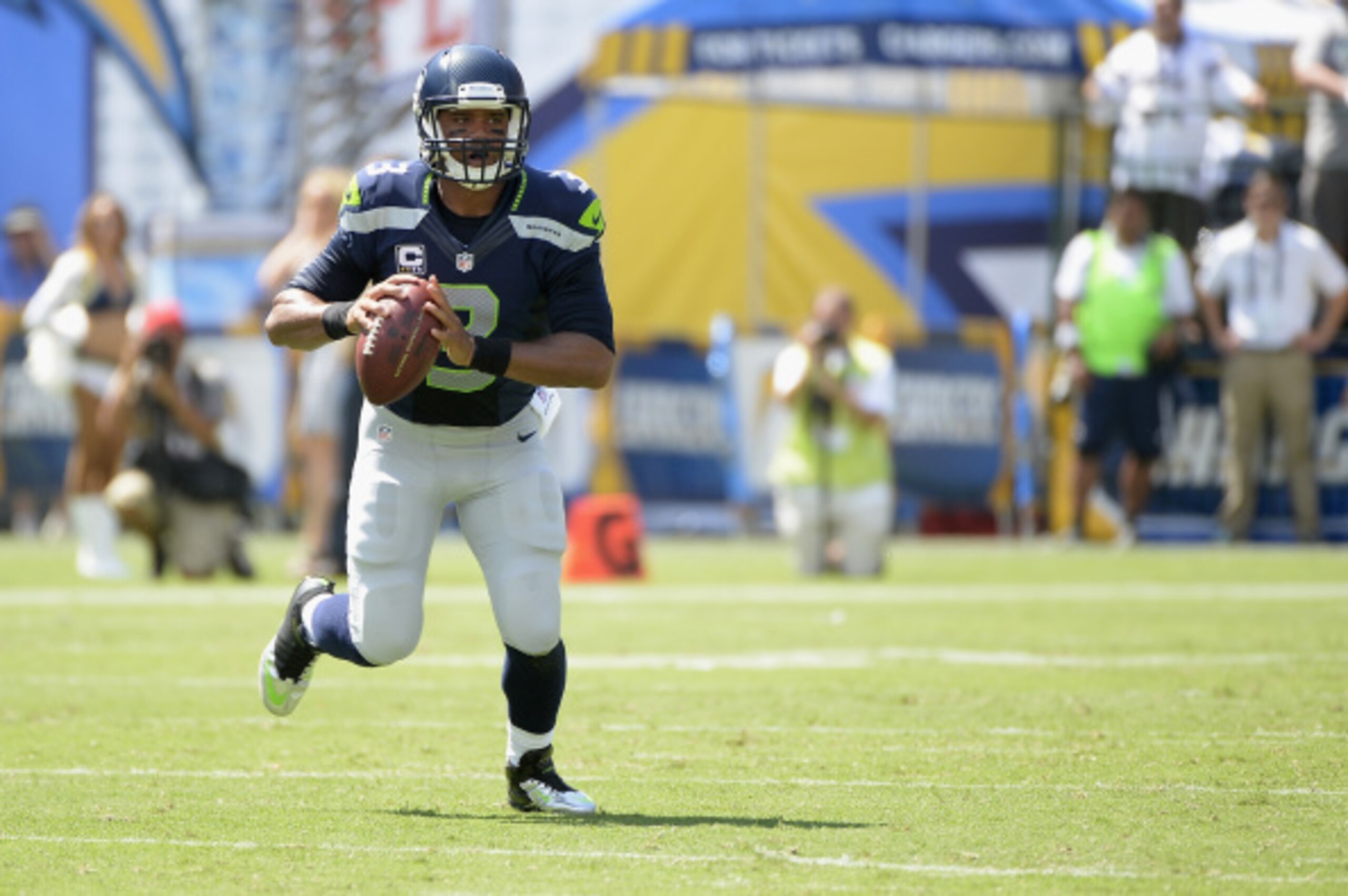
With all due respect to what happened in this game, Russell Wilson played very well. He was pressured on several dropbacks, his reaction to which was the biggest detractor in my evaluation. On seemingly every occasion that a pass-rusher broke into the backfield, Wilson ran five to 10 yards backwards.
One such instance resulted in a loss of nine yards or otherwise went for an incompletion. Wilson completed 17-of-25 passes for 202 yards and two touchdowns, scrambling twice for a gain of 18 yards. When given the opportunity to look downfield, Wilson was decisive and hit eight different targets.
The offense was forced to become one dimensional due to the score of the game and the offensive line continues to struggle in pass protection. Overall, Russell Wilson appeared to be the main component that kept Seattle in the game.
Grade: A-
Running Back
2 of 10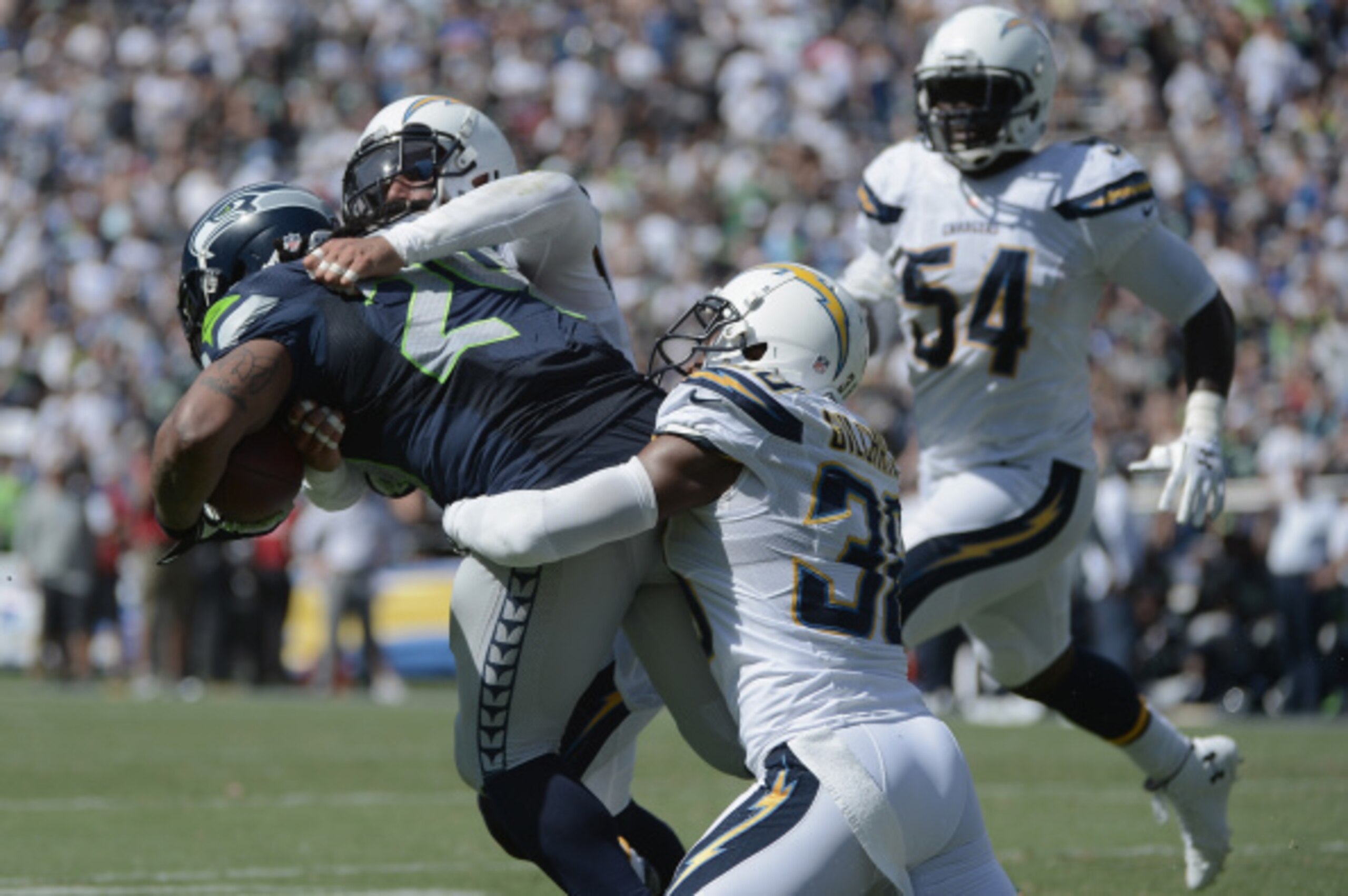
The Seahawks rushed for 108 yards on 13 carries. Percy Harvin took a pitch 51 yards for the team's only lead of the game, but it was clear he stepped out of bounds after review. The play still stood as a score, stirring up a bit of controversy.
Marshawn Lynch had just six carries in the game for a total of 36 yards. After rushing for 207 yards on 20 carries against the Green Bay Packers, the lack of rushing attack significantly hindered the team's time of possession.
Though Seattle averaged 8.3 yards per carry, the score of the game dictated that the offense throw the ball at a much higher rate than is typical of the Pete Carroll-led Seahawks. This truly factors into a game when you don't have the ball and have fallen behind.
Grade: C+
Wide Receiver and Tight End
3 of 10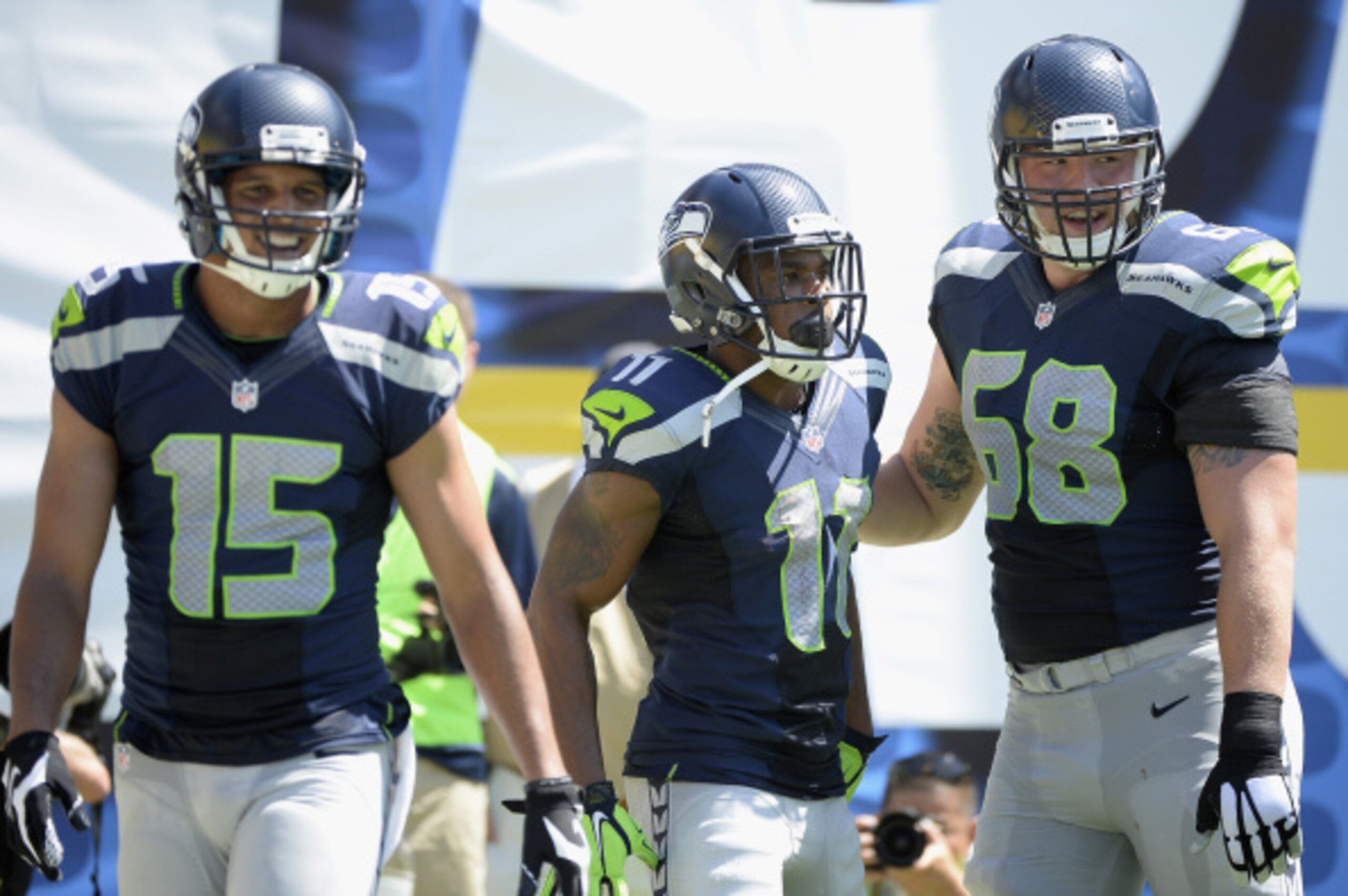
Percy Harvin rushed for his controversial 51-yard touchdown and then seemed to disappear from the offense. Jermaine Kearse led the receiving corps with four receptions for 61 yards and Doug Baldwin had three grabs for 35 yards of his own.
It was the running backs, however, that pulled in both of Russell Wilson touchdown throws. Robert Turbin was able to jog in for a score and finished with two catches for 35 yards. Marshawn Lynch seemed to score in similar fashion, but had four grabs for 27 yards.
Part of the issue with Seattle's receivers is that they're not particularly great route runners, outside of Harvin. Harvin was likely pulled from action for fumbling a kickoff, but his absence on offense was stunting. The group is adept at making great catches and running after the catch, but Wilson needed them to get open.
Zach Miller had one catch for 22 yards. The lack of possession hurt the receivers' ability to help, but they needed to get open more consistently.
Grade: B-

.jpg?w=2560 "Steelers Saints Football")
.jpg?w=2560 "Rams Raiders Football")
Offensive Line
4 of 10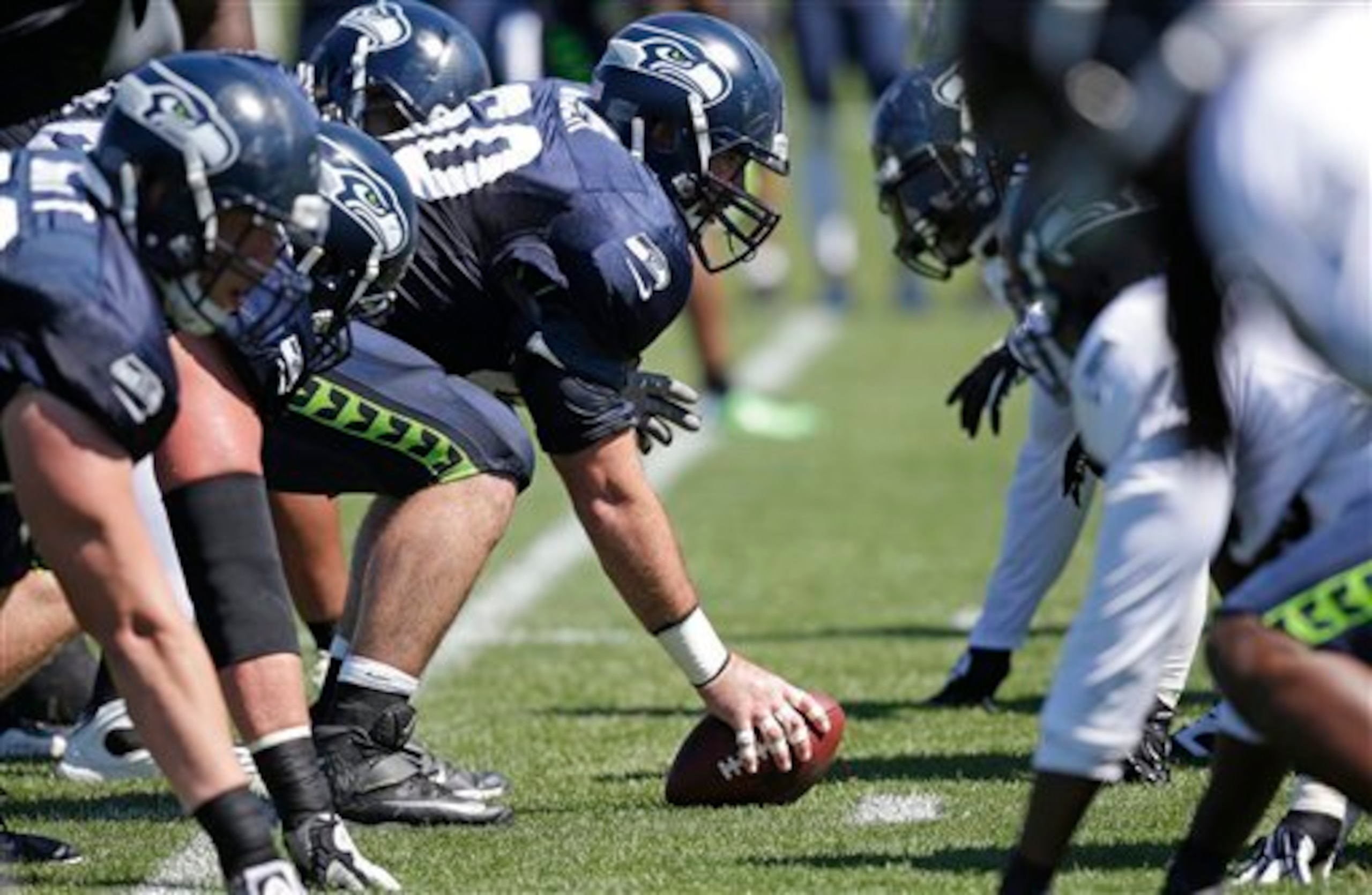
The Seahawks offensive line was once again able to open up some quality running lanes for Marshawn Lynch and company, but failed miserably in pass protection. The San Diego defense appeared to be capable of bursting into the backfield at will.
Russell Wilson was sacked twice for a loss of 22 yards, was hit twice and hurried regularly. Dwight Freeney was a problem, though Wilson regularly avoided him, but much of the pressure seemed to come from up the middle.
A lot of the offense's struggles were caused by the lack of time Wilson had to go through his reads.
Grade: D
Defensive Line
5 of 10
Michael Bennett had the Seahawks' lone sack in the game, but one of the keys to this game was that the defensive line needed to pressure Philip Rivers consistently. The San Diego offensive line did a great job of holding Seattle's defensive line at bay for larger portions of the game.
Of the team's seven tackles for a loss of yardage, only two came from the defensive line. One was the guy mentioned earlier and the other was made by Brandon Mebane. Bennett was a real bright spot for the group as he was able to get three hits off on Rivers, but his teammates weren't able to match him.
Part of the key to Rivers not being taken down for a sack was that the Chargers threw a lot of short passes and screens that consistently beat Seattle's usually great pass defense. Though San Diego was able to break the century mark rushing the ball, they averaged 2.7 yards per carry for the game.
Grade: B
Linebacker
6 of 10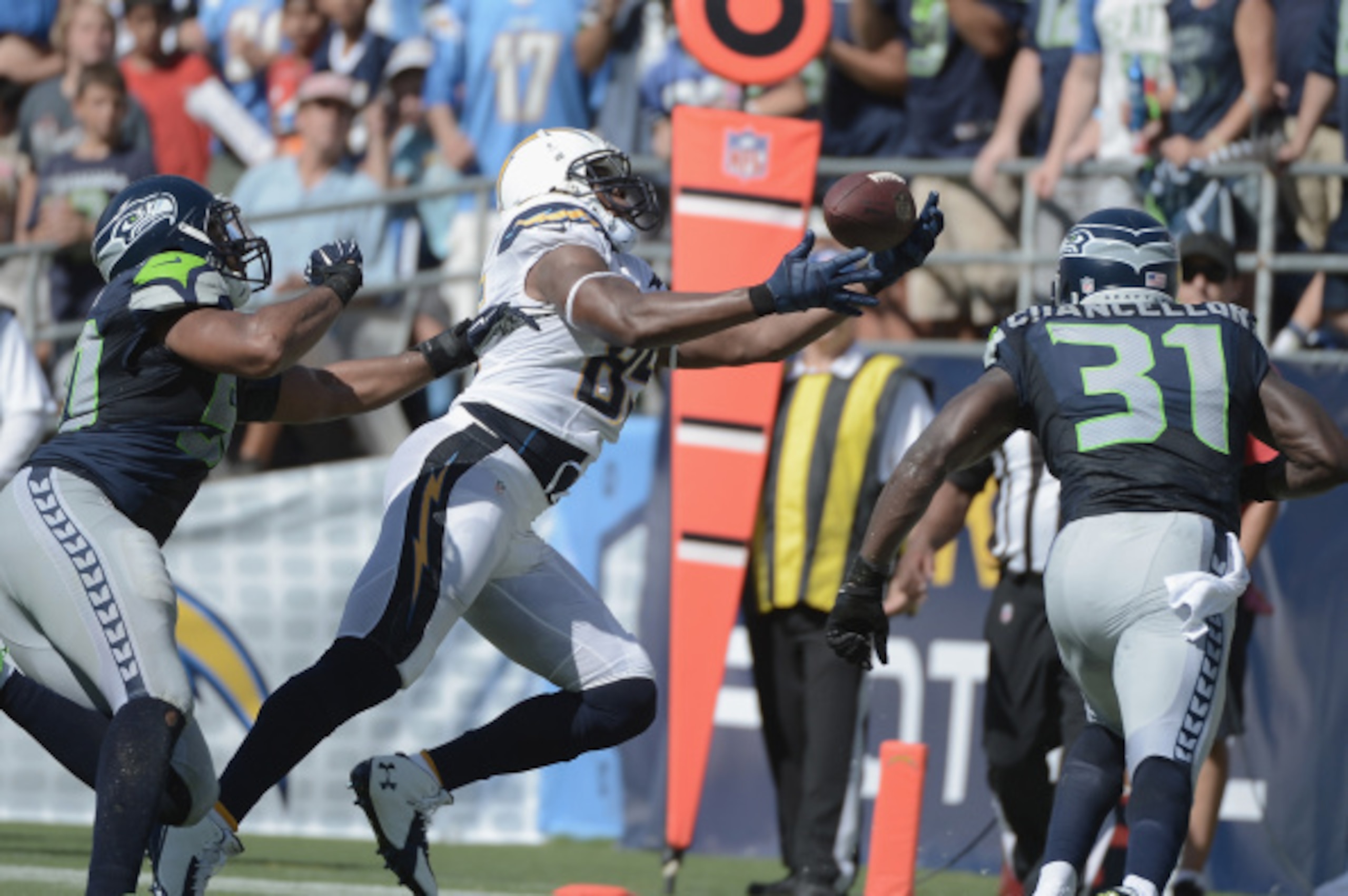
Another key matchup heading into the game was the Seattle linebackers going up against Antonio Gates and Ladarius Green—particularly K.J. Wright who had underperformed in coverage a week earlier. Gates was the main catalyst for San Diego's offense, beating Seattle's linebackers consistently.
Gates' three touchdown catches shows how incapable the Seattle defense was of stopping Philip Rivers' favorite target. We began to see some of the linebackers blitzing, which is out of the norm for Dan Quinn, but to no avail.
Danny Woodhead, Ryan Matthews and Donald Brown had a combined total of 64 yards receiving on nine receptions. The running backs gave the Seattle defense fits all day. Overall, San Diego's receivers accounted for less than half of the team's receiving yards.
Bruce Irvin's penalty for a late hit on Philip Rivers was also a noted moment in the game, that took a stalled-out drive that would have resulted in a field goal at most into a touchdown. It was clear that Rivers was out of bounds and Irvin had plenty of time to pull out.
In such a close game that Seattle was coming back in, the penalty was a back-breaker.
Grade: F
Secondary
7 of 10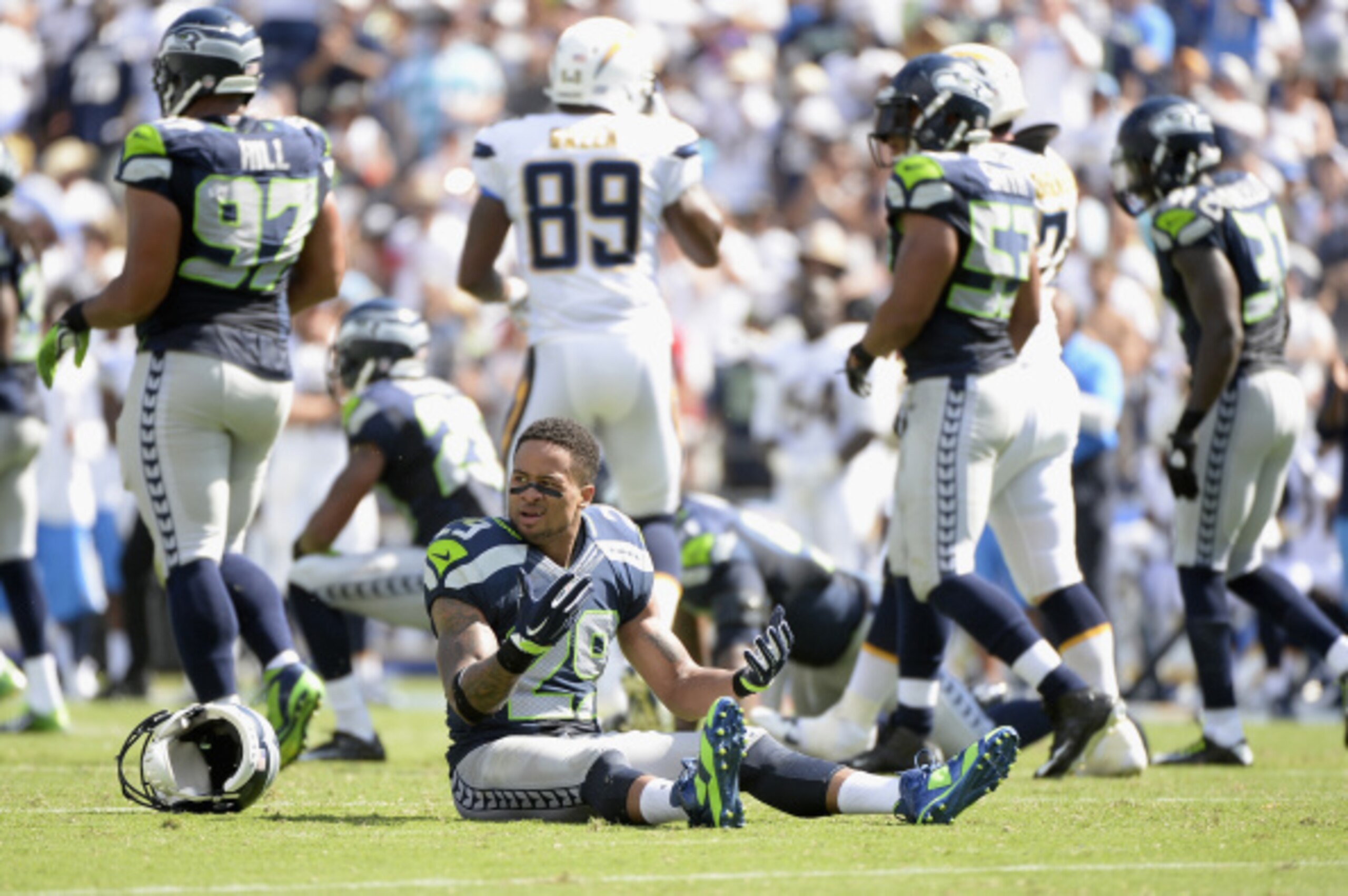
The other major matchup issue Seattle needed to prepare for was Eddie Royal. Injuries to Jeremy Lane and Tharold Simon left Marcus Burley as Seattle's nickelback in the game, forcing him to match up with Eddie Royal.
As mentioned earlier, Royal hauled in seven catches for 69 yards and was an excellent chain-mover for the Chargers offense. The Chargers saw a mismatch and were able to take advantage of it in this one. Philip Rivers challenged Richard Sherman, but the passes were always very safe.
Earl Thomas and Kam Chancellor both left the game with injuries, though Chancellor returned. Those are big losses for the Legion of Boom regardless of San Diego's game plan already working well. The secondary played a major role in stopping the running game for losses with four of the team's seven tackles.
Despite their injuries, the Seattle safeties have to help in coverage of Antonio Gates as well.
Grade: C+
Special Teams
8 of 10
For the second week in a row, the Seahawks' special teams coughed up a fumble that resulted in a touchdown for their opponent. Harvin averaged over 22 yards per return, while the team averaged 15.7. Kick return duties were taken from Harvin after his fumble.
Seattle was never able to make a punt return after handing the role over to Bryan Walters this week. Punter Jon Ryan had a great game, averaging 53.3 yards per punt on his four punts and had two touchbacks.
In return coverage, the Chargers had a total of six yards in the game.
Grade: B
Coaching
9 of 10
While the Seahawks' defensive game plan proved to be ineffective, they appeared to start the game a bit lackadaisical rather than with their usual fire. Defensively, there was no response for Antonio Gates's domination or the assortment of short passes the Chargers were using.
Offensively, the game plan looked as though they couldn't string together enough plays to regularly pick up first downs. The main form of ball movement was when the offense came out of no-huddle. There needed to be more energy from the team.
The Seahawks played well on the road last season, but are 14-19 under Pete Carroll's tutelage. It's his responsibility to have his team ready to play on the road, when their fans aren't there to cheer them on.
Grade: B-
Final Grades
10 of 10
| Positional Unit | Overall Grade |
| QB | A- |
| RB | C+ |
| WR/TE | B- |
| OL | D |
| DL | B |
| LB | F |
| DB | C+ |
| Special Teams | B |
| Coaching | B- |
| Cumulative Grade | C+ |
The Seahawks didn't seem to come out with their normal level of energy and crispness for this game, and the San Diego Chargers executed their game plan to perfection. The offense struggled to stay on the field and the defense was completely out of sync.
San Diego boasts a unique set of weapons that proved to be too much for the Seahawks to handle.
.jpg?w=2560 "Chiefs Giants Football")

.jpg?w=2560 "🚨 Week 8 AP Top 25 Poll")

.jpg?w=2560 "Lamar Being Out Shocked Ravens")
.jpg?w=2560 "Packers Safety Slams Refs 🤬")