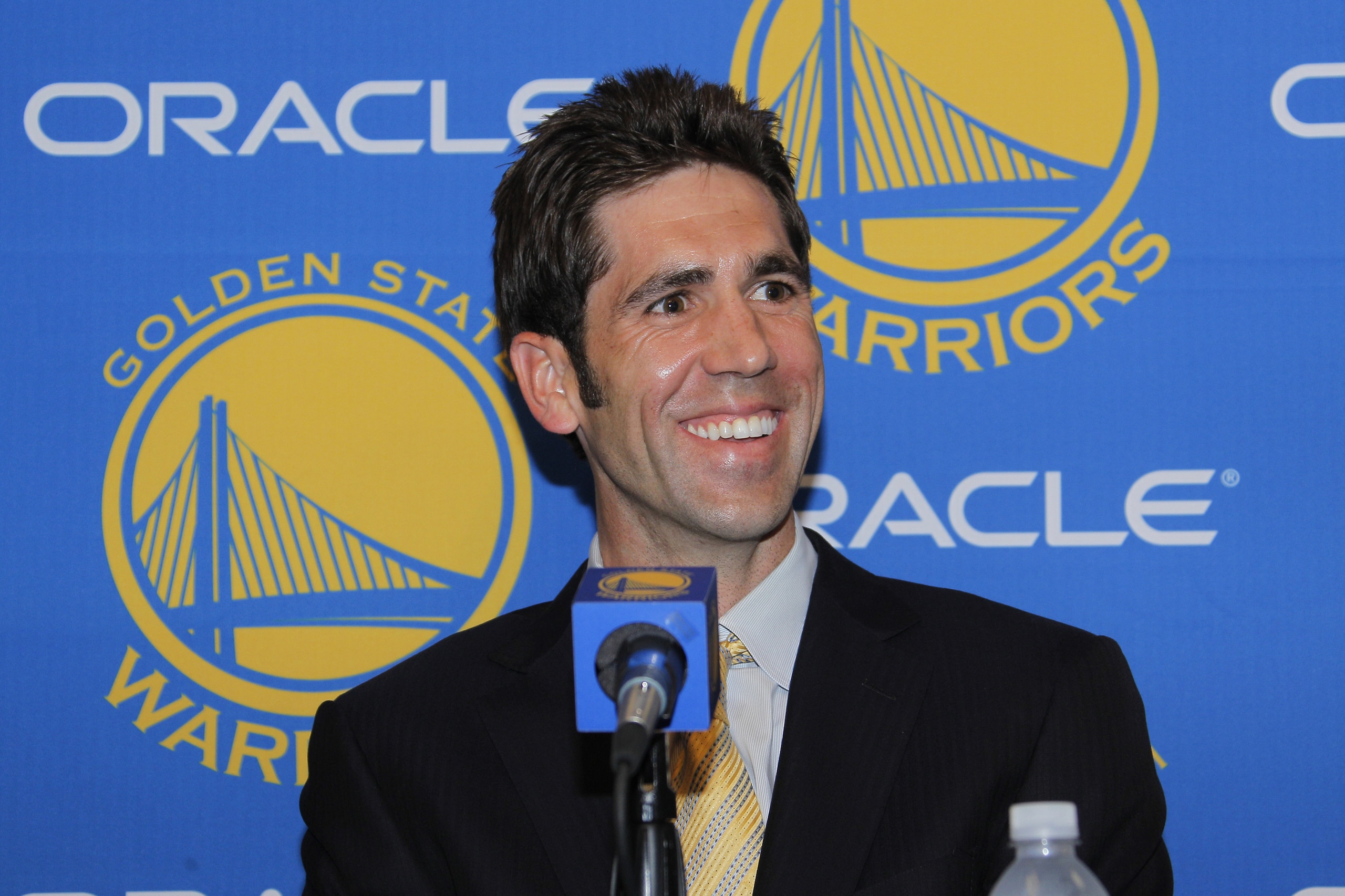

Why Warriors' Biggest Offseason Move Was Keeping Front Office Together
The Golden State Warriors feel good about where they're at as a franchise.
Good enough to part with former coach Mark Jackson after 98 wins and two playoff appearances in as many years. Good enough to resist breaking up their core, even though the process could have netted them perennial All-Star Kevin Love. Good enough to trust that same core will make former player-executive-broadcaster Steve Kerr's first season as a coach a wildly successful one.
If things are as good as the Warriors seem to think, then an old adage comes to mind: If it ain't broke, don't fix it.
TOP NEWS

LeBron's Special Helicopter Deal

MJ Makes Record-Setting Donation 🙌
Shams: KAT, Hart Could Be Trade Names
It's not broken, by the way, and the Dubs aren't tinkering with the formula. In fact, their major move of the offseason was doubling down on two of the parties partly (primarily?) responsible for eliciting that ebullience: general manager Bob Myers and executive board member Jerry West.
Myers, who was set to enter the final year of his contract, agreed to a three-year extension that will keep him in the Bay through the 2017-18 season, as first reported by Tim Kawakami of the San Jose Mercury News. West inked a two-year extension that will run through the 2016-17 campaign, as Kawakami also reported.
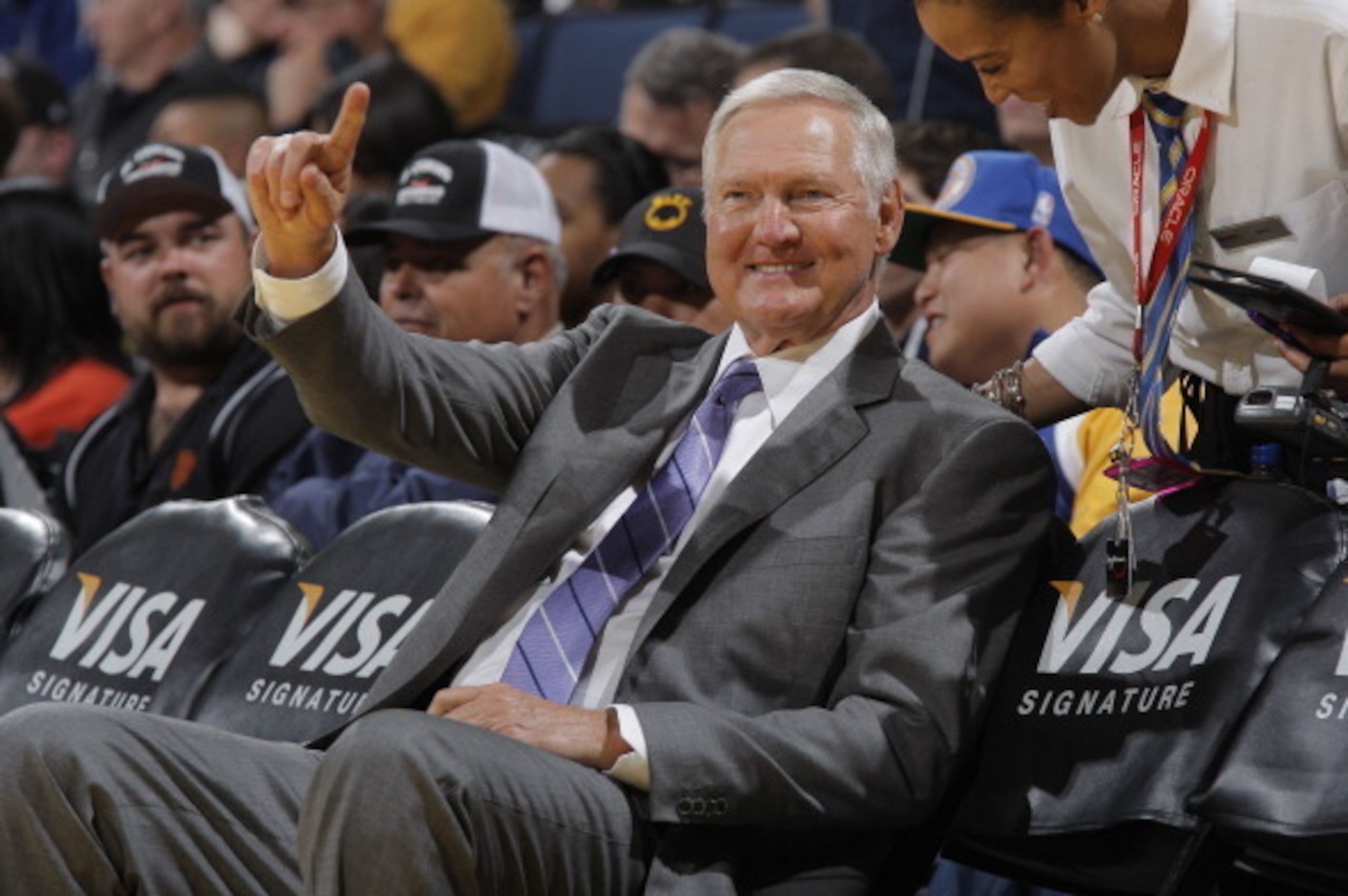
The executives arrived from opposite ends of the basketball world.
West is the definition of "old-school." For evidence of that, look no further than the NBA logo, the iconic silhouette of him from his Hall of Fame playing days. He wasn't simply seasoned, he was saturated in the game when he joined the organization in May 2011, having played, coached and managed in this league—all at elite levels.
Myers had experience around the game before signing on as assistant general manager in April 2011 but nothing nearly as hands-on. He followed a four-year playing career at UCLA (highlighted by a national title in 1995) by serving under heavyweight agent Arn Tellem. Myers was a rapid riser as a player agent and later shifted over to the powerful Wasserman Media Group.
During 14 years in the business, Myers brokered deals that earned his clients more than $575 million, according to Rusty Simmons of the San Francisco Chronicle.
Clearly he had a gift, but it was anyone's guess how that would carry over into the front office. Three years later, it's hard to label the transition as anything but smooth.
Well, smooth and speedy, that is. Supersonic, even.
"Agent to general manager-in-waiting to actual GM to indisputably part of the solution in Golden State. Zero-to-60 in about three years," wrote NBA.com's Scott Howard-Cooper.
That breakneck experience isn't unique to Myers, either.
The last three seasons have been a whirlwind for the entire franchise, a complete metamorphosis from a forgettable (or worse, forgotten) loser to a two-way force with championship aspirations and, more importantly, legitimate championship-level talent.
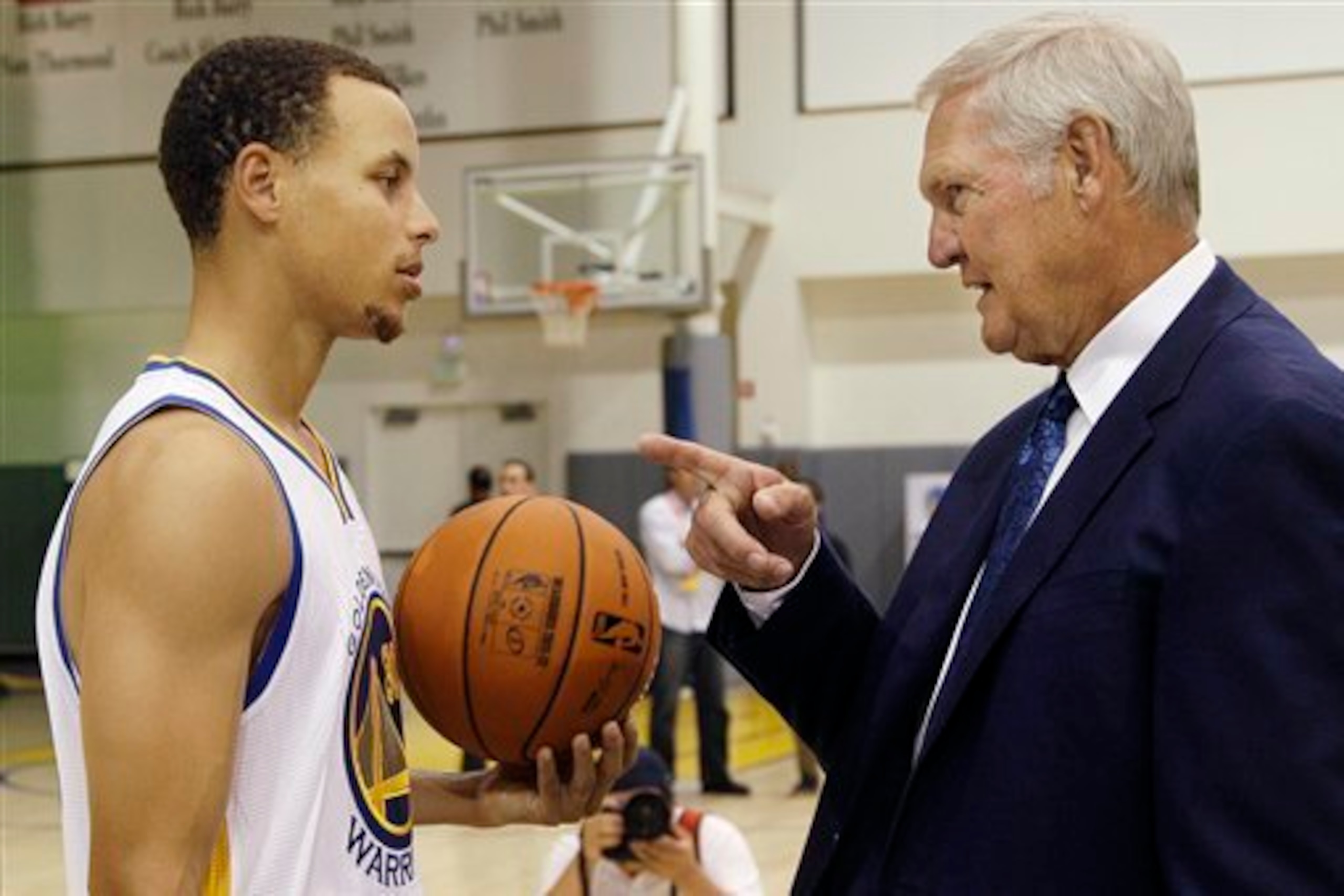
Now, Myers and West can't take credit for assembling Golden State's entire cast of characters. The executives inherited both David Lee and Stephen Curry.
They can, however, lay claim to one of the best decisions in franchise history: locking up Curry on a bargain four-year, $44 million contract extension in 2012. The point guard's problematic ankles had as much to do with the clearance rate as anything, but Myers' willingness to gamble left Golden State in possession of perhaps the best value contract in the NBA (rookie deals excluded).
That's not the only feather in the executives' hat, though. Far from it.
Through a flurry of savvy free-agent signings, intelligent draft picks and one blockbuster exchange, Myers and West have their fingerprints all over the Dubs' radically reshaped reality.
| Klay Thompson | Draft | June 2011 |
| Andrew Bogut | Trade | March 2012 |
| Harrison Barnes | Draft | June 2012 |
| Festus Ezeli | Draft | June 2012 |
| Draymond Green | Draft | June 2012 |
| Jarrett Jack | Trade | July 2012 |
| Carl Landry | Free Agency | August 2012 |
| Andre Iguodala | Sign-and-Trade | July 2013 |
| Jermaine O'Neal | Free Agency | July 2013 |
| Shaun Livingston | Free Agency | July 2014 |
Curry's extension is the best move this front office has made, but try figuring out what should be next on that list.
Is it turning volume scorer Monta Ellis into defensive anchor Andrew Bogut? Is it finding Curry the perfect backcourt complement with the No. 11 pick in 2012 (Klay Thompson)? What about finding the proverbial diamond in the rough by snagging Draymond Green with the 35th selection one year later? Or flipping an expendable Dorell Wright for difference-making third guard Jarrett Jack?
Or how about turning the franchise into a viable destination for top-shelf free agents?
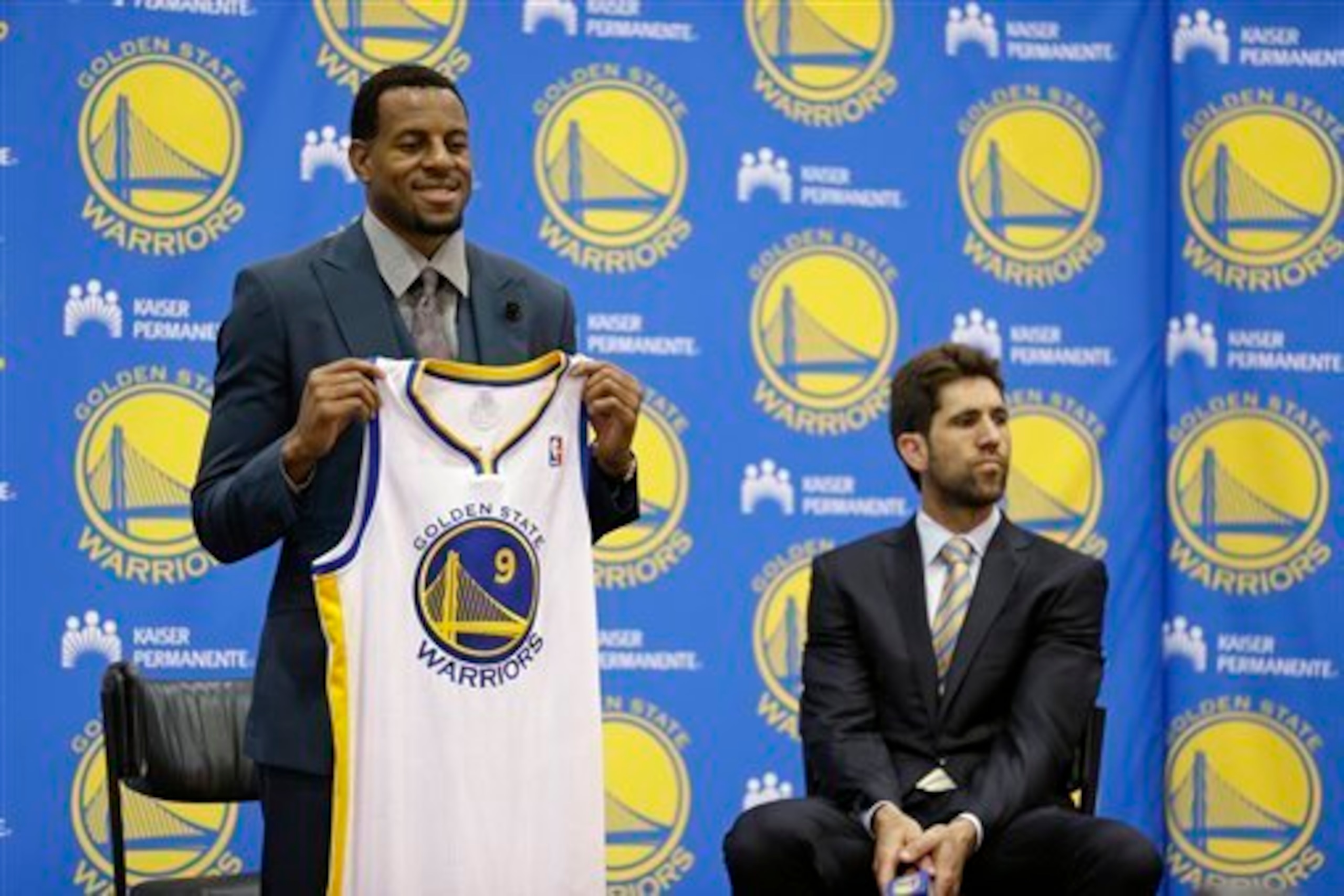
There are so many viable options, which is a testament to this group's tenure.
This front office's resume isn't free of warts—it was in place when Jeremy Lin was waived and Charlie Bell's insignificant, expiring contract was amnestied, both in December 2011—but the hits far outweigh the misses.
Just consider where the Warriors were when these two came aboard and where they are now.
They won 23 games in the lockout-shortened 2011-12 season while finishing 27th in defensive efficiency (106.0 points allowed per 100 possessions) and 30th in rebounding percentage (46.1). Last season, they rattled off 51 victories, ranking third in defensive efficiency (99.9) and ninth on the glass (51.1 percent).
How much of the credit for that turnaround belongs to the front office? Well, teams can't win without talent. And the Warriors didn't have much of it around before Myers and West showed up.
Golden State certainly trusts what this staff has built. While there seemed to be multiple layers behind Jackson's dismissal, performance was absolutely part of the equation.
"We said we wanted to be better than we were last year, and a reasonable expectation for better is to be in the top four. And to obviously have home-court advantage," owner Joe Lacob told reporters when discussing the decision. " ... We thought that was a reasonable expectation. We did not achieve that."
This team's ceiling is hard to set, but Lacob is right. the Warriors should have played better.
With as many offensive weapons as they had, there was no excuse for finishing 12th in efficiency at that end. The Warriors left a ton of points on the floor by way of ball-stopping, ineffective isolations.
That's part of the reason for all the excitement swirling around Kerr and the motion offense he plans to install. There is plenty of production yet to be tapped, and he sounds like he knows where to find it.
"I want the ball to move. That's the biggest thing," Kerr told Diamond Leung of Bay Area News Group. "We've got to get more ball movement, more passes per possession."
With a superstar coaching staff supporting him—notably Alvin Gentry for offense and Ron Adams for defense—Kerr seems ready to help this group realize its potential.
And that's why there was a split on breaking the team apart, even if it meant landing Love. The Warriors still want to see how all of these pieces work together.
"We want to give this coaching staff a chance to coach a roster that we think is pretty good," Myers told KNBR's Bob Fitzgerald in July (h/t via Leung). "It doesn't mean we think we're championship-ready. ... But we do think the roster is good and young, and we'd like to see what it can do with the new staff."
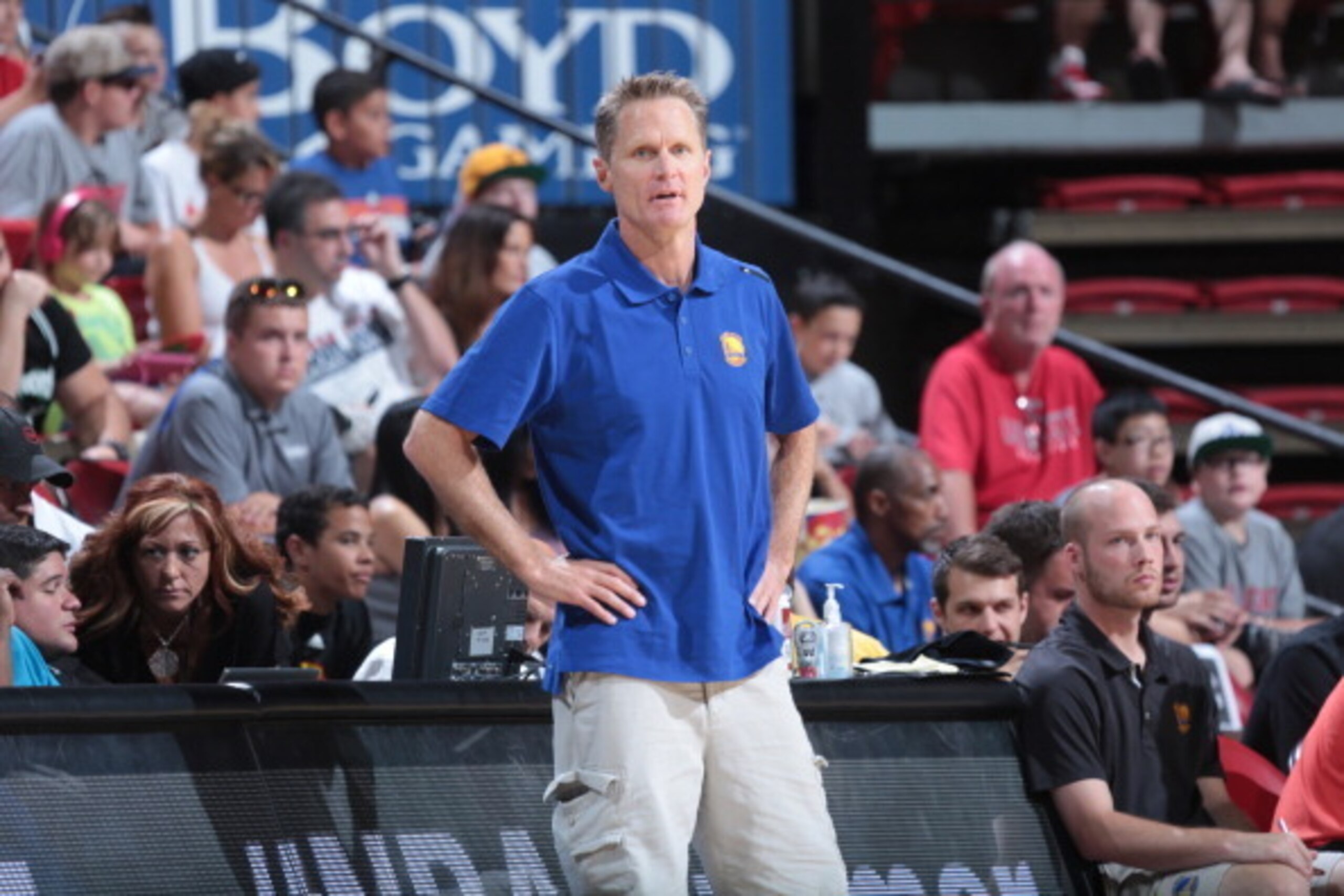
The front office believes in itself, in these players and in this first-year coach. That trust will be key in helping this franchise not just pick up where it left off but continue climbing the NBA ladder.
It will be especially critical given the type of scrutiny the team will face.
The Warriors will spend the 2014-15 season under the microscope. They won't be just another team; they'll be the ones who let go of Jackson despite his success and support from his players, who had a shot at Love and passed it up.
Golden State bet on itself, and the world will be watching to see if it can collect.
"The Warriors are built to win now in the West, and they faced some criticism for how they handled Kevin Love trade talks this summer," wrote CBS Sports' James Herbert. "They'll have high expectations, and that applies to the front office as much as the coaching staff."
But pressure is a good thing, particularly for a team that existed for so long without it. Expectations mean people are doing their jobs right, and the Warriors just protected their present and future by rewarding those people.
There's a reason the basketball world is buzzing in Oakland. Two of them, actually.
Thanks to the Warriors' best decision of the offseason, Myers and West will help keep the Bay beaming for years to come.
Unless otherwise noted, statistics used courtesy of Basketball-Reference.com and NBA.com.


.jpg?w=2560 "Grading WWE Raw 🔠")
.jpg?w=2560 "Viral Rams Coach Vid 🖕")
.jpg?w=2560 "Injury-stricken Seahawks signing veteran RB")
.jpg?w=2560 "Bijan's INSANE 1st Half 🤩")
.jpg?w=2560 "2 NFL Officials Suspended")
