What Went Wrong for Nick Foles in Philadelphia Eagles' Turnover-Laden Opener
Everybody knew Philadelphia Eagles quarterback Nick Foles wouldn’t be able to duplicate his historic 2013 stat line. Only two interceptions and two fumbles lost in 14 games, including playoffs, is simply unheard of.
What nobody easily could have predicted was Foles would come close to matching last season’s total giveaways in one half of football. The third-year signal-caller had already committed three turnovers by the time the Eagles’ 2014 campaign was 20 minutes old, against the 11.5-point underdog Jacksonville Jaguars no less.
Foles eventually got it together, throwing two touchdown passes in the second half to help Philadelphia escape Week 1 with a 34-17 victory. That being said, his overall performance (27/45, 322 YDS, 2 TD, 1 INT, 87.5 RAT, 5 SK, 2 FL) only fueled speculation that last year was a fluke after all.

.jpg?w=2560 "Commanders Eagles Football")

| First | 12/24 | 139 | 0 | 3 | 50.5 |
| Second | 15/21 | 183 | 2 | 0 | 129.7 |
It should go without saying that is an unfair assessment after one game, yet there is no denying Foles struggled on Sunday, or that we’ve seen it before. Inaccurate passes, failure to locate the open receiver, holding on to the football too long and careless decision making are flaws that have reared their ugly head with the 25-year-old at one time or another.
If you find yourself in the camp that remains unconvinced about Foles’ prospects as a franchise quarterback, this outing didn’t help. Perhaps if we go back, though, and dissect what exactly went wrong, it might alleviate some of those concerns.

This is a manageable 3rd-and-5, and the Eagles are in 11 personnel—one running back, one tight end and three wide receivers. The Jaguars are basically going to post five defenders at the line to gain, so the only way to reach the sticks is through them, over top of them or winning a one-on-one—easier said than done when the defense knows where the offense wants to go.
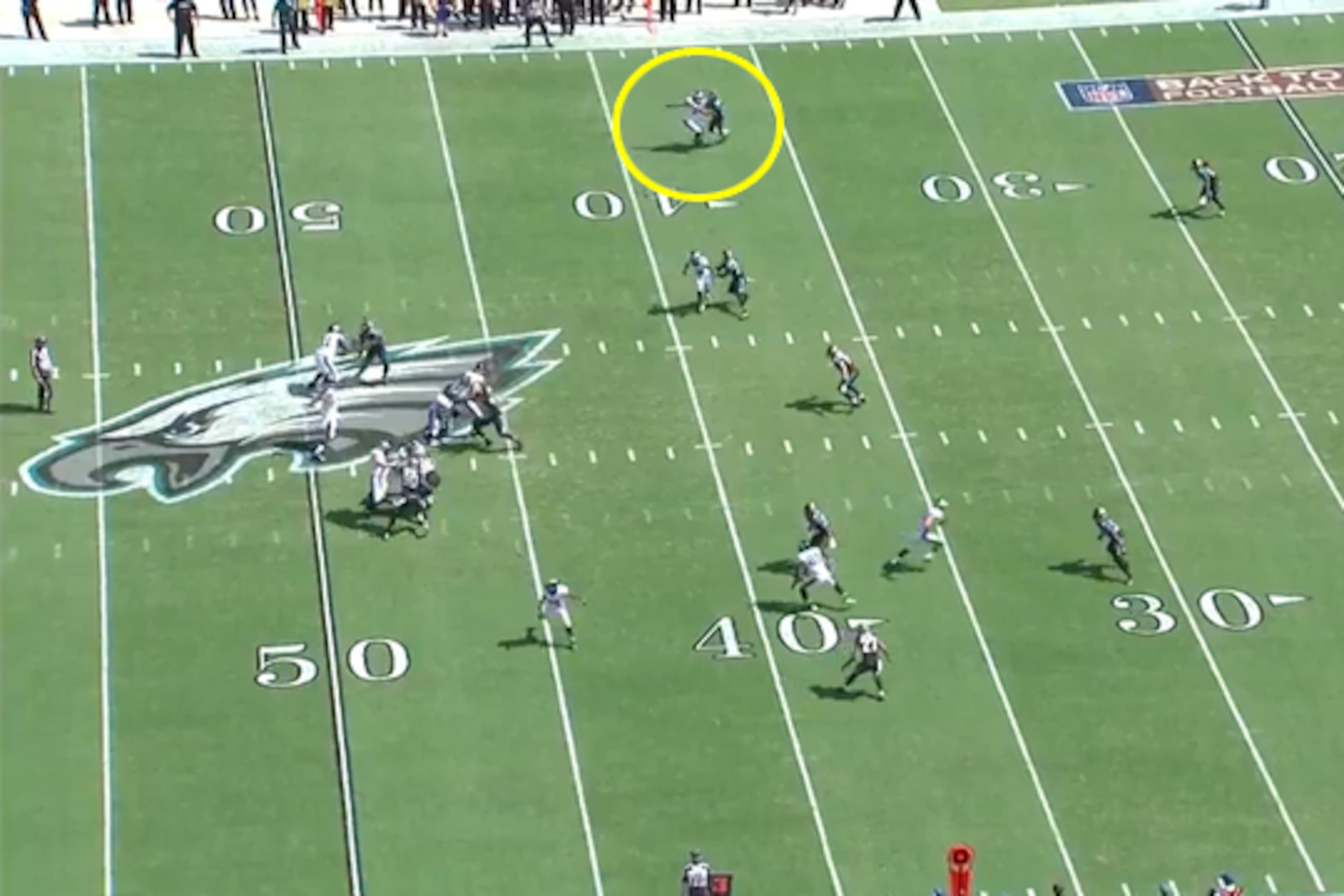
Riley Cooper has one-on-one with cornerback Alan Ball, only the receiver does not win. It looks like the defender might’ve got away with a hold, but Ball lined up 4.5 yards off the line of scrimmage and was simply standing his ground when the receiver initiated contact. Cooper isn’t the most dynamic route-runner, and the corner is basically the same size. Foles wants this throw, but it isn’t there.
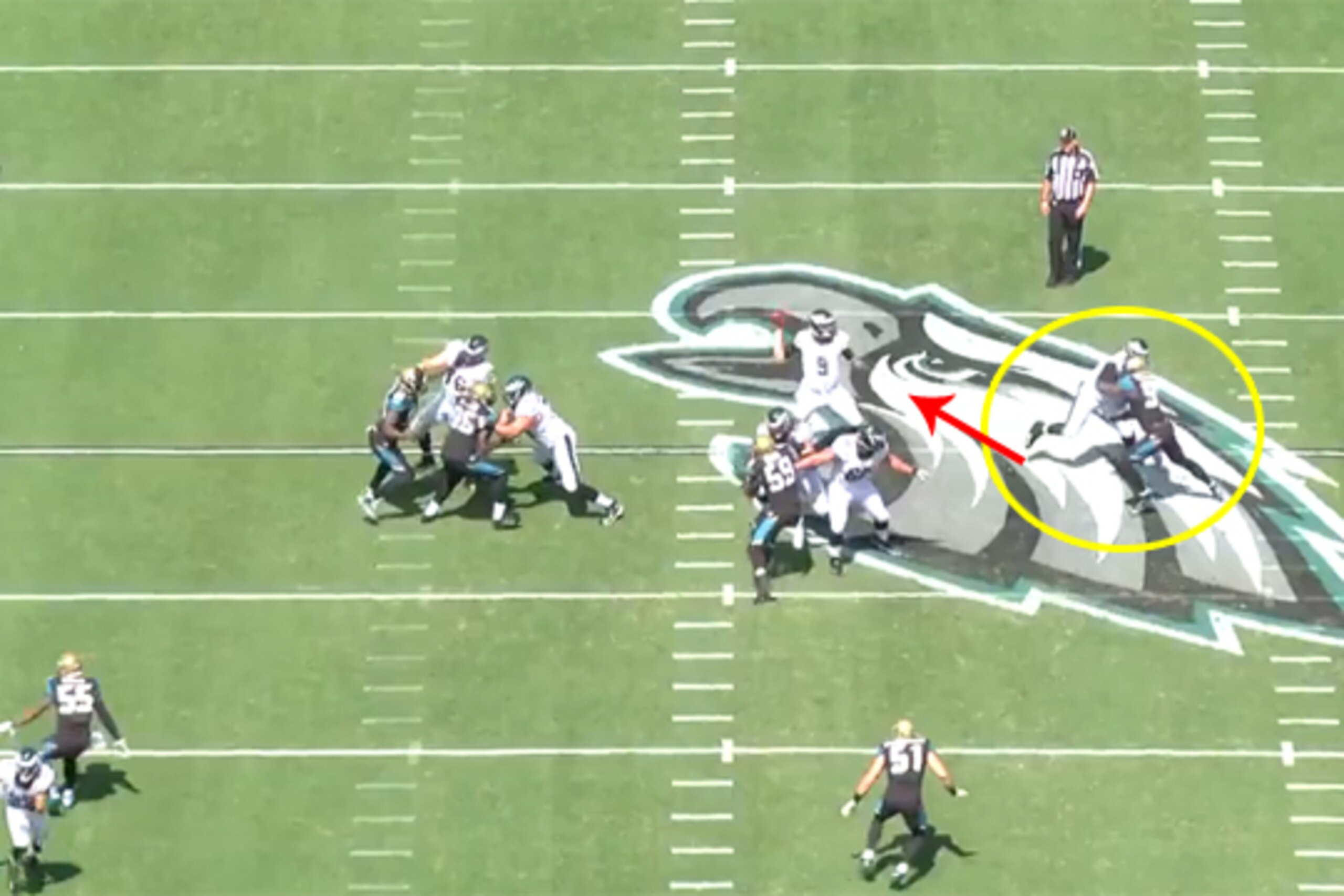
Let’s move down to pocket level. Foles is mid-pump—he recognizes the play isn’t there—but he’s about to run into a much bigger problem. Veteran defensive end Chris Clemons is about to break down All-Pro left tackle Jason Peters in protection, leaving the quarterback no chance to get a pass off.
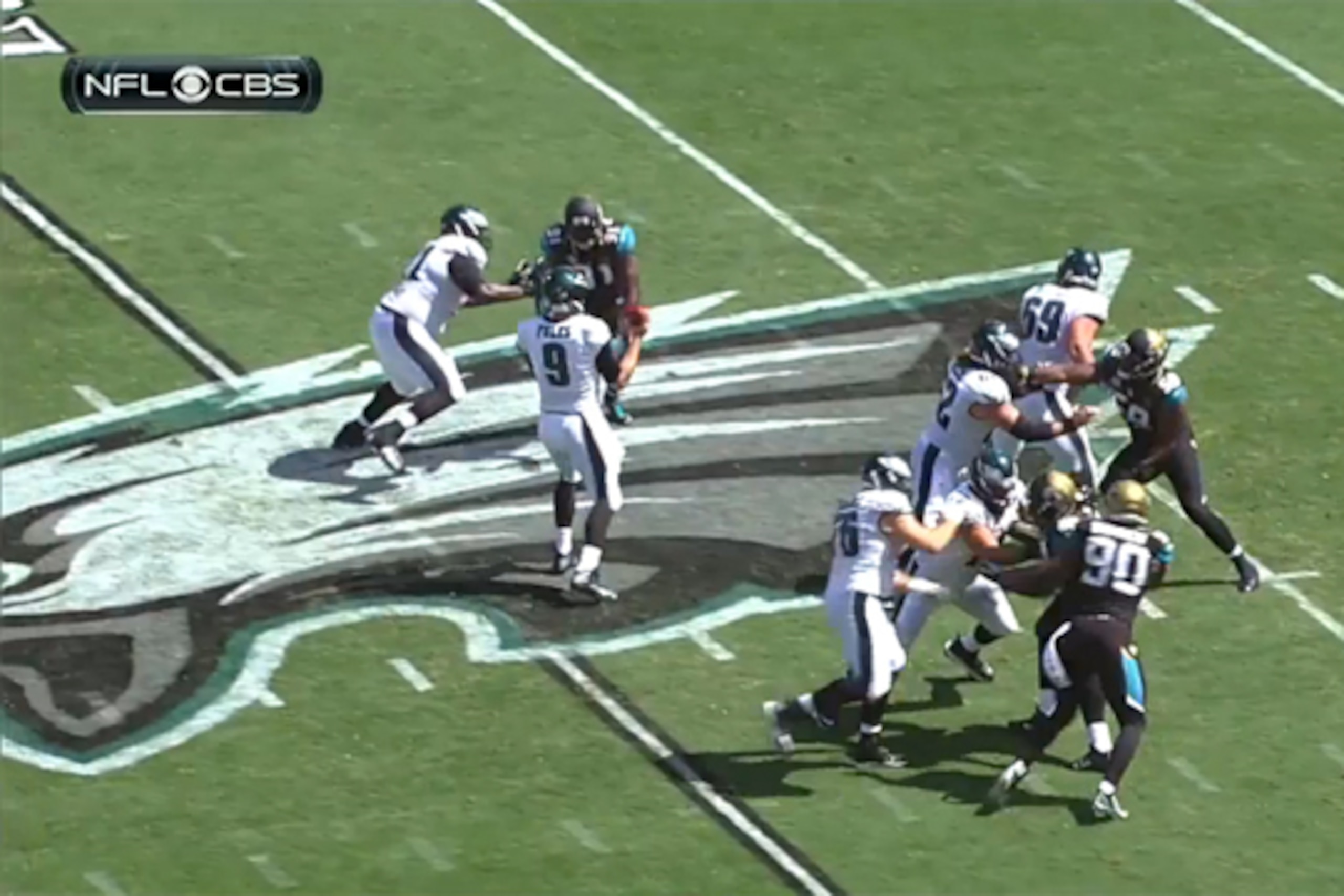
Here’s another look. This is less than three seconds after the ball is snapped, and the Jaguars are only rushing four, so Foles has a reasonable expectation he’s going to be protected here. And if Peters is going to get beat, it certainly can’t be to the inside, right where the quarterback is trying to set up. The ensuing fumble really isn’t on Foles at all.
The play of the offensive line was a factor for much of the game, particularly in the first half, and especially after All-Pro left guard Evan Mathis and right tackle Allen Barbre exited with injuries. Three of Foles’ five sacks, by my count, could be chalked up to blown blocks, while pressure led to several other hurried attempts. Generally, a quarterback is only as good as the guys up front.
Still, Foles couldn’t pin all of his problems on issues in protection.

This time, it’s 2nd-and-20 at Philadelphia’s 25-yard line following an offensive holding penalty. First of all, Foles has to recognize the situation here. Statistically speaking, the most likely outcome of this drive is a punt, and that’s honestly not the worst-case scenario—a turnover is. Take what the defense gives you, and live to fight another day.
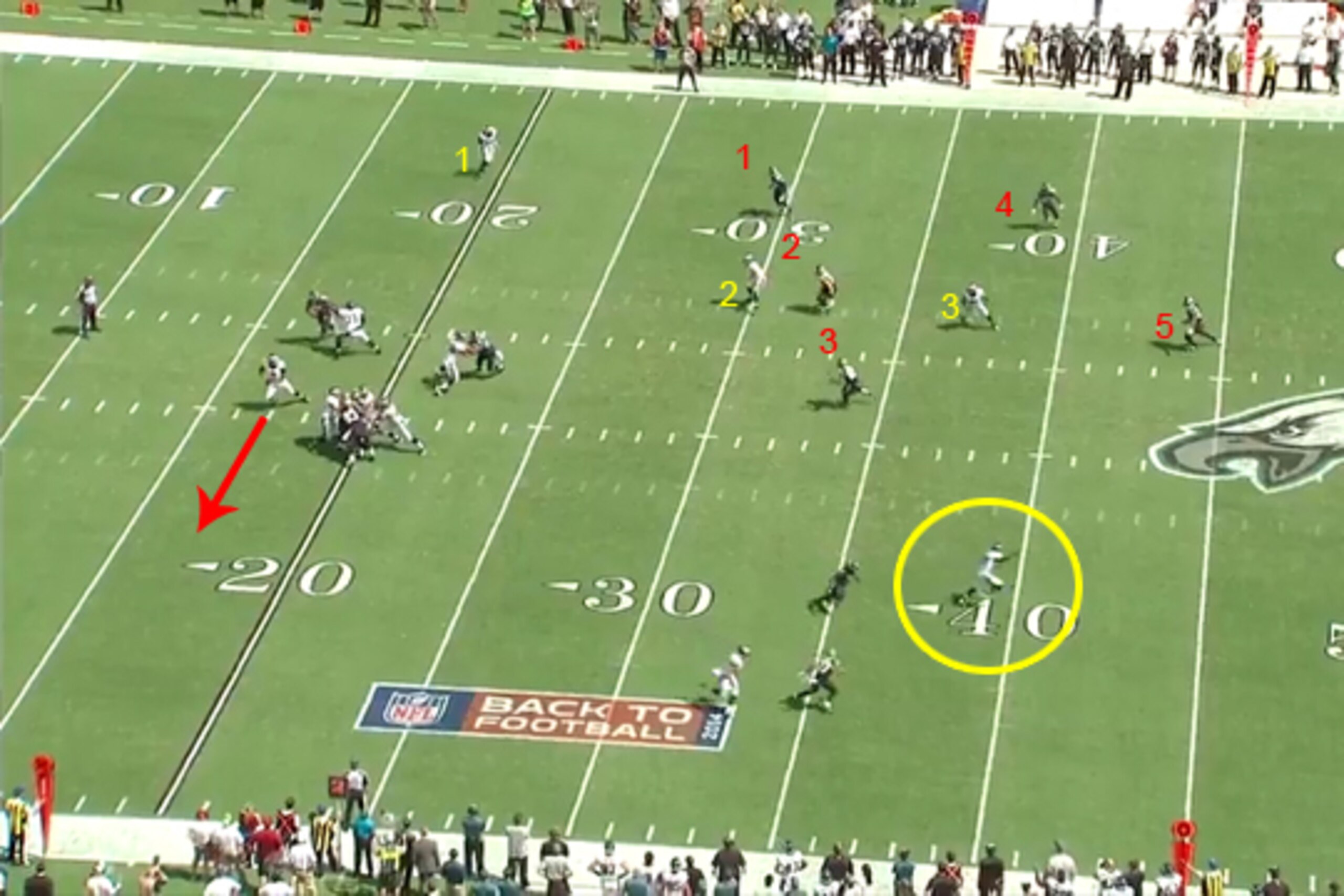
Foles stares down the left side for awhile, but Jacksonville has five defenders covering three receivers over there. Meanwhile, Jeremy Maclin is going to come wide open down the right-hand numbers—something the tape went on to show quite a bit of—only Foles can’t get the ball out there because he is already on the run.
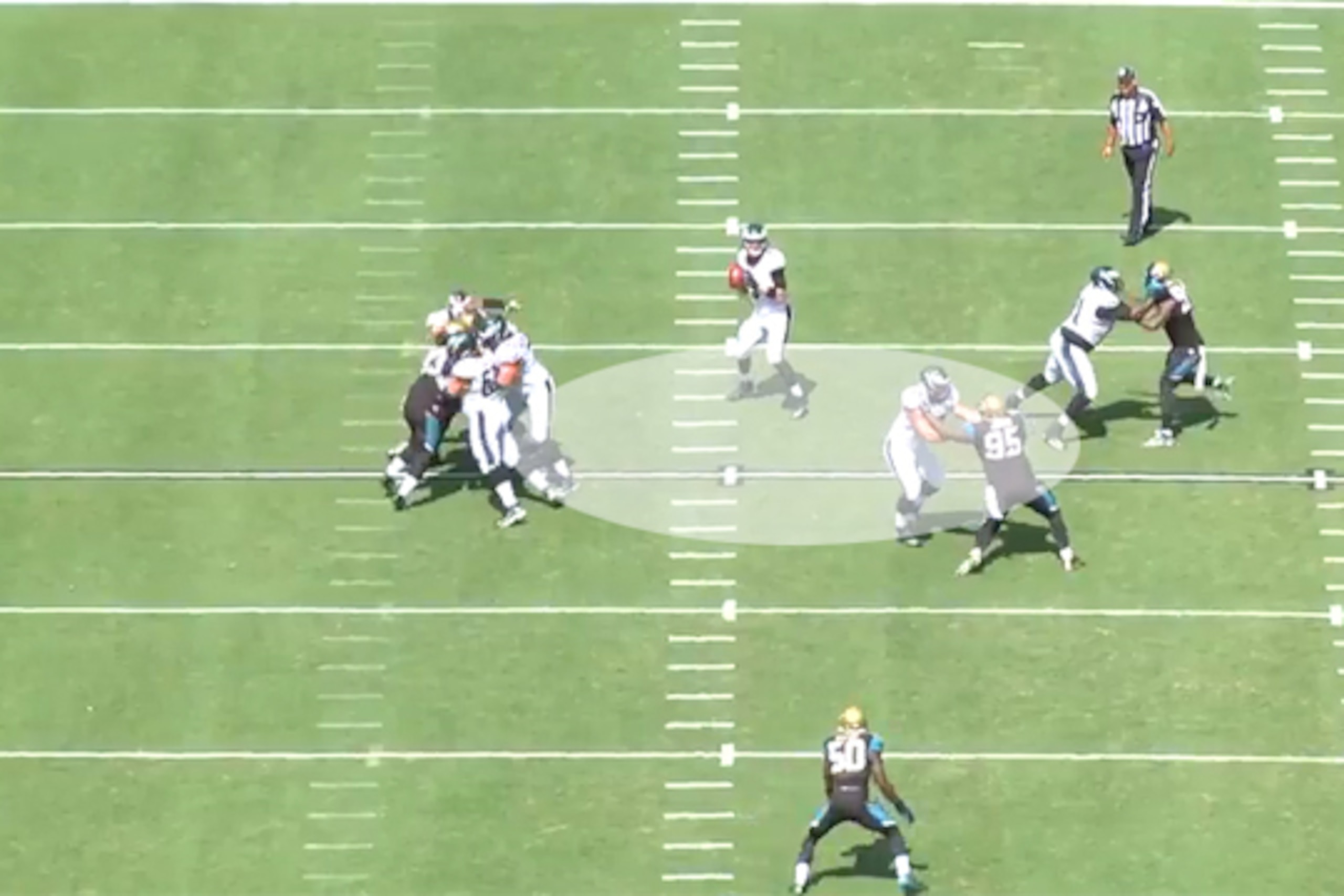
Let’s move down to field level again, right before Foles takes off. I’m not sure what he is looking at, but that’s a clean pocket. He can stand in there and deliver the football to Maclin, to his checkdown, out of bounds, somewhere. He could even climb the pocket and run right up the middle for a short gain it would seem.

Foles does see Maclin, except to throw the ball that far down the field, he must first stop and set back up. There simply isn’t enough time for that, not after fleeing the pocket unnecessarily. Predictably, Foles gets absolutely creamed from behind by defensive end Andre Branch for fumble No. 2, and this time, it was entirely the quarterback’s fault.
Holding on to the football too long has been a recurring problem for Foles going back to last season, perhaps his most visible flaw. That being said, this negative play seemed to be less about holding on to the ball, more about unnecessarily breaking the pocket, which is far less characteristic. So should we be worried? My gut feeling is no.
Foles’ final turnover had nothing to do with protection, either.
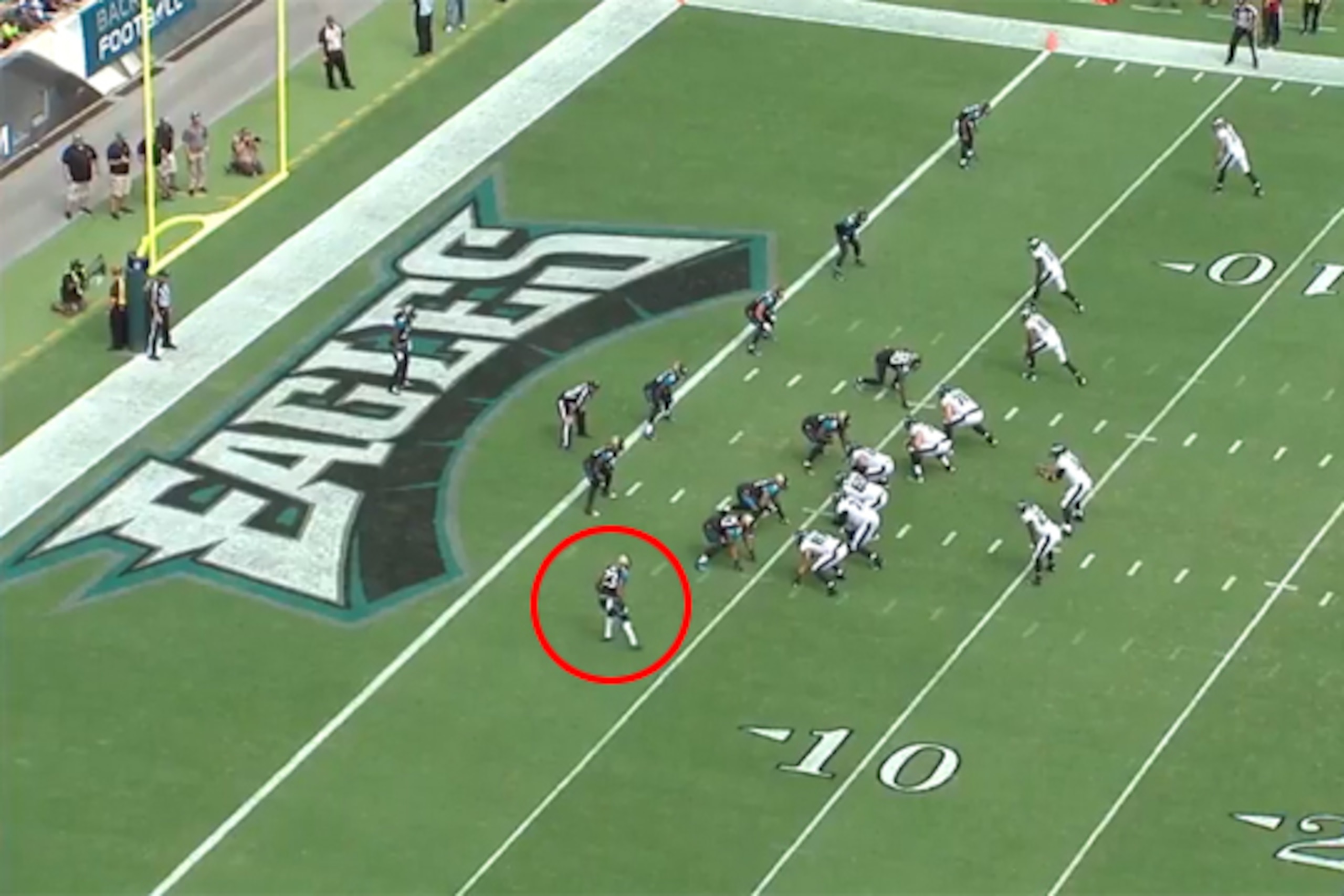
The Eagles have three wide receivers to the right, the running back and tight end to the left on 3rd-and-1 from Jacksonville’s 5-yard line. The Jaguars leave a cornerback, Ball, on the tight-end side—no minor detail, as it would turn out.

The assignments are revealed after the snap. Either this was man-to-man coverage, and the outside linebacker is responsible for the running back and Ball is responsible for tight end Brent Celek, or it’s zone, and the linebacker is responsible for the flat/underneath and Ball has the corner/back of the end zone. Either way, it’s a poor read by the quarterback.
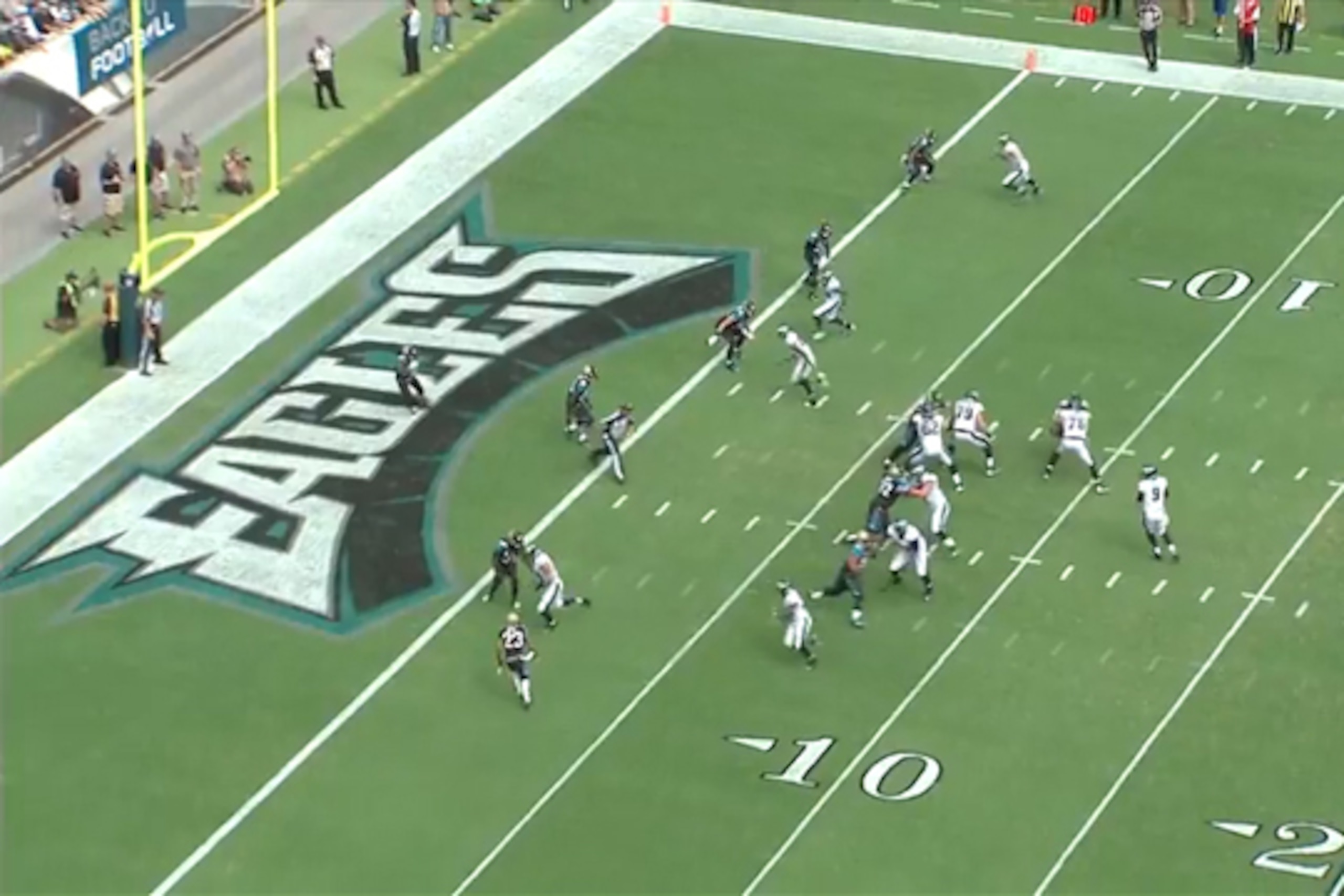
Foles has his eyes on Celek all the way, so we can only wonder what the thought process is. From this vantage point, it appears as though he thinks the linebacker has the tight end. It’s as if Foles never even sees Ball out there.
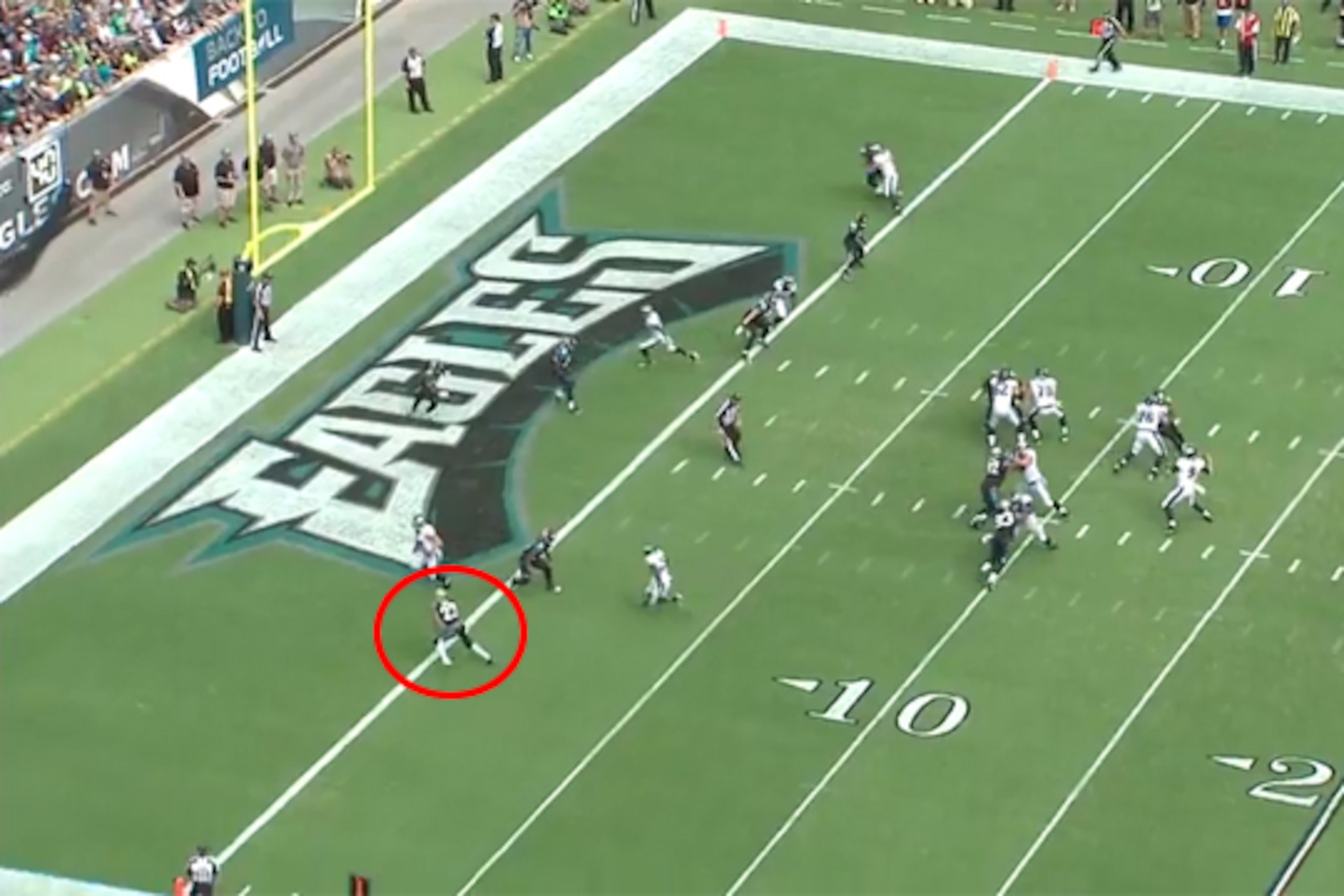
As you can see, as soon as Celek clears the linebacker, Foles is cocked to throw. Ball will continue dropping back and beat the intended target to the spot of the pass with relative ease.

What do we even say about that? It was a mistake, about as bad as they come, but for somebody who threw two interceptions in all of 2013, how much do you make of it? Especially considering Foles calmed down as the game progressed.
Despite the shaky start, Foles completed 15 of 21 passes for 183 yards and two touchdowns with zero interceptions and zero sacks in the second half. And while he wasn’t quite as sharp as the numbers would indicate, and he still missed some open receivers, the fact that he was more efficient and making fewer mistakes gave the Eagles a chance to come back from a 17-point deficit.
Nor was it all bad for Foles. He did drop this 26-yard touchdown pass into a window for tight end Zach Ertz between four defenders.

Given the kind of the pressure Foles was under for much of the first half, it’s not hard to understand why he struggled, perhaps feeling a rush when there was none, or trying to get the ball out quickly without reading the whole field. Otherwise, if you take turnovers out of the equation—and Foles’ body of work suggests we can—you start to see of the traits that made him the highest rated passer in the NFL last season.
.jpg?w=2560 "Chiefs Dolphins Football")
.jpg?w=2560 "Texans-Mixon Released Football")


.jpg?w=2560 "Love's Body Already 'Tired'")