

New England Patriots vs. Miami Dolphins: Full Report Card Grades for New England
For much of the contest, it appeared that the New England Patriots had once again established themselves as the class of the AFC East. But a stunning second half has raised far more questions about the Pats than a single notch in the loss column would imply.
After a rough start that included a blocked punt, Tom Brady and the offense settled in with an efficient performance. Brady and Co. controlled the middle of the field in the first half, while three turnovers helped the Patriots race out to a 20-10 halftime lead.
But the offensive line's slipshod blocking subsequently paralyzed the offense, with New England playing its worst offensive half in years. Coupled with poor tackling against Miami's rushing attack, the Patriots quickly fell into a hole they could not recover from, eventually falling by a 33-20 tally.
There will be plenty of questions about some puzzling coaching decisions, namely Bill Belichick's stubborn adherence to a two-gapping 3-4 that seems ill-suited to New England's current personnel. With so many flailing tackles from Patriots defenders, it's clear that the Pats never correctly executed their gap fits.
In addition, Josh McDaniels went away from the slant, stick and play-action seam routes that worked so well in the first half. Part of that surely stemmed from the putrid protection, but the refusal to establish a ground game limited the Pats offense and allowed Miami's pass rush to establish a rhythm.
There were a plethora of problems that emerged from today's contest, and while the Pats have the talent to solve them, this is not a team that can simply waltz into the postseason. New England's lack of execution and discipline was shocking, and Bill Belichick will surely be surly after such an uncharacteristically listless loss.
Read on for full grades and analysis of each position from the Patriots' first opening-day loss since 2003.
Quarterback
1 of 10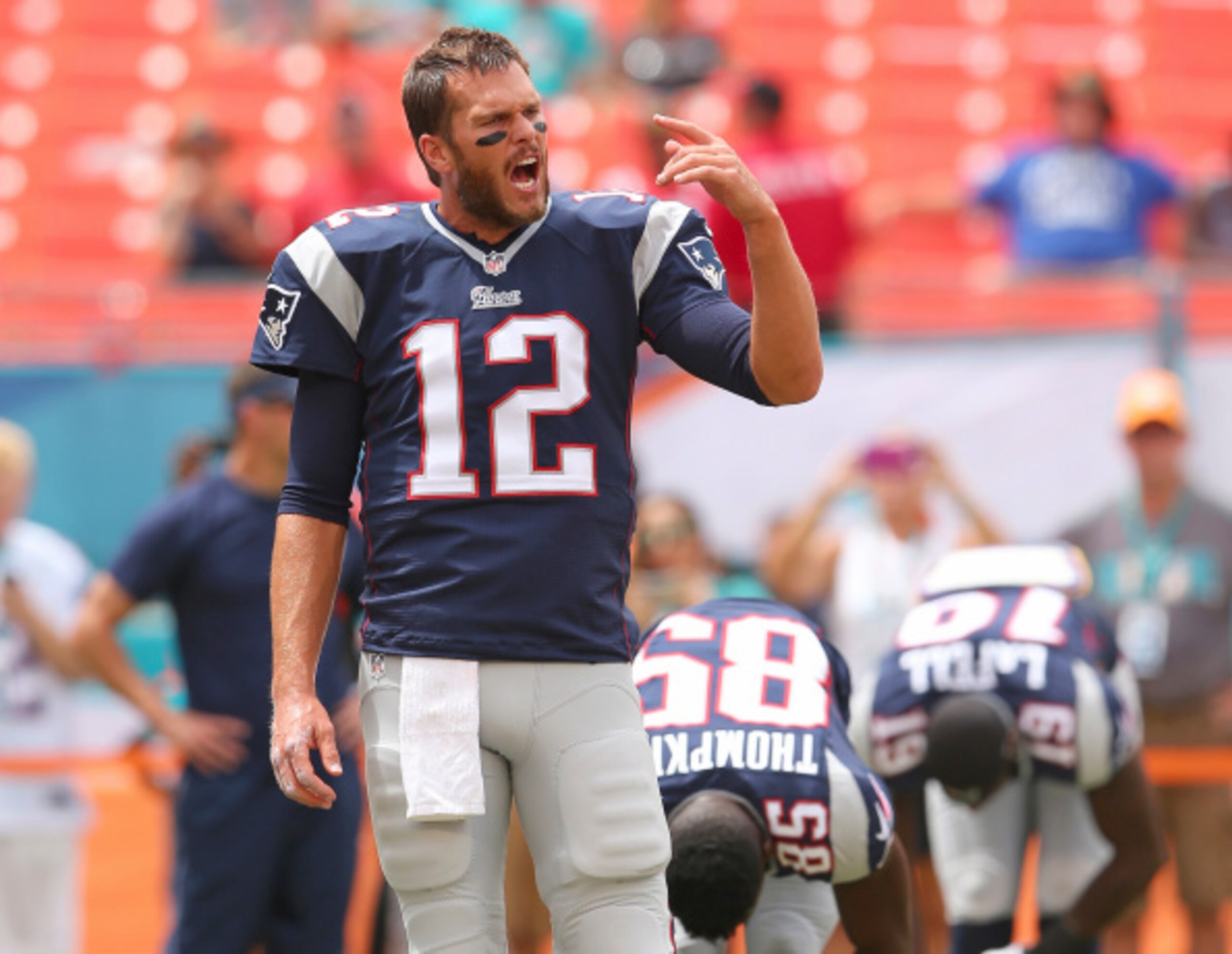
After an uber-efficient first half, Tom Brady failed to establish any discernible rhythm in the second half. Brady finished 29-of-56 for just 249 yards, a meager final yards-per-attempt of just 4.4.
The play-calling certainly did not help, as slow-developing routes from under center led to four total sacks as well. But Brady failed to hit Julian Edelman on a crucial third-down corner route that would have sent the Patriots into the red zone. Considering that the Dolphins' lead was just 23-20 at the time, it's not unreasonable to assert that the misfire was a turning point in the game.
The Patriots went away from the short-to-intermediate in-breaking routes that worked well last year, as well as in the first half. Those routes will still be effective for the Patriots this year, but that is not particularly useful on its own. New England was limited by their lack of offensive diversity at the end of 2013, and the start of 2014 was similarly stagnant.
For what it's worth, Brady's body language was also extremely negative in the second half. No one questions Brady's competitiveness or his effort, but the rest of the offense deflated along with their leader. For instance, Brandon LaFell failed to finish a fade route in the final minute that may have resulted in a score.
Brady is as resilient as any player in the league, but such open displays of contempt can grate on a fanbase. Though the quarterback was far from the primary reason for New England's loss, he was certainly a net-negative when the Patriots needed him most.
Grade: C-
Running Back
2 of 10
The running game was extremely disappointing against a soft Miami interior. Despite the Dolphins not having any of their three projected starting linebackers (Dannell Ellerbe, Koa Misi and Philip Wheeler) for the second half, the Patriots' lack of success on the ground eliminated an important dimension from the offense.
Stevan Ridley should have benefited most from the ostensibly juicy matchup, but the fourth-year back compiled just 21 yards on eight carries. It's too facile to simply blame the lack of opportunities for those struggles, but it is also worth noting that the linemen provided little help on gap-blocking runs.
The only semblance of success came on the Patriots' first touchdown drive, when the offense leaned on a series of outside-zone runs in the red zone. Shane Vereen may not seem like a prototypical goal-line back, but his vision and slippery elusiveness between the tackles led to an impressive cap on the scoring drive.
Nevertheless, it is alarming that Julian Edelman was New England's second-leading rusher despite receiving just two carries. New England did not run much out of 20/Pony personnel (3WR, 2 RB) wrinkle they showed during the preseason, perhaps a result of James White's deactivation on the afternoon. Brandon Bolden dropped a screen pass on one of his three targets, continuing to illustrate his ineffectiveness as a passing-down back.
This unit appears reliant on tempo to generate much of its success, as the ground game disappeared when the Patriots could not run their uptempo offense in the second half. The line provided almost no help on the afternoon, though, so it's hard to pin the majority of the blame on the backs.
Grade: C
Wide Receiver and Tight End
3 of 10
It was a tale of two halves for the receivers, particularly Julian Edelman. After shredding the Dolphins for 139 yards last December, it appeared Edelman was en route to a similar performance when he compiled 116 total yards in the first half.
But he was shut out in the second half, as the Pats strangely failed to target him on any of the safety-valve routes to establish some rhythm. With the Patriots compiling 8.6 yards per catch, it's clear that the yards-after-catch opportunities were plentiful at times.
That space disappeared when the Patriots insisted on deep perimeter routes after halftime, digging themselves into deeper offensive holes. Rob Gronkowski was conspicuously absent in the second half, in part because the Patriots limited his snap total once the game snowballed away. Still, after a few successful drives in which Gronk infused important versatility into the offense, it was puzzling to see him so inactive when the offense needed a jump-start.
Brandon LaFell and Michael Hoomanawanui also committed crippling penalties just when the Patriots gained some positive second-half momentum, grounding two important drives. The lack of diversity on this unit is troubling, and while things will improve once Gronkowski reaches full speed, the same limitations from 2013 are still in place.
Grade: C

.jpg?w=2560 "Rams Eagles Football")
.jpg?w=2560 "Texans-Mixon Released Football")
Offensive Line
4 of 10
"The offensive line that starts week one for the #Patriots will probably be different than the one that starts in January.
— Mike Loyko (@NEPD_Loyko) September 7, 2014"
This fact is important to remember. Still, it is not any less disconcerting that the line was overwhelmed by Miami's pass-rushers, failing to provide Brady any consistent pocket in the second half.
Jordan Devey, Marcus Cannon, Ryan Wendell and Nate Solder all stood out as liabilities on Sunday. In particular, Miami's quick interior front seemed to overwhelm New England's plodding interior blockers, easily flustering the passing game when they needed big chunks in the second half.
The Patriots have no clear solution at left guard, though Dan Connolly performed reasonably well on the right side. Cannon worked at tackle the majority of training camp, so while he possesses the power and lateral agility to play inside, he is far from ready to take every-down snaps with the starters. Devey remains a raw prospect who gets overpowered at the point of attack.
Consequently, Josh Kline and Bryan Stork are important names to watch next week. The Patriots are usually immune to overreactions, but this stultifying effort almost necessitates change. Until this unit can post at least a consistently respectable performance, the Patriots will be extraordinarily limited on offense.
Grade: D-
Defensive Line
5 of 10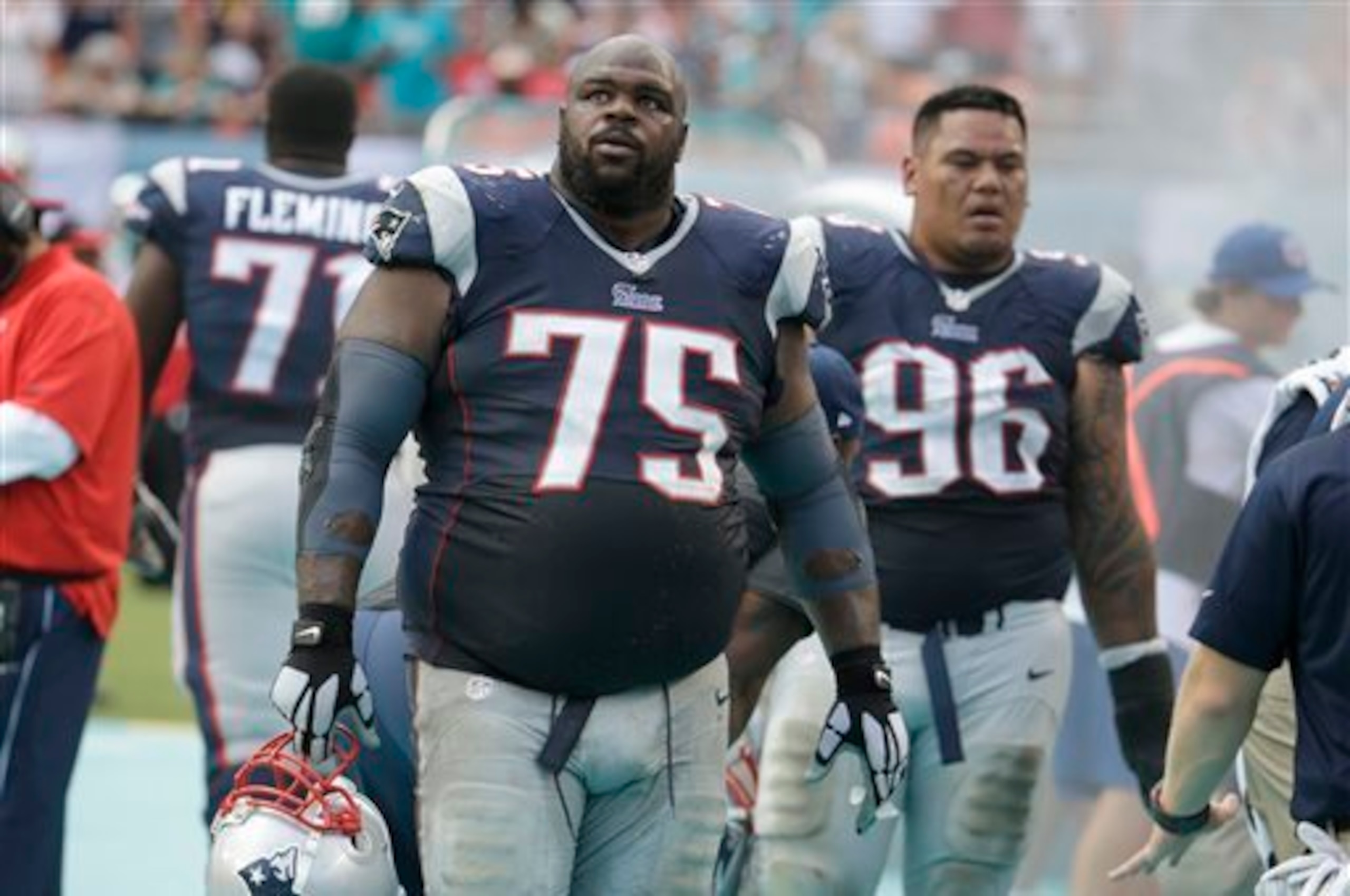
Anyone who was on Twitter during the game likely saw the cries of protest from Patriots beat reporters. Despite assembling textbook 4-3 personnel, Bill Belichick reverted to his old two-gapping 3-4 look for much of the afternoon, even abandoning the hybrid fronts they employed over the past few seasons.
The Patriots conceded 191 rushing yards on 5.0 yards per carry, with Chandler Jones and Joe Vellano consistently blocked far downfield on each play. Neither evokes old thumping space-eaters like Ty Warren or Richard Seymour, as Vince Wilfork is the only defensive lineman capable of masquerading in the current system.
More importantly, the Patriots' depth at the position is limited. That could change when the trio of Chris Jones, Dominique Easley and Sealver Siliga return to full strength, but again, none of those players are 3-4 fits. Belichick's contrarian thinking usually pays dividends despite public opinion, but it is hard for even the biggest Patriots apologist to assemble a defense for his decisions here.
It was also puzzling to see Rob Ninkovich marginalized in sub-packages. The Pats largely turned to Dont'a Hightower as the edge-rusher opposite Jones, with Ninkovich employed mostly in base 3-4 fronts. When Ninkovich was on the field, he was often used in zone coverage, which yielded predictably deleterious results (as embodied by Lamar Miller's touchdown reception).
Right now, the Patriots have an assemblage of square pegs being shoved into round holes. It is extremely difficult to envision what the endgame is with Belichick's thinking here. With Adrian Peterson looming next Sunday, New England is in for an extremely difficult afternoon if they have as much trouble with their gap fits.
Grade: D-
Linebacker
6 of 10
With the defensive line somehow overwhelmed by Miami's subpar offensive line, the linebackers received plenty of second-level clean-up duty against the run. Unfortunately, Jerod Mayo and Jamie Collins had their share of struggles in fitting the gaps responsibilities of 3-4 linebackers, thus leaving themselves out of position on numerous plays.
There were some positive signs from this unit. Dont'a Hightower thrived as an edge-rusher, providing the Patriots' most consistent pressure of the afternoon. Hightower emerged as an elite collegiate linebacker at Alabama because of his rushing and run-stuffing versatility, so it is encouraging that the Pats have switched him to more of an attacking "Jack" linebacker role.
In terms of coverage, it was hit and miss with the linebackers. Collins had some impactful plays, namely a forced fumble and a nice deflection on a deep pass to tight end Dion Sims. Still, the Patriots' reliance on zone often left him matched up against the likes of Mike Wallace and Brian Hartline, who exploited the second-year linebacker on multiple third downs.
The 3-4 misfits are not as obvious with this unit, but the issues still exist. None of these players are big stack-and-shed linebackers like Willie McGinest or Tedy Bruschi; by refusing to allow them to play in space, the Patriots minimized their impact.
Grade: B-
Secondary
7 of 10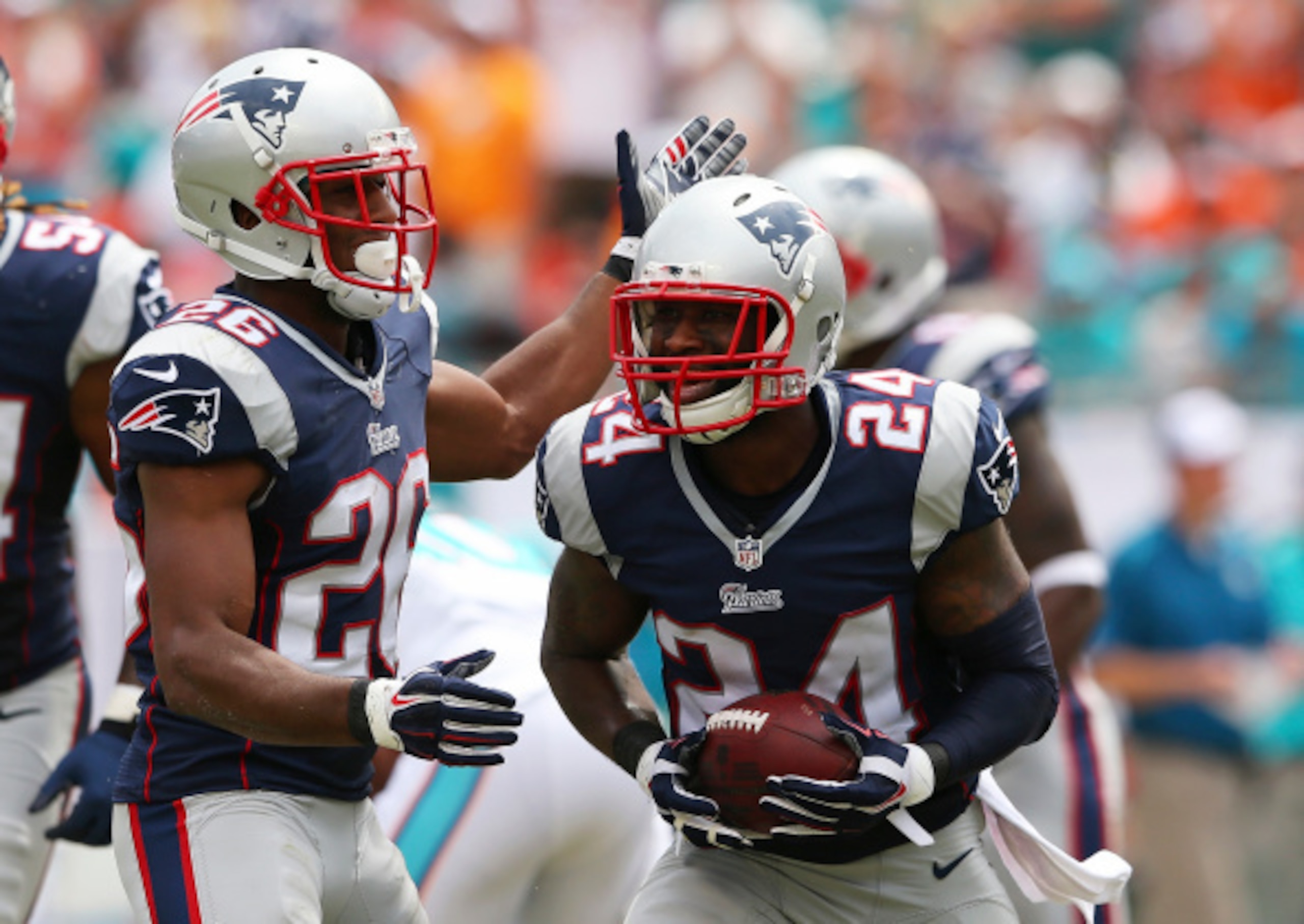
The Patriots mixed up their man and zone coverages, though they did not necessarily shadow any Miami receivers. Darrelle Revis was unlucky to concede a touchdown to Mike Wallace, as his deflection happened to fall into Wallace's lap.
The decision to insert Malcolm Butler into the game midway through the first half was somewhat puzzling. Butler demonstrated nice press-coverage skills in the preseason, and at times, the same fearlessness paid off. But he is still clearly a raw technician, and there were multiple instances where he lost leverage on his man and gave up large chunks.
Alfonzo Dennard had a successful return to the lineup, starting on the right side and coming up with an interception. Logan Ryan also forced a Lamar Miller fumble in the first half, while Patrick Chung and Devin McCourty provided much of the run support on the afternoon.
Overall, Ryan Tannehill compiled just 5.6 yards per attempt, as the Patriots limited the big plays through the air. That did not matter given their run defense, but the secondary generally lived up to expectations on Sunday. As one of the few units without significant problems emerging from this game, the secondary remains a unit the Patriots can rely upon.
Grade: B+
Special Teams
8 of 10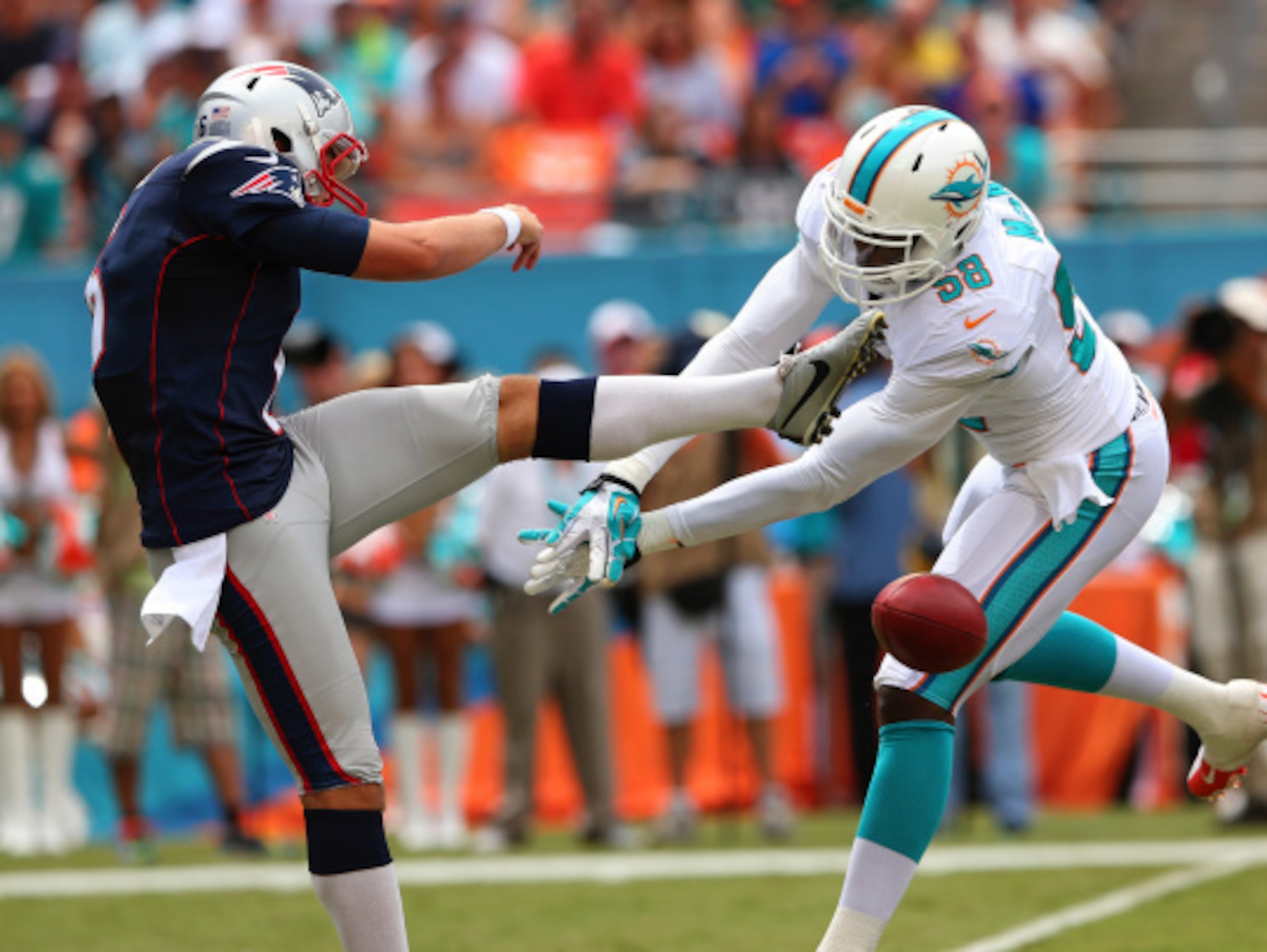
Ryan Allen's blocked punt was an ominous harbinger for the afternoon. New England's first blocked punt since 2012 stemmed from both a low snap by Danny Aiken and a missed block by Nate Ebner. With Allen failing to generate much distance or hangtime on his punts, do not be surprised to see turnover at both the punter and long snapper positions.
Stephen Gostkowski was stellar in nailing 47- and 45-yard field goals, but he did have two poor line drive kickoffs. This is likely nothing to worry about, as Gostkowski has been one of the league leaders in touchbacks for years, but it was eye-opening nonetheless.
In an unexpected twist, Patrick Chung served as New England's primary kick returner. Chung averaged 25 yards on two returns, so he will likely receive a second look next week. If James White is active at some point, he could challenge for the job as well. Devin McCourty also returned a kick late in the fourth quarter.
Even overlooking the blocked punt, this unit was a negative in its coverage. Miami averaged 25 yards per kick return, while Jarvis Landry had a 16-yard punt return. On a day when the fundamentals were lacking, New England's shakiness on special teams dovetailed with their general form.
Grade: C-
Coaching
9 of 10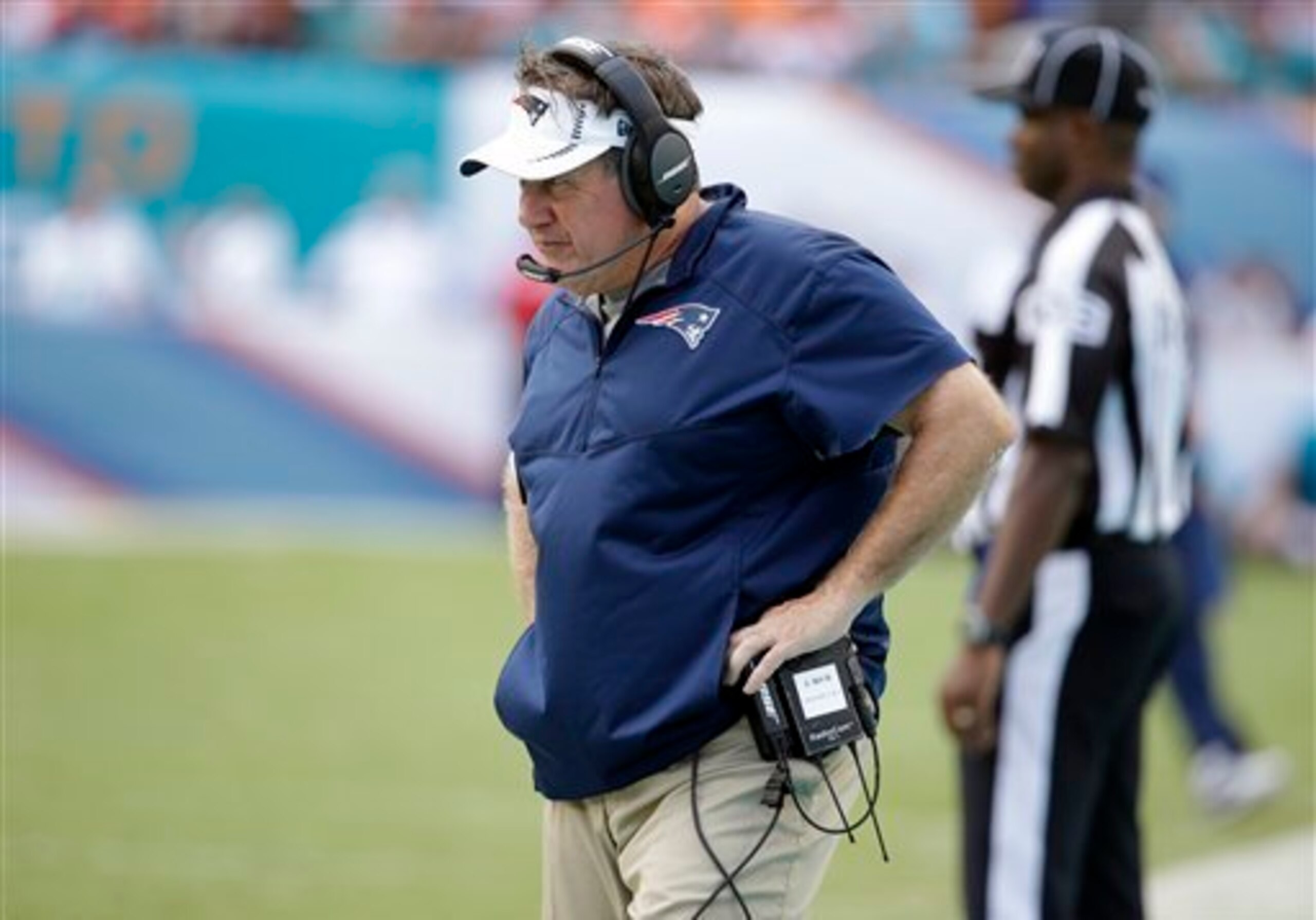
"Its like Belichick went out and acquired a bunch a 4-3 specific pieces only to put them in a 3-4. Why? God only knows.
— Mike Loyko (@NEPD_Loyko) September 7, 2014"
"Really weird that Belichick and company seem unsure about which combination of offensive linemen they want to use.
— Zuri Berry (@zuriberry) September 7, 2014"
Yeesh. Belichick has banked more goodwill than any other coach in terms of track record, but even he should not be beyond reproach after today's lackluster showing. While the players failed to execute well, they were also set up to fail by the coaches.
I've already recounted New England's bizarre insistence on 3-4 fronts and haphazard offensive play-calling, so I will not rehash those areas again. But while Belichick's experimentation usually yields effective change-ups and versatility, it appears he has gone too far. The Patriots' defensive personnel is totally different from the huge thumpers that manned the units of the early 2000s; installing the same system produced predictably disastrous results.
Meanwhile, Josh McDaniels' tendency to abandon the run propped up again, though the offensive line's lack of continuity could justify that decision. Still, after experiencing success with spread shotgun formations in the first half, McDaniels reverted to deep dropbacks from under center after halftime. That elementary mistake afforded Miami's pass-rushers extra time to rush Brady, yet the correction never came.
Belichick has always been a rational self-evaluator who immediately corrects mistakes. But it's hard to remember the last time he created so many self-inflicted wounds, so he will have plenty of questions to answer next week.
Grade: F
Final Grades
10 of 10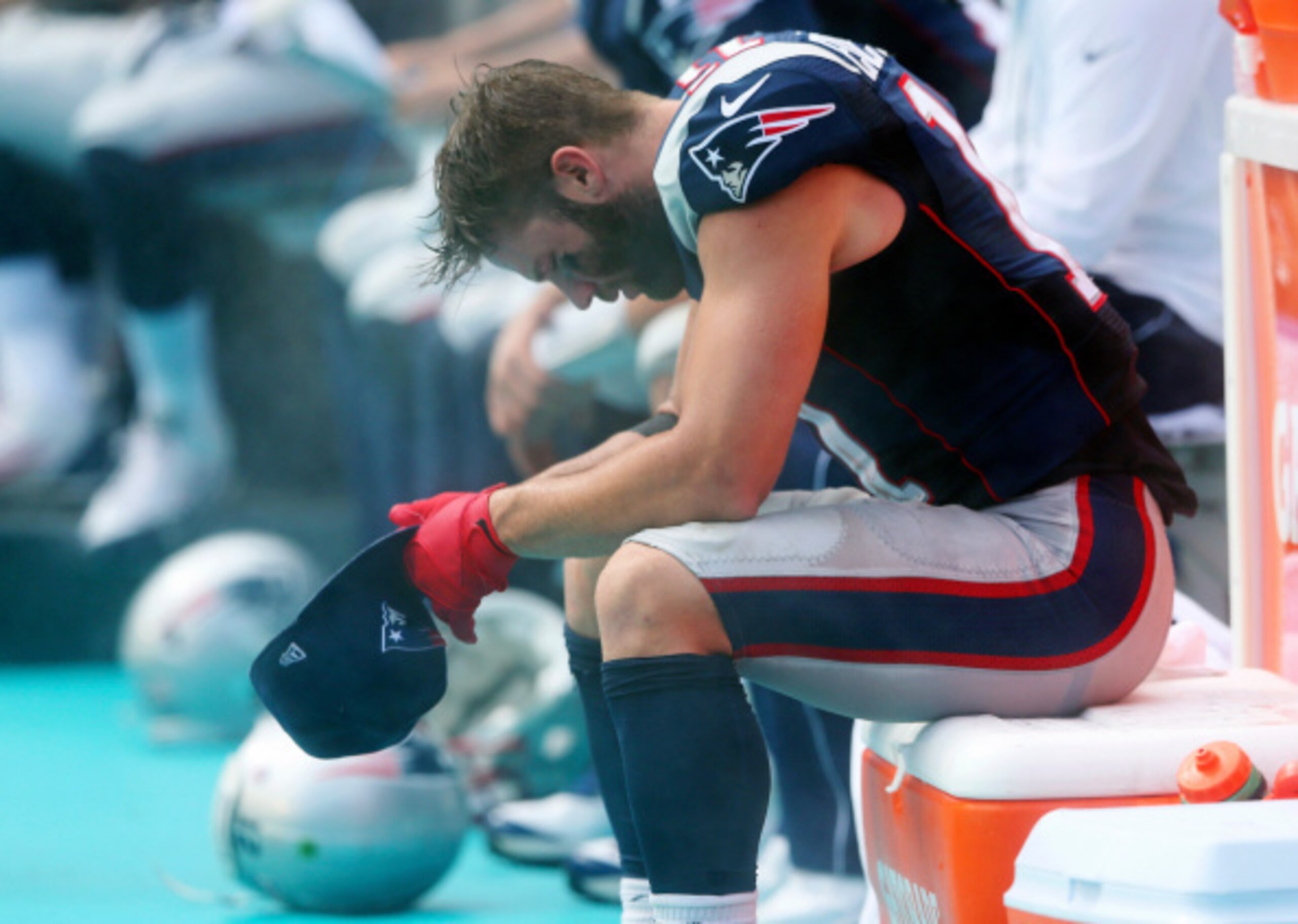
| Positional Unit | Overall Grade |
| QB | C- |
| RB | C |
| WR/TE | C |
| OL | D- |
| DL | D- |
| LB | B- |
| Secondary | B+ |
| ST | C- |
| Coaching | F |
| Cumulative Grade | D+ |
The final grade is largely shaped by the second half, which might be a case of recency bias. But it is hard to remember the last time the Patriots have played a worse half, especially considering their apparent lack of energy despite remaining close deep into the fourth quarter.
It is far too early to panic, as New England still possesses championship-caliber talent. Still, that means little when the system fails to maximize the existing talent, or when the players do not harbor the mental toughness to respond to adversity.
The narrative on the 2014 Patriots is far from complete, and it is more likely than not that this loss will only be a footnote by season's end. But New England's road to contention is far from preordained, and similar collapses going forward will raise more pressing alarms about the team's overall construction and character.
.jpg?w=2560 "Commanders Eagles Football")
.jpg?w=2560 "Chiefs Dolphins Football")


.jpg?w=2560 "Grading WWE Raw 🔠")

