

The NBA's Key Plays Still Begin with an Evolving Art: The Screen
One of the most important skills in the NBA is an evolving and overlooked art: the screen. While it’s used extensively and is developing steadily, we still pay almost no attention to it.
Even the notion that this is a pick-and-roll league is somewhat antiquated, as screens have progressed well beyond that. It has increasingly been incorporated in many different aspects of what offenses do, to the point where it can be argued that it is now one of the most crucial aspects of an effective offense.
Yet, in spite of that, we have almost no way of measuring or evaluating who is successful with them. In fact, it is ignored to the point that it’s hard even to know where to start discussing it. But let’s try.

We’ll look at four things here:
- The frequency of the screen
- The effectiveness of the screen
- The evolution of the screen
- The best at setting screens
The purpose here isn’t to give definitive analysis on the subject, but to start the conversation. Hopefully, by broaching the topic, we can start considering the things that need to be debated and how the screen can be measured. Then, its relative importance to other aspects such as passing, shooting and rebounding can be established.
The Frequency of the Screen
Based on Synergy’s data, we can look at some things. They track and categorize plays. Three of the play types they identify involve screens: pick-and-roll ball handler, pick-and-roll roll man and off screen. The 30 NBA teams have run those plays a combined 55,426 times this season.
If we exclude both transition and offensive-rebound plays and just view plays run out of the set offense, there have been 166,749 total half-court plays run. That means league-wide, at least 33.2 percent of such plays involve at least one screen.
Here are all 30 teams, how often they run pick plays and what percentage of their set offense is established around screens.
| Team | PNR BH | PNR R | Off Screen | HC Plays | Percent |
| Atlanta Hawks | 930 | 552 | 363 | 5334 | 34.6% |
| Boston Celtics | 1013 | 501 | 349 | 5555 | 33.5% |
| Brooklyn Nets | 765 | 422 | 347 | 5419 | 28.3% |
| Charlotte Bobcats | 1110 | 426 | 263 | 5700 | 31.6% |
| Chicago Bulls | 853 | 396 | 454 | 5633 | 30.2% |
| Cleveland Cavaliers | 1288 | 475 | 358 | 5789 | 36.6% |
| Dallas Mavericks | 1478 | 712 | 256 | 5861 | 41.7% |
| Denver Nuggets | 1112 | 591 | 274 | 5563 | 35.5% |
| Detroit Pistons | 937 | 388 | 222 | 5429 | 28.5% |
| Golden State Warriors | 936 | 555 | 440 | 5794 | 33.3% |
| Houston Rockets | 828 | 257 | 163 | 5361 | 23.3% |
| Indiana Pacers | 854 | 436 | 535 | 5597 | 32.6% |
| Los Angeles Clippers | 1185 | 417 | 480 | 5612 | 37.1% |
| Los Angeles Lakers | 979 | 542 | 214 | 5618 | 30.9% |
| Memphis Grizzlies | 854 | 403 | 256 | 5473 | 27.6% |
| Miami Heat | 830 | 352 | 337 | 5096 | 29.8% |
| Milwaukee Bucks | 1101 | 361 | 612 | 5409 | 38.3% |
| Minnesota Timberwolves | 926 | 404 | 370 | 5546 | 30.7% |
| New Orleans Pelicans | 1168 | 470 | 347 | 5404 | 36.7% |
| New York Knicks | 927 | 456 | 362 | 5719 | 30.5% |
| Oklahoma City Thunder | 1175 | 466 | 441 | 5498 | 37.9% |
| Orlando Magic | 1073 | 629 | 317 | 5748 | 35.1% |
| Philadelphia 76ers | 943 | 338 | 326 | 5457 | 29.4% |
| Phoenix Suns | 1001 | 358 | 280 | 5316 | 30.8% |
| Portland Trail Blazers | 1189 | 586 | 314 | 5884 | 35.5% |
| Sacramento Kings | 1133 | 472 | 370 | 5675 | 34.8% |
| San Antonio Spurs | 1068 | 426 | 452 | 5593 | 34.8% |
| Toronto Raptors | 1195 | 453 | 456 | 5587 | 37.7% |
| Utah Jazz | 1116 | 428 | 347 | 5504 | 34.4% |
| Washington Wizards | 1075 | 529 | 278 | 5575 | 33.8% |
Bear in mind, this does not include plays in which a player was indirectly freed by a screen. Many times a shot is created because a player moves over to help defense to compensate for a screened teammate. However, it’s categorized elsewhere because that was the final action of the shooter, so the actual screen isn’t reflected in the data.
If those plays account for even .1 percent, it means more than one-third of plays are influenced by screens.
What other skill is used so frequently, but we have no way of measuring it?
This establishes that the screen itself is a vastly overlooked part of today’s advanced analytics—and one in dire need of more exploration. How can an aspect of the game that influences so much be so completely ignored?
What Makes a Good Screen?
Did you hear the one about the screen-setter who was outstanding on the court? He was out, standing on the court.
I think part of the reason the screen is overlooked is that it’s boring. I mean, literally, it’s standing still. So it’s not the kind of thing that gets shown nightly on ESPN’s Top 10.
Yes, screens are simple in one sense, but that doesn’t mean there’s not skill involved in setting a good screen.
Coaches Clipboard offers four points to setting a solid pick:
"1. The screener must make contact with (but not foul, hold or push) the defender that he/she is trying to block. If you do not make contact, and get up tight, the defender will simply slide around you.
2. Be strong. Get your feet wide and plant your feet solidly. Do not move your feet once you have established this position or you will get called for a "moving screen" (a foul). You must be stationary and not move with the defender, and you must not push the defender away. If a defender bumps into you and you are not stationary, you will probably be called for the foul.
3. Keep your arms tucked into your chest, not only to physically protect yourself, but also so the ref can see that you are not pushing with your hands, or grabbing or holding the defender.
4. The angle, or direction, of the pick and the timing of the pick are probably the most important, and most overlooked factors in setting a screen. You must have the correct angle, or position, when you set the pick. You must anticipate the direction that your offensive teammate wants to go, and then make contact with his defender in a position so that you are directly in the way of the defender, and he/she cannot get around you. If you don't get the right angle, the defender will simply slide around you.
"
The pick is a seemingly simple skill, and while there’s a degree of timing and coordination involved, a good screen starts between the ears. A setter must factor in where his teammate—for whom he’s setting the screen—is, what that teammate’s predilections are, who the defender is, the angle and speed everyone’s coming at him and how he (the setter) needs to position himself in order to divert the defender in the best possible direction.
He must do all of this in a split second and then establish his placement within a six-inch margin with precision timing. Once he’s done all that, it’s only half the battle.
Position matters, too. Having a wide stance is essential to a good screen because it makes it harder for the picked player to fight over the screen. And if you move your arms, feet or hips once you’re set, you get whistled for a moving screen, and that’s a turnover.
That’s not as easy as it sounds. It’s why even the best fail more than 20 percent of the time (but more on that later).
To demonstrate, this is good.
And this is bad.
In the first clip, Kevin Garnett gets where he’s supposed to be, establishes his position and takes the defender out of the play. In the second clip, he’s not there in time, so he extends his arm, committing a blatantly illegal screen, and his team loses the ball.
The Evolution of the Screen
As the screen has been incorporated into offenses, it has taken on many faces. Here are several types of screen plays you’ll see run by teams. This is by no means a comprehensive list.
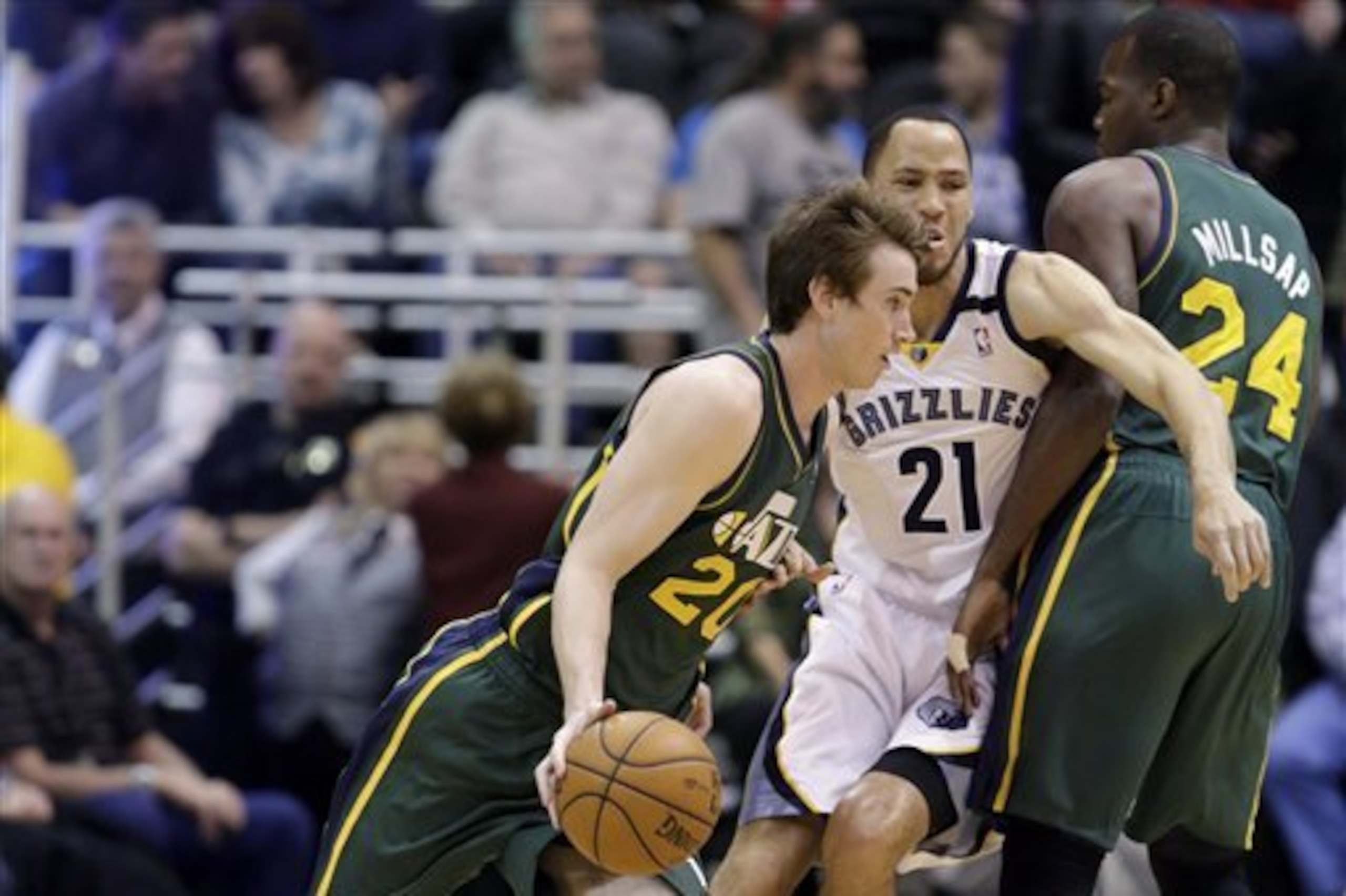
The pick-and-roll is called a pick-and-roll because the player who sets the pick then “rolls” to the basket. John Stockton and Karl Malone are the poster boys for this play, utilizing it to the tune of Stockton becoming the all-time leader in assists and Malone becoming the second all-time leading scorer.
Then came the pick-and-pop, championed by Dirk Nowitzki. On the pick-and-pop, the pick player doesn’t roll to the basket, but rather, after setting the screen, opens himself up for a jump shot. Since the pick-setter is normally a big man, and his man must come out to him, this allows the lane to open up for a driving point guard or cutter. Or, in Nowitzki’s case, to nail an otherworldly number of jumpers.
As picks became popular, defenders started anticipating them and adjusting before the screens were even set. This led to the slip screen, which is a kind of “fake screen” where the setter only starts to set the screen but then rolls to the basket. The strategy keeps the defense from cheating on screens. The Miami Heat are very effective with this, as demonstrated here by Chris Bosh.
Multiple screens are becoming the trend now, popularized by Gregg Popovich, head coach of the San Antonio Spurs. Their offense revolves around “the loop,” which typically involves Tony Parker running through several screens, explained here by Coach Nick of BBall Breakdown.
The key to these kinds of multiple screen sets is that it gives offenses several options and more chances to react to what the defense does. If run correctly there will be an open shot created on almost every possession, and then it’s just a matter of burying the shots.

Finally, a play the Chicago Bulls have been running since Joakim Noah became a “point center” doesn’t have an official name yet, but I’ll call it the pass, pick-and-pop. On these plays, Noah will dribble into a defender, drop the ball off behind him and then set the pick while his teammate takes an uncontested jumper as his defender is screened out by Noah.
Who are the Best Screeners?
How do we know who the best screeners are? How much does a screener impact an offense, for better or worse? It would be great to answer these questions with substance. But since there’s nothing in box scores or even advanced stats, it’s hard to know who the best pick-setters are—or how much impact they really have on the game.
There is one study, albeit limited.
Vantage Sports researched screens from the 2012-13 season and offered some valuable insight. They presented three measures and defined them accordingly:
"1. Solid Screen Percentage: This is the percentage of set screens (both on-ball and off-ball) where a player either makes contact with a defender, or re-routes that defender.
2. Set Screen Points per Chance: This is the cash-out value of a player's set screens in terms of points scored by his teammates.
3. Set Screen Outcome Efficiency: The percentage of set screens that result in a teammate score, missed open shot, shooting foul or Assist+[1]
"
In other words, they measured screens by how often the screen had the intended effect of diverting the defender, how often a teammate scored and how often it gave a teammate a chance to score.
And, as previously mentioned, even the best screen setters only affect the defender slightly less than 80 percent of the time. Ronny Turiaf led the NBA in solid screen percentage last year with 79 percent.
Based on their study, three players finished in the top five in two of the three categories: Noah of the Chicago Bulls, Marcin Gortat, then with the Phoenix Suns, and Kendrick Perkins of the Oklahoma City Thunder.
Tiago Splitter and Tim Duncan were two of the six most effective screeners in set screen points per chance. But they conclude that’s an indication of Tony Parker’s effectiveness in the pick-and-roll, which raises the issue: Who was responsible for what?
Overall, they proclaim Noah to be the best screen-setter in the league because he was near the top in both solid screen percentage and set screen outcome efficiency, both of which are shooter independent stats.
In spite of screens being used frequently and in an increasing number of ways, the analytics are lagging behind.
Vantage Sports offers some ideas of how to approach measuring pick success, but it is just a beginning.
It would also make sense to have comparative stats (ex. teammates' effective field-goal percentage when Player A sets picks compared to when Player B sets picks). That would help to offset the inherent biases that come with screening for a great shooter or offensive player, such as Parker.
The new tracking capacity provided by SportVU could accommodate such measures and allow extensive data for every screen during the season if they were to program it to do so.
Access to such figures would be incredibly helpful in terms of determining how much impact a good screen has on a play—and by extension, the effect a good screener has on a team. Ultimately, it could even impact how much some players get paid.
If the screen is evolving, analysis needs to keep pace with it. Yet, we’ve barely even touched on the topic.
[1] “Assist+ is a number that tracks not only traditional assists, but also gives credit to a passer when: (a) a pass results in a shooting foul (b) a pass results in a missed open shot (attempts to de-penalize facilitators for teammates' poor shooting on open shot attempts)(c) a pass is deemed crucial to an assist or a subsequent pass resulting in a shooting foul. Crucial passes can be thought of as 'hockey assists,' or assists-to-assists.”
.jpg?w=2560 "WWE Raw Live Grades 🔠")
.png?w=2560 "Allen's BRUTAL 1H Stats 🫤")
.jpg?w=2560 "Commanders OL HEATED After Tie ▶️")
.jpg?w=2560 "Monday Night Raw Blog 🔴")